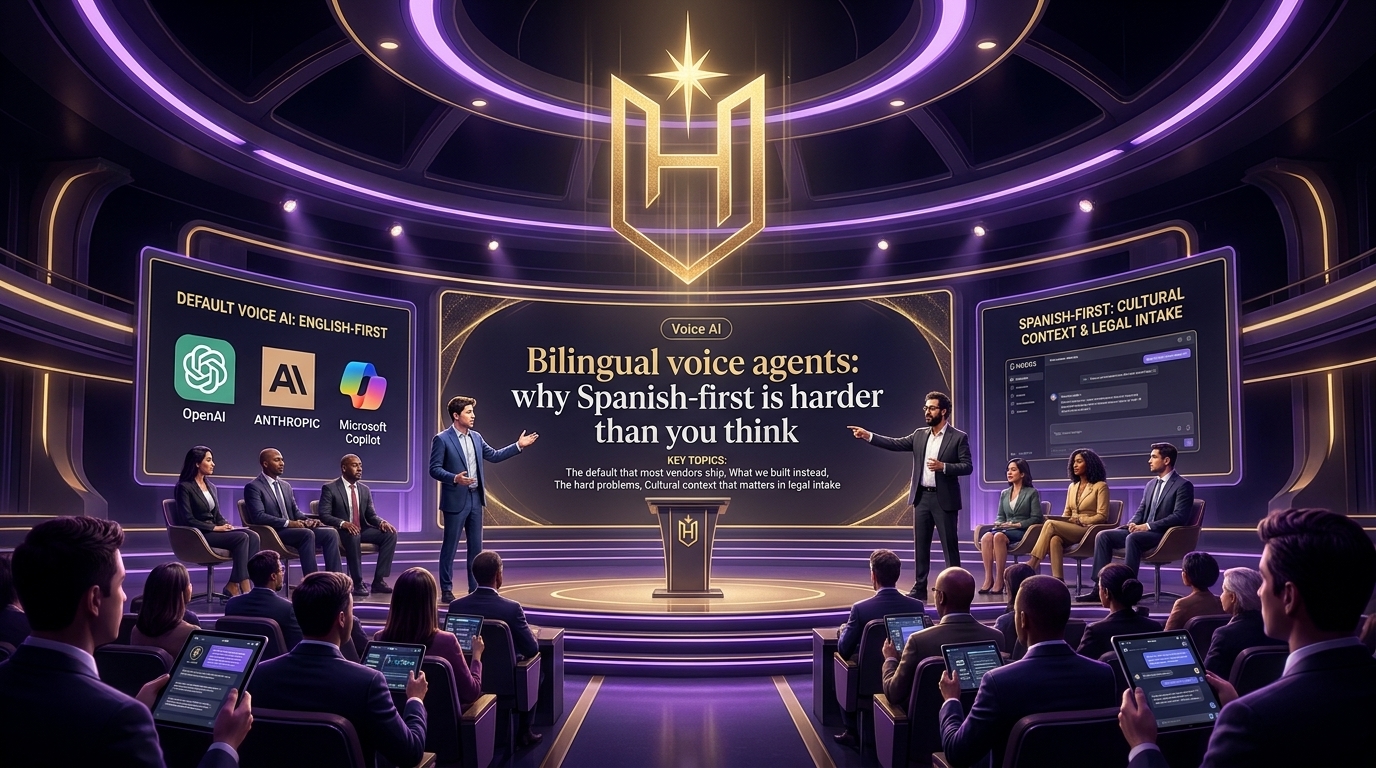


AI Voice Assistants: The Essential Tool for Legal Context
The legal industry stands at a pivotal juncture, where technological advancements are rapidly redefining client engagement. The recent announcement by CallRail regarding its real-time customer context integration with HubSpot is a clear signal: the era of generic client interactions is over. For law firms, this development underscores the urgent need to adopt sophisticated tools, particularly AI Voice Assistants, that can deliver personalized, efficient, and contextually rich client experiences.
This isn't just about answering calls; it's about transforming every client touchpoint into an opportunity for deeper connection and informed action.
In an increasingly competitive landscape, client expectations for immediate, knowledgeable service are higher than ever. Law firms are under immense pressure to reduce administrative burdens while simultaneously enhancing client satisfaction and conversion rates.
The traditional model of call handling, often involving call trees or overwhelmed receptionists, simply cannot keep pace. This is where the strategic implementation of AI Voice Assistants becomes not just advantageous, but essential. By harnessing the power of artificial intelligence, firms can ensure that every client interaction is not only efficient but also deeply informed by their history, needs, and current status, mirroring the kind of personalized service that top-tier clients expect from their legal counsel.
Table of Contents
- ✓AI Voice Assistants and the Evolving Landscape of Legal Client Engagement
- ✓Beyond Basic Answering: Real-Time Context and Proactive Client Support
- ✓Enhancing Lead Qualification and Intake Workflows
- ✓The Strategic Imperative: Integrating Voice AI with CRM for Law Firms
- ✓Seamless Appointment Booking and Follow-ups
- ✓Navigating Ethical AI in Client Communications: Data Privacy and Professional Responsibility
- ✓Ensuring Compliance and Data Security
- ✓The Future of Legal Practice: Empowering Attorneys with Intelligent Client Interactions
AI Voice Assistants and the Evolving Landscape of Legal Client Engagement
The legal sector, often perceived as slow to adopt technological shifts, is now at the forefront of a profound transformation driven by AI. While firms like Allen & Overy have made headlines for their internal adoption of generative AI tools like Harvey AI for legal research and document drafting, the external facing aspect of client engagement is equally ripe for innovation.
The competitive tension is palpable: firms that embrace intelligent automation are gaining a significant edge over those clinging to antiquated methods. As McKinsey & Company reported in 2023, AI adoption in professional services could unlock trillions in value, much of it through enhanced customer experience and operational efficiency.
The integration announced by CallRail and HubSpot, allowing AI Voice Assistants to access real-time CRM data, is a microcosm of this larger trend. It highlights a critical shift from mere call tracking to intelligent, context-aware interaction. Learn more about Essential AI Legal Solutions: Freshfields' Gemini Integration.
This isn't just about a chatbot on a website; it's about a sophisticated voice AI understanding the nuances of a client's journey, their previous interactions, and their current legal needs before a human ever engages. Imagine a potential client calling about a personal injury case, and the AI Voice Assistant immediately knows their name, whether they've visited the firm's website, and even which specific ad campaign led them to call, all before uttering a word.
This level of informed interaction fundamentally alters the initial impression and sets a precedent for the entire client relationship.
Beyond Basic Answering: Real-Time Context and Proactive Client Support
The true power of modern AI Voice Assistants for law firms extends far beyond simple call answering. It lies in their ability to harness and synthesize vast amounts of client data in real-time, providing an unparalleled level of context for every interaction. Think of the CallRail-HubSpot integration as a blueprint: when a client calls, the AI doesn't just greet them; it instantly pulls up their profile from the firm's client relationship management (CRM) system.
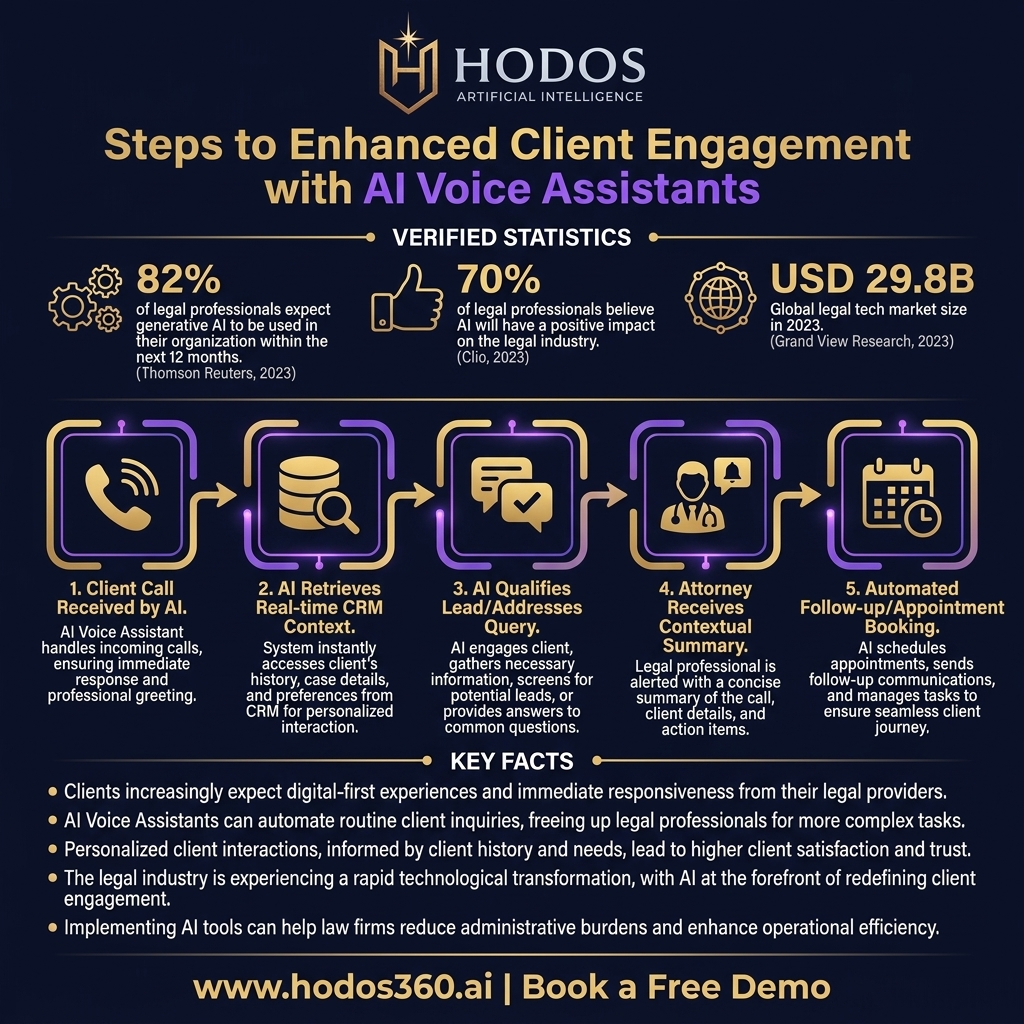
This profile could include details about previous inquiries, ongoing case status, billing information, and even their preferred communication style. This immediate access to a holistic client view allows the AI to offer a truly personalized experience, addressing the client by name and immediately understanding the nature of their call without requiring them to repeat information.
This capability translates directly into proactive client support. Learn more about Legal AI Revolution: Unlocking 2026 Firm Growth with HODOS. For instance, if a client calls about a pending court date, the AI Voice Assistant can confirm the date, provide directions, or even offer to send a reminder, all based on the information retrieved from the firm's case management system.
This reduces client anxiety, improves satisfaction, and frees up legal professionals from routine informational tasks. According to a 2024 report by Gartner, organizations leveraging AI for customer service can reduce agent workload by up to 30%, allowing human staff to focus on more complex, high-value interactions.
For law firms, this means attorneys and paralegals can dedicate more time to legal strategy and client advocacy, rather than administrative minutiae.
Enhancing Lead Qualification and Intake Workflows
One of the most immediate and impactful benefits of advanced AI Voice Assistants for law firms is their ability to revolutionize lead qualification and client intake. Historically, these processes have been resource-intensive, requiring significant human capital to screen potential clients, gather initial information, and determine if a case aligns with the firm's expertise.
An AI Voice Assistant can automate much of this, acting as the firm’s 24/7 front line. It can ask structured qualifying questions, capture critical data points, and even conduct preliminary conflict checks by cross-referencing information with the firm's existing client database. Learn more about AI Website Coding: An Essential Guide for Law Firms.
This ensures that when a human attorney or intake specialist finally engages, they are speaking with a pre-qualified lead, armed with all the necessary background information. This efficiency is critical for firms looking to scale and optimize their client acquisition strategies, ensuring that valuable attorney time is spent on viable cases.
The American Bar Association (ABA) consistently highlights client intake as a significant bottleneck for many firms, and AI offers a powerful solution.
The Strategic Imperative: Integrating Voice AI with CRM for Law Firms
The true strategic advantage of AI Voice Assistants is fully realized when they are seamlessly integrated with a firm's comprehensive CRM and case management systems. A fragmented technological ecosystem, where client data resides in disparate silos, severely limits efficiency and the ability to deliver a unified client experience.
The CallRail-HubSpot integration exemplifies the power of such synergy, demonstrating how voice interactions can feed directly into a central client record, enriching it with every call. For law firms, this means that every phone conversation, lead qualification attempt, and appointment booking automatically updates the client's profile, providing a single source of truth for all client-related information.
This unified client profile is invaluable for attorneys, ensuring they have immediate access to a client's complete history, preferences, and current legal needs, fostering stronger, more informed client relationships.
This integration also streamlines internal legal workflows. When an AI Voice Assistant qualifies a lead, it can automatically create a new client record, assign it to the appropriate attorney, and even initiate the document automation process for intake forms, all without manual intervention.
Learn more about Essential AI Web Development: Build Legal Apps with Ease. This level of automation significantly reduces the administrative burden on legal staff, allowing them to focus on substantive legal work. As Thomson Reuters' 2025 Legal Trends Report indicated, firms that leverage integrated technology solutions report higher profitability and client satisfaction.
The ability of AI to connect voice interactions directly to the firm's core operational systems is a game-changer, transforming fragmented data into actionable insights that drive efficiency and enhance service delivery. The HODOS 360 AI Law Firm Management System offers this level of deep integration, unifying client intake, case management, and AI-powered workflows.
Seamless Appointment Booking and Follow-ups
Beyond initial lead qualification, AI Voice Assistants excel at automating the often-tedious process of appointment booking and follow-ups. For law firms, missed appointments or delayed follow-ups can translate into lost revenue and diminished client trust. An AI Voice Assistant can intelligently access attorneys' calendars, suggest available slots, book appointments directly, and send automated confirmations and reminders via SMS or email.
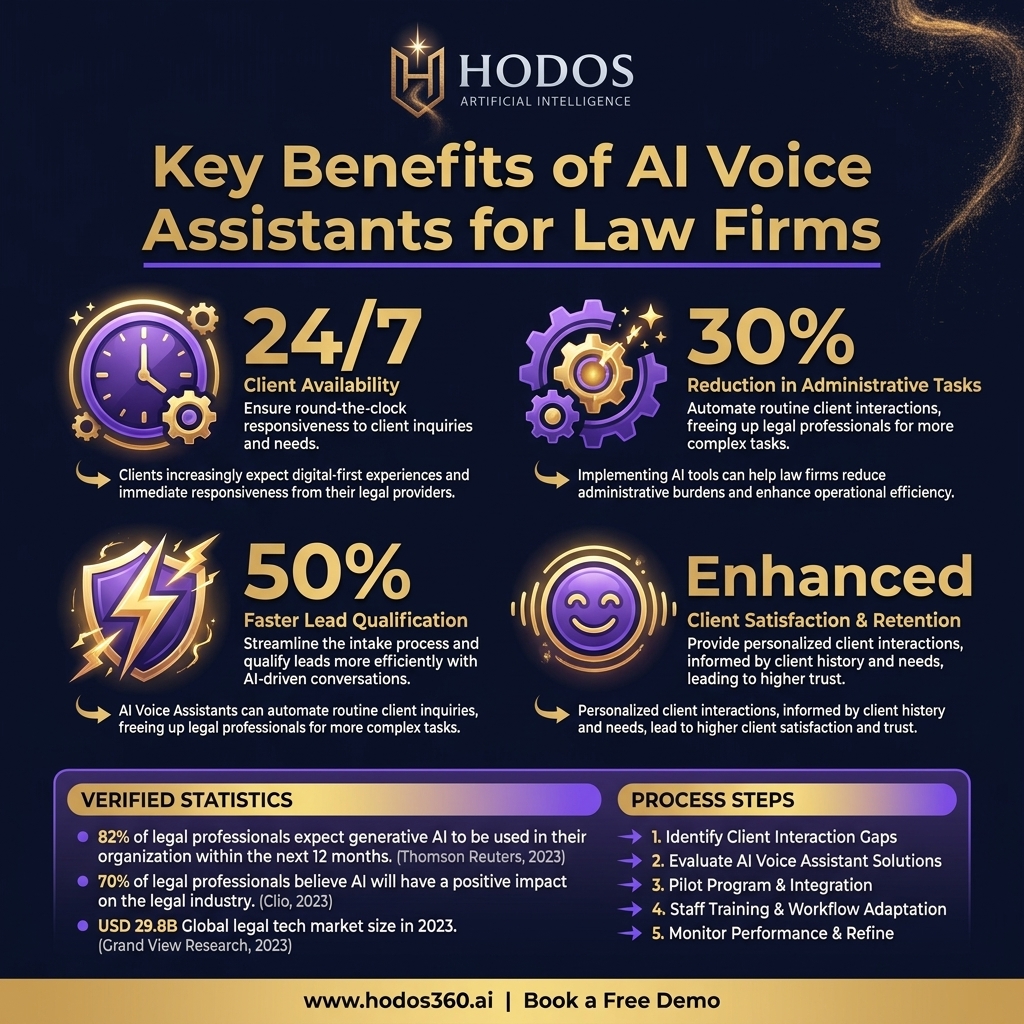
This not only ensures a higher show-up rate for consultations but also frees up administrative staff from the constant back-and-forth of scheduling. Learn more about Claude's Visual Coding: An Essential Guide for Law Firms. Furthermore, the AI can be programmed to trigger automated follow-up sequences based on the outcome of a call – for instance, sending a link to a client portal after an initial consultation or a thank-you note after a case resolution.
This proactive approach ensures that client engagement remains consistent and professional, reinforcing the firm’s commitment to excellent service at every stage of the legal journey.
Navigating Ethical AI in Client Communications: Data Privacy and Professional Responsibility
As law firms increasingly embrace AI Voice Assistants, navigating the ethical implications, particularly concerning data privacy and professional responsibility, becomes paramount. The legal profession is bound by strict rules regarding client confidentiality and the safeguarding of sensitive information. ABA Model Rule 1.6 on Confidentiality of Information mandates that lawyers shall not reveal information relating to the representation of a client unless the client gives informed consent, or the disclosure is impliedly authorized.
This rule extends to how technology handles client data. Firms must ensure that any AI solution they deploy adheres to the highest standards of data security, encryption, and privacy compliance, including regulations like GDPR or CCPA, depending on their jurisdiction and client base.
Firms must conduct thorough due diligence when selecting AI providers, scrutinizing their data handling policies, security protocols, and compliance certifications.
The ethical responsibility to protect client data ultimately rests with the law firm. Learn more about Agentic AI Unleashed: 2026's Power in Legal Work. This includes understanding where data is stored, how it is processed, and who has access to it. CTOs like OpenAI's Mira Murati and Anthropic's Dario Amodei consistently emphasize the need for robust security and ethical AI development.
For law firms, this means not only leveraging the capabilities of AI Voice Assistants but also meticulously managing the risks associated with processing highly sensitive legal information. Transparency with clients about the use of AI in communications, and obtaining informed consent where appropriate, are crucial steps in maintaining trust and upholding professional obligations.
Ensuring Compliance and Data Security
To ensure compliance and robust data security when implementing AI Voice Assistants, law firms must adopt a multi-faceted approach. This begins with selecting AI platforms that are specifically designed for the legal industry, offering enterprise-grade security features, end-to-end encryption, and clear data residency policies. Firms should implement strict internal protocols for AI usage, including regular audits and employee training on data privacy best practices.
Furthermore, contractual agreements with AI vendors must explicitly address data ownership, confidentiality, and liability. The Federal Rules of Civil Procedure, particularly regarding e-discovery, also implicitly place a burden on firms to manage electronically stored information securely. By prioritizing secure infrastructure and ethical governance, law firms can confidently leverage AI Voice Assistants to enhance client service without compromising their professional responsibilities or client trust.
The objective is to harness innovation responsibly, ensuring that technological advancement aligns with the core ethical tenets of the legal profession.

The Future of Legal Practice: Empowering Attorneys with Intelligent Client Interactions
The integration of AI Voice Assistants into legal practice is not merely an incremental improvement; it represents a fundamental shift in how law firms operate and interact with their clientele. This technology empowers attorneys by offloading repetitive, time-consuming administrative tasks, allowing them to focus on the complex legal analysis, strategic thinking, and personalized client counseling that truly define their profession.
Firms that embrace these intelligent tools are poised to achieve higher levels of efficiency, greater client satisfaction, and ultimately, enhanced profitability. The narrative is clear: AI is not replacing lawyers but augmenting their capabilities, making them more effective, responsive, and competitive in a rapidly evolving market.
By integrating advanced AI Voice Assistants into their operations, law firms are not just adopting new technology; they are making a strategic investment in their future, ensuring they remain competitive, client-centric, and highly efficient in an increasingly digital world. The path forward for legal professionals is clear: embrace intelligent client engagement to build stronger relationships and achieve sustained growth.
This is the new standard, and firms equipped with robust AI Voice Assistants will lead the charge. HODOS 360 stands at the forefront of this transformation, offering comprehensive AI-powered solutions that empower law firms to thrive in this new era of intelligent legal practice.
Frequently Asked Questions
What are AI Voice Assistants for law firms?+
AI Voice Assistants are sophisticated AI-powered systems designed to handle client communications for law firms. They can answer calls, qualify leads, book appointments, and provide real-time context by integrating with CRM and case management systems. Unlike basic chatbots, they offer intelligent, personalized interactions that improve efficiency and client satisfaction, ensuring 24/7 availability and consistent service quality for potential and existing clients.
How do AI Voice Assistants improve client intake?+
AI Voice Assistants significantly streamline client intake by automating initial screening, gathering essential client information, and conducting preliminary conflict checks. They can ask qualifying questions to determine case viability, create new client records in the CRM, and even initiate document automation. This process frees up legal staff, ensuring attorneys engage with pre-qualified leads, saving valuable time and increasing conversion rates for the firm.
Can AI Voice Assistants handle multilingual client interactions?+
Yes, advanced AI Voice Assistants are equipped with multilingual support capabilities, allowing them to communicate effectively with clients in various languages. This feature is crucial for law firms serving diverse communities, ensuring that language barriers do not hinder access to legal services or compromise the quality of client engagement. Multilingual support expands a firm's reach and enhances its ability to serve a broader client base seamlessly.
What are the data privacy considerations for using Voice AI in law firms?+
Data privacy is a paramount concern. Law firms must ensure AI Voice Assistants comply with strict confidentiality rules (e.g., ABA Model Rule 1.6) and data protection regulations like GDPR or CCPA. This requires selecting AI providers with robust security, end-to-end encryption, and transparent data handling policies. Firms must also educate staff, conduct regular audits, and obtain informed client consent when appropriate to maintain trust and ethical standards.
How does real-time context benefit law firms?+
Real-time context allows AI Voice Assistants to instantly access a client's complete history from the firm's CRM and case management systems during a call. This enables personalized greetings, immediate understanding of their inquiry (e.g., case status, billing), and proactive support. For law firms, this means more efficient, informed, and satisfying client interactions, reducing repetition, improving client trust, and freeing attorneys to focus on complex legal work.