

Essential AI Legal Solutions: Freshfields' Gemini Integration
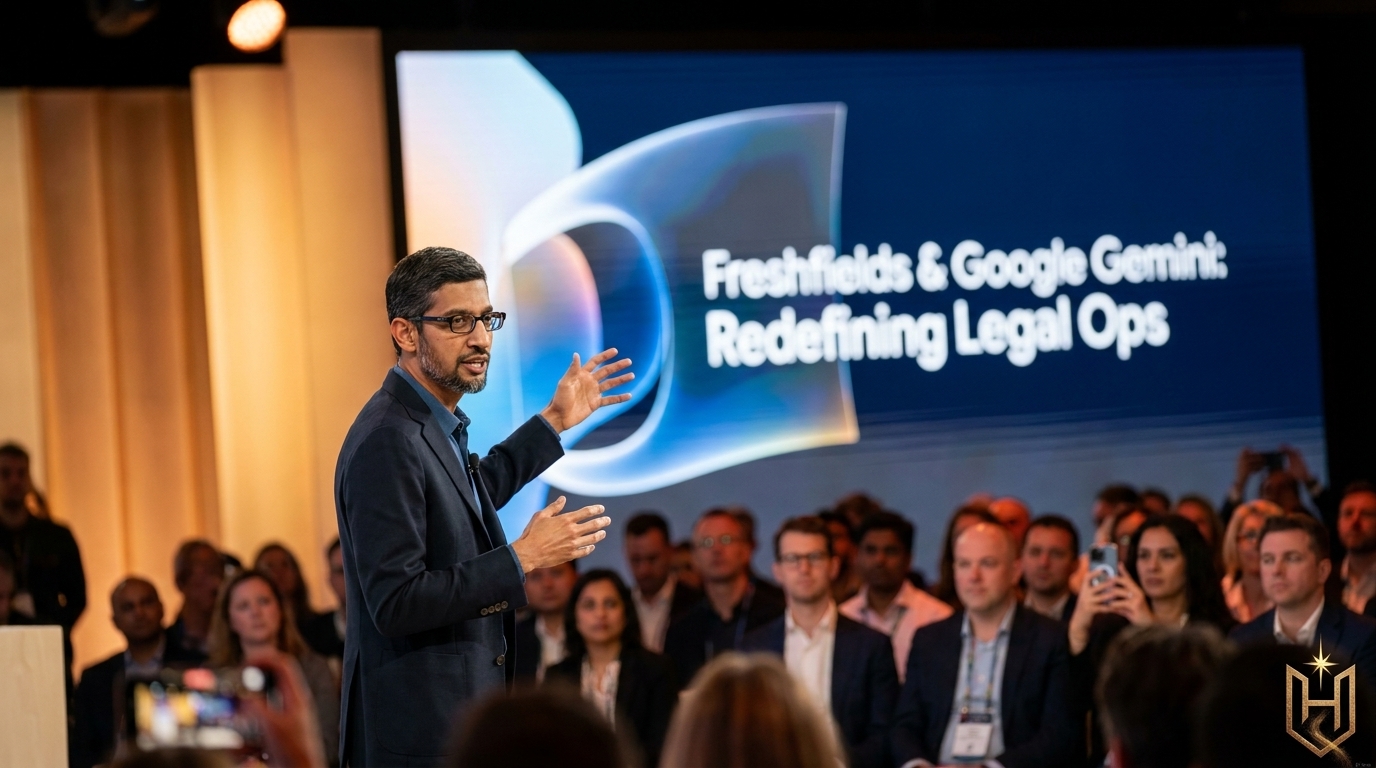
The legal industry is in the midst of a profound transformation, spearheaded by the rapid evolution of artificial intelligence. A recent seismic shift came from Freshfields Bruckhaus Deringer, the global legal giant, announcing the widespread integration of Google Gemini across its global operations, impacting over 5,000 staff.
This isn't merely an incremental update; it marks a pivotal moment in the adoption of advanced AI legal solutions, underscoring a strategic imperative that law firms worldwide can no longer ignore. This move by a firm of Freshfields' stature sends a clear signal: AI is no longer a futuristic concept but a present-day necessity for competitive advantage and operational excellence.
For years, the legal sector has grappled with the tension between its storied traditions and the relentless pace of technological advancement. While some firms cautiously explored early-stage AI tools for specific tasks like e-discovery, the integration of a powerful, versatile large language model like Google Gemini into the core fabric of a global firm’s operations represents a leap forward.
This bold step by Freshfields echoes similar strategic investments seen across the industry, such as Allen & Overy's widely publicized partnership with Harvey AI, a generative AI platform co-founded by Gabriel Pereyra and C.J. Adams, demonstrating a clear trend toward deep AI integration to enhance legal service delivery.
This development is more than just a headline for 'Big Law'; it serves as a powerful blueprint for firms of all sizes. The ability to harness sophisticated AI legal solutions to streamline workflows, manage vast quantities of data, and provide more agile, insightful client services is becoming non-negotiable.
As the legal landscape grows increasingly complex, firms that embrace integrated AI platforms will be better positioned to navigate challenges, unlock efficiencies, and drive innovation. This article delves into the implications of Freshfields' strategic move and explores how such advanced AI integration can redefine legal practice for every firm.
Ready to explore the transformative power of AI in your firm? [Discover How HODOS 360 Can Elevate Your Legal Practice]
The Strategic Imperative: Why Global Firms Embrace AI Legal Solutions
The decision by Freshfields to embed Google Gemini so deeply into its operations is a testament to the undeniable pressures and opportunities facing the modern legal sector. Global firms, in particular, are under immense pressure to deliver more value, faster, and at a lower cost, all while navigating an ever-expanding universe of legal information.
Clients demand efficiency, transparency, and innovative solutions that go beyond traditional legal advice. This environment compels firms to seek out advanced AI legal solutions that can act as force multipliers, augmenting human capabilities rather than merely automating simple tasks. The competitive landscape is fierce, with firms like Clifford Chance, Linklaters, and Latham & Watkins also making significant investments in their own AI and digital transformation initiatives, creating an arms race for technological superiority.
Julian Long, Freshfields' Global Head of Legal Operations, has consistently highlighted the strategic importance of technology in meeting client expectations and enhancing operational agility. While specific quotes on the Gemini integration are still emerging, the firm's long-standing commitment to innovation, including its 'Freshfields Lab' initiative, clearly paved the way for such a comprehensive rollout.
This isn't just about saving money; it's about competitive differentiation. According to a 2023 report by the McKinsey Global Institute, AI has the potential to boost global productivity by 1.2-1.7% annually across various industries, a figure that resonates deeply within the labor-intensive legal sector. Learn more about AI Web Development: Revolutionizing Law Firm Websites in 2026.
For law firms, this translates to hundreds of thousands of billable hours freed up for higher-value strategic work.
Moreover, the sheer volume of legal data—from case law and statutes to client documents and transactional records—has become unmanageable through traditional means. AI-powered platforms, especially those leveraging advanced large language models like Gemini, offer an unparalleled ability to process, analyze, and synthesize this information at scale.
This capability is critical for everything from due diligence in multi-billion dollar mergers to identifying subtle precedents in complex litigation. The goal is not just to do things faster, but to do them with greater accuracy and insight, enabling lawyers to focus on the nuanced legal strategy that only human expertise can provide.
Freshfields' move signals a clear shift from experimental AI adoption to enterprise-wide integration, aiming for a unified, intelligent workspace. This approach allows for a seamless flow of information and AI-driven insights across different practice areas and geographical locations, fostering a truly collaborative and efficient global legal team.
The firm's commitment to rolling out Gemini with Google Workspace to over 5,000 staff globally indicates a comprehensive strategy to embed AI into daily operations, from communication and document creation to advanced analytical tasks, positioning them at the forefront of legal technology innovation.
Beyond Document Review: Gemini's Impact on Bespoke Solutions
While early legal AI applications often focused on discrete tasks like document review and e-discovery, the integration of Google Gemini by Freshfields highlights a more sophisticated trend: the development of bespoke legal solutions powered by general-purpose LLMs. This means tailoring AI capabilities to specific, complex legal workflows that go far beyond simple keyword searches or contract comparisons.
Imagine AI agents trained on proprietary firm knowledge and client data, capable of drafting nuanced legal arguments, identifying regulatory compliance risks across jurisdictions, or even predicting litigation outcomes based on vast datasets.
This evolution is transforming how firms approach complex legal challenges. Instead of generic AI tools, firms are now building customized applications that leverage the foundational power of models like Gemini to create highly specialized legal assistants.
Learn more about Essential AI Website Builder Guide for Law Firms. This approach allows for greater precision, relevance, and ultimately, a deeper integration of AI into the strategic core of legal practice. Firms are moving towards multi-agent AI strategies, where different AI models collaborate to tackle multifaceted legal problems, a vision that pioneers like Harvey AI's founders have championed, demonstrating the profound potential when sophisticated AI meets specific legal needs.
Navigating the Integration Landscape: Challenges and Best Practices
The journey to integrate advanced AI legal solutions on an enterprise scale is fraught with challenges, even for a firm as resourced as Freshfields. One of the foremost concerns revolves around data privacy and security. Handling sensitive client information with AI requires ironclad protocols, robust encryption, and strict adherence to global data protection regulations like GDPR and CCPA.
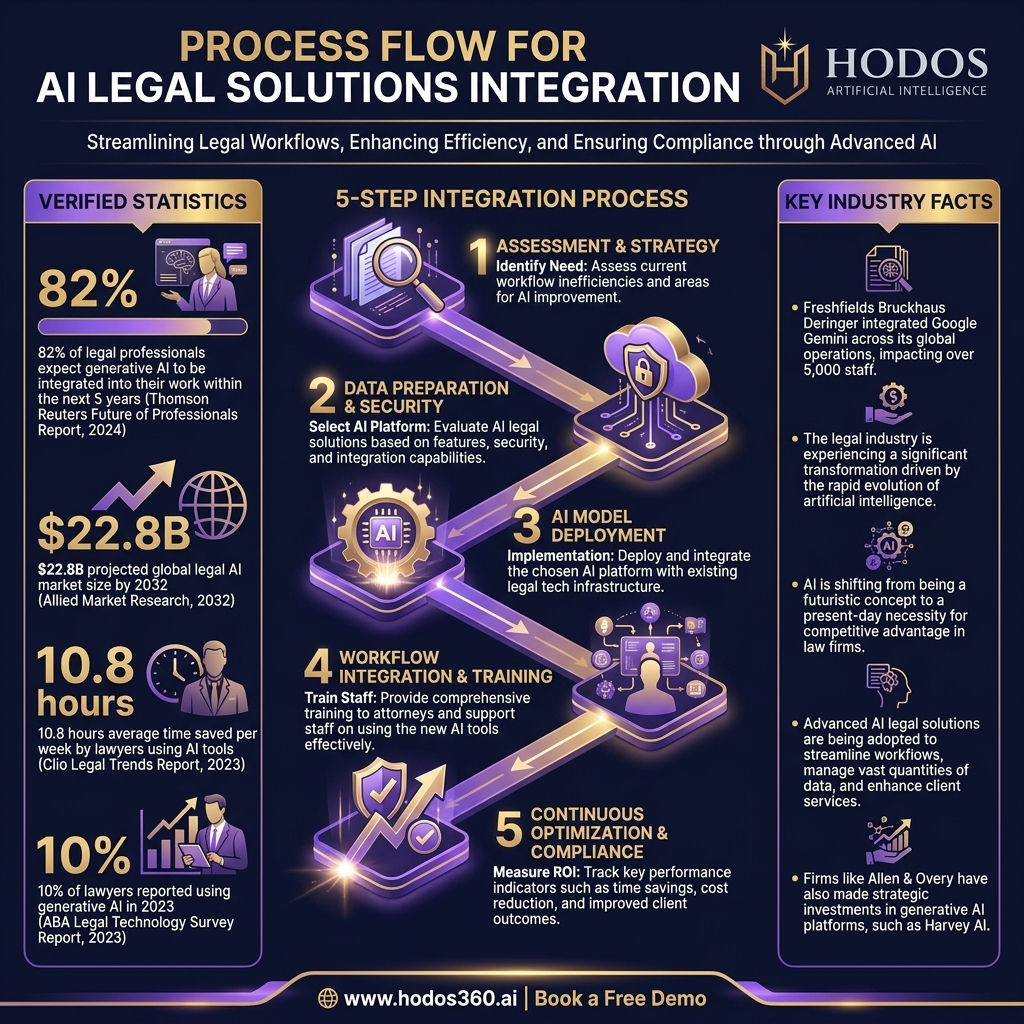
The ethical implications are equally profound; ensuring client confidentiality, mitigating algorithmic bias, and maintaining the integrity of legal advice are paramount. The ABA Model Rule 1.6 (Confidentiality of Information) explicitly requires lawyers to protect client data, a duty that extends to understanding and vetting the security measures of any AI tools utilized.
Firms must invest heavily in secure cloud infrastructure, such as Google Cloud, which offers enterprise-grade security features, and conduct rigorous due diligence on third-party AI providers.
Another significant hurdle is the sheer logistical complexity of rolling out new technology to thousands of staff across diverse jurisdictions.
This isn't just an IT project; it's a massive change management undertaking. It requires comprehensive training programs, clear communication strategies, and a culture that embraces experimentation and continuous learning. As Professor Daniel Martin Katz from Illinois Tech Chicago-Kent College of Law often emphasizes, successful AI integration is as much about human adaptation as it is about technological deployment.
Lawyers need to understand not just *how* to use the tools, but *how* the tools work, their limitations, and their ethical boundaries. Learn more about AI Legal Tech Boom 2026: Unlocking Billions in Valuation. This necessitates a shift in legal education and professional development, equipping legal professionals with 'AI literacy' to effectively leverage these new capabilities.
Furthermore, the legal and regulatory landscape surrounding AI is still evolving. The recent enforcement of the EU AI Act, for instance, sets a precedent for how AI systems, particularly those deemed 'high-risk,' will be regulated. Firms must stay abreast of these developments and ensure their AI deployments are compliant, a task that requires continuous monitoring and adaptation.
The concept of 'human-in-the-loop' is critical here; AI should assist, not replace, human judgment, especially in high-stakes legal decisions. This means building workflows where AI generates insights or drafts, but human lawyers always review, refine, and take ultimate responsibility for the advice provided.
Finally, the technical integration itself presents complexities.
Merging AI models like Google Gemini with existing case management systems, document automation platforms, and communication tools requires sophisticated API development and robust cloud infrastructure. Firms need skilled data scientists, software engineers, and legal technologists to build and maintain these integrated systems. The choice of partners, like Google Cloud for Freshfields, becomes crucial for scalability, reliability, and access to cutting-edge AI research.
This holistic approach ensures that AI doesn't operate in a silo but enhances the entire legal value chain, transforming raw data into actionable intelligence and optimizing every facet of legal operations.
The Future of Legal Operations: AI-Powered Workflows and Efficiency Gains
The true promise of integrated AI legal solutions lies in their capacity to fundamentally redesign legal operations, driving unprecedented efficiency gains and allowing legal professionals to focus on higher-value, strategic work. Imagine a future where manual, repetitive tasks are virtually eliminated, freeing up lawyers and paralegals from the drudgery of administrative burdens.
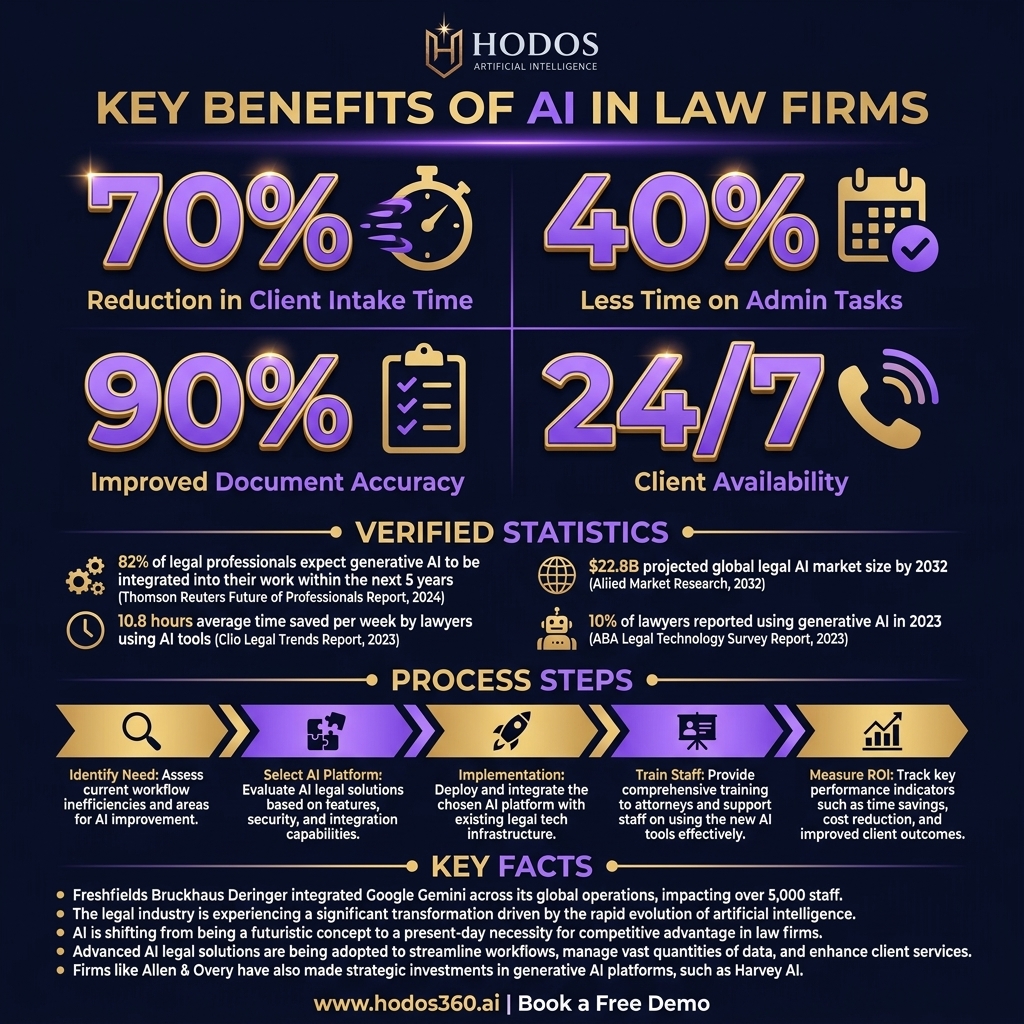
From client intake to case closure, AI can automate and optimize every step. For instance, intelligent client intake systems can rapidly process new client information, perform conflict checks, and generate initial engagement letters, reducing onboarding time by as much as 70%. Document automation, powered by generative AI, can draft contracts, pleadings, and briefs in minutes, not hours, while ensuring consistency and accuracy across all firm-generated documents.
This level of automation is not just about speed; it's about reducing human error and ensuring compliance, a critical factor in a profession where precision is paramount.
Beyond automation, AI offers powerful analytical capabilities. Predictive analytics can forecast litigation outcomes, assess the success probability of different legal strategies, and even optimize billing and resource allocation.
By analyzing historical data, AI can identify patterns that humans might miss, offering insights into client profitability, lawyer utilization, and project timelines. A Thomson Reuters report highlighted that legal professionals spend an average of 40% of their time on administrative tasks; AI legal solutions aim to drastically reduce this figure, allowing lawyers to dedicate more time to complex problem-solving, client counseling, and business development.
This shift not only improves firm profitability but also enhances job satisfaction for legal staff, who can engage in more intellectually stimulating work.
The integration of AI also leads to a more proactive legal practice. Learn more about AI Settlement Rates: An Essential Guide to Maximizing Outcomes.
AI-powered compliance monitoring systems can continuously scan for regulatory changes and flag potential risks before they escalate, providing firms with a crucial advantage in a dynamic regulatory environment. In case management, AI can prioritize tasks, identify critical deadlines, and suggest optimal pathways for resolution, ensuring that no detail is overlooked and every case progresses efficiently.
This level of operational intelligence transforms a reactive legal service into a proactive, strategic partnership with clients, positioning the firm as an indispensable advisor rather than just a legal service provider. Transform your firm's efficiency with intelligent automation. [Explore HODOS 360's AI Law Firm Management System Today]
The benefits extend to every facet of a law firm's daily operations, creating a truly integrated and intelligent ecosystem.
The goal is to move beyond mere automation to intelligent augmentation, where AI acts as a sophisticated co-pilot, enhancing human capabilities and decision-making. This holistic approach ensures that the firm remains competitive, agile, and client-focused in an increasingly complex and technologically driven legal market. Firms that embrace this vision are not just adopting new tools; they are fundamentally rethinking their operational models to unlock new levels of performance and service delivery.
- ✓Automated Case Prioritization: AI analyzes case complexity, deadlines, and potential impact to help firms allocate resources effectively.
- ✓Predictive Billing & Cost Analysis: Algorithms forecast project costs and client profitability, enabling more accurate budgeting and transparent billing.
- ✓Intelligent Client Intake & Onboarding: AI streamlines data collection, conflict checks, and initial document generation, accelerating the client journey.
- ✓Dynamic Document Generation & Review: Generative AI drafts, reviews, and edits legal documents, ensuring consistency and compliance with firm standards.
- ✓AI-Enhanced Legal Research: AI quickly sifts through vast legal databases to find relevant precedents, statutes, and scholarly articles, dramatically cutting research time.
- ✓Optimized Resource Allocation: AI helps match the right legal professionals to projects based on expertise, availability, and workload.
- ✓Compliance Monitoring & Risk Assessment: Continuous scanning of regulatory changes and internal data to proactively identify and mitigate compliance risks.
The Evolving Role of the Legal Professional in an AI-Driven World
The integration of advanced AI legal solutions fundamentally reshapes, but does not diminish, the role of the legal professional. Rather than replacing lawyers, AI empowers them to operate at a higher level, shifting their focus from rote tasks to strategic thinking, complex problem-solving, and empathetic client counseling.
Lawyers are evolving into 'AI supervisors' or 'prompt engineers,' responsible for guiding AI tools, interpreting their outputs, and applying human judgment and ethical reasoning to ensure the advice is sound and client-centric. This transition requires a commitment to continuous learning and adaptation, embracing new skills in data literacy, computational thinking, and the ethical deployment of AI.
This evolution is not a threat but an opportunity. Learn more about AI for Small Law Firms: The Essential Hub for Growth. By offloading monotonous work to AI, lawyers can dedicate more time to developing deeper client relationships, engaging in innovative legal strategy, and focusing on the human elements of law that AI cannot replicate—negotiation, advocacy, and emotional intelligence.
The legal professional of tomorrow will be a hybrid expert, leveraging technology to amplify their unique human capabilities and deliver unparalleled value.
Beyond the Back Office: AI's Broad Impact on Law Firm Growth
While much of the focus on AI legal solutions often centers on internal operational efficiencies, the transformative power of AI extends far beyond the back office, profoundly impacting a law firm's ability to attract, engage, and retain clients. In today's competitive market, a firm's growth is inextricably linked to its digital presence and client acquisition strategies.
This is where AI moves from being a productivity tool to a potent engine for business development and market expansion. Firms that strategically leverage AI in their client-facing activities can create a significant competitive edge, reaching new audiences and delivering personalized experiences that resonate deeply.
Consider the realm of legal marketing. An AI Marketing Platform can revolutionize how firms connect with prospective clients. AI can generate highly targeted content, from blog posts and articles that answer specific legal questions to engaging social media campaigns tailored to different client segments. Beyond content, AI-powered video creation tools can produce professional, personalized video messages that explain complex legal concepts or introduce firm services, significantly enhancing engagement.
Social media automation ensures consistent brand presence and interaction, while advanced analytics and ROI tracking provide clear insights into marketing effectiveness, allowing firms to optimize their spend and focus on channels that yield the highest returns. This intelligent approach to marketing is crucial for attracting the modern client who expects digital accessibility and personalized communication.
Client engagement and service delivery are also being redefined by AI. Learn more about Legal AI Adoption: An Essential Roadmap for Law Firms. AI Voice Assistants, for example, offer 24/7 phone answering capabilities, ensuring that no potential client call goes unanswered, regardless of business hours.
These assistants can perform initial lead qualification, gather essential information, book appointments directly into lawyers' calendars, and even provide multilingual support, catering to a diverse client base. The ability to route calls intelligently ensures that clients are connected with the right expert immediately, providing a seamless and professional first impression.
This continuous availability and efficiency can dramatically improve client satisfaction and convert more inquiries into retained cases.
Finally, a firm's digital storefront—its website and mobile presence—is its most powerful marketing asset. Web & Mobile Development powered by AI can create sophisticated, responsive websites that are not only aesthetically pleasing but also highly functional and optimized for search engines.
AI-powered website builders can leverage high-converting templates and integrate SEO optimization from the ground up, ensuring that the firm ranks prominently in search results for relevant legal queries. This comprehensive digital strategy, driven by AI, transforms a firm's online presence from a static brochure into a dynamic lead generation and client engagement hub, ultimately fueling sustainable growth and market leadership in an increasingly digital world.
Cultivating a Culture of Innovation: Lessons from Industry Leaders
The successful integration of AI legal solutions is not solely a technological undertaking; it equally hinges on cultivating a firm-wide culture of innovation. Industry leaders like Freshfields understand that leadership buy-in is paramount. Partners and senior management must champion AI initiatives, communicate their strategic importance, and provide the necessary resources and training.
This top-down commitment fosters an environment where experimentation is encouraged, and fear of change is mitigated. Firms that establish innovation hubs or dedicated legal tech teams, much like 'Freshfields Lab,' often see greater success in piloting and scaling new technologies.
Moreover, fostering cross-functional collaboration between legal professionals, IT specialists, and data scientists is essential.
Events like LegalTech NYC highlight the importance of these interdisciplinary dialogues in shaping the future of legal practice. By embracing a culture that values continuous improvement and technological literacy, firms can ensure that AI becomes an integral, rather than an isolated, component of their long-term strategy, driving sustained growth and competitive advantage.

Key Takeaways and Next Steps for Your Firm
Freshfields' comprehensive integration of Google Gemini across its global operations is a powerful affirmation that AI legal solutions are no longer optional but a strategic imperative for law firms aiming for sustained success and competitive advantage. The era of hesitant, piecemeal AI adoption is giving way to a new paradigm of integrated, intelligent legal ecosystems.
This shift isn't just about cutting costs; it's about unlocking unprecedented efficiencies, enhancing the quality and speed of legal service delivery, and fundamentally redefining the value proposition that law firms offer their clients. From streamlining internal workflows to revolutionizing client acquisition and engagement, AI is the engine driving the next generation of legal practice.
For law firm owners and legal professionals, the takeaway is clear: develop a strategic, phased approach to AI integration. Start by identifying core operational areas where AI can deliver the most immediate impact, such as client intake, document automation, or case management. Prioritize solutions that are not only powerful but also scalable, secure, and designed with the unique ethical and regulatory demands of the legal industry in mind.
The goal is to build an integrated suite of tools that work harmoniously, rather than a collection of disparate technologies, to ensure maximum efficiency and a seamless user experience.
Embracing AI is about future-proofing your firm. It's about empowering your legal teams to focus on the intricate, high-value work that only human expertise can provide, while AI handles the heavy lifting of data processing and routine tasks.
By strategically investing in sophisticated AI legal solutions, firms of all sizes can enhance their operational efficiency, elevate their client service, and position themselves as leaders in a rapidly evolving legal landscape. Don't get left behind. [Schedule a Free Consultation with HODOS 360 to Future-Proof Your Firm]
Frequently Asked Questions
What is Google Gemini integration in law firms?+
Google Gemini integration in law firms refers to embedding Google's advanced large language model, Gemini, into various legal workflows and systems. This includes leveraging its capabilities for document analysis, content generation, legal research, and enhancing internal communication within platforms like Google Workspace, as demonstrated by Freshfields' recent adoption to streamline operations for over 5,000 staff.
How does AI improve law firm management?+
AI significantly improves law firm management by automating routine tasks like client intake, billing, and document generation. It enhances case management through intelligent workflow automation, provides predictive analytics for resource allocation, and streamlines administrative processes. Platforms like HODOS 360's AI Law Firm Management System offer comprehensive solutions to boost efficiency, reduce costs, and improve overall operational control.
What are the ethical considerations of AI in legal practice?+
Ethical considerations for AI in legal practice include ensuring data privacy and confidentiality (adhering to ABA Model Rule 1.6), mitigating algorithmic bias, maintaining human oversight and accountability for AI-generated outputs, and understanding the limitations of AI. Lawyers must also uphold competence (ABA Model Rule 1.1) by understanding the technology they use and its implications for client representation.
Can small and mid-sized firms benefit from AI legal solutions?+
Absolutely. Small and mid-sized firms can derive immense benefits from AI legal solutions by leveling the playing field with larger competitors. AI can automate administrative tasks, provide sophisticated legal research, enhance marketing efforts, and offer 24/7 client support, all of which are critical for growth without requiring a massive internal IT department. Scalable AI platforms make advanced technology accessible to all firms.
How can AI enhance a law firm's marketing efforts?+
AI enhances legal marketing by enabling targeted content generation for blogs and social media, creating personalized video pitches, automating social media scheduling, and providing advanced analytics to track ROI. This allows firms to optimize marketing spend, attract high-quality leads, and build a stronger online presence efficiently. HODOS 360's AI Marketing Platform provides tools for these transformative strategies.
What role do AI voice assistants play in legal services?+
AI voice assistants revolutionize legal services by offering 24/7 phone answering, ensuring no potential client call is missed. They can perform lead qualification, book appointments, offer multilingual support, and intelligently route calls to the appropriate department or lawyer. This significantly improves client experience, captures more leads, and frees up staff for more complex tasks, enhancing overall client engagement.