
Essential AI Website Security: Protecting Law Firms from Cyber Threats
The digital landscape, once a frontier of opportunity, has rapidly become a battleground for cybersecurity. For law firms, whose very existence hinges on trust and the inviolability of client data, this shift presents an existential challenge. Consider the recent alarming reports, such as the one from Security Boulevard on May 7, 2026, detailing how a fake Claude AI website was weaponized to deliver a new Beagle Windows backdoor via sophisticated malvertising.
This incident isn't just another headline; it's a stark reminder of the escalating sophistication of cyber threats targeting even the most tech-savvy users and, by extension, the professional services firms that rely on cutting-edge AI tools.
The implications for legal practices are profound. In an industry where a single data breach can lead to irreparable reputational damage, severe financial penalties, and the erosion of client trust, the imperative for robust AI website security has never been clearer.
The attackers behind the fake Claude AI site leveraged the burgeoning interest in advanced AI models, tricking users into downloading what appeared to be a legitimate application. This type of social engineering, combined with advanced malware delivery, underscores a critical vulnerability: the human element interacting with the digital frontier.
Law firms, constantly handling sensitive information and often operating with complex digital infrastructures, are prime targets for such sophisticated attacks.
This article delves into the anatomy of these modern cyber threats, examining how vulnerabilities in web development and digital user interaction can be exploited. We will explore the critical measures law firms must adopt to fortify their digital presence, moving beyond reactive defense to proactive, intelligent security strategies.
From understanding the nuances of malware distribution to implementing advanced AI-powered website building and monitoring, securing your firm's online assets is no longer optional—it's foundational to maintaining competence and client trust in the digital age. The lessons from the fake Claude AI incident serve as a powerful catalyst for re-evaluating and strengthening your firm's entire cybersecurity posture.
The Evolving Threat Landscape: Malvertising and AI Impersonation
The incident involving the fake Claude AI website is a textbook example of how cybercriminals are weaponizing trust in emerging technologies. Anthropic's Claude, developed by a team including former OpenAI researchers like Dario Amodei, has gained significant traction as a competitor to OpenAI's ChatGPT. Its growing popularity made it an attractive target for impersonation.
The attackers meticulously crafted a convincing imitation of the official Claude website, complete with branding and user interface elements, to lure unsuspecting users searching for the legitimate AI assistant. This fraudulent site then acted as a conduit, delivering the Beagle backdoor to Windows systems through a technique known as DLL sideloading, a sophisticated method that allows malware to masquerade as legitimate software components.
This form of attack, often initiated through malvertising, represents a significant escalation in cyber warfare. Malvertising involves injecting malicious code into legitimate online advertising networks, leading users to deceptive websites without their explicit consent. According to a 2024 report by the ABA's Legal Technology Resource Center, over 30% of law firms experienced a cybersecurity breach, with phishing and malvertising cited as primary vectors.
The ease with which a fake website can be promoted through compromised ad networks makes it a potent tool for attackers, bypassing traditional security measures that focus solely on email-based phishing attempts. Firms must recognize that their digital footprint extends beyond their own website, encompassing every platform where their employees might interact with online content.
What makes the Beagle backdoor particularly insidious is its capability to establish persistent access and exfiltrate sensitive data. Learn more about Voice AI: An Essential Leap for Law Firms' Client Engagement. Once installed, it allows attackers to remotely control the compromised system, potentially accessing client files, financial records, and confidential communications.
For a law firm, such a compromise is catastrophic, violating fundamental ethical duties of client confidentiality and competence, as outlined in ABA Model Rule 1.6 (Confidentiality of Information). The tension between leveraging advanced AI tools for efficiency and ensuring airtight security is a central drama playing out across the legal industry.
Firms like Allen & Overy, which famously partnered with Harvey AI, are at the forefront of this innovation, but even they must contend with the broader implications of a less secure digital ecosystem.
This sophisticated form of digital mimicry and malware deployment underscores a critical vulnerability in the digital supply chain of information.
As more legal professionals integrate AI tools into their daily workflows—from AI-powered legal workflows in case management to AI video creation for marketing—the attack surface expands. The expectation of seamless digital interaction often overshadows the underlying security risks. Firms must therefore cultivate a culture of extreme vigilance, coupled with advanced technological safeguards, to differentiate between legitimate AI resources and malicious impersonations.
The cost of failing to do so, as demonstrated by the Beagle backdoor, far outweighs the investment in robust security infrastructure.
The Beagle Backdoor Exploit: A Deeper Dive
The Beagle backdoor is not merely a generic piece of malware; it represents a new generation of sophisticated persistent threats. Its ability to leverage DLL sideloading means it exploits how legitimate applications load dynamic-link libraries, making it difficult for standard antivirus software to detect. This technique often involves placing a malicious DLL in a location where a legitimate program expects to find a system DLL, tricking the program into loading the malicious code instead.
This covert method allows the malware to execute with the privileges of the legitimate application, often enabling deep system access without raising immediate red flags.
Security researchers at firms like CrowdStrike and Mandiant have consistently warned about the rising prevalence of fileless and stealthy malware techniques.
The Beagle backdoor aligns perfectly with this trend, designed to evade detection and maintain a low profile while gathering information or awaiting further commands. Learn more about AI Adoption: The Ultimate Guide for Law Firm Growth. For law firms, whose systems often contain a treasure trove of privileged and confidential information, such an exploit is a direct threat to their core business.
It highlights the inadequacy of relying solely on signature-based detection methods and emphasizes the need for behavioral analysis and advanced endpoint detection and response (EDR) solutions. The legal industry, often a target due to the high value of its data, needs to move beyond basic cybersecurity hygiene and embrace a proactive, intelligence-led defense strategy.
Fortifying Your Firm's Digital Perimeter: Beyond Basic Protection
In light of incidents like the Beagle backdoor, law firms must re-evaluate and significantly enhance their AI website security and overall digital defense. Simply installing antivirus software and a firewall is no longer sufficient. The modern threat landscape demands a multi-layered, adaptive security posture that anticipates and neutralizes threats before they can compromise sensitive data.
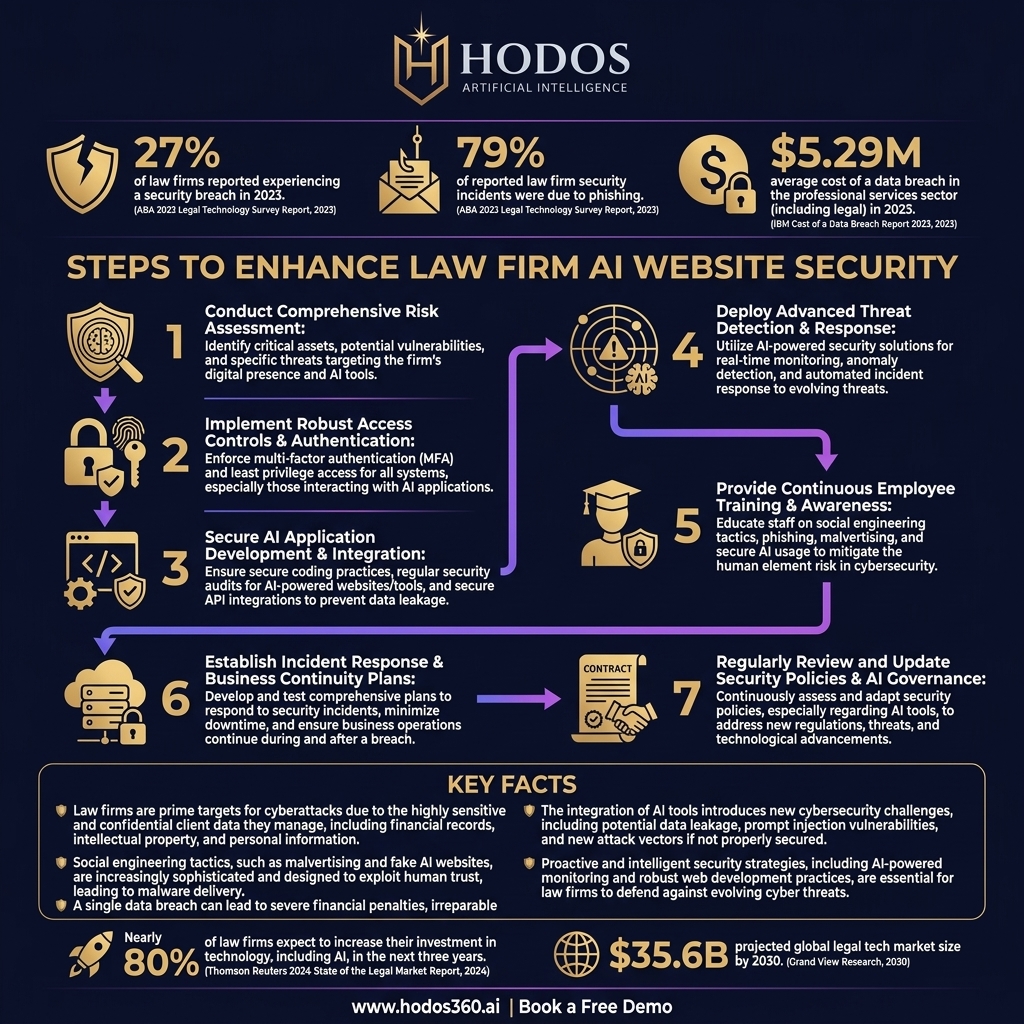
This includes robust endpoint protection, network segmentation, and advanced threat intelligence feeds. Firms must invest in security awareness training that specifically addresses emerging threats like malvertising and AI impersonation, educating every team member—from senior partners to administrative staff—on how to identify and report suspicious digital interactions.
The human element, while often the weakest link, can also be the strongest defense if properly informed and empowered.
The foundation of a secure legal practice in the AI era begins with secure web development. An AI-powered website building platform that prioritizes security from the ground up is essential.
This means secure coding practices, regular vulnerability assessments, and continuous monitoring for anomalies. High-converting templates and responsive design are crucial for client engagement, but they must be built on a bedrock of uncompromised security. Firms should opt for platforms that offer automated security updates, secure hosting environments, and built-in protection against common web vulnerabilities like SQL injection and cross-site scripting (XSS).
This proactive approach, embedded in the very architecture of a firm's digital presence, significantly reduces the attack surface for sophisticated actors.
Furthermore, the principles of zero-trust architecture should be applied across the firm's network. Learn more about AI Websites: Essential for Law Firm Growth & Control.
This means verifying every user and device, regardless of whether they are inside or outside the network perimeter. Multi-factor authentication (MFA) should be mandatory for all systems, especially those accessing client data or sensitive firm information. Regular penetration testing and red team exercises, conducted by independent cybersecurity experts, can uncover hidden vulnerabilities that automated scans might miss.
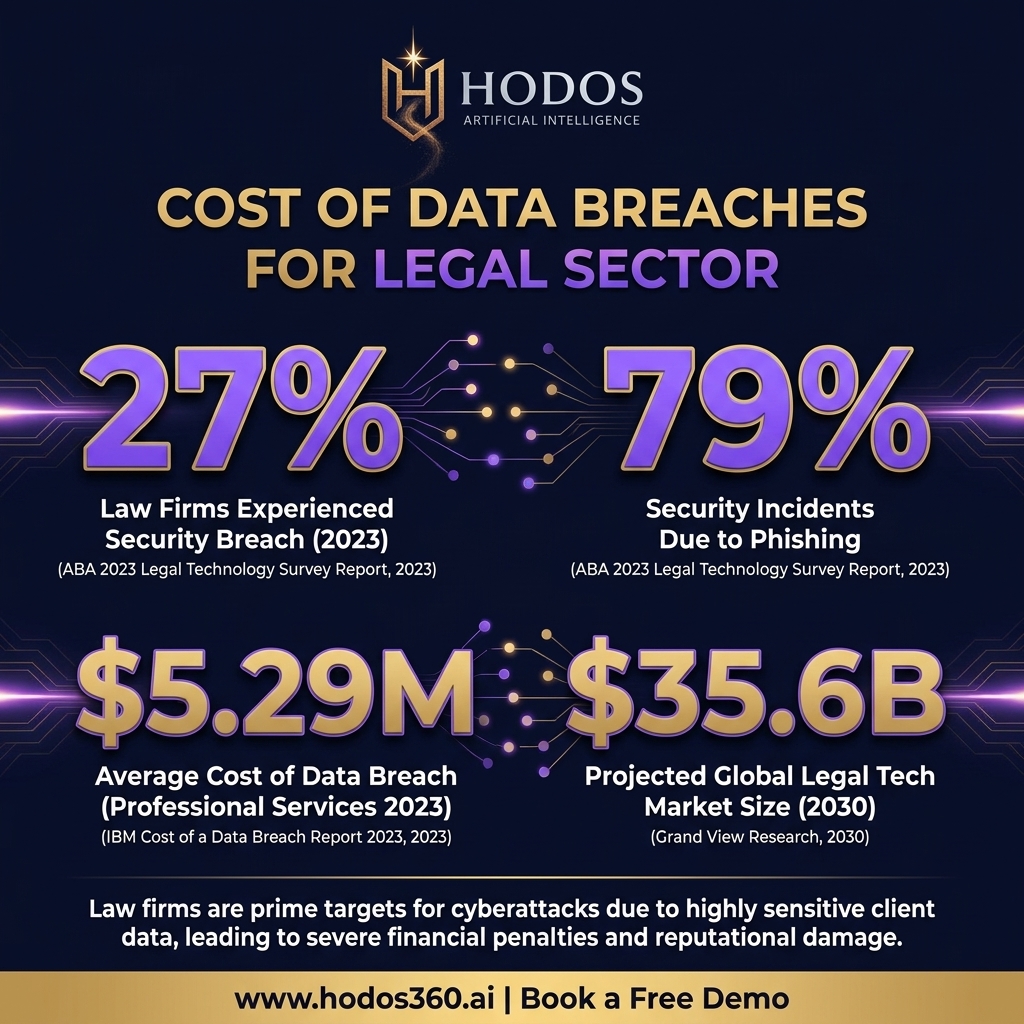
These measures, while requiring investment, are non-negotiable in protecting the integrity and confidentiality of legal work. The cost of a breach, estimated by IBM's 2023 Cost of a Data Breach Report to average $9.48 million for the legal and professional services sector, far outweighs the preventative expenditures.
Beyond technical safeguards, firms must establish clear protocols for incident response. A well-defined plan, tested regularly, ensures that in the event of a breach, the firm can respond swiftly, contain the damage, notify affected parties, and comply with regulatory requirements. This includes adherence to federal and state data breach notification laws, such as those mandated by the FTC's Standards for Safeguarding Customer Information under the Gramm-Leach-Bliley Act.
The ability to demonstrate a proactive and competent response is crucial for mitigating legal liabilities and preserving the firm's reputation. Investing in advanced AI Law Firm Management System with integrated security features can help streamline these processes, ensuring that compliance and security are not afterthoughts but core components of daily operations.
- ✓Implement Multi-Factor Authentication (MFA): Mandate MFA for all internal systems, email, and cloud-based applications to prevent unauthorized access.
- ✓Regular Security Audits & Penetration Testing: Conduct periodic external and internal vulnerability assessments to identify and remediate weaknesses.
- ✓Employee Cybersecurity Training: Educate staff on phishing, malvertising, AI impersonation, and safe browsing habits, emphasizing the 'think before you click' principle.
- ✓Secure Web Development & Hosting: Partner with providers offering AI-powered website building with built-in security features, automated updates, and secure hosting environments.
- ✓Endpoint Detection and Response (EDR): Deploy advanced EDR solutions to monitor, detect, and respond to threats on individual devices in real-time.
- ✓Data Encryption: Encrypt all sensitive client data both in transit and at rest to protect it from unauthorized access.
- ✓Incident Response Plan: Develop and regularly test a comprehensive plan for responding to data breaches, including communication protocols and legal compliance.
Proactive Strategies for Law Firm AI Website Security
The proactive approach to AI website security for law firms extends beyond simply patching vulnerabilities; it involves leveraging intelligent systems to predict and prevent attacks. This is where the power of AI truly comes into play, not just as a tool for legal work, but as a sentinel for digital defense.
Firms should consider adopting AI-driven security solutions that can analyze vast amounts of data, detect subtle anomalies indicative of a breach, and respond autonomously. For instance, AI can be employed to monitor website traffic patterns, identifying unusual spikes or access attempts that might signal a distributed denial-of-service (DDoS) attack or a sophisticated botnet attempting to compromise a firm's digital presence.
This predictive capability moves security from a reactive cost center to a strategic advantage.
Furthermore, AI can significantly enhance the security of a firm's AI Marketing Platform. As law firms increasingly use AI for content generation, social media automation, and AI video creation, the risk of these platforms being compromised or used for malicious purposes grows.
An AI-powered security layer can monitor outbound communications for signs of brand impersonation or phishing attempts originating from within a compromised system. It can also track the authenticity of digital assets, ensuring that marketing materials are not tampered with or replaced by malicious versions. This integrated security approach ensures that every facet of a firm's digital operations, from client intake to marketing outreach, is protected by intelligent oversight.
Another critical area for proactive defense is the security of third-party integrations and supply chain vulnerabilities. As law firms utilize a growing ecosystem of SaaS tools—from case management systems to e-discovery platforms—each integration point represents a potential entry for attackers. Learn more about Legal AI Deployment: The Ultimate Firmwide Strategy for Torys.
Due diligence must extend to vetting the security practices of every vendor. This includes reviewing their SOC 2 reports, understanding their data encryption protocols, and ensuring they have robust incident response capabilities. The Federal Rules of Civil Procedure, particularly Rule 26, emphasize the importance of data integrity and security in e-discovery, making vendor security a legal as well as a practical imperative.
Firms should maintain a comprehensive inventory of all third-party services and conduct regular security reviews, demanding transparency from their technology partners.
The investment in Web & Mobile Development that is inherently secure is paramount. This means using platforms that not only offer AI-powered website building but also integrate advanced security features from design to deployment.
HODOS 360, for instance, focuses on providing secure, responsive design and SEO optimization while embedding cybersecurity best practices into its web and mobile solutions. This ensures that the firm's online face is not only appealing and functional but also resilient against the most sophisticated cyber threats.
The goal is to build a digital fortress, where every brick, from the code to the user interface, is reinforced with security in mind, giving law firms peace of mind as they navigate the complexities of the digital legal world.
Beyond Basic Encryption: Securing Client Communications
While encryption is a fundamental pillar of AI website security, merely encrypting data is no longer enough. The method and strength of encryption, along with the management of encryption keys, are equally critical. For law firms, securing client communications requires end-to-end encryption for all sensitive exchanges, whether via email, secure client portals, or AI Voice Assistants.
These voice assistants, offering 24/7 phone answering and multilingual support, must be built with robust encryption protocols to protect recorded conversations and transcribed data. The use of secure, verifiable communication channels is essential to prevent interception and tampering, safeguarding the attorney-client privilege.
Furthermore, firms should implement secure document sharing platforms that offer granular access controls and audit trails.
Learn more about AI Voice Assistants: Essential for Modern Law Firm Efficiency. This ensures that only authorized individuals can view, edit, or download sensitive files, and every action is logged for accountability. The principle of least privilege should be applied rigorously, granting users only the minimum access necessary to perform their duties.
This approach, combined with regular access reviews, minimizes the risk of internal breaches or unauthorized data exposure. The evolving legal landscape, driven by technological advancements and increasing cyber threats, necessitates a dynamic and comprehensive approach to securing every aspect of client interaction and data management.
The Future of Secure Legal Tech: An Integrated Approach
The future of legal technology, particularly in the realm of AI website security, lies in an integrated, holistic approach that weaves security into the fabric of every digital operation. Firms cannot afford to treat cybersecurity as an afterthought or a separate department; it must be a core competency, reflecting the ethical obligations to protect client information.
The competition among legal tech providers, from established players like Clio to innovative startups like Harvey AI, is driving rapid advancements, but security must remain paramount. As Sam Altman, CEO of OpenAI, frequently emphasizes, the development of powerful AI must be coupled with equally powerful safety and security protocols to ensure responsible deployment.
This integrated approach means leveraging platforms that offer comprehensive solutions, such as HODOS 360's AI Law Firm Management System, which combines case management, billing, client intake, and document automation with embedded security features. Such systems provide a unified, secure environment, reducing the complexity and potential vulnerabilities associated with managing disparate tools.
Learn more about AI Deposition Prep: The Ultimate Guide to Winning Strategies. The ability to manage workflows, client data, and communications within a single, fortified ecosystem significantly enhances a firm's overall security posture, allowing attorneys to focus on legal practice rather than IT management.
Ultimately, the narrative arc of legal tech security is one of continuous adaptation.
The incident with the fake Claude AI website and the Beagle backdoor serves as a vivid illustration of a constant arms race between cyber defenders and attackers. Law firms that embrace this reality and proactively invest in advanced AI website security measures, secure web & mobile development, and comprehensive legal tech solutions will not only protect themselves from devastating breaches but also build a stronger, more resilient foundation for future growth and client trust.
The firms that fail to adapt risk being left behind, not just technologically, but ethically and reputationally.
Embracing a Culture of Cyber Resilience
Cultivating a culture of cyber resilience within a law firm means embedding security consciousness into every daily activity and decision. It’s about fostering an environment where every employee understands their role in safeguarding sensitive data and where technology is seen not just as an enabler, but as a potential vulnerability if not managed correctly.
This includes regular security briefings, incentivizing secure practices, and creating clear channels for reporting suspicious activities without fear of reprisal. A resilient firm is one that not only prevents breaches but also recovers quickly and effectively when incidents inevitably occur. This proactive mindset, combined with the right technological tools, is the ultimate defense against an ever-evolving threat landscape.

Key Takeaways and Next Steps for Law Firms
The recent malvertising attack using a fake Claude AI website to distribute the Beagle Windows backdoor serves as a critical wake-up call for all legal professionals. The sophistication of modern cyber threats demands a comprehensive and proactive approach to AI website security. Law firms must move beyond traditional defenses, embracing advanced AI-powered website building and integrated security solutions to protect their invaluable client data and maintain their professional integrity.
The investment in secure digital infrastructure, continuous staff training, and robust incident response planning is no longer a luxury but a fundamental requirement for ethical and competent practice.
To effectively combat these evolving threats, law firms should immediately review their current cybersecurity protocols, focusing on areas identified as vulnerable, such as third-party integrations, employee digital literacy, and the security of their public-facing digital presence.
Partnering with a legal tech provider that understands the unique security needs of law firms, offering secure web & mobile development alongside AI-powered legal management tools, is crucial. The path to true cyber resilience involves a commitment to continuous improvement, ensuring that your firm remains several steps ahead of malicious actors.
Your firm's reputation and client trust depend on it.
Frequently Asked Questions
What is the Beagle backdoor and how does it affect law firms?+
The Beagle backdoor is a new type of Windows malware delivered via malvertising, often through fake AI websites like the fraudulent Claude AI site. It exploits DLL sideloading to gain persistent access to a system, potentially exfiltrating sensitive client data and firm information. For law firms, this could lead to severe data breaches, reputational damage, and violations of client confidentiality, underscoring the critical need for advanced AI website security measures.
How can law firms identify and protect against fake AI websites and malvertising?+
Law firms can protect themselves by verifying the legitimacy of AI tools through official developer channels and trusted sources. Implement robust email and web filtering, and provide regular staff training on identifying phishing, suspicious links, and malvertising. Advanced endpoint detection and response (EDR) solutions and AI-powered website security monitoring can also detect and block malicious content before it compromises systems.
What role does AI play in enhancing law firm website security?+
AI plays a crucial role in enhancing law firm website security by enabling proactive threat detection, behavioral analysis, and autonomous response. AI-powered systems can monitor web traffic for anomalies, identify sophisticated malware like the Beagle backdoor, and secure AI-powered website building platforms from initial development. This helps firms stay ahead of evolving cyber threats and protect their digital presence effectively.
What are the ethical obligations for law firms regarding client data security?+
Law firms have significant ethical obligations to protect client data. ABA Model Rule 1.6 mandates confidentiality, requiring competent measures to safeguard client information. This includes implementing robust cybersecurity protocols, conducting due diligence on tech vendors, and having an incident response plan. Failure to protect data can lead to professional discipline, legal liabilities, and irreparable damage to client trust and firm reputation.
How can HODOS 360 help law firms improve their AI website security and overall digital defense?+
HODOS 360 offers comprehensive solutions that embed security into every service. Our Web & Mobile Development provides AI-powered website building with secure, responsive design and SEO optimization. Our AI Law Firm Management System integrates secure case management and document automation, ensuring client data integrity. By leveraging HODOS 360, firms can build a resilient digital infrastructure, enhance AI website security, and streamline operations securely.