


AI Deposition Prep: The Ultimate Guide to Winning Strategies
The courtroom drama of yesteryear, where legal prowess relied solely on encyclopedic knowledge and sheer human intuition, is rapidly giving way to a new era. We're witnessing a paradigm shift, not in the fundamental principles of justice, but in the tools attorneys wield to achieve it.
A prime example surfaced recently with the announcement of Second Chair AI's 'Depo Defense Mode,' a development that sent ripples through the legal tech community, as reported by National Today. This isn't just another incremental update; it signals a profound change in how litigators approach one of the most critical phases of any trial: the deposition.
For law firms, understanding and integrating these AI advancements isn't just about staying competitive; it's about redefining the very art of legal strategy.
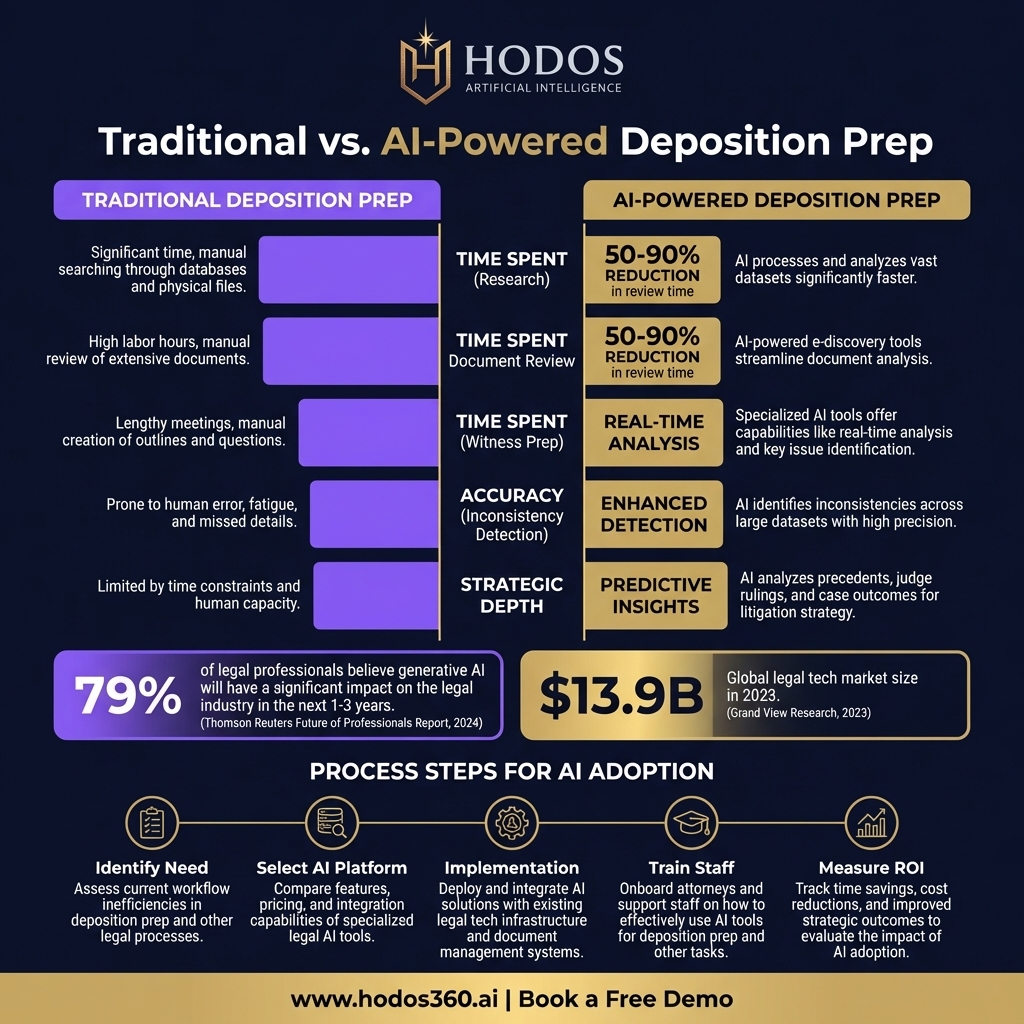
Historically, deposition preparation has been a labor-intensive process, demanding countless hours of document review, cross-referencing, and strategic planning. Attorneys like Sarah Chen, a seasoned litigator at Davis Polk & Wardwell, often spent late nights meticulously combing through discovery, anticipating every possible line of questioning and witness response.
The emergence of specialized AI tools, however, promises to augment this process dramatically. From real-time analysis during testimony to predictive insights drawn from vast datasets, artificial intelligence is transforming the preparation phase into a more precise, data-driven endeavor. This evolution isn't merely about automation; it's about providing an 'unfair advantage' – to borrow a phrase from many tech entrepreneurs – by empowering legal teams with capabilities once thought impossible, fundamentally reshaping the dynamics of legal practice and offering a glimpse into the future of AI news in the legal sector.
The New Era of AI-Powered Depositions
The legal industry's embrace of AI, while initially cautious, has accelerated dramatically. According to the Thomson Reuters Institute's 2023 State of the Legal Market report, a significant percentage of law firms are actively exploring or implementing AI solutions, driven by the dual pressures of efficiency and client demand.
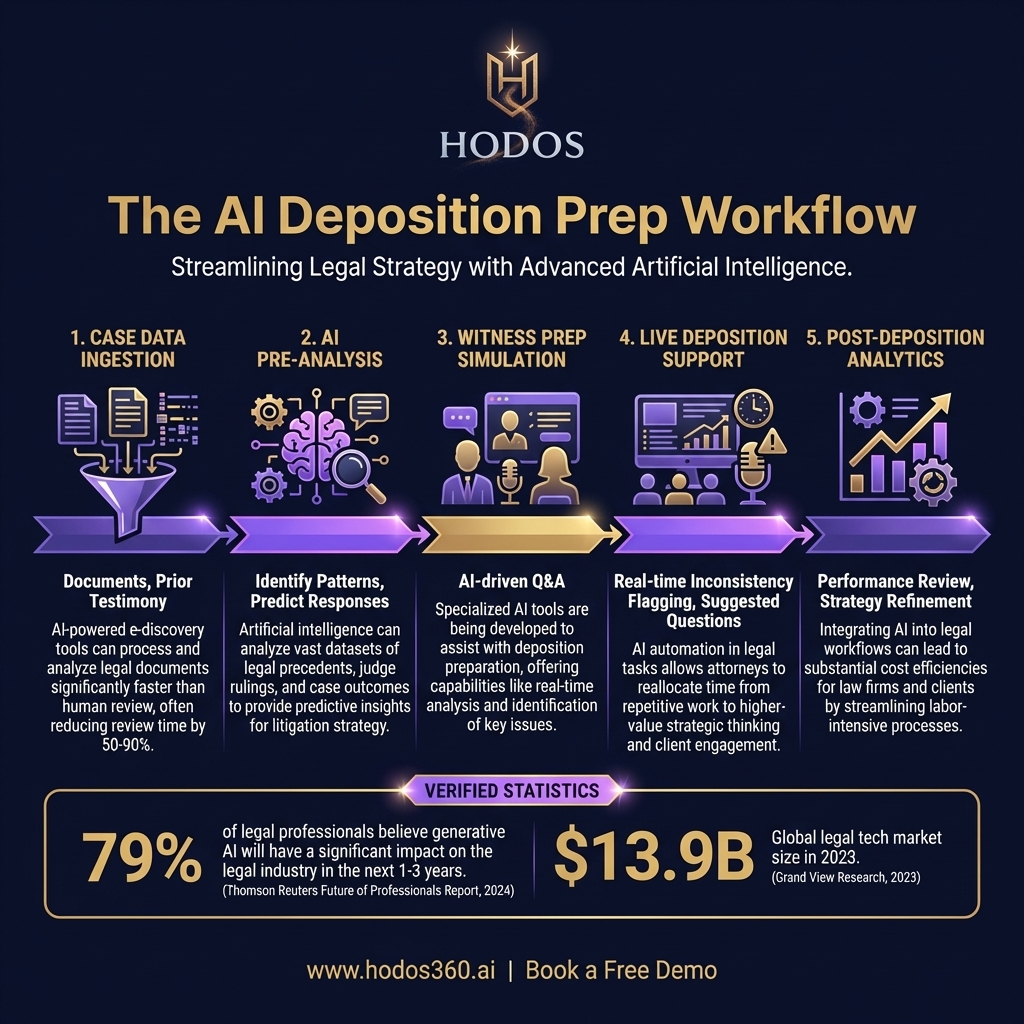
The unveiling of Second Chair AI's 'Depo Defense Mode' is a testament to this trend, offering attorneys a sophisticated virtual co-counsel. This tool, much like Filevine's Depo CoPilot, allows litigators to feed in vast amounts of case documentation – interrogatories, exhibits, prior testimony – and receive real-time analysis during a live deposition.
Imagine a scenario where, as a witness speaks, the AI flags inconsistencies with their previous statements or highlights critical omissions from key documents, all within seconds. This capability moves beyond mere transcription; it's about contextual intelligence at a speed no human can match.
Joe Kless, CEO of Second Chair AI, emphasized in a recent interview that their goal is to "democratize advanced litigation support."
He noted that the 'Depo Defense Mode' is designed to act as an omnipresent expert, ensuring no critical detail is missed, especially in complex cases with voluminous discovery. This shifts the attorney's focus from frantically cross-referencing to strategically adapting in the moment. Learn more about AI Website Development: Essential Strategies for Law Firms.
Firms that adopt such technology gain a significant edge, as evidenced by early adopters who report substantial reductions in preparation time and a marked increase in the precision of their questioning. This level of AI-powered analysis is particularly impactful for younger attorneys, providing an invaluable layer of support and insight that historically would take years of experience to cultivate.
However, the promise extends beyond just reactive analysis. The true power lies in its proactive capabilities. Before a deposition even begins, these AI platforms can analyze the entire case file to identify potential weak points in a witness's testimony, suggest lines of questioning based on identified patterns, and even predict how a witness might respond given their past statements and the evidence at hand.
This predictive insight, a hallmark of advanced legal AI, allows attorneys to craft more incisive questions and anticipate objections, transforming deposition prep from an exhaustive review into a highly targeted strategic exercise. This is where the competitive landscape of legal tech intensifies, with companies vying to offer the most comprehensive and accurate predictive models, constantly pushing the boundaries of what is possible with legal AI, a hot topic in ai news today.
Beyond Second Chair AI: A Look at Emerging Deposition Tech
While Second Chair AI and Filevine's Depo CoPilot are prominent players, the field of AI-powered deposition technology is a vibrant ecosystem of innovation. Startups are continually emerging, pushing the boundaries of what's possible, fueled by significant investment rounds. For instance, companies like LegalMation are focusing on automating responses to discovery requests, which, while not directly a deposition tool, streamlines the broader discovery process that feeds into deposition prep.
Others, like Everlaw, are integrating advanced AI into their e-discovery platforms, making the identification of key documents and patterns for depositions more efficient than ever before. The competition is fierce, reflecting the high stakes of revolutionizing legal workflows. These advancements are not just about faster processing; they're about deeper insights, allowing attorneys to uncover connections and subtle nuances that might elude human review, especially under tight deadlines.
The real differentiator among these platforms often lies in their real-time analysis capabilities and the depth of their predictive insights. The ability of an AI to ingest a live transcript, cross-reference it against gigabytes of case data, and highlight a critical inconsistency or suggest a follow-up question in mere seconds is a game-changer.
This empowers the deposing attorney with a constantly updated strategic brief, allowing them to pivot their questioning, challenge evasive answers more effectively, and ensure all key objectives for the deposition are met. The analytics provided post-deposition are equally valuable, offering firms a granular view of performance, identifying areas for improvement in witness preparation, and refining overall litigation strategy for future cases.
This continuous feedback loop is crucial for institutional learning within law firms.
### Real-time Analysis and Predictive Insights At the core of these advanced tools is the sophisticated real-time analysis engine. Learn more about AI Legal Assistant 2026: Revolutionizing Law Firm Efficiency. During a deposition, the AI listens, transcribes, and simultaneously compares testimony against every relevant document and prior statement uploaded to the system.
If a witness deviates from a previous sworn statement, or if their current testimony contradicts a key piece of evidence, the AI alerts the attorney instantly, often with a suggested prompt or reference. This immediate feedback loop is invaluable, preventing missed opportunities and ensuring thoroughness.
Beyond reaction, predictive insights leverage machine learning to anticipate potential witness responses based on historical data and the pattern of questioning. This allows attorneys to simulate deposition scenarios, identify high-risk questions, and refine their approach, moving from reactive questioning to proactive strategic engagement, a critical aspect of modern case strategy.
This blend of real-time support and predictive foresight is transforming how legal teams approach depositions. Brad Blickstein of the Blickstein Group, a prominent legal tech consultant, often remarks on the shift from 'gut feeling' to 'data-driven strategy' in litigation. He emphasizes that tools offering superior real-time analysis are not just aids but essential components for firms aiming for peak performance.
The sheer volume of information in modern litigation demands this level of technological support, ensuring that even the most subtle discrepancies are caught and leveraged effectively. This robust support system is a key reason why AI depositions are gaining traction as a standard practice.
Integrating AI into Your Litigation Workflow for Strategic Advantage
The true power of AI in litigation is realized not as a standalone gadget, but as an integrated component of a broader legal workflow. For law firms, this means seamlessly weaving AI deposition prep tools into their existing case management, document automation, and client intake systems.
Imagine a scenario where, from the moment a new case is initiated, AI begins to assist: identifying relevant precedents, categorizing discovery documents, and even drafting initial interrogatories. When it comes to depositions, this foundational AI work ensures that the specialized deposition tool has a perfectly organized and comprehensive dataset to draw upon, maximizing its effectiveness.
This integration prevents data silos and ensures a holistic approach to case strategy, optimizing every phase of litigation.
Firms like Allen & Overy, which famously partnered with Harvey AI, are demonstrating how deep integration can yield significant strategic advantages across the entire litigation lifecycle. Their experience highlights that AI isn't just about tactical wins in a deposition; it's about building a more efficient, insightful, and ultimately, more successful practice.
For instance, AI-powered document review, a core component of many AI Law Firm Management systems, can drastically reduce the time and cost associated with preparing for depositions. By rapidly identifying key documents, prioritizing them based on relevance, and flagging potentially privileged information, AI frees up legal professionals to focus on higher-level strategic thinking rather than administrative tasks.
This efficiency translates directly into a competitive edge, allowing firms to handle more cases with greater precision.
### Optimizing Witness Preparation and Document Review One of the most impactful applications of AI for depositions lies in optimizing witness preparation. Learn more about Voice AI Assistant: The Ultimate Guide for Law Firms.
Tools can simulate cross-examination scenarios, identify logical fallacies or inconsistencies in a witness's planned testimony, and even analyze their communication style for potential weaknesses. This rigorous, data-driven preparation ensures witnesses are thoroughly briefed and confident, minimizing surprises during the actual deposition. Concurrently, AI revolutionizes document review by performing rapid, intelligent searches across vast datasets, identifying specific phrases, concepts, or relationships between documents that are critical for deposition strategy.
This deep analysis ensures that attorneys walk into a deposition not just prepared, but armed with every piece of relevant information, instantly accessible, transforming how firms manage their AI-powered legal workflows.
This level of integration is precisely where platforms like HODOS 360’s AI Law Firm Management System shine.
By offering a comprehensive suite of tools – from case management and client intake to document automation and AI-powered legal workflows – it creates a unified environment where deposition prep is not an isolated task but a seamlessly supported process. This holistic approach ensures that the insights gained from AI-powered deposition tools feed back into the overall case strategy, enhancing everything from initial client consultations to final trial arguments.
The synergy between these integrated modules provides a powerful strategic advantage, ensuring that no aspect of a case is left unoptimized.
Navigating Ethical AI Use and Data Security in Depositions
As AI becomes more embedded in legal practice, particularly in sensitive areas like depositions, ethical considerations and data security become paramount. The American Bar Association (ABA) has long recognized the importance of technological competence, enshrined in Model Rule 1.1, which mandates that lawyers keep abreast of changes in the law and its practice, including the benefits and risks associated with relevant technology.
This rule squarely applies to the adoption of AI in depositions. Attorneys must understand not only how these tools work but also their limitations, potential biases, and the implications for client confidentiality. Using AI without proper understanding or oversight could lead to ethical breaches, from misrepresenting AI-generated insights as independent legal judgment to inadvertently revealing privileged information.
Data security is another critical pillar. Depositions involve highly sensitive client information, often protected by attorney-client privilege and work product doctrine. When this data is processed by AI platforms, firms must ensure that vendors adhere to the highest security standards, including robust encryption, access controls, and compliance with data privacy regulations such as GDPR or CCPA.
A data breach involving deposition transcripts or case files could have catastrophic consequences for clients and severe reputational damage for the firm. Firms must conduct thorough due diligence on any AI vendor, scrutinizing their data handling policies, security certifications, and incident response plans. The Federal Rules of Civil Procedure (FRCP), particularly Rule 26 regarding discovery and Rule 30 concerning depositions, underscore the importance of protecting sensitive information, a responsibility that extends to how AI tools process and store data.
### The Human Element: Attorney-AI Collaboration Despite the sophistication of AI, the human element remains indispensable. Learn more about AI Chatbot Builders: Transform Your Law Firm in 2026. AI tools are powerful assistants, not replacements for legal judgment, empathy, or strategic acumen. The most effective use of AI in depositions involves a synergistic collaboration between attorney and machine.
The attorney sets the strategic objectives, interprets AI-generated insights within the broader context of the case, and makes the ultimate decisions. AI can identify patterns, flag inconsistencies, and generate data-driven suggestions, but it cannot understand the subtle nuances of human emotion, assess a witness's credibility in the same way a human can, or adapt to unforeseen circumstances with the same flexibility.
The evolving skill set for modern lawyers includes not just legal expertise but also 'AI literacy' – the ability to effectively leverage and critically evaluate technological tools.
This collaborative model emphasizes that AI enhances, rather than diminishes, the attorney's role. It frees up time from mundane tasks, allowing lawyers to dedicate more energy to high-value activities: client counseling, strategic thinking, and persuasive advocacy.
As technology advances, the focus shifts from simply 'using AI' to 'partnering with AI' to achieve superior outcomes. Firms that foster this collaborative culture, where attorneys are trained to work alongside their AI counterparts, will be best positioned to thrive in the increasingly complex legal landscape.
This forward-thinking approach ensures that innovation serves justice, maintaining the integrity and efficacy of the legal profession, even as google ai and other major players continue to push the boundaries of AI capabilities.

Key Takeaways and Next Steps
The emergence of tools like Second Chair AI’s 'Depo Defense Mode' signals a definitive turning point in legal practice. AI-powered depositions are no longer a futuristic concept but a tangible reality offering unprecedented strategic advantages. From real-time analysis during testimony to sophisticated witness preparation and predictive insights, AI is reshaping the entire litigation workflow.
Firms that proactively embrace these technologies stand to gain significant efficiencies, enhance their strategic capabilities, and ultimately deliver superior results for their clients. The competitive landscape demands not just awareness, but active integration of these cutting-edge tools into daily practice.
For law firm owners and legal professionals, the call to action is clear: investigate, evaluate, and implement.
Start by assessing your current deposition prep processes and identifying pain points where AI could offer the most immediate impact. Learn more about Legal AI Adoption: An Essential Guide for Discerning Firms. Explore integrated AI Law Firm Management solutions that provide not just deposition support but a comprehensive suite of tools, from client intake to document automation, ensuring a seamless and efficient practice.
Platforms designed for AI-powered legal workflows, like those offered by HODOS 360, provide a robust framework for firms ready to modernize and gain a competitive edge. This holistic approach ensures that every aspect of your firm, including crucial AI deposition prep, is optimized for the future.
The future of legal practice is one where human expertise is powerfully amplified by artificial intelligence. By strategically adopting and integrating these innovations, law firms can not only navigate the complexities of modern litigation but also thrive, setting new standards for efficiency, precision, and client advocacy.
The opportunity to transform your practice is here; the time to act is now.
Frequently Asked Questions
What is AI Deposition Prep?+
AI deposition prep refers to the use of artificial intelligence tools to assist attorneys in preparing for and conducting depositions. This includes functionalities like real-time analysis of witness testimony against case documents, identifying inconsistencies, suggesting lines of questioning, optimizing witness preparation, and streamlining document review processes for strategic advantage. It transforms traditional, labor-intensive preparation into a more data-driven and efficient endeavor, enhancing legal strategy and outcomes.
How do AI tools like Second Chair AI's 'Depo Defense Mode' work?+
Tools like 'Depo Defense Mode' ingest vast amounts of case documentation—discovery, exhibits, prior testimony—before a deposition. During the live deposition, the AI transcribes testimony in real-time and simultaneously cross-references it against the loaded documents. It then flags inconsistencies, omissions, or contradictions, providing instant alerts and strategic suggestions to the attorney. This acts as a virtual co-counsel, ensuring critical details are not missed and allowing for dynamic adaptation of questioning strategy.
What are the key benefits of using AI for depositions?+
The primary benefits include significant efficiency gains by automating document review and research, enhanced strategic advantage through real-time analysis and predictive insights, and improved accuracy in identifying inconsistencies in witness testimony. AI also helps optimize witness preparation, reduces the risk of overlooking critical details, and empowers attorneys to conduct more precise and impactful depositions, ultimately leading to better case outcomes and a more competitive practice.
Are there ethical concerns with using AI in depositions?+
Yes, ethical considerations are crucial. Attorneys must adhere to ABA Model Rule 1.1 (Competence), understanding AI's capabilities and limitations. Concerns include ensuring client confidentiality and data security with AI vendors, avoiding over-reliance on AI-generated insights without human judgment, and potential biases in AI algorithms. Firms must conduct due diligence on tools, maintain attorney oversight, and ensure compliance with all professional responsibilities when integrating AI into their deposition workflows.
How can law firms integrate AI deposition tools into their existing workflows?+
Successful integration involves weaving AI deposition tools into a firm's broader legal tech ecosystem. This means ensuring compatibility with case management, document automation, and client intake systems. Firms should seek comprehensive AI Law Firm Management platforms that offer integrated solutions, preventing data silos and creating a unified environment. This holistic approach ensures AI-powered insights from depositions feed into overall case strategy, optimizing every phase of litigation from start to finish.