


AI Legal Tech: Essential Strategies for Law Firm Innovation
The legal industry is in the throes of an unprecedented transformation, driven largely by the rapid advancements in AI legal tech. Just this week, the news broke that Intelligent AF, a burgeoning force in legal artificial intelligence, has acquired TechnoCat, a move signaling a significant consolidation and specialization within the legal AI market. This acquisition, reported by citybiz.co, isn't just another corporate maneuver; it's a potent indicator of the escalating arms race among technology providers to offer comprehensive, integrated solutions for law firms. For legal professionals, this isn't merely about adopting new tools; it's about fundamentally rethinking practice management, client engagement, and competitive strategy in an era where AI legal tech is no longer optional but essential.
This landscape of rapid evolution demands vigilance and proactive adoption from law firms of all sizes. The days of manual, labor-intensive processes are quickly giving way to AI-powered efficiencies that promise to redefine productivity and profitability. Firms that embrace this wave of innovation are finding themselves better equipped to handle complex caseloads, streamline administrative burdens, and deliver superior client experiences. Conversely, those that lag risk being outmaneuvered by competitors who leverage these new technology systems to their full potential. The Intelligent AF acquisition of TechnoCat underscores a critical trend: the market is maturing, and the focus is shifting towards integrated platforms that offer end-to-end solutions, from sophisticated document review to predictive analytics and beyond. This push towards holistic AI platforms reflects a deeper understanding of law firms' needs for seamless, interconnected tools that can manage the entire client lifecycle and operational demands.
For law firm owners and attorneys, understanding these shifts is paramount. The question is no longer *if* to integrate AI, but *how* to do so effectively to maximize benefits and mitigate risks. The market is teeming with specialized AI legal tech solutions, each promising to alleviate different pain points. From automated contract review to intelligent client intake and predictive litigation outcomes, the possibilities are vast. However, the true challenge lies in selecting and implementing platforms that offer genuine value, integrate smoothly with existing operations, and align with a firm's strategic objectives. The race is on to build and deploy the most robust and user-friendly AI legal tech ecosystems, and firms must choose their partners wisely to navigate this complex yet opportunity-rich environment. The future of legal practice hinges on this strategic embrace of innovation.
Explore how HODOS 360 can transform your firm's operations and growth.
The Shifting Sands of Legal Tech: Acquisitions and Consolidation
The acquisition of TechnoCat by Intelligent AF is more than a footnote in the legal tech news cycle; it's a bellwether for the industry's future. This move highlights a broader trend of consolidation, where specialized AI providers are either being absorbed by larger entities or merging to create more comprehensive platforms. This strategic M&A activity is driven by the increasing demand from law firms for integrated, full-spectrum AI legal tech solutions that can address multiple operational challenges simultaneously. Firms are weary of piecemeal solutions that require complex integrations and often lead to data silos. Instead, they seek unified technology systems that offer seamless workflows across various practice areas and administrative functions. This trend was foreshadowed years ago by the growth of companies like Clio, which has strategically acquired firms like Legalboards to expand its practice management ecosystem, demonstrating the value of a comprehensive platform approach.
Industry leaders, like Jerry Ting, CEO of Evisort, have long emphasized the importance of AI's ability to not just automate, but to *understand* legal documents and processes. The integration of specialized capabilities, such as advanced natural language processing (NLP) for contract analysis (TechnoCat's likely strength) into a broader AI platform (Intelligent AF's offering), creates a formidable competitive advantage. This consolidation means fewer, but more powerful, players are emerging, capable of delivering end-to-end solutions that promise greater efficiency and deeper insights. According to the Thomson Reuters Future of Legal Report, a significant percentage of law firms are actively evaluating or implementing AI solutions, indicating a robust market for these integrated offerings. The report consistently shows that firms prioritize solutions that reduce administrative burden and improve client service, both areas where consolidated AI platforms excel.
This dynamic also creates a unique tension for law firms. Learn more about AI Marketing Measurement Strategies Law Firms. On one hand, the availability of more robust, integrated AI legal tech platforms simplifies vendor selection and offers greater reliability. On the other hand, it intensifies the competitive pressure. Firms that delay adopting these advanced technology systems risk falling behind those who leverage them to optimize resource allocation, enhance legal research, and predict case outcomes with greater accuracy. The stakes are higher than ever, as firms grapple with the dual challenge of embracing innovation while navigating the evolving vendor landscape. This necessitates a strategic approach to technology adoption, one that considers long-term scalability and integration potential, rather than chasing every new tool.
Moreover, this wave of acquisitions often brings about an acceleration in innovation. When smaller, specialized firms are brought into larger ecosystems, they gain access to greater resources for research and development, broader market reach, and enhanced talent pools. This can lead to faster product development cycles and the introduction of even more sophisticated AI legal tech capabilities. For instance, the integration of advanced machine learning models from an acquired entity can significantly boost the predictive power of a larger platform, offering unparalleled advantages in areas like litigation funding analysis or regulatory compliance. This synergy ultimately benefits law firms by providing access to cutting-edge tools that were once the domain of only the largest, most technologically advanced legal departments.
Navigating the Integrated AI Legal Tech Ecosystem
For law firms, the key to success in this consolidating market lies in carefully evaluating integrated AI legal tech ecosystems. It's no longer sufficient to simply look at individual features; firms must assess how different modules interact, how data flows between them, and whether the platform truly supports a holistic operational strategy. This includes scrutinizing interoperability with existing systems and the vendor's roadmap for future enhancements. Learn more about AI Websites: Essential Digital Growth for Law Firms. A truly integrated platform should act as a central nervous system for the firm, connecting everything from client intake to document management and billing, ensuring consistency and accuracy across all operations. The goal is to move beyond fragmented tools to a unified environment where every piece of artificial intelligence works in concert to enhance productivity and decision-making.
AI-Powered Law Firm Management: Beyond Basic Practice Tools
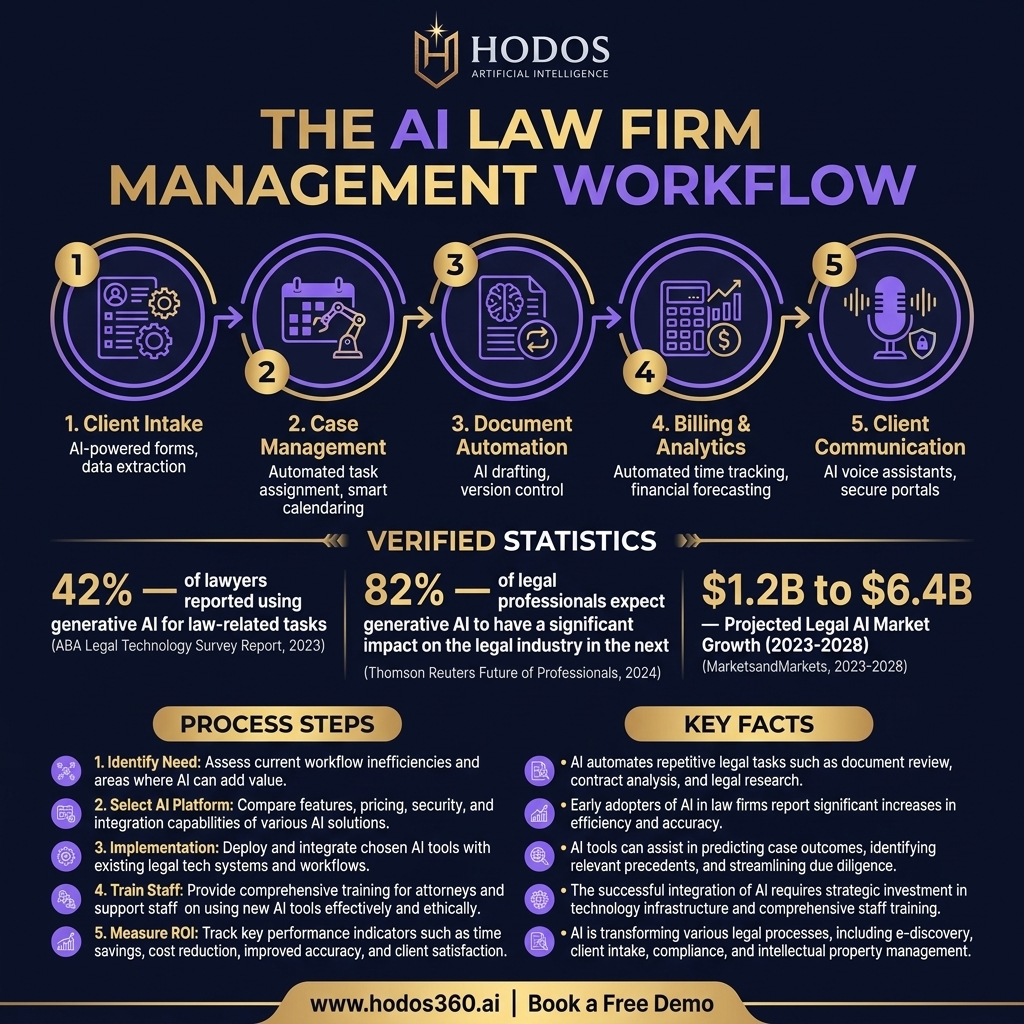
The core of any modern law firm's operation is its management system, and AI legal tech is redefining what's possible. The days of relying on disparate spreadsheets and siloed software for case management, billing, and client intake are rapidly fading. Today, advanced AI-powered platforms offer comprehensive solutions that integrate these functions seamlessly, providing a unified view of firm operations. Imagine a system where client intake forms automatically populate case files, billing entries are generated from time tracking with minimal human intervention, and documents are drafted using intelligent automation. This is the reality offered by platforms like the HODOS 360 AI Law Firm Management System. Such technology systems are engineered not just for efficiency but for strategic advantage, allowing firms to focus on legal strategy rather than administrative overhead.
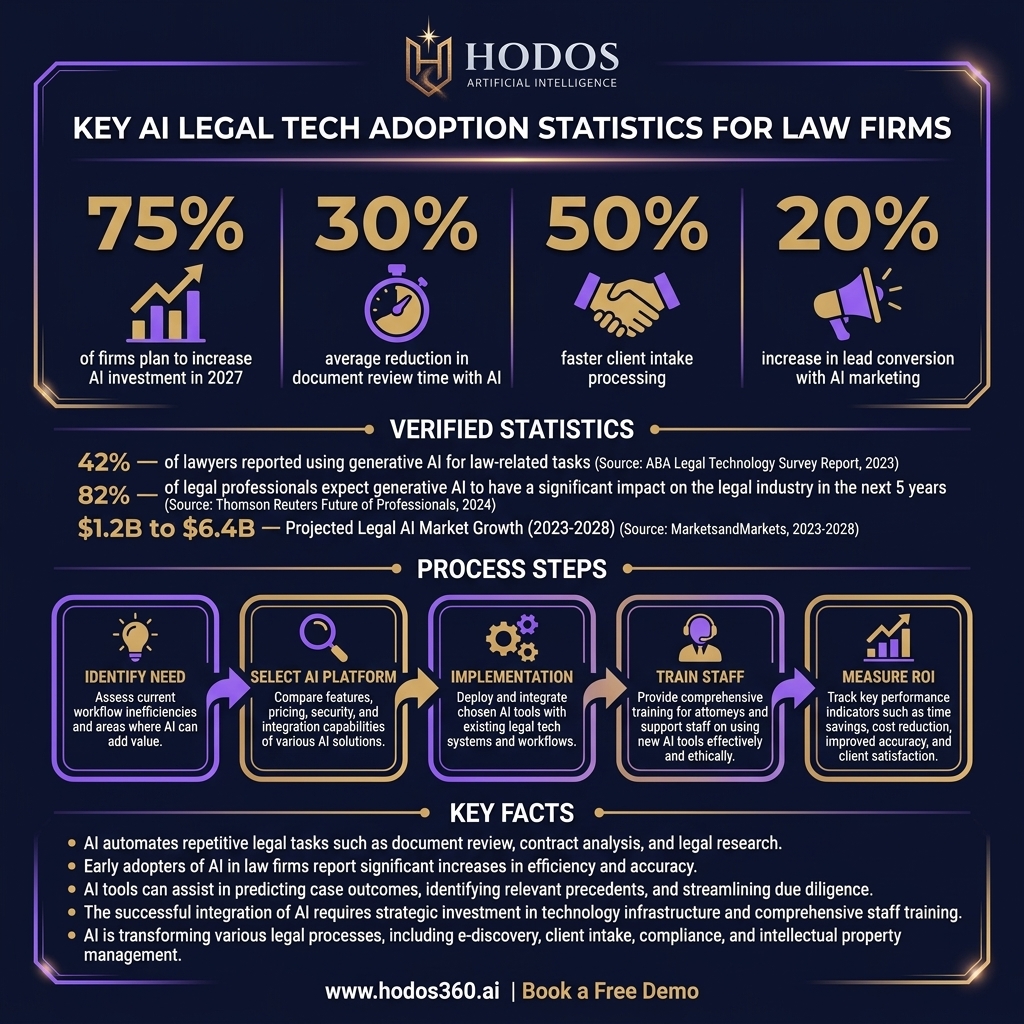
Consider the impact on legal workflows. With AI-powered legal workflows, routine tasks that once consumed hours of paralegal and attorney time can now be automated. This includes everything from scheduling client meetings and managing court dates to generating initial drafts of legal documents based on case parameters. The system learns from past cases and attorney preferences, continuously improving its suggestions and automation capabilities. According to the ABA TechReport 2023, a growing number of firms are adopting AI for tasks like document review and legal research, reporting significant gains in efficiency and accuracy. This shift directly addresses the increasing pressure on firms to do more with less, without compromising on quality or client service. The precision offered by artificial intelligence in these areas minimizes errors, ensuring compliance and reducing the risk of malpractice.
Beyond automation, these advanced management systems provide invaluable data analytics. Learn more about Ultimate AI Voice Assistants: Transforming Legal Client Intake. By aggregating data from case files, billing records, and client interactions, AI can identify trends, forecast financial performance, and even flag potential issues before they escalate. This predictive capability empowers firm leadership to make data-driven decisions regarding resource allocation, marketing strategies, and talent development. For example, a system might identify that certain types of cases are consistently more profitable or that specific attorneys are over-burdened, allowing for proactive adjustments. This level of insight transforms law firm management from a reactive process into a proactive, strategically guided operation, ensuring sustainable growth and resilience in a competitive market. The integration of such robust AI legal tech provides a clear competitive edge.
Furthermore, document automation, a cornerstone of AI-powered management, goes far beyond simple template filling. Modern AI legal tech solutions can intelligently extract relevant information from client intake forms, court documents, and previous filings to generate complex legal documents with remarkable accuracy and speed. This not only saves immense time but also reduces the risk of human error, ensuring consistency and adherence to firm standards. For instance, drafting a standard motion or a complex contract can be accelerated by leveraging AI to pull in clauses, facts, and legal precedents, customized to the specific case. This frees up attorneys to focus on the nuanced legal strategy and client advocacy that truly require human expertise, rather than the rote drafting of documents. This intelligent automation is a game-changer for firms looking to optimize their operational efficiency.
Streamlining Workflows with Intelligent Automation
Intelligent automation within law firm management systems leverages AI legal tech to predict next steps, suggest relevant documents, and even flag potential conflicts of interest. This proactive functionality ensures that critical tasks are not missed and that cases progress smoothly. For instance, an AI might analyze an incoming client matter, compare it against historical data, and automatically suggest a workflow template, assign tasks to team members, and even estimate potential billing hours. Learn more about Voice AI Assistant: The Ultimate Guide for Law Firms. This level of predictive support is invaluable in reducing administrative overhead and allowing legal teams to focus on high-value work, significantly improving overall productivity and client satisfaction. This represents a paradigm shift from reactive task management to proactive strategic execution, powered by robust artificial intelligence.
Redefining Legal Marketing in the AI Era
In an increasingly crowded legal market, effective marketing is paramount, and AI legal tech is transforming how law firms attract and retain clients. Traditional marketing methods are giving way to sophisticated, data-driven strategies powered by artificial intelligence. Platforms like the HODOS 360 AI Marketing Platform offer a suite of tools designed to elevate a firm's digital presence and client acquisition efforts. This includes everything from AI-powered video creation that can generate engaging content tailored to specific legal niches, to social media automation that ensures consistent brand messaging across all platforms. The goal is to maximize reach and engagement, turning casual browsers into qualified leads, all while optimizing marketing spend. This strategic application of AI legal tech ensures that marketing efforts are not just visible, but impactful and measurable.
Content generation, a perennial challenge for busy legal professionals, is dramatically simplified with AI. Firms can leverage AI to draft blog posts, articles, and website copy that is both SEO-optimized and legally accurate, freeing up attorneys' valuable time. This doesn't replace human creativity or legal expertise but augments it, allowing firms to maintain a robust online presence with fresh, relevant content. Furthermore, the power of analytics and ROI tracking provided by these AI legal tech platforms is revolutionary. Firms can now precisely measure the effectiveness of their marketing campaigns, identifying which channels and content types generate the highest return on investment. This granular insight allows for continuous optimization, ensuring that marketing budgets are allocated efficiently to achieve maximum impact. Learn more about AI Marketing Revolution 2026: Autonomous Agents for Law Firms. This data-driven approach is a stark contrast to older, often speculative marketing efforts.
Consider the competitive edge gained through personalized marketing. Artificial intelligence can analyze potential client demographics, online behavior, and specific legal needs to deliver highly targeted advertisements and content. Imagine a potential client searching for "estate planning lawyer near me" receiving a personalized video from your firm discussing relevant strategies, or seeing social media ads tailored to their specific questions. This level of personalization, previously unattainable for most firms, significantly increases conversion rates and builds stronger client relationships from the outset. This precision marketing is a cornerstone of modern client acquisition, and it's entirely powered by sophisticated AI legal tech that understands and responds to individual client journeys.
This shift in legal marketing isn't just about automation; it's about intelligence. AI can identify emerging legal trends, analyze competitor strategies, and even predict future client needs, allowing firms to proactively position themselves as leaders in specific practice areas. For instance, if AI detects a surge in inquiries related to a new regulatory framework, it can automatically suggest content topics, ad campaigns, and even specialized services to address that demand. This foresight allows firms to capture new market segments and solidify their reputation as forward-thinking, client-centric practices. The integration of these technology systems into marketing strategies ensures that firms are not just reacting to the market, but actively shaping their presence within it, leading to sustained growth.
Discover how HODOS 360's AI Marketing Platform can elevate your firm's client acquisition.
The Conversational Revolution: AI Voice Assistants in Legal
The front lines of client interaction are also being revolutionized by AI legal tech, specifically through AI Voice Assistants. The traditional challenges of missed calls, overwhelmed receptionists, and inconsistent lead qualification are now being addressed by intelligent virtual assistants that provide 24/7 support. Platforms like the HODOS 360 AI Voice Assistants can answer phone calls around the clock, ensuring that no potential client inquiry goes unanswered, regardless of business hours or holidays. This capability alone represents a massive leap forward in client service and lead capture, addressing a critical pain point for many law firms that struggle with after-hours calls or overflow during peak times. The immediate responsiveness offered by artificial intelligence sets a new standard for client accessibility.
Beyond simply answering calls, these AI Voice Assistants are adept at lead qualification and appointment booking. They can engage callers in natural language conversations, asking pertinent questions to determine the nature of their legal need, their urgency, and their financial capacity. Based on this qualification process, the AI can then seamlessly book appointments directly into the firm's calendar, ensuring that attorneys and paralegals only engage with genuinely promising leads. This frees up valuable human resources to focus on complex legal work and client advocacy, rather than spending time on initial screening calls. The efficiency gained by this intelligent routing and scheduling is invaluable for optimizing firm operations and improving the utilization of legal staff.
One of the most impressive features of modern AI Voice Assistants is their multilingual support. In today's diverse society, law firms often serve clients from various linguistic backgrounds. Learn more about AI Web Development: Essential Strategies for Law Firms. An AI assistant capable of communicating in multiple languages breaks down communication barriers, making legal services more accessible and inclusive. This not only expands a firm's potential client base but also enhances its reputation as a client-centric and culturally aware practice. Furthermore, advanced call routing ensures that complex inquiries or highly qualified leads are immediately directed to the appropriate human attorney or specialist within the firm, maintaining a balance between automation and personalized human interaction. This sophisticated blend of AI legal tech ensures optimal client experience.
The implications for client satisfaction and operational efficiency are profound. Clients receive immediate attention, feel heard, and are efficiently guided through the initial stages of engagement, often before a human even picks up the phone. For the firm, this means dramatically reduced administrative costs associated with phone answering, improved lead conversion rates, and a more streamlined intake process. The data collected by AI Voice Assistants during these interactions can also feed back into the firm's management and marketing technology systems, providing valuable insights into common client inquiries, geographic demand, and service preferences. This continuous feedback loop allows firms to refine their offerings and further optimize their client engagement strategies, creating a virtuous cycle of improvement.
Enhancing Client Experience with 24/7 AI Support
The ability of AI legal tech to provide 24/7 support through voice assistants fundamentally alters client expectations. Clients no longer need to wait for business hours to initiate contact or get basic information. This always-on availability not only enhances convenience but also builds trust and demonstrates a firm's commitment to modern service delivery. It ensures that potential clients, often reaching out during stressful times, receive immediate, professional assistance, setting a positive tone for their entire engagement with the firm. This proactive client service is a significant differentiator in a competitive legal market, powered by responsive artificial intelligence.
Digital Presence & Growth: Web & Mobile Development for Law Firms
In today's digital-first world, a law firm's online presence is its most crucial storefront. AI legal tech is now extending its reach to web and mobile development, ensuring firms not only have a presence but a highly effective one. Platforms like HODOS 360's Web & Mobile Development service leverage AI-powered website building to create sophisticated, responsive, and high-converting websites with unprecedented speed and efficiency. This isn't just about aesthetics; it's about functionality, user experience, and strategic client acquisition. A firm's website is often the first point of contact for potential clients, and its design, speed, and content can significantly influence their decision to engage. This holistic approach to digital presence is vital for modern legal practices.
Responsive design is no longer a luxury but a necessity. With a significant portion of internet traffic originating from mobile devices, a website that seamlessly adapts to any screen size is critical for accessibility and user satisfaction. AI-powered tools assist in ensuring this responsiveness, optimizing layouts and content for various devices automatically. Furthermore, SEO optimization, another cornerstone of effective digital marketing, is greatly enhanced by AI legal tech. AI can analyze search trends, competitor strategies, and keyword performance to continuously fine-tune a firm's online content, ensuring it ranks highly in search engine results. This proactive SEO management means a firm's website isn't just a static brochure but a dynamic lead-generation engine, constantly working to attract new clients.
High-converting templates, often integrated with AI-driven analytics, provide law firms with proven frameworks for effective online engagement. These templates are designed not just to look good but to guide visitors through a clear user journey, culminating in a call to action—whether it's booking a consultation, downloading a resource, or signing up for a newsletter. The AI can even A/B test different layouts and calls to action, providing data-driven insights into what resonates most effectively with target audiences. This level of optimization ensures that every visitor to a firm's site is presented with the most compelling version of its digital offering, maximizing the chances of conversion. This continuous improvement cycle is a hallmark of intelligent technology systems.
Beyond websites, mobile applications are becoming increasingly relevant for law firms looking to offer enhanced client portals, secure communication channels, and streamlined document sharing. AI legal tech can facilitate the development of these applications, providing secure, user-friendly interfaces that improve client engagement and operational efficiency. Imagine clients being able to securely upload documents, track case progress, and communicate directly with their legal team through a branded mobile app. This level of convenience and transparency not only fosters stronger client relationships but also positions the firm as a leader in modern legal service delivery. A robust digital ecosystem, encompassing both web and mobile, is now an indispensable asset for any forward-thinking law firm aiming for sustained growth and market leadership.
Building High-Converting Digital Ecosystems
Building a high-converting digital ecosystem means leveraging AI legal tech to create an online presence that not only informs but actively engages and converts prospective clients. This involves more than just a visually appealing website; it requires a strategic blend of SEO, compelling content, intuitive user experience, and clear calls to action, all optimized by artificial intelligence. The goal is to create a seamless digital journey for potential clients, from their initial search query to becoming a retained client, ensuring that every touchpoint reinforces the firm's expertise and value. This comprehensive digital strategy is crucial for capturing market share in today's competitive legal landscape.

Key Takeaways and Next Steps for Embracing AI Legal Tech
The legal industry is at an inflection point, with AI legal tech serving as the primary catalyst for change. The acquisition of TechnoCat by Intelligent AF is a clear signal that the market is consolidating around comprehensive, integrated solutions, pushing firms to adopt sophisticated technology systems or risk being left behind. For law firm owners and attorneys, the path forward is clear: strategic engagement with AI is no longer a luxury but a necessity for sustained growth, efficiency, and competitive advantage. The benefits extend across every facet of practice, from streamlining complex administrative tasks to revolutionizing client acquisition and fostering deeper client relationships. Firms must move beyond simply acknowledging AI's potential to actively implementing it across their operations.
Embracing AI legal tech requires a thoughtful, strategic approach. It begins with identifying specific pain points within your firm that AI can most effectively address, whether it's optimizing case management, enhancing marketing efforts, or improving client communication. Firms should seek out integrated platforms that offer scalability, robust support, and a clear roadmap for future innovation. The goal is to create an ecosystem of tools that work harmoniously, rather than a collection of disparate solutions. As ABA Model Rule 1.1, Comment 8 notes, lawyers must keep abreast of changes in the law and its practice, including the benefits and risks associated with relevant technology. This ethical imperative underscores the professional responsibility to engage with these advancements.
The future of legal practice is undeniably intertwined with artificial intelligence. Firms that proactively invest in AI-powered tools will not only gain significant operational efficiencies but will also enhance their ability to deliver superior client outcomes and attract top talent. The challenge lies in navigating the vast landscape of available solutions and selecting those that offer the most transformative impact. By adopting a forward-thinking mindset and partnering with innovative legal tech providers, law firms can confidently step into this new era, ensuring their relevance and prosperity for years to come. The time to act on AI legal tech is now, shaping a more efficient, client-centric, and profitable future for your practice.
Ready to transform your law firm with leading AI legal tech? Book a free consultation with HODOS 360 today.
Frequently Asked Questions
What is AI Legal Tech and why is it important for law firms?+
AI Legal Tech refers to artificial intelligence applications designed to optimize various aspects of legal practice. It's crucial for law firms because it enhances efficiency in case management, automates routine tasks, improves client intake, and provides data-driven insights. This allows attorneys to focus on high-value legal work, reduce operational costs, and gain a competitive edge in a rapidly evolving market, ensuring better client service and sustainable growth.
How can AI improve law firm management and operations?+
AI significantly improves law firm management by automating processes like document generation, billing, and scheduling. It streamlines client intake, manages case files efficiently, and provides AI-powered legal workflows that reduce manual errors and save time. These technology systems offer comprehensive oversight, predictive analytics for financial planning, and resource allocation, transforming reactive management into a proactive, data-driven strategy for greater productivity and profitability.
What role does AI play in modern legal marketing?+
AI revolutionizes legal marketing by enabling data-driven strategies. It powers AI video creation, automates social media posting, generates SEO-optimized content, and tracks ROI with precision. This allows firms to create highly targeted campaigns, attract qualified leads more efficiently, and measure the effectiveness of their marketing spend. AI ensures a strong digital presence, personalized client outreach, and a competitive advantage in client acquisition.
Can AI Voice Assistants truly enhance client service for law firms?+
Yes, AI Voice Assistants dramatically enhance client service by offering 24/7 phone answering, ensuring no potential client inquiry is missed. They excel at lead qualification, accurately assessing client needs and urgency, and can book appointments directly. With multilingual support and intelligent call routing, these assistants provide immediate, professional assistance, freeing up human staff for complex legal tasks while significantly improving client satisfaction and lead conversion rates.
Why is AI-powered web and mobile development crucial for law firms today?+
AI-powered web and mobile development is crucial because a strong digital presence is a law firm's primary storefront. AI facilitates the creation of responsive, SEO-optimized, and high-converting websites and mobile apps. It ensures seamless user experience across devices, improves search engine rankings, and provides data-driven insights to optimize content and user journeys. This digital ecosystem is essential for attracting new clients, enhancing engagement, and establishing a firm's authority in the legal market.