


AI Marketing: The Ultimate Guide for Law Firms to Dominate Digital
The legal industry, often perceived as a bastion of tradition, is now at the precipice of a profound digital transformation, largely driven by artificial intelligence. While many firms grapple with integrating AI into their core legal workflows, a quieter, yet equally revolutionary, shift is occurring in how they attract, engage, and retain clients: AI marketing.
This isn't just about automating social media posts; it's about leveraging sophisticated algorithms to understand client needs, predict market trends, and personalize outreach at an unprecedented scale. Consider the recent news of Zeta Global expanding its Athena AI platform to advertising agencies, a move that underscores the growing sophistication and accessibility of AI-powered tools even for specialized sectors.
This expansion signals a broader market acceptance and maturation of AI in marketing, creating a powerful blueprint for law firms to follow if they wish to remain competitive in a crowded digital sphere. The stakes are higher than ever, as firms that fail to adapt risk being outmaneuvered by agile, tech-forward competitors.
The narrative of technological adoption in law often involves a tension between preserving established practices and embracing disruptive innovation. Firms that hesitated to adopt early internet strategies or robust CRM systems often found themselves playing catch-up. Today, the same drama unfolds with AI. Leaders like David Lat, founder of Original Jurisdiction and a keen observer of legal tech, have frequently highlighted the imperative for legal professionals to understand and integrate AI, not just for efficiency in practice but also for business development.
The competitive advantage now hinges on a firm's ability to not only deliver exceptional legal services but also to effectively communicate that value to prospective clients in an increasingly noisy digital world. This is where a strategic approach to AI marketing becomes indispensable, moving beyond rudimentary digital advertising to a realm of hyper-targeted, data-driven engagement.
For law firm owners and managing partners, the question is no longer *if* to adopt AI in marketing, but *how* to do so effectively and ethically. The advancements seen in general marketing — from predictive analytics employed by retail giants to highly personalized content feeds from platforms like Netflix — are now being tailored for professional services.
This article delves into the actionable strategies and transformative potential of AI marketing for law firms, exploring how these powerful tools can redefine client acquisition, enhance brand visibility, and ultimately, drive sustainable growth. We will examine the specific applications, ethical considerations, and real-world impacts, offering a roadmap for legal practices to not just survive, but thrive in the AI-powered digital age.
Ready to transform your firm's growth? Discover how HODOS 360's AI Marketing Platform can revolutionize your client acquisition strategy.
The Dawn of AI Marketing in Legal: Beyond Zeta Global's Expansion
The recent expansion of Zeta Global’s Athena AI platform to advertising agencies is a bellwether for the broader professional services industry, including law. While Zeta Global, led by CEO David A. Steinberg, has traditionally focused on large enterprise clients, this move indicates a maturation of AI-powered solutions, making them more accessible and adaptable for specialized sectors.
Athena AI, lauded for its superintelligent agent capabilities, leverages proprietary data and contextual understanding to surface marketing opportunities and recommend real-time actions. For law firms, this signals a critical turning point: the sophistication of AI tools is no longer confined to tech giants or early adopters but is becoming a mainstream necessity for competitive differentiation.
The underlying principle is simple yet profound: AI can process vast quantities of data—from search queries and social media interactions to case law trends and competitor strategies—to identify optimal pathways for client engagement, far beyond what human analysis alone can achieve.
This shift represents a significant departure from traditional legal marketing, which often relied on broad-stroke advertising, networking events, and generic content.
The legal market, valued at over $800 billion globally by Thomson Reuters Institute reports, is ripe for disruption, and AI marketing presents one of the most immediate and impactful avenues. Learn more about AI Legal Website Optimization: Essential Guide for Law Firms. Firms that embraced early digital marketing, like LegalZoom or Avvo, gained significant market share by simply being accessible online.
Today, the bar is much higher. Firms must not only be present but also hyper-relevant. The "superintelligent agent" concept, as pioneered by companies like OpenAI with its advanced GPT models and the continuous innovation from startups like Anthropic with Claude, demonstrates AI's capacity for nuanced understanding and creative output.
Applying this to legal marketing means generating highly personalized content, identifying niche client segments with surgical precision, and even predicting future legal needs based on evolving societal and economic trends. The competitive pressure is palpable, creating a clear divide between firms that invest in advanced digital capabilities and those that cling to outdated methods.
The broader landscape of AI news today frequently highlights innovations that, while not explicitly legal, offer profound implications for how law firms can operate. For instance, the ongoing advancements in generative AI, as showcased by Google's Gemini or Meta's Llama models, are rapidly democratizing content creation and analysis.
This means law firms can leverage similar technologies to draft bespoke marketing copy, optimize website content for SEO, and even create compelling video testimonials with AI-powered video creation tools, a service offered by platforms like HODOS 360. This isn't merely about efficiency; it's about amplifying a firm's reach and impact, ensuring that its expertise resonates with the right clients at the right time.
The market is increasingly driven by data, and AI provides the lens through which that data can be transformed into actionable insights, moving legal marketing from an art to a more precise science.
The real drama unfolds in the strategic choices law firm leaders are making right now.
Learn more about AI Voice Assistant: Apple's Essential Siri Reboot Unpacked. Will they view the expansion of platforms like Athena AI as a distant trend, or as an urgent call to action? Firms like Allen & Overy, known for their early adoption of legal tech through initiatives like their Fuse incubator and partnership with Harvey AI for legal research, exemplify a proactive approach.
Their willingness to experiment and integrate cutting-edge tools into their operations extends beyond core legal work to encompass their business development and client acquisition strategies. This forward-thinking mindset, driven by partners like Richard Susskind who has long advocated for technology's transformative role in law, positions them to capture market share from firms less willing to embrace the future.
The message is clear: the future of legal business development is intertwined with advanced AI marketing capabilities, and the time to invest is now, before the competitive gap becomes insurmountable.
Harnessing AI-Powered Marketing Platforms for Law Firms
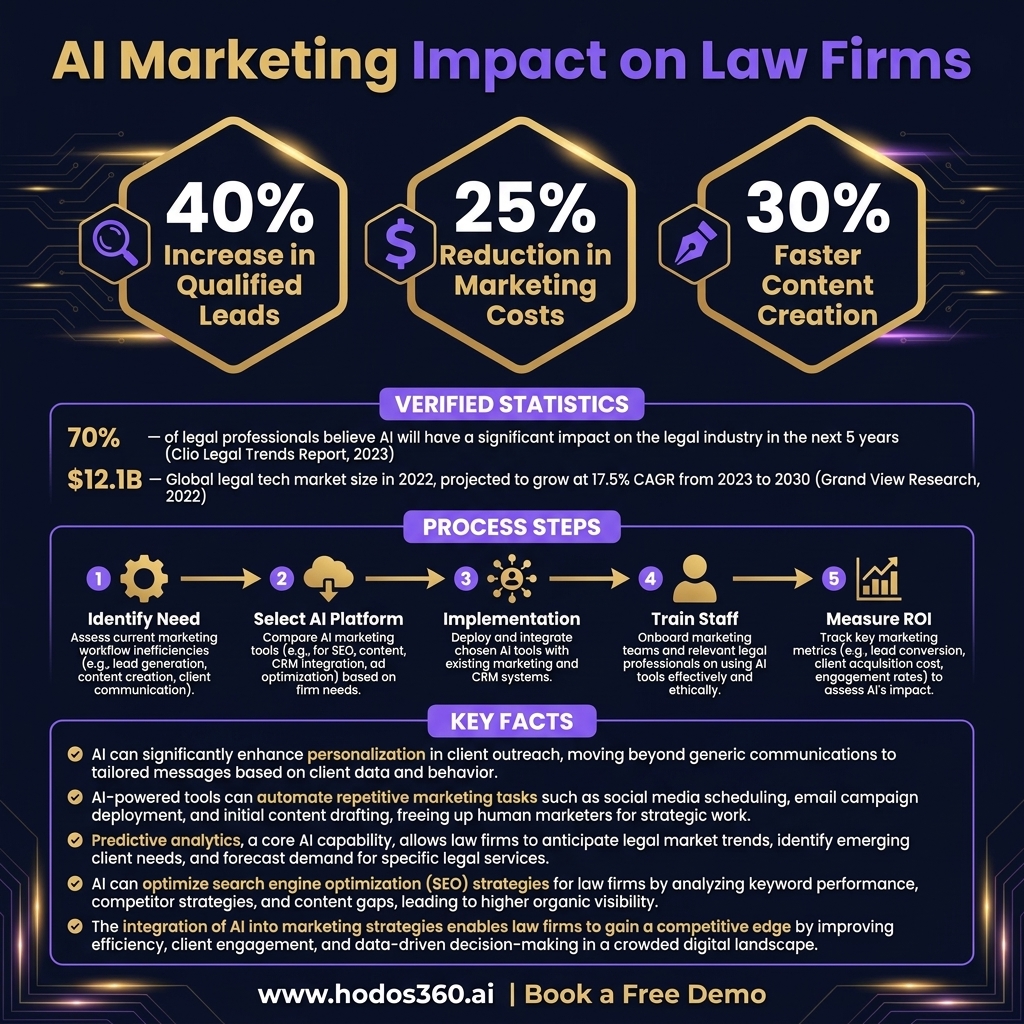
For law firms, the adoption of an AI marketing platform translates into a suite of powerful capabilities designed to streamline operations, enhance client engagement, and significantly boost return on investment. The core components often include AI video creation, social media automation, sophisticated content generation, real-time analytics, and comprehensive ROI tracking.
Consider the challenge of producing engaging video content: traditionally, this required significant time, resources, and often external agencies. With AI video creation, firms can rapidly generate high-quality, personalized video messages for client testimonials, practice area explanations, or thought leadership pieces. This accelerates content cycles and allows for A/B testing of different messages to optimize impact, a capability previously out of reach for many small to mid-sized firms.
The ability to create dynamic and visually appealing content is crucial in today's digital landscape, where attention spans are short and visual media dominates.
Social media automation, powered by AI, moves beyond simple scheduling to intelligent content distribution. Learn more about AI Chatbot Builders: Transform Your Law Firm in 2026.
Instead of manually posting across multiple platforms, AI can analyze audience engagement patterns, optimal posting times, and even predict which types of content will perform best for specific demographics. This ensures that a firm's message reaches the right audience at the most impactful moment, maximizing visibility and engagement.
For example, an AI-powered system can identify trending legal topics (like recent legislative changes or high-profile court rulings) and suggest relevant content for immediate dissemination, linking to the firm's blog or news section. This proactive approach to social media management ensures that law firms remain at the forefront of legal discourse, establishing themselves as authoritative voices in their respective practice areas.
This strategic advantage is particularly potent for firms looking to expand their digital footprint without exponentially increasing their marketing team's workload.
Content generation through AI is perhaps one of the most transformative aspects for law firms. From blog posts and articles to email newsletters and website copy, AI can draft compelling, SEO-optimized content that adheres to specific brand guidelines and legal accuracy parameters. While human oversight remains critical for legal precision and nuance, AI significantly reduces the initial drafting time, allowing attorneys to focus on high-value legal work.
Platforms like Marigold, which leverages AI for customer engagement, showcase the potential for hyper-personalized communication. Imagine an AI system generating a series of email campaigns tailored to potential clients based on their specific legal queries or demographic data, guiding them through the intake process with relevant information and firm insights.
This level of personalization not only improves conversion rates but also builds stronger client relationships from the very first interaction, making the client journey smoother and more efficient.
Beyond creation, the true power of an AI marketing platform lies in its analytics and ROI tracking capabilities.
Traditional marketing often struggles with clear attribution and measuring the true return on investment. Learn more about Voice AI Revolution 2026: Agentic Platforms Transform Law Firms. AI-powered analytics platforms provide deep insights into campaign performance, client acquisition costs, and the effectiveness of different marketing channels.
This data-driven approach allows law firms to continuously refine their strategies, allocating resources to the most impactful activities and identifying areas for improvement. For example, if data indicates that clients searching for "estate planning lawyer near me" respond better to video content on LinkedIn than text-based ads on Google, the AI system can automatically reallocate budget and content efforts.
This iterative optimization, driven by real-time data, ensures that marketing spend is always working as hard as possible, maximizing leads and client conversions. The integration of such robust analytics into platforms like HODOS 360’s AI Marketing Platform empowers law firms to make informed strategic decisions, transforming marketing from a cost center into a powerful growth engine.
Streamlining Client Acquisition with AI-Powered Workflows
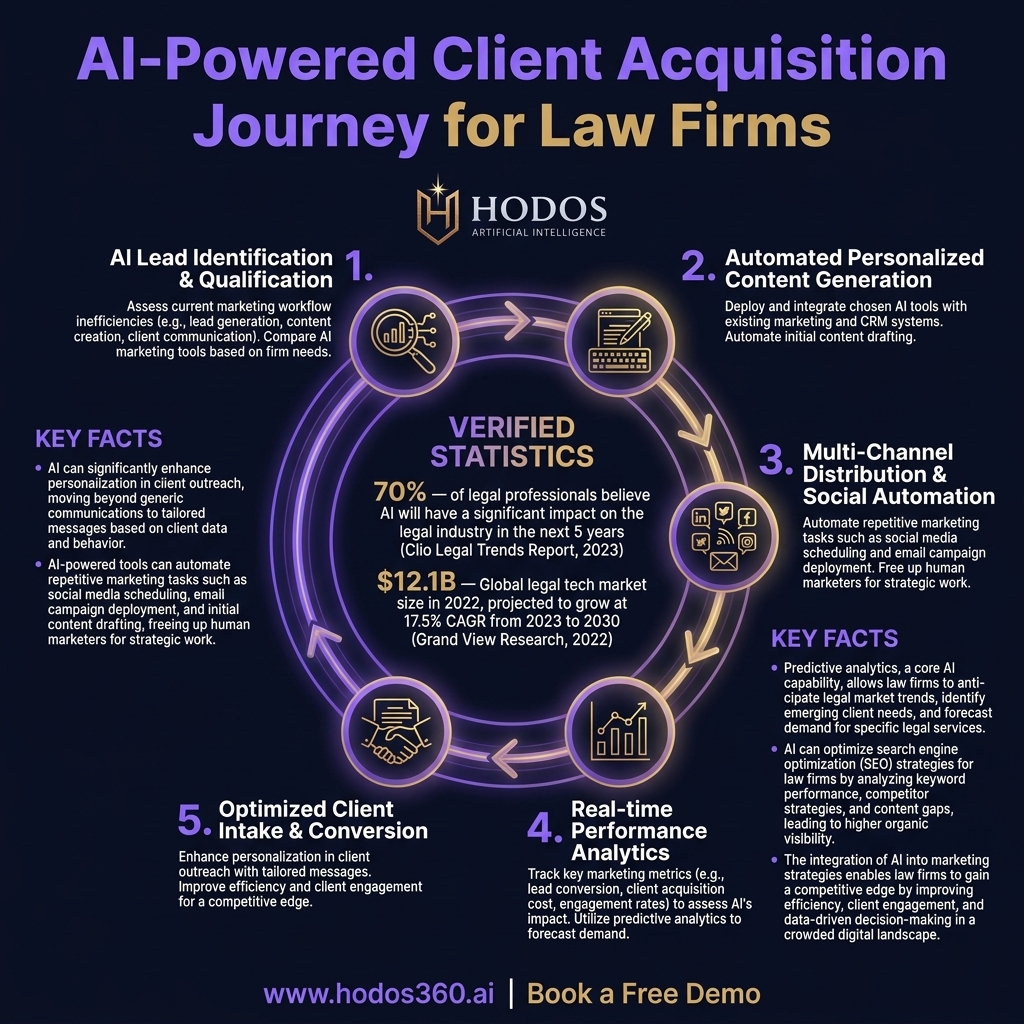
The journey from a prospective client to a retained client can be complex and time-consuming. AI-powered marketing platforms, especially when integrated with broader AI Law Firm Management Systems, streamline this entire process. From initial lead qualification using AI Voice Assistants that answer calls 24/7 and book appointments, to automated client intake forms that pre-populate data and generate initial documents, AI creates a seamless, efficient experience.
Learn more about AI Web Apps: Ultimate Legal Firms' Guide to Next-Gen Development. This reduces administrative burden, minimizes human error, and ensures that potential clients receive prompt, professional attention, setting a positive tone for the client-firm relationship. The ability to automate routine tasks frees up legal staff to focus on high-value client interactions and complex legal work, significantly improving overall firm productivity.
See the future of legal marketing. Request a personalized demo of HODOS 360's AI Marketing Platform today and discover your firm's potential.
Strategic Advantages: Data-Driven Decisions and Client Acquisition
The strategic advantage of adopting an advanced AI marketing platform for law firms extends far beyond mere automation; it fundamentally transforms how firms make decisions and acquire clients. In an increasingly competitive legal market, access to precise, actionable data is paramount. AI-powered analytics provide insights into market trends, client demographics, and competitor strategies that are simply unattainable through manual analysis.
For instance, a firm specializing in intellectual property law can leverage AI to identify emerging tech companies in specific regions, analyze their patent filing patterns, and predict their future legal needs, allowing for highly targeted outreach campaigns. This predictive capability, often seen in the financial sector with algorithms forecasting stock movements, is now being adapted for legal services, offering a significant edge.
The ability to anticipate client needs, rather than merely reacting to them, positions a firm as a proactive partner, fostering deeper trust and long-term relationships.
Moreover, the power of an AI-powered platform lies in its ability to synthesize data from disparate sources into a unified, intelligent view of the market and client base.
Learn more about AI Marketing: The Ultimate Strategic Guide for Law Firms. This includes integrating data from website traffic, social media engagement, email campaigns, CRM systems, and even public legal databases. By correlating these data points, AI can identify optimal client profiles, uncover unmet legal needs, and pinpoint the most effective marketing channels for specific practice areas.
For example, a family law firm might discover through AI analytics that younger demographics are increasingly seeking divorce advice via TikTok, while older clients prefer detailed articles found through Google search. This nuanced understanding allows for dynamic adjustment of marketing efforts, ensuring resources are allocated where they will yield the highest ROI.
This level of data integration and analysis is a hallmark of sophisticated platforms, such as those that underpin Zeta Global's Athena, providing a blueprint for how law firms can achieve similar strategic clarity.
The impact on client acquisition is profound. By moving away from a "spray and pray" approach to marketing, firms can focus on highly qualified leads who are genuinely in need of their services. AI can score leads based on their likelihood to convert, prioritizing outreach efforts and optimizing the sales funnel.
This not only increases conversion rates but also reduces the time and resources spent on pursuing leads that are unlikely to materialize. Furthermore, AI can personalize the entire client journey, from the initial touchpoint to ongoing communication, ensuring that each interaction is relevant and valuable.
This personalized approach, often cited by experts like Seth Godin in the context of permission marketing, builds trust and rapport, critical elements in the professional services sector. The firm becomes a trusted advisor from the outset, rather than just a service provider.
The competitive dynamics within the legal industry are often characterized by a zero-sum game for clients.
However, AI marketing allows firms to expand their reach and tap into previously underserved markets or niche areas with greater precision. Consider the emergence of new legal needs driven by technological shifts, such as AI governance or data privacy compliance (especially relevant with legislation like the EU AI Act coming into full force).
An AI platform can quickly identify the companies and individuals most affected by these changes, allowing a firm to proactively offer specialized services. This agility in identifying and capitalizing on new market opportunities is a game-changer. Firms that embrace this data-driven, AI-centric approach will not only attract more clients but will also attract the *right* clients, leading to higher-value cases and more sustainable long-term growth.
The era of guesswork in legal marketing is over; the era of intelligent, data-led strategy has begun.
Navigating Ethical AI in Legal Marketing and Compliance
While the transformative potential of AI marketing is undeniable, law firms operate within a unique ethical and regulatory landscape that demands careful consideration. The American Bar Association (ABA) Model Rules of Professional Conduct, particularly Rules 7.1 (Communications Concerning a Lawyer’s Services) and 7.2 (Advertising), impose strict requirements on how lawyers can market their services.
These rules emphasize that communications must not be false or misleading, and any advertising must clearly identify the lawyer or law firm responsible. The use of AI in generating content, personalizing outreach, or even simulating human interaction (e.g., AI voice assistants) raises critical questions about transparency, accuracy, and the potential for unintended bias.
Firms must ensure that AI-generated content is thoroughly reviewed by human attorneys for legal accuracy and compliance with ethical guidelines, preventing any misrepresentation or misleading claims that could undermine public trust or lead to disciplinary action.
The ethical imperative extends to data privacy and client confidentiality.
AI marketing platforms collect and process vast amounts of data, including potentially sensitive information about prospective clients. Firms must adhere to stringent data protection regulations, such as the General Data Protection Regulation (GDPR) or the California Consumer Privacy Act (CCPA), ensuring that client data is handled securely, transparently, and with appropriate consent.
This means implementing robust cybersecurity measures, clearly communicating data usage policies, and regularly auditing AI systems for vulnerabilities. The legal profession’s duty of confidentiality, enshrined in ABA Model Rule 1.6, applies not only to current clients but also to prospective clients where confidential information may have been shared.
Therefore, the architecture of any AI-powered marketing system must be designed with privacy by design principles, ensuring that data is anonymized or pseudonymized where appropriate, and access is strictly controlled.
Another significant ethical consideration is the potential for algorithmic bias. AI systems learn from the data they are fed, and if that data reflects societal biases, the AI can perpetuate or even amplify them. In a legal context, this could manifest as marketing campaigns that inadvertently exclude certain demographics or make biased assumptions about legal needs.
For example, if an AI is trained predominantly on data from affluent urban areas, it might inadvertently overlook marketing opportunities or misinterpret needs in rural or lower-income communities. Firms have an ethical obligation to ensure their marketing efforts are inclusive and do not discriminate. This requires proactive measures, such as auditing AI algorithms for bias, diversifying training data, and implementing human oversight mechanisms to flag and correct any discriminatory outcomes.
The ethical development and deployment of AI in any legal context, including marketing, is not just a best practice but a professional responsibility, a topic frequently discussed at conferences like LegalTech NYC.
The legal and ethical landscape around AI is continuously evolving, with new legislation like the EU AI Act setting precedents for responsible AI development and deployment.
Law firms, therefore, must remain vigilant and adaptable. This involves ongoing education for legal professionals on AI ethics, regular review of internal AI policies, and potentially engaging with legal tech experts or consultants to ensure compliance. The goal is not to stifle innovation but to channel it responsibly, leveraging AI marketing to enhance access to justice and improve client services, rather than creating new ethical pitfalls.
Firms that prioritize ethical AI development will not only mitigate risks but also build a stronger reputation for integrity and trustworthiness in an increasingly AI-driven world, reinforcing the profession's core values while embracing technological advancement.
Ensuring Transparency and Avoiding Misleading Claims
A critical aspect of ethical AI marketing in law is maintaining transparency and rigorously avoiding misleading claims. ABA Model Rule 7.1 explicitly prohibits false or misleading communications. When AI generates content or personalizes messages, firms must ensure that the output accurately reflects their services, expertise, and fee structures.
For example, an AI-generated ad should not imply a specific outcome for a case or guarantee results, as this would be a clear violation. Furthermore, if AI voice assistants are used for initial client interactions, it may be prudent to disclose that the client is interacting with an AI, especially if the interaction delves into sensitive areas or requires legal advice.
The line between helpful information and legal advice is sacrosanct, and AI systems must be programmed to recognize and respect this boundary, routing complex inquiries to human attorneys.
Future-Proofing Your Firm: Integrating AI for Sustainable Growth
The integration of AI marketing is not merely a tactical upgrade; it is a strategic imperative for future-proofing law firms in an increasingly digital and competitive landscape. As the legal market continues to evolve, driven by technological advancements and shifting client expectations, firms that embrace AI will be better positioned for sustainable growth.
This involves a holistic view of technology, where AI marketing is seamlessly integrated with other AI-powered legal solutions, such as case management, document automation, and AI-powered legal workflows. Imagine a scenario where a potential client's initial inquiry via an AI voice assistant automatically populates a client intake form, triggers a personalized email campaign with relevant practice area information, and schedules an appointment, all while simultaneously updating the firm's CRM and generating initial draft documents for review.
This level of integration, offered by comprehensive platforms like HODOS 360, creates unparalleled operational efficiency and a superior client experience.
The long-term success of law firms will increasingly depend on their ability to leverage data to make informed strategic decisions. AI-powered analytics provide the intelligence needed to identify new market opportunities, optimize service offerings, and adapt to changing regulatory environments.
For example, by analyzing patterns in legal tech adoption and client feedback, a firm can identify a need for specialized services in areas like AI compliance or data governance, allowing them to proactively develop new practice groups or educational resources. This foresight, driven by AI, transforms a firm from a reactive service provider to a proactive industry leader.
It's about building a resilient, adaptable business model that can navigate the complexities of the 21st-century legal market, a concept often discussed by thought leaders like Richard Susskind in his seminal works on the future of law.
Furthermore, integrating AI into marketing strategies fosters a culture of innovation within the firm. Attorneys and staff become more comfortable with technology, leading to broader adoption of AI tools across different departments. This creates a virtuous cycle where technological proficiency enhances both client service and internal efficiency.
Firms that invest in AI training for their staff, encouraging experimentation and continuous learning, will attract top talent who are eager to work at the forefront of legal innovation. This not only improves the quality of legal services but also enhances employee satisfaction and retention, critical factors for long-term success.
The competitive advantage of being an early and effective adopter of AI will only grow, creating a significant divide between tech-forward firms and those that lag behind.
Ultimately, the goal of integrating AI marketing is to build a more client-centric and agile law firm. By understanding client needs with greater precision, delivering highly personalized communications, and streamlining the client acquisition process, firms can foster stronger relationships and build a loyal client base.
This focus on the client experience, powered by AI, translates into increased referrals, higher client satisfaction scores, and ultimately, sustainable revenue growth. The future of legal practice is not just about legal expertise; it's about combining that expertise with cutting-edge technology to deliver exceptional value.
Firms that strategically embrace AI across their operations, from practice management to marketing, will not just survive the digital transformation—they will lead it, setting new benchmarks for efficiency, client service, and professional excellence in the legal industry.
Embracing Continuous Learning and Adaptation in AI Adoption
The rapid pace of AI development necessitates a commitment to continuous learning and adaptation within law firms. As new AI models and applications emerge, firms must be prepared to evaluate, integrate, and optimize these tools. This isn't a one-time implementation but an ongoing process of refinement and strategic adjustment.
Staying abreast of AI news today and developments in the broader technology sector, such as advancements from OpenAI or Adobe Stock's integration of AI-generated content, will be crucial. Firms that foster a culture of curiosity and embrace iterative improvement in their AI strategies will be best equipped to leverage the full potential of these transformative technologies for enduring success.

Key Takeaways and Next Steps
The journey of integrating AI marketing into a law firm's strategy is no longer optional; it is a critical differentiator in today's dynamic legal landscape. From the advanced capabilities demonstrated by platforms like Zeta Global's Athena to the comprehensive solutions offered by dedicated legal tech providers, the tools for transformation are readily available.
The core takeaway is clear: embracing AI in marketing empowers law firms to achieve unprecedented levels of efficiency, personalization, and strategic foresight in client acquisition and engagement. Firms that proactively adopt these technologies will not only streamline their operations but also build stronger, more resilient practices capable of sustained growth.
For law firm owners and managing partners, the next steps are practical and actionable. Begin by assessing your current marketing infrastructure and identifying areas where AI can provide the most immediate impact, whether it's content generation, social media automation, or lead qualification. Educate your team on the capabilities and ethical considerations of AI, fostering a culture of informed adoption.
Critically, seek out trusted partners who understand the unique needs of the legal industry. Platforms like HODOS 360 offer a comprehensive suite of AI-powered services, from an AI Law Firm Management System to an AI Marketing Platform and AI Voice Assistants, specifically designed to empower legal practices.
By strategically integrating these advanced tools, your firm can navigate the complexities of the digital age with confidence, ensuring you attract the right clients, deliver exceptional service, and secure your place at the forefront of the legal profession. The time to act is now, to transform your firm's potential into tangible success.
Frequently Asked Questions
What is AI marketing for law firms?+
AI marketing for law firms involves using artificial intelligence technologies to automate, optimize, and personalize marketing efforts. This includes AI-powered tools for content generation, social media management, targeted advertising, client lead qualification, and performance analytics. It shifts marketing from traditional, broad approaches to data-driven, highly efficient strategies that attract and convert ideal clients more effectively.
How can AI marketing help my law firm acquire new clients?+
AI marketing significantly enhances client acquisition by enabling hyper-targeted outreach, predicting client needs, and personalizing communications. AI analyzes vast datasets to identify high-potential leads, automates initial client interactions (like appointment booking), and generates relevant content that resonates with specific client segments, ultimately streamlining the entire lead-to-client conversion funnel.
What are the ethical considerations for AI marketing in the legal profession?+
Ethical considerations include ensuring transparency, avoiding misleading claims, and protecting client data. Law firms must adhere to ABA Model Rules regarding advertising, rigorously review AI-generated content for accuracy, and implement robust data privacy measures. It's crucial to mitigate algorithmic bias and clearly disclose AI interactions to maintain professional responsibility and client trust.
Can AI marketing personalize content for different practice areas?+
Absolutely. AI marketing platforms excel at personalizing content. By analyzing client demographics, search behavior, and specific legal inquiries, AI can generate and distribute tailored content—from blog posts about estate planning to social media updates on corporate litigation—ensuring each message is relevant to the intended audience for different practice areas.
How does AI marketing integrate with existing law firm operations?+
AI marketing platforms can seamlessly integrate with existing law firm operations, especially when part of a broader legal tech ecosystem. They can connect with case management systems, CRM, and document automation tools to create unified workflows. This integration allows for a holistic approach, where marketing efforts feed directly into client intake and case management, enhancing overall firm efficiency.