


AI Marketing: The Strategic Advantage for Law Firms
Just a few years ago, the idea of an algorithm drafting a legal blog post or an AI assistant qualifying leads for a law firm might have seemed like science fiction. Today, it's the strategic bedrock for firms pushing the boundaries of client engagement and operational efficiency.
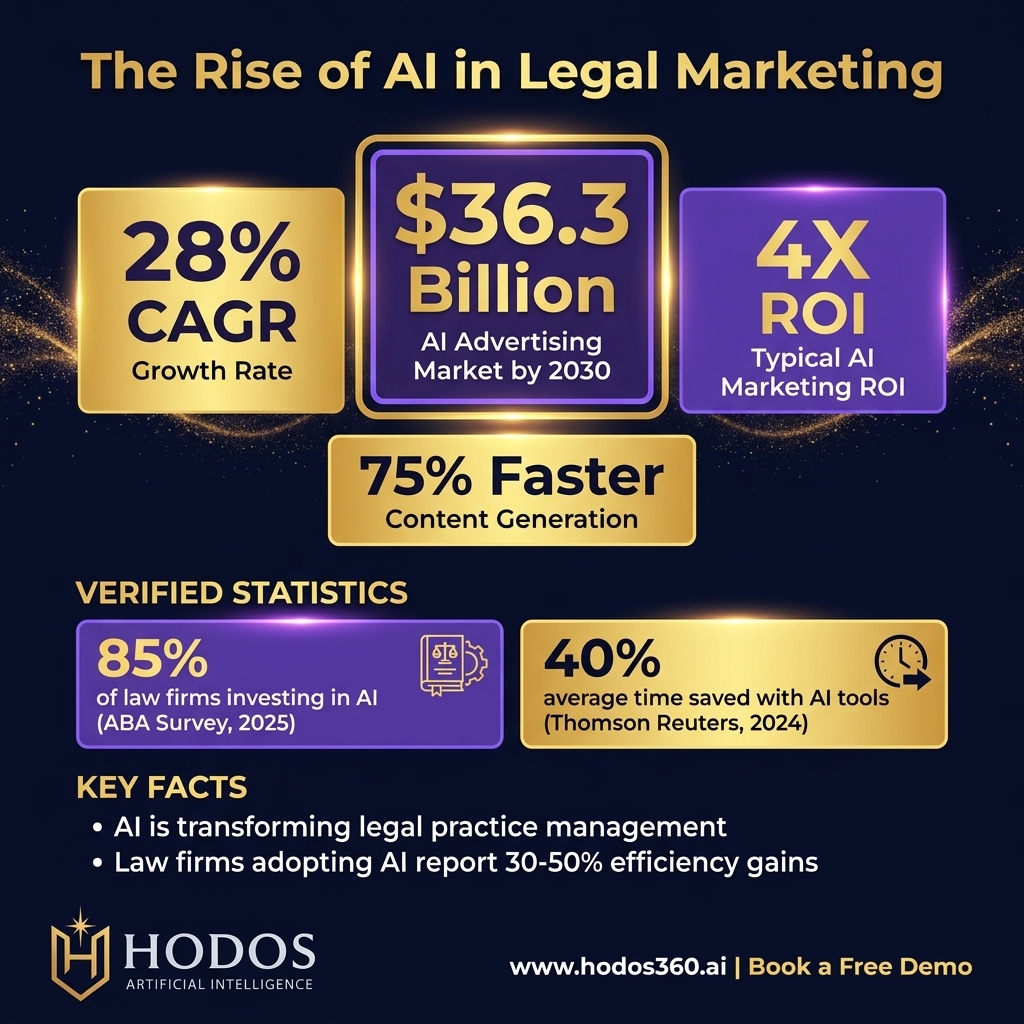
The legal sector, traditionally cautious, is now witnessing a seismic shift as artificial intelligence (AI) marketing moves from experimental to essential. The numbers speak volumes: the AI in advertising market, valued at $11.2 billion in 2025, is projected to skyrocket to $36.3 billion by 2030, according to bestmediainfo.com.
This exponential growth isn't just for consumer brands; it's a clear signal for law firms that the future of client acquisition and brand building is undeniably AI-powered.
This burgeoning market represents a critical juncture for law firm owners and attorneys. Firms that embrace AI marketing are not merely adopting new tools; they are fundamentally reshaping their approach to outreach, client conversion, and competitive positioning.
Consider the narrative of firms like Allen & Overy, which famously partnered with Harvey AI to enhance legal research and drafting. While that focused on legal work, the underlying principle—leveraging AI for strategic advantage—extends powerfully into marketing. The tension between traditional, relationship-based marketing and data-driven, AI-optimized campaigns is palpable.
Firms that hesitate risk being outmaneuvered by agile competitors who are already harnessing AI to identify niche markets, personalize communications, and track campaign ROI with unprecedented precision. The question is no longer *if* AI will impact legal marketing, but *how quickly* your firm will harness its strategic advantage.
The Transformative Power of AI Marketing for Legal Client Acquisition
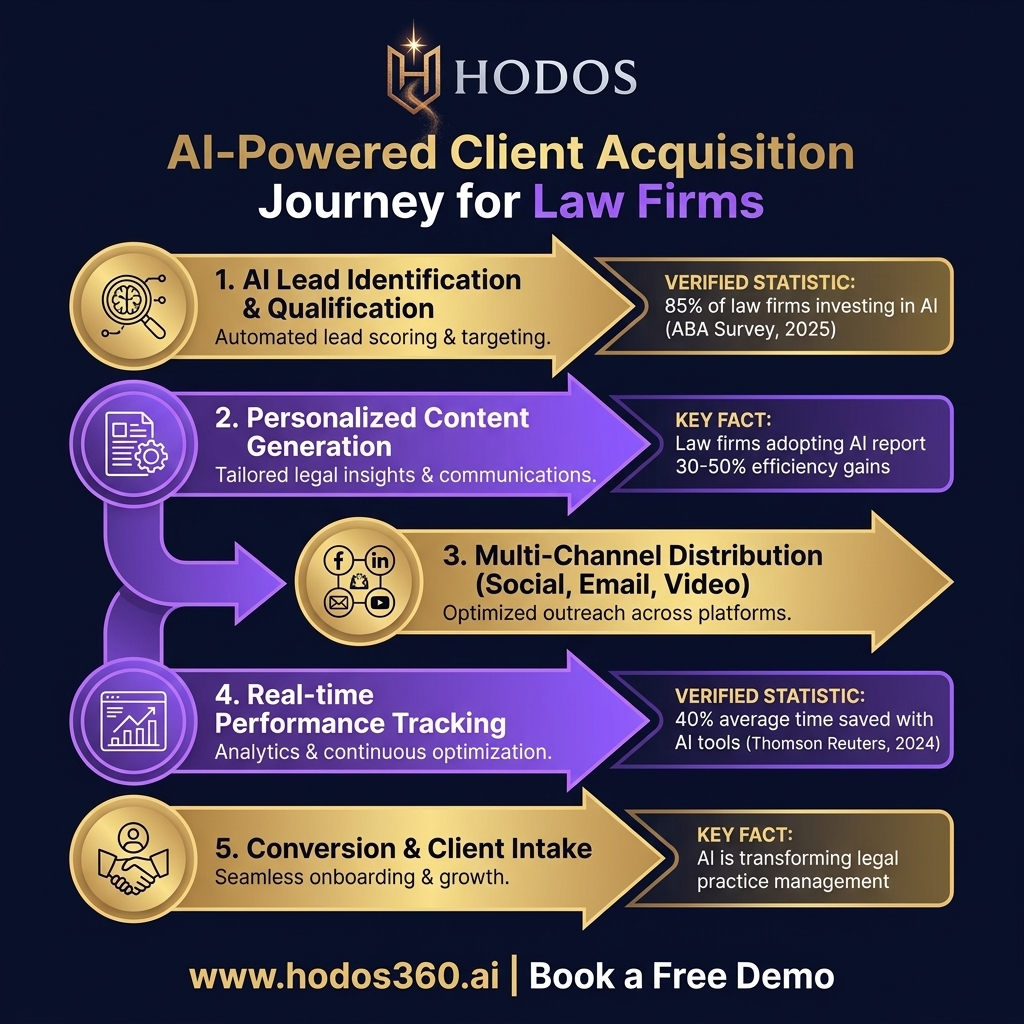
For law firms, the bedrock of sustained growth lies in effective client acquisition. In an increasingly crowded and competitive legal landscape, AI marketing offers a distinct edge, moving beyond traditional methods of networking events and word-of-mouth referrals. AI-powered platforms can analyze vast datasets—from demographic information to online behavior and past interactions—to identify potential clients who are most likely to need specific legal services.
This predictive analytics capability allows firms to target their efforts with surgical precision, reducing wasted marketing spend and significantly increasing conversion rates. Imagine a system that can flag businesses in a specific industry facing new regulatory challenges or individuals in a particular region experiencing life events that often necessitate legal counsel.
This isn't theoretical; it's the reality of modern AI marketing.
The deployment of AI in client intake and lead qualification is fundamentally redefining the early stages of the client journey. Firms are leveraging AI voice assistants, for instance, to provide 24/7 phone answering services, qualify leads based on predefined criteria, and even book initial consultations.
This automation frees up valuable paralegal and administrative staff to focus on more complex tasks, while ensuring that no potential client inquiry goes unanswered, regardless of the hour. Legal tech innovators like Jack Newton, CEO of Clio, have long championed the integration of technology to streamline firm operations, and AI in marketing extends this philosophy to the very first touchpoints with prospective clients.
The efficiency gains are enormous, transforming what was once a labor-intensive, often inconsistent process into a smooth, always-on client acquisition engine.
Beyond initial contact, AI facilitates hyper-personalization in outreach. Learn more about AI Voice Assistant: Apple's Essential Siri Reboot Unpacked. Instead of generic email blasts, AI can craft tailored messages that resonate with the specific needs and pain points of individual prospects.
This level of customization builds trust and demonstrates a deeper understanding of the client's situation even before the first consultation. For example, a prospective client researching estate planning might receive content specifically addressing their age group's common concerns, rather than broad legal advice. This nuanced approach, driven by sophisticated algorithms, elevates the client experience and significantly improves engagement.
The result is a more efficient pipeline, converting leads into loyal clients with greater speed and efficacy, a crucial factor in today's competitive legal market.
However, this power comes with responsibility. The ethical considerations surrounding data privacy and the use of personal information in AI-driven targeting are paramount for law firms.
Adherence to regulations like the EU AI Act (following its enforcement) and existing data protection laws (e.g., GDPR, CCPA) is not just a legal obligation but a professional imperative. Law firms must ensure their AI marketing strategies are transparent, secure, and compliant with ethical guidelines, particularly ABA Model Rule 1.6 on Confidentiality of Information and Model Rule 7.1 on Communications Concerning a Lawyer's Services.
The tension here lies in maximizing AI's targeting capabilities while rigorously upholding the profession's ethical standards, requiring careful implementation and ongoing oversight.
Beyond Keywords: AI-Driven Content Generation and SEO
Content remains king in digital marketing, but the sheer volume and quality required can overwhelm even well-resourced law firms. This is where AI-driven content generation and SEO become indispensable. AI tools can analyze trending legal topics, identify long-tail keywords with high search intent, and even draft compelling content—from blog posts and articles to social media updates and website copy—at a speed and scale impossible for human writers alone.
This doesn't mean replacing legal expertise; rather, it means augmenting it, allowing attorneys to focus on complex legal analysis while AI handles the initial content creation and optimization. Firms can then refine and inject their unique voice, ensuring accuracy and legal nuance.
AI's impact on Search Engine Optimization (SEO) is profound.
Modern search engines increasingly rely on semantic understanding, meaning they don't just look for keywords but for the intent and context behind a query. Learn more about AI Operational Intelligence: The Essential Shift for Law Firms. AI-powered SEO tools can analyze competitor content, identify gaps in a firm's online presence, and recommend strategies to improve organic search rankings.
This includes optimizing for voice search queries, structuring content for featured snippets, and ensuring technical SEO best practices are met. The goal is to ensure that when a potential client searches for legal help, your firm's expertise is prominently displayed, making your content discoverable and authoritative.
This strategic use of artificial intelligence ensures a firm's digital footprint is maximized.
Navigating the Digital Landscape: Social Media & Video with AI
In today's interconnected world, a robust social media presence and engaging video content are non-negotiable for law firms. However, managing multiple platforms, creating consistent content, and tracking engagement can be a significant drain on resources. AI steps in as a powerful ally, streamlining social media automation and enhancing video content creation.
AI tools can schedule posts across various platforms, analyze audience demographics to determine optimal posting times, and even identify trending topics relevant to the legal industry. This allows firms to maintain an active, professional, and impactful social media presence without constant manual oversight, ensuring they reach their target audience effectively and consistently.
AI video creation is another game-changer for legal marketing. Explainer videos, client testimonials, and firm profiles can be produced with remarkable efficiency using AI-powered platforms. These tools can generate scripts, select appropriate visuals, and even create voiceovers, significantly reducing the time and cost associated with traditional video production.
Imagine a firm like Sullivan & Cromwell, known for its institutional reputation, leveraging AI to quickly produce concise videos explaining complex legal concepts to a broader audience. This capability democratizes high-quality video content, allowing even smaller firms to compete with the global players in terms of digital presence.
The result is more dynamic, engaging content that captures attention and conveys expertise in a visually compelling format, crucial for building brand awareness and trust.
Beyond creation, AI provides invaluable analytics for social media and video campaigns. Learn more about AI Voice Clone: The Ultimate Guide for Law Firms.
It can track engagement rates, identify which content resonates most with specific client segments, and provide actionable insights to refine future strategies. This data-driven approach moves firms away from guesswork and towards informed decision-making, optimizing their digital outreach for maximum impact. The ability to measure the ROI of social media efforts, often a challenge for law firms, becomes clearer with AI's analytical capabilities.
This level of insight ensures that every piece of content and every social media post contributes directly to the firm's strategic objectives, making marketing efforts more accountable.
The competitive dynamics in legal marketing are intensifying, with firms vying for attention in a noisy digital space.
Firms that are slow to adapt to AI's role in social media and video risk falling behind. The shift isn't just about efficiency; it's about relevance. As clients increasingly turn to digital channels for information and recommendations, a firm's ability to engage effectively on these platforms becomes a litmus test for its modernity and accessibility.
AI provides the tools to not only keep pace but to lead the charge, ensuring a firm's digital voice is heard clearly and persuasively, thereby maintaining a strong competitive position in the market.
ROI Tracking and Analytics: Proving Marketing Effectiveness
One of the perennial challenges in legal marketing has been accurately measuring the return on investment (ROI) for various campaigns. AI decisively addresses this by offering sophisticated ROI tracking and analytics capabilities. AI-powered platforms can integrate data from multiple sources—website traffic, lead generation forms, social media engagement, email campaigns, and even client intake systems—to provide a holistic view of marketing performance.
This allows law firm owners and managing partners to see precisely which channels and campaigns are generating the most qualified leads and ultimately, the most profitable clients. This transparency is crucial for optimizing budgets and making data-backed strategic decisions.
AI's analytical prowess extends to predictive modeling, allowing firms to forecast future marketing performance and adjust strategies proactively.
Learn more about Generative AI Marketing: Law Firms' 2026 Growth Engine. By identifying patterns and correlations that human analysts might miss, AI can pinpoint areas for improvement and opportunities for growth. For example, a firm might discover that certain content types consistently lead to higher conversion rates for a particular practice area, enabling them to double down on those successful strategies.
This level of insight transforms marketing from a cost center into a measurable investment, demonstrating tangible value to the firm's bottom line. The AI in advertising market growth is largely powered by these advanced analytics capabilities, which are now accessible to the legal sector.
Ethical AI in Legal Marketing: Balancing Innovation and Responsibility
The rapid advancement of AI in marketing, while offering immense opportunities, also brings significant ethical considerations to the forefront, particularly for the legal profession. Law firms operate under stringent ethical guidelines, and the use of AI in client outreach and data management must strictly adhere to these principles.
Data privacy is paramount: AI systems must be designed and implemented to comply with all relevant data protection laws, such as the General Data Protection Regulation (GDPR) in Europe and the California Consumer Privacy Act (CCPA) in the United States. Furthermore, ABA Model Rule 1.6 on Confidentiality of Information mandates that lawyers protect client data, a principle that extends to how prospective client information is handled by AI marketing tools.
Firms must ensure that AI tools do not inadvertently expose sensitive information or misuse collected data.
Another critical concern is algorithmic bias. AI systems learn from the data they are fed, and if that data reflects existing societal biases, the AI can perpetuate or even amplify them.
In legal marketing, this could manifest as discriminatory targeting, where AI inadvertently excludes certain demographics from receiving information about legal services. This is not only ethically problematic but could also lead to violations of anti-discrimination laws. Firms must actively audit their AI algorithms and data sources to mitigate bias, ensuring equitable access to information about legal services.
As the artificial intelligence landscape evolves, vigilance is key to maintaining fairness and equity in marketing practices.
Transparency and explainability are also vital. Learn more about Agentic Marketing: The Ultimate Guide for Law Firms. Clients and prospective clients have a right to understand how their data is being used and how AI is influencing the marketing messages they receive.
While AI can personalize content, it must do so in a way that is not deceptive or misleading, aligning with ABA Model Rule 7.1, which prohibits false or misleading communications about a lawyer's services. Firms should strive for transparency in their AI usage, clearly communicating their data practices and offering opt-out options.
This builds trust and reinforces the profession's commitment to ethical conduct, even as it embraces cutting-edge technology. The challenge is to leverage AI's power without compromising the foundational trust between lawyers and the public.
Finally, the role of human oversight cannot be overstated. While AI can automate many aspects of marketing, human attorneys and marketing professionals must remain in control, reviewing AI-generated content, monitoring campaign performance, and making ultimate strategic decisions.
AI should be viewed as a powerful assistant, not a replacement for human judgment and ethical responsibility. This hybrid approach ensures that the innovative capabilities of AI are harnessed responsibly, maintaining the highest standards of professional conduct and client trust in the legal marketing space.
The debate at recent LegalTech NYC conferences often centers on this delicate balance, highlighting the ongoing tension between technological advancement and professional ethics.
The Future is Now: Implementing AI Marketing for Sustainable Firm Growth
The trajectory of AI in advertising market growth, from $11.2 billion in 2025 to an expected $36.3 billion by 2030, signals an undeniable shift that law firms must embrace for sustainable growth. Implementing AI marketing is not about a sudden, radical overhaul, but a strategic, phased approach.
Firms should start by identifying specific pain points in their current marketing efforts—whether it's lead qualification, content creation bottlenecks, or inconsistent social media presence. Pilot programs with AI tools focused on these areas can provide valuable insights and demonstrate immediate ROI, building internal buy-in. The key is to integrate AI not as a standalone solution, but as a complementary layer to existing strategies, enhancing efficiency and effectiveness without disrupting core operations.
For firms looking to gain a competitive edge, early adoption and strategic partnerships are crucial. Companies like Thomson Reuters and Bloomberg Law consistently highlight the increasing adoption of legal tech. Firms that partner with comprehensive AI platforms designed specifically for the legal sector, such as HODOS 360’s AI Marketing Platform, can accelerate their transition.
These platforms offer integrated solutions for AI video creation, social media automation, content generation, and sophisticated analytics, providing a unified approach to digital outreach. This holistic integration ensures that marketing efforts are not fragmented but work in concert to achieve overarching firm objectives, leading to a more consistent and impactful brand presence.
Investing in training and change management is equally vital. The success of AI implementation hinges on the willingness and ability of a firm's staff to adapt to new workflows and tools. Learn more about Digital Marketing: Essential Strategies for Law Firms. Providing comprehensive training for marketing teams, attorneys, and administrative staff on how to leverage AI effectively will foster a culture of innovation and ensure smooth adoption.
This proactive approach minimizes resistance and maximizes the benefits of AI, transforming skepticism into proficiency. Firms like Hogan Lovells, known for their innovative approaches, often invest heavily in internal tech education, recognizing that human capital is key to successful technological integration. The journey requires commitment, but the rewards in terms of efficiency, client reach, and competitive advantage are substantial.
Ultimately, the firms that will lead the legal industry in the next decade will be those that strategically integrate AI into every facet of their operations, including marketing. This isn't just about keeping up; it's about setting the pace. As the global AI in advertising market continues its rapid expansion, law firms have an unprecedented opportunity to redefine their marketing strategies, optimize client acquisition, and secure a robust future.
The time to act is now, transforming the potential of AI into tangible, sustainable firm growth. Embrace this future, and position your firm at the forefront of legal innovation.
Strategic Partnerships: Choosing the Right AI Marketing Platform
Selecting the right AI marketing platform is a critical decision for law firms. It’s not just about features, but about finding a partner that understands the unique compliance, ethical, and operational needs of the legal industry. Firms should look for platforms that offer a comprehensive suite of tools, from AI-powered content generation and social media automation to robust analytics and ROI tracking.
Integration capabilities are also crucial; a platform that seamlessly connects with existing case management systems or client intake processes will provide the most value, reducing data silos and streamlining workflows. Firms need a solution that is not only powerful but also intuitive and scalable, capable of growing with their ambitions.
Platforms like HODOS 360 are designed specifically to meet these sophisticated needs, offering an AI Marketing Platform that integrates seamlessly with other essential firm services. This ensures a cohesive digital strategy where every marketing effort is aligned with overall firm management and client service objectives.
Choosing a partner that provides a holistic approach to AI integration, supporting both marketing and other operational aspects, can significantly enhance a firm's efficiency and competitive posture in the market. This strategic decision forms the cornerstone of a future-proof legal marketing strategy, allowing firms to leverage the full potential of artificial intelligence.

Key Takeaways and Next Steps
The rapid expansion of the AI in advertising market, projected to reach $36.3 billion by 2030, underscores a fundamental truth for the legal sector: AI marketing is no longer a luxury but an imperative for sustained success. Firms that proactively integrate AI into their client acquisition, content strategy, and digital outreach will be best positioned to thrive in an increasingly competitive landscape.
From hyper-personalized content generation and automated social media management to precise ROI tracking and lead qualification, AI offers an unparalleled suite of tools to enhance efficiency, broaden reach, and optimize marketing spend. The ethical considerations, particularly regarding data privacy and algorithmic bias, require diligent oversight, ensuring that innovation is always balanced with professional responsibility.
The journey toward an AI-powered legal marketing strategy is both challenging and incredibly rewarding. It demands a willingness to embrace new technologies, invest in staff training, and constantly adapt to evolving digital trends. By doing so, law firms can unlock unprecedented growth, attract and retain high-value clients, and solidify their position as forward-thinking leaders in the legal market.
The time to explore and implement these transformative technologies is now. Discover how HODOS 360's AI Marketing Platform can be the cornerstone of your firm's future success. Learn more about our comprehensive legal tech solutions today.
Frequently Asked Questions
What is AI marketing for law firms?+
AI marketing for law firms involves using artificial intelligence tools and platforms to automate, optimize, and personalize various aspects of their marketing efforts. This includes client acquisition, content creation, social media management, SEO, and ROI tracking. It leverages data analytics and machine learning to make marketing more efficient and effective, identifying ideal clients and tailoring outreach.
How does AI ensure data privacy in legal marketing?+
Ensuring data privacy in AI legal marketing requires strict adherence to regulations like GDPR and CCPA, as well as ABA Model Rule 1.6. Firms must choose AI platforms with robust security features, anonymize data where possible, and obtain explicit consent for data usage. Human oversight is crucial to audit algorithms for bias and ensure transparency in data handling, protecting client confidentiality.
Is AI marketing suitable for small and medium-sized law firms?+
Absolutely. AI marketing is highly beneficial for small and medium-sized law firms. It democratizes sophisticated marketing capabilities, allowing smaller firms to compete with larger ones by optimizing budgets, automating repetitive tasks, and gaining insights typically reserved for firms with extensive marketing departments. AI tools can scale to fit various firm sizes and needs, offering cost-effective solutions.
How can AI help measure the ROI of marketing campaigns?+
AI significantly enhances ROI tracking by integrating data from all marketing channels and client touchpoints. It uses predictive analytics to identify which campaigns and strategies are most effective in generating qualified leads and converting them into profitable clients. This data-driven approach allows firms to optimize their marketing spend, allocate resources more efficiently, and demonstrate tangible returns on investment.
What are the first steps for a law firm to adopt AI marketing?+
The first steps involve identifying current marketing pain points, researching AI marketing platforms tailored for the legal sector, and starting with pilot programs in specific areas like lead qualification or content generation. It's crucial to invest in staff training, establish clear ethical guidelines, and seek a strategic partner that offers comprehensive, integrated AI solutions. A phased approach ensures smooth adoption.