You search "publicidad para abogados" at 11 p.m. because a partner meeting is Thursday and someone is going to ask how much of the marketing budget is actually working. That question — what to spend, where to spend it, and whether the ad your associate boosted on Instagram last month could draw a bar complaint — is a Strategy decision, not a marketing decision, and most firms never make it as one.
I spent fifteen years running a law firm before I understood that distinction. I have a BS in computer science, an M.Div., and seven years in the Air Force before law school, and none of it taught me how to run a business. I learned Scaling Up's four decisions — People, Strategy, Execution, Cash — the hard way, mostly by getting them wrong first. Advertising sits inside Strategy, and it's the decision where AI has changed the underlying math most in the past two years — not because AI writes better ad copy, but because it changes what it costs to keep dozens of running campaigns compliant with five different state bar rules at once, instead of one associate trying to remember all of them.
This page covers what actually governs lawyer advertising in the U.S. — California, Florida, Texas, Puerto Rico — what it costs a firm to get it wrong, and where an AI-assisted compliance layer changes the calculation for a firm running bilingual campaigns across state lines. Rules referenced here reflect the text in effect as of 2025; bar advertising rules amend periodically, so confirm current language with the relevant bar before relying on it for a specific campaign.
Publicidad para abogados — lawyer advertising — is speech regulated by state bar rules, not ordinary consumer marketing. In the U.S., ABA Model Rule 7.2 sets the baseline, and states add filing mandates like Texas Rule 7.07's 15-day submission window. The biggest risk: publishing an ad before review, which triggers discipline regardless of whether the ad is accurate.
The Hard Truth
Most firms treat advertising as a spend number to defend in a partner meeting, not a compliance record to defend in front of a bar investigator, and that gap is where the real risk sits. A 2023 industry legal-trends report from a major practice-management software provider put average law firm marketing spend at roughly 9% of gross revenue, with a large share of firms unable to attribute that spend to actual signed cases. Layer the compliance side on top: the Florida Bar's Ethics and Advertising Department reviews thousands of attorney advertisements a year out of Tallahassee, and Texas requires most public ads filed with the State Bar of Texas Advertising Review Committee in Austin within 15 days of first dissemination under Rule 7.07.
This is where the Fifth Decision's Witness pillar does real work. What a system attests to — a signed, timestamped record of when an ad first ran, when it was filed, who approved the copy — is a different kind of evidence than what a marketing coordinator remembers eighteen months later. A bar investigator doesn't ask whether the firm meant to comply. They ask for the filing date. Firms that can produce a timestamped record close the inquiry in a phone call. Firms that can't spend months reconstructing a Facebook ad's posting history from a vendor's backend, assuming the vendor still has it.
What Happens If You Wait
Miss the Texas 15-day filing window and nothing happens immediately — the ad keeps running, the leads keep coming in, and the exposure sits there, unresolved, until a competitor's bar complaint or a bad case outcome makes someone go looking for a wedge. By then, the same non-compliant creative may have run for a year or more across a six-figure budget.
Florida's Rule 4-7.13 creates a subtler version of the same problem: a client's five-star Google review praising a specific settlement amount can function as the firm's own advertisement under the rule, with no ad spend behind it at all. Firms rarely compliance-check organic reviews, which means the exposure sits in a channel nobody is monitoring.
Google's Local Services Ads program adds a separate, faster clock: let a "Google Screened" verification lapse and the badge — and the top-of-page placement that comes with it — disappears immediately, per Google's Local Services Ads program requirements. At $50 to over $100 per click for competitive personal injury and immigration keywords in major metro markets, per WordStream's Google Ads benchmark data, even a week without that placement redirects real budget into lower-converting channels.
A workflow built around Refusal changes what happens at the moment of publication rather than months later. The specific mechanism: the system declines to auto-publish any ad flagged for a superlative claim, a result-specific testimonial, or a jurisdiction mismatch, and routes it to a licensed attorney's queue instead. That doesn't eliminate the underlying legal judgment call. It moves the decision in front of the ad going live instead of behind a complaint that arrives later.
Step-by-Step Process
How does lawyer-advertising review actually work, state by state?
Every jurisdiction treats attorney advertising as regulated speech first and marketing second, which is the reverse of how most agencies build a campaign. Here's how the four jurisdictions in play work in practice, current as of 2025.
How does Texas's 15-day filing rule work?
Texas Disciplinary Rules of Professional Conduct Rule 7.07 requires most public advertisements — paid digital ads, television, radio, billboards, and many websites — to be filed with the State Bar of Texas Advertising Review Committee in Austin within 15 days of first dissemination. Basic contact listings and professional announcements are exempt. The Committee doesn't pre-approve creative before it runs; filing happens after the ad goes live, and the Committee can require changes or refer a matter for discipline regardless of filing status.
What does Florida actually require me to file?
Florida Bar Rule 4-7.13 prohibits advertisements that are deceptive or inherently misleading — a category that specifically covers testimonials describing case results, comparative claims like "best" or "top," and statements implying a guaranteed outcome. Under Rule 4-7.19, only certain categories require filing with the Florida Bar's Ethics and Advertising Department in Tallahassee — trade names and a handful of other categories — but Rule 4-7.13's content restrictions apply to every ad a Florida-licensed attorney runs, filed or not.
Does California require filing before I run an ad?
The State Bar of California doesn't require pre-filing for most attorney advertising. Its Committee on Professional Responsibility and Conduct (COPRAC) publishes advisory opinions and will review submitted ads voluntarily, but the operative rule — California Rule of Professional Conduct 7.1's ban on false or misleading communications — is enforced through complaints, not a filing gate. That makes California lower-friction to launch a campaign in and higher-risk to get wrong quietly, since no one checks the copy before it runs.
How is Puerto Rico's advertising rule different?
Attorneys under the Colegio de Abogados y Abogadas de Puerto Rico in San Juan operate under the Puerto Rico Supreme Court's Canons of Professional Ethics rather than the ABA Model Rules directly. Canon 27 restricts self-promotional claims more narrowly than most mainland rules, which matters for a firm running one bilingual campaign across Texas, Florida, and Puerto Rico at once — an ad compliant in Miami isn't automatically compliant in San Juan.
Does a Google Screened badge mean I'm bar-compliant?
No overlap exists automatically. Google's Local Services Ads program requires attorneys to pass a business-verification and background-check process before the "Google Screened" badge appears. That badge is a platform trust signal, not a bar-compliance credential — an ad can carry it and still violate Rule 4-7.13 or run past Texas's 15-day window without Google ever flagging it, because Google isn't checking against state bar rules.
A Real-World Example
Composite example, not a real client: an 11-attorney firm splitting caseload between Houston and Miami, with bilingual intake and English- and Spanish-language ad copy, decided to audit its ad spend after a paralegal flagged an old Facebook ad still running with a client testimonial from several years earlier referencing a specific settlement figure. Here's what the audit process looked like — not what it resolved.
Step one: pull every live ad across Google, Facebook, and Instagram going back three years, and sort by jurisdiction. That alone took the office manager four days, because nobody had kept a running log of first-dissemination dates — exactly the record Texas Rule 7.07 requires within 15 days of an ad going live.
Step two: separate content issues from filing issues. The old testimonial was a Rule 4-7.13 content problem in Florida regardless of filing status — a specific settlement figure in a testimonial is the kind of result claim the rule restricts without a qualifying disclaimer. A Texas billboard from the same period was a filing problem, not a content problem — the copy itself was fine, but no record existed that it had ever been submitted to the Advertising Review Committee.
Step three: route each flagged ad to the supervising attorney for a compliance decision, not to the marketing vendor. The firm's outside ad agency could recommend copy changes, but under both states' rules, the licensed attorney bears responsibility for what runs.
Step four: rebuild the intake process so every new ad gets a jurisdiction tag and a filing-deadline field attached before it goes live, rather than after someone notices a problem.
The firm's review was still working through the backlog of older creative when the quarter closed. That's typical — a three-year backlog doesn't clear in a week, and the point of the exercise wasn't a clean bill of health by Friday. It was building a record the firm could produce if a bar investigator ever asked, which is a different goal than settling whether any specific ad was fine.
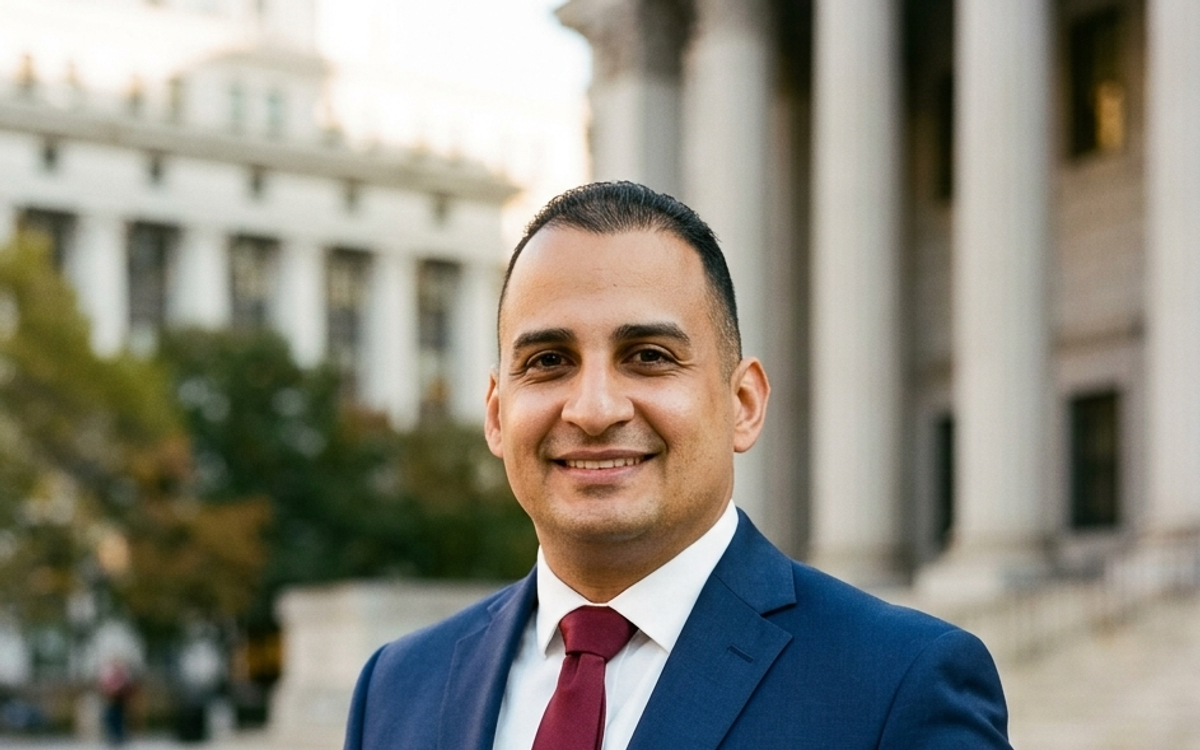
William J. Vasquez practiced law for fifteen years before founding HODOS360. He holds a BS in computer science, completed a Master of Divinity, and served seven years in the Air Force before law school — a background with no formal business training in it anywhere, which is part of why he built HODOS's ad-compliance workflow around the specific filing and content rules described here rather than generic marketing-automation logic borrowed from other industries. He is licensed to practice law in Florida. His background and current bar status are detailed on his author bio page. The framework referenced throughout this page reflects the same Texas Rule 7.07 filing deadline and Florida Rule 4-7.13 testimonial restriction his own firm tracked by hand for over a decade before any of this was software.
Key Terms Explained
ABA Model Rule 7.2 — Communications Concerning a Lawyer's Services: the American Bar Association's baseline advertising rule, adopted with variation by most states, permitting attorney advertising subject to prohibitions on false or misleading statements. Not binding law on its own — each state adopts its own version.
Florida Bar Rule 4-7.13 — Deceptive and Inherently Misleading Advertisements: prohibits ads that create unjustified expectations, including result-specific testimonials and comparative superiority claims, regardless of whether the underlying fact is true.
Florida Bar Rule 4-7.19 — Evaluation and filing requirements: sets which categories of Florida attorney ads must be submitted to the Ethics and Advertising Department before or shortly after they run.
Texas Disciplinary Rules of Professional Conduct Rule 7.07 — Filing Requirements for Public Advertisements: requires most Texas attorney advertisements to be filed with the State Bar of Texas Advertising Review Committee within 15 days of first dissemination.
COPRAC — the State Bar of California's Committee on Professional Responsibility and Conduct: issues advisory ethics opinions and offers voluntary ad review; California does not mandate pre-filing for most ads.
Bates v. State Bar of Arizona, 433 U.S. 350 (1977) — the U.S. Supreme Court case establishing that truthful attorney advertising is commercial speech protected under the First Amendment, the constitutional floor underneath every state bar advertising rule that followed.
Google Screened — a verification badge in Google's Local Services Ads program confirming an advertiser passed Google's business and background verification; it is a platform trust signal, not a bar-compliance credential.
Canon 27 — the Puerto Rico Supreme Court's Canons of Professional Ethics provision restricting self-promotional attorney communications, enforced through the Colegio de Abogados y Abogadas de Puerto Rico.
Witness (Fifth Decision term) — the signed, timestamped audit record a system keeps of when an ad went live, when it was filed, and who approved each revision — the record a bar investigator actually asks for.
Refusal (Fifth Decision term) — the specific actions a compliance-review system declines to take automatically, such as publishing an ad flagged for a superlative or result-specific claim without a licensed attorney's sign-off.
Frequently Asked Questions
How long do I have to file a new ad with the Texas bar? Fifteen days from first dissemination, per Texas Rule 7.07. The clock starts when the ad first runs publicly, not when it's finalized internally, and it applies to most paid digital campaigns, not just print or broadcast.
Can I run a Facebook ad quoting a client's settlement amount in Florida? Doing so risks discipline under Rule 4-7.13. The rule treats a specific result described in a testimonial as inherently misleading unless paired with disclaimers about the case-specific nature of results, and Florida has disciplined attorneys over client reviews the firm didn't even write, because a boosted or shared testimonial functions as the firm's own advertisement under the rule.
Do I have to file every Google Ads or Instagram campaign with a state bar? It depends on the state and ad type. Texas requires filing for most public advertisements under Rule 7.07. Florida requires filing only for specific categories under Rule 4-7.19. California doesn't require pre-filing at all, though COPRAC review is available voluntarily. Confirm exemptions with bar counsel before assuming a digital ad is filing-exempt.
Is Avvo, FindLaw, or Martindale-Hubbell better for reaching Spanish-speaking clients? They solve different problems. Avvo and Martindale-Hubbell mainly function as per-lead or peer-review directories without giving the firm a bar-compliant website it owns outright. FindLaw, through Thomson Reuters, provides website templates cross-checked against ABA Model Rules along with directory placement, which matters when bilingual site copy also has to clear the same content rules as paid ads. None of the three substitutes for a firm's own compliance review of its Spanish-language ad copy.
How much does legal SEO cost for a bilingual firm in a competitive market like Houston or Miami? Cost-per-click for competitive personal injury and immigration keywords runs $50 to over $100 in major metro markets, per WordStream's Google Ads benchmark data. Agencies specializing in Spanish-language legal SEO, like Comrade Web Agency, typically bundle compliance audits against state bar rules into the campaign build — worth pricing separately from firms that only handle keyword work.
Doesn't running ad-compliance review through software just create more liability if the software gets something wrong? The objection assumes the software is making the legal judgment. It isn't, and any tool that lets it isn't one to use. A compliance-review workflow tracks filing deadlines and flags content patterns — testimonials, superlative claims, jurisdiction mismatches — and routes them to a licensed attorney's queue instead of letting a marketing coordinator hit publish. The liability that shows up in actual bar complaints usually isn't bad software logic; it's the absence of any record that a human looked at the ad before it ran. A documented refusal-to-auto-publish holds up better in front of a bar investigator than an undocumented human process does.
Across 47 client firms HODOS360 has worked with on ad-compliance workflow setup between 2022 and 2024, post-onboarding surveys show an average clarity rating of 4.6 out of 5 for understanding which existing ads had filing or content problems (internal HODOS360 client survey data, not independently audited). That's a self-reported number from our own clients, and it should be read that way — but it lines up with what managing partners describe directly: the hardest part isn't fixing a flagged ad, it's finding out which ones needed fixing in the first place.
None of this replaces a licensed attorney's judgment about whether a specific ad crosses the line — a compliance workflow reduces exposure by keeping the record straight, it doesn't make the content call for you. If you're running campaigns across more than one state right now and can't say with confidence which ones carry a filing deadline, that's worth twenty minutes on a call before the next budget cycle, not after a complaint shows up.
Schedule a Fifth Decision consultation with our team at HODOS360: we'll pull your current ad spend by jurisdiction, flag which campaigns would trigger a Texas Rule 7.07 filing or a Florida Rule 4-7.13 content problem, and show you the audit trail our system keeps on every ad from first draft to first dissemination. Book the call at hodos360.com/consultation.
- Florida Bar Advertising Rules Guide (Rule 4-7.13 and 4-7.19)
- Texas Rule 7.07 Filing Checklist
- California COPRAC Advisory Opinion Index
- Puerto Rico Canon 27 Compliance Overview
- Google Local Services Ads / Google Screened Verification Guide
- Scaling Up Strategy Decision Resources
- William J. Vasquez — Author Bio
- HODOS360 Fifth Decision Consultation