
Agentic Marketing: Essential Data Foundation for Law Firms
The legal landscape, long rooted in tradition and personal relationships, is rapidly evolving under the influence of artificial intelligence. For years, law firms relied on word-of-mouth, referrals, and conventional advertising, often struggling with unpredictable client intake and untraceable marketing ROI. However, a seismic shift is underway, epitomized by the rise of Agentic Marketing – a revolutionary approach where autonomous AI agents perform marketing tasks on behalf of the firm, from content creation to lead qualification, all driven by sophisticated data analysis. This isn't merely automation; it's intelligence acting independently, learning, and optimizing.
Consider the plight of many mid-sized firms, such as 'LexCorp Legal' in Chicago, which, until recently, faced a common dilemma: pouring resources into fragmented marketing efforts with little clarity on what truly worked. Their partners, like Sarah Chen, often expressed frustration over static websites and social media channels that felt more like obligations than growth engines. The traditional model, while familiar, was proving inefficient in a digital-first world where potential clients demand instant access to information and personalized experiences. The market was ripe for disruption, and the answer lay not just in adopting AI tools, but in building the foundational infrastructure to empower them.
This new era of marketing, extensively tracked by platforms like StartupHub.ai which monitors thousands of AI startups and their launches, underscores a critical imperative: a robust data foundation. As highlighted in a recent StartupHub.ai article, “Agentic Marketing's Data Foundation,” the effectiveness of these AI agents is directly proportional to the quality and accessibility of the data they consume. Without meticulously curated and integrated data, even the most advanced AI marketing platform becomes a sophisticated guessing game. For law firms, this means consolidating everything from past client interactions and case outcomes to website analytics and referral patterns into a single, intelligent repository. This isn't just about collecting data; it's about strategically building a modern, cloud-native architecture that enables AI to deliver unprecedented precision in client acquisition and retention.
The Agentic Marketing Revolution for Legal Practices
The concept of agentic AI, where systems can reason, plan, and execute multi-step tasks autonomously, is moving from theoretical discussions to practical applications, profoundly impacting marketing. For law firms, this translates into AI agents that can, for instance, analyze a prospective client's online behavior, identify their specific legal needs, generate tailored content, and even initiate follow-up communications, all without constant human oversight. This represents a significant leap from simple automation, where tasks are merely sped up, to true agency, where decisions are made and actions are taken based on complex data analysis and predefined objectives.
This shift is not just about efficiency; it's about strategic advantage. As Snowflake CMO Denise Persson insightfully noted, AI isn't simply replacing existing tools; it's creating a new 'control plane' above them, orchestrating various marketing functions with unprecedented coherence. Learn more about AI Website Creation: Ultimate Guide for Law Firms. Firms that embrace this agentic approach are positioning themselves ahead of the curve, capable of responding to market shifts and client demands with agility that traditional firms simply cannot match. The competitive landscape is becoming starker, creating a clear divide between those leveraging these advanced capabilities and those clinging to outdated methods. The data curated by platforms like StartupHub.ai consistently shows a rapid acceleration in the launch and funding of companies focused on these agentic capabilities, signaling a clear market direction.
A compelling example of this strategic investment comes from firms like Wilson Sonsini Goodrich & Rosati, known for their innovative approach to legal tech. While they might develop internal AI tools to enhance their marketing intelligence, smaller and mid-sized firms can leverage integrated platforms to achieve similar sophistication. This creates a fascinating tension between bespoke solutions and accessible, off-the-shelf platforms, driving innovation across the entire legal sector. The core idea is to move beyond reactive marketing—waiting for clients to come to you—to proactive engagement, where your firm anticipates needs and positions itself strategically.
The real drama unfolds as law firms grapple with this disruption. Learn more about Marketing AI: Essential Tools to 10x Law Firm Growth. On one side are the early adopters, often smaller, agile firms or large enterprises with substantial tech budgets, eager to experiment with new AI marketing platforms. On the other are the traditionalists, wary of the investment, the complexity, and the ethical implications. This divide isn't just about technology; it's about organizational culture and a willingness to embrace change, a narrative often echoed in broader AI discussions, such as the competitive drive between AI powerhouses like OpenAI and Anthropic, whose innovations constantly push the boundaries of what's possible.
Building a Robust Data Foundation for AI-Powered Growth
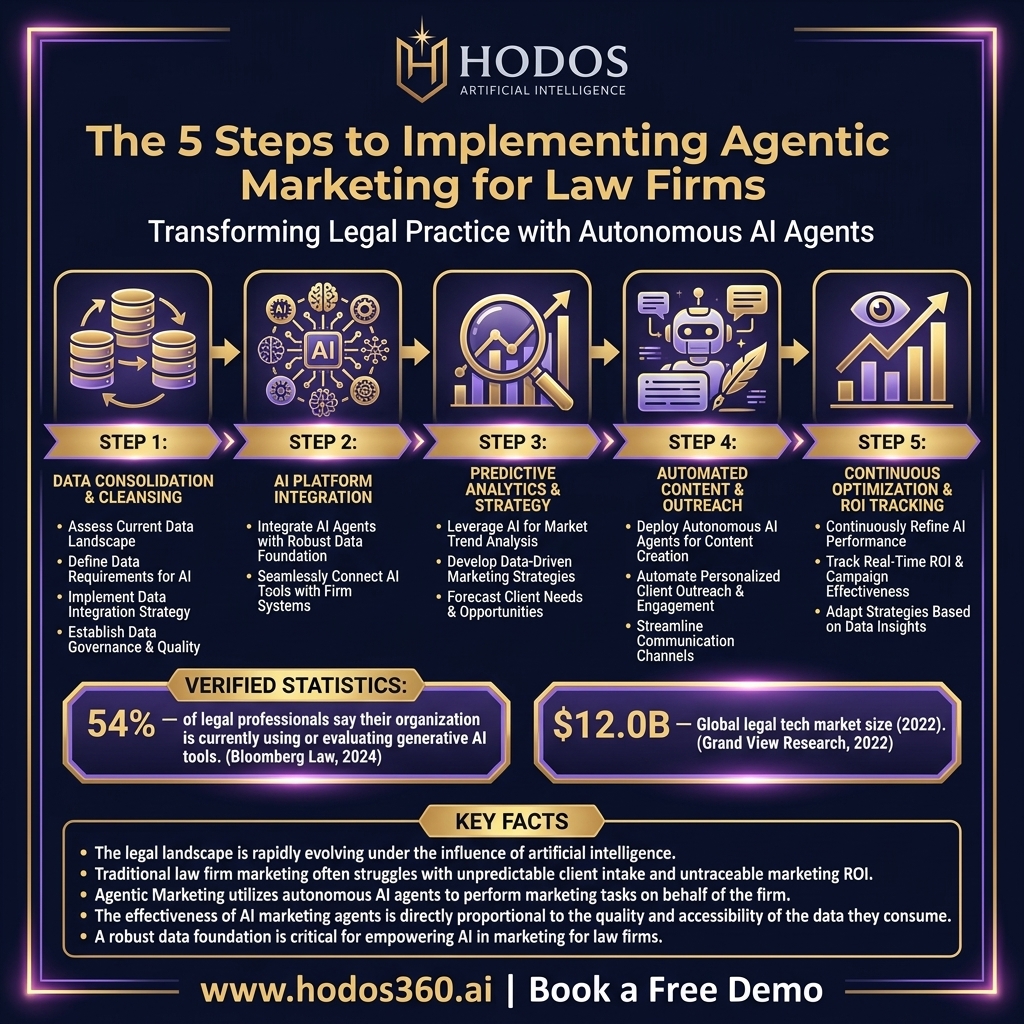
The bedrock of any successful Agentic Marketing strategy is an impeccable data foundation. Without high-quality, integrated, and accessible data, AI agents cannot learn, predict, or act effectively. This is where many law firms face their biggest hurdle: disparate data silos, legacy systems, and inconsistent data entry. Imagine a firm where client intake forms are stored separately from billing records, and case management notes are in yet another system. This fragmentation renders meaningful AI analysis nearly impossible.
To overcome this, law firms must prioritize data consolidation and cleansing. Learn more about Strategic AI Tools Adoption: Essential Guide for Law Firms. This involves integrating all client-facing and operational data—from initial inquiries and client demographics to case types, outcomes, communication histories, and billing patterns—into a unified platform. Thomson Reuters' annual 'State of the Legal Market' reports consistently highlight data management as a top challenge, reinforcing the need for sophisticated solutions. For instance, a firm's CRM, practice management software, and marketing automation tools must speak to each other seamlessly, creating a comprehensive 360-degree view of every client and prospect. This holistic approach is precisely what powers the intelligence behind effective agentic marketing.
Data Governance and Ethical AI in Legal Marketing
Beyond mere collection, the ethical implications of using client data for Agentic Marketing are paramount for law firms. Adherence to professional conduct rules, such as ABA Model Rule 1.6 (Confidentiality of Information), is non-negotiable. Firms must ensure that any data collected and utilized for marketing purposes respects client privacy, maintains attorney-client privilege, and complies with stringent data protection regulations like the General Data Protection Regulation (GDPR) or the California Consumer Privacy Act (CCPA). This means implementing robust data governance policies, ensuring data anonymization where appropriate, and obtaining explicit consent for marketing communications.
The challenge lies in striking a balance between leveraging data for competitive advantage and upholding the sacred trust inherent in the legal profession. Firms must invest in secure, compliant data architectures and transparently communicate their data practices to clients. Learn more about AI Marketing Agents: Essential for Law Firm Growth. The legal tech industry is rapidly developing solutions to address these concerns, offering platforms that are built with compliance by design. A modern data foundation isn't just about quantity; it's about quality, security, and ethical stewardship. Neglecting these aspects can lead to severe reputational damage and legal repercussions, as seen in numerous data breach cases across industries, underscoring the critical need for diligence in every data point collected and utilized.
Leveraging Predictive Analytics for Strategic Client Acquisition
Once a robust data foundation is established, Agentic Marketing truly shines through its ability to leverage predictive analytics. Instead of broad, untargeted campaigns, AI can analyze historical data to identify patterns, predict future legal needs, and pinpoint high-value client segments with remarkable accuracy. This allows law firms to shift from reactive marketing to proactive engagement, anticipating client needs before they even arise. For example, by analyzing economic indicators, local business trends, and past client behavior, an AI marketing platform can predict an uptick in real estate transactions, prompting a firm to strategically deploy content and targeted ads to potential new clients.
This level of insight is transformative for client acquisition. Firms can optimize their ad spend by focusing on channels and demographics most likely to convert, significantly improving their marketing ROI. Learn more about Legal AI: The Ultimate Guide to Automating Conveyancing. The AI Marketing Platform offered by HODOS 360, for instance, provides detailed analytics and ROI tracking, allowing firms to see precisely which campaigns are driving the most qualified leads. This data-driven approach moves marketing beyond intuition to measurable, impactful strategies. Consider how a firm like Latham & Watkins, renowned for its sophisticated business operations, might use advanced analytics to identify emerging market trends in sectors like renewable energy or biotechnology, allowing them to proactively position their legal services to capture new business opportunities.
AI-Powered Content Generation and Social Media Automation
A crucial component of Agentic Marketing is the automation and personalization of content. AI agents can analyze audience preferences, search trends, and firm expertise to generate tailored blog posts, social media updates, video scripts, and even email newsletters. This capability not only saves countless hours for marketing teams but also ensures that the content resonates deeply with the target audience, improving engagement and lead conversion. Imagine an AI system detecting a surge in queries about intellectual property rights for startups, then automatically drafting a series of informative articles and social media snippets, complete with relevant keywords and calls to action.
Beyond content creation, AI excels at social media automation. This includes scheduling posts at optimal times, monitoring engagement, and even drafting responses to common inquiries, ensuring a consistent and active online presence. Learn more about AI Operational Intelligence: The Essential Shift for Law Firms. Platforms like HODOS 360's AI Marketing Platform offer features like AI video creation and social media automation, allowing law firms to maintain a vibrant digital footprint without dedicating extensive internal resources. This curated, intelligent distribution ensures that the right message reaches the right person at the right time, enhancing the firm's brand visibility and authority. The sheer volume of data points related to user engagement and content performance that these systems can process makes every marketing effort more effective and targeted.
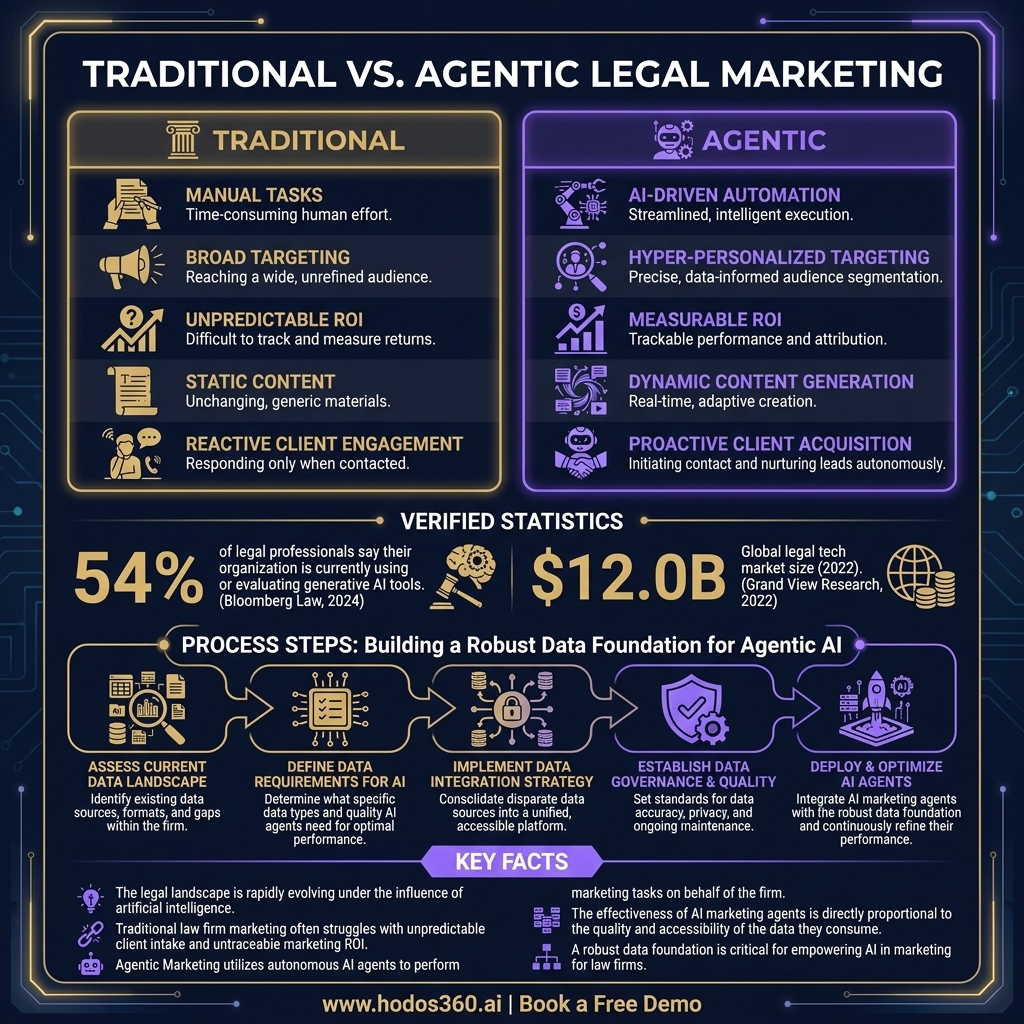
- ✓Enhanced Client Targeting: AI analyzes vast datasets to identify ideal client profiles, ensuring marketing efforts reach the most promising prospects.
- ✓Personalized Communication: Automated agents deliver tailored messages, content, and offers, fostering stronger client relationships and higher conversion rates.
- ✓Optimized Resource Allocation: Predictive analytics guides budget allocation to channels and campaigns with the highest potential ROI, reducing wasted spend.
- ✓Scalable Content Creation: AI rapidly generates high-quality, relevant content across various formats, keeping the firm's digital presence fresh and authoritative.
- ✓24/7 Lead Qualification & Engagement: AI voice assistants and chatbots can qualify leads and answer queries around the clock, ensuring no potential client is missed.
- ✓Proactive Market Adaptation: AI monitors market trends and competitive actions, allowing firms to adjust strategies swiftly and maintain a competitive edge.
- ✓Measurable ROI and Continuous Improvement: Integrated analytics provide clear insights into marketing performance, enabling data-driven optimization loops.
Overcoming Challenges: Competition and Adaptation in Legal Tech
The transition to Agentic Marketing is not without its hurdles. The legal tech sector, while booming, is also intensely competitive, fueled by significant funding rounds and rapid product launches. Companies like Harvey AI, which secured substantial investment and partnered with Allen & Overy, exemplify the rapid pace of innovation. This creates a challenging environment for law firms, who must navigate a bewildering array of new tools and platforms, often with limited in-house tech expertise. The 'build vs. buy' dilemma is real, and many firms struggle with integrating new AI solutions into existing, often legacy, practice management systems.
Furthermore, there's a human element to this drama: the tension between disruption and tradition. Many senior partners, accustomed to established marketing methods, may be resistant to adopting complex AI technologies, fearing job displacement or loss of human touch. This cultural inertia can be a significant barrier. Firms that succeed in this new era are those that foster a culture of continuous learning and embrace technological evolution, recognizing that AI is a co-pilot, not a replacement, for human expertise. The market is increasingly rewarding firms that are modern in their approach, and every startup in the AI space is vying for attention, making the choice of platform a critical strategic decision.
Measuring ROI and Continuous Optimization
A critical, yet often overlooked, aspect of any marketing endeavor is the ability to accurately measure its return on investment (ROI) and continuously optimize strategies. In the realm of Agentic Marketing, this becomes even more sophisticated, as AI systems can track an unprecedented number of data points. Beyond vanity metrics like website traffic, law firms need to focus on tangible outcomes: qualified leads generated, new client conversions, average client value, and overall revenue growth directly attributable to specific marketing campaigns. This requires robust analytics dashboards and clear attribution models, capabilities that are often integrated into advanced AI marketing platforms.
Continuous optimization is a hallmark of successful AI-driven marketing. Agentic systems are designed to learn from performance data, identify what works and what doesn't, and automatically adjust campaigns in real-time. This iterative process, involving A/B testing of ad copy, landing page designs, and content formats, ensures that marketing efforts are always improving. For law firms, this means a dynamic strategy that adapts to market changes and client feedback, rather than a static plan that quickly becomes outdated. The ability to monitor, analyze, and refine marketing initiatives based on concrete data points is what truly differentiates modern, AI-powered marketing from its traditional counterparts, ensuring every dollar spent works harder.

Key Takeaways and Next Steps for Law Firm Growth
The future of law firm growth is inextricably linked to the adoption of Agentic Marketing principles, underpinned by a meticulously constructed data foundation. This isn't a speculative trend; it's a present-day imperative for firms seeking to remain competitive and relevant. The narrative of disruption vs. tradition is playing out in real-time, and those who embrace the transformative power of AI will undoubtedly gain a significant advantage in client acquisition and retention. The journey begins with understanding that your firm's data — everything from past case details to client communication logs — is its most valuable asset, waiting to be unlocked by intelligent systems.
For law firm owners and legal professionals, the call to action is clear: assess your current data infrastructure, invest in integrated AI-powered platforms, and foster a culture of data-driven decision-making. Platforms like HODOS 360 offer an integrated suite of services, including an AI Marketing Platform, designed to provide law firms with the tools necessary to build this robust data foundation and leverage agentic capabilities. By consolidating case management, client intake, document automation, and AI-powered marketing, firms can transform their operations, streamline client acquisition, and ensure sustainable growth in an increasingly competitive legal market. The time to build a modern, intelligent marketing strategy is now, ensuring your firm is not just participating, but leading, in the legal tech revolution.
Frequently Asked Questions
What is Agentic Marketing and how does it apply to law firms?+
Agentic Marketing utilizes autonomous AI agents to perform marketing tasks like content generation, lead qualification, and campaign optimization. For law firms, this means AI can analyze client data, identify specific legal needs, and proactively engage potential clients with tailored messages, significantly enhancing client acquisition strategies beyond traditional methods.
Why is a strong data foundation essential for Agentic Marketing in the legal sector?+
A robust data foundation is the bedrock of effective Agentic Marketing. AI agents require high-quality, integrated data on client demographics, case histories, and market trends to learn, make accurate predictions, and execute targeted campaigns. Without it, AI's potential is limited, leading to inefficient marketing efforts and poor ROI for law firms.
How can law firms ensure ethical data use with AI marketing platforms?+
Law firms must adhere to strict data governance, complying with regulations like GDPR and CCPA, and ethical guidelines such as ABA Model Rule 1.6. This involves implementing secure data architectures, obtaining explicit client consent for marketing use, and anonymizing data where appropriate. Transparency and compliance are crucial to maintain client trust.
What are the key benefits of using predictive analytics in legal marketing?+
Predictive analytics allows law firms to anticipate client needs, identify high-value segments, and optimize marketing spend by focusing on the most promising prospects. This proactive approach leads to more efficient client acquisition, improved conversion rates, and a higher return on investment, moving beyond guesswork to data-driven strategic decisions.
What role does AI play in content generation and social media for law firms?+
AI automates and personalizes content creation, generating tailored blog posts, social media updates, and video scripts based on audience data and firm expertise. For social media, AI schedules posts, monitors engagement, and drafts responses, ensuring a consistent and targeted online presence. This boosts brand visibility and saves significant time for law firms.