
AI Legal Assistants: Essential Tools, Not Staff Replacements
The recent headline from The Guardian, “Plan for AI legal assistants in England and Wales ‘cannot replace funding and staff’, lawyers say,” encapsulates a pervasive tension within the legal profession. As artificial intelligence continues its rapid integration into daily practice, a critical debate emerges: Is AI a threat to legal jobs and existing resource structures, or is it the essential catalyst for a more efficient, equitable, and profitable future?
This isn't merely an academic discussion; it's a real-world dilemma faced by managing partners like Fiona Woolf, former President of the Law Society of England and Wales, who has publicly advocated for responsible tech adoption while safeguarding human expertise. The narrative is often framed as a zero-sum game, pitting advanced technology against the indispensable human element of law.
However, this perspective fundamentally misunderstands the transformative potential of AI legal assistants.
Indeed, the sentiment from England and Wales reflects a legitimate concern about resource allocation and the nuanced role of human judgment in legal practice. According to the 2023 ABA TechReport, while 58% of lawyers believe AI will significantly impact the legal profession, a substantial portion still grapples with understanding its practical applications beyond basic research.
This hesitancy isn't unfounded; the legal system, by its very nature, relies on precedent, human interpretation, and empathetic client interaction. The challenge lies in distinguishing between tasks that AI can augment or automate, and those that demand the irreplaceable cognitive and emotional intelligence of a seasoned lawyer.
The fear that AI might simply be a cost-cutting measure, rather than an investment in enhanced capability, fuels much of the skepticism.
Yet, leading firms and innovative legal tech companies like HODOS 360 are demonstrating that AI is not designed to supplant the foundational roles of lawyers or to justify cuts in essential funding.
Instead, it acts as a powerful force multiplier, empowering legal professionals to transcend administrative burdens and focus on high-value strategic work. Imagine a world where the drudgery of document review, contract analysis, and client intake is significantly reduced, freeing up hours for complex legal reasoning, client counseling, and business development.
This isn't science fiction; it's the present reality for firms leveraging advanced AI legal assistants. The conversation must shift from 'replacement' to 'reimagination' – how AI can elevate the legal profession, making justice more accessible and practice more sustainable. It’s about leveraging these sophisticated AI tools to augment human capabilities, not to diminish them.
Discover how AI can transform your practice.
The Misconception: Why AI Legal Assistants Aren't Replacing Lawyers
The core of the 'cannot replace funding and staff' argument stems from a misunderstanding of AI's current capabilities and its intended role. AI legal assistants excel at pattern recognition, data processing, and automation of repetitive, rules-based tasks. They can sift through millions of documents in minutes, identify relevant clauses, and even draft initial responses based on established precedents.
For instance, platforms like Harvey AI, backed by OpenAI and adopted by firms such as Allen & Overy, don't write legal briefs from scratch or argue cases in court. Instead, they assist with due diligence, contract analysis, and regulatory compliance, tasks that traditionally consume hundreds of billable hours.
This allows senior lawyers to dedicate their expertise to strategic counsel and complex problem-solving, rather than being bogged down by administrative minutiae. The value proposition is not about fewer lawyers, but more effective lawyers.
Consider the realm of transactional law, where the sheer volume of documentation can be overwhelming.
Before the advent of sophisticated AI tools, a team of junior lawyers might spend weeks reviewing merger agreements or property deeds. Now, AI legal assistants can perform this initial pass with remarkable speed and accuracy, flagging anomalies and critical provisions for human review. Learn more about Voice AI: The Ultimate Shift in Legal Client Service.
This drastically reduces the time and cost associated with such tasks, making legal services more efficient and potentially more affordable for clients. A 2024 report by Thomson Reuters Legal showed that firms adopting AI for research and document review reported a 15-20% increase in efficiency, directly impacting their capacity to take on new cases without needing to proportionally increase staff.
This isn't about replacing the human lawyer; it's about augmenting their ability to deliver results faster and more reliably.
Indeed, the notion that AI legal assistants will simply 'replace' human lawyers overlooks the intricate, human-centric nature of legal practice. While AI can process vast amounts of data, it lacks the capacity for empathy, ethical reasoning, and nuanced strategic judgment that defines a competent legal professional.
It cannot build client relationships, understand the emotional context of a dispute, or adapt to unforeseen courtroom dynamics. As Sam Altman, CEO of OpenAI, frequently emphasizes, AI is a powerful co-pilot, not an autonomous driver. The legal profession in England and Wales, like elsewhere, requires a blend of human insight and technological efficiency.
The question is not if AI will replace lawyers, but how lawyers will leverage AI to enhance their practice and better serve justice.
Strategic Integration: AI in Law Firm Management and Operations
Rather than reducing staff, the strategic integration of AI legal assistants allows law firms to maximize the potential of their existing human capital and optimize operational efficiency. This is particularly crucial for smaller and mid-sized firms that often operate with tighter budgets and fewer personnel.
AI-powered platforms can automate a multitude of back-office functions, freeing up paralegals and administrative staff for more impactful work. For instance, a 2023 survey by Clio indicated that firms using practice management software with integrated AI features saved an average of 8 hours per week per legal professional on administrative tasks.
This time can be redirected towards client relations, professional development, or complex casework, directly contributing to firm growth and employee satisfaction.
The real power of AI lies in its ability to create smarter, more agile legal workflows. Consider the comprehensive capabilities of HODOS 360's AI Law Firm Management System.
Learn more about AI Legal Tech: The Essential Guide to Funding and Growth. This platform integrates case management, billing, client intake, document automation, and calendar management into a single, intelligent ecosystem. Instead of manual data entry or juggling disparate software, firms can streamline their entire operational pipeline.
This not only reduces the potential for human error but also provides real-time insights into firm performance and resource allocation. Imagine a system that proactively identifies potential bottlenecks in a case, suggests optimal billing strategies based on historical data, or automates the generation of routine legal documents, all while ensuring compliance with established protocols.
- ✓Automated Client Intake: AI guides prospective clients through initial questionnaires, capturing essential data and qualifying leads efficiently.
- ✓Intelligent Document Automation: Create complex legal documents, contracts, and filings in minutes, significantly reducing drafting time and errors.
- ✓Predictive Case Management: AI analyzes case data to forecast outcomes, identify risks, and optimize resource allocation for better strategic planning.
- ✓Streamlined Billing & Financials: Automate invoice generation, expense tracking, and financial reporting, ensuring accuracy and compliance.
- ✓Smart Calendar & Task Management: AI-powered scheduling and task assignment ensure deadlines are met and workloads are balanced across the team.
- ✓AI-Powered Legal Workflows: Design and automate custom legal processes, from litigation support to transactional closings, enhancing consistency and speed.
Enhancing Efficiency Through AI-Powered Workflows
The true measure of AI's value in legal operations is its capacity to enhance efficiency. AI-powered legal workflows, a core component of advanced management systems, transform traditionally laborious, multi-step processes into seamless, automated sequences. For example, in a mergers and acquisitions transaction, AI can automate the initial due diligence review, flagging problematic clauses or missing documents, and then automatically route these findings to the relevant legal team members for review.
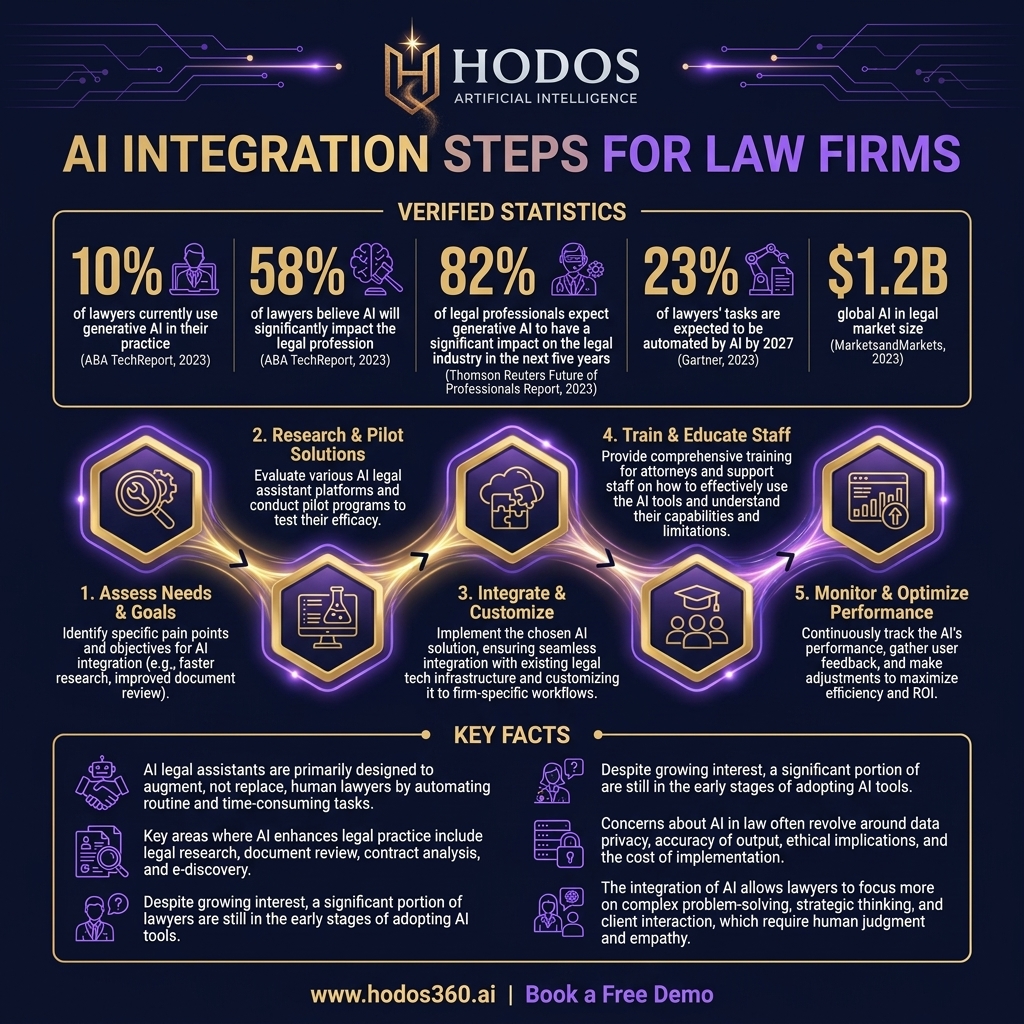
This drastically cuts down on the time required for deal closings, allowing firms to handle a higher volume of transactions without increasing their headcount. Learn more about AI-Powered Web Development: Essential SaaS Optimization for Law Firms. The human element shifts from rote data processing to critical analysis and strategic negotiation, leveraging the AI's output to make more informed decisions.
This is an investment in capability, not a substitute for funding or staff, and fundamentally redefines how law firms approach complex legal challenges, making them more competitive in a rapidly evolving market.
Expanding Reach: AI in Legal Marketing and Client Engagement
Beyond internal operations, AI legal assistants are revolutionizing how law firms attract, engage, and retain clients. In an increasingly competitive legal landscape, effective marketing and client service are paramount for growth. Generic marketing strategies no longer suffice; firms need targeted, data-driven approaches. This is where AI excels, providing unparalleled insights into client behavior and market trends.
For instance, HODOS 360's AI Marketing Platform empowers firms with tools for AI video creation, social media automation, content generation, and sophisticated analytics. This allows even small firms to produce high-quality marketing materials and manage robust online campaigns, competing effectively with larger counterparts without requiring a dedicated in-house marketing team.
The ROI tracking feature ensures marketing spend is optimized, directly contributing to firm profitability and sustainable growth, rather than being seen as an expendable cost.
Client engagement, often the bottleneck for busy law firms, also sees significant transformation through AI. Traditional phone answering services can be costly and limited, especially for 24/7 availability or multilingual support.
HODOS 360's AI Voice Assistants address this by providing round-the-clock phone answering, intelligent lead qualification, and automated appointment booking. Learn more about Essential AI Voice Agent Transfer: Mastering Warm Handoffs. Imagine a potential client calling at 2 AM, receiving professional, immediate assistance in their preferred language, and even scheduling an initial consultation without human intervention.
This ensures no lead is missed and provides an exceptional client experience from the very first touchpoint. This proactive client service is a competitive differentiator, directly addressing the need for robust client acquisition and retention strategies that traditional staffing models often struggle to provide effectively.
Furthermore, the digital presence of a law firm is now as critical as its physical address. An outdated or non-responsive website can deter potential clients before they even consider reaching out. HODOS 360's Web & Mobile Development services, powered by AI, enable firms to build AI-powered websites with responsive design, robust SEO optimization, and high-converting templates.
This ensures that a firm's online presence is not just aesthetically pleasing but also a highly effective lead generation tool. By leveraging AI for web development, firms can ensure their digital storefront is always optimized, visible in search results, and tailored to convert visitors into clients.
This holistic approach to client engagement, from initial search to ongoing support, demonstrates how AI enhances, rather than replaces, the critical functions of outreach and relationship building.
Building a Future-Ready Firm with AI-Driven Client Experiences
The synergy of AI in marketing and client engagement creates a future-ready firm that anticipates client needs and optimizes every interaction. Firms that embrace these AI-driven client experiences are not just adopting new AI tools; they are fundamentally rethinking their client acquisition and service models.
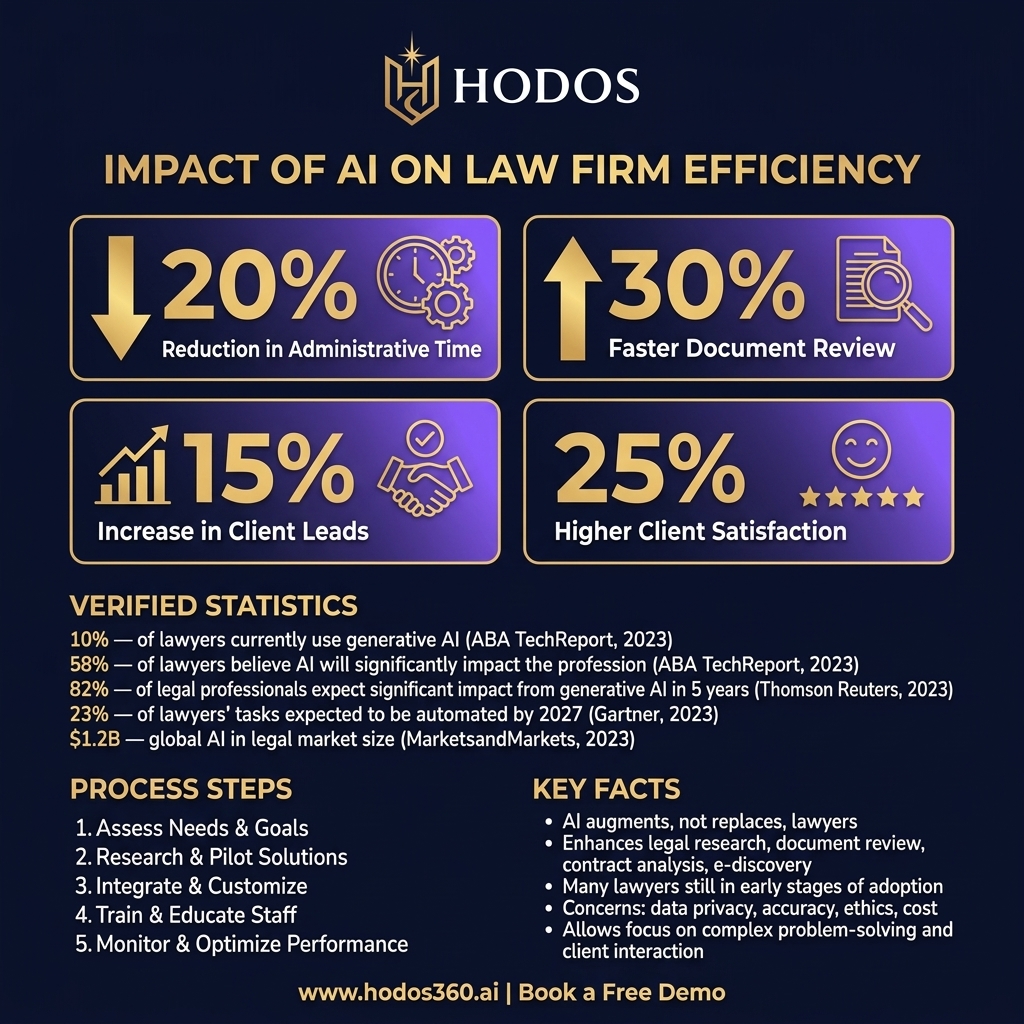
For example, a recent study by Gartner revealed that firms leveraging AI for personalized client communication saw a 25% increase in client satisfaction and retention rates. Learn more about Conversational AI: Essential Strategies for Legal Success. This isn't about cutting corners; it's about elevating the client journey to an unprecedented level of responsiveness and personalization.
By integrating AI across marketing, voice assistance, and web development, law firms can build a seamless, efficient, and highly effective client-facing operation that ensures growth and sustained success in a competitive market, moving beyond the limitations of traditional staffing and funding models.
Ethical Frameworks and Responsible AI Adoption in Law
While the benefits of AI legal assistants are undeniable, their adoption must be guided by robust ethical frameworks and a commitment to responsible implementation. Concerns about data privacy, algorithmic bias, and the accuracy of AI-generated content are legitimate and require careful consideration. The legal profession, bound by principles of confidentiality and justice, must ensure that AI tools uphold these standards.
The recent enforcement of the EU AI Act, for example, sets a global precedent for regulating AI systems, particularly those deemed high-risk. While the UK operates under its own regulatory approach, the principles of transparency, accountability, and human oversight remain paramount. Law firms must conduct thorough due diligence on AI vendors, ensuring that data security protocols are stringent and that AI models are regularly audited for bias and accuracy.
This proactive approach safeguards client interests and maintains the integrity of the legal process.
Furthermore, the ethical implications extend to the very nature of legal advice. While AI can assist in research and drafting, it cannot provide legal counsel, which requires professional judgment, an understanding of complex human situations, and adherence to professional conduct rules.
The American Bar Association (ABA) Model Rule 1.1 on Competence, for instance, implies that lawyers must understand the risks and benefits associated with relevant technology. Learn more about AI Marketing Intelligence: The Ultimate Guide for Law Firms. Similarly, Model Rule 5.3, which covers the Responsibilities Regarding Nonlawyer Assistants, can be analogously applied to AI, mandating that lawyers ensure the AI's work is compatible with their professional obligations.
The legal profession cannot abdicate its responsibility to scrutinize and guide the development and deployment of AI legal assistants. This requires ongoing education, collaboration between legal professionals and technologists, and the establishment of clear internal policies for AI use.
This proactive engagement with ethical considerations is not a barrier to innovation but a necessary foundation for sustainable growth.
Firms that prioritize ethical AI adoption will build greater trust with clients and differentiate themselves in the market. It involves training legal teams not just on how to use AI tools, but how to critically evaluate their output, understand their limitations, and ensure their application aligns with the firm’s ethical obligations.
This human oversight is the crucial ingredient that prevents AI from becoming a liability. It is about understanding that while AI can process information, human lawyers must apply wisdom, discretion, and a deep understanding of justice to ensure the technology serves its intended purpose effectively and ethically, reinforcing the idea that AI legal assistants are tools that enhance, not replace, human capacity.
Navigating the Regulatory Landscape and Best Practices
Navigating the evolving regulatory landscape for AI is critical for any law firm. Jurisdictions like England and Wales are actively developing their own frameworks, often influenced by global discussions and legislation like the EU AI Act. Best practices for firms include establishing clear internal policies for AI usage, ensuring transparency with clients about AI's role in their cases, and continuously updating staff training.
Firms should also invest in robust cybersecurity measures to protect sensitive data handled by AI systems. Partnering with reputable legal tech providers, like HODOS 360, which prioritize ethical AI development and data security, is paramount. This proactive approach ensures compliance, mitigates risks, and positions the firm as a responsible innovator in the use of AI legal assistants.

Key Takeaways: Empowering the Legal Professional of Tomorrow
The debate around AI legal assistants replacing funding and staff, as highlighted by The Guardian, misses the fundamental truth: AI is a powerful augmentative force, not a replacement. It empowers lawyers to be more efficient, strategic, and client-focused, ultimately enhancing justice delivery. By automating routine tasks, optimizing operations, and revolutionizing client engagement, AI allows legal professionals to elevate their practice to new heights.
The future of law is not about AI versus humans, but about humans leveraging AI to achieve unprecedented levels of productivity and insight. Firms that embrace this paradigm shift will not only thrive but lead the way in shaping a more accessible and effective legal system.
Explore how HODOS 360’s comprehensive AI solutions can transform your practice.
Frequently Asked Questions
Can AI legal assistants truly replace human lawyers or paralegals?+
No, AI legal assistants are designed to augment, not replace, human legal professionals. They automate repetitive tasks like document review and legal research, freeing up lawyers and paralegals for higher-value strategic work, complex analysis, and client interaction. Human judgment, empathy, and ethical reasoning remain indispensable to legal practice.
How can AI improve my law firm's profitability without increasing staff?+
AI enhances profitability by boosting efficiency and capacity. It automates administrative tasks, reduces billable hours spent on routine work, improves client intake and marketing effectiveness, and provides data-driven insights for better decision-making. This allows existing staff to handle more cases or focus on complex, high-revenue matters, optimizing resource utilization.
What are the main ethical concerns with using AI in legal practice?+
Key ethical concerns include data privacy and security, potential algorithmic bias in AI outputs, maintaining client confidentiality, and ensuring human oversight for AI-generated content. Lawyers must remain competent in technology, critically evaluate AI results, and adhere to professional conduct rules, ensuring AI tools align with justice principles.
How does HODOS 360 specifically help law firms with AI?+
HODOS 360 offers four core AI-powered services: an AI Law Firm Management System for operations, an AI Marketing Platform for growth, AI Voice Assistants for client engagement, and Web & Mobile Development for digital presence. These integrated solutions streamline processes, attract clients, and enhance overall firm efficiency and strategic capacity.
Is AI adoption in law firms compliant with current legal regulations?+
Yes, AI adoption can be compliant with regulations, provided firms implement it responsibly. This includes conducting due diligence on AI vendors, adhering to data protection laws (like GDPR or relevant UK regulations), and ensuring human lawyers supervise AI outputs. Regulatory bodies, like the Law Society, are also actively developing guidance for AI use in legal practice.