
AI Marketing for Law Firms: The Ultimate Growth Playbook
The legal industry, traditionally rooted in precedent and meticulous detail, is now on the precipice of a profound transformation, particularly in how law firms attract and retain clients. The recent announcement by ContentGrip detailing Brrandom's expansion of its AI marketing practice serves as a potent signal: the era of AI-driven client acquisition is not just arriving, it's expanding at an unprecedented pace. This isn't merely about automating repetitive tasks; it's about fundamentally reshaping how legal services are presented, perceived, and procured in a digital-first world. Firms that embrace this shift are poised to gain a significant competitive advantage, while those that hesitate risk being left behind in a rapidly evolving market.
Historically, legal marketing relied heavily on traditional networking, referrals, and often, rudimentary digital presence. Today, the landscape is dramatically different. With AI marketing for law firms becoming increasingly sophisticated, attorneys and legal professionals are no longer limited by manual processes or guesswork. Instead, they can harness the power of artificial intelligence to craft highly personalized campaigns, predict client needs, and optimize their outreach with data-backed precision. This paradigm shift, championed by innovators and early adopters, underscores a critical imperative for all legal practices: understanding and implementing advanced AI strategies is no longer a luxury, but a strategic necessity for sustainable growth and market relevance.
From generating compelling content that resonates with specific client demographics to orchestrating multi-channel digital campaigns, AI provides the intelligence layer necessary to cut through the noise. As Brrandom, a prominent player in the AI marketing space, demonstrates with its strategic growth, the demand for specialized AI expertise in marketing is skyrocketing. Law firms, facing intense competition and evolving client expectations, must now critically evaluate their marketing spend and strategies. The question is no longer *if* AI will impact legal marketing, but *how* rapidly and effectively firms can integrate these cutting-edge AI tools to secure their future success. Ready to explore how AI can redefine your firm's growth trajectory? [CTA: Discover HODOS 360's AI Marketing Platform]
The Dawn of Agentic AI in Legal Marketing: Beyond Basic Automation
The concept of agentic AI represents a significant leap beyond the basic automation tools many firms might associate with artificial intelligence. Unlike simple rule-based systems that perform predefined tasks, agentic AI systems can understand complex goals, break them down into sub-tasks, plan sequences of actions, and even self-correct based on feedback. This transformative capability is fundamentally reshaping digital marketing strategies for law firms. Consider the advancements made by companies like OpenAI with GPT-4o, Google with Gemini, and Anthropic with Claude 3. These models are not just generating text; they are increasingly capable of reasoning, strategizing, and executing sophisticated marketing workflows, offering a level of autonomy that was unimaginable just a few years ago. This shift empowers legal marketers to move from reactive content creation to proactive, strategically driven campaigns.
For law firms, this means an AI can do more than just draft a blog post; it can analyze market trends, identify emerging legal needs, and then generate a series of targeted content pieces, social media posts, and email campaigns designed to attract clients for those specific needs. "The future of marketing isn't just about AI assisting humans; it's about AI becoming a strategic partner, capable of autonomous action," noted Dario Amodei, CEO of Anthropic, in a recent interview discussing the capabilities of next-generation AI. Learn more about AI Social Media Agents: The Ultimate Guide for Law Firms. This perspective underscores a critical paradigm shift: AI is no longer just a tool but an intelligent agent contributing directly to a firm's brand strategy and client acquisition efforts. Firms that understand and leverage these agentic capabilities will be able to respond to market dynamics with unprecedented speed and precision, creating a distinct competitive edge.
This sophisticated form of AI is particularly impactful in developing a cohesive legal brand strategy. An agentic AI can ensure consistent messaging across all platforms, adapting content tone and style to resonate with different client segments while maintaining the firm's core identity. For instance, a firm specializing in intellectual property might deploy an AI agent to monitor industry news, draft thought leadership articles on patent law, schedule their distribution across LinkedIn and legal forums, and even engage in preliminary lead qualification conversations via a chatbot on the firm's website. This level of integrated, intelligent operation is what sets agentic AI apart, moving legal marketing beyond mere presence to pervasive and persuasive influence. It's about creating a dynamic, responsive digital footprint that continuously works to attract and convert ideal clients, allowing human legal marketers to focus on high-level strategic oversight and client relationship building.
Revolutionizing Content Generation and Client Engagement
One of the most immediate and impactful applications of AI marketing for law firms lies in content generation. Imagine the ability to produce high-quality, SEO-optimized blog posts, detailed legal explainers, compelling website copy, and engaging social media updates at a fraction of the time and cost traditionally required. AI-powered platforms can rapidly research legal topics, synthesize complex information, and generate drafts that are both informative and persuasive. This capability empowers law firms to maintain a consistent flow of fresh, relevant content, which is crucial for establishing authority, improving search engine rankings, and attracting potential clients who are actively seeking legal information online. Firms can now scale their content efforts dramatically, ensuring their expertise is visible across multiple digital touchpoints, from Google searches to professional networking sites like LinkedIn.
Beyond sheer volume, AI revolutionizes client engagement by enabling hyper-personalization. Instead of generic email blasts, AI can analyze client data—such as practice area interests, past interactions, and demographic information—to tailor communications that resonate deeply. This might involve recommending specific legal services, sharing relevant articles, or even personalizing website experiences for returning visitors. Learn more about AI SEO: Ultimate Content Strategy for Law Firms. According to a 2024 report by Gartner, organizations leveraging AI for personalization saw a 15% increase in customer engagement and a 10% boost in conversion rates. For law firms, this translates into more meaningful interactions, stronger client relationships, and ultimately, higher conversion rates for new matters. This level of personalized outreach fosters trust and positions the firm as a proactive, client-centric advisor, moving beyond transactional relationships.
Furthermore, AI-powered creatives extend to video production and interactive content, which are increasingly vital for capturing attention in a crowded digital space. AI can assist in scripting engaging videos, generating voiceovers, and even creating animated explainers that demystify complex legal concepts. This diversified approach to content not only enhances the firm's online presence but also caters to varying client preferences for consuming information. By strategically deploying AI across their content generation efforts, law firms can cultivate a dynamic, informative, and highly engaging digital ecosystem that continuously educates, attracts, and converts prospective clients, solidifying their position as thought leaders in their respective practice areas.
- ✓Accelerated Content Production: AI drafts articles, blog posts, and social media updates significantly faster than manual processes, allowing firms to publish more frequently and consistently.
- ✓Enhanced Personalization: AI analyzes client data to deliver highly tailored content and communications, increasing relevance and engagement.
- ✓Improved SEO Performance: AI tools optimize content for relevant keywords and search intent, boosting organic visibility and attracting qualified leads.
- ✓Multilingual Content Reach: AI enables rapid translation and localization of legal content, expanding a firm's reach to diverse client populations.
- ✓Data-Driven Topic Ideation: AI identifies trending legal topics and client pain points, informing content strategy for maximum impact.
- ✓Consistency in Brand Voice: AI helps maintain a consistent tone and style across all generated content, reinforcing the firm's professional brand identity.
Strategic Social Media Automation and Targeted Campaigns
Social media has evolved into a critical battleground for legal marketers seeking to build brand awareness and engage with potential clients. However, managing multiple platforms, scheduling posts, and analyzing performance can be a significant drain on resources. This is where AI marketing for law firms truly shines, offering sophisticated tools for strategic social media automation. AI can optimize posting schedules based on audience activity patterns, ensuring content reaches the maximum number of relevant eyes. It can also analyze engagement metrics in real-time, identifying which types of content resonate best and suggesting adjustments to future posts. Firms like Linklaters have, for years, invested in sophisticated digital strategies, recognizing the power of online presence. Now, AI takes this a step further, enabling even small to mid-sized firms to compete effectively on social channels, crafting a professional, consistent, and highly engaging online persona without requiring a dedicated, round-the-clock social media team.
Beyond basic scheduling, AI powers highly targeted social media advertising campaigns. Learn more about Legal AI Trust: An Essential Guide for Law Firms. By leveraging vast datasets, AI algorithms can identify specific demographics, professional affiliations, and behavioral patterns of individuals most likely to require a firm's services. For example, an estate planning firm could use AI to target individuals nearing retirement age who have recently engaged with financial planning content. This precision targeting drastically reduces wasted ad spend and increases the likelihood of reaching qualified leads. This strategic approach moves beyond generic advertising to hyper-focused outreach, ensuring every marketing dollar is invested where it has the highest potential return. The competitive landscape demands this level of precision; firms that continue with broad, untargeted campaigns will find their marketing efforts increasingly inefficient compared to their AI-powered counterparts.
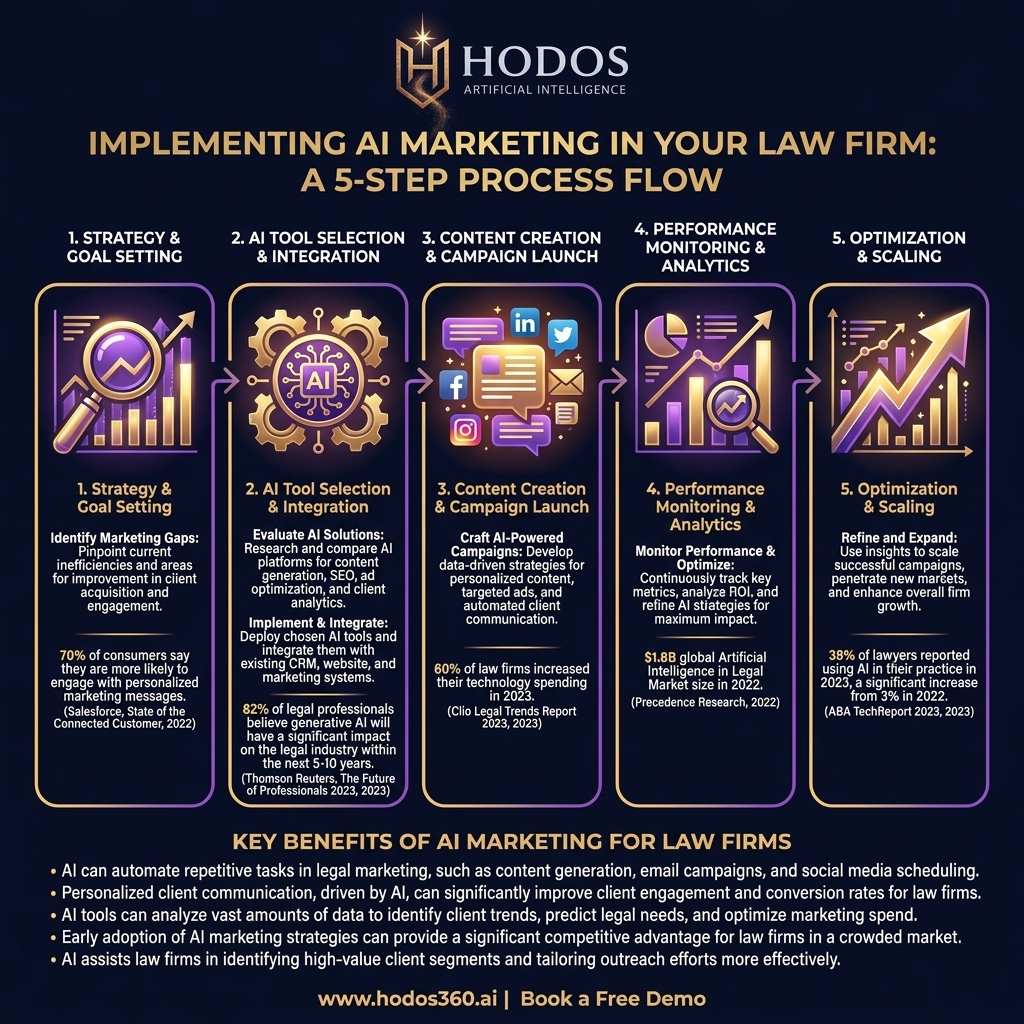
The Power of Predictive Analytics in Legal Marketing
The true game-changer in AI-driven social media and advertising lies in predictive analytics. AI models can process historical data, market trends, and public sentiment to forecast future client needs and behaviors. This foresight allows law firms to anticipate demand for specific legal services, launch proactive campaigns, and even identify potential clients *before* they actively begin searching for legal counsel. For instance, an AI might detect a surge in regulatory changes impacting a particular industry sector and predict an increase in demand for compliance advice, enabling a firm to preemptively publish relevant articles and launch targeted ads. Learn more about Claude AI for Legal: The Ultimate Guide to Contract Review. This proactive stance, driven by intelligent data analysis, fundamentally transforms client acquisition from a reactive process into a strategic, forward-looking initiative. The strategic integration of AI is no longer optional for firms seeking a competitive edge. [CTA: Schedule a Consultation to Transform Your Legal Marketing]
Measuring Success: AI-Driven Analytics and ROI Tracking
In legal marketing, demonstrating concrete return on investment (ROI) has historically been a challenge. Traditional marketing efforts often involved significant spend with opaque results. However, AI marketing for law firms fundamentally changes this dynamic by embedding robust analytics and ROI tracking capabilities into every campaign. AI-powered platforms can meticulously track every touchpoint, from initial website visits and social media engagement to lead conversions and client retention. This granular data provides unprecedented clarity into which marketing channels and content pieces are most effective, allowing firms to allocate resources more strategically. According to the 2023 ABA Legal Technology Survey Report, while analytics adoption is growing, many firms still struggle with comprehensive ROI measurement, a gap that AI is uniquely positioned to fill.
AI doesn't just collect data; it interprets it, identifying patterns and correlations that human analysts might miss. Learn more about AI Website Audit: Essential Tools for Law Firm Growth. It can pinpoint underperforming campaigns, suggest A/B testing variations for ads or landing pages, and even predict the lifetime value of a client acquired through a specific marketing channel. This allows firms to continuously optimize their marketing spend, ensuring that every dollar contributes meaningfully to revenue growth. Consider the competitive pressure from large firms or tech-savvy legal startups; they are already leveraging these insights. Firms that embrace AI-driven analytics gain the agility to adapt quickly to market changes, refine their targeting, and ultimately achieve a higher and more predictable ROI from their digital marketing investments. This is particularly crucial in a legal market where client acquisition costs are rising and differentiation is paramount.
From Data Overload to Actionable Insights
One of the most valuable contributions of AI in marketing is its ability to transform raw, overwhelming data into clear, actionable insights. Legal marketers are often inundated with data from various sources—website traffic, social media metrics, email campaigns, CRM systems. Without AI, making sense of this volume can be paralyzing. AI-powered dashboards provide intuitive visualizations and generate concise reports, highlighting key performance indicators (KPIs) and offering concrete recommendations for improvement. Learn more about AI Legal Management: The Essential Build vs. Buy Strategy. This means attorneys and firm administrators no longer need to be data scientists to understand their marketing performance. They can quickly grasp what's working, what isn't, and why, enabling informed decision-making that directly impacts the firm's bottom line. This shift from data overload to strategic clarity empowers firms to make smarter, faster decisions about their marketing efforts, ensuring continuous improvement and sustained growth.
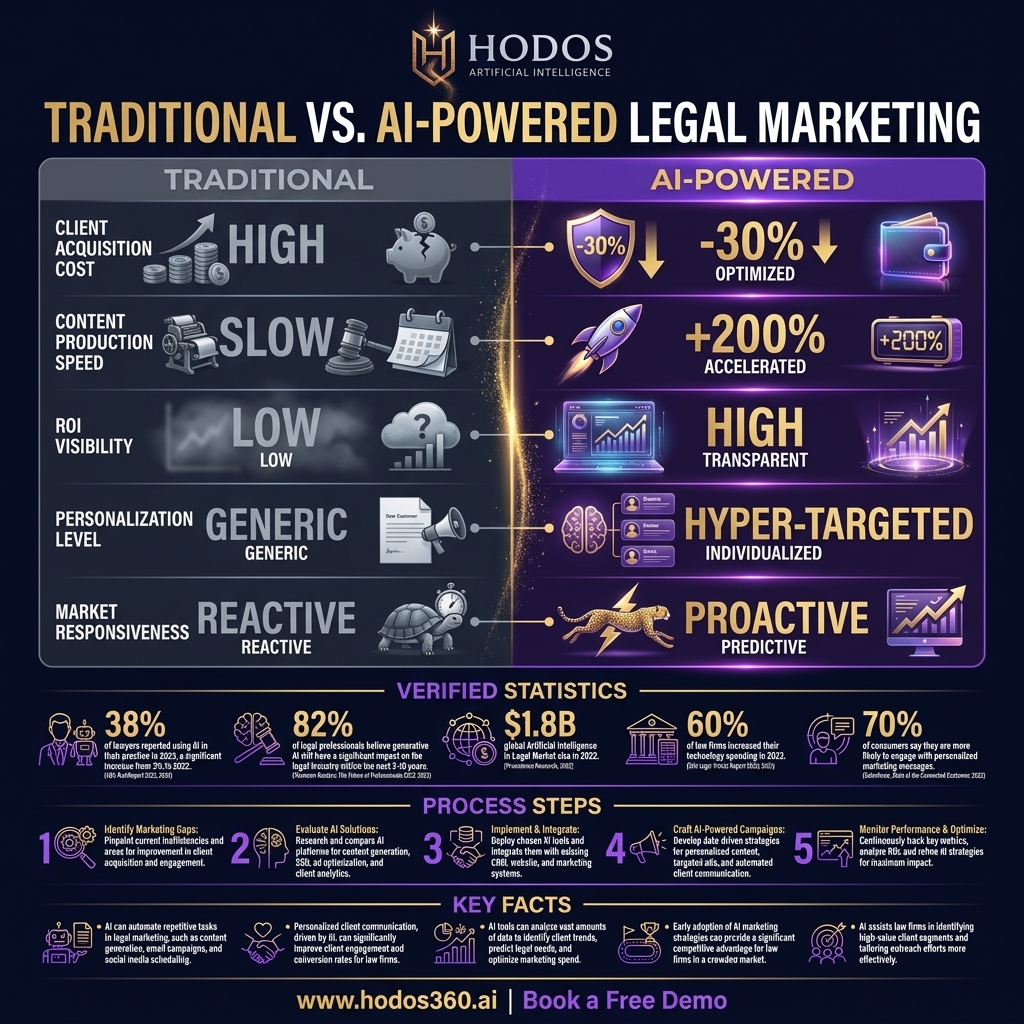
Navigating the Ethical and Practical Landscape of AI Marketing
While the benefits of AI marketing for law firms are compelling, their implementation is not without ethical and practical considerations that legal professionals must navigate carefully. Central to these concerns is data privacy. AI systems often rely on vast amounts of client data, raising questions about confidentiality, consent, and compliance with regulations such as GDPR or CCPA. Lawyers have a professional obligation to protect client information, as outlined in ABA Model Rule 1.6 (Confidentiality of Information). Firms must ensure that any AI tools used for marketing adhere to stringent data security protocols and that client data is anonymized or de-identified where appropriate. Furthermore, the potential for algorithmic bias in AI-driven targeting or content generation is a significant ethical challenge. If an AI system is trained on biased data, it could inadvertently perpetuate discriminatory practices in client outreach, which directly conflicts with a lawyer's ethical duties of fairness and non-discrimination.
Transparency is another critical ethical imperative. Law firms must be clear with potential clients about the role AI plays in their marketing and communication. For instance, if an AI chatbot is handling initial inquiries, it should be clearly identified as such, rather than masquerading as a human. This aligns with the broader ethical principles of honest communication, as emphasized in ABA Model Rule 7.1 (Communications Concerning a Lawyer's Services), which prohibits false or misleading communications about a lawyer's services. The practical challenges also extend to implementation. Integrating new AI systems requires investment in technology, training for staff, and often, a cultural shift within the firm. Partners and legal marketers need to understand the capabilities and limitations of AI, ensuring that human oversight remains paramount. The initial learning curve and potential for technical glitches can be daunting, but the long-term strategic advantages typically outweigh these initial hurdles.
Future-Proofing Your Firm: Adoption vs. Stagnation
Ultimately, the choice facing law firms is not whether to adopt AI marketing tools, but how and when. The legal profession, often slow to embrace technological change, is now at an inflection point. Firms that strategically integrate AI into their digital marketing efforts will be better equipped to attract and retain clients, optimize their marketing spend, and build a resilient brand in a competitive market. Those that cling to outdated methods risk stagnation, losing ground to more agile, technologically advanced competitors. The narrative of disruption versus tradition is playing out in real-time, and the firms that are future-proofing themselves are those actively exploring and investing in intelligent technologies. This isn't just about efficiency; it's about survival and thriving in the next era of legal practice, leveraging innovation to serve clients more effectively and expand market share. The time for proactive engagement with AI is now, shaping a more dynamic and prosperous future for legal services.

Key Takeaways and Next Steps
The expansion of AI marketing practices, as evidenced by Brrandom and countless other innovators, underscores an undeniable truth: AI is no longer a futuristic concept but a present-day imperative for law firms. From advanced agentic AI that strategizes and executes campaigns to sophisticated analytics that provide clear ROI tracking, the tools available today offer an unparalleled opportunity for growth. Law firms that embrace AI marketing for law firms can expect to see enhanced client acquisition, optimized brand strategy, and significantly more efficient digital marketing operations. The competitive landscape demands not just awareness, but strategic action. The firms that are winning are those actively integrating AI into their core marketing functions, transforming how they connect with clients and expand their market presence.
For law firm owners and legal professionals looking to navigate this new era, the path forward involves deliberate exploration and strategic implementation. This means assessing current marketing deficiencies, understanding where AI can provide the most leverage, and investing in platforms that offer comprehensive solutions. HODOS 360, for instance, provides an AI Marketing Platform specifically designed for law firms, streamlining everything from content generation and social media automation to detailed analytics and ROI tracking. Embracing the future of client acquisition and firm growth requires a commitment to innovation and a willingness to adapt. [CTA: Request a HODOS 360 Demo Today]
Frequently Asked Questions
What is agentic AI in the context of legal marketing?+
Agentic AI refers to advanced AI systems capable of understanding complex goals, breaking them into sub-tasks, planning actions, and executing them autonomously. In legal marketing, this means AI can not only generate content but also strategize campaigns, optimize distribution, and even engage in preliminary lead qualification, moving beyond simple automation to proactive strategic partnership for law firms.
How can AI improve content generation for my law firm?+
AI significantly boosts content generation by rapidly drafting high-quality, SEO-optimized articles, blog posts, and social media updates. It can research legal topics, synthesize information, and even create multilingual content, allowing law firms to maintain a consistent, authoritative online presence that attracts and educates potential clients more efficiently than traditional methods.
What are the ethical considerations when using AI in legal marketing?+
Ethical considerations include ensuring data privacy and compliance with regulations like GDPR or CCPA, avoiding algorithmic bias that could lead to discriminatory targeting, and maintaining transparency with clients about AI's role in communications (e.g., clearly identifying AI chatbots). Adherence to ABA Model Rules, especially concerning confidentiality and honest communication, is paramount.
How does AI help with social media automation and targeted campaigns?+
AI optimizes social media by determining ideal posting times, analyzing engagement for better content, and automating scheduling. For campaigns, AI leverages data to precisely target potential clients based on demographics and behaviors, reducing wasted ad spend and increasing lead quality. This allows law firms to achieve highly effective, personalized outreach on various platforms.
Can AI truly track the ROI of my law firm's marketing efforts?+
Yes, AI-driven analytics provide granular insights into marketing performance by tracking every touchpoint from clicks to conversions. It identifies effective channels, optimizes ad spend, and predicts client lifetime value, offering unprecedented clarity into ROI. This enables law firms to make data-backed decisions, continuously refine strategies, and ensure marketing investments yield measurable returns.