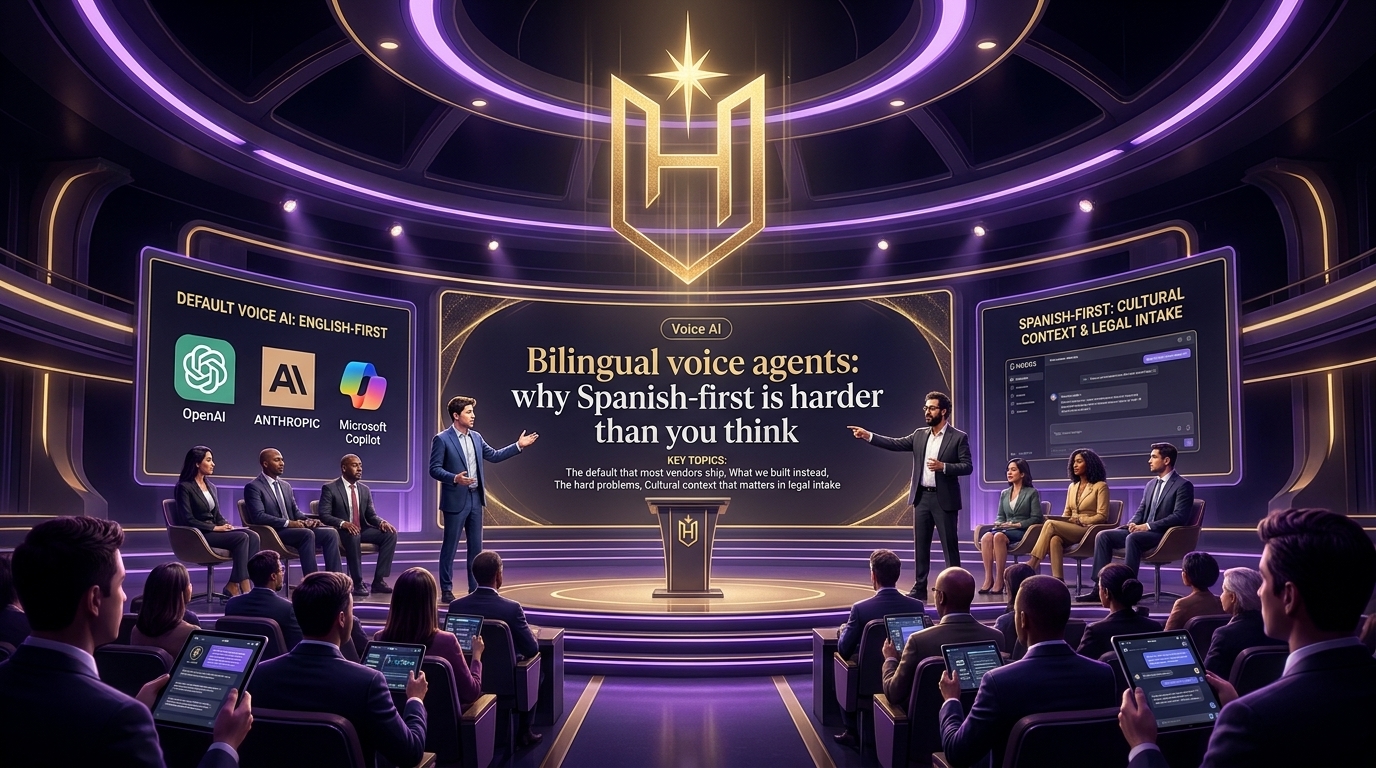


AI Specialist Unveiled: Essential Guide for Law Firms
The legal industry is currently experiencing a seismic shift, with artificial intelligence moving from a futuristic concept to an indispensable operational reality. Just this week, Scott Coop's Flozic made headlines with its launch of a dedicated AI specialist service for law firms, starting at an accessible $999 per month.
This announcement underscores a growing trend: firms are actively seeking specialized expertise to harness AI's transformative power, not just dabbling in isolated tools. The question is no longer *if* AI will impact legal practice, but *how* firms can strategically integrate it to gain a competitive edge and optimize their intricate operations.
Historically, technology adoption in law firms has often been reactive, driven by necessity or client demands. However, the current wave of generative AI, exemplified by models like OpenAI's GPT-4 and Anthropic's Claude, demands a proactive and expert-led approach. Firms are grappling with complex decisions: which platforms to adopt, how to ensure data security and ethical compliance, and most importantly, how to train their teams to leverage these powerful new capabilities effectively.
The emergence of services like Flozic's speaks directly to this challenge, highlighting the critical need for a dedicated, expert hand to guide law firms through the intricacies of AI implementation and management, ensuring they don't just survive but thrive in this new era.
The legal landscape demands innovation. If your firm is ready to explore how an AI specialist can transform your practice, [Discover HODOS 360's AI Law Firm Management solutions today!]
The Rise of the AI Specialist in Law Firms: A New Paradigm
The legal sector is no stranger to technological disruption, yet the advent of advanced AI presents a unique challenge and opportunity. For years, firms have adopted practice management software, e-discovery tools, and document automation, but these were typically point solutions. Now, the integration of generative AI across all facets of a law firm – from client intake to litigation support – necessitates a deeper, more strategic approach.
The role of an AI specialist is emerging as the linchpin in this transformation, serving as a bridge between cutting-edge technology and established legal practice. This individual or team isn't just a tech support person; they are strategic consultants, workflow architects, and ethical guardians, dedicated to maximizing AI's impact while mitigating its risks.
Their expertise is becoming indispensable as firms navigate the complexities of data privacy, algorithmic bias, and the professional responsibility inherent in using AI tools.
Consider the insights from the 2024 Thomson Reuters Future of Legal Report, which indicated that over 60% of law firm leaders believe AI will significantly impact their firm's strategy within the next three years.
Learn more about AI Marketing: The Ultimate Blueprint for Law Firm Growth. However, a significant barrier to adoption remains the lack of in-house expertise. This gap is precisely what services like Flozic aim to fill. By providing a dedicated AI specialist, firms can access top-tier knowledge without the prohibitive cost and time of hiring a full-time, highly specialized employee.
This model allows firms to quickly implement sophisticated AI solutions, customize them to their specific practice areas, and continuously adapt to the rapid evolution of legal tech. It’s a pragmatic response to a market demanding both innovation and efficiency, ensuring that firms can leverage tools like AI agents for tasks ranging from initial case assessment to drafting complex legal documents, without needing to become AI experts themselves.
Beyond the Hype: What a Dedicated AI Specialist Truly Does
A dedicated AI specialist for law firms performs a multifaceted role, far exceeding mere software installation. They are responsible for identifying high-impact areas where AI can drive efficiency, designing and implementing AI-powered workflows, and continuously optimizing these systems. For instance, in client intake, an AI specialist can configure a system to automatically process new client inquiries, qualify leads based on predefined criteria, and even schedule initial consultations, freeing up paralegals and attorneys for more substantive work.
This not only streamlines operations but also enhances the client experience, providing quicker responses and a more professional initial interaction. Firms like Allen & Overy, in their partnership with Harvey AI, have demonstrated the profound impact of integrating such expertise, seeing significant reductions in research time and improvements in document review accuracy.
The specialist ensures that these tools are not just adopted but are deeply integrated and leveraged to their fullest potential.
Moreover, an AI specialist is crucial for data governance and ethical compliance. Learn more about AI Marketing: Revolutionizing Law Firm Growth in 2026. With the increasing scrutiny on AI's use in legal practice, exemplified by ongoing discussions around the EU AI Act enforcement, ensuring that AI tools adhere to ethical guidelines and maintain client confidentiality is paramount.
This includes setting up robust data security protocols, training AI models on firm-specific data without compromising privacy, and establishing clear oversight mechanisms. For example, they might implement safeguards to ensure that generative AI tools do not inadvertently disclose privileged information or produce biased outputs. They also stay abreast of legal tech developments, evaluating new platforms and features, such as those offered by AllRize, which recently debuted its agentic AI for legal workflows.
This constant vigilance ensures the firm's AI strategy remains cutting-edge and compliant, protecting both the firm and its clients.
Streamlining Legal Workflows and Operations
The core function of an AI specialist often revolves around transforming conventional legal workflows into highly efficient, automated processes. They analyze existing procedures—from document drafting and review to legal research and case management—and identify opportunities for AI integration. This could involve deploying AI agents to summarize discovery documents, automate contract clause extraction, or even predict litigation outcomes based on historical data.
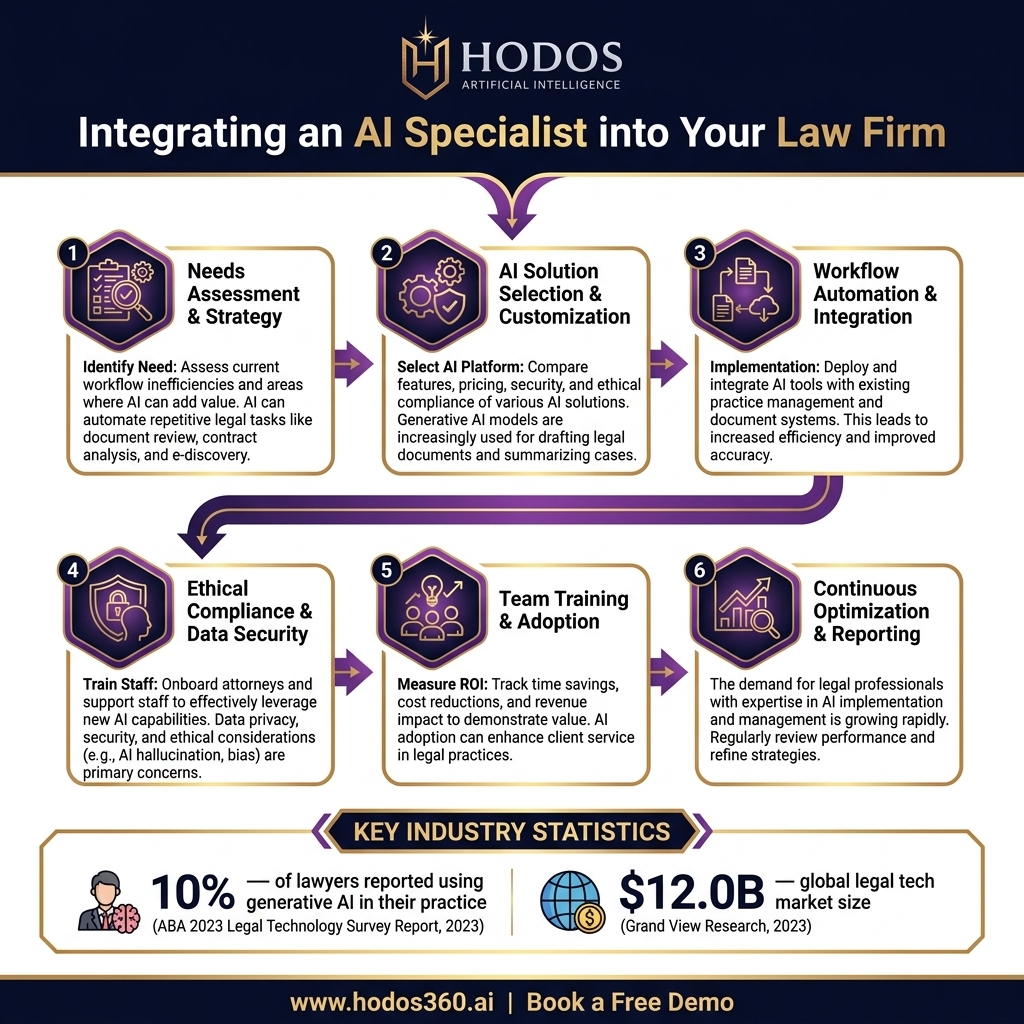
Companies like Clio, through their recent acquisitions and platform enhancements, are making these capabilities more accessible, but an expert hand is still needed to tailor them to a firm's unique needs. Learn more about AI Website Development: Essential Strategies for Law Firms. This focused approach to legal operations not only reduces manual labor but also minimizes human error, leading to more accurate and reliable outputs.
The specialist ensures that these automated processes are seamlessly integrated into the daily routines of attorneys and support staff, fostering a culture of efficiency and technological adoption.
Navigating the Market: Choosing the Right AI Service or In-House Talent
The market for legal AI solutions is burgeoning, presenting law firms with a complex array of choices: should they hire an in-house AI specialist, outsource to a service provider like Flozic, or rely on existing tech vendors? Each approach has its merits and challenges. Hiring an in-house expert offers deep institutional knowledge and immediate availability but comes with significant recruitment costs and the challenge of finding rare talent.
According to a recent report by McKinsey, specialized AI talent commands premiums of 20-30% over general tech roles, making it a substantial investment. Outsourcing, as offered by Flozic's new service, provides flexibility, access to specialized expertise without the overhead, and a faster time-to-value. These services often leverage a pool of experts who have experience across various legal tech stacks, offering a broader perspective than a single in-house hire.
However, firms must carefully vet providers to ensure alignment with their specific needs and security protocols.
Another critical consideration is the integration of diverse AI tools and platforms. Learn more about AI Officer: The Essential Role for Modern Law Firms. No single AI solution can address all of a law firm's needs.
An effective strategy often involves a combination of specialized tools for specific tasks, such as e-discovery platforms like Relativity, legal research tools like Casetext (now part of Thomson Reuters), and generative AI platforms like Harvey AI. The AI specialist, whether in-house or outsourced, plays a pivotal role in orchestrating these disparate systems, ensuring interoperability and a cohesive technological ecosystem.
They evaluate new launches in the market, such as Microsoft's recent expansion of its AI capabilities for legal professionals, and advise on their potential fit. This strategic oversight is essential to avoid fragmented tech stacks and to maximize the return on AI investments, transforming a collection of tools into a powerful, integrated solution for the firm's operations.
The Agentic AI Revolution and Specialized Tools
The shift towards agentic AI represents a significant leap forward, moving beyond simple chatbots to autonomous AI entities capable of executing complex, multi-step tasks. Companies like AllRize are at the forefront of this revolution, developing AI agents that can manage entire legal workflows, from initial document review to drafting responses and managing case dockets.
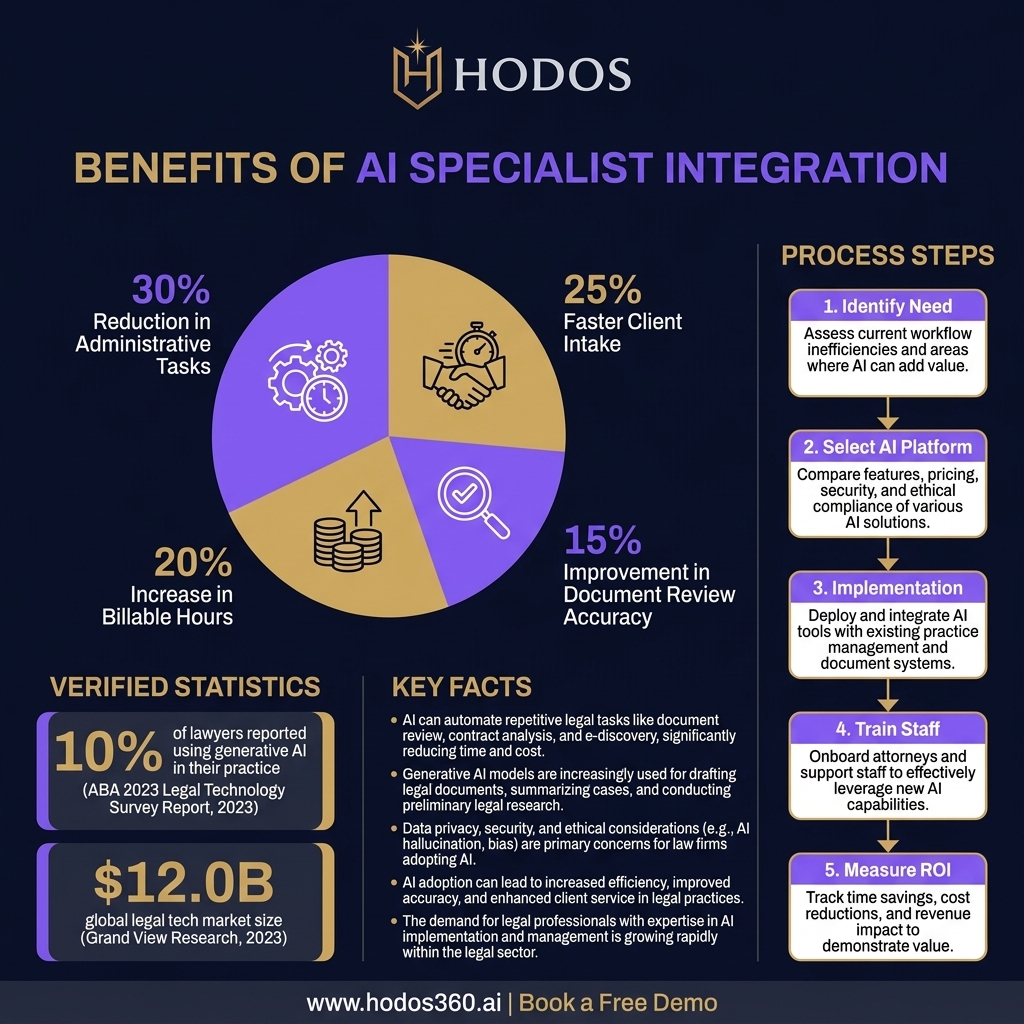
A dedicated AI specialist understands how to configure, deploy, and monitor these agents, ensuring they perform tasks accurately and ethically. Learn more about Voice AI: Ultimate Competitive Landscape for Law Firms. This involves defining precise parameters, integrating with existing systems, and establishing robust feedback loops for continuous improvement.
The power of agentic AI lies in its ability to handle iterative and interconnected tasks, dramatically accelerating processes that once required significant human intervention, thereby allowing legal professionals to focus on higher-value strategic work.
Empower your firm with cutting-edge AI. [Explore HODOS 360's AI Marketing Platform and Voice Assistants to amplify your reach!]
Integrating AI Expertise: Strategies for Seamless Adoption
Successful integration of an AI specialist and their recommended solutions requires more than just technical implementation; it demands a strategic roadmap for change management. Law firms must prepare their entire team for this paradigm shift. This begins with clear communication from leadership about the benefits of AI, addressing common fears about job displacement by emphasizing AI as an augmentation tool rather than a replacement.
Firms that have successfully adopted AI, such as Cooley LLP with its early embrace of AI for contract review, often highlight the importance of pilot programs and incremental rollouts. An AI specialist can design these pilot projects, identify early adopters, and demonstrate tangible benefits, building internal champions for broader adoption.
This phased approach helps to demystify AI, making it a collaborative partner rather than an intimidating disruptor.
Furthermore, the integration process must prioritize legal ethics and professional responsibility. Learn more about AI Agents Marketing: Your Essential Guide for Law Firms. The American Bar Association (ABA) Model Rule 1.1 on Competence requires lawyers to keep abreast of changes in the law and its practice, including the benefits and risks associated with relevant technology.
An AI specialist is critical in ensuring that the firm's use of AI aligns with these ethical obligations, particularly concerning client confidentiality (ABA Model Rule 1.6) and the unauthorized practice of law. They establish guidelines for AI use, monitor compliance, and provide ongoing training to ensure that attorneys understand the limitations and appropriate application of AI tools.
This proactive stance on ethics not only safeguards the firm but also builds client trust, positioning the firm as a forward-thinking yet responsible leader in the legal tech space.
Training and Empowering Your Legal Team
The long-term success of AI integration hinges on the ability of a firm's legal team to effectively utilize these new tools. An AI specialist develops and delivers comprehensive training programs tailored to different roles within the firm—from paralegals using AI for document review to partners leveraging AI for strategic insights.
These programs go beyond basic software tutorials, focusing on critical thinking skills necessary to interpret AI outputs, identify potential biases, and apply human judgment where necessary. For example, a specialist might train attorneys on how to effectively prompt generative AI for legal research, ensuring the outputs are accurate and relevant, or how to use AI for case management to predict case durations.
This continuous education empowers the team, transforming them from passive users into active collaborators with AI, enhancing their productivity and enabling them to deliver superior client service.

Key Takeaways and Next Steps for Your Firm
- ✓Embrace the AI Specialist Role: Whether in-house or outsourced, dedicated AI expertise is crucial for strategic AI adoption and maximizing return on investment.
- ✓Prioritize Workflow Optimization: Leverage AI to streamline client intake, document automation, and case management, significantly boosting efficiency.
- ✓Ensure Ethical & Secure Implementation: An AI specialist can guide your firm in adhering to ABA guidelines and data privacy regulations, building client trust.
- ✓Invest in Continuous Training: Empower your legal team with ongoing education to effectively use AI tools and integrate them into their daily practice.
- ✓Evaluate Agentic AI Solutions: Explore advanced AI agents for automating complex, multi-step legal tasks, reducing manual effort and improving accuracy.
- ✓Stay Agile and Adaptable: The legal tech landscape is evolving rapidly; a dedicated AI expert helps your firm stay competitive and responsive to new innovations.
The legal industry stands at a pivotal juncture. The emergence of specialized services for AI specialist roles, as highlighted by Flozic's recent launch, signals a maturing market where bespoke AI solutions are becoming the norm rather than the exception. For law firms, the decision to integrate such expertise is no longer a luxury but a strategic imperative.
Firms that proactively embrace this shift, guided by dedicated AI professionals, will not only enhance their operational efficiency and client service but also position themselves as leaders in a future-forward legal landscape. By focusing on smart implementation, ethical governance, and continuous learning, law firms can transform the potential of AI into tangible competitive advantages, ensuring sustainable growth and innovation.
At HODOS 360, we understand these intricate needs. Our comprehensive suite of AI-powered services, including an AI Law Firm Management System with AI-powered legal workflows and document automation, is designed to support firms in this transformation. We empower your team to focus on what truly matters: delivering exceptional legal counsel, while our technology handles the operational complexities.
The future of legal practice is here, and it's powered by intelligent solutions.
Frequently Asked Questions
What is an AI specialist for law firms?+
An AI specialist for law firms is an expert who guides the strategic adoption, implementation, and optimization of artificial intelligence tools within a legal practice. They identify areas for AI-driven efficiency, configure AI-powered workflows for tasks like client intake and document automation, ensure ethical compliance, and provide training to legal teams. Their role is crucial for maximizing AI's benefits while managing its inherent risks and complexities.
How can an AI specialist improve law firm efficiency?+
An AI specialist significantly improves efficiency by automating repetitive tasks, streamlining workflows, and enhancing data analysis. They can deploy AI for faster legal research, intelligent document review, automated billing, and more efficient case management. This frees up attorneys and paralegals from administrative burdens, allowing them to focus on high-value legal work, improve accuracy, and ultimately deliver services more quickly and cost-effectively to clients.
What are the ethical considerations when using AI in legal practice?+
Ethical considerations include client confidentiality, data security, potential algorithmic bias, and the unauthorized practice of law. An AI specialist ensures compliance with rules like ABA Model Rules 1.1 (Competence) and 1.6 (Confidentiality) by implementing robust data governance, selecting ethical AI tools, and training staff on responsible AI use. They help firms navigate these challenges to maintain professional responsibility and client trust.
Is hiring an in-house AI specialist better than an outsourced service?+
Both options have pros and cons. An in-house AI specialist offers deep firm-specific knowledge but can be costly and hard to find. Outsourced services, like Flozic's, provide flexible access to specialized expertise, faster implementation, and broader market insights without the overhead. The best choice depends on the firm's size, budget, existing tech infrastructure, and specific needs for AI integration and ongoing support.
How does AI impact client intake and case management?+
AI revolutionizes client intake by automating lead qualification, scheduling appointments, and initial document collection, ensuring a faster, more consistent experience. For case management, AI tools enhance efficiency through automated docketing, predictive analytics for litigation outcomes, and intelligent organization of case files. An AI specialist customizes these tools to optimize these processes, improving both client satisfaction and operational effectiveness.