Legal AI Product Standards: An Essential Blueprint for Firms
October 19, 2026, marks a crucial juncture for the global legal industry. In a landmark collaboration, the Indian LegalTech Network (ILTN) and Jindal Global University's Ideate Lab recently brought together an unprecedented assembly of legal AI buyers, builders, academics, and policymakers. Their mission: to draft a standardized product assessment framework for artificial intelligence tools in law. This initiative signals a profound shift from the 'Wild West' of rapid AI deployment to a more structured, accountable era, directly addressing the burgeoning concerns around ethical use, reliability, and transparency in legal technology. For law firm owners and attorneys, this development isn't just news; it's a foundational step towards mitigating risk and maximizing the transformative potential of AI.
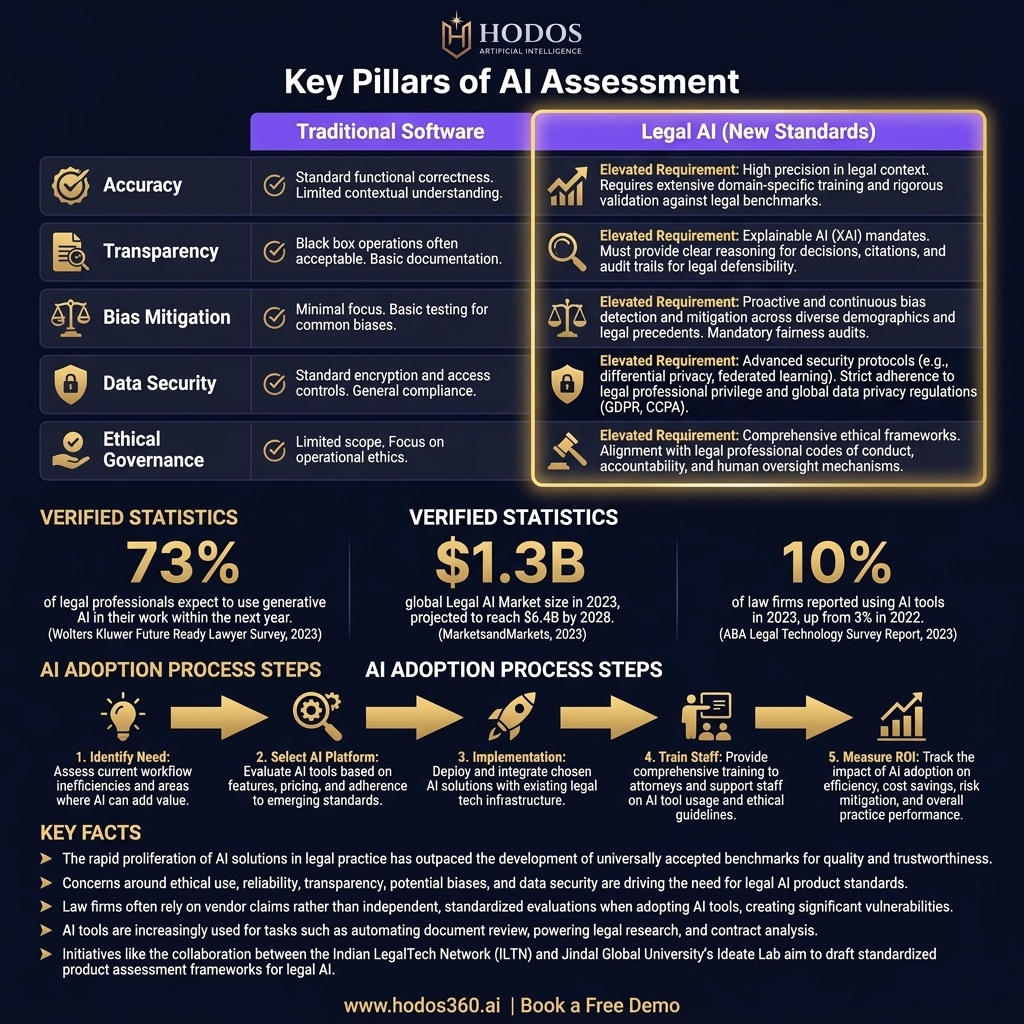
The rapid proliferation of AI solutions in legal practice, from automating document review to powering sophisticated legal research, has outpaced the development of universally accepted benchmarks for their quality and trustworthiness. Firms are often left to navigate a complex landscape, relying on vendor claims rather than independent, standardized evaluations. This gap creates significant vulnerabilities, from potential biases embedded in algorithms to data security risks and the ethical implications of delegating complex legal tasks to unvetted systems. As Microsoft President Brad Smith frequently emphasizes, the development of AI must go hand-in-hand with robust ethical guardrails and regulatory frameworks to ensure societal benefit and prevent unintended harm. This collaborative effort by the ILTN and Jindal Global University is a powerful step in providing those much-needed guardrails, ensuring that the promise of legal AI is realized responsibly. To understand how these emerging standards will impact your practice, and to explore solutions that are built with these principles in mind, consider scheduling a demonstration of HODOS 360's capabilities. Book a Free Demo.
The Imperative for Legal AI Product Standards: Navigating the New Frontier
The legal sector's journey into artificial intelligence has been marked by both exhilarating innovation and cautious apprehension. While platforms like Harvey AI, backed by OpenAI and adopted by firms like Allen & Overy, demonstrate the immense potential for efficiency and insight, the broader market is rife with tools of varying quality and ethical grounding. The lack of a unified legal AI product assessment standard has created a fragmented market where distinguishing between genuinely transformative solutions and unproven or even risky applications is increasingly challenging. A 2023 report by the American Bar Association (ABA) highlighted that while AI adoption is steadily climbing, a significant percentage of firms express concerns over data privacy, algorithmic bias, and the lack of clear guidelines for ethical AI deployment. This sentiment underscores the critical need for a framework that can bring clarity and confidence to legal professionals.
Historically, the legal profession has been characterized by meticulous due diligence and a high bar for reliability. Yet, the speed of AI development, often driven by tech startups with limited legal domain expertise, has threatened to bypass these traditional safeguards. Without a common set of benchmarks, firms face a heightened risk of adopting tools that could lead to inaccurate advice, breach client confidentiality under ABA Model Rule 1.6, or perpetuate societal biases through flawed data analysis. Dr. C. Raj Kumar, Vice-Chancellor of Jindal Global University, has often spoken about the responsibility of educational institutions to bridge the gap between technological advancement and societal implications, a philosophy deeply embedded in the Ideate Lab's mission. Their initiative, therefore, isn't just about technical specifications; it's about safeguarding the core tenets of legal practice in the digital age. The absence of such standards could lead to a 'race to the bottom,' where firms prioritize cost and speed over accuracy and ethical integrity, ultimately eroding public trust in AI-powered legal services.
The ILTN-Jindal Initiative: A Collaborative Blueprint for Trust
The recent gathering orchestrated by the Indian LegalTech Network (ILTN) and Jindal Global University's Ideate Lab represents a monumental step towards addressing this critical need. This collaborative blueprint brought together a diverse group of stakeholders, including prominent legal technologists, senior partners from leading law firms, legal academics, and government representatives. The discussions focused on identifying the core components of an effective assessment standard, drawing inspiration from existing frameworks like the EU AI Act, which, though primarily regulatory, offers valuable insights into defining high-risk AI systems and their compliance requirements. This "global" and "indian" "legaltech" "university" "ideate" "network" "centre" "incubation" effort exemplifies a proactive approach to shaping the future of legal AI, rather than merely reacting to its challenges.
The true power of this initiative lies in its collaborative nature. By bringing together the 'buyers' (law firms struggling to evaluate AI solutions) and the 'builders' (AI developers seeking to demonstrate the trustworthiness of their products), the Ideate Lab fostered a dialogue rooted in practical needs and technical feasibility. This direct engagement ensures that the drafted standards are not theoretical but are deeply informed by the real-world challenges and opportunities presented by AI in legal practice. Legal experts like Pavan Duggal, a renowned cyber law expert, have long advocated for such multi-stakeholder approaches to tackle complex technological governance issues. The aim is to create a standard that is both rigorous enough to instill confidence and flexible enough to adapt to the rapid evolution of AI technology, offering a clear pathway for responsible innovation that aligns with the professional obligations of attorneys, particularly concerning competence as outlined in ABA Model Rule 1.1.
Beyond Hype: Key Pillars of a Robust AI Assessment Framework
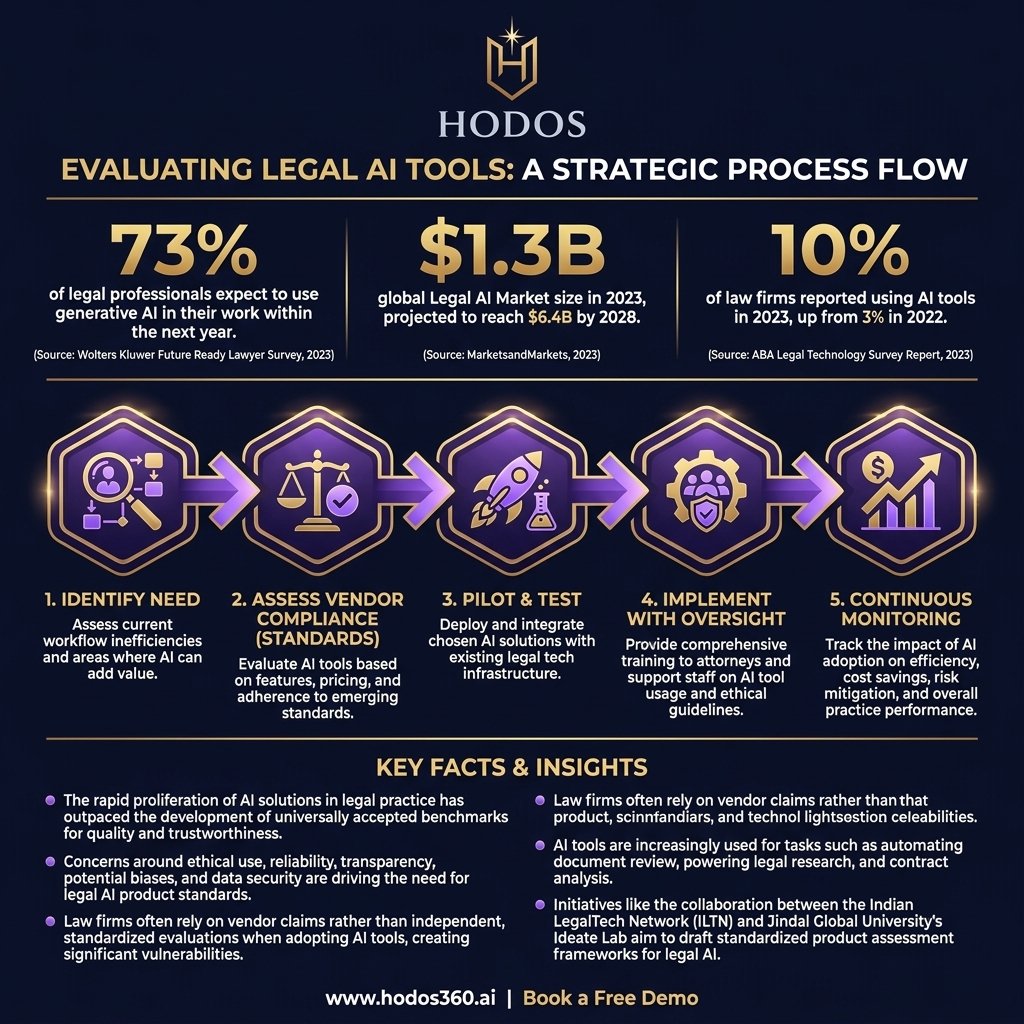
A truly robust AI assessment framework, as envisioned by the ILTN-Jindal initiative, must extend beyond mere functionality to encompass a spectrum of critical attributes. First and foremost is Accuracy and Reliability. This pillar addresses the AI's ability to produce consistent, correct outputs, minimizing 'hallucinations' or erroneous information that could severely undermine legal advice. For instance, in a contract review tool, reliability means consistently identifying specific clauses without false positives or negatives. Second, Transparency and Explainability are paramount. Legal professionals need to understand how an AI system arrives at its conclusions – the 'why' behind the 'what.' This is crucial for accountability and for upholding the ethical duty to provide competent legal advice, as attorneys must ultimately vouch for the work performed, even if assisted by AI. Third, Bias Mitigation is non-negotiable. AI systems, trained on historical data, can inadvertently perpetuate and amplify existing societal biases. A standard must mandate rigorous testing and auditing processes to identify and correct such biases, ensuring equitable outcomes for all clients. Fourth, Data Security and Privacy remain a cornerstone. With sensitive client information flowing through AI platforms, compliance with stringent data protection regulations like GDPR and CCPA is essential, demanding robust encryption, access controls, and data anonymization techniques. Finally, Ethical Governance requires that AI tools align with the overarching principles of justice, fairness, and professional responsibility that define the legal profession. This includes considerations around human oversight, the appropriate scope of AI application, and the prevention of misuse. Together, these pillars form a comprehensive blueprint for evaluating AI, moving beyond the initial excitement to a mature understanding of its capabilities and limitations. The Gartner Hype Cycle for AI often shows initial inflated expectations giving way to a trough of disillusionment before reaching a plateau of productivity; robust standards are key to navigating this cycle effectively.
Ensuring Ethical AI in Legal Practice: A Balancing Act
The integration of AI into legal practice presents a delicate balancing act between unprecedented efficiency gains and the unwavering commitment to ethical conduct. The drafted standards aim to provide clear guidelines for this balance. For example, while an AI system might rapidly analyze thousands of documents, the ethical lawyer must ensure that the output is reviewed and validated, maintaining human oversight. This aligns directly with the spirit of ABA Model Rule 1.1 on Competence, which requires lawyers to provide competent representation, a duty that now extends to understanding the risks and benefits associated with technology. Moreover, the standards will likely address the crucial distinction between AI as a tool for augmentation versus automation, clearly delineating tasks where human judgment remains indispensable. The tensions between disruption and tradition are palpable, with firms that embrace ethical AI frameworks poised to lead, while those that lag risk falling behind in both efficiency and client trust. The focus on ethical AI is not merely a compliance exercise; it is a strategic imperative that builds client confidence and reinforces the legal profession's core values.
The Impact on Law Firms: From Due Diligence to Competitive Edge
For law firms, the advent of standardized AI assessment frameworks will fundamentally reshape how technology is procured and integrated. The days of simply adopting the 'latest and greatest' tool based on marketing claims will yield to a more rigorous due diligence process, one informed by objective benchmarks. This shift will empower firms to make strategic investments in AI, ensuring that chosen solutions not only deliver on their promises but also align with the firm's ethical obligations and risk tolerance. The benefits are multifold: reduced exposure to unreliable or biased tools, enhanced data security posture, and a clearer pathway to demonstrating compliance with evolving regulatory landscapes. Firms that proactively engage with these standards will gain a significant competitive edge, not only in terms of operational efficiency but also in attracting clients who increasingly value transparency and responsible technology use.
Furthermore, these standards will foster greater trust between law firms and AI vendors. Developers who adhere to these benchmarks will gain a credible seal of approval, simplifying the evaluation process for buyers. This could lead to a more mature and specialized legal tech market, where innovation is channeled towards solutions that meet verified standards of quality and ethics. Early adopters of such frameworks, like several forward-thinking firms showcased at LegalTech NYC 2026, have already reported improved client satisfaction and reduced operational costs through the strategic deployment of vetted AI tools. Conversely, firms that resist this move towards standardization may find themselves at a disadvantage, struggling to differentiate their services and potentially facing increased risks from unproven technologies. For firms looking to gain a competitive edge by leveraging advanced, ethically-designed AI solutions, HODOS 360 offers a suite of services, including an AI Law Firm Management System and AI Marketing Platform capabilities, built on principles of reliability and transparency.
Global Implications and the Future of Legal AI Development
The ILTN-Jindal initiative, while rooted in India, carries significant "global" implications for the future trajectory of "legal AI development." As AI technology transcends national borders, the need for international consensus on assessment standards becomes paramount. This effort could serve as a vital model for other jurisdictions and international bodies seeking to establish similar frameworks, contributing to a harmonized global approach to AI governance in law. The collaboration underscores the growing recognition that AI's impact on legal systems necessitates a coordinated, worldwide response, moving beyond fragmented national regulations to a shared understanding of best practices. Organizations like the OECD and UNESCO have already put forth high-level AI principles, but specific, actionable product assessment standards for legal applications are still nascent, making the Jindal initiative particularly groundbreaking.
Moreover, the role of "universities" and "incubation" "centres" like Ideate Lab in driving this future cannot be overstated. Academic institutions are uniquely positioned to foster interdisciplinary research, ethical discourse, and collaborative standard-setting, free from immediate commercial pressures. Learn more about Gemini Enterprise Legal: Unlocking AI Automation for Firms. Their involvement ensures that the standards are grounded in rigorous research and broad stakeholder input, reflecting a balanced perspective that considers both technological innovation and societal impact. This approach is critical for the continuous iteration and adaptation of standards as AI technology evolves. The insights gained from initiatives like this will inform not only product development but also legal education, preparing the next generation of lawyers to operate effectively in an AI-powered legal landscape. This ongoing dialogue and commitment to excellence are precisely what HODOS 360 champions in its own development of secure and effective AI tools for the legal profession, ensuring our AI Voice Assistants and web development services meet the highest benchmarks.

Key Takeaways and Next Steps for Legal Professionals
The move towards standardized legal AI product assessment, spearheaded by the ILTN and Jindal Global University, marks a turning point for the legal profession. It signals a collective commitment to ensuring that AI serves as a powerful, ethical, and reliable partner in delivering justice. For law firm leaders and attorneys, the key takeaway is clear: the era of uncritical AI adoption is ending. The future demands a strategic, informed approach to integrating AI, one guided by robust assessment frameworks that prioritize transparency, ethics, and verifiable performance. Firms must stay informed about these evolving standards, actively engage with their implications, and demand that their technology partners adhere to the highest benchmarks. This proactive stance will not only mitigate risks but also unlock the full potential of AI to enhance legal services, improve client outcomes, and foster a more efficient and equitable legal system. Embracing these standards is not just about compliance; it's about future-proofing your practice and cementing your firm's reputation as a leader in responsible legal innovation.
As the legal tech landscape continues to mature, firms that prioritize the ethical and reliable deployment of AI will be best positioned for long-term success. The insights from initiatives like the ILTN-Jindal collaboration provide a roadmap for this journey, emphasizing that technology, when guided by clear standards, can truly transform legal practice for the better. The legal profession is not being replaced by AI; it is being augmented by it, and these standards ensure that augmentation is both powerful and principled. To explore how HODOS 360's AI-powered solutions align with the highest emerging standards for legal AI, we invite you to connect with our experts and discover how our platform can elevate your firm's operations.
Frequently Asked Questions
Why are legal AI product standards necessary now?+
Legal AI product standards are crucial because the rapid proliferation of AI tools has outpaced ethical guidelines and reliability benchmarks. Without them, law firms face significant risks from biased algorithms, data privacy breaches, and unreliable outputs, potentially compromising client representation and professional integrity. These standards provide a framework for responsible AI adoption, ensuring trustworthiness and accountability in a rapidly evolving tech landscape.
What kind of legal AI tools will these standards apply to?+
These standards are expected to apply to a broad range of legal AI tools, including case management systems, document automation platforms, legal research assistants, predictive analytics software, and AI-powered client intake solutions. The goal is to ensure that any AI tool impacting legal practice or client data adheres to rigorous benchmarks for accuracy, transparency, ethics, and security, regardless of its specific function.
How will these standards benefit my law firm?+
For law firms, these standards offer several benefits: reduced risk of adopting unreliable or unethical AI, improved due diligence processes, enhanced data security, and greater client trust. They provide a clear framework for evaluating AI solutions, enabling firms to make informed strategic investments that align with their ethical obligations and improve operational efficiency. This ultimately contributes to a stronger competitive edge.
Who is developing these legal AI product assessment standards?+
The standards are being collaboratively drafted by a diverse group of stakeholders, spearheaded by the Indian LegalTech Network (ILTN) and Jindal Global University's Ideate Lab. This includes legal AI developers, law firm partners, legal academics, and policymakers. This multi-stakeholder approach ensures that the standards are comprehensive, practical, and reflect the needs and concerns of the entire legal ecosystem.
How can my firm prepare for these new AI standards?+
To prepare, your firm should stay informed about the ongoing developments in AI governance and ethical AI principles. Prioritize due diligence when evaluating new AI tools, asking vendors for transparency regarding their algorithms, data sources, and security measures. Invest in continuous education for your team on AI ethics and capabilities, and consider partnering with legal tech providers, like HODOS 360, that are committed to developing and adhering to high ethical and performance standards.