


Legal AI Technology: Your Essential Guide to Modern Law Practice
The legal industry stands at a pivotal juncture, where the integration of advanced legal AI technology is no longer a futuristic concept but an immediate imperative. As highlighted in recent industry reports, such as the "Legal Tech Roundup: ClearPath AI, BriefCatch" from Law360, the pace of innovation is accelerating, challenging traditional law firms to adapt or risk obsolescence. This isn't just about automation; it's about a fundamental shift in how legal services are delivered, managed, and optimized. Firms that embrace this wave are poised to gain significant advantages in efficiency, accuracy, and client satisfaction, fundamentally reshaping their market position. The conversation has moved beyond mere curiosity to strategic implementation.
For years, discussions around artificial intelligence in law often centered on rudimentary tasks like e-discovery or basic document review. However, the current generation of legal AI technology, epitomized by platforms like ClearPath AI and BriefCatch, delves deeper into cognitive functions, offering sophisticated solutions for case management, legal research, and even refining the nuances of legal writing. This evolution is driven by breakthroughs in natural language processing (NLP) and machine learning, enabling AI to understand context, predict outcomes, and generate human-quality text. Pioneers like Sam Altman of OpenAI and Dario Amodei of Anthropic have laid the groundwork for these advanced models, which are now being tailored specifically for the legal sector. As firms grapple with increasing client demands, escalating costs, and a competitive market, understanding and strategically deploying these ai-powered tools becomes paramount. This comprehensive guide will explore how these innovations are transforming the legal profession and what law firm owners and attorneys need to know to thrive.
The Evolution of Legal AI: Beyond Basic Automation
The journey of AI in law began with straightforward, rules-based automation, primarily focused on high-volume, low-complexity tasks. Early systems, while revolutionary for their time, were limited in their ability to handle the intricate, context-dependent nature of legal work. Fast forward to today, and we are witnessing a profound shift towards generative AI, which can not only process but also *create* and *reason*. This leap is powered by large language models (LLMs) that have been trained on vast datasets, allowing them to comprehend and produce legal text with remarkable accuracy and nuance. For instance, companies like Harvey AI, backed by major investments and partnerships with global firms like Allen & Overy, are demonstrating how these advanced models can assist in complex legal research, contract analysis, and even litigation strategy, moving far beyond simple keyword searches or template filling. This represents a significant step towards truly intelligent legal software.
The widespread adoption of these sophisticated ai-powered tools has been propelled by several factors: exponential increases in computational power, the availability of massive digitized legal datasets, and continuous advancements in machine learning algorithms. Learn more about AI Web Design Tools: The Ultimate Guide for Law Firms. The result is a new generation of legal AI technology that can perform tasks previously thought exclusive to human attorneys, such as drafting initial legal documents, summarizing complex cases, and even identifying potential risks in contractual agreements. According to a 2023 report by McKinsey & Company, generative AI could add trillions of dollars in value to the global economy, with the professional services sector, including law, being a prime beneficiary. This data underscores the economic imperative for law firms to explore and integrate these technologies, not just as a competitive advantage, but as a fundamental shift in operational efficiency and service delivery. The legal industry, once seen as slow to adopt technology, is now at the forefront of this AI revolution.
The Promise of Predictive Analytics in Law
Beyond generative capabilities, a crucial aspect of modern legal AI technology lies in predictive analytics. This involves using AI to analyze historical case data, judicial rulings, and litigation trends to forecast potential outcomes. Platforms like Lex Machina, while distinct from the generative AI tools, exemplify how data-driven insights can empower attorneys with strategic foresight, allowing them to better advise clients on the likelihood of success, potential costs, and optimal legal strategies. This level of insight was previously unattainable, relying heavily on individual attorney experience and anecdotal evidence. Now, AI can sift through millions of data points to identify patterns and correlations that human analysis might miss.
The implications for law firm efficiency are profound. Learn more about AI-Powered Websites: Essential Digital Workforce for Law Firms. By leveraging predictive analytics, firms can make more informed decisions about which cases to pursue, how to negotiate settlements, and what arguments are most likely to resonate with specific judges or juries. This not only enhances the quality of legal advice but also significantly reduces the inherent uncertainties and risks associated with litigation. The ability to anticipate legal outcomes and strategize with data-backed confidence provides an undeniable competitive edge. This shift from reactive legal practice to proactive, data-informed strategy is a hallmark of the new era of legal AI technology, enabling attorneys to deliver superior results and value to their clients.
ClearPath AI & BriefCatch: Redefining Legal Workflows
The recent Law360 roundup prominently features two innovative players: ClearPath AI and BriefCatch, each addressing critical pain points within legal workflows. ClearPath AI is making waves with its sophisticated technology designed to read and comprehend legal documents, intelligently surfacing decisions that require human judgment. This platform isn't just about identifying keywords; it’s about understanding the context and implications of legal text, a significant leap forward in legal AI technology. ClearPath AI boasts five distinct AI platforms tailored for law firms, suggesting a comprehensive approach to integrating AI across various operational facets, from discovery and due diligence to contract review and compliance. By automating the preliminary analysis of vast document sets, ClearPath AI enables legal professionals to focus their expertise on high-value, complex tasks, drastically reducing the time spent on mundane review and improving overall law firm efficiency.
On the other hand, BriefCatch, founded by legal writing expert Steven Lerner, specifically targets the critical domain of legal writing. Recognized as an indispensable ai-powered tool by lawyers and judges alike, BriefCatch enhances clarity, conciseness, and persuasiveness in legal documents. Learn more about Autonomous Marketing: The Ultimate Guide for Law Firms. It goes beyond simple grammar checks, offering real-time suggestions to improve sentence structure, eliminate jargon, and ensure adherence to best practices in legal communication. For attorneys drafting briefs, motions, or client communications, BriefCatch acts as an intelligent co-editor, helping them write more effectively and persuasively. As the legal profession increasingly values clear and impactful communication, tools like BriefCatch are becoming essential. For example, ensuring compliance with standards such as those outlined in Federal Rules of Civil Procedure Rule 8(a), which requires a 'short and plain statement of the claim,' becomes significantly easier with AI assistance. The synergy between ClearPath AI's document analysis and BriefCatch's writing refinement creates a powerful combination for any modern law firm.
Enhancing Legal Writing with AI
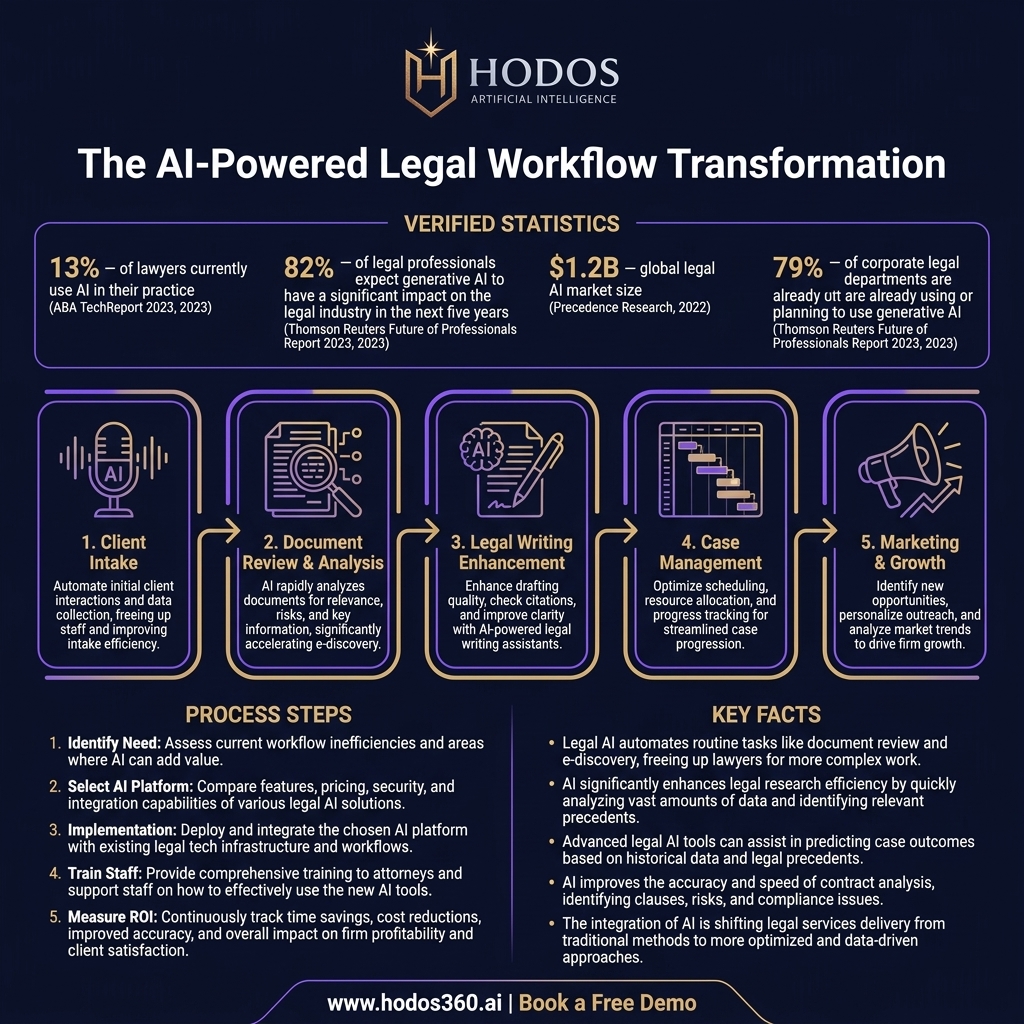
The craft of legal writing is foundational to effective advocacy, yet it is often time-consuming and prone to human error. Legal AI technology like BriefCatch offers a transformative solution. By leveraging advanced natural language processing, this ai-powered tool can analyze text for common pitfalls such as excessive jargon, passive voice, run-on sentences, and lack of clarity. It provides actionable suggestions that not only correct errors but also elevate the overall quality and impact of legal documents. Imagine drafting a complex appellate brief and having an intelligent assistant instantly flag areas for improvement, suggesting more precise terminology or a more concise way to articulate a legal argument. This capability is invaluable.
Moreover, AI can help ensure consistency in tone and style across different documents and authors within a firm, which is crucial for maintaining a professional brand. Learn more about Essential AI Deployment: Mastering Embedded AI for Law Firms. The benefits extend beyond mere grammar and style; AI can also help attorneys refine their persuasive arguments by identifying weak phrasing or logical gaps. This means that lawyers can spend less time on meticulous proofreading and more time on strategic thinking and client engagement. The integration of such legal software ensures that every document leaving a firm is polished, professional, and maximally effective, thereby enhancing reputation and improving the chances of favorable outcomes. This focus on precision directly supports the ethical obligation of competence, as enshrined in ABA Model Rule 1.1 (Competence).
Ready to transform your firm's operations with cutting-edge AI? Discover how HODOS 360 can elevate your practice!
Navigating the AI Landscape: Choosing the Right Legal Software
As the market for legal AI technology expands, law firms face the challenge of choosing the right legal software that aligns with their specific needs and strategic goals. The sheer volume of offerings, from specialized tools like ClearPath AI and BriefCatch to comprehensive platforms, can be overwhelming. Key considerations for selection must include data security and privacy, especially given the sensitive nature of client information (see ABA Model Rule 1.6 (Confidentiality of Information)). Firms must ensure that any chosen AI solution complies with stringent regulatory requirements and robust data protection protocols. Integration capabilities are also paramount; a new AI tool should seamlessly connect with existing practice management systems, document repositories, and communication channels to avoid creating data silos and workflow disruptions.
Scalability is another critical factor. As a firm grows and its needs evolve, the chosen legal AI technology should be able to expand its capabilities without requiring a complete overhaul. User-friendliness and comprehensive training support are also crucial for successful adoption across the firm, from senior partners to paralegals. A 2024 survey by Thomson Reuters found that one of the biggest barriers to AI adoption in law firms was a lack of understanding and training among staff. Learn more about Marketing Automation: Powering Law Firm Growth & Efficiency in 2026. This highlights the importance of vendor reputation and a proven track record in the legal sector. Firms should look for solutions that offer a holistic approach, addressing multiple pain points rather than just isolated tasks. This is where integrated platforms shine, providing a unified ecosystem for various AI-powered functionalities.
At HODOS 360, we understand these complexities. Our platform offers a comprehensive suite of legal AI technology services designed specifically for law firms, integrating everything from AI Law Firm Management and AI Marketing to AI Voice Assistants and Web & Mobile Development. This integrated approach ensures that firms can leverage the full power of AI across all aspects of their operations, from client intake and case management to billing and document automation, all within a secure and user-friendly environment. We aim to be the single source of truth for your firm's digital transformation, providing not just tools but a strategic partner in navigating the future of legal practice.
Streamlining Client Intake and Case Management
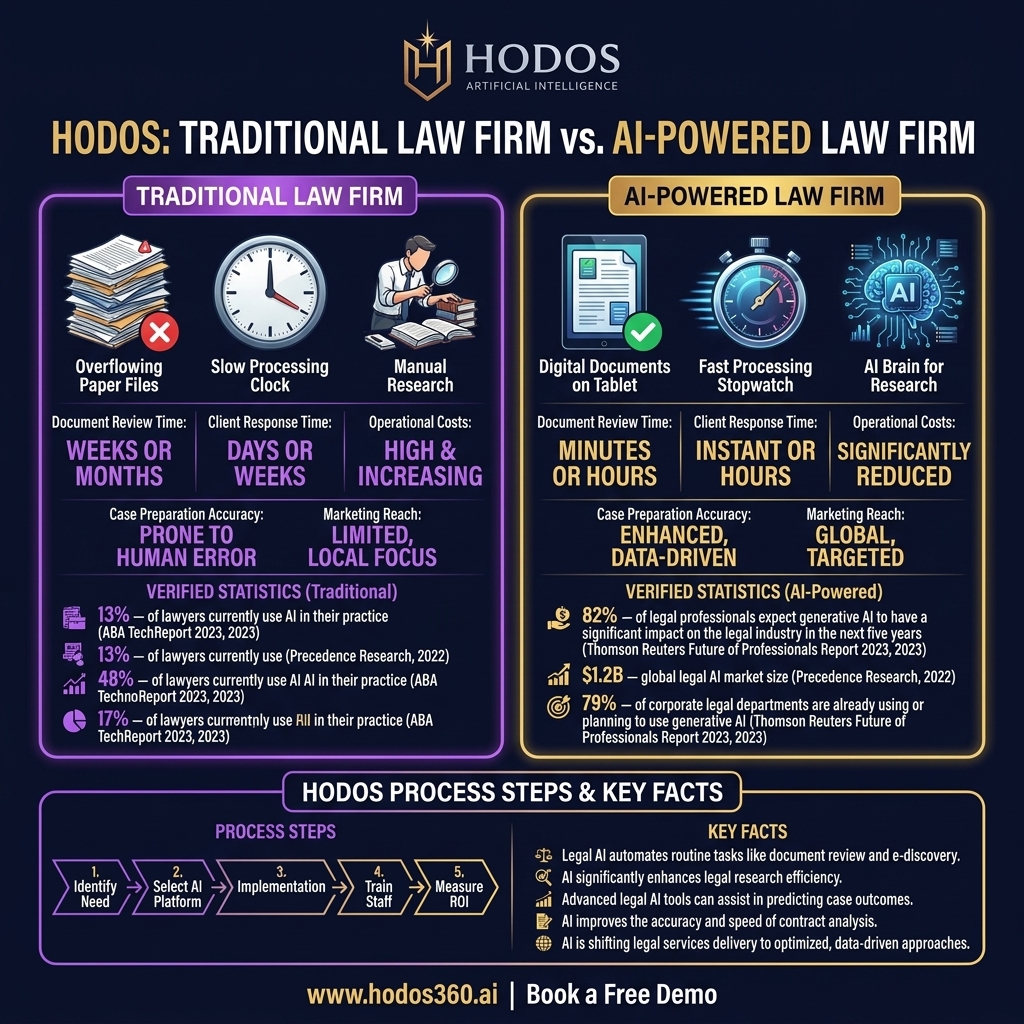
One of the most immediate and impactful applications of legal AI technology is in streamlining client intake and case management. Traditional processes are often manual, time-consuming, and prone to errors, leading to delays and client frustration. AI-powered systems can automate the entire intake process, from initial inquiry and lead qualification to conflict checks and document collection. For example, AI Voice Assistants can provide 24/7 phone answering, qualify leads, and even book appointments, ensuring no potential client is left unattended. This significantly improves response times and the overall client experience, which is crucial for client retention and acquisition.
Furthermore, AI-driven case management systems can intelligently organize case files, track deadlines, automate document generation, and provide real-time insights into case progress. Learn more about Legal AI Deployment: The Ultimate Firmwide Strategy for Torys. This not only reduces the administrative burden on attorneys and support staff but also enhances accuracy and compliance. Imagine a system that automatically flags upcoming deadlines, generates standard motions based on case data, and provides predictive analytics on case outcomes—all integrated into a single platform. This level of automation and intelligence allows legal professionals to focus on strategic legal work, rather than getting bogged down in administrative tasks, ultimately boosting law firm efficiency and profitability.
Integrating AI-Powered Tools for Peak Law Firm Efficiency
The true value of legal AI technology is realized not through isolated tools but through seamless integration into a firm's overarching workflow. A phased rollout strategy, coupled with comprehensive training, is critical for successful adoption. Firms should start with specific areas where AI can deliver immediate, measurable impact, such as automating repetitive tasks in document review or streamlining client intake. This approach allows staff to gradually adapt to new technologies, building confidence and demonstrating tangible benefits. Investing in change management is as important as investing in the technology itself, ensuring that attorneys and support staff understand *how* AI will augment their roles, not replace them.
The return on investment (ROI) for integrated ai-powered tools is compelling. Reduced overhead costs, faster turnaround times for legal work, and improved accuracy translate directly into increased profitability. A 2023 report by Gartner predicted that by 2027, generative AI will reduce the time to market for new legal services by 30%, highlighting the competitive advantage for early adopters. More importantly, AI frees up attorneys from tedious, low-value tasks, allowing them to focus on complex legal analysis, client strategy, and business development. This shift not only enhances law firm efficiency but also significantly improves professional satisfaction and work-life balance for legal professionals. The goal is to create a symbiotic relationship where human expertise is amplified by AI's processing power and analytical capabilities, leading to superior legal outcomes and client service.

The Future of Law: Embracing Legal AI Technology
The trajectory of legal AI technology points towards an increasingly sophisticated and integrated future. We can anticipate even more precise predictive analytics, AI models capable of nuanced legal reasoning, and potentially autonomous legal agents operating under human supervision. The ongoing development of legal-specific LLMs promises to make AI even more adept at understanding and navigating the complexities of legal precedent, statutes, and case law. Firms that resist this wave of innovation risk being outmaneuvered by competitors who embrace ai-powered tools to deliver faster, more cost-effective, and higher-quality services. This isn't just about efficiency; it's about maintaining relevance and competitiveness in an evolving market.
Ultimately, legal AI technology is not about replacing the human lawyer but empowering them. It serves as a powerful co-pilot, augmenting human intelligence, enhancing decision-making, and streamlining operational burdens. The firms that will thrive in the coming decade are those that strategically integrate AI into their core operations, fostering a culture of innovation and continuous learning. Embracing these technologies means delivering superior value to clients, attracting top talent, and securing a sustainable future for the practice of law. The time to act is now; the future of law is being written by those who dare to innovate.
Frequently Asked Questions
What is the primary benefit of integrating legal AI technology into a law firm?+
The primary benefit is a significant increase in efficiency and accuracy across various legal tasks. AI automates repetitive processes like document review, client intake, and case management, freeing attorneys to focus on high-value strategic work. This leads to reduced operational costs, faster service delivery, and improved client satisfaction, ultimately boosting profitability and competitiveness.
How do platforms like ClearPath AI and BriefCatch differ in their functionalities?+
ClearPath AI focuses on analyzing vast legal documents to surface critical information and decisions requiring human judgment, aiding in discovery and contract review. BriefCatch, on the other hand, is an AI-powered legal writing tool that enhances the clarity, conciseness, and persuasiveness of legal documents by providing real-time suggestions for grammar, style, and legal jargon. They are complementary tools.
What are the key considerations when choosing legal AI software for a firm?+
Key considerations include data security and privacy compliance, seamless integration with existing systems, scalability to meet future needs, user-friendliness for easy adoption, and the vendor's reputation and support. It's crucial to select solutions that offer a holistic approach to address multiple pain points and provide comprehensive training for staff.
Can legal AI replace human lawyers?+
No, legal AI is designed to augment, not replace, human lawyers. It acts as a powerful co-pilot, automating routine tasks, providing predictive insights, and enhancing decision-making. AI allows lawyers to focus on complex legal analysis, client relationships, and strategic thinking, thereby elevating the quality and efficiency of legal services, rather than eliminating the need for human expertise.
How does AI improve law firm efficiency beyond just automation?+
Beyond automation, AI improves efficiency by offering predictive analytics for case outcomes, enhancing legal research speed, and refining legal writing quality. It also streamlines client intake with 24/7 AI Voice Assistants, optimizes marketing efforts with AI-powered campaigns, and provides data-driven insights for strategic business development, allowing for a more proactive and competitive practice.