
Autonomous Marketing: The Ultimate Guide for Law Firms
The legal world, often perceived as a bastion of tradition, is experiencing a seismic shift in how it approaches client acquisition and growth. The recent buzz around platforms like Klaviyo's Composer, as highlighted by The Futurum Group, signals a profound evolution towards autonomous marketing – a paradigm where AI agents independently plan, execute, and optimize marketing campaigns. This isn't merely an incremental upgrade; it represents a fundamental rethinking of marketing strategy, moving from human-led, manual processes to sophisticated AI-driven systems capable of orchestrating complex campaigns with minimal oversight. For law firms, this trend is not just fascinating; it's an imperative to understand and strategically integrate, lest they be left behind in a rapidly evolving competitive landscape. The promise of AI-powered platforms like Composer, which can generate tailored emails, SMS campaigns, and even segment audiences from a single prompt, offers a glimpse into a future where marketing efficiency and personalization reach unprecedented levels.
Historically, law firms have navigated a challenging terrain when it comes to marketing. The ethical constraints, the need for deep specialization, and the sheer time commitment required to generate high-quality content, manage social media, and track ROI have often meant marketing efforts were either under-resourced or inconsistent. However, the advent of sophisticated AI marketing agents promises to alleviate many of these burdens, offering a pathway to scalable, compliant, and highly effective client outreach. Imagine a system that not only identifies potential clients but crafts compelling narratives, schedules posts across platforms, and analyzes performance, all while adhering to the firm's brand voice and regulatory requirements. This shift isn't about replacing human marketers but augmenting their capabilities, freeing them to focus on high-level strategy and client relationship building. The implications for firms looking to expand their reach, optimize their budget, and attract a steady stream of qualified leads are nothing short of transformative.
The legal market is increasingly competitive, with firms constantly seeking an edge in client acquisition. According to a 2023 Thomson Reuters report, client acquisition remains a top challenge for over 60% of law firms. This pressure, coupled with the rising expectations of digitally native clients, makes the adoption of advanced marketing technologies essential. The move towards autonomous marketing isn't just about automation; it's about intelligence. It's about systems that learn from data, predict client behavior, and adapt marketing campaigns in real-time. Leaders like Klaviyo CEO Andrew Bialecki have articulated a vision where AI goes beyond simple task execution, becoming a strategic partner that understands business goals and autonomously drives results. Learn more about AI Web Development: The Ultimate Advantage for Law Firms. This vision aligns perfectly with the needs of law firms, where precise targeting and personalized communication can significantly impact client conversion rates.
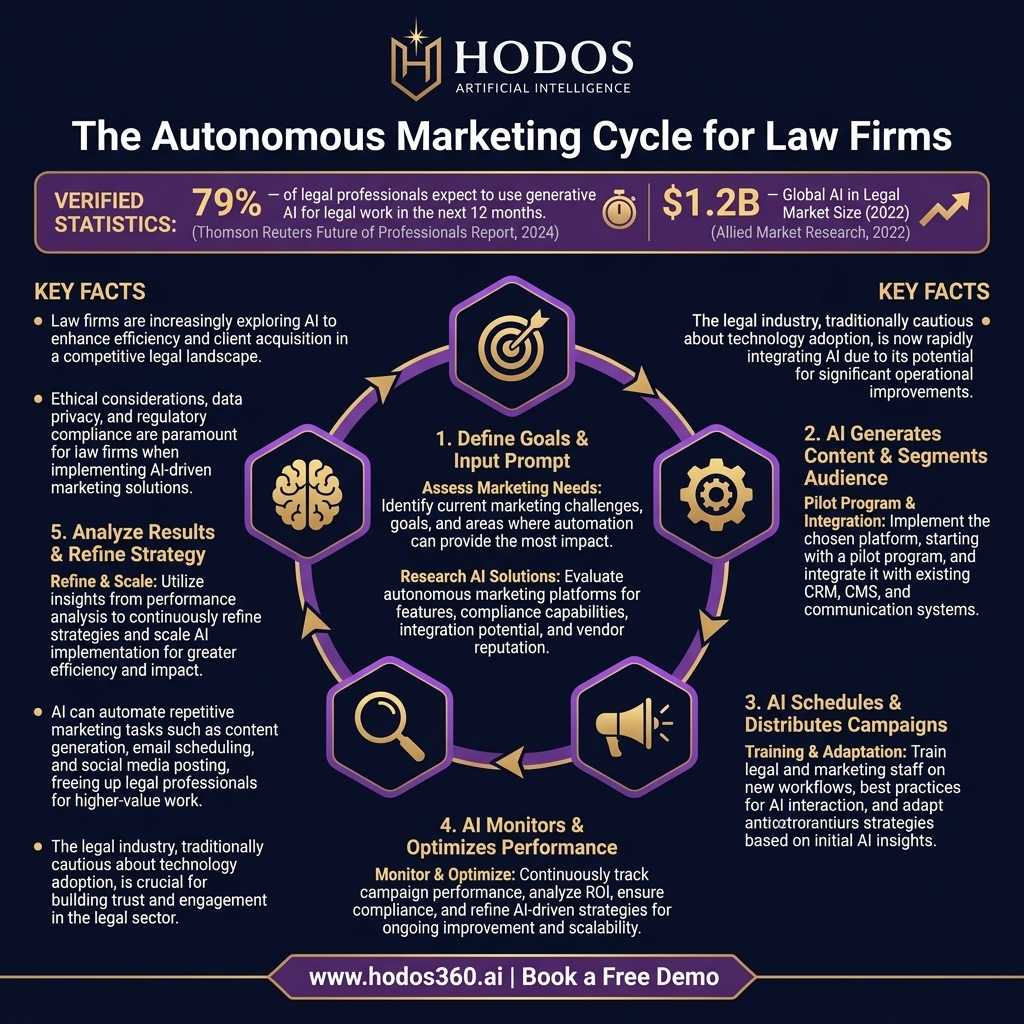
Consider the traditional process of launching a marketing campaign for a law firm: identifying target demographics, drafting compelling copy for various channels (email, social media, blog posts), designing visuals, scheduling posts, monitoring engagement, and then manually adjusting strategy based on performance. This entire cycle is resource-intensive and prone to human error. With AI agents like Composer, a firm could input a single prompt – for example, "Launch a campaign to attract small business owners seeking intellectual property protection" – and the AI would generate comprehensive content, segment the audience, schedule optimal delivery times, and even A/B test different messages, all while continuously learning and optimizing for better outcomes. This level of efficiency and strategic depth was previously unattainable for many firms, particularly small to mid-sized ones lacking dedicated marketing teams. The competitive tension here is palpable: firms embracing these tools will rapidly outpace those relying on conventional methods, creating a clear divide between innovators and laggards.
The Rise of AI Agents: Reshaping Legal Marketing Workflows
The concept of AI agents operating with a degree of autonomy is not new, but its application in specialized fields like legal marketing is reaching a critical inflection point. These agents are not just glorified chatbots; they are sophisticated software entities capable of understanding complex instructions, performing multi-step tasks, and making decisions based on data. Klaviyo's Composer, for instance, leverages large language models (LLMs) and predictive analytics to create entire marketing campaigns from a simple text prompt. This includes generating email sequences, crafting SMS messages, identifying optimal audience segmentation, and even suggesting personalized offers or content. The underlying technology, often developed by companies like OpenAI (whose CEO Sam Altman has championed autonomous AI's potential) or Anthropic (led by Dario Amodei, focusing on safe AI), is becoming increasingly powerful and accessible.
For law firms, this translates into a dramatic overhaul of traditional marketing workflows. Instead of spending hours brainstorming content ideas or meticulously scheduling social media posts, legal marketers can now direct AI agents to handle these tasks autonomously. Learn more about Legal AI Demo Day: Ultimate Insights for Law Firms. This frees up valuable time for strategic planning, client relationship management, and focusing on high-value legal work. Imagine a scenario where a firm's AI marketing platform monitors industry news, identifies emerging legal needs (e.g., new regulations impacting a specific sector), and then autonomously drafts and distributes informative content to relevant client segments. This proactive approach to client acquisition not only enhances efficiency but also positions the firm as a thought leader, attracting clients who value timely and relevant insights. The transition from reactive marketing to proactive, AI-driven engagement represents a significant competitive advantage in the legal sector, where expertise and responsiveness are paramount.
From Manual Campaigns to Autonomous Orchestration
The shift from manual marketing campaigns to autonomous orchestration is perhaps the most profound impact of these AI agents. Historically, a campaign would involve a team of individuals coordinating content creation, design, scheduling, and analysis. This process was often bottlenecked by human capacity and prone to inconsistencies. With autonomous systems, the entire lifecycle of a campaign can be managed by AI, from initial concept to post-launch optimization. For example, a law firm specializing in real estate law could prompt an AI agent to create a campaign targeting property developers interested in new zoning regulations. Learn more about AI Voice Calls: The Essential Guide for Modern Law Firms. The AI would then research relevant regulations, generate blog posts, social media updates, and email newsletters, segment the firm's contact list based on past engagement and property interests, and schedule content distribution across various channels. Crucially, the AI would also monitor engagement metrics in real-time, adjusting subject lines, call-to-actions, or even content delivery times to maximize impact. This level of dynamic optimization, driven by machine learning, is virtually impossible to achieve manually at scale. Firms like Allen & Overy, which famously partnered with Harvey AI, demonstrate a commitment to leveraging AI for core legal functions; extending this mindset to marketing is the natural next step for legal tech innovators.
Strategic Advantages for Law Firms in a New Era
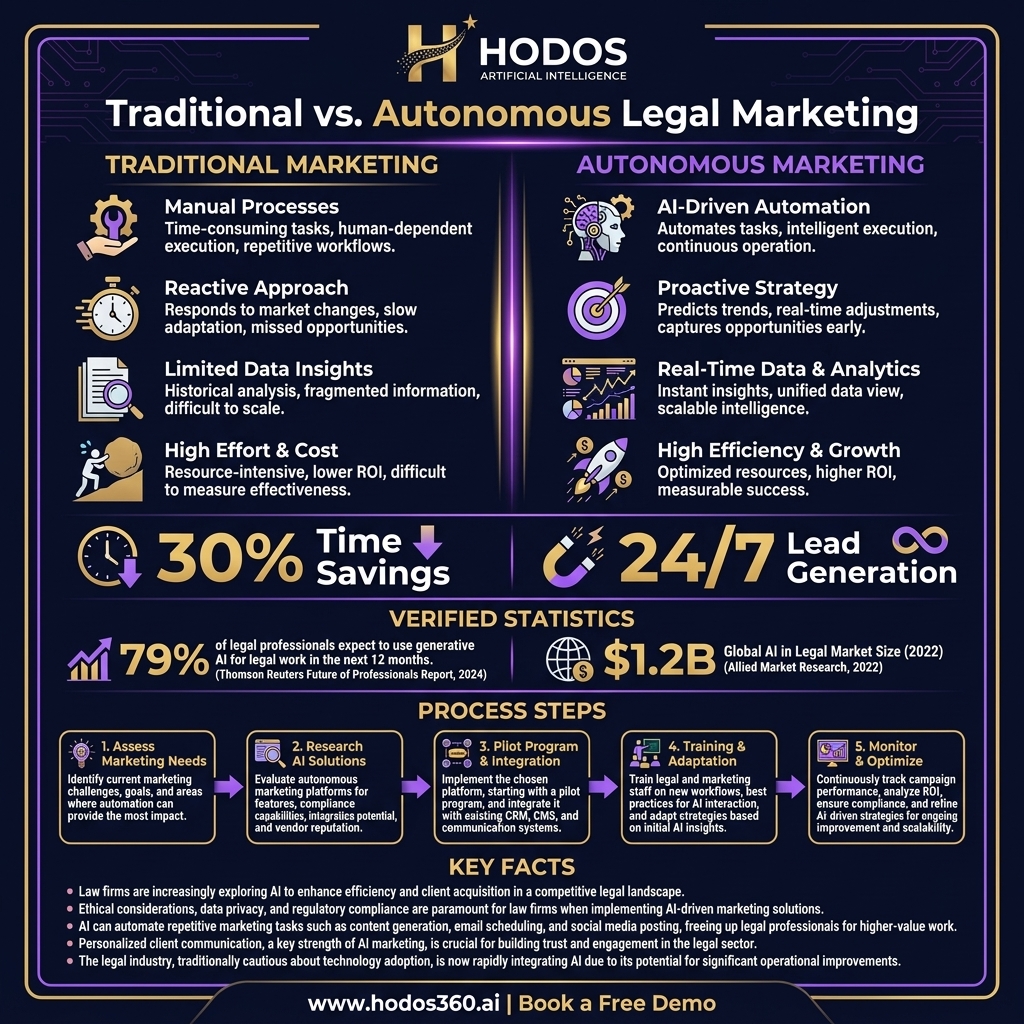
Adopting autonomous marketing platforms offers several compelling strategic advantages for law firms aiming to thrive in the digital age. Firstly, it dramatically enhances efficiency. The automation of repetitive and time-consuming marketing tasks frees legal professionals to focus on higher-value activities, such as client consultations, case strategy, and complex legal research. A 2024 report by McKinsey Global Institute estimated that AI could automate up to 30% of marketing tasks across industries, translating into significant time and cost savings. For law firms, where billable hours are paramount, this efficiency gain is directly tied to profitability and growth. Secondly, these platforms enable unparalleled personalization and precision in client acquisition. AI agents can analyze vast amounts of data – from website interactions to past case histories – to create hyper-targeted marketing campaigns that resonate deeply with individual client needs and preferences. This level of bespoke communication builds trust and significantly increases conversion rates, moving beyond generic outreach to truly meaningful engagement.
Thirdly, autonomous marketing provides superior data analytics and ROI tracking. Learn more about AI Voice Assistants: The Ultimate Guide for Law Firms. Traditional marketing often struggles with accurately attributing leads and measuring the return on investment for various campaigns. AI-powered platforms, however, are built with sophisticated tracking and reporting mechanisms that provide real-time insights into campaign performance. This allows law firms to understand precisely which strategies are most effective, where to allocate resources, and how to continuously optimize their marketing spend. This data-driven approach is crucial for demonstrating the value of marketing efforts to firm partners and ensuring that every dollar spent contributes directly to lead generation and revenue. Companies like Clio, a leading legal practice management software that has made strategic acquisitions in the legal tech space, emphasize the importance of integrated data for firm growth, a principle that extends powerfully to marketing. Furthermore, the ability of AI agents to operate 24/7 means that a firm's marketing efforts are always active, capturing leads and engaging potential clients even outside of business hours, thereby expanding market reach and responsiveness.
Navigating the Challenges: Ethics, Compliance, and Integration
While the benefits of autonomous marketing are clear, law firms must also navigate several critical challenges, particularly concerning ethics, compliance, and seamless integration. The legal profession operates under stringent ethical guidelines, such as the ABA Model Rules of Professional Conduct, which govern attorney advertising (e.g., Rule 7.1, 7.2, 7.3). AI-generated content, while efficient, must still adhere to these rules, ensuring accuracy, avoiding misleading statements, and maintaining professional decorum. Firms must implement robust oversight mechanisms to review and approve AI-generated materials before public dissemination. This involves human review layers and potentially training AI models on specific legal ethical frameworks to minimize compliance risks.
Integration is another significant hurdle. For autonomous marketing platforms to be truly effective, they must seamlessly integrate with existing practice management systems, CRM platforms, and client intake processes. A fragmented tech stack can undermine the benefits of automation, creating data silos and inefficiencies. Learn more about Essential AI Web Development for Law Firms: Harvard's Impact. Law firms need to select platforms that offer robust APIs and connectors, or better yet, comprehensive solutions that encompass multiple functionalities, such as the HODOS 360 AI Marketing Platform. This platform, for example, is designed to integrate its AI video creation, social media automation, and content generation capabilities, ensuring a unified approach to client outreach. The complexity of integrating disparate systems can be a source of significant frustration and cost for firms that fail to plan strategically. Furthermore, the rapid pace of AI development means firms must be prepared for continuous learning and adaptation, investing in training their teams to effectively utilize these new tools and manage the output of their AI agents. The tension between rapid innovation and the need for meticulous compliance is a defining characteristic of this new era in legal tech, demanding careful strategic planning from firm leadership.
Ensuring Ethical AI in Legal Client Outreach
Ensuring ethical AI in legal client outreach goes beyond mere compliance; it's about maintaining the integrity and trustworthiness of the legal profession. The potential for AI to generate content that could be perceived as overly aggressive, misleading, or even discriminatory necessitates careful attention. Firms must establish clear guidelines for their AI marketing agents, defining acceptable tone, factual accuracy parameters, and data privacy protocols. For instance, the use of client data for segmentation must always comply with regulations like GDPR or CCPA, ensuring informed consent and data security. The ABA Standing Committee on Ethics and Professional Responsibility continues to issue guidance on technology and ethics, underscoring the ongoing need for vigilance. Learn more about Ultimate Inbound Marketing AI Guide for Law Firms. Firms should consider implementing a 'human in the loop' approach, where AI generates preliminary content and strategies, but final approval and critical decision-making remain with experienced legal marketers or attorneys. This hybrid model leverages AI's efficiency while safeguarding against potential ethical missteps. The responsibility ultimately rests with the firm to ensure that its autonomous systems uphold the highest standards of professional conduct, preserving client trust and the firm's reputation. The ongoing debate around AI ethics, with figures like Fei-Fei Li advocating for human-centered AI, highlights the importance of these considerations.
The Future is Autonomous: Preparing Your Firm for What's Next
The trajectory towards autonomous marketing in the legal industry is undeniable. As AI capabilities continue to advance, we can expect even more sophisticated AI agents that not only execute but also strategize, innovate, and adapt with increasing autonomy. The lessons from platforms like Klaviyo Composer demonstrate that the technology is maturing rapidly, moving beyond simple automation to truly intelligent, self-optimizing systems. For law firms, preparing for this future involves several key steps. Firstly, investing in foundational legal tech infrastructure that can support advanced AI tools is crucial. This includes robust data management systems and integrated platforms. Secondly, fostering a culture of innovation within the firm, encouraging attorneys and staff to experiment with and understand AI tools, will be vital. Firms that embrace continuous learning will be better positioned to leverage these technologies effectively. Finally, strategically partnering with legal tech providers that specialize in AI-powered solutions, like HODOS 360, can provide the expertise and tools necessary to navigate this complex landscape. These partnerships ensure access to cutting-edge technology tailored to the unique needs of the legal sector, ensuring compliance and maximizing impact.
The competitive landscape will increasingly favor firms that can effectively harness the power of autonomous marketing. This isn't just about adopting a new tool; it's about fundamentally rethinking how a law firm connects with potential clients, builds its brand, and drives sustainable growth. The firms that move decisively now, investing in smart AI solutions and developing a forward-thinking marketing strategy, will be the ones that dominate the legal market of tomorrow. The time for passive observation is over; the era of intelligent, autonomous action has arrived. As Jensen Huang, CEO of NVIDIA, often emphasizes the transformative power of AI across all industries, the legal sector is no exception. Firms that fail to adapt risk becoming footnotes in an increasingly AI-driven narrative, while those that embrace this shift will define the new standards of legal excellence and client acquisition.

Key Takeaways and Next Steps for Law Firms
The emergence of autonomous marketing represents a pivotal moment for law firms. The ability of AI agents to autonomously manage and optimize marketing campaigns offers unprecedented opportunities for efficiency, personalization, and strategic growth. Firms that embrace this shift will gain a significant competitive edge in client acquisition and lead generation. It's crucial for legal professionals to move beyond generic understandings of AI and delve into the specific applications and benefits of platforms like Klaviyo Composer, understanding how they can be tailored for the unique demands of the legal industry. The path forward involves careful planning, ethical consideration, and strategic investment in the right legal tech solutions. Law firms must prioritize data privacy, ensure ethical compliance for AI-generated content, and integrate these new tools seamlessly into their existing operations. By doing so, they can unlock the full potential of autonomous marketing to transform their outreach efforts and secure their position in a future-forward legal landscape. This proactive approach will not only enhance a firm's market presence but also free up valuable human capital for complex legal work, ultimately driving greater profitability and client satisfaction. HODOS 360’s AI Marketing Platform offers a comprehensive suite of tools designed to empower law firms in this new era, from AI-powered content generation to social media automation and ROI tracking, ensuring firms can harness the power of autonomous marketing responsibly and effectively.
Frequently Asked Questions
What is autonomous marketing?+
Autonomous marketing refers to an AI-driven approach where intelligent software agents independently plan, create, execute, and optimize marketing campaigns. These agents leverage machine learning and data analytics to perform tasks like content generation, audience segmentation, scheduling, and performance tracking with minimal human intervention, continuously learning and adapting for improved results.
How can autonomous marketing benefit law firms?+
Law firms can benefit from autonomous marketing through increased efficiency, precise client acquisition, and superior ROI tracking. It automates repetitive tasks, freeing up legal professionals for high-value work. AI agents enable hyper-personalized outreach, improving conversion rates, and provide real-time data insights to optimize marketing spend and strategy, enhancing lead generation.
What are AI marketing agents, and how do they work?+
AI marketing agents are sophisticated software entities that use AI, often large language models, to perform complex marketing tasks. They work by taking a high-level prompt (e.g., 'launch a campaign for X service') and then autonomously generating content, segmenting audiences, scheduling delivery, and optimizing performance across various channels, based on predefined goals and real-time data.
Are there ethical considerations for law firms using autonomous marketing?+
Yes, law firms must carefully consider ethical guidelines like the ABA Model Rules of Professional Conduct regarding attorney advertising. AI-generated content needs rigorous human review to ensure accuracy, avoid misleading statements, and comply with data privacy regulations (e.g., GDPR, CCPA). Maintaining a 'human in the loop' approach is crucial for ethical compliance and preserving trust.
How does autonomous marketing differ from traditional marketing automation?+
Autonomous marketing goes beyond traditional automation by incorporating true AI intelligence and decision-making. While automation executes predefined rules (e.g., send email after X action), autonomous marketing agents learn, adapt, and strategize independently to achieve marketing goals. They can initiate campaigns, optimize content, and adjust strategies dynamically, rather than just following a script.
What role does HODOS 360 play in autonomous marketing for law firms?+
HODOS 360 offers an AI Marketing Platform specifically designed for law firms, providing tools for AI video creation, social media automation, and content generation. This platform empowers firms to leverage autonomous marketing by streamlining client acquisition, enhancing brand visibility, and tracking ROI, all while adhering to the unique compliance and ethical needs of the legal industry.