
Ultimate Inbound Marketing AI Guide for Law Firms
A few years ago, managing partner Sarah Chen at Lex Innova LLP in San Francisco found her firm struggling against larger competitors with seemingly endless marketing budgets. Traditional ad spend yielded diminishing returns, and their content strategy, while earnest, lacked the precision to truly convert.
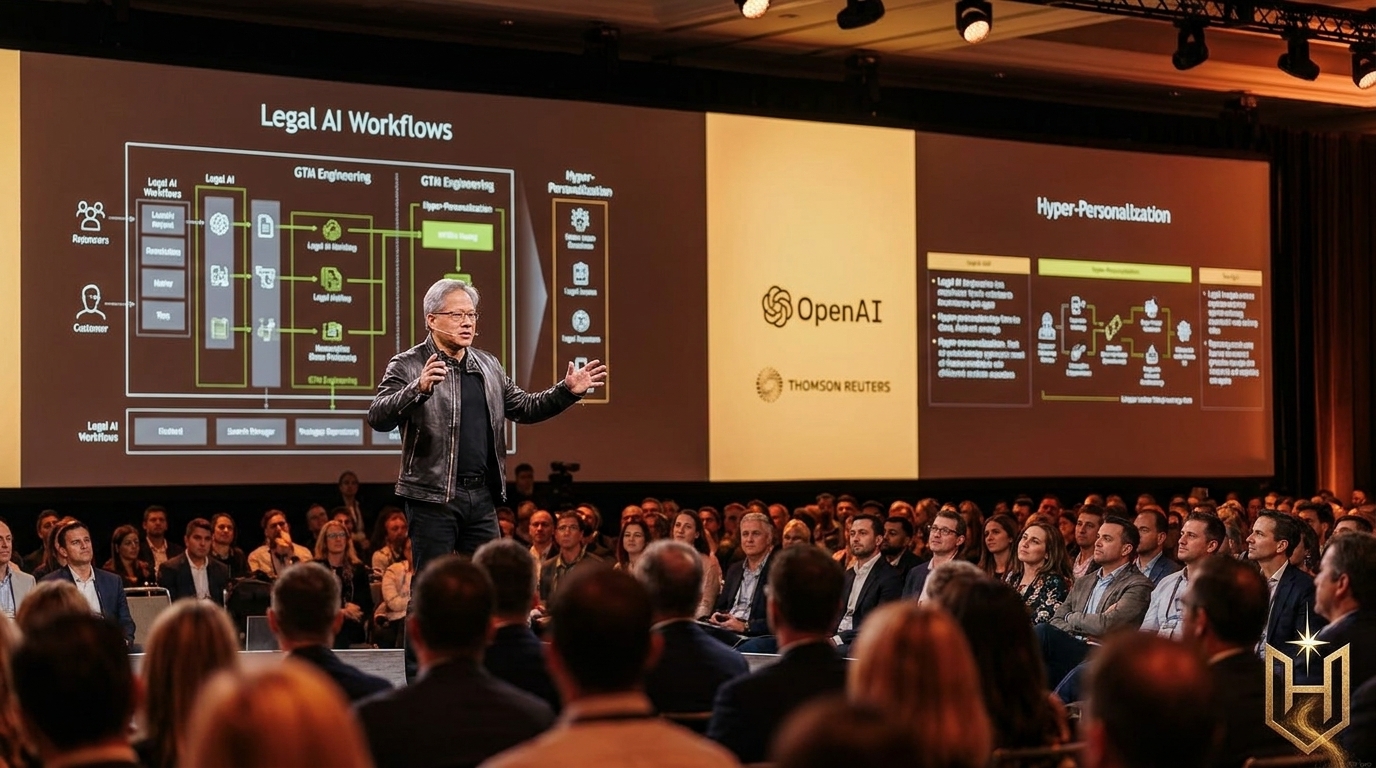
Then, in early 2025, during a LegalTech NYC panel featuring Jensen Huang discussing "AI's democratization of enterprise tools," a lightbulb went off. Chen realized the future wasn't about outspending, but outsmarting, leveraging advanced AI to personalize outreach and optimize every touchpoint. This shift, mirroring the broader industry pivot highlighted by eMarketer's recent "FAQ on inbound marketing" report, marks a critical juncture for law firms.
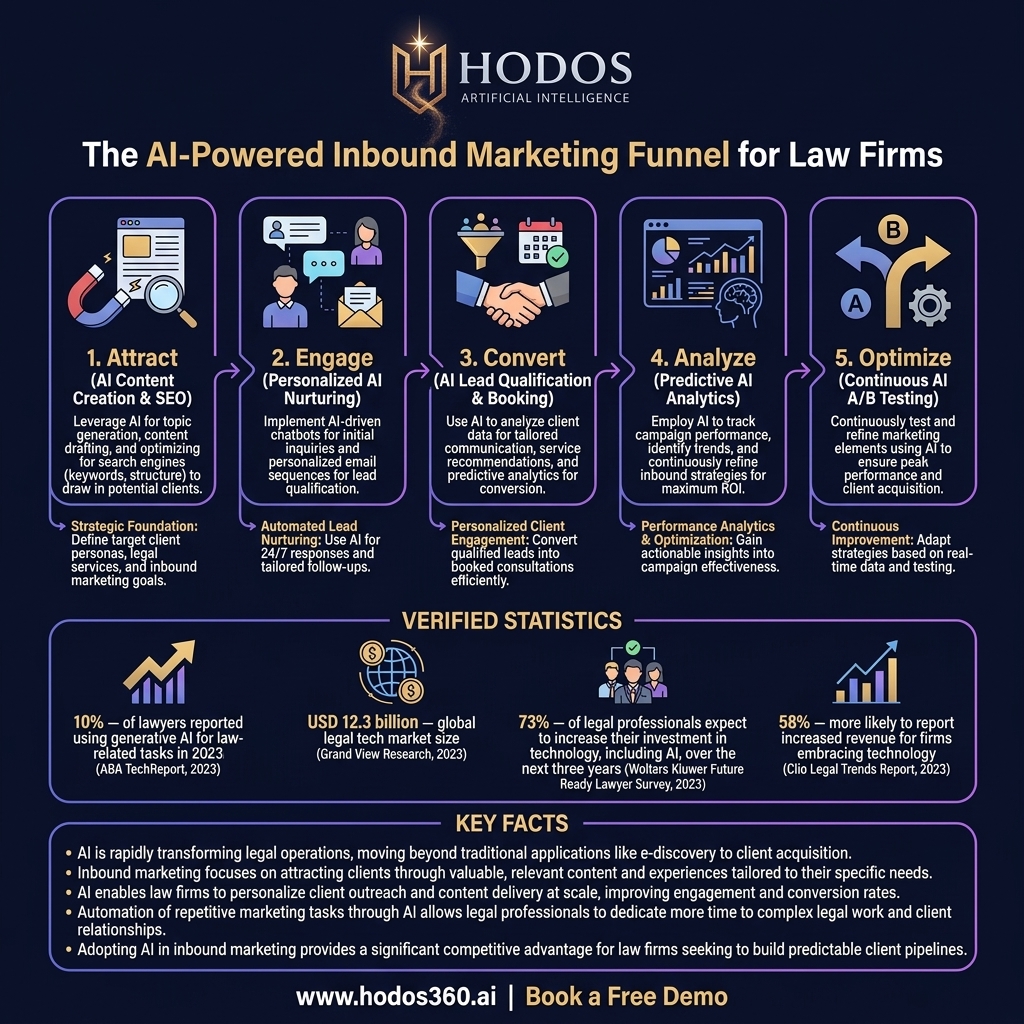
The report underscores that the confluence of artificial intelligence and GTM (Go-to-Market) engineering is not just enhancing, but fundamentally rewriting the playbook for how businesses, including law firms, attract, engage, and convert clients in 2026. This isn't merely about adopting new tools; it's about a strategic overhaul of the entire client acquisition lifecycle, moving beyond reactive marketing to proactive, data-driven engagement.
For too long, legal marketing has lagged behind other industries in embracing cutting-edge technology. While other sectors were experimenting with predictive analytics and hyper-personalized content, many law firms remained tethered to outdated referral networks and generic outreach. However, the sheer pace of AI innovation, exemplified by breakthroughs from companies like OpenAI with their GPT-4o model and Anthropic's Claude, has made these capabilities accessible and indispensable.
The eMarketer analysis points to a future where firms that master inbound marketing AI will not just survive, but thrive, building robust, predictable client pipelines. This necessitates a deep dive into what GTM engineering means in a legal context and how AI can be strategically deployed to build, measure, and optimize every facet of a firm's digital presence and client journey.
It’s no longer a question of *if* AI will impact legal marketing, but *how quickly* firms can adapt to harness its transformative power to boost their revenue and client base.
The Evolution of Inbound Marketing for Law Firms in the AI Era
The traditional model of inbound marketing, focused on attracting customers through valuable content and experiences, has undergone a seismic shift with the advent of advanced AI. Historically, law firms relied on thought leadership articles, seminars, and SEO-optimized websites. This required significant manual effort in content creation and lead nurturing.
However, the legal market, as noted in the 2025 Thomson Reuters Institute's "State of the Legal Market" report, is increasingly competitive, with clients demanding more personalized experiences and immediate value. This demand has pushed firms beyond basic content marketing into a realm where AI not only automates tasks but also provides strategic insights, fundamentally altering the competitive landscape.
Consider the journey of a prospective client. In the pre-AI era, they might stumble upon a firm's blog post and eventually fill out a contact form. Each step was a discrete event. Today, an AI-powered inbound marketing system tracks every interaction, from website visits to social media engagement.
Learn more about AI Web Design: Essential for Law Firms in the Agentic Era. This granular data, analyzed by machine learning algorithms, allows firms to build incredibly detailed client profiles, predicting their needs and preferences with remarkable accuracy. For instance, a small business owner researching "contract disputes" might immediately be served with targeted content about commercial litigation, followed by an invitation to a webinar led by a specific partner specializing in that area, all orchestrated autonomously by an AI platform.
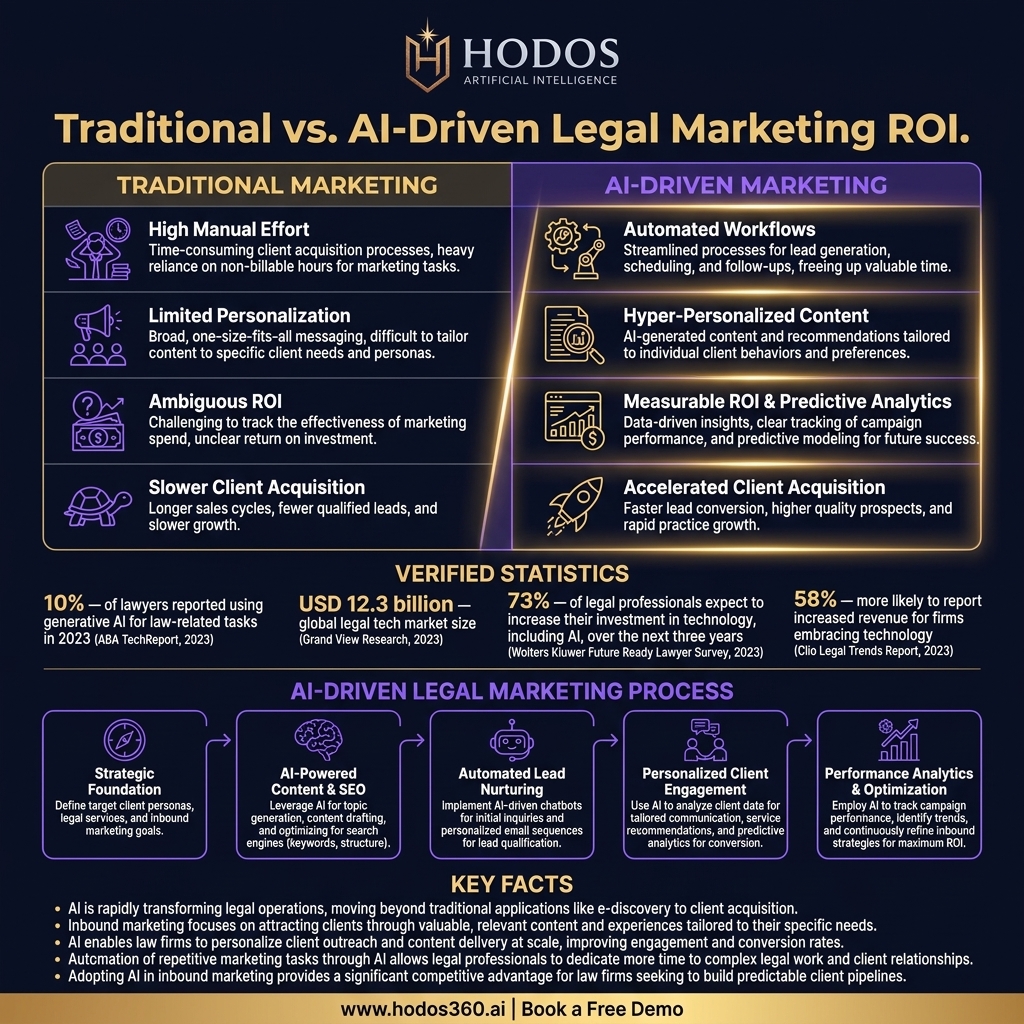
The integration of AI also addresses a long-standing challenge for legal marketers: demonstrating clear ROI. While traditional inbound metrics were useful, AI takes this a step further by connecting specific marketing activities directly to client conversions and revenue generation. Firms can now precisely attribute which pieces of content or which social media plays led to a signed retainer.
This data-driven approach, championed by figures like Clay's CEO, Shlomo Genchin, who has spoken extensively on building "revenue engines" through AI, allows law firms to continually refine their strategies and allocate resources more effectively. The days of "spray and pray" marketing are over; in their place, AI fosters a highly targeted, efficient, and measurable approach to client acquisition, ensuring every dollar spent contributes directly to the firm's bottom line and provides a significant boost to growth.
From Content Creation to Hyper-Personalization
One of the most profound impacts of inbound marketing AI lies in its ability to transform content creation and delivery. Historically, crafting high-quality legal content was labor-intensive, requiring significant attorney time. Now, generative AI tools, often powered by large language models (LLMs) from companies like Google DeepMind or OpenAI, can assist in drafting blog posts, articles, social media updates, and email sequences.
This doesn't replace the attorney's expertise but augments it, allowing them to focus on legal nuances while AI handles initial drafts and SEO optimization.
Beyond creation, AI excels at hyper-personalization. Learn more about AI to Create a Website: The Ultimate Guide for Law Firms. Instead of a generic email newsletter, AI segments audiences based on their specific legal needs, industry, and engagement history, then tailors content to resonate directly with them.
For example, a real estate developer might receive an email detailing recent zoning changes, while a startup founder gets updates on intellectual property protection, both automatically generated and distributed by the AI system. This enhances engagement and conversion rates dramatically, ensuring every interaction is highly relevant.
GTM Engineering: A New Paradigm for Legal Client Acquisition
The concept of Go-to-Market (GTM) engineering, a term gaining significant traction in 2026, represents a structured, data-driven approach to revenue generation, moving beyond traditional sales and marketing silos. For law firms, GTM engineering means systematically designing, building, and optimizing the entire client journey, from initial awareness to post-engagement delight, using technology and automation.
It's about constructing a "revenue engine" – a term often attributed to Silicon Valley leaders like David Sacks, co-founder of Craft Ventures – that ensures a predictable flow of qualified leads and conversions.
The "engineer" aspect of GTM engineering emphasizes a methodical, iterative process akin to software development.
Just as a software engineer continuously refines code, a GTM engineer for a law firm constantly analyzes performance metrics, A/B tests different approaches, and optimizes the client journey for maximum efficiency and conversion. This often involves integrating various tools and platforms to create a seamless ecosystem.
For instance, a GTM engineer might integrate a firm's website analytics with its CRM and an AI-powered email marketing platform to trigger specific actions. If a potential client visits the "M&A Law" section of the website multiple times, the system might automatically send them a case study on a successful M&A transaction the firm handled, followed by an invitation to a private Q&A session with an M&A partner.
Learn more about Legal AI Deployment: The Ultimate Firmwide Strategy for Torys. This level of orchestration ensures that no lead falls through the cracks and that every interaction is designed to move the client closer to engagement, significantly boosting revenue.
The rise of GTM engineering is also a response to the increasing complexity of the digital marketing landscape and the sheer volume of data available.
Law firms can no longer rely on intuition; they need a scientific approach to marketing. This is where AI becomes indispensable. AI tools can analyze vast datasets to identify patterns, predict client behavior, and recommend optimal strategies, essentially acting as an extension of the GTM engineer.
For example, AI can pinpoint which content formats are most effective for a specific client segment, or which call-to-action yields the highest conversion rates on a landing page. This data-driven precision allows law firms to allocate their marketing budget more strategically, ensuring that every dollar spent contributes to measurable growth.
Automating the Client Journey with AI Workflows
A core component of GTM engineering for law firms is the automation of the client journey through AI-powered workflows. This goes beyond simple email automation; it involves intelligent systems that adapt to client behavior in real-time. For example, when a prospective client downloads a whitepaper on "Navigating Regulatory Compliance," an AI workflow can immediately trigger a series of personalized follow-up emails, schedule a relevant blog post to appear in their social media feed, and even alert a specific attorney to reach out if the client shows high engagement.
This level of proactive, adaptive engagement ensures that the firm remains top-of-mind and that potential clients receive the information they need at the precise moment they need it. Learn more about AI Officer: The Essential Role for Modern Law Firms. The goal is to create a frictionless path from awareness to conversion, minimizing manual intervention and maximizing efficiency, thereby helping law firms build stronger client relationships from the first interaction.
It transforms lead nurturing into a dynamic, personalized experience, significantly improving conversion rates.
Leveraging AI for Personalized Content and Engagement
In the crowded digital space, generic content is ignored. Law firms must deliver hyper-personalized experiences to capture and retain attention. AI is the engine behind this personalization, allowing firms to move beyond broad demographic targeting to individual-level engagement. Leading legal tech platforms, including HODOS 360’s AI Marketing Platform, are now equipped with advanced content generation and distribution capabilities.
These tools utilize sophisticated natural language processing (NLP) and machine learning (ML) models to analyze market trends, client queries, and competitor content, enabling firms to create highly relevant and engaging material at scale.
Beyond creation, AI excels at determining the optimal delivery channel and timing for content.
A prospect who prefers video content might receive a short explainer video via email, while another who engages more with LinkedIn articles might see a detailed legal analysis pop up in their feed. Learn more about AI Website Design: Essential Prompts for Law Firms. AI algorithms can predict which content format and distribution method will yield the highest engagement for each individual, maximizing the impact of every piece of communication.
This level of intelligent distribution ensures that valuable content reaches the right person, at the right time, through their preferred channel, significantly enhancing the effectiveness of inbound marketing.
This personalization extends to client communication and relationship management. AI-powered chatbots and virtual assistants, such as those offered by HODOS 360’s AI Voice Assistants, can provide 24/7 support, answer common legal FAQs, and even qualify leads before routing them to the appropriate attorney.
This not only improves client satisfaction by offering immediate assistance but also frees up valuable attorney time, allowing them to focus on complex legal work. The data collected from these interactions further feeds the AI system, refining its understanding of client needs and improving future interactions, demonstrating a tangible boost in client acquisition efforts.
Ethical Considerations and the Future of AI in Legal Marketing
While the benefits of AI in legal marketing are clear, ethical considerations surrounding data privacy, transparency, and bias are paramount. The ABA Model Rules of Professional Conduct, particularly Rule 7.1 (Communications Concerning a Lawyer's Services) and Rule 7.3 (Solicitation of Clients), provide a framework for ethical marketing.
Law firms must ensure that AI-driven personalization does not cross into deceptive or coercive solicitation. Transparency about AI's role in client interactions and robust data security measures are crucial for maintaining trust.
As AI continues to evolve, firms must stay abreast of regulatory developments, such as the EU AI Act, which will influence how AI is deployed in client-facing applications.
Learn more about Voice AI: Essential Transformation for Modern Legal Workflows. The future of inbound marketing AI will necessitate a delicate balance between leveraging technology for efficiency and upholding the highest ethical standards of the legal profession. Responsible AI adoption is not just a compliance issue, but a cornerstone of client trust and firm reputation.
Measuring ROI and Optimizing Campaigns with AI Analytics
One of the most compelling advantages of integrating AI into inbound marketing strategies for law firms is the unprecedented ability to measure Return on Investment (ROI) and continuously optimize campaigns. Historically, attributing specific marketing spend to actual client acquisition and revenue was a challenge, often relying on anecdotal evidence or broad estimations.
However, with AI-powered analytics platforms, firms can now gain granular insights into every aspect of their marketing efforts.
These platforms ingest data from various sources – website traffic, social media engagement, email campaigns, CRM entries, and even billing systems – to create a holistic view of the client journey.
This allows firms to not only see which campaigns are generating leads but also which leads are converting into paying clients, and the average lifetime value of clients acquired through specific channels. This predictive power helps firms optimize their budget allocation, ensuring that marketing spend is directed towards the most effective strategies and channels, thereby maximizing their revenue potential.
According to a 2024 Gartner report on marketing technology trends, companies leveraging AI for predictive analytics saw an average of 15-20% improvement in campaign effectiveness.
Furthermore, AI facilitates continuous A/B testing and optimization on a scale impossible for human teams. From testing different headlines on a landing page to experimenting with various call-to-action buttons in an email campaign, AI can rapidly iterate through countless variations, identifying the highest-performing elements.
This constant optimization ensures that a law firm's inbound marketing efforts are always improving, adapting to market changes and client preferences in real-time. For example, a campaign manager using an advanced AI marketing platform might observe that video testimonials on LinkedIn generate significantly more qualified leads for their personal injury practice than written case studies.
The AI would then automatically boost the distribution of video content across relevant channels, while suggesting modifications to the blog strategy, ensuring the most efficient use of resources and a higher conversion rate for every marketing play.
Building Your Law Firm's AI-Powered Inbound Strategy with HODOS 360
Implementing an advanced inbound marketing AI strategy can seem daunting for law firms, but with the right partner and tools, it's an achievable and transformative endeavor. The first step involves a comprehensive audit of existing marketing efforts and client data to identify areas ripe for AI integration.
This foundational analysis helps define clear objectives, whether it's increasing lead generation by a certain percentage, improving client retention, or reducing client acquisition costs. Once objectives are set, firms can begin to build their AI-powered framework, starting with robust data collection and integration.
HODOS 360 offers a comprehensive suite of services specifically designed to empower law firms in this transition.
Our AI Marketing Platform provides a robust foundation for an AI-driven inbound strategy, featuring AI video creation for engaging content, social media automation to maintain a consistent online presence, sophisticated content generation tools, and advanced analytics for ROI tracking. For instance, a firm can use HODOS 360 to generate a series of localized video ads explaining specific legal services, automatically schedule them across various social media channels, and then track their performance in real-time, adjusting targeting and budget based on AI-driven insights.
Beyond marketing, HODOS 360 supports the entire legal client lifecycle. Our AI Law Firm Management System streamlines case management, client intake, and document automation, ensuring that once a lead is qualified, the transition to a paying client is seamless and efficient. Furthermore, our AI Voice Assistants provide 24/7 phone answering and lead qualification, ensuring no potential client inquiry goes unanswered, and appointments are booked efficiently.
For firms looking to enhance their digital storefront, our Web & Mobile Development services offer AI-powered website building with SEO optimization and high-converting templates. The synergy of these services allows law firms to not only master inbound marketing AI but also to integrate it into a cohesive, firm-wide operational strategy, ensuring sustained growth and competitive advantage in a rapidly evolving legal landscape.

Key Takeaways and Next Steps
The eMarketer report on inbound marketing AI underscores a critical truth for law firms in 2026: adaptation is no longer optional, but imperative. The integration of AI and GTM engineering is not just an incremental improvement; it's a paradigm shift that redefines how law firms attract, engage, and retain clients.
Firms that embrace this transformation will gain a significant competitive edge, building more efficient, predictable, and scalable client acquisition engines. Those that cling to outdated methodologies risk being left behind in a legal market that increasingly rewards digital fluency and data-driven decision-making.
For law firm leaders, the immediate next step is to assess your current marketing capabilities and identify where AI can deliver the most immediate impact.
This might involve starting with AI-assisted content generation, automating social media distribution, or implementing advanced analytics to gain deeper insights into client behavior. The key is to start small, learn, and iterate. Platforms like HODOS 360 are purpose-built to facilitate this transition, offering modular solutions that can be integrated incrementally or as a comprehensive suite.
By leveraging AI across your marketing and operational functions, you can not only boost your firm's visibility and lead generation but also enhance client satisfaction and operational efficiency, ultimately securing your firm's position at the forefront of the legal industry. It's time to move beyond the traditional playbook and build a future-proof client acquisition strategy.
Frequently Asked Questions
What is GTM engineering and how does it apply to law firms?+
GTM (Go-to-Market) engineering is a data-driven, systematic approach to designing and optimizing a firm's entire client acquisition process. For law firms, it means using technology and automation to build a predictable "revenue engine" that guides prospective clients from initial awareness to engagement and retention. It focuses on integrating marketing, sales, and service functions, leveraging AI to analyze data, automate workflows, and personalize interactions, ensuring efficient client conversion and sustained growth.
How can AI personalize content for law firm clients?+
AI personalizes content by analyzing vast amounts of client data, including browsing history, legal queries, industry, and engagement patterns. Generative AI tools assist in drafting highly relevant blog posts, articles, and email sequences. AI then determines the optimal format and distribution channel for each individual, ensuring that a potential client receives content specifically tailored to their legal needs and preferences, maximizing engagement and the likelihood of conversion.
What are the ethical considerations for using AI in legal marketing?+
Ethical considerations include data privacy, transparency, and avoiding deceptive or coercive practices. Law firms must adhere to ABA Model Rules of Professional Conduct, ensuring AI-driven marketing is truthful and not misleading. Transparency about AI's role in client interactions and robust data security are crucial. Firms must also be mindful of emerging regulations like the EU AI Act to ensure compliant and responsible deployment of AI in client-facing applications.
How does AI help measure the ROI of legal marketing campaigns?+
AI-powered analytics platforms provide granular ROI measurement by integrating data from websites, social media, CRM, and billing systems. They track which marketing activities lead to qualified leads and paying clients, attributing revenue directly to specific campaigns. AI can also predict future campaign performance and identify optimal budget allocation, allowing firms to continuously optimize their marketing spend for maximum efficiency and demonstrate tangible returns on their inbound marketing AI investments.
What role do AI Voice Assistants play in inbound marketing for law firms?+
AI Voice Assistants act as a crucial front-line for inbound inquiries. They provide 24/7 phone answering, ensuring no potential client call goes missed. These assistants can qualify leads by asking structured questions, gather essential information, answer common FAQs, and even book appointments directly into an attorney's calendar. This frees up human staff, improves client experience with immediate responses, and efficiently routes qualified leads to the appropriate legal professional, streamlining the inbound process.