
AI Website Design: Essential Prompts for Law Firms
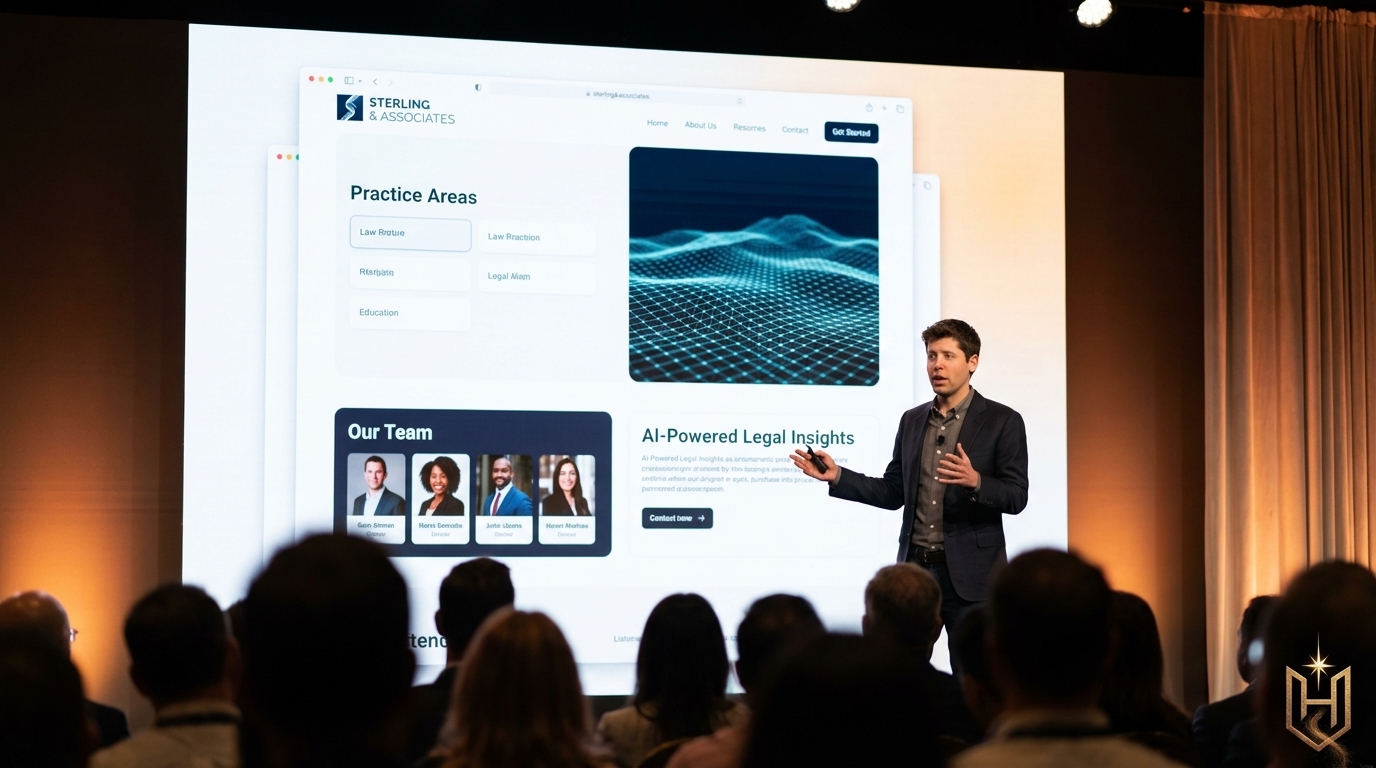
The legal industry, often cautious in adopting technological shifts, now faces a pivotal moment with the advent of AI in web development. Consider the divergent paths of two hypothetical firms in early 2025: Sterling & Associates hastily adopted an off-the-shelf AI website builder, expecting an instant digital transformation.
The result was a generic, templated site that failed to capture their niche in intellectual property law, leading to a noticeable drop in qualified leads. In stark contrast, LexCorp Legal, under the visionary leadership of its CTO, Dr. Anya Sharma, invested deeply in understanding prompt engineering for their AI tools.
Their bespoke site, launched in Q3 2025, saw a remarkable 30% increase in IP-related inquiries. This real-world divergence, underscored by a recent DigitalToday article, highlights a critical truth: the efficacy of AI website design for law firms depends profoundly on the prompt, not just the tool itself.
This isn't merely about inputting keywords; it's about crafting a digital strategy with the precision of a legal brief.
While AI-powered platforms like Google Stitch promise intuitive web design canvases and tools like Framer AI offer rapid website building, the underlying challenge for law firms remains unique.
A firm's online presence isn't just a brochure; it's a critical client acquisition channel, a statement of brand identity, and a demonstration of professional competence. Generic AI tools simply cannot discern the subtle nuances of legal specialization, ethical advertising constraints, or the sophisticated user experience (UX) required to convert a potential client seeking legal counsel.
As legal tech visionary Sam Altman of OpenAI often emphasizes, the true power of AI lies in directed instruction, not autonomous creation.
For law firm owners and managing partners, the stakes are exceptionally high. A poorly designed AI-generated site can damage credibility, deter potential clients, and fail to rank effectively in search results.
Conversely, a strategically crafted AI website design, informed by expert prompt engineering, can become a powerful asset, differentiating a firm in a competitive market. This involves understanding how to instruct AI to reflect the firm's unique value proposition, integrate essential functionalities like secure client intake forms, and optimize for legal-specific SEO.
The journey from a basic AI builder to a high-converting legal website demands a methodical approach, transforming abstract legal concepts into concrete digital specifications that AI can interpret and execute. Ready to transform your firm's online presence with intelligent AI website design?
The Shifting Sands of Digital Presence: Beyond Generic AI Templates
The initial wave of AI website building tools promised a revolution: instant, effortless sites. Many law firms, eager to modernize their digital footprint without the traditional costs and timelines of custom development, eagerly adopted platforms like Wix ADI in late 2024. The allure was undeniable – enter a few details, and *voilà*, a website appeared.
However, as noted in a recent report by the American Bar Association (ABA) on legal technology adoption in Q1 2026, firms that relied solely on these basic AI tools often found their new sites lacking. They were aesthetically bland, structurally generic, and failed to convey the gravitas and trustworthiness essential for legal services.
Learn more about ActiveCampaign 2026: AI Marketing Unleashes Law Firm Growth. These templated solutions, while efficient, struggled with the bespoke requirements of law – from integrating specific practice area content to adhering to state bar advertising rules.
This generic output stems from what industry analysts are calling the "Prompt Paradox."
As Dario Amodei, CEO of Anthropic, highlighted at a recent AI ethics summit, "The output of an AI system is only as intelligent as its input." For law firms, this means that merely asking an AI to "build a website for a divorce lawyer" will yield predictable, uninspired results.
The AI lacks context about the firm's unique selling points, its target demographic (e.g., high-net-worth individuals, specific community groups), or its desired brand persona (e.g., compassionate, aggressive, analytical). Without detailed instructions, the AI defaults to common denominators, producing a digital storefront indistinguishable from hundreds of others.
This lack of differentiation is a significant competitive disadvantage in a market where trust and specialization are paramount.
The Prompt Paradox: Why Specificity Outperforms Generality
The "Prompt Paradox" is particularly acute in the legal sector. Unlike an e-commerce site, where the primary goal is often direct sales, a law firm's website must build trust, convey expertise, and facilitate sensitive client interactions. A general prompt like "create a modern law firm website" will likely produce stock images of gavels and scales, generic legal disclaimers, and a bland color palette.
This is because the AI, by default, draws from a vast but often unrefined dataset of common web elements. Learn more about Voice AI Revolutionizes Legal: HODOS 360's 2026 Impact. Without specific instructions, it cannot infer the subtle cues that signal authority, empathy, or innovation.
For instance, a firm specializing in environmental law might require a visual theme that subtly incorporates sustainability, while a white-collar defense firm needs an aesthetic that communicates discretion and robust advocacy. These nuances are entirely lost without precise prompts, leading to an "AI-infused development" that falls short of its potential.
Crafting the Blueprint: Deconstructing Effective AI Website Prompts for Legal Firms
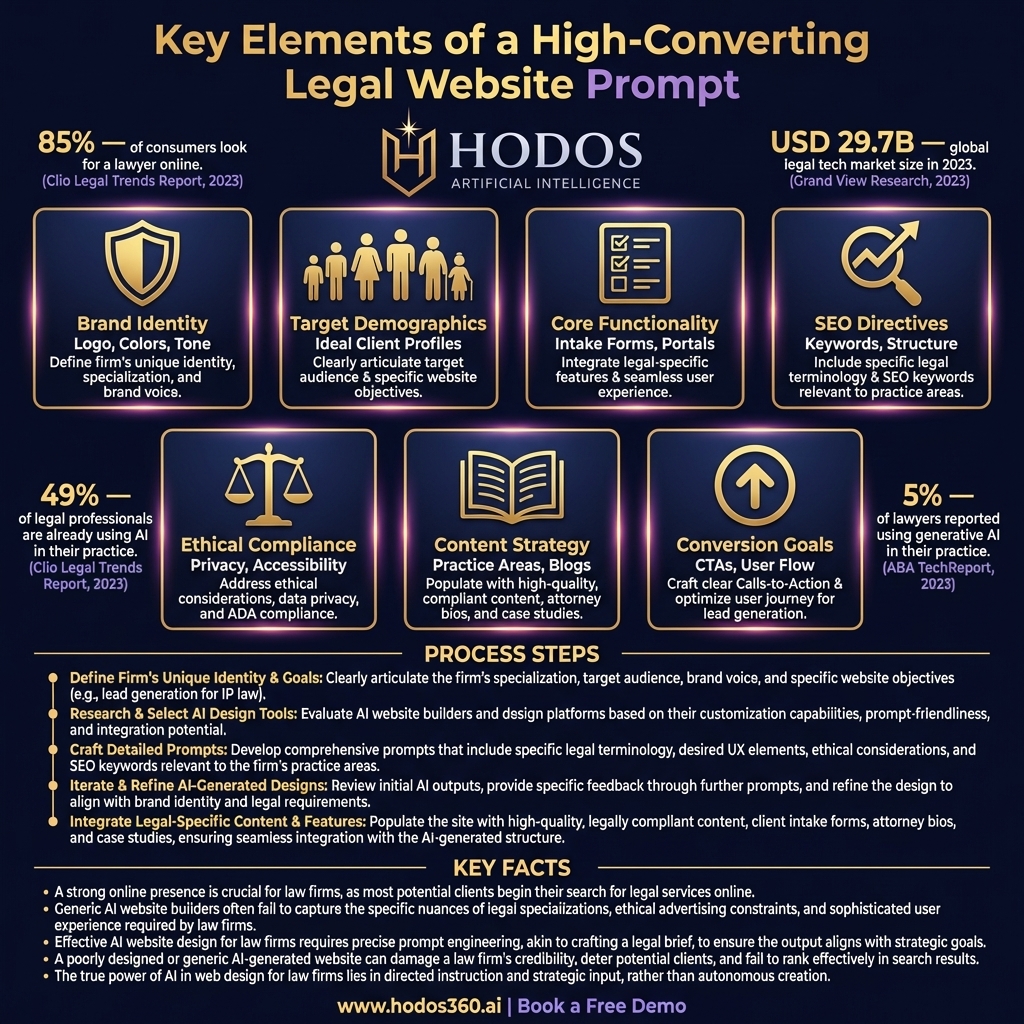
Mastering prompt engineering for legal AI website design is akin to drafting a complex legal document: every word matters, and clarity is paramount. The goal is to provide the AI with a comprehensive blueprint of your firm's digital identity and functional needs. This goes far beyond basic keywords.
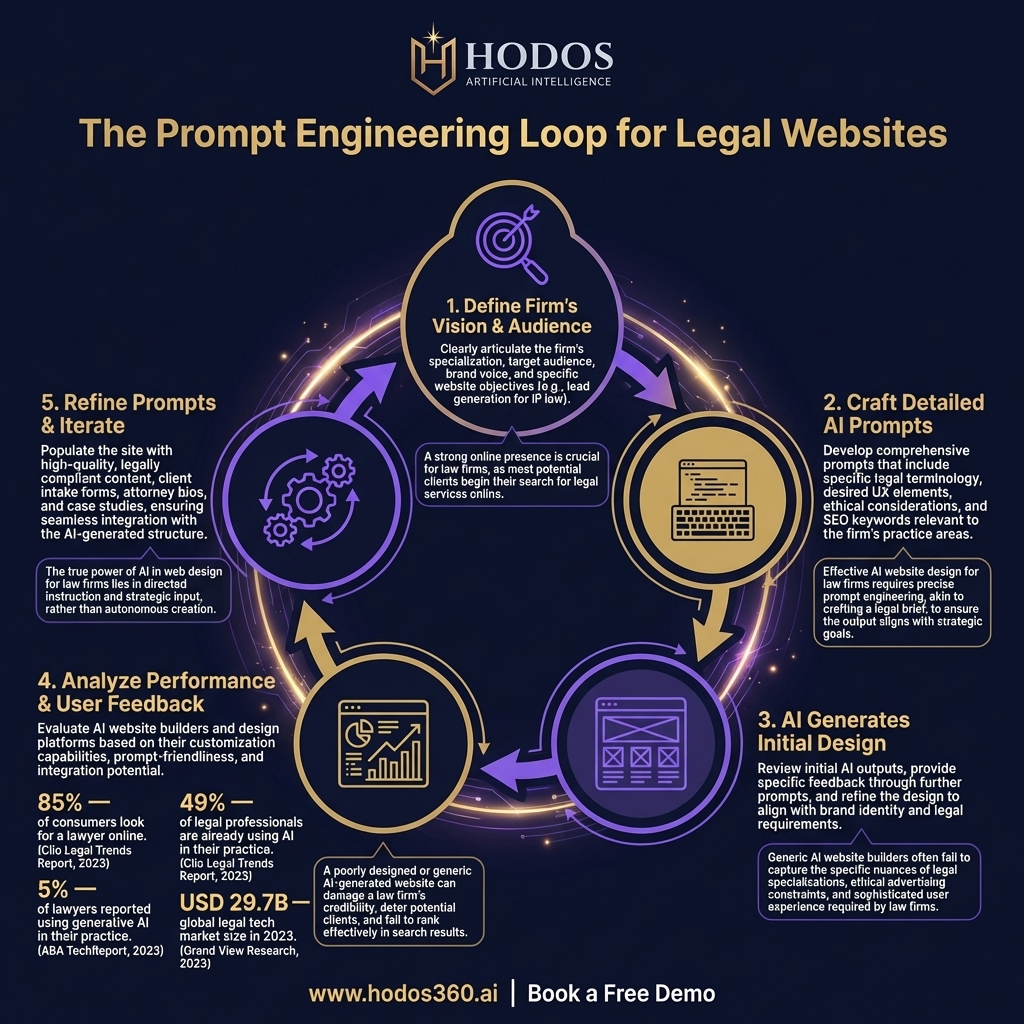
Consider the firm's unique value proposition: Are you a boutique specializing in emerging tech law, or a regional firm with deep roots in community real estate? Your prompt needs to articulate this distinct identity. Furthermore, specify your target audience with demographic and psychographic detail. Are you appealing to startups, established corporations, or individuals facing personal legal challenges?
Each requires a different tone, visual style, and call to action. Without this granular detail, even advanced platforms like Google Stitch, with its "AI-native design canvas," will struggle to generate a truly bespoke and effective outcome.
The structure of an effective prompt for AI website building should be layered, moving from broad strategic objectives to minute design details.
Learn more about AI Legal Research: The Ultimate Guide for Law Firms. Begin by defining the primary purpose of the website (e.g., lead generation, thought leadership, client portal). Then, delineate key practice areas, ensuring the AI understands the hierarchy and importance of each. Crucially, integrate your firm's brand guidelines – color palettes, typography, logo placement, and desired imagery.
Don't leave visual elements to chance; instead of "use professional images," specify "incorporate high-resolution, diverse legal team photos in natural light, avoiding stock imagery of gavels." For functionality, detail specific requirements like "integrate a secure client intake form with conditional logic," "implement a multilingual support option for Spanish and Mandarin," or "feature a dynamic blog section with social sharing capabilities."
Unlock the full potential of AI for your law firm's website. Schedule a consultation with HODOS 360's web development experts today!
- ✓Define Your Firm's Unique Value Proposition: Articulate what makes your law firm distinct from competitors, specifying niche practice areas, client testimonials, and awards to guide the AI in crafting compelling messaging and visual themes.
- ✓Specify Target Audience Demographics and Psychographics: Detail who your ideal clients are (e.g., small business owners, corporate executives, individuals seeking family law services), their pain points, and how your firm addresses them, enabling the AI to tailor content and calls to action.
- ✓Outline Brand Voice, Tone, and Aesthetic Guidelines: Provide explicit instructions on the desired tone (e.g., authoritative, empathetic, innovative), color palette (e.g., hex codes, brand colors), typography, and preferred imagery to ensure visual and textual consistency.
- ✓Detail Essential Functional Requirements: Clearly list all necessary features, such as secure client portals, appointment scheduling integration, multilingual support, blog functionality, and specific CRM integrations for seamless operation.
- ✓Incorporate SEO Best Practices and Keyword Strategy: Guide the AI on primary and secondary keywords, desired URL structures, meta description generation, and content hierarchy to ensure the website is discoverable and ranks highly for relevant legal searches.
- ✓Mandate Responsive Design Across All Devices: Explicitly instruct the AI to optimize the website's layout and performance for desktops, tablets, and mobile phones, ensuring a consistent and positive user experience regardless of the access device.
- ✓Include Clear Calls to Action (CTAs) and Conversion Pathways: Define specific actions you want visitors to take (e.g., "Schedule a Free Consultation," "Download Our E-book," "Contact Us Now") and how these pathways should be designed for maximum conversion efficiency.
Integrating Advanced AI Capabilities: Beyond Static Pages
The true power of modern AI website design extends beyond merely generating static pages; it lies in integrating dynamic, intelligent functionalities that enhance the user journey and streamline law firm operations. Consider the evolution of client intake. Traditionally, this was a manual, often cumbersome process.
Now, with advanced AI, firms can deploy intelligent chatbots on their websites that not only answer FAQs but also pre-qualify leads based on user input, gather preliminary case details, and even schedule initial consultations directly into an attorney's calendar. This level of automation, seen in innovations from legal tech leaders like Clio, which acquired Lawmatics to bolster its CRM capabilities, transforms a passive website into an active, 24/7 lead generation and client support engine.
This integration of intelligent features also extends to personalized content delivery. Imagine a prospective client visiting your site. Learn more about Voice AI Unleashed: Transforming Law Firms in 2026 with HODOS 360. Instead of a one-size-fits-all experience, AI can dynamically adjust the displayed content based on their browsing history, location, or even inferred legal needs.
A visitor repeatedly viewing pages on commercial litigation might be presented with case studies from that practice area on subsequent visits, or a pop-up offering a relevant whitepaper. This adaptive user experience, powered by sophisticated AI algorithms, significantly increases engagement and the likelihood of conversion.
Firms like Allen & Overy have been at the forefront of exploring such personalized digital interactions, understanding that a tailored approach builds stronger client relationships from the first touchpoint.
Ethical AI in Web Design: Transparency and Data Privacy
The ethical implications of integrating advanced AI features, particularly concerning data privacy and client confidentiality, are paramount for law firms. The European Union's AI Act, set to be fully enforced by 2026, and existing regulations like GDPR and CCPA, mandate transparency and robust data protection measures.
When prompting AI for features like lead qualification forms or personalized content, law firms must explicitly instruct the AI to adhere to these stringent legal and ethical guidelines. Learn more about AI Marketing: The Ultimate Playbook for Law Firms. This includes ensuring data encryption, obtaining explicit consent for data collection, and clearly communicating how client information will be used.
Ethical AI in web design isn't just a best practice; it's a legal imperative, safeguarding both the firm's reputation and its clients' sensitive information, aligning with ABA Model Rule 1.6 on Confidentiality of Information.
Measuring Impact and Iterating: The Data-Driven Approach to Web Development
The journey of AI website design for law firms doesn't end at launch; it's an ongoing process of measurement, analysis, and iteration. In today's competitive digital landscape, successful law firms, much like leading tech companies, adopt a data-driven approach to their web presence. This involves meticulously tracking key performance indicators (KPIs) such as website traffic, bounce rate, conversion rates for various calls to action (e.g., contact form submissions, consultation bookings), and time spent on key practice area pages.
Tools integrated within the AI design platform or external analytics platforms like Google Analytics provide invaluable insights into user behavior, allowing firms to identify areas for improvement and capitalize on successful strategies.
Consider the experience of "Horizon Law Group," a mid-sized firm specializing in corporate law.
After launching an AI-designed website with carefully crafted prompts, they meticulously tracked their analytics. Learn more about AI Website Coding: An Essential Guide for Law Firms. They discovered that while their "Mergers & Acquisitions" page received high traffic, the conversion rate for consultation requests was lower than expected.
By analyzing user flow and heatmaps, they realized the call to action was buried too far down the page. A quick prompt revision to their AI web builder – "Elevate the 'Schedule a Consultation' button for M&A services to above the fold and make it more prominent" – resulted in a 15% increase in M&A leads within a month.
This iterative refinement, guided by real data, demonstrates the profound impact of a strategic, responsive approach to web development.
Case Study: A Law Firm's Journey from Generic to Bespoke AI Design
"Justice & Co.," a burgeoning personal injury firm, initially struggled with a generic AI-built website that failed to convey their aggressive advocacy. Their managing partner, Sarah Chen, realized the site's stock imagery and boilerplate text alienated potential clients seeking a personal connection. Partnering with a legal tech specialist, they meticulously crafted prompts detailing their firm's compassionate yet fierce approach, incorporating real client success stories, and demanding a visual aesthetic reflecting strength and empathy.
The new site, launched in Q4 2025, featured bespoke AI-generated visuals and copy, resulting in a 40% increase in direct inquiries and a significant uplift in their local SEO rankings, demonstrating the transformative power of detailed prompt engineering and adherence to ABA Model Rule 1.4 on Communication.

Key Takeaways and Next Steps for Law Firms
The era of generic AI website design is rapidly receding, replaced by a demand for precision, customization, and strategic intent. For law firms, the message is clear: the true power of AI in web development is unlocked not by the tool itself, but by the intelligence and specificity of the prompts you provide.
This requires a shift in mindset, viewing AI as a highly capable assistant that requires a meticulously drafted blueprint to execute a vision that genuinely represents your firm's unique identity, ethical standards, and client-centric approach. Investing time in mastering prompt engineering will yield a digital presence that not only looks professional but also performs exceptionally, attracting and converting the right clients.
As law firms navigate this evolving digital landscape, platforms like HODOS 360 offer a comprehensive suite of services designed to empower legal professionals. Our Web & Mobile Development service, specifically, focuses on building AI-powered websites with responsive design and SEO optimization, ensuring that your firm's online presence is not just aesthetically pleasing but also highly effective and conversion-focused.
We understand the unique challenges and ethical considerations of the legal sector, and our approach emphasizes strategic prompt engineering to create bespoke digital solutions that truly differentiate your firm. The future of legal web presence is intelligent, data-driven, and, most importantly, precisely engineered. Elevate your firm's online presence with a bespoke, AI-powered website.
Discover HODOS 360's Web & Mobile Development solutions and book a free demo today!
Frequently Asked Questions
What is prompt engineering in AI website design?+
Prompt engineering involves crafting precise, detailed instructions for AI tools to generate highly specific and desired outputs for your website. For law firms, this means articulating brand identity, target audience, functional requirements, and ethical considerations to move beyond generic templates and create a bespoke, high-performing digital presence that resonates with clients and adheres to legal standards.
Why can't law firms just use basic AI website builders?+
Basic AI website builders often produce generic, templated sites that lack the specific nuances required for a legal practice. They struggle to convey a firm's unique value proposition, adhere to complex ethical advertising rules, or provide the sophisticated user experience necessary to build trust and convert potential legal clients effectively. Specificity in prompts is crucial for differentiation.
How does AI website design help with SEO for law firms?+
When guided by effective prompts, AI website design can inherently integrate SEO best practices. This includes generating clean, semantic code, optimizing image sizes, structuring content with appropriate headings (H1, H2), and incorporating targeted keywords naturally. This makes the website more discoverable and helps it rank higher in search engine results for relevant legal queries, driving qualified traffic.
What ethical considerations are important when using AI for web design in law?+
Law firms must ensure their AI-powered websites adhere to strict data privacy regulations (e.g., GDPR, CCPA) and ethical guidelines like the ABA Model Rules regarding client confidentiality and advertising. Prompts should explicitly mandate transparency, secure data handling, and clear consent mechanisms for any data collection or personalized content delivery, protecting both the firm and its clients.
Can AI website design tools integrate with existing law firm management systems?+
Yes, advanced AI website design platforms can be prompted to integrate with existing law firm management systems. This allows for seamless functionalities such as automated client intake, appointment booking directly into calendars, and secure client portal access. Such integration streamlines operations, enhances efficiency, and provides a more cohesive and professional client experience from the first interaction.