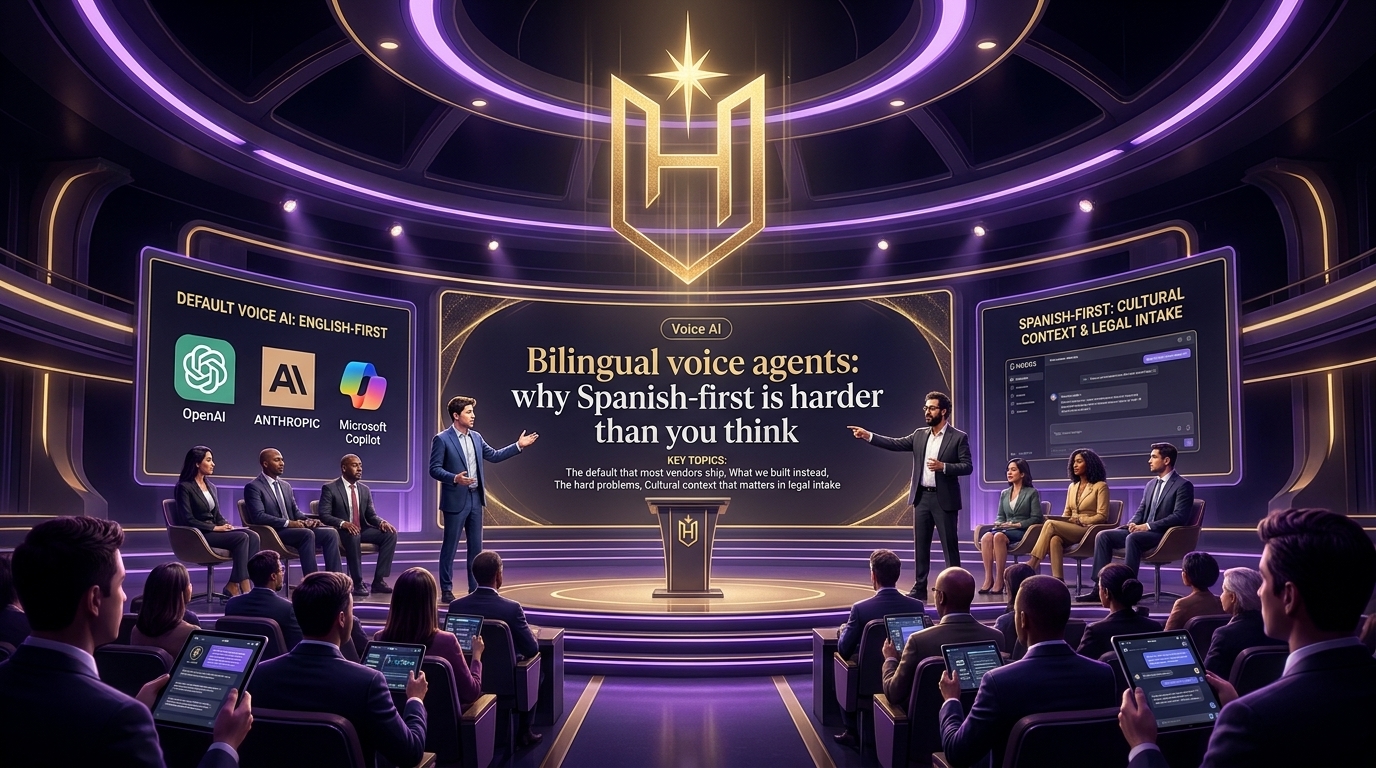


Agentic AI Voice: Ultimate Guide for Law Firms
The legal landscape is experiencing a seismic shift, propelled by innovations in artificial intelligence that are redefining how law firms operate and interact with clients. A recent landmark event, highlighted by CXO Digitalpulse, saw Exotel power India’s first fully agentic AI voice call. This milestone, achieved with Exotel CEO Shivakumar Ganesan at the helm, marks a critical inflection point, demonstrating AI's capacity to move beyond mere automation to truly autonomous, goal-oriented interaction.
For law firms, this isn't just a technological curiosity; it's a blueprint for a future where sophisticated AI voice assistants can transform everything from initial client contact to complex legal workflows.
Historically, AI in legal practice has often been confined to document review or basic chatbot functions, which, while useful, lacked the nuanced understanding and proactive capabilities required for complex legal conversation.
The emergence of agentic AI, however, represents a qualitative leap. These systems are not just responding to commands; they are reasoning, adapting, and even initiating actions to achieve specific objectives, much like a human agent. This evolution promises to alleviate significant administrative burdens, enhance customer experience, and free up valuable attorney time, allowing legal professionals to focus on higher-value, strategic work.
As we delve deeper, we will explore how this cutting-edge technology is poised to redefine efficiency and engagement within the demanding world of legal services.
The Dawn of Agentic AI Voice: Beyond Basic Chatbots
Agentic AI represents a paradigm shift from conventional AI systems. Unlike rule-based chatbots that follow predefined scripts, agentic AI systems are designed with a degree of autonomy, enabling them to comprehend context, make informed decisions, and execute multi-step tasks to achieve a specific goal. This capability is rooted in advancements in large language models (LLMs) and sophisticated reasoning engines, pioneered by figures like Sam Altman of OpenAI and Dario Amodei of Anthropic.
Learn more about AI Search Era Web Design: An Essential Guide for Law Firms. Their work on foundational models has laid the groundwork for AI that can not only generate human-like text but also understand intent, plan, and adapt, making the concept of a truly intelligent AI voice assistant a reality for complex sectors like law.
The evolution of voice AI has been rapid and profound. From rudimentary Interactive Voice Response (IVR) systems of the past, which often frustrated customers with rigid menus, we've progressed to natural language processing (NLP) systems that can understand spoken language. Now, agentic AI pushes this further by enabling the system to maintain a coherent conversation, remember past interactions, and proactively gather information.
Learn more about AI Website Builders: The Ultimate Guide for Law Firms. This is powered by immense computational infrastructure, often leveraging technologies from companies like NVIDIA, led by CEO Jensen Huang, which provide the processing power necessary for these complex AI operations. This blend of advanced algorithms and robust hardware transforms a simple voice interface into a powerful, virtual agent capable of handling intricate inquiries with remarkable fluidity.
For law firms, this means moving beyond simple FAQ responses. An agentic AI voice assistant can engage in a dynamic dialogue, asking clarifying questions, processing complex information, and even performing preliminary legal research or client background checks. This level of sophistication allows the AI to act as a genuine extension of the legal team, capable of handling a significant portion of initial client interactions with a depth and responsiveness previously only possible through human intervention.
Learn more about WordPress AI Unlocked: Legal Websites Mastered 2026. The implications for streamlining operations and enhancing overall experience are immense, offering a competitive edge to firms willing to embrace this technological frontier.
The ability of agentic AI to learn and adapt from each conversation is a critical differentiator. As these systems process more calls and client interactions, they refine their understanding of legal nuances, client needs, and effective communication strategies. This continuous learning cycle ensures that the AI voice assistants become increasingly efficient and effective over time, providing an ever-improving customer experience.
Learn more about Essential AI Voice Assistant Strategies for Modern Law Firms. This iterative improvement, combined with the capacity to operate 24/7, positions agentic AI as a transformative force, enabling law firms to scale their client outreach and support without proportionally increasing their overhead, a challenge that has historically constrained growth in the legal sector.
Revolutionizing Legal Operations with AI Voice Assistants
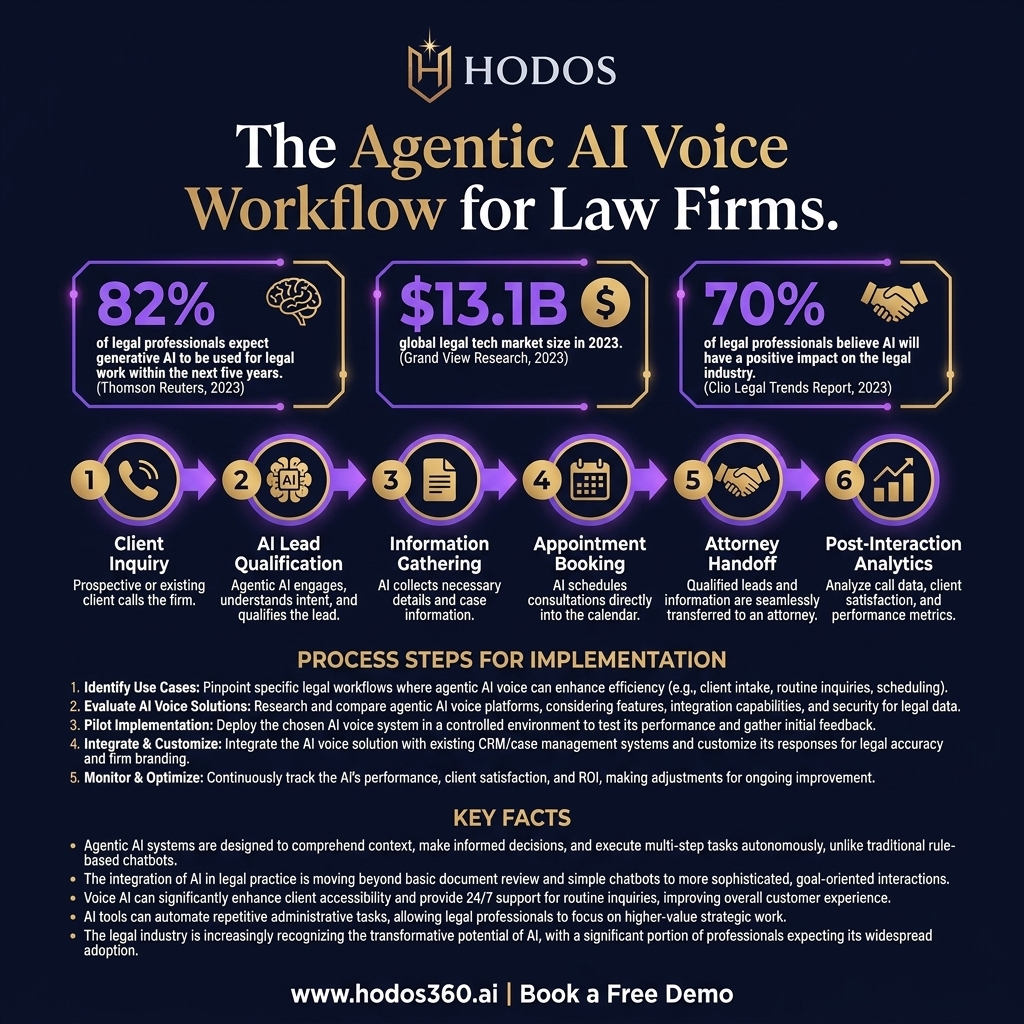
The practical applications of AI voice assistants within law firms are vast and immediately impactful, offering solutions to long-standing operational challenges. One of the most significant areas of transformation is client intake. Traditionally a laborious, paper-intensive process, agentic AI can automate initial client screenings, gather essential information, explain service agreements, and even schedule initial consultations.
Learn more about Future Ready Lawyer: Essential AI Confidence for Legal Professionals. This drastically reduces the time and resources spent on administrative tasks, allowing legal staff to focus on substantive legal work. The ABA Tech Report consistently highlights client intake as a major bottleneck for firms, and AI offers a robust solution, improving efficiency and the initial client experience.
Beyond intake, agentic AI excels in lead qualification. A sophisticated AI voice agent can engage potential clients in a detailed conversation, assessing their legal needs, urgency, and financial capacity. By asking targeted questions and understanding the responses, the AI can effectively qualify leads, routing high-value prospects directly to the appropriate human attorney, while providing automated support or referrals for less suitable inquiries.
Learn more about AI Marketing Automation: Essential Lead Flow for Law Firms. This ensures that attorneys spend their valuable time on cases with the highest potential, optimizing resource allocation and improving conversion rates. This capability is crucial for firms aiming to maximize their marketing ROI and streamline their operations.
Furthermore, AI voice assistants provide unparalleled 24/7 client support. In a globalized and always-on world, clients expect immediate answers, regardless of business hours. AI can provide instant responses to common FAQs about firm services, billing, or case status, dramatically improving customer experience and engagement. This continuous availability not only boosts client satisfaction but also alleviates the burden on administrative staff, who no longer need to field routine inquiries during off-hours. This level of responsiveness cultivates trust and loyalty, critical components for client retention in a competitive market.
The sheer volume of interactions that an AI voice assistant can handle is staggering. Companies like Exotel, processing nearly 2 billion calls per month across various industries, demonstrate the scalability of this technology. For law firms, this means the ability to manage a massive influx of inquiries without increasing headcount, ensuring consistent service quality even during peak demand.
This scalable efficiency translates directly into cost savings and improved operational resilience, allowing firms to grow and adapt to market fluctuations with greater agility. The data collected from these interactions also provides invaluable insights into client needs and service gaps, enabling continuous improvement.
Enhancing Client Experience and Engagement
The ability of AI voice assistants to provide multilingual support is a game-changer for diverse client bases. In an increasingly interconnected world, law firms often serve clients from various linguistic backgrounds. Agentic AI can seamlessly switch between languages, ensuring that every client receives personalized and effective communication in their preferred tongue.
This not only enhances accessibility but also significantly improves client satisfaction and trust, broadening a firm's potential market reach and fostering stronger relationships. The ease of access and personalized touch provided by AI contributes directly to a superior customer experience.
Moreover, the consistent and professional nature of AI interactions ensures a uniform experience for all clients. Unlike human agents who might have varying levels of expertise or be subject to fatigue, an AI voice assistant maintains a consistent standard of service. This reliability builds client confidence and reinforces the firm's brand image as modern and client-centric.
By handling routine inquiries efficiently, the AI ensures that when a client does speak with a human attorney, that conversation is focused on complex legal strategy, maximizing the value of the interaction for both parties. This strategic allocation of resources optimizes both efficiency and client satisfaction.
- ✓Streamlined Client Intake: Automates initial information gathering, reducing administrative overhead and speeding up the onboarding process.
- ✓Improved Lead Qualification: Intelligently assesses potential clients' needs and fit, directing high-value leads to appropriate attorneys and optimizing resource allocation.
- ✓24/7 Multilingual Support: Provides round-the-clock availability and communicates with clients in their preferred language, enhancing accessibility and satisfaction.
- ✓Reduced Administrative Burden: Frees up legal staff from routine inquiries, allowing them to focus on complex legal work and strategic tasks.
- ✓Enhanced Data Collection for Insights: Gathers valuable data from every conversation, providing actionable intelligence for service improvement and market strategy.
- ✓Consistent Client Engagement: Ensures a uniform, professional, and responsive client experience across all interactions, strengthening client trust and loyalty.
- ✓Cost Savings in Operations: Optimizes operational efficiency by handling high volumes of calls and inquiries without increasing staffing costs, leading to significant long-term savings.
Navigating Ethical and Regulatory Landscapes of AI Voice
While the promise of agentic AI voice is immense, its implementation in the legal sector necessitates careful navigation of a complex ethical and regulatory landscape. The legal profession is bound by stringent rules of professional conduct, and AI systems must operate within these boundaries. The human conflict/drama here lies in balancing technological innovation with the fundamental principles of client protection and justice.
Regulators globally, such as those behind the EU AI Act, are grappling with how to classify and govern high-risk AI systems. Legal AI voice assistants, especially those handling sensitive client information, could easily fall into this category, demanding robust compliance frameworks from law firms and tech providers alike.
A primary concern is data privacy and client confidentiality. Law firms handle highly sensitive information, and any AI voice assistant must ensure that client data is protected with the highest standards of security and privacy. The ABA Model Rule 1.6 on Confidentiality of Information is paramount here, requiring lawyers to protect all information relating to the representation of a client.
This extends to third-party vendors and AI systems. Firms must ensure that AI providers adhere to strict data encryption, access controls, and data retention policies, and that client data is never used for training models without explicit consent. The potential for data breaches or misuse poses significant reputational and legal risks, making vendor due diligence critical.
Another ethical consideration is algorithmic bias. AI models, trained on vast datasets, can inadvertently perpetuate or amplify existing societal biases, leading to discriminatory outcomes. In legal contexts, where fairness and impartiality are foundational, biased AI voice assistants could have severe consequences, from misqualifying leads to providing inaccurate or prejudiced information.
Responsible AI development, championed by figures like Microsoft President Brad Smith, emphasizes the need for transparency, explainability, and regular auditing of AI systems to detect and mitigate bias. Firms must partner with AI developers committed to ethical AI principles and rigorous testing, ensuring their AI voice solutions uphold the highest standards of justice.
The question of accountability also looms large. When an AI voice agent provides incorrect information or makes a mistake, who is responsible? Under ABA Model Rule 5.3, lawyers have responsibilities regarding nonlawyer assistants, which can be extended to AI systems. Lawyers must supervise the work of nonlawyers, including AI, to ensure that their conduct is compatible with the professional obligations of the lawyer.
This means firms cannot simply deploy AI and abdicate responsibility; they must implement robust oversight mechanisms, regular performance reviews, and clear protocols for human intervention when necessary. The legal profession's duty of competence requires understanding the limitations and capabilities of any technology deployed.
Data Privacy and Confidentiality in Voice AI
Ensuring robust data privacy and client confidentiality is non-negotiable for AI voice assistants in the legal sector. Compliance with regulations such as GDPR, CCPA, and HIPAA (where applicable) is a baseline requirement. This involves implementing end-to-end encryption for all voice data, secure storage protocols, and strict access controls.
Law firms must also be transparent with clients about the use of AI, obtaining informed consent for data collection and processing. This transparency builds trust and manages expectations, ensuring clients understand how their information is handled and by whom – or what. The integrity of the attorney-client relationship hinges on this commitment to privacy.
Furthermore, firms must scrutinize the data governance policies of their AI voice assistant providers. Questions to ask include: Is client data used to train broader AI models? How long is conversation data retained? Are there mechanisms for data anonymization or deletion upon request? These considerations are vital to prevent unauthorized data usage and maintain client trust.
The legal industry's unique demands for confidentiality mean that off-the-shelf AI solutions may not suffice without significant customization and stringent contractual agreements that prioritize data security above all else. A proactive approach to data protection is not merely a compliance issue but a fundamental ethical obligation.
Implementing Agentic AI: A Strategic Blueprint for Law Firms
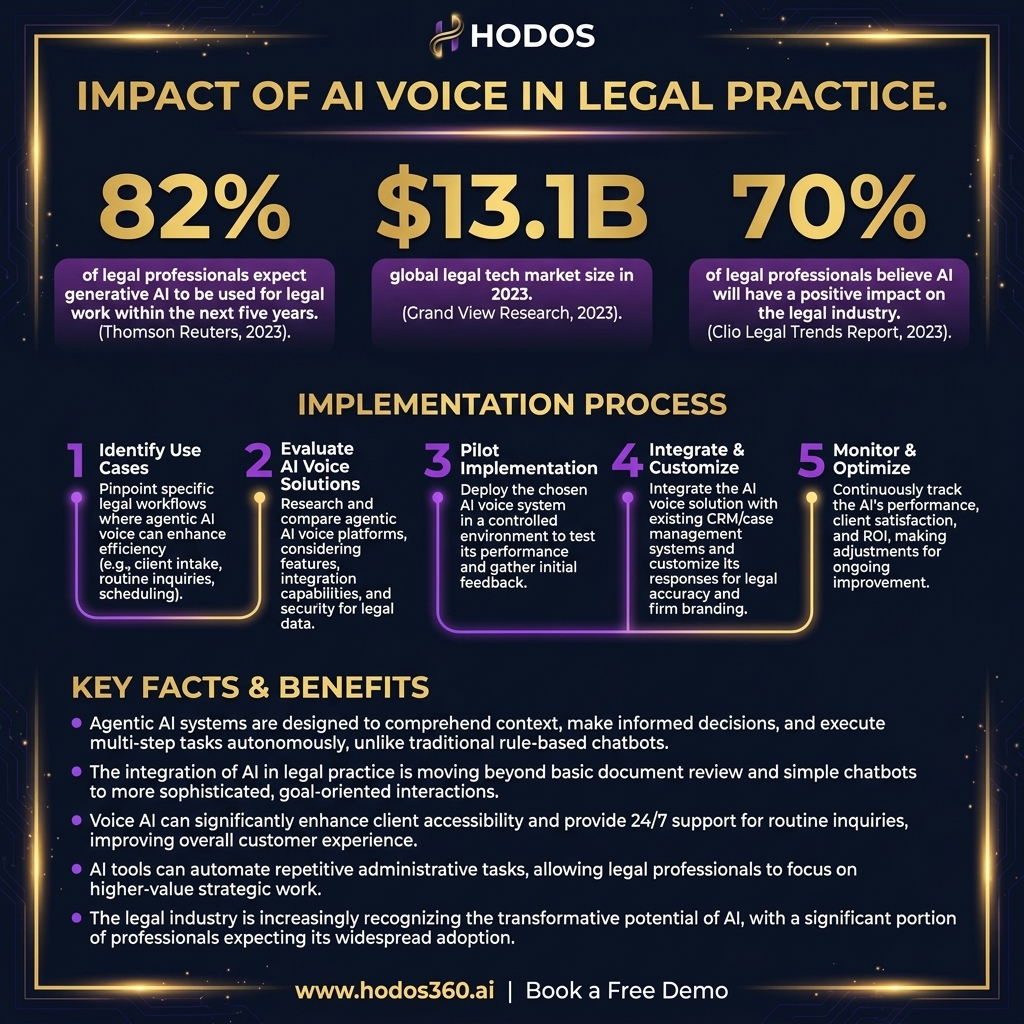
Successfully integrating agentic AI voice into a law firm requires a strategic, phased approach, rather than a wholesale overhaul. The initial step involves identifying specific pain points within current operations that AI can most effectively address. For many firms, this might be the high volume of initial customer support inquiries, appointment scheduling, or the early stages of lead qualification.
Starting with targeted applications allows firms to gain experience, demonstrate value, and build internal confidence in the technology. This incremental adoption minimizes disruption and provides valuable feedback for iterative improvements, ensuring the AI solution truly meets the firm's unique needs.
Seamless integration with existing legal tech infrastructure is paramount. An AI voice assistant should not operate in a silo but rather connect with the firm's CRM, case management systems, and document automation platforms. This interoperability ensures a unified data flow and a holistic view of client interactions.
Platforms like HODOS 360 are designed to offer this comprehensive integration, creating AI-powered legal workflows that bridge various aspects of firm management. This connectivity is crucial for leveraging the full potential of AI, allowing the AI voice agent to access relevant client history, update case files, and trigger follow-up actions automatically, enhancing efficiency across the entire firm.
Effective training and ongoing human oversight are indispensable for the success of agentic AI. While these systems are designed to be autonomous, they thrive on continuous learning and refinement. Firms must dedicate resources to train the AI on specific legal terminology, firm policies, and client communication styles.
Moreover, a human-in-the-loop approach is critical; attorneys and staff need to monitor AI performance, review complex conversations, and provide feedback to improve the AI's accuracy and effectiveness. This collaborative model ensures that the AI complements, rather than complicates, legal practice, aligning its capabilities with the firm's ethical and professional standards.
The competitive landscape in legal tech is constantly evolving, with firms that embrace innovation gaining a significant advantage. Companies like Harvey AI, backed by OpenAI and partnering with global firms like Allen & Overy, demonstrate the appetite for advanced AI solutions in top-tier legal circles.
These partnerships highlight a trend towards leveraging AI not just for efficiency but for strategic competitive differentiation. By proactively adopting and integrating AI voice assistants, law firms can position themselves as forward-thinking, client-centric, and technologically advanced, attracting both new clients and top legal talent in an increasingly disrupted market.
This proactive stance is critical for long-term growth and sustainability.
Measuring ROI and Optimizing AI Voice Performance
Measuring the Return on Investment (ROI) of AI voice assistants is crucial for demonstrating their value and optimizing performance. Key metrics include the volume of calls handled by AI, lead conversion rates from AI-qualified prospects, reductions in client intake time, and improvements in client satisfaction scores.
Firms should track administrative cost savings, such as reduced staffing needs for routine inquiries, and the increase in billable hours freed up for attorneys. Utilizing analytics dashboards, firms can gain insights into AI performance, identifying areas for improvement in conversation flow, accuracy, and overall customer experience.
Data-driven optimization ensures the AI continuously evolves to meet firm objectives.
Continuous optimization involves regular review of AI transcripts, sentiment analysis of client interactions, and A/B testing of different conversation pathways. Feedback from both clients and human staff is invaluable in refining the AI voice assistant's capabilities. For instance, if the AI struggles with specific legal jargon, targeted training data can be introduced.
This iterative process, akin to agile development, ensures that the AI remains a highly effective tool, adapting to new challenges and client expectations. Firms that commit to this ongoing optimization will unlock the maximum potential from their AI investment, ensuring it remains a strategic asset for years to come.

Key Takeaways and Next Steps
The advent of agentic AI voice technology marks a pivotal moment for the legal industry, promising a future where law firms can operate with unprecedented efficiency and deliver superior client experience. From revolutionizing client intake and lead qualification to providing 24/7 multilingual support, AI voice assistants are not just automating tasks; they are transforming the very fabric of legal operations.
This shift is not about replacing human legal professionals but about augmenting their capabilities, freeing them from mundane administrative burdens to focus on the complex, strategic, and empathetic aspects of legal practice that only humans can provide. The competitive advantage lies with firms that proactively embrace this innovation, integrating intelligent agents into their workflows to enhance productivity and engagement.
As demonstrated by Exotel's pioneering agentic AI voice call in India, the technology is mature and ready for robust application. However, successful implementation hinges on a clear understanding of ethical considerations, stringent data privacy protocols, and a commitment to continuous optimization. Firms must choose partners like HODOS 360 that prioritize both technological excellence and responsible AI deployment, ensuring solutions are compliant, secure, and aligned with legal professional standards.
The future of legal practice is one where intelligent voice agents work in seamless synergy with legal experts, creating a more efficient, accessible, and client-centric legal ecosystem. Don't get left behind in this transformative era; proactively exploring and adopting these advanced AI tools is no longer an option but a strategic imperative.
Frequently Asked Questions
What is "agentic AI voice" and how does it differ from traditional chatbots?+
Agentic AI voice refers to AI systems capable of autonomous, goal-oriented reasoning and action, going beyond simple responses. Unlike traditional chatbots that follow predefined scripts, agentic AI can understand context, initiate complex conversations, adapt to new information, and perform multi-step tasks, effectively acting as an intelligent virtual agent rather than just a conversational interface. This allows for more dynamic and meaningful interactions.
How can AI voice assistants specifically benefit my law firm?+
AI voice assistants offer numerous benefits, including streamlined client intake by automating initial information gathering, improved lead qualification by intelligently assessing potential clients, and 24/7 multilingual support for enhanced client experience. They reduce administrative burdens, free up attorney time for complex legal work, and provide valuable data insights for optimizing firm operations and client engagement. They can handle high volumes of calls efficiently.
Are AI voice assistants compliant with legal ethics and privacy regulations?+
Compliance is paramount. Reputable AI voice assistant providers ensure adherence to data privacy regulations (e.g., GDPR, CCPA) and ethical guidelines. Law firms must ensure robust data encryption, secure storage, and transparency with clients about AI usage. Adherence to ABA Model Rules, particularly on confidentiality and supervision of nonlawyer assistants, is critical, requiring firms to implement oversight and audit AI interactions.
What kind of investment is required to implement AI voice technology?+
Investment varies based on the scope and sophistication of the AI solution. It includes licensing fees for the AI platform, potential integration costs with existing systems, and resources for training and ongoing human oversight. While there's an upfront investment, the long-term ROI often includes significant cost savings from increased efficiency, reduced administrative overhead, and improved client conversion rates, making it a strategic investment in modern legal operations.
Will AI voice assistants replace human staff in my law firm?+
No, AI voice assistants are designed to augment, not replace, human staff. They handle repetitive, high-volume tasks like initial inquiries and scheduling, freeing up legal professionals to focus on complex legal analysis, strategy, and empathetic client interaction—areas where human expertise is irreplaceable. AI enhances efficiency and customer experience, allowing human talent to be utilized more strategically and effectively within the firm.