


Essential AI for Client Relationships: Future-Proofing Law Firms
Just last month, Sarah Chen, a managing partner at a mid-sized corporate law firm in London, found herself grappling with an increasingly common challenge. A long-standing client, a tech startup, expressed frustration over the perceived slowness of communication and the lack of personalized updates, despite Chen's team working tirelessly.
This wasn't an isolated incident; similar feedback echoed across the legal landscape, highlighted in a recent legaltechnology.com article titled "The future of client relationships in the GenAI era." The article underscored a critical truth: the advent of generative AI (GenAI) has fundamentally recalibrated client expectations, pushing law firms to rethink how they build and maintain trust and loyalty.
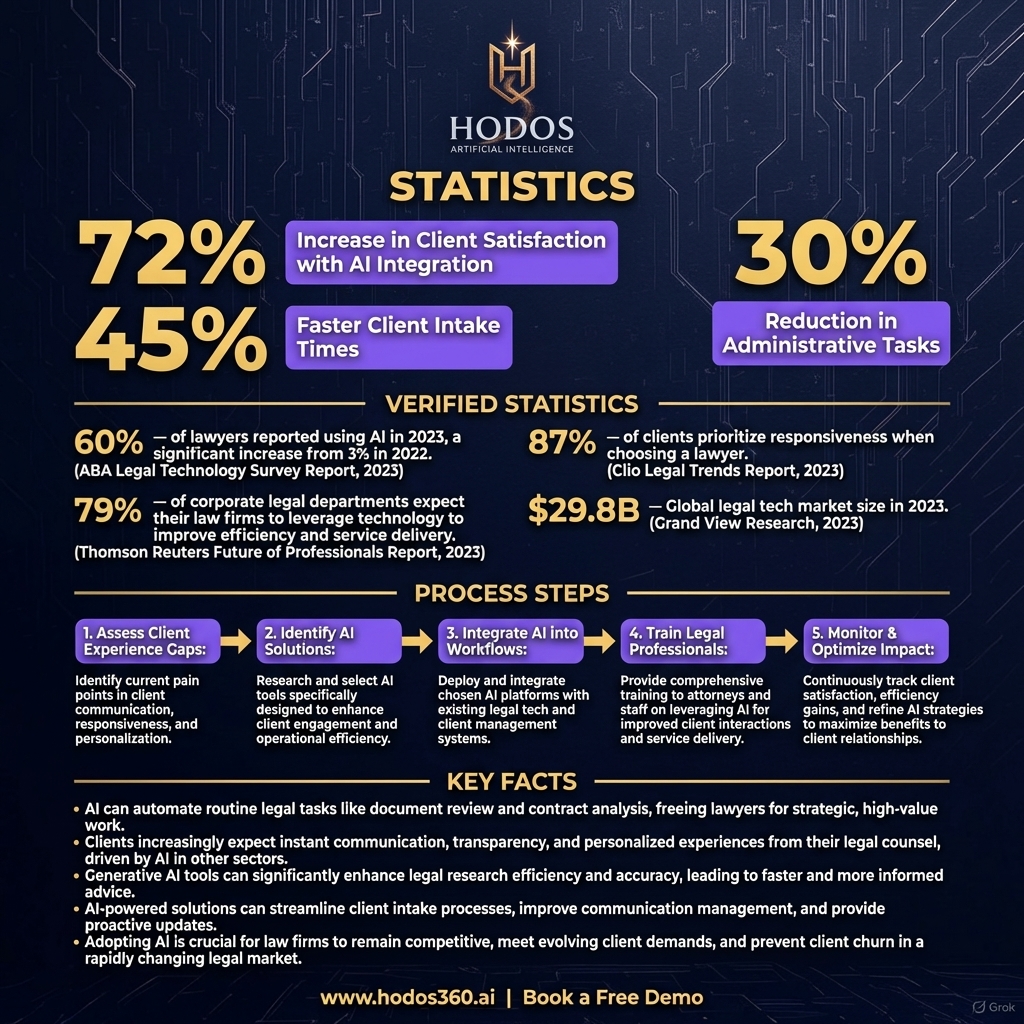
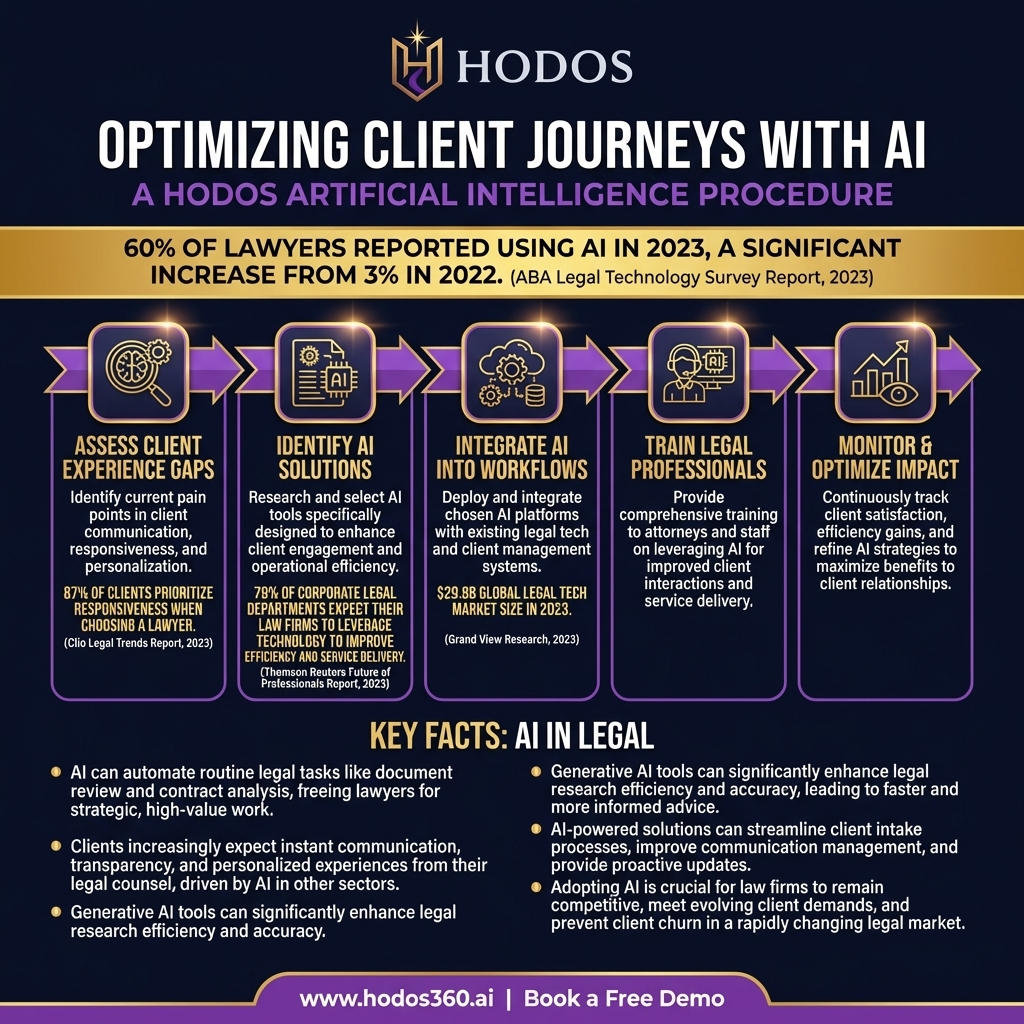
Clients, accustomed to instant, personalized experiences in other sectors powered by AI, now demand the same from their legal counsel.
The shift is profound. It’s no longer enough for legal professionals to merely deliver excellent legal work; they must also deliver an unparalleled client experience, driven by efficiency, transparency, and proactive engagement.
The competition among firms, often dubbed an "AI race" by industry observers, is heating up, with those slow to adapt risking significant client churn. As ai news today frequently reports on advancements from industry giants like OpenAI and Anthropic, the capabilities of GenAI are expanding exponentially, offering unprecedented opportunities for legal innovation.
This isn't about replacing human lawyers; it's about augmenting their capabilities, freeing them from mundane tasks, and enabling them to focus on the high-value strategic advice and empathetic counsel that clients truly seek. The question for firms like Sarah Chen's isn't *if* they should adopt AI, but *how* they can strategically integrate it to strengthen, rather than dilute, their most valuable asset: their client relationships.
The Evolving Landscape of AI Client Relationships
The legal industry has always prided itself on personal connections and bespoke service. However, the rise of generative AI is compelling firms to reinterpret what "personal" truly means. Clients today are digital natives or digital converts, expecting seamless, on-demand interactions that mirror their experiences with consumer tech giants.
Consider the rise of chatbots and virtual assistants in everyday life; these tools, often powered by the same large language models developed by companies like OpenAI, have normalized instant information retrieval and personalized support. Learn more about AI Legal Tech Boom 2026: Unlocking Billions in Valuation.
When a client engages with a law firm, they now implicitly expect a similar level of responsiveness and tailored communication, making the traditional, often opaque, legal process feel antiquated. This paradigm shift is not a threat to the human lawyer but an opportunity to elevate their role, allowing AI to handle the administrative load while attorneys deepen strategic engagement.
The 2026 Future Ready Lawyer Survey Report by Thomson Reuters highlighted that firms prioritizing technology investment, particularly in AI, reported significantly higher client satisfaction rates. This data underscores a crucial point: AI client relationships are not just about efficiency; they are about meeting modern client expectations head-on.
Firms that have been early adopters, such as Allen & Overy with its partnership with Harvey AI, are demonstrating how generative AI can transform initial client intake, accelerate document review, and even assist in drafting complex legal arguments, all of which contribute to faster, more transparent service.
Learn more about Website Design Cost 2026: Strategic Investment for Law Firms. This proactive approach builds trust and demonstrates a commitment to innovation, setting these firms apart in a competitive market. The integration of AI isn't merely a technological upgrade; it's a strategic imperative for client retention and growth.
The ripple effect of AI extends beyond direct client interactions. Internally, AI-powered legal workflows streamline operations, from case management to billing, ensuring that client-facing teams have accurate, up-to-date information at their fingertips. This internal efficiency directly translates to improved client service. For instance, an AI-powered legal management system can automate routine client updates, schedule follow-up appointments, and even predict potential case delays, allowing attorneys to communicate proactively rather than reactively.
Learn more about Marketing Automation: Powering Law Firm Growth & Efficiency in 2026. This level of foresight and consistent communication is invaluable in building strong AI client relationships, fostering a sense of partnership and transparency that clients deeply appreciate. It’s about creating a holistic experience where every touchpoint is optimized for client satisfaction.
Moreover, the competitive landscape is forcing firms to act decisively. The "AI race" isn't just between law firms; it's also between law firms and their clients, who are increasingly using AI internally to manage their legal needs, as noted by some industry observers. This means firms must be at the forefront of AI adoption not only to serve clients better but also to remain indispensable.
The stakes are high, with firms like Clifford Chance investing heavily in internal AI development to maintain their edge. Learn more about Legal AI Gap: Bridging the Divide for Law Firms in 2026. This investment isn't just in software; it's in retraining legal professionals and redesigning processes to fully leverage AI's capabilities.
The future of AI client relationships hinges on firms' ability to adapt their service delivery models to an AI-driven world, ensuring that technology enhances, rather than detracts from, the human connection.
Personalized Client Journeys with AI
One of AI's most profound impacts on client relationships is its capacity for hyper-personalization. Traditional law practice often struggles with tailoring communications and services at scale. However, AI can analyze vast amounts of client data – from communication preferences to case history and demographic information – to create highly customized client journeys.
Learn more about AI Website Coding: An Essential Guide for Law Firms. Imagine a client intake process where an AI assistant not only gathers initial information but also identifies the client's specific concerns and communication style, allowing the assigned attorney to tailor their approach from day one.
This proactive understanding, powered by sophisticated algorithms, creates an immediate sense of being heard and valued, a cornerstone of strong AI client relationships.
Furthermore, AI can facilitate personalized content delivery. For example, after a consultation, an AI marketing platform could automatically generate and send relevant articles, case studies, or legal updates that directly address the client's industry or specific legal challenge. This continuous, value-added engagement keeps the firm top-of-mind and positions it as a knowledgeable partner, not just a service provider.
Learn more about Voice Assist: Essential AI Scheduling for Law Firms. This level of personalized outreach, previously resource-intensive, becomes scalable with AI, fostering deeper connections and demonstrating a genuine commitment to the client's success. It transforms generic interactions into meaningful touchpoints, solidifying loyalty.
Navigating Ethical AI in Client Engagement
While the benefits of AI in client relationships are clear, navigating the ethical landscape is paramount. The legal profession is bound by strict rules of professional conduct, and AI deployment must adhere to these principles, particularly concerning confidentiality, competence, and supervision. The American Bar Association (ABA) has increasingly emphasized the ethical obligations of lawyers using technology, with formal opinions addressing the duty of technological competence.
For instance, ABA Model Rule 1.1 (Competence) implies that lawyers must understand the risks and benefits of technology they use. A misstep in AI implementation, such as a data breach or the unintentional disclosure of privileged information, could severely damage client trust and lead to professional sanctions.
This is why discussions around ai regulation news and frameworks like the EU AI Act are so critical for the legal sector.
Data privacy and security are at the forefront of these ethical considerations. Law firms handle highly sensitive client information, and any AI system used must incorporate robust cybersecurity measures to protect this data. The use of cloud-based AI solutions, for example, necessitates rigorous due diligence to ensure vendor compliance with data protection regulations like GDPR or CCPA.
Firms must also be transparent with clients about how AI is being used in their matters, explaining its role and limitations. This transparency builds trust and manages expectations, preventing misunderstandings about the extent of AI's involvement. Without clear guidelines and a commitment to data protection, the promise of enhanced AI client relationships could quickly unravel.
Another critical ethical concern is bias in AI algorithms. If AI systems are trained on biased data, they can perpetuate or even amplify existing societal biases, leading to unfair or discriminatory outcomes. In legal contexts, this could manifest as biased predictions in case outcomes or unequal allocation of resources.
Lawyers have a professional duty to ensure fairness and justice, meaning they must actively scrutinize the AI tools they employ for potential biases and implement safeguards to mitigate them. This often requires human oversight and intervention, ensuring that AI recommendations are always reviewed by a qualified legal professional who can apply ethical judgment and context.
The goal is to leverage AI's analytical power while upholding the fundamental principles of justice and equity that define the legal profession.
Finally, the duty of supervision extends to ensuring that AI tools are used competently and responsibly by legal staff. This involves providing adequate training on AI platforms, establishing clear protocols for AI-assisted tasks, and continuously monitoring the performance and ethical implications of these tools. Firms cannot simply deploy AI and assume it will operate flawlessly or ethically on its own.
The human element remains indispensable in overseeing AI, interpreting its outputs, and applying the nuanced judgment that only a seasoned legal professional can provide. This balanced approach—embracing AI's capabilities while maintaining strict ethical guardrails—is essential for fostering trust and ensuring the integrity of AI client relationships in the GenAI era.
The Human Element Amidst Automation
Despite the incredible advancements in AI, the core of a successful legal practice remains the human connection. AI is a powerful enhancer, but it cannot replicate empathy, strategic intuition, or the nuanced judgment required in complex legal matters. Clients seek lawyers for their wisdom, their ability to navigate ambiguity, and their capacity to provide compassionate counsel during challenging times.
AI can streamline information gathering and predict outcomes, but it cannot sit across from a distraught client and offer reassurance, nor can it strategize creatively in a courtroom in response to unforeseen circumstances. The ethical obligation to provide competent representation, as outlined in ABA Model Rule 1.1, ultimately rests with the human attorney, not the machine.
Therefore, the focus for law firms should be on how AI can free up lawyers to dedicate more time to these uniquely human aspects of their work. By automating administrative tasks, document review, and initial client intake, AI allows attorneys to engage in deeper client discussions, build stronger rapport, and focus on the strategic, advisory, and empathetic roles that truly differentiate their services.
This strategic deployment ensures that AI client relationships are not depersonalized but rather optimized, allowing human lawyers to deliver an even higher caliber of personalized and compassionate service.
Leveraging Generative AI for Enhanced Client Service
The practical applications of generative AI in enhancing client service are vast and rapidly expanding. One of the most immediate benefits lies in document automation and rapid information retrieval. Imagine an attorney needing to quickly respond to a client query about a specific clause in a lengthy contract.
Instead of manually sifting through pages, an AI-powered system can instantly locate the relevant section, summarize its implications, and even draft a preliminary response, all within seconds. This dramatically reduces response times, a key driver of client satisfaction, and ensures that legal advice is delivered with unprecedented speed and accuracy.
This kind of efficiency directly impacts client perceptions of responsiveness and competence, strengthening AI client relationships by delivering value faster.
Furthermore, GenAI excels at content generation, which can be leveraged for proactive client communication. Beyond personalized articles, AI can assist in drafting routine client updates, preparing summaries of legal developments relevant to a client's industry, or even generating initial drafts of legal explanations for complex concepts.
This capability allows firms to maintain consistent, high-quality communication without overburdening legal staff. For example, an AI system could monitor regulatory changes and automatically flag those pertinent to specific clients, prompting the attorney to reach out with timely, relevant advice. This proactive engagement, driven by AI, transforms client communication from a reactive necessity into a strategic advantage, fostering deeper trust and demonstrating foresight.
Another powerful application is in legal research and predictive analytics. GenAI tools can analyze vast legal databases, case law, and statutes far more quickly and comprehensively than any human, identifying patterns and precedents that might otherwise be missed. This capability not only enhances the quality of legal advice but also allows firms to provide clients with more accurate predictions regarding case outcomes, potential risks, and strategic pathways.
Companies like Everlaw have been at the forefront of leveraging AI for e-discovery and case analytics, demonstrating the tangible benefits for firms and their clients. This data-driven insight empowers clients to make more informed decisions, solidifying the lawyer-client partnership built on shared understanding and strategic foresight.
The precision and speed offered by AI in this domain are revolutionizing how legal strategies are formulated and communicated, enhancing the value proposition of legal services.
The integration of AI voice assistants also presents a significant opportunity for improving client service around the clock. Imagine clients being able to get answers to frequently asked questions, schedule appointments, or receive basic case updates 24/7, even outside of business hours. These AI voice assistants, equipped with multilingual support, can handle routine inquiries, qualify leads, and route complex calls to the appropriate human attorney, ensuring that clients always feel supported and heard.
This level of accessibility and responsiveness significantly elevates the client experience, particularly for international clients or those in different time zones, reinforcing the firm's commitment to exceptional service. This continuous availability, powered by AI, is a game-changer for AI client relationships, ensuring no query goes unanswered.
Data-Driven Insights for Client Retention
In an increasingly competitive legal market, client retention is as critical as new client acquisition. AI provides powerful tools for understanding client behavior and predicting churn risk. By analyzing client interaction data, billing patterns, and feedback, AI can identify clients who might be disengaging or expressing dissatisfaction, allowing firms to intervene proactively.
This predictive capability transforms client retention from a reactive measure into a strategic initiative, enabling firms to address potential issues before they escalate. For instance, an AI system might flag a client who hasn't engaged with the firm in a while or whose billing has decreased, prompting an attorney to reach out with a personalized check-in or an offer of relevant services, thereby nurturing the AI client relationship.
Beyond preventing churn, AI can also identify opportunities for upselling or cross-selling. By understanding a client's business, industry trends, and past legal needs, AI can suggest other services the firm offers that might be beneficial. This data-driven approach ensures that recommendations are relevant and timely, perceived as helpful advice rather than mere sales pitches.
This holistic understanding of client needs, powered by AI analytics, strengthens the firm-client bond by positioning the firm as a comprehensive legal partner invested in the client's long-term success. It moves beyond transactional interactions to a strategic partnership.
Law Firm Management in the Age of AI
The integration of AI into client relationships is inextricably linked to broader transformations in law firm management. A comprehensive AI Law Firm Management System acts as the central nervous system, orchestrating efficiency across all firm operations, which in turn directly impacts client service. This includes everything from initial client intake, where AI can automate data collection and conflict checks, to case management, where AI-powered legal workflows streamline task assignments and progress tracking.
Firms like Clio, through strategic acquisitions and continuous innovation, have demonstrated the power of integrated platforms in enhancing overall practice efficiency and client satisfaction. The synergy between AI-driven internal processes and external client interactions is key to a future-ready firm.
Billing and financial management also see significant improvements with AI. Automated billing systems, integrated with case management, ensure accurate and transparent invoicing, reducing disputes and improving cash flow. AI can analyze billing data to identify inefficiencies or areas where services could be priced more competitively, benefiting both the firm and its clients.
Furthermore, AI-powered legal workflows can predict project timelines and resource allocation, allowing for more precise fee estimates and better budget management for clients. This transparency and predictability in financial matters are crucial for maintaining strong AI client relationships, fostering trust and avoiding unpleasant surprises.
Beyond core legal operations, AI is also revolutionizing how law firms market themselves and attract new clients. An AI Marketing Platform can automate social media content generation, create compelling AI videos, and track the ROI of marketing campaigns with unprecedented accuracy. This allows firms to reach their target audience more effectively, showcasing their expertise and innovative approach to client service.
When prospective clients see a firm leveraging cutting-edge technology to deliver superior service, it immediately builds confidence and sets the firm apart. The ability to demonstrate technological prowess, from AI-powered website building to sophisticated analytics, becomes a powerful differentiator in a crowded legal market, enhancing the firm's brand image and attracting tech-savvy clients.
The strategic adoption of AI across all facets of law firm management—from client intake and document automation to marketing and communication—creates a cohesive, efficient, and client-centric ecosystem. This integrated approach ensures that every interaction a client has with the firm, whether directly with an attorney or through a digital touchpoint, is optimized for efficiency, transparency, and value.
The future of AI client relationships is not a standalone initiative but an integral component of a comprehensively managed, technologically advanced legal practice. Firms that embrace this holistic view will not only survive but thrive, building lasting relationships in an increasingly digital world.
Building the Future of Legal Client Relationships
The trajectory of AI client relationships in the legal industry is undoubtedly upward, demanding proactive engagement from law firms. The era of reactive legal service is fading, replaced by an expectation of proactive, personalized, and perpetually available support. Firms that once viewed AI with skepticism are now recognizing it as an indispensable partner in delivering superior client experiences.
This isn't just about adopting a new tool; it's about fundamentally rethinking the client journey and embedding AI at every touchpoint to enhance, not diminish, human interaction. The legal profession, often slow to change, is now experiencing an accelerated digital transformation, fueled by both technological advancements and evolving client demands.
The competitive pressure to innovate is immense. As openai news continues to dominate headlines with new model releases and nvidia news today highlights the foundational hardware powering these advancements, the capabilities of AI will only grow more sophisticated. Law firms cannot afford to be passive observers.
They must actively engage with legal tech vendors, invest in continuous training for their staff, and foster a culture of innovation that embraces experimentation and adaptation. The firms that will truly excel are those that view AI as a strategic asset for building stronger, more loyal client relationships, recognizing that technology is a means to an end: delivering exceptional value and fostering deeper trust.
The journey towards fully optimized AI client relationships is iterative. It involves continuous feedback loops, data analysis, and a willingness to refine processes. Firms should start with areas where AI can deliver immediate, measurable improvements in client satisfaction—such as automating routine communications or streamlining intake—and then gradually expand its application.
This phased approach allows for careful evaluation of ethical implications and ensures that AI integration aligns with the firm's values and client expectations. The goal is to create a symbiotic relationship between human expertise and artificial intelligence, where each enhances the other to serve the client better.
Ultimately, the future of legal client relationships will be defined by how effectively law firms leverage AI to personalize service, enhance responsiveness, and maintain the human connection. It's about using technology to amplify the best aspects of legal practice: expert advice, ethical counsel, and empathetic support.
By embracing AI as a strategic partner, law firms can not only meet but exceed the evolving expectations of their clients, securing their relevance and success in the GenAI era. This strategic investment in AI is not just about staying competitive; it's about building enduring client partnerships that thrive on innovation and trust.

Key Takeaways and Next Steps
The transformation of client relationships through generative AI is not a distant future but a present reality. Law firms must recognize that the digital fluency of their clients necessitates a corresponding evolution in service delivery. Embracing AI is no longer optional; it's a strategic imperative for maintaining competitiveness and fostering enduring client loyalty.
The core challenge lies in integrating AI ethically and effectively, ensuring that technology enhances the human elements of legal practice—empathy, judgment, and strategic counsel—rather than diminishing them. Firms that prioritize a holistic approach to AI adoption, from client intake to proactive communication, will be best positioned to thrive.
To navigate this evolving landscape, law firms should focus on investing in integrated AI solutions that streamline operations and elevate client interactions. Platforms that offer comprehensive AI Law Firm Management, including robust case management, document automation, and client intake tools, are essential. Furthermore, leveraging AI Marketing Platforms for targeted outreach and AI Voice Assistants for 24/7 client support can significantly enhance the client experience.
These tools not only improve efficiency but also free up attorneys to focus on high-value legal work and deeper client engagement. It's about building a future-ready firm where technology empowers, rather than overwhelms, legal professionals. Ready to transform your client relationships and firm management? Explore HODOS 360’s AI-powered solutions to build a more efficient, client-centric practice.
Discover how our integrated platform can elevate your firm's capabilities.
Frequently Asked Questions
How does AI specifically enhance client intake for law firms?+
AI streamlines client intake by automating data collection, performing initial conflict checks, and categorizing inquiries. This reduces manual effort, speeds up the onboarding process, and ensures accuracy. AI can also analyze prospective client data to pre-qualify leads, ensuring attorneys focus on high-potential cases. This efficiency creates a positive first impression and sets the foundation for strong AI client relationships from the outset.
What are the primary ethical considerations when using AI for client communications?+
Primary ethical considerations include client confidentiality, data privacy, and the duty of competence. Firms must ensure AI systems protect sensitive information, comply with data protection regulations, and are used transparently. Lawyers must also supervise AI outputs to prevent inaccuracies or biases and maintain ultimate responsibility for the advice provided, upholding ABA Model Rules of Professional Conduct.
Can AI truly personalize client interactions without losing the human touch?+
Yes, AI can personalize interactions by analyzing client data to tailor communications and service delivery, making clients feel understood and valued. This frees up lawyers from routine tasks, allowing them to dedicate more time to empathetic counsel and strategic discussions—the very essence of the human touch. AI enhances, rather than replaces, the human element, optimizing the overall client experience.
How can law firms measure the ROI of AI investments in client relationships?+
Law firms can measure ROI by tracking key metrics such as client satisfaction scores, client retention rates, average response times, lead conversion rates, and the efficiency gains from automated processes. Reduced administrative overhead, increased billable hours due to time savings, and growth in client referrals also indicate a positive return. Robust analytics provided by integrated AI platforms are crucial for this measurement.
What role does AI play in marketing and attracting new clients for law firms?+
AI marketing platforms automate content creation, optimize social media presence, and run targeted ad campaigns, significantly expanding a firm's reach. AI can analyze market trends and client demographics to identify ideal prospects and tailor messaging. This not only attracts new clients more efficiently but also showcases the firm's innovative approach, appealing to tech-savvy clients looking for modern legal solutions.