
AI IP Research: The Ultimate Guide to Automating Legal Workflows
The relentless pace of innovation in artificial intelligence continues to reshape industries, and the legal sector, particularly intellectual property (IP) law, is no exception. For decades, IP law firms have grappled with the labor-intensive demands of patent searches, prior art analysis, and complex litigation discovery. This arduous work, often requiring thousands of attorney hours, has been a bottleneck for efficiency and a significant cost driver for clients. However, a new wave of AI-powered platforms is emerging, promising to fundamentally alter this dynamic. The recent launch of ZeusIP's RIA platform, designed to automate IP research and litigation workflows, stands as a prominent example of this transformative shift, signaling a future where legal professionals can dedicate more time to strategic thinking and less to manual data sifting.
This evolution is not merely about incremental improvements; it represents a paradigm shift in how legal work is conducted, mirroring the broader technological revolution seen across corporate sectors. The integration of advanced AI is moving beyond simple e-discovery tools, now tackling the intricate nuances of patent claims, litigation strategy, and comprehensive research. Firms that embrace these innovative tools are not just keeping pace; they are setting a new standard for service delivery, accuracy, and competitive advantage. The implications for law firm management are profound, demanding a re-evaluation of traditional operational models in favor of streamlined, AI-enhanced processes. As we delve into the capabilities of these AI platform solutions, we understand that the future of legal practice hinges on strategic adoption and integration, ensuring that attorneys are equipped with the latest and most faster technologies to serve their clients effectively.
In a competitive legal market, the ability to deliver faster, more accurate, and cost-effective services is paramount. This is precisely where AI IP research platforms like ZeusIP's RIA are making their mark. Imagine a world where the exhaustive process of prior art searching, which historically could take weeks, is condensed into hours, or where the initial review of thousands of complex patent documents is completed with unparalleled precision by an AI. This is no longer a futuristic vision but a present-day reality. For example, Thomson Reuters' 2024 State of the Legal Market Report highlighted that firms leveraging AI for research and document review reported a 20% increase in productivity and a 15% reduction in operational costs. This data underscores the tangible benefits of integrating such an AI platform into daily operations. ZeusIP's RIA promises to push these boundaries further, specifically targeting the highly specialized and demanding arena of intellectual property law. By providing real-time intelligence and automated workflows, it aims to free up IP attorneys from mundane, repetitive tasks, allowing them to focus on high-value legal analysis and client counseling. The strategic advantage for firms adopting these solutions early is clear: enhanced client satisfaction, improved profitability, and a stronger competitive position in the global IP market. Learn more about AI-Native Law Firms: The Ultimate Guide to Thriving in a New Era. The legal industry is witnessing a shift where technological prowess is becoming as critical as legal acumen.
The competitive landscape among legal tech providers is also intensifying, driving rapid advancements. While ZeusIP's RIA is the latest entrant making headlines, established players and innovative startups alike are pushing the envelope. Companies like DeepIP, for instance, have garnered significant attention, reaching substantial funding rounds to lead the AI patent platform market, demonstrating the massive investment and belief in this sector. This vibrant competition ensures that AI tools for legal professionals are continuously evolving, offering more sophisticated functionalities and greater integration capabilities. The CEO of a prominent IP firm, during a panel at LegalTech NYC 2026, emphasized, "The firms that will thrive in the next decade are those that view AI not as a threat, but as an indispensable partner in delivering exceptional legal services. It's about augmenting human intelligence, not replacing it." This sentiment encapsulates the prevailing attitude among forward-thinking legal leaders. The challenge, however, lies in discerning which AI platform best fits a firm's specific needs, ensuring seamless integration with existing case management systems, and training legal teams to maximize the benefits of these powerful automation tools. The investment is not just financial; it's an investment in a future-ready legal practice capable of navigating the complexities of modern intellectual property law with unparalleled efficiency and insight.
Transforming IP Workflows: From Patent Search to Litigation Strategy
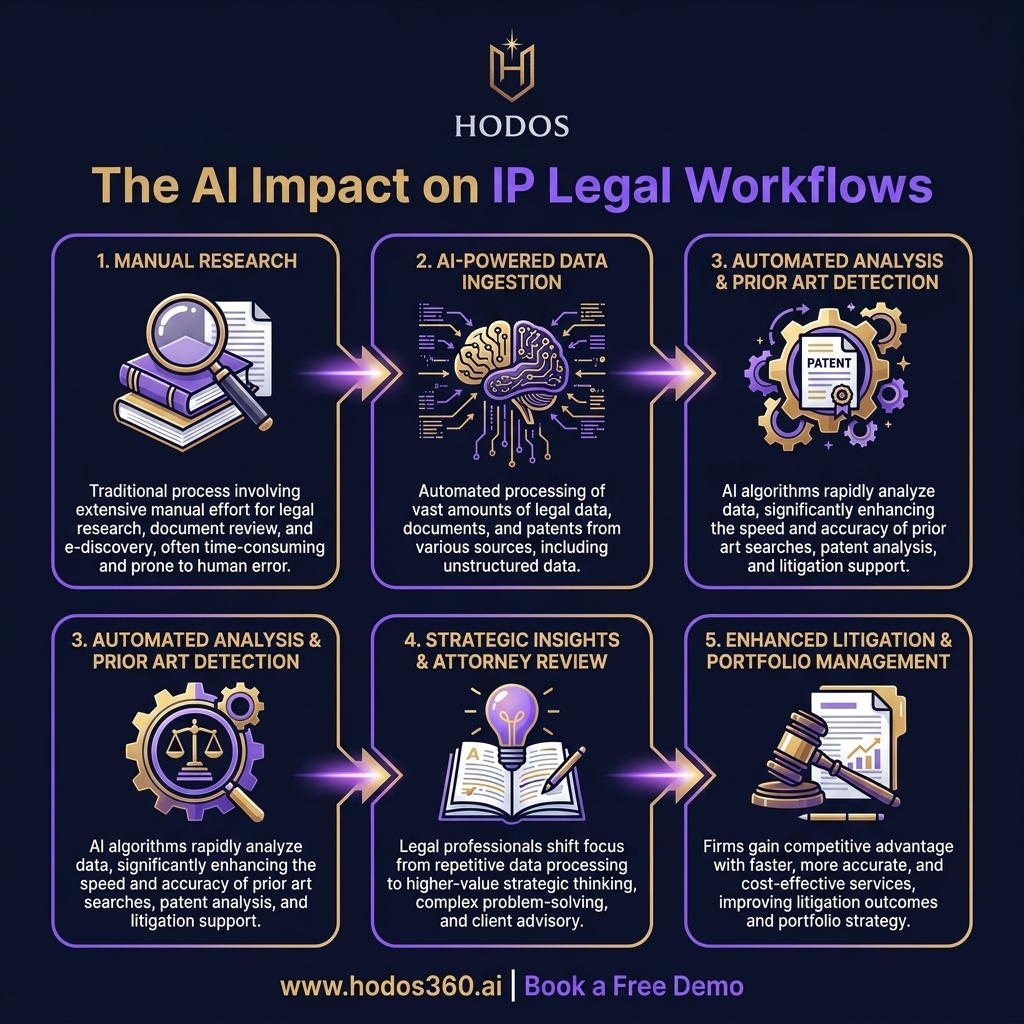
The core promise of an AI platform like ZeusIP's RIA is the radical transformation of traditional IP workflows. Historically, a comprehensive patent search involved manual review of vast databases, often leading to missed prior art or incomplete analysis. This process was not only time-consuming but also prone to human error, with significant implications for patent validity and litigation outcomes. AI-powered research changes this dynamic entirely. These platforms leverage natural language processing (NLP) and machine learning (ML) to rapidly sift through millions of patent documents, scientific papers, and legal precedents. They can identify subtle linguistic similarities, conceptual overlaps, and obscure references that a human reviewer might miss. For instance, a recent study published by the Journal of Law and Technology indicated that AI tools can reduce the time spent on initial patent search and analysis by up to 70%, while simultaneously increasing the accuracy of prior art identification by 25%. This level of efficiency and precision is indispensable for firms managing large IP portfolios or engaging in high-stakes litigation.
Beyond basic research, AI is also revolutionizing the strategic aspects of IP litigation. Learn more about AI Voice Assistants: Essential for Modern Law Firm Growth. Consider the challenge of analyzing an adversary's entire patent portfolio, identifying potential weaknesses, or predicting the likelihood of success in a particular claim. AI platforms can ingest and analyze vast quantities of corporate legal documents, court filings, and patent prosecution histories to provide predictive analytics. They can identify patterns in judicial decisions, assess the strength of arguments based on historical data, and even suggest counter-arguments or defensive strategies. This kind of deep analytical capability, once the exclusive domain of highly experienced litigation teams, is now accessible through intelligent tools. For example, in a complex patent infringement case, an AI platform could quickly identify all similar cases handled by a particular judge, analyze their rulings, and highlight key precedents, offering an attorney a significant informational advantage. This augmentation of human expertise with machine intelligence allows attorneys to construct more robust arguments, anticipate opposing counsel's moves, and ultimately achieve better outcomes for their clients, fundamentally elevating the quality of legal service in the IP domain. It's a shift from reactive legal work to proactive, data-driven strategy.
Beyond Basic Automation: Deep Learning in Patent Analysis
The true power of modern AI platform solutions in IP law lies in their ability to move beyond basic automation to incorporate sophisticated deep learning algorithms. Unlike earlier rule-based systems, these advanced AI models can learn from vast datasets, recognize complex linguistic patterns, and even understand the *intent* behind patent claims. For example, in analyzing a novel pharmaceutical patent, deep learning algorithms can identify subtle chemical structure similarities or therapeutic applications that might be obscured by different terminology across various documents. This capability is critical for accurately assessing novelty and non-obviousness, two cornerstones of patent law. Companies like OpenAI and Anthropic are continually pushing the boundaries of large language models (LLMs), which form the backbone of many of these legal AI applications. Their advancements in understanding context and generating human-like text mean that AI platforms can now not only find relevant information but also summarize it, draft initial responses, and even highlight potential ambiguities in complex legal language. This level of semantic understanding is what truly sets apart the latest generation of AI tools from their predecessors, enabling a deeper, more nuanced analysis of IP matters.
Furthermore, deep learning models are particularly adept at handling the unstructured data that dominates legal research. Learn more about AI Legal Tech: Ultimate Guide to Legora's Strategic Funding. Court transcripts, email communications, and expert witness reports often contain critical information that is difficult for traditional software to process. An AI platform trained on vast amounts of legal documents can extract key entities, relationships, and sentiments from this unstructured data, turning raw information into actionable intelligence. This capability is invaluable during litigation discovery, where identifying crucial pieces of evidence within millions of documents can be the difference between winning and losing a case. According to a report by McKinsey & Company, firms that have implemented deep learning for document analysis have seen a reduction in discovery costs by as much as 40% and a significant decrease in the time required to prepare for trial. This is a testament to the transformative potential of these tools for automating and enhancing complex IP workflows, allowing legal teams to focus on strategic insights derived from the AI's rapid, comprehensive analysis rather than the laborious task of manual review.
The Competitive Edge: How AI Elevates Law Firm Performance in Intellectual Property
In today's fiercely competitive legal market, law firms are constantly seeking new ways to differentiate themselves and gain a competitive edge. The adoption of advanced AI platforms like ZeusIP's RIA provides just that. Firms that effectively integrate these tools are not only more efficient but also better positioned to attract and retain high-value clients. Clients, particularly corporate legal departments, are increasingly sophisticated and demand transparency, efficiency, and demonstrable value. When a law firm can promise faster patent searches, more accurate litigation predictions, and reduced discovery costs through AI-powered legal workflows, it becomes an incredibly attractive proposition. For instance, a firm utilizing an AI platform for IP research can offer fixed-fee services for certain tasks, providing cost predictability that traditional hourly billing often lacks. This not only builds trust but also makes legal services more accessible and appealing to a broader client base. The ability to quickly assess the novelty of an invention or the strength of a patent claim with AI-driven insights allows attorneys to provide strategic advice much earlier in the process, guiding clients more effectively through complex IP landscapes. This proactive, value-driven approach is a significant differentiator in a crowded market.
Moreover, the strategic use of AI platforms can significantly enhance a firm's internal capabilities and talent retention. Learn more about AI Website Design: Essential Prompts for Law Firms. Young attorneys and paralegals, often burdened with repetitive research tasks, can be redeployed to more intellectually stimulating and client-facing roles. This not only improves job satisfaction but also fosters a culture of innovation and continuous learning within the firm. The latest generation of legal professionals expects to work with cutting-edge tools, and firms that provide them are better equipped to recruit and retain top talent. According to a 2025 report by the American Bar Association (ABA) Legal Technology Resource Center, over 60% of law students indicated that a firm's technological sophistication was a significant factor in their job selection. By investing in an AI platform for IP research and litigation, firms are not just improving their bottom line; they are investing in their people and their future. This holistic approach to technology adoption creates a virtuous cycle of efficiency, client satisfaction, and talent development, solidifying a firm's position as a leader in the intellectual property legal sector. It allows firms to scale their expertise without proportionally scaling their headcount, leading to higher profit margins and increased capacity for complex, high-value cases.
Integration Challenges and Solutions for AI Tools
Despite the undeniable benefits, the adoption of new AI platforms in legal practice is not without its challenges. One of the primary hurdles is the seamless integration of these tools with existing firm infrastructure, particularly case management systems, document management systems, and billing software. Many law firms operate with legacy systems that were not designed to interface with modern AI applications, leading to data silos and inefficient workflows. Overcoming these integration challenges requires careful planning, robust IT support, and a commitment to change management. Solutions often involve leveraging APIs (Application Programming Interfaces) to create custom connections between systems, or opting for comprehensive AI law firm management platforms that offer integrated solutions from the outset. For example, HODOS 360's AI Law Firm Management System is designed to provide an end-to-end solution, encompassing case management, document automation, and AI-powered legal workflows, which can significantly simplify the adoption process for firms looking to centralize their operations.
Another significant challenge is data security and confidentiality. IP law deals with highly sensitive and proprietary information, making data breaches a catastrophic risk. Learn more about AI Voice Clone: The Ultimate Guide for Law Firms. Any AI platform handling such data must adhere to the highest standards of cybersecurity, including robust encryption, access controls, and compliance with regulations like GDPR and CCPA. Firms must conduct thorough due diligence on potential AI vendors, scrutinizing their security protocols and data handling policies. Training legal professionals to use these tools ethically and securely is equally crucial, ensuring that sensitive information is not inadvertently exposed or misused. The human element remains vital, even with advanced automation. Furthermore, the initial investment in an AI platform can be substantial, requiring firms to carefully evaluate the ROI and ensure that the chosen solution aligns with their long-term strategic goals. However, as the market matures, the cost of entry is becoming more accessible, and the long-term benefits in terms of efficiency, accuracy, and competitive advantage far outweigh the initial outlay, making it a strategic imperative for modern IP practices.
Navigating the Ethical and Practical Realities of AI in IP Law
As AI platforms become more sophisticated, particularly in specialized fields like IP law, legal professionals must also navigate a complex landscape of ethical and practical realities. The core principle of attorney-client privilege and the duty of confidentiality remain paramount. When an AI platform processes sensitive client data for IP research or litigation support, firms must ensure that the vendor's data handling practices align with these ethical obligations. The ABA Model Rules of Professional Conduct, specifically Rule 1.6 (Confidentiality of Information) and Rule 1.1 (Competence), mandate that attorneys maintain competence in technology and safeguard client information. This means understanding how AI processes data, where it's stored, and who has access. Furthermore, the issue of 'hallucinations' in generative AI—where the AI produces factually incorrect or misleading information—poses a significant risk. Attorneys must always verify AI-generated content and research output, exercising their professional judgment rather than relying blindly on the automation tools. The responsibility for legal advice ultimately rests with the attorney, not the machine.
Practically, the adoption of an AI platform also requires a significant cultural shift within a law firm. Learn more about Voice Assistant Market: An Essential Guide for Law Firms. Resistance to change, fear of job displacement, and a lack of technical literacy can impede successful implementation. Firms must invest in comprehensive training programs that not only teach the mechanics of using the tools but also articulate the strategic vision behind their adoption. Emphasizing that AI is an *assistant* that augments human capabilities, rather than a replacement, is crucial for fostering buy-in from legal teams. Moreover, establishing clear internal policies for AI usage, including guidelines for data input, output verification, and client communication regarding AI-assisted work, is essential. The EU AI Act, though still in its early stages of enforcement, signals a global trend towards regulating AI, especially in high-risk applications. While direct implications for specific legal tools are evolving, firms should proactively develop internal governance frameworks that address fairness, transparency, and accountability in their use of AI platforms. By addressing these ethical and practical considerations head-on, law firms can harness the immense power of AI responsibly and effectively, ensuring that technological advancement serves the highest ideals of the legal profession.

Data Security and Confidentiality in AI Legal Platforms
Data security and confidentiality are non-negotiable pillars when adopting any AI platform in the legal sector, especially for sensitive IP research and litigation data. The potential for a data breach in an IP firm could lead to catastrophic losses for clients, including the compromise of trade secrets, patent applications, and strategic business plans. Therefore, when evaluating AI tools like ZeusIP's RIA or any other advanced legal AI platform, firms must scrutinize the vendor's security infrastructure with the same rigor they apply to their own. This includes understanding their data encryption protocols, where data is hosted (e.g., cloud vs. on-premise, geographical location), disaster recovery plans, and compliance certifications (e.g., ISO 27001, SOC 2 Type II). Leading AI platform providers understand these concerns and invest heavily in enterprise-grade security measures, often employing dedicated cybersecurity teams. For instance, reputable providers will offer assurances that client data is segregated, anonymized where appropriate, and never used to train generalized AI models without explicit consent, thereby safeguarding confidentiality.
Furthermore, the concept of 'need-to-know' access must extend to AI systems. Firms should implement strict internal policies governing who can access which data within the AI platform and what level of interaction is permitted. This also involves ensuring that the AI platform itself has granular access controls. The rise of sophisticated cyber threats means that static security measures are no longer sufficient; continuous monitoring, threat detection, and rapid incident response capabilities are essential. Firms should also consider data residency requirements, especially for international clients, ensuring that data is stored and processed in jurisdictions that comply with relevant data protection laws. By prioritizing data security and confidentiality from the initial evaluation phase through ongoing operation, law firms can leverage the immense power of AI platforms for IP research and litigation workflows with confidence, protecting their clients' most valuable assets while simultaneously enhancing their own operational efficiency and reputation. It is a critical aspect of responsible AI adoption that cannot be overlooked in the pursuit of automation and faster legal processes.
Future-Proofing Your Practice: Strategic Adoption of Legal AI Solutions
The legal profession is at an inflection point, and future-proofing your practice means embracing strategic adoption of legal AI solutions. The launch of ZeusIP's RIA and similar AI platforms for IP research and litigation is not an isolated event; it's part of a broader, irreversible trend. Firms that delay their AI integration risk being left behind by more agile competitors who are already reaping the benefits of enhanced efficiency, accuracy, and client satisfaction. Strategic adoption involves more than just purchasing software; it requires a holistic approach that includes assessing current workflows, identifying areas ripe for automation, selecting the right tools, and investing in continuous training for legal teams. It's about envisioning a future where attorneys are empowered by technology to perform at their highest level, focusing on complex problem-solving, strategic advice, and human connection, while AI handles the heavy lifting of data processing and preliminary analysis.
For law firm owners and managing partners, the decision to invest in an AI platform is a strategic imperative that impacts everything from profitability and talent acquisition to client service and market positioning. The latest AI tools offer not just incremental improvements but exponential gains in productivity and insight. By integrating an AI platform for IP research and litigation, firms can significantly reduce the time spent on routine tasks, allowing attorneys to take on more cases, deliver faster results, and provide more comprehensive legal advice. This ultimately translates into higher revenue per attorney and increased client loyalty. The journey towards an AI-powered future is continuous, requiring ongoing evaluation of emerging technologies and a willingness to adapt. Firms that proactively engage with this technological evolution, understanding that AI is a powerful accelerator for human expertise, will not only survive but thrive in the evolving legal landscape, cementing their status as leaders in the corporate and intellectual property legal sectors. It's about building a resilient, innovative, and highly competitive practice for the decades to come.
- ✓Enhanced Efficiency: AI platforms drastically reduce time spent on manual research, document review, and data analysis, often by 50% or more, allowing attorneys to focus on higher-value tasks.
- ✓Superior Accuracy: AI's ability to process vast datasets without human error leads to more precise identification of prior art, relevant case law, and critical evidence in litigation.
- ✓Strategic Advantage: Predictive analytics offered by AI tools can forecast litigation outcomes, identify weaknesses in opposing arguments, and inform more robust legal strategies.
- ✓Cost Reduction: Automating repetitive tasks lowers operational costs, enabling firms to offer more competitive pricing and improve profit margins.
- ✓Improved Client Satisfaction: Faster turnaround times, greater transparency, and cost predictability translate into happier, more loyal clients who appreciate value-driven services.
- ✓Talent Empowerment: AI frees up junior attorneys and paralegals from mundane tasks, allowing them to engage in more intellectually stimulating work and develop advanced legal skills.
- ✓Scalability: Firms can handle a larger volume of complex IP cases without proportionally increasing headcount, making growth more sustainable and efficient.

Key Takeaways and Next Steps for Your Law Firm
The emergence of sophisticated AI platforms like ZeusIP's RIA marks a pivotal moment for the intellectual property legal sector. The era of manual, labor-intensive IP research and litigation workflows is rapidly giving way to a future defined by intelligent automation, unparalleled accuracy, and strategic foresight. For law firm owners and legal professionals, the message is clear: embracing these AI tools is no longer optional but a strategic imperative. Firms that proactively integrate AI platforms will not only enhance their operational efficiency and reduce costs but also gain a significant competitive edge in attracting top talent and delivering superior client outcomes. The journey involves careful selection of AI tools, robust integration with existing systems, stringent attention to data security and confidentiality, and a commitment to continuous learning and adaptation within the firm.
The path forward for any forward-thinking legal practice involves a thorough assessment of its current workflows and a deliberate strategy for AI platform adoption. Consider how an AI platform for IP research and litigation could transform your firm's case management, document automation, and overall legal workflows. The benefits extend beyond mere efficiency to fundamentally reshape how you deliver value to your clients and position your firm for sustained success in a rapidly evolving market. Don't let your firm be left behind in this technological revolution. Explore how comprehensive AI law firm management solutions can empower your practice. Discover the future of legal efficiency today!
Frequently Asked Questions
What is an AI IP research platform?+
An AI IP research platform is a specialized software solution that uses artificial intelligence, including natural language processing and machine learning, to automate and enhance tasks related to intellectual property law. This includes prior art searches, patent analysis, trademark research, and support for IP litigation workflows, significantly boosting efficiency and accuracy for legal professionals.
How do AI platforms like ZeusIP's RIA benefit law firms?+
AI platforms like ZeusIP's RIA offer numerous benefits: dramatically reducing research time, improving the accuracy of patent and legal analysis, providing predictive insights for litigation strategy, lowering operational costs, and freeing attorneys to focus on high-value, strategic work. This leads to increased client satisfaction and a stronger competitive position.
Are AI legal tools secure for sensitive client data?+
Reputable AI legal tools prioritize data security and confidentiality. They employ advanced encryption, strict access controls, and comply with data protection regulations (e.g., GDPR, CCPA). Firms must conduct due diligence on vendors' security protocols and implement internal policies to ensure client data, especially sensitive IP information, remains protected.
What are the ethical considerations when using AI in IP law?+
Ethical considerations include maintaining attorney-client privilege, ensuring data confidentiality, and exercising professional judgment to verify AI-generated content. Attorneys must remain competent in technology, understand AI's limitations (like 'hallucinations'), and take ultimate responsibility for legal advice, using AI as an augmentation, not a replacement.
How can law firms integrate AI platforms into existing workflows?+
Integrating AI platforms requires careful planning. Firms can leverage APIs for custom connections with legacy systems or opt for comprehensive AI law firm management solutions that offer integrated case management, document automation, and AI workflows. Investing in training and change management is crucial to ensure seamless adoption and maximize the benefits for legal teams.