


AI Legal Plugins: The Ultimate Guide to Anthropic's Impact
In the rapidly accelerating landscape of legal technology, few announcements have captured the industry's attention quite like Anthropic's recent unveiling of its specialized legal plug-ins for Claude AI. This development, highlighted by LawFuel.com, isn't merely an incremental update; it signifies a profound shift, offering law firms unprecedented capabilities to streamline operations, enhance client service, and redefine legal practice itself.
Legal professionals, from solo practitioners to partners at Am Law 100 firms, are now grappling with the implications of an AI assistant capable of integrating deeply into their existing tech stacks, promising to automate mundane tasks and unlock new levels of strategic insight. This is not a distant future, but a present reality, spearheaded by companies like Anthropic and a competitive ecosystem driving relentless innovation.
The strategic move by Anthropic, a prominent player in the generative AI space founded by former OpenAI researchers Dario Amodei and Daniela Amodei, underscores a broader trend: the targeted application of sophisticated AI models to specific, high-value industry verticals. With its focus on safety and constitutional AI, Anthropic's entry into the legal domain with tailored tools, including connectors for leading legaltech providers like Ironclad for contracts and Clio for practice management, sets the stage for a new era of efficiency and precision.
The tension between traditional legal methodologies and the disruptive potential of AI is palpable, creating a competitive arena where early adopters stand to gain significant advantages in productivity, cost-efficiency, and strategic foresight. For law firm owners, understanding and integrating these advanced capabilities is no longer optional but essential for sustained success.
The Genesis of a New Legaltech Era: Anthropic's Strategic Move
The legal industry has always been ripe for technological disruption, yet its inherent conservatism and regulatory complexities have often slowed the pace of adoption. However, the advent of sophisticated generative AI has proven too compelling to ignore. Anthropic's recent launch of over a dozen specialized AI legal plugins for its Claude platform, as extensively covered by industry outlets, represents a calculated and aggressive push into this lucrative market.
This isn't just a general-purpose AI being adapted; it's a dedicated suite of legaltech innovation tools designed to address specific pain points within legal practice. Dario Amodei, CEO of Anthropic, has often spoken about the need for AI to be not just powerful, but also steerable and safe, a philosophy that resonates deeply with the legal profession's emphasis on precision and ethical conduct.
This strategic focus differentiates Anthropic's approach from broader, less specialized AI offerings, aiming for deep integration rather than superficial assistance.
This suite of legal plugins is built on the foundation of Claude AI, known for its strong reasoning capabilities and extended context windows, making it particularly adept at handling complex legal documents and nuanced queries.
The integration strategy is key: instead of building an entirely new vertical, Anthropic has partnered with existing legaltech providers. For instance, connections with platforms like Ironclad for contract lifecycle management, Clio for practice management AI, and other document automation tools mean that Claude can act as an intelligent layer, enhancing existing workflows rather than replacing them wholesale.
Learn more about Legal AI ROI: Maximizing Law Firm Value in 2026. This collaborative approach minimizes friction for law firms already invested in specific software ecosystems, easing the transition to AI-powered legal workflows. The market for these connectors is vast, touching upon virtually every segment, from document review AI to client intake.
The competitive landscape in generative AI for legal is fierce, with major players like OpenAI (with its partnership with Harvey AI for firms like Allen & O'Very) and Microsoft (leveraging its investment in OpenAI) also vying for market share. Anthropic's move signals an intent to carve out a significant niche by offering deeply integrated, legally-centric solutions.
This rivalry fosters rapid innovation, pushing the boundaries of what AI legal services can achieve. Law firms are no longer just observing; they are actively evaluating which AI platform offers the most robust features, ethical safeguards, and seamless integration with their existing operations. The tension between adopting a single, overarching AI platform versus a modular, plugin-based approach is a key strategic decision point for many managing partners like Brad Smith, President of Microsoft, who has publicly emphasized the transformative potential of AI while advocating for responsible development.
Ready to explore how AI can redefine your legal practice?
Claude AI and its Legal Connectors: A Deeper Dive
The core of Anthropic's offering lies in its sophisticated Claude AI model, now enhanced with a robust set of connectors. These aren't just simple API links; they are designed to enable Claude to interact intelligently with legal-specific data and applications. For example, a legal professional could use a Claude plugin to rapidly analyze a stack of NDAs, identifying specific clauses, flagging risks, or extracting key terms for a due diligence process.
Another plugin might integrate with a case management system to automatically generate initial drafts of pleadings based on client intake data, or schedule follow-up actions. Learn more about Voice Assistant Market: An Essential Guide for Law Firms. The goal is to offload repetitive, time-consuming tasks, freeing up attorneys to focus on higher-value strategic work, client counseling, and complex problem-solving.
This shift is critical for improving both firm profitability and attorney job satisfaction, addressing the perennial challenge of managing overwhelming workloads.
Transforming Legal Workflows: Practical Applications of AI Legal Plugins
The true power of Anthropic's AI legal plugins becomes evident in their practical applications, fundamentally reshaping how legal professionals conduct their daily work. Consider the traditional process of document review AI: historically, a labor-intensive and error-prone task consuming countless billable hours. With Claude's specialized plugins, a firm can now feed thousands of discovery documents into the system, asking Claude to identify privileged information, categorize documents by relevance to specific legal issues, or even summarize deposition transcripts.
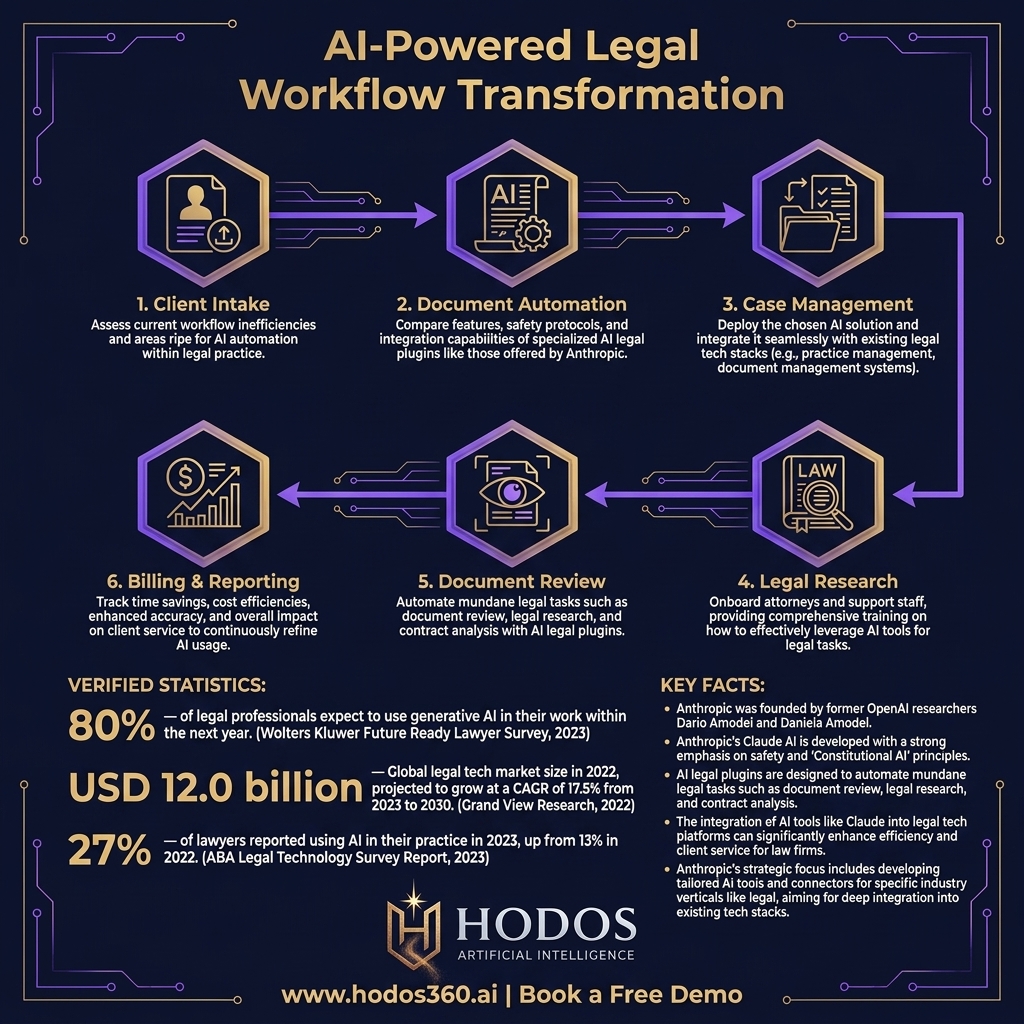
This dramatically reduces the time and cost associated with e-discovery, a significant win for both firms and their clients. Firms that embrace these tools are reporting reductions in review time by as much as 30-50%, according to recent reports from the ABA's Legal Technology Resource Center, providing a distinct competitive edge.
Beyond document review, the impact extends to virtually every facet of AI law firm management. Client intake, often a bottleneck, can be accelerated through AI-powered forms that dynamically adapt based on responses, gathering comprehensive data and even performing initial lead qualification. Legal workflows automation is no longer a buzzword but a tangible reality, with AI assisting in drafting routine legal documents like non-disclosure agreements, simple wills, or engagement letters, often achieving a high degree of accuracy that requires only final attorney review.
Learn more about Voice AI: Ultimate Competitive Landscape for Law Firms. This allows firms to scale their operations without proportionally increasing headcount, addressing the critical challenge of managing growth while maintaining service quality. The shift from manual, sequential tasks to AI-augmented, parallel processing marks a paradigm shift in operational efficiency.
The integration of Anthropic Claude with various legal platforms also facilitates advanced legal research. Instead of sifting through vast databases, attorneys can pose complex legal questions to Claude, which can then leverage its plugins to query legal research platforms, summarize relevant case law, statutes, and secondary sources, and even identify conflicting precedents.
This accelerates the research process, allowing for more comprehensive and nuanced legal arguments. Furthermore, the platform's ability to analyze and predict litigation outcomes based on historical data, though still nascent, holds immense promise. This predictive analytics capability, while not a substitute for human judgment, provides valuable insights for strategic decision-making, helping firms advise clients more effectively on risk assessment and settlement negotiations.
Discover how integrated AI solutions can elevate your firm's efficiency and client satisfaction.
Key Areas Revolutionized by AI Legal Plugins
- ✓Enhanced Document Automation & Drafting: From initial contract drafts to complex pleadings, AI significantly speeds up document creation and ensures consistency, reducing human error.
- ✓Accelerated Legal Research: AI-powered tools can rapidly sift through vast legal databases, summarize relevant precedents, and identify key statutes, saving hours of research time.
- ✓Streamlined E-Discovery & Document Review: AI drastically cuts down the time and cost of reviewing large volumes of documents, identifying relevant information, and flagging privileged content.
- ✓Improved Client Intake & Lead Qualification: Automated systems can gather client information efficiently, pre-qualify leads, and route them to the appropriate legal professional 24/7.
- ✓Predictive Analytics for Litigation: Though still evolving, AI can analyze historical case data to offer insights into potential litigation outcomes, aiding strategic decision-making.
- ✓Compliance & Risk Management: AI can monitor regulatory changes, analyze contracts for compliance issues, and flag potential risks proactively, enhancing a firm's risk posture.
- ✓Optimized Practice Management: Integration with existing practice management AI systems allows for automated billing, calendar management, and workload distribution, improving overall firm efficiency.
Navigating the Ethical and Operational Landscape of AI in Law
While the benefits of AI legal plugins are compelling, their adoption introduces a complex array of ethical and operational considerations that law firms must meticulously address. The American Bar Association (ABA) Model Rules of Professional Conduct, particularly Rule 1.1 (Competence) and Rule 1.6 (Confidentiality of Information), are paramount.
Attorneys leveraging AI have an ethical duty to understand the technology's capabilities and limitations, ensuring that its use does not compromise the duty of competence or client confidentiality. This includes understanding potential biases in AI models, safeguarding client data, and ensuring that AI-generated output is always reviewed and verified by a human attorney.
The recent enforcement of the EU AI Act in some jurisdictions, and ongoing legislative efforts in the U.S., underscore the growing regulatory scrutiny of AI's impact, particularly concerning data privacy and algorithmic transparency.
One of the most significant ethical dilemmas centers on the "black box" nature of some AI models.
While Anthropic emphasizes its "constitutional AI" approach, aiming for transparency and steerability, the underlying complexities of deep learning can make it challenging to fully explain how a particular output was generated. This raises questions about accountability, especially in cases where AI might contribute to an erroneous legal conclusion.
Firms must establish clear protocols for human oversight, ensuring that AI acts as an assistant, not a replacement, for human judgment. Learn more about AI Marketing Automation: Law Firms' 2026 Growth Catalyst. As Joshua Browder, founder of DoNotPay, discovered with early attempts to bring AI directly into courtrooms, the legal system's reliance on human advocacy and nuanced interpretation requires a careful, phased approach to AI integration.
The tension here lies between maximizing efficiency and upholding the highest standards of legal ethics and professional responsibility.
Operationally, integrating AI legal plugins into existing IT infrastructure presents its own set of challenges. Compatibility issues, data migration, and cybersecurity concerns are all critical factors. Firms must invest in robust data governance frameworks to ensure the integrity, security, and privacy of client information, especially when leveraging cloud-based AI solutions.
The choice between a vendor-agnostic platform or one deeply integrated with a specific AI provider like Anthropic, for instance, requires careful strategic planning. Furthermore, training legal staff – from partners to paralegals – on how to effectively use these new AI tools and understand their outputs is crucial for successful adoption and to mitigate the risks associated with improper use.
This involves a significant investment in change management and continuous education, ensuring that the human element remains central to the legal workflows automation.
The Competitive Edge: Firms Embracing AI vs. The Traditional Path
The divide between law firms that aggressively embrace legaltech innovation and those that cling to traditional methods is widening, creating a tangible competitive disparity in the market. Firms that strategically adopt AI legal plugins are reporting significant gains in efficiency, allowing them to take on more cases, offer more competitive pricing, and deliver faster client service.
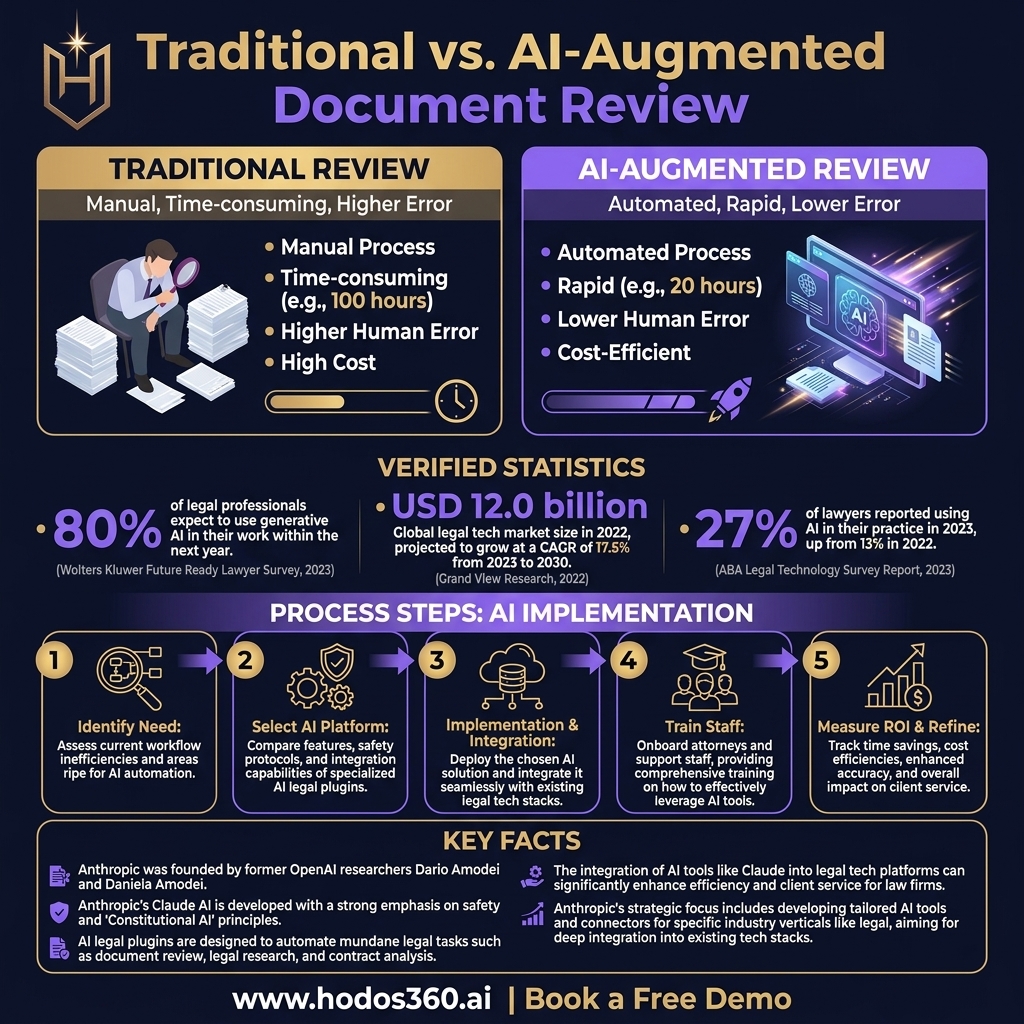
This translates directly into increased profitability and market share. For example, a firm using AI for initial document review can offer more attractive rates for large-scale discovery projects than one relying solely on manual review, attracting corporate clients seeking cost-effective solutions. Learn more about AI Local Search: The Ultimate Visibility Guide for Law Firms.
Conversely, firms hesitant to integrate AI risk falling behind, struggling with higher operational costs, slower turnaround times, and potentially losing clients to more technologically advanced competitors. This dynamic creates a compelling narrative of disruption versus tradition, where the former is increasingly dictating the future of legal practice.
The Future of Legal Practice: Integration and Innovation
The trajectory of AI legal plugins points towards a future where legal practice is characterized by deep integration and continuous innovation. The vision extends beyond mere task automation to a holistic transformation of the legal ecosystem. We are moving towards an era of "ambient intelligence" in law, where AI seamlessly supports every stage of the legal process, from initial client contact through case resolution and beyond.
This involves not just standalone plugins but integrated platforms that combine elements of AI law firm management, advanced analytics, and predictive capabilities. The legal sector, according to Gartner's recent forecasts, is expected to see a 40% increase in AI adoption within the next three years, driven by the compelling ROI and competitive pressures.
This shift demands that legal professionals not only adapt to new tools but also rethink their fundamental approaches to service delivery and business strategy.
The next wave of legaltech innovation will likely focus on even more sophisticated applications, such as AI-powered negotiation assistants, real-time legal advice bots for routine queries, and advanced predictive modeling for regulatory compliance.
Imagine an AI that can not only draft a contract but also simulate its performance under various market conditions, or an AI voice assistant that can handle initial client consultations, qualify leads, and book appointments, all while maintaining a professional and empathetic tone. These advancements will necessitate even greater collaboration between legal professionals and AI developers, ensuring that the technology is designed with legal nuances and ethical considerations at its core.
Learn more about AI Voice Assistants Transform Law: HODOS 360's 2026 Impact. The goal is to augment human intelligence, allowing lawyers to focus on the truly human aspects of law: empathy, strategy, and complex problem-solving, rather than repetitive administrative burdens.
The evolution of AI legal services also hints at a democratization of legal access.
By reducing the cost and time associated with many legal processes, AI can make legal services more affordable and accessible to a broader segment of the population, bridging the access-to-justice gap. This societal benefit, while secondary to firm profitability, is a powerful long-term outcome of widespread AI adoption.
However, this also presents challenges for existing legal aid models and raises questions about the future role of paralegals and junior associates whose tasks are most amenable to automation. Law firms must strategically plan for workforce reskilling and reorientation, ensuring that their human talent is equipped to leverage AI rather than be displaced by it.
This requires a forward-thinking leadership that understands both the technological and human dimensions of this transformation.
HODOS 360's Role in the Evolving AI Ecosystem
In this dynamic environment, platforms like HODOS 360 are uniquely positioned to empower law firms to navigate and thrive amidst the AI legal plugins revolution. HODOS 360’s comprehensive AI-powered platform offers an integrated suite of services designed to address the very challenges and opportunities presented by these new technologies.
Our AI Law Firm Management System provides case management, billing, client intake, and document automation, directly aligning with the efficiencies offered by specialized AI plugins. Furthermore, our AI Marketing Platform ensures firms can effectively communicate their technological advancements and attract new clients, while AI Voice Assistants offer 24/7 lead qualification and appointment booking, mirroring the advanced capabilities now becoming standard.
By offering a unified, AI-centric approach, HODOS 360 helps firms not just integrate individual plugins but build a cohesive, future-proof legal practice that harnesses the full power of artificial intelligence.

Key Takeaways and Next Steps
The launch of Anthropic's AI legal plugins for Claude marks an undeniable inflection point for the legal industry. It's a clear signal that general-purpose AI is rapidly evolving into highly specialized, deeply integrated tools designed to tackle the unique complexities of legal practice. The era of "wait and see" for legaltech innovation is over; firms that do not strategically engage with these advancements risk being left behind in a rapidly evolving competitive landscape.
The immediate imperative for law firm leaders is to initiate a comprehensive assessment of their current workflows, identify areas where AI can deliver the most significant impact, and begin exploring pilot programs with trusted AI solutions. This isn't just about adopting new software; it's about fundamentally rethinking how legal services are delivered, priced, and managed.
For legal professionals, the journey ahead involves a commitment to continuous learning and adaptation. Understanding the nuances of ethical AI legal use, ensuring data privacy, and mastering the art of collaborating with intelligent systems will become core competencies. The focus must shift from simply performing tasks to orchestrating intelligent workflows, leveraging AI to amplify human expertise rather than diminish it.
As the legal market becomes increasingly discerning, with clients expecting greater efficiency and transparency, firms that proactively integrate and innovate with AI will be best positioned to attract top talent, secure high-value cases, and cultivate lasting client relationships. The future of legal practice is not just AI-enhanced; it is AI-driven, demanding visionary leadership and a proactive approach to technological adoption.
The ultimate takeaway is clear: the AI legal plugins introduced by Anthropic represent a powerful catalyst for transformation, but their success within any given law firm will hinge on strategic planning, ethical implementation, and a commitment to integrating these tools thoughtfully into existing operations. This involves not only technological investment but also a cultural shift towards embracing innovation.
Firms that understand this holistic challenge and opportunity will not only survive but thrive, shaping the next chapter of legal service delivery. The time to act is now, to leverage these powerful tools to build a more efficient, intelligent, and client-centric legal practice.
Frequently Asked Questions
What are Anthropic's AI legal plugins?+
Anthropic's AI legal plugins are specialized extensions for their Claude AI model, designed to integrate with various legal technology platforms. These tools automate specific legal tasks like document review, contract analysis, and legal research, streamlining workflows and enhancing efficiency for law firms by leveraging Claude's advanced natural language processing and reasoning capabilities.
How do these AI legal plugins benefit law firms?+
Law firms benefit significantly from these plugins through increased efficiency, reduced operational costs, and improved accuracy. They can accelerate document processing, automate routine drafting, enhance client intake, and perform faster legal research, freeing attorneys to focus on complex strategic work. This leads to better client service and a stronger competitive position in the market.
What ethical considerations should firms be aware of when using AI legal tools?+
Firms must adhere to ethical duties of competence and confidentiality. Key considerations include ensuring human oversight of AI outputs, understanding potential AI biases, protecting client data privacy, and complying with evolving AI regulations. Attorneys must remain ultimately responsible for all legal advice and work product, even when assisted by AI.
How does Anthropic's approach differ from other AI legal solutions?+
Anthropic emphasizes "constitutional AI," focusing on safety, transparency, and steerability, which is particularly appealing for the legal sector. Their strategy involves deep integration with existing legaltech providers via specialized plugins, enhancing current systems rather than creating entirely new ones. This modular approach allows for flexible and targeted application of AI.
Will AI legal plugins replace human lawyers?+
No, AI legal plugins are designed to augment, not replace, human lawyers. They automate repetitive and data-intensive tasks, allowing attorneys to focus on higher-value work requiring critical thinking, strategy, empathy, and client interaction. The future of law involves a collaborative model where human expertise is amplified by AI's analytical power.
How can law firms start integrating AI legal plugins?+
Firms should begin by assessing their current workflows to identify pain points where AI can offer the most impact. Start with pilot programs for specific tasks like document review or contract analysis. It's crucial to choose reputable AI providers, establish clear ethical guidelines, and invest in training staff to ensure successful and responsible integration.