


AI in Legal Tech: The Ultimate Guide to Modern Firm Management
In the fast-paced world of legal technology, few stories have captured the imagination quite like that of Legora, the collaborative AI platform founded by Max Junestrand. As highlighted by StartupHub.ai, Junestrand, a 25-year-old visionary with no traditional legal background, has built a startup valued in the hundreds of millions, backed by giants like Nvidia.
Legora's rapid ascent, focusing on empowering lawyers to review and research faster, draft smarter, and advise with precision, signals a pivotal moment for the industry. It underscores a clear message: AI in legal tech is no longer a futuristic concept but a present-day imperative reshaping the very fabric of legal practice.
The market, once cautious, is now embracing this transformation, with significant funding rounds and strategic partnerships becoming commonplace, demonstrating the immense potential for firms willing to adapt.
Legora's success, however, represents just one facet of a much broader revolution. While their focus on specific legal tasks is powerful, the true competitive advantage for law firms today lies in a holistic integration of AI across all operational pillars.
The tension between traditional methodologies and disruptive innovation is palpable, creating a clear divide between firms that are proactively adopting AI and those that risk being left behind. Firms seeking to thrive in this new era must look beyond isolated tools and consider how AI can serve as the central nervous system for their entire practice, optimizing everything from client acquisition to internal management and online presence.
The question is no longer *if* AI will transform legal services, but *how comprehensively* a firm will leverage it to gain an edge.
This comprehensive guide delves into how advanced AI solutions are not just augmenting legal work but fundamentally redefining law firm management. We will explore the critical areas where AI in legal tech is delivering tangible benefits, drawing insights from industry leaders, real-world data, and strategic approaches that empower firms to enhance efficiency, drive growth, and elevate client experiences.
From intelligent automation of routine tasks to sophisticated data analytics for strategic decision-making, the journey towards an AI-powered future for legal practices is underway, promising unprecedented levels of productivity and innovation for those who embrace it.
Ready to transform your practice with cutting-edge AI? Explore how HODOS 360 can redefine your law firm's future.
The Transformative Power of AI in Legal Operations
The integration of AI in legal tech has moved beyond mere hype, translating into quantifiable improvements in law firm operations. For years, firms grappled with manual, time-consuming processes for client intake, document review, and case management. These inefficiencies not only drained resources but also limited the capacity for strategic, high-value legal work.
A 2023 report by Thomson Reuters highlighted that law firms leveraging AI for document automation experienced a 30% reduction in time spent on repetitive tasks, freeing lawyers to focus on complex analysis and client advocacy. This shift mirrors the broader economic impact of AI; McKinsey Global Institute projects that generative AI could add trillions of dollars in value to the global economy, with knowledge work sectors like legal being prime beneficiaries.
The story of Legora, enabling lawyers to review and research faster, exemplifies this targeted efficiency, showcasing how even specific AI applications can unlock significant productivity gains across a firm’s collaborative workspace.
The competitive landscape is intensifying, pushing firms to adopt comprehensive AI solutions to stay relevant.
Major players like Allen & Overy's partnership with Harvey AI, a generative AI platform for legal professionals, signal a clear trend: top-tier firms are not just experimenting with AI but integrating it into their core workflows. This adoption creates a significant divide. Firms that cling to outdated, manual processes find themselves at a disadvantage, struggling to match the speed, accuracy, and cost-effectiveness of their AI-augmented counterparts.
The ability to manage a high volume of cases, process vast amounts of data, and generate precise legal documents quickly is becoming a baseline expectation, driven by the capabilities of advanced AI in legal tech. Learn more about AI Podcasts: Essential Voice Assistant Strategies for Law Firms.
This isn't just about incremental improvements; it's about fundamentally rethinking how legal services are delivered to meet the demands of today’s clients and market.
An integrated AI Law Firm Management System goes far beyond isolated tools. It acts as a central nervous system, connecting disparate functions from client intake to billing and document automation.
Consider the journey of a new client: traditionally, this involves manual data entry, multiple forms, and often, significant administrative overhead. With an AI-powered system, client data can be captured, verified, and integrated across all relevant modules instantly, creating smart workflows that trigger document generation, calendar entries, and task assignments automatically.
This holistic approach ensures data consistency, reduces human error, and accelerates the entire client lifecycle. The ability to gain a 360-degree view of every case and client, powered by real-time analytics, empowers firm leaders to make data-driven decisions, optimizing resource allocation and identifying growth opportunities that were previously obscured by operational complexities.
Moreover, the rise of sophisticated AI for legal workflows means firms can now automate complex, multi-step processes that once required significant human intervention. From drafting initial complaints based on case facts to generating customized client communications and even predicting case outcomes based on historical data, AI is transforming the entire lifecycle of legal matters.
This level of automation is not merely about saving time; it's about enhancing the quality and consistency of legal work, ensuring compliance, and allowing legal professionals to dedicate their expertise to strategic thinking, client counseling, and courtroom advocacy. The promise of AI in legal tech is not to replace human lawyers but to augment their capabilities, making them more efficient, insightful, and ultimately, more valuable to their clients.
Streamlining Client Intake and Case Management with AI
The initial touchpoint with a potential client sets the tone for the entire relationship, and AI is revolutionizing this critical phase. Traditional client intake is often a bottleneck, characterized by manual data entry, extensive form-filling, and delayed responses. AI-powered intake systems, however, can automate lead qualification, gather essential information through intelligent chatbots or voice assistants, and even conduct preliminary conflict checks instantly.
This not only accelerates the onboarding process but also ensures a consistent, professional, and responsive client experience from the very first interaction. For example, an AI system can analyze initial queries, extract key facts, and automatically route the client to the most appropriate attorney, significantly reducing the time from inquiry to consultation and improving conversion rates for new business.
Once a client is onboarded, AI continues to play a pivotal role in case management. Modern AI-powered platforms can automatically extract relevant data from documents, populate case files, and even identify patterns or precedents that might be missed by human review. Learn more about AI-Native Law Firms: The Ultimate Guide to Thriving in a New Era.
The sheer volume of data in complex litigation or transactional work can be overwhelming, but AI tools can rapidly sift through millions of documents, flag critical information, and organize it logically. This capability is invaluable for managing large-scale discovery, due diligence, and compliance tasks. Furthermore, AI can provide predictive analytics, offering insights into potential case durations, resource requirements, and even likely outcomes based on historical data and legal precedents.
This foresight empowers lawyers to manage client expectations more effectively, allocate resources optimally, and develop more robust legal strategies, moving from reactive management to proactive, data-driven decision-making.
Beyond Research: AI's Role in Legal Marketing and Business Development
While companies like Legora excel in internal legal task automation, the impact of AI in legal tech extends powerfully into client acquisition and firm growth. In an increasingly competitive market, effective marketing is no longer optional for law firms. However, traditional legal marketing often lacks the precision and ROI tracking common in other industries.
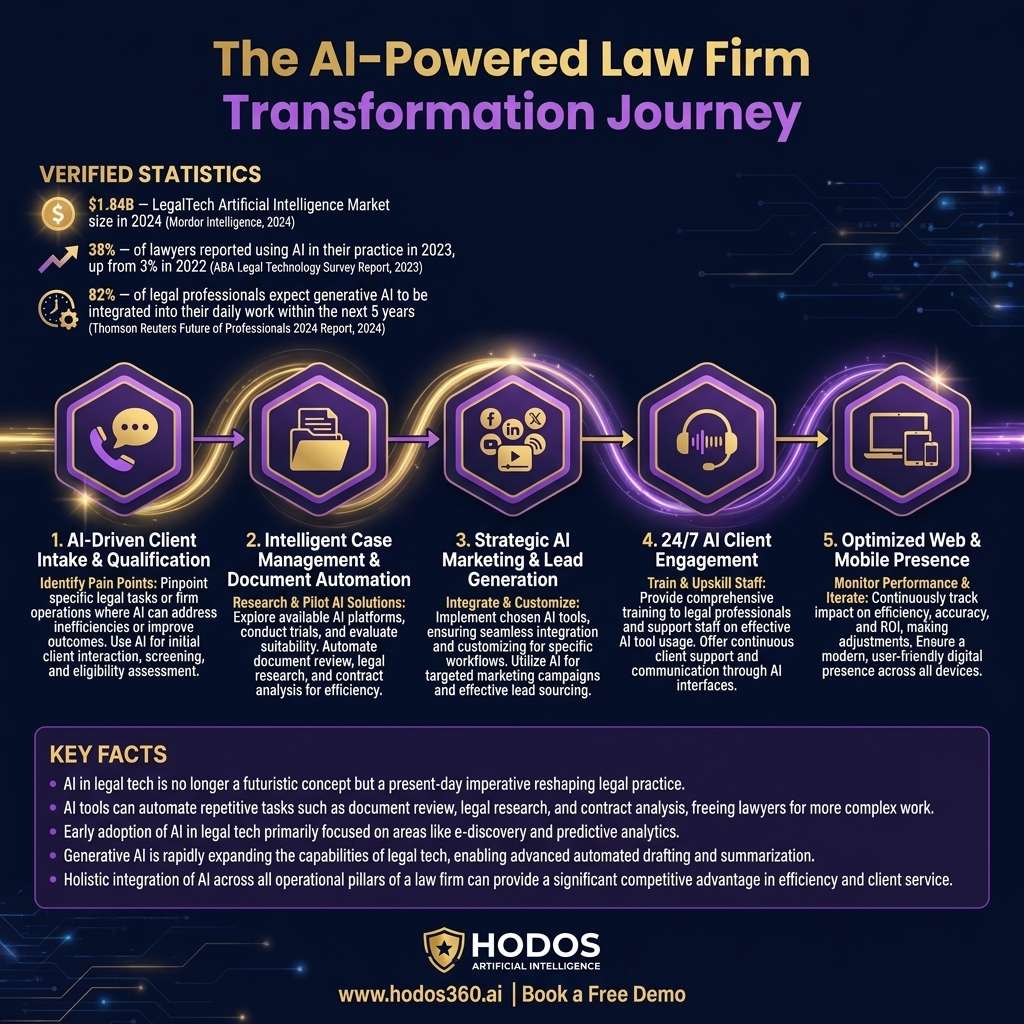
AI is bridging this gap by offering tools that streamline content creation, automate social media engagement, and provide granular analytics to optimize campaigns. Imagine an AI marketing platform that can generate compelling video content for social media, tailor blog posts to specific client demographics, and schedule posts for optimal engagement, all while tracking conversion rates and lead sources in real-time.
This level of automation and data-driven insight transforms marketing from a speculative expense into a strategic investment, allowing firms to identify their most profitable channels and client segments.
The content generation capabilities of AI are particularly game-changing for legal marketing. Lawyers, often constrained by time, struggle to consistently produce high-quality thought leadership, blog posts, and website copy.
AI-powered content tools can assist in drafting articles, summarizing complex legal topics for a lay audience, and even personalizing outreach emails. This allows firms to maintain a robust online presence, establish themselves as authorities in their practice areas, and attract new clients without diverting significant billable hours from their legal teams.
The ability to rapidly produce SEO-optimized content means firms can rank higher in search results, capturing the attention of potential clients actively seeking legal services. This proactive approach to digital marketing is essential for any firm looking to expand its reach and build a sustainable client base in today's digital-first world.
Social media automation, another key application of AI in legal tech for marketing, ensures consistent brand visibility and engagement. Learn more about AI Marketing Revolution 2026: Autonomous Agents for Law Firms. AI tools can analyze audience behavior, identify trending legal topics, and schedule posts across various platforms at optimal times.
This consistent, data-informed presence helps build brand recognition and fosters a sense of community around the firm. Furthermore, AI-driven analytics provide invaluable insights into marketing campaign performance, tracking everything from website traffic and lead generation to actual client conversions. This allows firms to understand the true return on investment (ROI) for their marketing efforts, enabling them to refine strategies, allocate budgets more effectively, and focus on initiatives that yield the best results.
The days of 'spray and pray' marketing are over; AI empowers legal marketers with the precision and accountability needed to drive measurable growth.
Moreover, AI voice assistants are revolutionizing the initial client experience, acting as a powerful extension of the marketing and business development teams.
These assistants provide 24/7 phone answering, ensuring no potential lead is missed, regardless of time zones or office hours. Beyond simply answering calls, advanced AI can conduct initial lead qualification, asking pertinent questions to understand the caller's needs and legal issue, and then accurately routing the call to the appropriate department or attorney.
They can even book appointments directly into the firm's calendar, reducing administrative overhead and ensuring that qualified leads are promptly converted into consultations. With multilingual support, firms can broaden their reach, serving diverse client populations without the need for additional human resources. This seamless, efficient, and professional front-line service significantly enhances the client experience, building trust and demonstrating the firm's commitment to modern, responsive service.
Elevating Client Experience with AI Voice Assistants
In a service-oriented industry like legal, client experience is paramount, and AI voice assistants are proving to be a game-changer. The expectation for instant communication and immediate support has never been higher. A 24/7 AI voice assistant ensures that every call is answered, every inquiry acknowledged, and every potential client feels valued.
This round-the-clock availability is particularly critical for urgent legal matters, where a delayed response can mean a lost opportunity or a frustrated client. Beyond simple answering, these AI assistants are capable of sophisticated lead qualification. They can engage callers in natural language conversations, understand the specifics of their legal needs, and gather crucial information before a human attorney even picks up the phone.
Learn more about AI Marketing: Law Firms Slash $225K Tools in 2026. This pre-qualification saves valuable time for legal professionals, allowing them to focus on high-value consultations with genuinely prospective clients.
The ability of AI voice assistants to book appointments directly into a firm’s calendar streamlines the client journey significantly.
No more back-and-forth emails or phone tag to schedule a meeting; the AI handles it efficiently, ensuring the attorney’s calendar is optimized and clients receive immediate confirmation. Furthermore, multilingual support breaks down communication barriers, allowing firms to serve a broader, more diverse client base without the need for an in-house team of translators.
This inclusivity expands market reach and enhances the firm's reputation for accessibility and client-centric service. Coupled with intelligent call routing, which directs specific types of inquiries to the most appropriate legal expert, AI voice assistants ensure that clients receive the right information from the right person at the right time, fostering trust and improving client satisfaction, ultimately leading to positive 'reviews' and referrals.
The Digital Frontier: Web & Mobile Development Driven by AI
A law firm's digital presence is often the first, and sometimes only, impression a potential client gets. In AI in legal tech, this extends to AI-powered web and mobile development, which is redefining how firms build, maintain, and optimize their online assets. Gone are the days of static, generic websites.
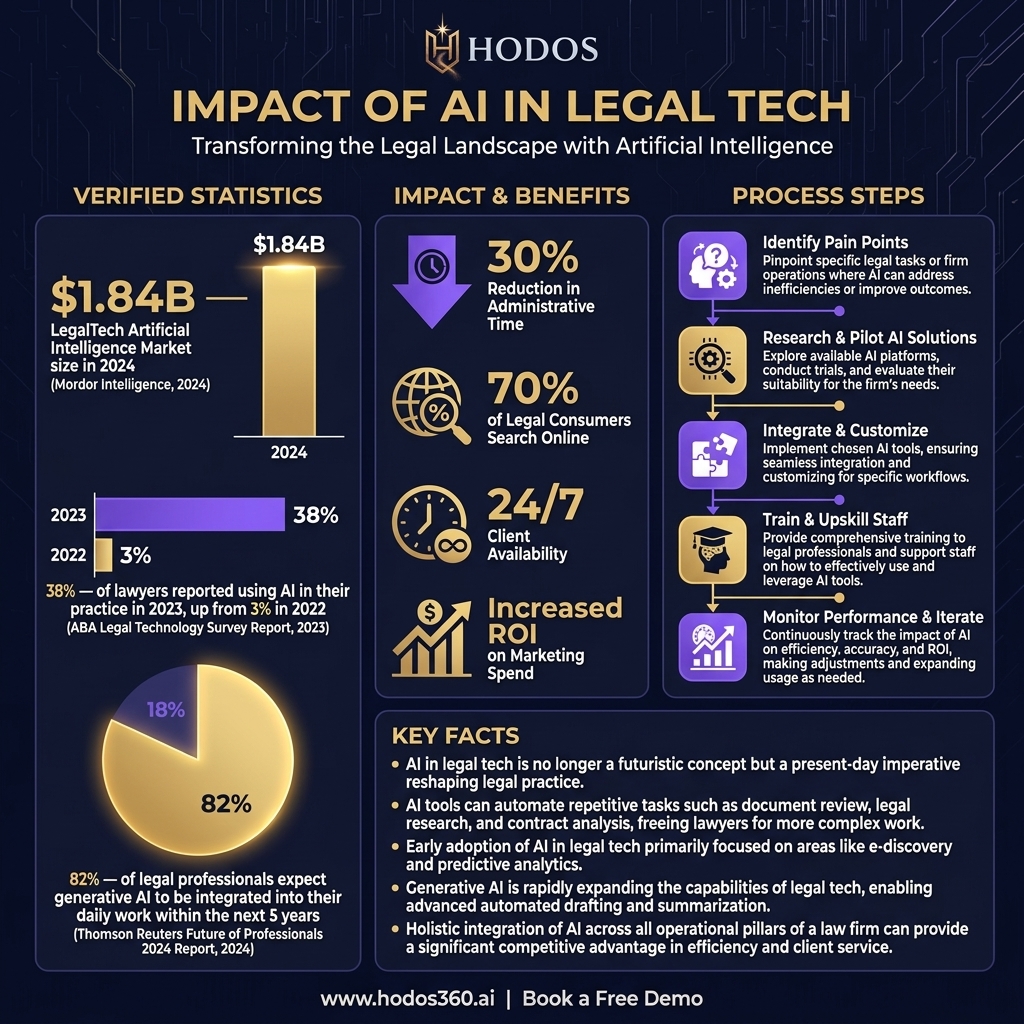
AI-powered website builders leverage data analytics and design principles to create responsive, intuitive, and high-converting platforms tailored to a firm's specific needs and target audience. These systems can dynamically adapt content and layout based on user behavior, ensuring a personalized and engaging experience for every visitor.
The importance of a robust, modern online presence cannot be overstated; the ABA's 2023 Legal Technology Survey Report indicated that over 70% of legal consumers search for attorneys online, making a high-performing website a non-negotiable asset for 'today's' successful law firm.
SEO optimization, a critical component of digital visibility, is also significantly enhanced by AI.
AI tools can analyze search trends, identify relevant keywords, and even suggest content improvements to boost a firm's ranking on search engines. This proactive approach ensures that when potential clients search for legal services, the firm's website appears prominently, driving organic traffic and generating qualified leads.
Furthermore, AI-driven analytics provide deep insights into website performance, allowing firms to understand user journeys, identify conversion bottlenecks, and continuously refine their online strategy for maximum impact. This data-centric approach transforms website development from a one-time project into an ongoing, optimized growth engine for the firm.
High-converting templates, often a feature of AI-powered web development platforms, are designed with user experience and conversion in mind. Learn more about AI Legal Revolution: Corporate Use Jumps 87% by 2026. These templates are not just aesthetically pleasing but are structured to guide visitors seamlessly from initial contact to client conversion, incorporating clear calls to action, easy navigation, and compelling content.
The responsiveness of these designs ensures a consistent and optimal experience across all devices – desktops, tablets, and smartphones – which is crucial given the increasing prevalence of mobile browsing. A law firm's mobile site is often the first point of contact for many users, and a poorly optimized mobile experience can deter potential clients.
AI ensures that firms can deliver a polished, professional, and high-performing digital experience that converts visitors into valuable clients, solidifying their competitive advantage in the digital space.
Beyond just websites, AI is also driving the development of sophisticated mobile applications for law firms. These apps can offer clients secure access to case updates, document sharing, and direct communication with their legal team, enhancing transparency and convenience.
For attorneys, mobile apps can provide on-the-go access to case files, calendars, and legal research tools, boosting productivity and enabling flexible work arrangements. The ability to deliver legal services and information directly to a client's smartphone or tablet streamlines processes, improves client satisfaction, and positions the firm as a leader in technological adoption.
This comprehensive approach to web and mobile presence, powered by AI in legal tech, ensures that firms are accessible, efficient, and client-friendly across all digital touchpoints.
Navigating Ethical Considerations and Regulatory Frameworks
The rapid adoption of AI in legal tech brings with it crucial ethical and regulatory considerations that law firms must proactively address. While AI offers immense benefits, issues such as data privacy, algorithmic bias, and the boundaries of professional responsibility demand careful attention. For instance, reliance on AI for legal research or document drafting necessitates an understanding of its limitations and potential for error, aligning with ABA Model Rule 1.1 on Competence, which requires lawyers to understand the risks and benefits associated with relevant technology.
Firms must ensure that client data handled by AI systems is protected in accordance with ABA Model Rule 1.6 on Confidentiality, implementing robust cybersecurity measures and understanding the data privacy implications of cloud-based AI solutions.
Furthermore, the potential for algorithmic bias, where AI systems perpetuate or amplify societal biases present in their training data, poses a significant ethical challenge.
If an AI system used for predictive analytics or case assessment exhibits bias against certain demographics, it could lead to inequitable legal outcomes. Learn more about Generative AI Marketing: Law Firms' 2026 Growth Engine. Law firms have a professional obligation to ensure fairness and equal access to justice, making careful vetting and continuous monitoring of AI tools essential.
Globally, regulatory bodies are catching up; the EU AI Act, for example, establishes a comprehensive legal framework for AI, categorizing systems by risk and imposing strict requirements for high-risk applications, including those in the legal sector. Firms operating internationally or dealing with EU clients must be aware of and comply with such evolving legislation, ensuring their use of AI is both innovative and ethically sound.
The HODOS 360 Advantage: A Holistic Approach to Legal AI
While startups like Legora have demonstrated the power of AI for specific legal tasks, the true competitive edge for law firms in 2026 and beyond lies in a comprehensive, integrated approach. Many firms find themselves juggling a patchwork of disparate tools – one for case management, another for marketing, a third for client communication.
This fragmented approach often leads to data silos, inefficiencies, and a lack of unified insight. HODOS 360 offers a compelling alternative: an AI-powered platform designed to provide a holistic solution across four critical service areas, ensuring every aspect of a law firm's operations is optimized and interconnected.
This integrated ecosystem eliminates the complexities of managing multiple vendors and ensures seamless data flow, providing a true 360-degree view of your practice.
Our AI Law Firm Management System encompasses everything from advanced case management and billing to client intake and document automation, all powered by intelligent legal workflows.
This means a single source of truth for all your operational data, leading to unparalleled efficiency and reduced administrative burden. Concurrently, our AI Marketing Platform leverages AI for video creation, social media automation, and content generation, coupled with robust analytics and ROI tracking to ensure your marketing spend is always optimized.
This integrated approach ensures that your operational excellence is matched by your market visibility and client acquisition capabilities, driving sustainable growth.
Furthermore, HODOS 360's AI Voice Assistants provide 24/7 phone answering, lead qualification, and appointment booking, ensuring that your firm is always responsive and professional, capturing every potential lead.
This seamless client interaction is complemented by our Web & Mobile Development services, offering AI-powered website building, responsive design, and SEO optimization to create a high-converting digital presence. By integrating these four pillars, HODOS 360 empowers law firms to not only enhance their internal processes but also to dominate their market, elevate client experiences, and truly thrive in the age of AI in legal tech.
It’s about building a future-proof practice, designed for efficiency, growth, and unparalleled client service.
- ✓Integrated Case & Practice Management: Centralize all firm data, streamline workflows, and automate routine tasks from intake to billing with AI-powered efficiency.
- ✓Targeted AI Marketing: Leverage AI for automated content creation, social media management, and precise ROI tracking to attract and convert ideal clients.
- ✓24/7 Client Engagement: Utilize AI Voice Assistants for round-the-clock lead qualification, appointment booking, and multilingual support, ensuring no client inquiry is missed.
- ✓Optimized Digital Presence: Build high-converting, SEO-optimized websites and mobile experiences with AI-powered development tools, enhancing online visibility and client access.
- ✓Data-Driven Insights: Gain actionable intelligence across all firm operations and marketing efforts, enabling strategic decision-making and continuous improvement.
- ✓Reduced Operational Costs: Automate repetitive tasks and optimize resource allocation, significantly lowering administrative overhead and increasing profitability.
- ✓Enhanced Client Satisfaction: Deliver a seamless, responsive, and personalized experience across all touchpoints, fostering loyalty and positive referrals.

Key Takeaways and Next Steps for Law Firm Leaders
The narrative of Max Junestrand and Legora is a powerful testament to the transformative potential of AI in legal tech. It underscores a fundamental truth: the legal industry is undergoing an irreversible shift, driven by innovations that promise unprecedented levels of efficiency, growth, and client satisfaction.
Law firm leaders can no longer afford to view AI as an optional add-on; it is now a core component of a competitive and sustainable practice. The firms that embrace this technological evolution, moving beyond piecemeal solutions to integrated AI platforms, are the ones poised to lead the market, attract top talent, and deliver superior client outcomes.
The choice is clear: adapt comprehensively or risk obsolescence in an increasingly AI-driven legal landscape.
For forward-thinking law firm owners and attorneys, the next steps involve a strategic evaluation of their current technological infrastructure and a proactive embrace of integrated AI solutions. Assess where your firm experiences bottlenecks, where client experience can be enhanced, and where marketing efforts fall short on ROI.
Explore platforms that offer a unified approach to AI-powered management, marketing, client communication, and digital presence. The goal is not just to automate tasks, but to fundamentally reimagine your firm's operational model, leveraging AI to create a more efficient, profitable, and client-centric practice. The future of law is intelligent, and the time to build that future is now.
Frequently Asked Questions
What is AI in legal tech?+
AI in legal tech refers to the application of artificial intelligence technologies, such as machine learning, natural language processing, and generative AI, to automate, optimize, and enhance legal processes and services. This includes tasks like document review, legal research, contract analysis, case management, client intake, and even legal marketing, transforming how law firms operate and deliver value to clients.
How does AI improve law firm management?+
AI improves law firm management by automating repetitive administrative tasks, streamlining workflows, and providing data-driven insights. It enhances client intake efficiency, optimizes case management through predictive analytics, automates document generation, and improves billing accuracy. This allows legal professionals to focus on higher-value legal work, reduces operational costs, and increases overall firm productivity and profitability.
Is AI replacing lawyers?+
No, AI is not replacing lawyers; rather, it is augmenting their capabilities. AI handles repetitive, data-intensive tasks, freeing lawyers to focus on strategic thinking, complex problem-solving, client counseling, and courtroom advocacy. It transforms the role of lawyers, making them more efficient and effective by providing powerful tools for research, document drafting, and case analysis, enhancing their ability to serve clients.
What are the ethical concerns of using AI in legal practice?+
Ethical concerns include data privacy and confidentiality (ABA Model Rule 1.6), potential algorithmic bias leading to unfair outcomes, ensuring attorney competence (ABA Model Rule 1.1) in using AI, and transparency regarding AI's role in legal advice. Firms must implement robust safeguards, vet AI tools for bias, and maintain professional oversight to ensure responsible and ethical AI deployment.
How can small firms afford AI legal tech?+
Many AI legal tech solutions are now offered on a subscription or SaaS model, making them accessible and affordable for small firms without significant upfront investment. Integrated platforms provide comprehensive functionality at a predictable cost, often leading to substantial ROI through increased efficiency, reduced administrative burden, and enhanced client acquisition, making AI a strategic investment rather than a prohibitive expense.