

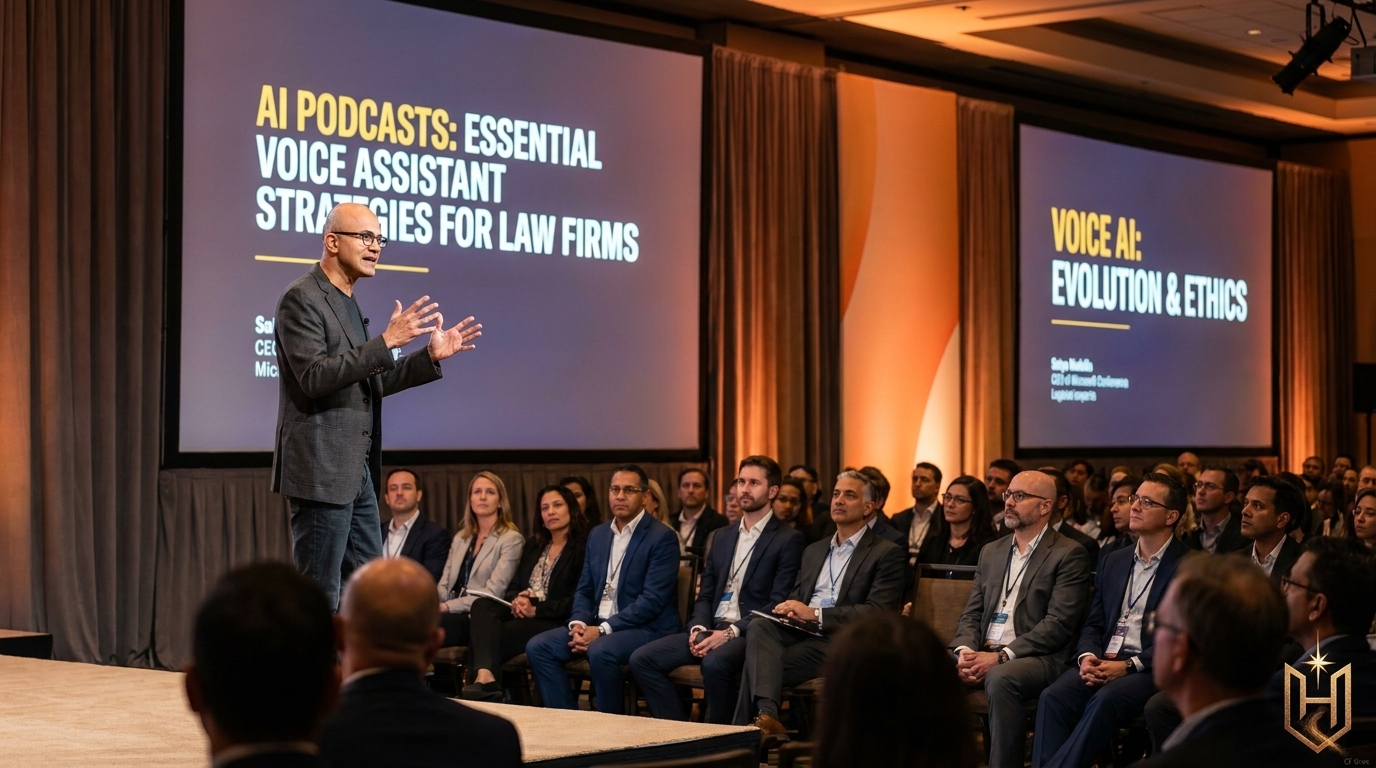
AI Podcasts: Essential Voice Assistant Strategies for Law Firms
The legal landscape, often perceived as a bastion of tradition, is increasingly feeling the ripples of rapid technological advancement. On May 18, 2026, CXO Digitalpulse reported a groundbreaking development: Amazon’s Alexa now boasts a feature capable of generating full-length podcast episodes on demand. This isn't merely a novelty; it represents a significant leap in conversational artificial intelligence, transforming how information is consumed and created.
For law firms, this innovation is more than just a trending headline; it’s a clarion call to re-evaluate client interaction, content generation, and operational efficiency in an increasingly voice-first world. The ability for an AI to seamlessly generate complex audio content underscores a broader shift towards hyper-personalized, on-demand services, a paradigm that legal professionals can no longer afford to ignore.
This development, spearheaded by tech giants like Amazon, builds upon years of research and investment in natural language processing (NLP) and speech synthesis. Figures like Amazon CEO Andy Jassy have consistently emphasized the company's commitment to pushing the boundaries of AI, and this Alexa AI feature is a testament to that vision.
While the immediate application might seem consumer-centric, the underlying technology has profound implications for professional services. Imagine a prospective client asking their smart assistant for a summary of intellectual property law regarding software patents, and receiving a personalized, AI-generated 'podcast' episode tailored to their query.
This level of immediate, accessible information delivery sets a new benchmark for client expectations, challenging law firms to adapt their outreach and service models.
Historically, law firms have relied on traditional marketing and client intake processes. However, as the digital native generation becomes the dominant client base, their expectations for instantaneous, intuitive, and AI-powered interactions are reshaping the industry.
The rise of AI podcasts signals that voice AI is maturing beyond simple commands to sophisticated content creation. Firms that embrace this evolution, leveraging advanced voice assistant capabilities, will be better positioned to attract and retain clients, streamline operations, and ultimately thrive in a competitive market.
Ignoring this trend risks falling behind, as clients increasingly seek out firms that mirror their tech-savvy lifestyles.
The Evolution of Voice AI: From Commands to Complex Content Generation
The journey of voice AI from rudimentary speech recognition to complex content generation has been nothing short of remarkable. Early iterations of virtual assistants like Apple's Siri and Google Assistant primarily focused on executing simple commands, setting alarms, or providing quick search results. However, the recent announcement regarding Alexa AI's capability to generate podcast episodes on virtually any topic marks a pivotal moment.
This isn't just about retrieving information; it's about synthesizing, structuring, and narrating it in a coherent, engaging audio format. This advanced capability is a direct result of breakthroughs in large language models (LLMs) and generative AI, fields championed by innovators like OpenAI's Sam Altman and Anthropic's Dario Amodei, whose companies have collectively raised billions to push these frontiers, including OpenAI's reported $6.6 billion raise in 2023. These investments are yielding tangible results that are now cascading into mainstream applications.
The implications for legal content creation are profound. Law firms traditionally invest significant resources in drafting articles, whitepapers, and blog posts to establish thought leadership and attract clients. The emergence of AI podcasts suggests a future where voice AI can assist in transforming complex legal concepts into accessible, on-demand audio content.
Imagine a firm specializing in corporate law needing to explain the nuances of a recent SEC filing to potential clients. Learn more about AI Ethics: Essential Safeguards for Law Firm Accountability. An advanced voice assistant could generate a concise, informative podcast episode tailored to that specific query, delivered instantly.
This capability moves beyond simple text-to-speech, incorporating natural intonation, pacing, and even emotional intelligence into the delivery, making the information more digestible and engaging for the listener. This shift aligns with broader trends identified by Gartner, which predicts that by 2027, generative AI will be a top 5 investment priority for over 70% of organizations.
The competitive landscape for AI-powered voice solutions is intensifying, with tech giants vying for dominance. Amazon's move with Alexa is a clear signal of their intent to expand beyond smart home devices into content creation and enterprise solutions. Meanwhile, companies like Google and Microsoft are also heavily investing in their own generative AI capabilities, with Google's DeepMind and Microsoft's extensive partnership with OpenAI leading the charge.
This fierce competition ultimately benefits end-users, including law firms, by accelerating the development of more sophisticated, reliable, and user-friendly AI tools. The legal industry, historically cautious about adopting new technologies, is now presented with an opportunity to leverage these powerful tools to enhance client service, streamline internal processes, and carve out a competitive edge in an increasingly digital legal market.
From Reactive Support to Proactive Client Engagement
The transformation brought about by advanced voice AI extends beyond mere content generation; it fundamentally redefines client engagement. Historically, interactions with law firms have often been reactive—clients reaching out with a problem, and firms responding. However, with the maturation of voice assistant technology, particularly as demonstrated by Alexa's new feature, firms can pivot towards a more proactive and personalized engagement model.
This involves leveraging AI to anticipate client needs, provide relevant information before it's explicitly requested, and maintain continuous, intelligent communication. For instance, a client who has previously inquired about estate planning could receive a short, AI-generated audio update on recent tax law changes affecting wills, delivered via their preferred smart device.
This proactive approach not only enhances client satisfaction but also strengthens the firm-client relationship, fostering loyalty and trust. The ABA's 2023 Legal Technology Survey Report noted a significant increase in client expectations for personalized digital communication, a trend perfectly addressed by sophisticated voice AI solutions.
This shift is also evident in how law firms can manage their digital presence. Learn more about AI Voice Calls: The Essential Guide for Modern Law Firms. Beyond traditional websites, firms can now explore creating an 'audio persona' through AI-generated content. This could include a library of short AI podcasts on common legal questions, accessible via smart speakers or mobile apps, allowing prospective clients to 'listen' to the firm's expertise at their convenience.
This strategy significantly lowers the barrier to entry for clients seeking initial information, making legal services feel more approachable and less intimidating. Firms like Dentons have already been exploring innovative digital engagement strategies, recognizing the need to meet clients where they are, which increasingly means on voice-activated platforms.
The ability to generate such content quickly and cost-effectively, without requiring extensive studio time or human narration, democratizes content creation and allows firms of all sizes to participate.
AI Voice Assistants: The Next Frontier for Law Firm Operations
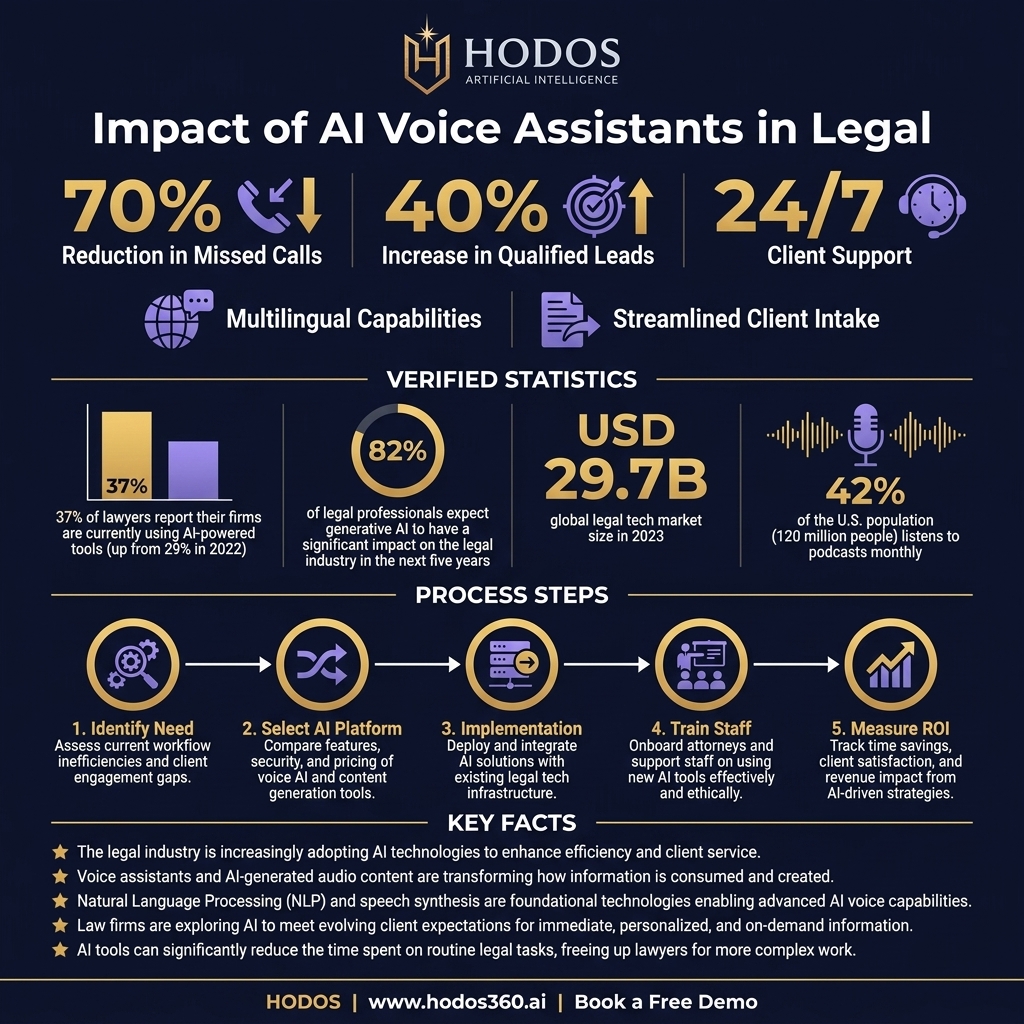
The operational benefits of integrating advanced AI voice assistants into law firm workflows are becoming undeniable. Beyond client engagement, these tools can significantly streamline internal processes, from initial client intake to case management and billing. Imagine an AI voice assistant handling the initial screening of potential clients 24/7, asking qualifying questions, documenting responses, and even booking appointments directly into the firm’s calendar system.
This frees up administrative staff to focus on more complex tasks, drastically reducing response times and ensuring no potential lead is missed. A 2024 report by McKinsey & Company on AI in professional services highlighted that firms leveraging AI for administrative tasks reported up to a 30% increase in operational efficiency, a critical metric for profitability in the legal sector.
Lead qualification, in particular, stands to be revolutionized. Instead of relying on human receptionists who may be overwhelmed during peak hours or limited by time zones, an AI voice assistant can engage callers in a sophisticated dialogue, identifying their specific legal needs, assessing their case's viability, and gathering essential preliminary information.
This ensures that attorneys only engage with highly qualified leads, optimizing their valuable time. Learn more about AI Marketing: The Ultimate Platform Disrupting Agencies. Moreover, the ability of these assistants to offer multilingual support breaks down language barriers, expanding a firm's potential client base and demonstrating a commitment to inclusivity.
This capability is not just about efficiency; it’s about enhancing the client experience from the very first point of contact, making the firm more accessible and responsive.
Consider the operational impact of a voice assistant that can integrate seamlessly with a firm's existing practice management software.
For instance, after a call, the AI can automatically create a new client file, populate it with the gathered information, and set reminders for follow-up, eliminating manual data entry errors and saving countless hours. This level of automation is critical in a profession where time is billable, and efficiency directly impacts the bottom line.
Legal tech platforms, like HODOS 360’s AI Law Firm Management System, are specifically designed to facilitate such integrations, offering comprehensive solutions for case management, billing, and document automation, all enhanced by AI-powered legal workflows. The synergy between AI voice assistants and these management systems creates a truly intelligent and efficient operational ecosystem for law firms.
- ✓24/7 Client Answering: Ensure no call is missed, providing continuous availability and immediate response to client inquiries, vastly improving client satisfaction.
- ✓Automated Lead Qualification: Efficiently screen incoming calls to identify high-potential leads, gathering crucial information before a human attorney intervenes, saving valuable time.
- ✓Appointment Booking & Management: Seamlessly schedule client consultations and manage calendars, integrating directly with existing firm management systems.
- ✓Multilingual Support: Break down language barriers by offering assistance in multiple languages, expanding client reach and demonstrating inclusivity.
- ✓Call Routing & Information Dissemination: Intelligently direct calls to the appropriate department or individual, and provide instant answers to frequently asked questions, reducing administrative load.
- ✓Data Collection & CRM Integration: Automatically capture client information and integrate it into CRM and case management systems, ensuring accurate records and streamlined workflows.
Navigating Ethical and Regulatory Landscapes with AI Voice Technology
While the promise of AI voice assistants is immense, law firms must navigate a complex ethical and regulatory landscape to ensure compliance and maintain client trust. Paramount among these concerns is data privacy and the protection of confidential client information. The use of AI in handling client communications necessitates strict adherence to regulations like the General Data Protection Regulation (GDPR) in Europe and the California Consumer Privacy Act (CCPA) in the United States.
Firms must ensure that any voice assistant platform they utilize employs robust encryption, secure data storage, and clear protocols for data retention and deletion. The potential for AI to inadvertently share sensitive information or be vulnerable to cyber threats poses a significant risk that must be proactively mitigated through rigorous due diligence and continuous security audits, as highlighted by numerous legal tech advisories from organizations like the American Bar Association.
Another critical consideration is the attorney-client privilege and the duty of confidentiality. ABA Model Rule 1.6 mandates that lawyers keep information relating to the representation of a client confidential. When an AI voice assistant interacts with clients, firms must clearly disclose the AI's role and ensure that the AI is programmed to handle privileged information with the utmost care, preventing unauthorized access or disclosure.
This requires careful configuration of the AI's knowledge base and strict oversight of its operational parameters. Learn more about Essential AI for Vibe Coding: Elevating Legal Web Development. Furthermore, the accuracy and potential for bias in AI-generated responses are significant ethical concerns. If an AI podcast or a voice assistant provides inaccurate or misleading legal information, it could lead to severe professional liability.
Firms must implement quality control measures, regular audits of AI interactions, and human oversight to ensure the accuracy and impartiality of the information provided by their AI tools.
The rapidly evolving regulatory environment surrounding AI, such as the EU AI Act, which came into force in 2024, adds another layer of complexity.
This landmark legislation introduces a risk-based approach to AI regulation, categorizing AI systems based on their potential to cause harm. Law firms deploying AI voice assistants must understand where their systems fall within these classifications and ensure full compliance with the relevant legal obligations, including transparency, human oversight, and data governance.
The failure to comply could result in substantial fines and reputational damage. Therefore, selecting an AI vendor with a strong commitment to ethical AI development and regulatory compliance, such as HODOS 360, which prioritizes secure and compliant AI solutions, is not just a best practice but a legal imperative for any forward-thinking law firm.
Crafting Your Firm's Voice AI Strategy: Opportunities for Growth
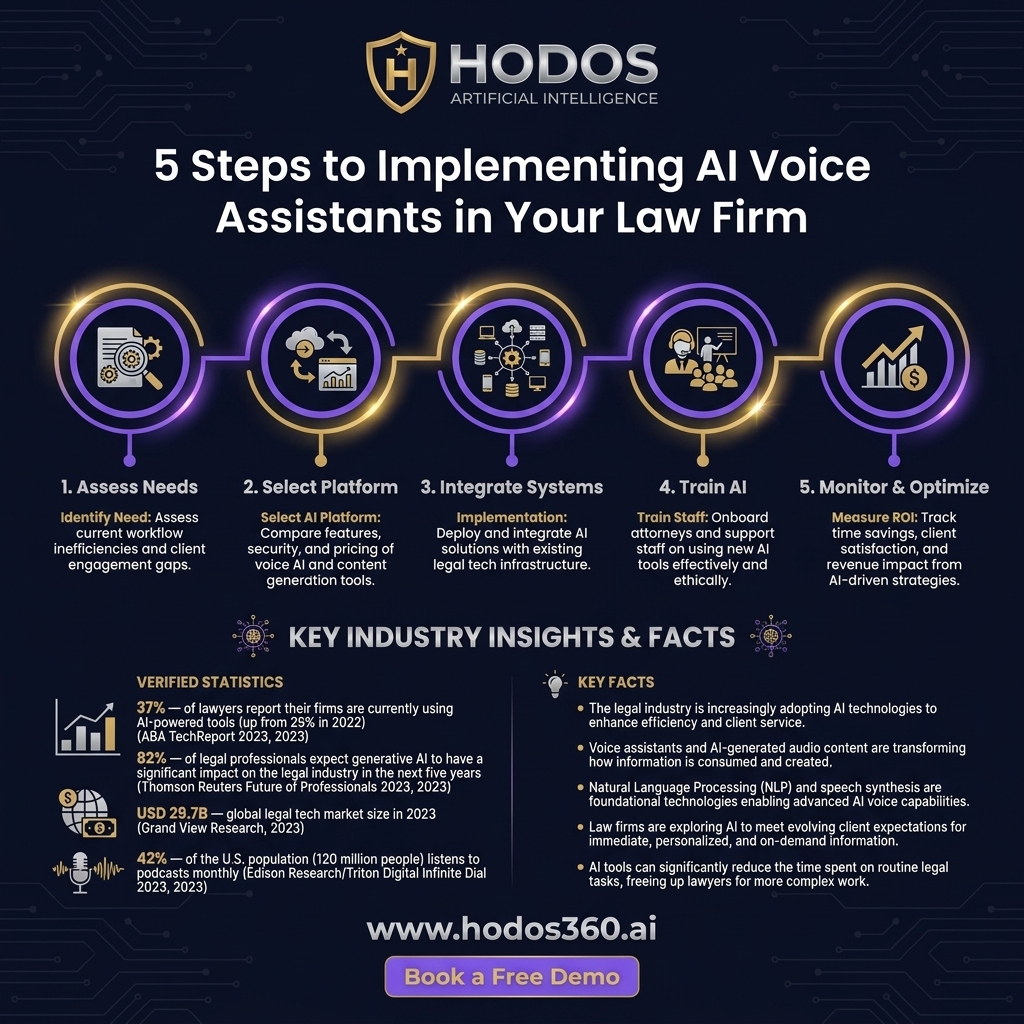
Developing a clear and actionable voice assistant strategy is no longer optional for law firms aiming for sustained growth and competitive advantage. The first step involves a comprehensive assessment of current client interaction points and operational bottlenecks. Where are clients experiencing delays? Where is staff time being inefficiently spent on repetitive tasks?
Identifying these pain points will help pinpoint the most impactful applications for voice AI, whether it's automating client intake, managing routine inquiries, or generating educational AI podcasts. For example, firms struggling with high call volumes during business hours could significantly benefit from a 24/7 AI voice assistant for initial lead qualification, a service where a firm like Allen & Overy, through its partnership with Harvey AI, has demonstrated the potential for AI to augment, rather than replace, human expertise.
The next crucial step is selecting the right technology partner. Given the unique demands and stringent ethical requirements of the legal industry, a generic consumer-grade voice assistant is insufficient. Firms need a solution designed specifically for legal professionals, offering robust security, seamless integration with existing legal tech stacks, and customizable legal workflows.
Platforms like HODOS 360, with its suite of AI-powered services including AI Voice Assistants and an AI Law Firm Management System, provide tailored solutions that address these specific needs. When evaluating vendors, look for demonstrated expertise in legal AI, a strong track record of data security, and comprehensive support for implementation and ongoing optimization.
Learn more about AI Document Management: Essential for Modern Law Firms. This strategic investment can yield significant returns, enhancing client satisfaction and operational efficiency.
Finally, successful implementation requires a phased approach and continuous optimization. Begin with a pilot program, perhaps by deploying a voice assistant to handle frequently asked questions or to manage after-hours calls.
Gather feedback, analyze performance metrics—such as call deflection rates, lead conversion ratios, and client satisfaction scores—and iterate. As the AI learns and the firm gains experience, gradually expand its responsibilities. This iterative process, championed by agile development methodologies, ensures that the AI solution evolves with the firm's needs and remains effective.
Firms that embrace this continuous improvement mindset will be best positioned to leverage AI podcasts and other voice AI capabilities to generate new growth opportunities, solidify client relationships, and redefine their market presence in the years to come. This forward-thinking approach is what separates industry leaders from those who merely react to change.

Key Takeaways and Next Steps for Legal Leaders
The introduction of Amazon's Alexa feature to generate podcast episodes is more than just a technological curiosity; it's a powerful indicator of the growing sophistication and mainstream adoption of generative voice AI. For law firms, this trend necessitates a proactive re-evaluation of how they engage with clients, manage operations, and position themselves in a rapidly evolving digital landscape.
The firms that embrace AI voice assistants will not only enhance their efficiency and client service but also forge a stronger, more resilient future in a competitive market. As Jack Newton, CEO of Clio, often emphasizes, firms must be client-centered, and increasingly, that means being tech-enabled and responsive to modern communication preferences.
The ability to offer 24/7 support, intelligent lead qualification, and even personalized AI podcasts on demand can be a significant differentiator.
To remain competitive and relevant, legal leaders must begin exploring and investing in tailored AI solutions. Learn more about AI Litigation Workflows: Essential for Modern Law Firms.
This isn't about replacing human expertise but augmenting it, empowering legal professionals to focus on high-value, complex legal work while AI handles routine and administrative tasks. The path forward involves strategic partnerships with legal tech innovators, a deep understanding of ethical obligations, and a commitment to continuous technological integration.
Platforms like HODOS 360 offer comprehensive AI solutions, including advanced AI Voice Assistants, designed to help law firms navigate this transformation successfully. The future of legal practice is conversational, intelligent, and deeply integrated with AI, and the time to adapt is now.
Frequently Asked Questions
How can AI voice assistants specifically benefit law firm client intake?+
AI voice assistants can automate the initial client intake process by answering common questions, qualifying leads based on predefined criteria, and collecting essential preliminary information. This ensures a consistent, 24/7 first point of contact, reducing staff workload and ensuring potential clients are efficiently routed to the appropriate legal professional, significantly improving response times and lead conversion rates.
What are the primary ethical concerns when using AI voice assistants in a law firm?+
Key ethical concerns include maintaining client confidentiality and attorney-client privilege, ensuring data privacy in accordance with regulations like GDPR and CCPA, and mitigating the risks of AI bias or inaccurate information. Firms must implement robust security measures, clearly disclose the AI's role, and maintain human oversight to ensure ethical compliance and professional responsibility.
Can AI voice assistants help law firms generate new content, like AI podcasts?+
Yes, advanced AI voice assistants, leveraging generative AI capabilities similar to Amazon's Alexa, can assist law firms in generating new content. This includes creating short, informative AI podcasts on specific legal topics, developing scripts for educational videos, or even drafting responses to common legal queries, all in an engaging, natural-sounding voice, thereby enhancing the firm's thought leadership and marketing efforts.
How does AI voice technology integrate with existing law firm management systems?+
Modern AI voice technology can integrate seamlessly with existing law firm management systems through APIs. This allows the AI to automatically update client records, book appointments in calendars, and trigger workflows within case management and billing systems. This integration creates a cohesive, automated ecosystem that reduces manual data entry, minimizes errors, and enhances overall operational efficiency.
What kind of ROI can law firms expect from implementing AI voice assistants?+
Law firms can expect significant ROI from implementing AI voice assistants through various avenues. This includes reduced operational costs by automating administrative tasks, increased lead conversion rates due to 24/7 qualification and improved client satisfaction, and expanded market reach through multilingual support. Enhanced efficiency and client engagement directly translate into higher profitability and competitive advantage.