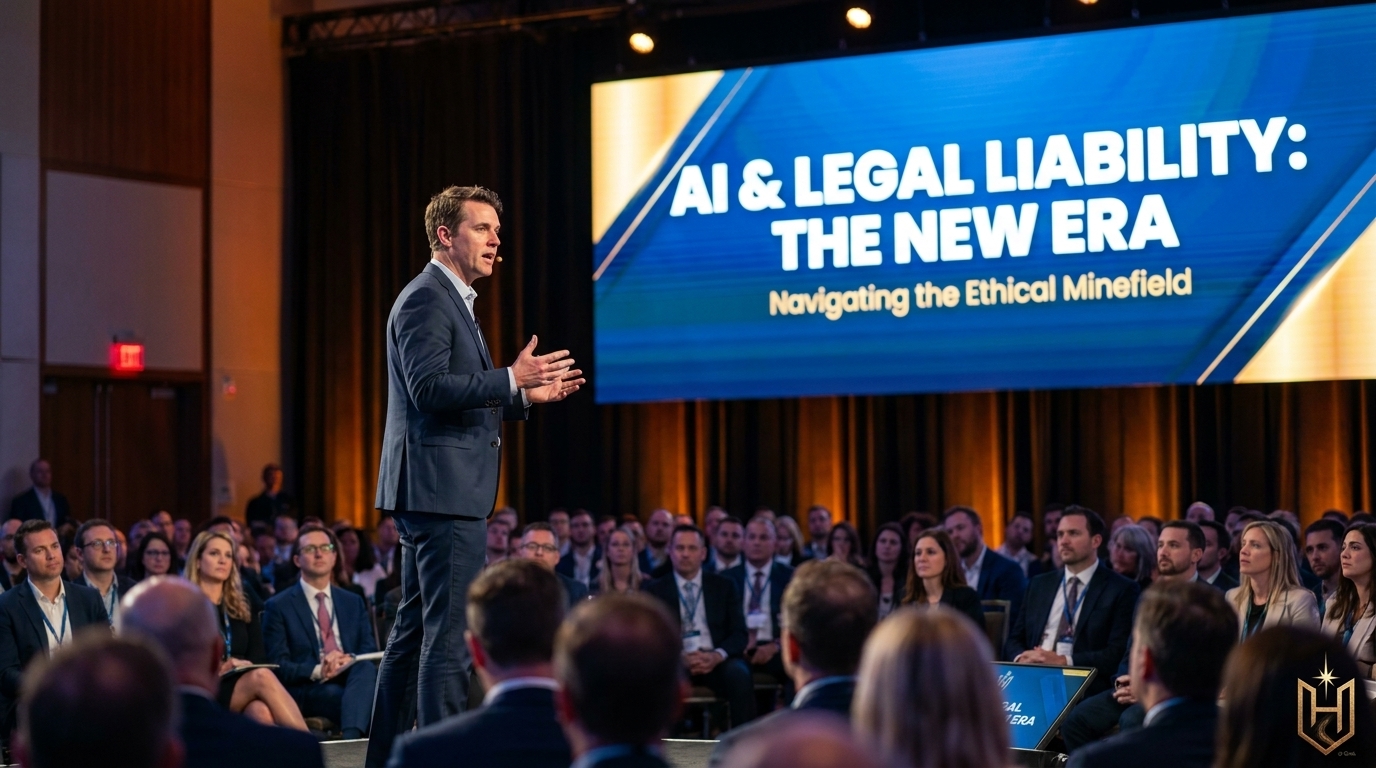
AI Mistakes: Ultimate Guide to Lawyer Liability & Safeguards
The legal landscape is rapidly evolving, driven by the transformative power of artificial intelligence. Yet, as AI tools become increasingly integral to legal practice, so too does the scrutiny surrounding their responsible use. A recent ruling, widely reported by jdjournal.com, has cast a stark light on this emerging challenge: a federal judge has declared senior lawyers liable for AI mistakes made by junior attorneys.
This decision is not merely a cautionary tale; it's a foundational moment that redefines the parameters of professional responsibility in the age of AI, particularly for those in supervisory roles within law firms.
The implications of this ruling are profound, sending a clear message to managing partners and senior attorneys across the globe.
The promise of AI to streamline case management, automate document generation, and enhance legal research is undeniable, but it comes with an inherent ethical imperative. The judge's stance highlights a growing tension between technological adoption and the timeless principles of legal diligence and oversight. Law firms can no longer simply deploy AI tools; they must embed comprehensive strategies for their ethical integration, ensuring that the efficiency gains do not compromise the accuracy, reliability, or integrity of legal work.
This development compels every firm to re-evaluate their AI policies, training programs, and supervisory frameworks, making the responsible use of artificial intelligence a non-negotiable component of modern legal practice. The era of passive AI adoption is over; active, informed governance is now paramount.
The Landmark Ruling: A New Era of Attorney Accountability for AI Mistakes
The news reverberating from jdjournal.com on May 6, 2026, details a critical court ruling that has firmly placed the onus of AI-generated errors on the shoulders of senior attorneys. While the specific case details remain under wraps, the core message is unambiguous: a federal judge has sanctioned a senior lawyer for AI mistakes originating from a subordinate's use of artificial intelligence in preparing a court brief.
This isn't just about a single incident; it's a judicial pronouncement reflecting a broader concern about the uncritical adoption of nascent technologies within the legal profession. This decision echoes sentiments expressed by figures like Judge Brantley Starr, who famously sanctioned lawyers for submitting AI-generated fake cases, and Judge Kevin Castel, who issued a standing order requiring disclosure of AI use in court filings.
The judiciary is clearly signaling that the excitement around AI must be tempered with rigorous professional responsibility.
This ruling marks a significant escalation in the legal community's reckoning with AI. For years, legal tech leaders like Andrew Arruda, co-founder of legal AI pioneer ROSS Intelligence (acquired by Clio), have advocated for ethical AI development, recognizing the potential for misuse.
However, the focus has largely been on the technology itself. Learn more about AI Marketing Intelligence: The Ultimate Guide for Law Firms. This latest development shifts the spotlight to the human element – the lawyer. It underscores that while AI can be a powerful assistant, it does not absolve the legal professional of their fundamental duties.
The judge's decision reinforces the principle that ultimate responsibility for the accuracy and integrity of legal submissions lies squarely with the attorney of record, particularly the supervisory lawyer who is expected to oversee the work of their team. This creates a compelling narrative of tension between the efficiency promised by AI and the unwavering demand for professional competence and diligence in the courts.
Firms that fail to acknowledge this shift risk severe penalties, from monetary sanctions to reputational damage.
Navigating the Ethical Minefield: ABA Guidance and Professional Duty
The ruling on AI mistakes directly implicates core ethical obligations outlined by the American Bar Association (ABA). Specifically, ABA Model Rule 1.1, Competence, mandates that lawyers provide competent representation, requiring the legal knowledge, skill, thoroughness, and preparation reasonably necessary for the representation. When using AI, this rule implies a duty to understand the technology's capabilities and limitations.
Furthermore, ABA Model Rule 5.1, Responsibilities of a Partner or Supervisory Lawyer, states that partners and lawyers with comparable managerial authority must make reasonable efforts to ensure the firm has measures in place to give reasonable assurance that all lawyers conform to the Rules of Professional Conduct.
This includes supervising junior attorneys who utilize AI tools. The ruling essentially operationalizes these rules in the context of advanced legal technology, making it clear that a failure to adequately supervise AI usage is a breach of professional duty.
Beyond competence and supervision, lawyers must also contend with the potential for AI hallucinations – instances where AI generates plausible but factually incorrect information.
Learn more about AI Deposition Prep: The Ultimate Guide to Winning Strategies. This was a central issue in the infamous *Mata v. Avianca* case, where lawyers cited non-existent cases generated by ChatGPT, leading to significant sanctions. The ethical implications extend to client confidentiality (Rule 1.6), where data fed into AI models must be protected, and the duty of candor toward the tribunal (Rule 3.3), which prohibits making false statements of law or fact.
As former ABA President Mary Smith has emphasized, "Lawyers have a professional obligation to understand the benefits and risks associated with relevant technology." The current ruling serves as a stark reminder that this understanding must translate into actionable firm-wide policies and rigorous oversight, particularly regarding the output of artificial intelligence systems used in preparing court briefs and other critical legal documents.
The challenge for today's attorneys is to harness AI's power without falling victim to its inherent flaws, always prioritizing ethical compliance.
The Imperative of Supervision: Protecting Junior Lawyers and Firms
The jdjournal.com report specifically highlights the liability of the senior lawyer for mistakes made by a junior attorney using AI. This underscores the critical role of supervisory lawyers in vetting all work product, regardless of how it was generated. In the past, supervision might have focused on ensuring a junior associate's legal research was thorough or their drafting skills were adequate.
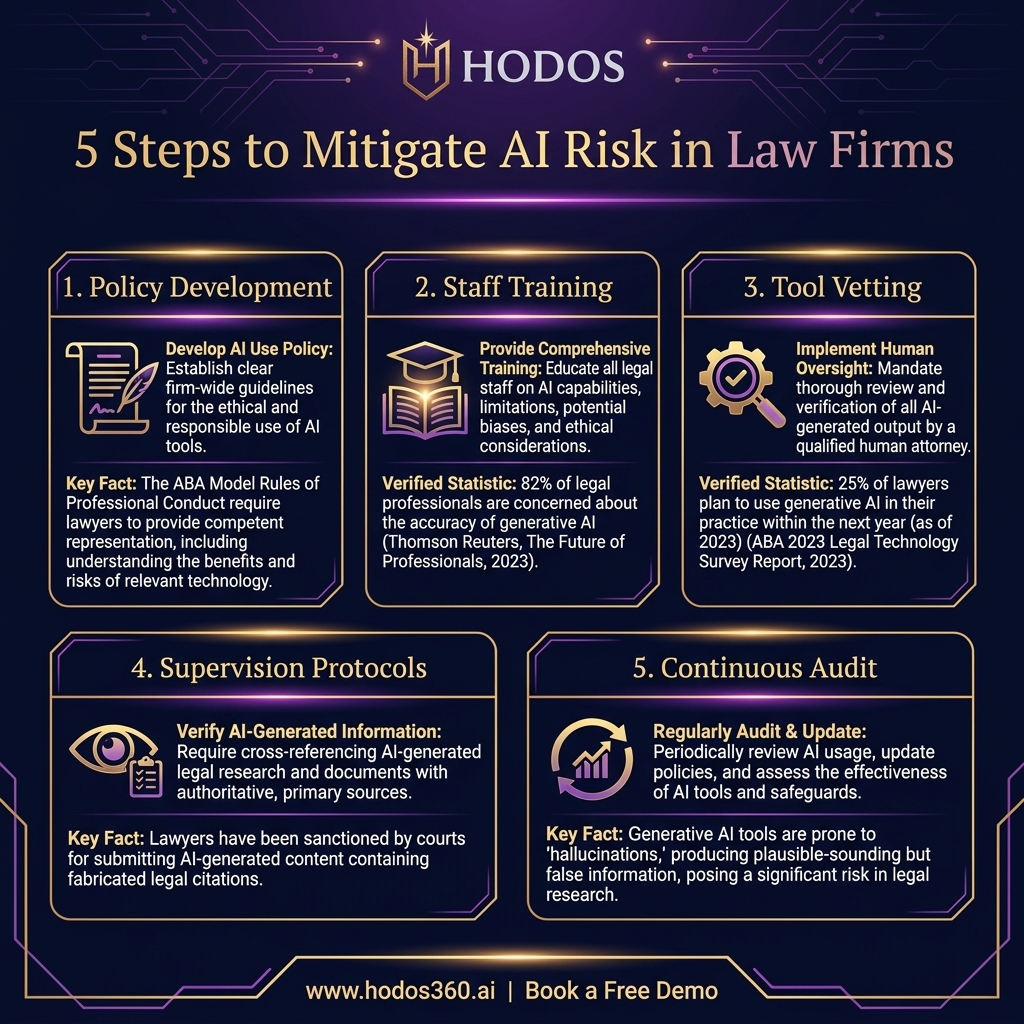
Now, it must extend to verifying the factual and legal accuracy of AI-generated content. Firms like Allen & Overy, which famously partnered with Harvey AI, have invested heavily in internal training and validation protocols, recognizing that even the most advanced AI requires human oversight. The potential for a junior attorney, perhaps less experienced in identifying AI hallucinations or biases, to introduce errors into a court brief necessitates a heightened level of scrutiny from their seniors.
This is not about micromanagement but about ensuring that the firm's collective reputation and the client's interests are protected from the unique risks posed by generative AI. Learn more about Essential AI Web Development for Law Firms: Harvard's Impact. Negligence in this area can lead to severe professional consequences, as the federal judge's ruling clearly demonstrates.
Protecting junior lawyers also means equipping them with the knowledge and tools to use AI responsibly. This includes comprehensive training on specific AI platforms, understanding their limitations, and developing a critical eye for AI output. According to a 2025 Thomson Reuters report, only about 30% of law firms have formal AI training programs in place, a statistic that the recent ruling is likely to dramatically alter.
Firms must establish clear guidelines on which AI tools are permissible, for what purposes, and with what level of human review. The goal is to empower junior attorneys to leverage artificial intelligence effectively while instilling a deep understanding of their ethical obligations and the supervisory framework in place to catch any potential AI mistakes.
This proactive approach not only mitigates risk for the firm but also fosters a culture of responsible innovation, preparing the next generation of legal professionals for an AI-integrated future.
Proactive Risk Management: Safeguarding Your Firm Against AI Liability
In the wake of heightened scrutiny over AI mistakes, proactive risk management is no longer optional for law firms; it's an existential necessity. Firms must develop comprehensive AI governance frameworks that address everything from tool selection to output validation. This begins with rigorous due diligence when choosing AI solutions.
Not all AI platforms are created equal, and understanding their underlying models, data sources, and accuracy rates is paramount. For instance, a firm might prefer an AI-powered legal research tool with a strong track record of verifiable citations over a general-purpose large language model for drafting court documents.
According to a recent Gartner survey, only 25% of legal departments currently have formal processes for vetting AI vendors, a gap that urgently needs addressing. Firms must also consider the security implications, ensuring that client data handled by AI tools is protected in compliance with Federal Rules of Civil Procedure related to e-discovery and data privacy regulations like GDPR or CCPA.
Developing clear, firm-wide AI policies is another cornerstone of risk management. Learn more about Legal AI Deployment: The Ultimate Firmwide Strategy for Torys. These policies should delineate acceptable uses of AI, prohibit certain risky applications (e.g., using public LLMs for confidential client work without strict safeguards), and establish mandatory review protocols for all AI-generated content.
For example, a policy might require a senior attorney to personally verify every citation generated by an AI tool before it is included in a court brief. This level of diligence is crucial for avoiding the kind of sanctions highlighted by the federal judge. Furthermore, firms should invest in AI-powered legal workflow solutions that build in checks and balances.
Platforms like HODOS 360's AI Law Firm Management System offer integrated document automation and AI-powered legal workflows that can be configured with built-in validation steps, ensuring that human oversight is an integral part of the process, not an afterthought. This structured approach helps prevent AI mistakes by embedding quality control directly into the firm's operational fabric, significantly reducing exposure to liability.
Implementing Robust AI Policies and Training Programs
To effectively safeguard against AI liability, law firms must move beyond informal guidelines and implement robust, written AI policies complemented by mandatory, ongoing training programs. These policies should clearly define the firm's stance on generative AI, acceptable use cases, data security protocols, and the required level of human review for AI-assisted work product.
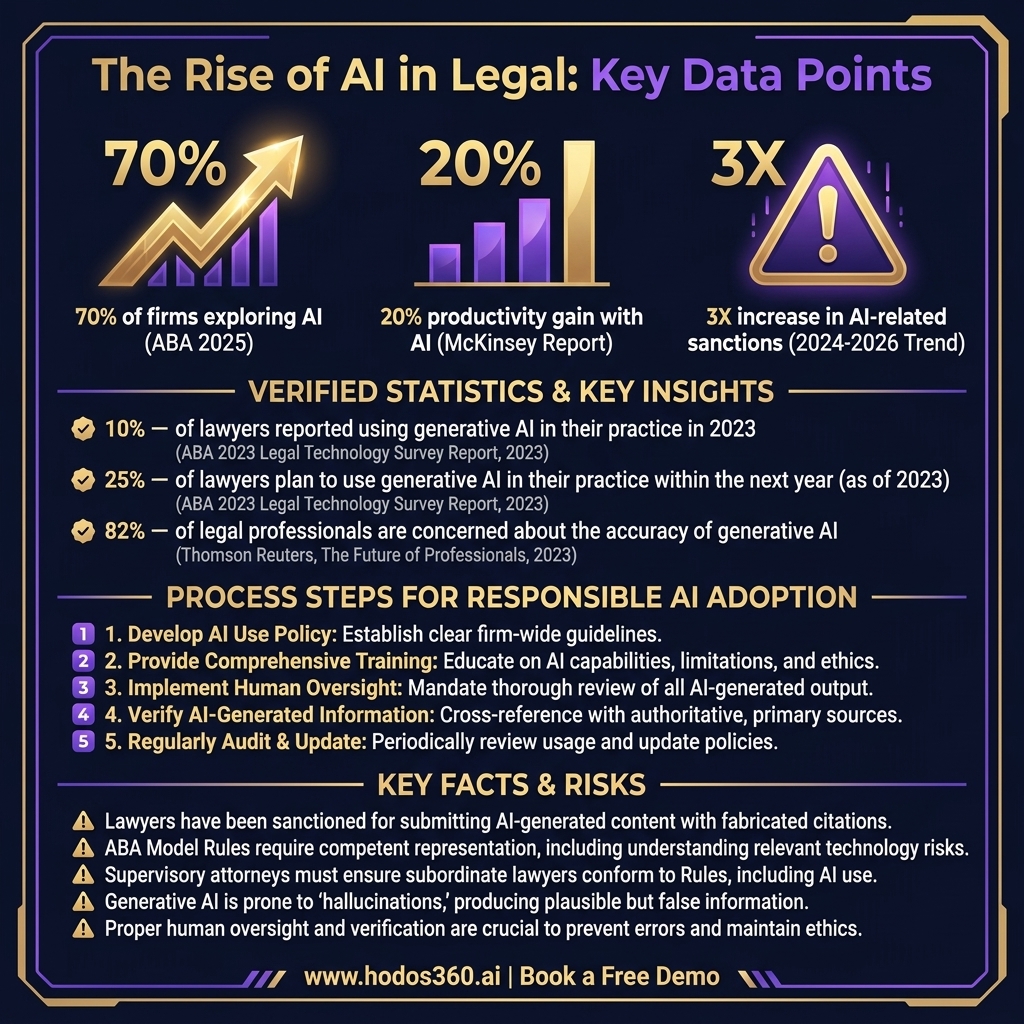
Consider the example of Cooley LLP, which developed comprehensive internal guidelines for its attorneys on using generative AI, emphasizing the need for verification and ethical considerations. Their approach includes specific instructions on protecting client confidentiality and avoiding the disclosure of privileged information when interacting with AI models.
A 2024 ABA TechReport indicated that while interest in AI is high, actual formal policy implementation lags, with only a minority of firms having written guidelines. This gap represents a significant vulnerability that the recent ruling is designed to address.
Training programs are equally vital.
It's not enough to tell lawyers to be careful; they need practical instruction on how to use AI tools effectively and ethically. Learn more about AI Websites: Essential Digital Growth for Law Firms. This includes hands-on sessions demonstrating how to prompt AI for reliable results, how to identify potential AI hallucinations, and how to verify AI-generated information using traditional legal research methods.
Training should also cover the ethical implications of AI use, drawing directly from ABA Model Rules and recent case law. For instance, scenarios based on the *Mata v. Avianca* case can be powerful teaching tools. By investing in continuous education, firms can empower their attorneys to leverage artificial intelligence as a powerful asset while simultaneously instilling a deep understanding of the professional responsibility required.
This dual approach of stringent policy and comprehensive training is the most effective defense against the risks of AI mistakes and the increasing scrutiny from the courts.
- ✓Establish Clear AI Usage Policies: Define which AI tools are approved, for what tasks, and with what confidentiality safeguards. Prohibit the use of unvetted public LLMs for client-sensitive data.
- ✓Mandatory Training and Education: Implement continuous training programs on ethical AI use, identifying AI hallucinations, and best practices for verification of AI-generated content.
- ✓Implement Multi-Layered Review Protocols: Require senior attorneys to review and verify all AI-assisted work product, particularly court filings, ensuring factual and legal accuracy.
- ✓Vetting AI Vendors and Tools: Conduct thorough due diligence on all AI software, evaluating their security, data privacy policies, and the reliability of their outputs.
- ✓Integrate AI with Human Oversight: Design workflows that embed human review and validation checkpoints at critical stages, rather than relying solely on automated processes. HODOS 360’s AI Law Firm Management System facilitates this integration.
- ✓Maintain Documentation of AI Use: Keep records of how AI tools were used in specific cases, including prompts and outputs, to demonstrate diligence if challenged.
- ✓Stay Updated on Legal Tech Ethics: Regularly review new judicial rulings, bar association guidance, and ethical opinions related to artificial intelligence in legal practice.
The Future of Legal Practice: Embracing AI Responsibly for Competitive Advantage
Despite the recent ruling emphasizing the risks of AI mistakes, the trajectory of legal technology remains firmly pointed towards greater AI integration. The key is not to shun artificial intelligence but to embrace it with prudence and strategic foresight. Firms that successfully navigate this new landscape will gain a significant competitive advantage.
AI tools, when properly managed, can drastically reduce the time spent on mundane tasks, allowing lawyers to focus on higher-value strategic work. For example, AI-powered document review can process thousands of pages in minutes, a task that would take human attorneys weeks, freeing up valuable resources.
Companies like Casetext, with its CoCounsel AI, and LexisNexis, with its Lexis+ AI, are constantly pushing the boundaries of what’s possible, offering tools that promise enhanced efficiency and accuracy in legal research and drafting. The market is clear: the future of legal practice involves AI, and firms that understand how to leverage it responsibly will be those that thrive.
Moreover, clients are increasingly expecting their law firms to be technologically sophisticated. A 2025 report by Bloomberg Law indicated that 60% of corporate legal departments consider a law firm's tech capabilities when making hiring decisions. Learn more about AI Web Development: Essential Collaboration for Law Firms.
This isn't just about having a modern website; it's about demonstrating an ability to deliver legal services more efficiently and cost-effectively, often through the judicious use of legal tech. The human conflict here is between firms clinging to traditional methods and those willing to adapt.
Firms that integrate AI responsibly can offer superior service at competitive prices, attracting and retaining top-tier clients. This requires a cultural shift, championed by leaders like Clio CEO Jack Newton, who has consistently advocated for technology adoption to improve access to justice and modernize law firm operations.
The message is clear: the judge's ruling is a call to action for responsible AI integration, not a deterrent. It challenges firms to elevate their standards, ensuring that AI enhances, rather than compromises, the quality of legal services provided.
Leveraging AI for Enhanced Competence and Efficiency
The path forward for law firms involves strategically leveraging AI to enhance competence and efficiency, turning potential liabilities into powerful assets. Rather than viewing AI as a replacement for human intellect, firms should see it as an augmentation tool. For instance, AI can be invaluable for identifying patterns in vast datasets, predicting litigation outcomes, or quickly summarizing complex legal documents.
This allows attorneys to approach cases with a deeper, data-driven understanding, thereby improving the quality of their advice and advocacy. Consider the advancements in AI for e-discovery, where algorithms can swiftly identify relevant documents and privileged information, significantly reducing the time and cost associated with manual review.
This not only makes legal services more accessible but also enables lawyers to focus their expertise on nuanced legal strategy and client counseling, areas where human judgment remains irreplaceable.
To truly harness AI's potential, law firms must prioritize continuous learning and adaptation. This includes staying abreast of the latest developments in artificial intelligence, understanding new legal tech products, and refining internal processes to incorporate AI seamlessly.
The goal is to create a symbiotic relationship between human intelligence and machine intelligence, where AI handles the heavy lifting of data processing and information retrieval, while lawyers provide the critical analysis, ethical judgment, and strategic insight. By doing so, firms can enhance their overall competence, deliver more efficient services, and ultimately gain a significant edge in a competitive market.
The judge's ruling, while a stark warning against AI mistakes, ultimately serves as a catalyst for firms to implement best practices that ensure AI becomes a force for good in legal practice, driving both innovation and unwavering professional excellence.

Key Takeaways and Next Steps for Law Firms
The recent federal judge's ruling on senior lawyer liability for AI mistakes marks a pivotal moment for the legal profession. It's a clear signal that the judiciary expects law firms to take AI integration seriously, recognizing that the promise of efficiency must be balanced with robust ethical oversight and diligent supervision.
For law firm owners and attorneys, the immediate takeaway is the imperative to act now: review existing AI policies, invest in comprehensive training, and establish clear supervisory protocols. Ignoring this development is not an option; the risks of sanctions, reputational damage, and client dissatisfaction are too high.
This is an opportunity for firms to solidify their commitment to professional excellence in a technologically advanced era, ensuring that artificial intelligence serves as a powerful asset rather than a source of liability.
Looking ahead, successful law firms will be those that integrate AI not as a shortcut, but as a strategic enhancement to their practice.
This means embracing platforms that are designed with legal ethics and workflow integrity in mind. For instance, HODOS 360's AI-powered Law Firm Management System provides tools for document automation, case management, and AI-driven legal workflows that can be customized to include essential human review steps, helping firms mitigate the risks highlighted by the court.
By adopting such integrated solutions and fostering a culture of responsible AI use, law firms can navigate the complexities of this new legal frontier with confidence, ensuring they remain competent, ethical, and competitive. The future belongs to those who adapt intelligently.
Frequently Asked Questions
What does the judge's ruling mean for senior lawyers regarding AI use?+
The ruling signifies that senior lawyers are ultimately responsible for AI mistakes made by subordinates. It extends supervisory duties to include oversight of AI tool usage, requiring them to ensure the accuracy and ethical compliance of AI-generated content used in legal work, especially court filings. This increases the onus on firm leadership to implement stringent AI governance.
How can law firms mitigate the risk of AI-related liability?+
Firms can mitigate risk by implementing robust AI policies, providing mandatory training on ethical AI use, establishing multi-layered review protocols for AI-assisted work, and conducting thorough due diligence on AI vendors. Integrating AI-powered legal management systems with built-in human oversight, like HODOS 360, is also crucial for structured risk management.
Which ABA Model Rules are most relevant to AI use in legal practice?+
Key ABA Model Rules include Rule 1.1 (Competence), requiring understanding of relevant technology; Rule 5.1 (Responsibilities of a Partner or Supervisory Lawyer), mandating oversight of subordinates' AI use; Rule 5.3 (Responsibilities Regarding Nonlawyer Assistance), which can apply to AI tools; and Rule 3.3 (Candor Toward the Tribunal), prohibiting false statements, even if AI-generated.
What are 'AI hallucinations' and why are they a concern for lawyers?+
AI hallucinations are instances where AI models generate plausible but factually incorrect or entirely fabricated information. For lawyers, this is a major concern because citing such information in court filings or client advice can lead to sanctions, professional embarrassment, and ethical breaches, as seen in the *Mata v. Avianca* case.
How can AI actually enhance a law firm's competence and efficiency?+
When used responsibly, AI can significantly enhance competence and efficiency by automating routine tasks like document review, legal research, and contract analysis. This frees up lawyers to focus on complex legal strategy, client counseling, and areas requiring human judgment, ultimately leading to more thorough, cost-effective, and higher-quality legal services.