


AI Mobile App Development: An Essential Guide for Law Firms
The legal industry, often perceived as a bastion of tradition, is undergoing a profound transformation, propelled by the relentless march of artificial intelligence. Just this week, the news broke that Bilt.me, an Estonian startup, successfully raised $700,000 in pre-seed funding to help entrepreneurs build and launch mobile apps with AI. This significant capital round, backed by investors like Superhero Capital, isn't just another startup success story; it's a powerful signal to every law firm owner and legal professional: the future of digital engagement is here, and it's AI-powered.
For decades, custom mobile application development was a costly, time-consuming endeavor, largely the domain of well-funded tech giants. The barriers to entry for small to mid-sized law firms were often insurmountable, leaving them reliant on generic communication channels and lagging behind client expectations for instant, secure, and personalized interaction. However, the paradigm shift heralded by companies like Bilt.me, which leverages AI to democratize app creation, is dismantling these barriers. This new wave of AI platforms is not merely about automating tasks; it's about empowering legal practices to craft bespoke digital experiences that truly resonate with their clientele, enhancing both service delivery and firm management.
This trend is not isolated. Across the legal technology sector, we're witnessing a surge in AI-driven innovation, from sophisticated case management systems to intelligent marketing tools. Law firms that embrace this shift are not just adapting; they are gaining a decisive competitive advantage. The ability to deploy custom AI mobile app development solutions allows firms to offer secure client portals, streamline intake processes, facilitate document exchange, and provide real-time case updates—all from the convenience of a client's smartphone. This article delves into how law firms can leverage this burgeoning field to redefine client relationships and optimize their operations. If your firm is ready to harness these transformative capabilities, consider exploring HODOS 360's Web & Mobile Development services, designed specifically for the unique needs of the legal sector. Discover how AI can transform your firm today!
The New Frontier of AI Mobile App Development for Legal Services
The recent pre-seed funding round for Bilt.me underscores a critical evolution in the tech landscape: AI is making sophisticated mobile app development accessible to a broader range of entrepreneurs and businesses, including law firms. While a startup like Bilt.me focuses on the broader market, its underlying technology — AI-driven code generation and low-code/no-code interfaces — has profound implications for the legal sector. Traditionally, law firms faced significant hurdles in commissioning custom mobile applications. The cost of hiring specialized developers could easily reach hundreds of thousands of dollars, a figure often prohibitive for firms not operating at a billion-dollar scale. This financial barrier meant that only the largest corporate law firms could afford to invest in bespoke client portals or internal tools, creating a digital divide within the industry.
However, the advent of advanced AI platforms is rapidly changing this dynamic. These tools can interpret natural language commands, generate functional code snippets, and even design user interfaces, drastically reducing the time and technical expertise required to build a robust application. Imagine a law firm partner, like Elena Rodriguez, managing partner at 'Lex Innova LLP', who once dreamt of a dedicated app for her clients to track their divorce proceedings securely. Before AI, this was a pipe dream due to budget constraints. Now, with AI-powered builders, the vision of a personalized, secure client experience is within reach. This shift is not just about cost reduction; it's about speed to market. Firms can now conceptualize, develop, and launch mobile apps in a fraction of the time, allowing them to respond more agilely to client demands and market trends.
Industry data consistently highlights the growing reliance on mobile devices. Learn more about AI Defence: The Ultimate Guide to Next-Gen Litigation Tools. The ABA TechReport 2023 revealed that a significant percentage of legal professionals use smartphones for work-related tasks, and client expectations mirror this trend. Clients, accustomed to seamless digital experiences in banking and retail, now expect similar convenience from their legal providers. According to a Thomson Reuters report on the Future of Legal, client demand for technology-enabled services is at an all-time high, with a direct correlation between tech adoption and client satisfaction. Firms that fail to meet these expectations risk losing out to more digitally savvy competitors. AI mobile app development offers a direct pathway to meeting these evolving demands, providing secure, instant access to information and communication channels.
Furthermore, the ability to deploy custom mobile applications has significant implications for access to justice. By simplifying interactions and providing clearer, more intuitive interfaces, these apps can make legal processes less daunting for everyday citizens. For instance, a small claims court app, developed with AI assistance, could guide users through form completion, provide updates on hearing dates, and even connect them with pro bono resources. This isn't just about business growth for law firms; it's about fulfilling the legal profession's broader societal mandate. As AI mobile app development continues to mature, its potential to democratize legal services and enhance client engagement will only grow, creating a more inclusive and efficient legal ecosystem for all.
Enhancing Client Experience and Accessibility
The core benefit of AI mobile app development for law firms lies in its capacity to dramatically enhance the client experience. Imagine a client, anxious about their ongoing litigation, receiving real-time updates directly to their smartphone, securely encrypted and personalized. This level of proactive communication not only alleviates client stress but also builds trust and confidence in their legal counsel. Custom apps can offer dedicated client portals where individuals can securely upload sensitive documents, review case timelines, schedule appointments, and communicate directly with their legal team through encrypted messaging. This streamlined interaction significantly reduces the administrative burden on both sides, freeing up attorneys to focus on substantive legal work rather than chasing documents or answering routine queries. This also aligns perfectly with ABA Model Rule 1.4 (Communication), which mandates that lawyers keep clients reasonably informed about the status of their matters and promptly comply with reasonable requests for information. A well-designed app, powered by AI, can automate aspects of this communication, ensuring consistent and timely updates.
Beyond basic communication, AI mobile app development can facilitate a new era of accessibility. Learn more about AI Marketing Agents: Essential for Law Firm Growth. For clients with disabilities, or those in remote areas, a mobile app can be a lifeline to legal services. Features like multilingual support, voice-to-text capabilities, and simplified navigation can break down traditional barriers, ensuring that legal assistance is not just available, but truly accessible. For example, a legal aid organization could deploy an AI-powered app that guides users through the process of applying for benefits, explaining complex legal jargon in plain language, and connecting them with appropriate resources. This kind of innovative deployment not only expands the reach of legal services but also enhances the firm's reputation as a forward-thinking, client-centric practice. The investment in such technology, while initially requiring strategic planning, yields dividends in client loyalty and positive referrals.
Strategic Advantages: Operational Efficiency and Competitive Edge
Beyond client-facing applications, AI mobile app development offers profound opportunities for enhancing a law firm's internal operational efficiency. Consider the myriad of tasks that consume valuable attorney and paralegal time: case tracking, document management, billing, and scheduling. An AI-powered internal app can integrate with existing case management systems, offering a unified, mobile dashboard for legal professionals. For example, a litigator could use their firm's custom app to quickly access deposition transcripts, review court filings, or even dictate notes that are instantly transcribed and categorized using AI, saving hours of manual data entry. This level of integration and automation reduces human error, accelerates workflows, and allows legal teams to reallocate their time to more complex, high-value tasks. The productivity gains from such systems are not trivial; Gartner predicts that AI augmentation will generate trillions of dollars in business value globally by 2030, a benefit that law firms are increasingly poised to capture.
The competitive landscape for legal services is more intense than ever. Firms that embrace AI mobile app development are not just keeping pace; they are setting the standard. A firm offering a custom, intuitive app for clients to manage their cases, communicate securely, and access resources immediately differentiates itself from competitors relying solely on email and phone calls. This isn't just about technological flash; it's about delivering superior service and convenience, which directly translates into client retention and new business acquisition. Firms like 'Global Legal Partners' that invested early in AI-driven client platforms are already reporting higher client satisfaction scores and a stronger market presence. Conversely, firms that resist this digital transformation risk being perceived as outdated, less efficient, and ultimately, less attractive to a new generation of clients who demand digital fluency from all their service providers.
Moreover, the data insights gleaned from custom mobile applications can be invaluable. Learn more about Siri AI Revolution: Essential Legal Voice Assistant Strategies. AI can analyze user behavior within the app, identifying pain points, popular features, and areas for improvement. For instance, if an app reveals that many clients are frequently searching for information on property law, the firm can proactively create more content, offer specialized webinars, or even launch a targeted marketing campaign. This data-driven approach allows firms to refine their services, optimize their client experience, and make more informed strategic decisions. This continuous feedback loop, powered by AI analytics, ensures that the firm's digital offerings remain relevant and highly effective, providing a sustained competitive edge. It moves beyond anecdotal evidence to tangible, quantifiable insights that drive growth and innovation.
Finally, the strategic advantage extends to talent attraction and retention. Younger legal professionals, often digital natives, are drawn to firms that demonstrate a commitment to innovation and leverage cutting-edge technology. Offering state-of-the-art tools, including custom AI mobile app development solutions, signals a progressive work environment that values efficiency and forward-thinking approaches. This can be a significant differentiator in a competitive talent market, helping firms attract top-tier legal talent who are eager to work with advanced platforms. As McKinsey research indicates, companies that effectively integrate AI into their operations often see not only improved performance but also increased employee engagement and satisfaction. This holistic benefit underscores the multifaceted impact of embracing AI in modern legal practice.
The Economics of AI-Powered App Building
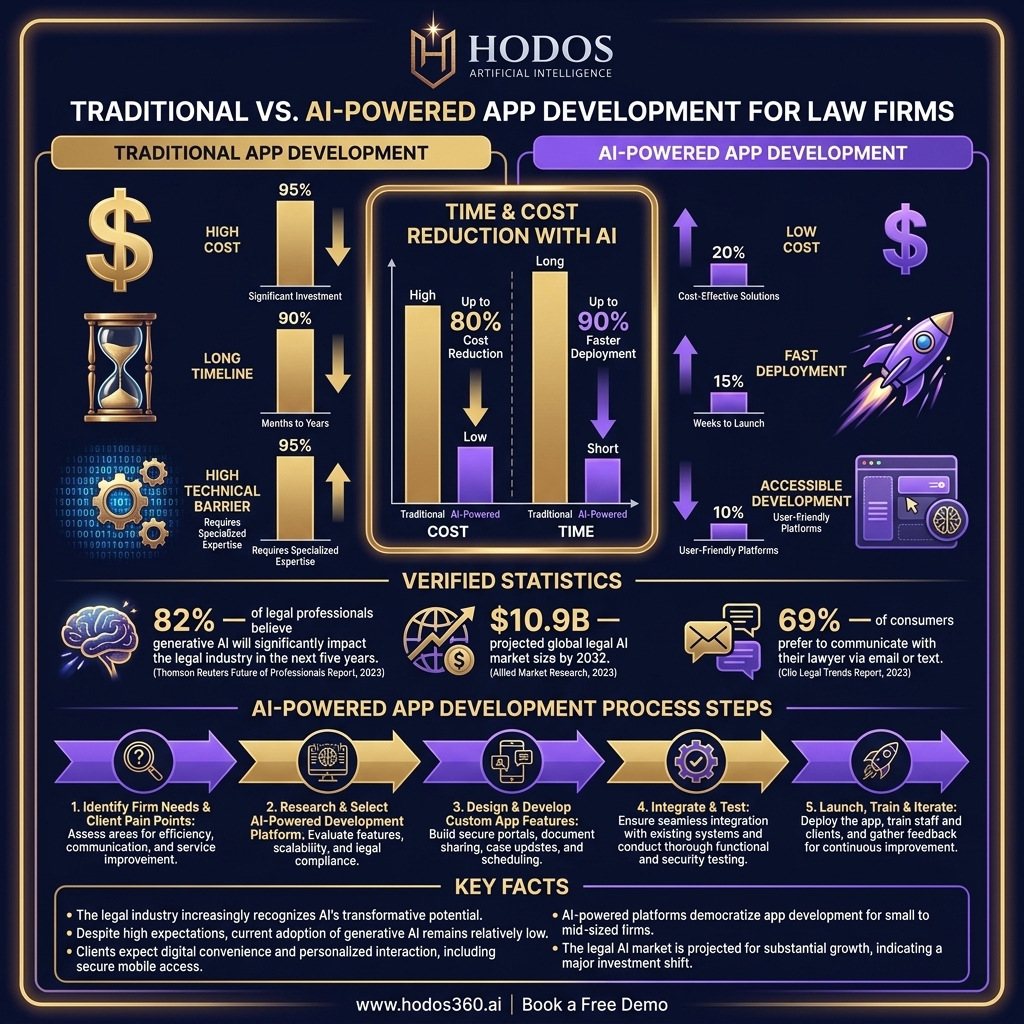
The economic argument for AI mobile app development is compelling, particularly for law firms seeking to maximize their return on investment (ROI) in technology. The traditional model of app development involved substantial upfront costs for design, coding, testing, and ongoing maintenance. These expenses often meant that only firms with multi-million dollar tech budgets could justify a custom application. However, AI-powered development platforms dramatically reduce these costs. By automating much of the coding and design process, and leveraging pre-built modules, firms can achieve professional-grade applications at a fraction of the historical price. This cost efficiency democratizes access to custom app solutions, making them viable for even small to mid-sized practices.
Moreover, the speed of development is a critical economic factor. Learn more about AI Web Design: The Ultimate Guide for Modern Law Firms. Faster deployment means a quicker realization of benefits, whether it's improved client satisfaction, streamlined internal operations, or enhanced marketing reach. The time saved in development translates directly into reduced labor costs and accelerated revenue generation. Instead of waiting a year or more for a fully custom app, firms can now launch functional, feature-rich applications in a matter of months, sometimes even weeks. This agility allows firms to experiment with different features, gather user feedback, and iterate quickly, ensuring their AI mobile app development efforts are aligned with evolving client needs and market demands, providing a dynamic and cost-effective solution for digital transformation.
Navigating the Future: Implementation and Best Practices
Implementing AI mobile app development within a law firm requires careful consideration of several key factors to ensure success and compliance. Foremost among these is data security and client confidentiality, which are paramount in the legal profession. Any custom app must incorporate robust encryption, secure authentication protocols, and adhere to strict data privacy regulations such as CCPA, GDPR, and relevant state bar ethical opinions. For instance, ABA Model Rule 1.6 (Confidentiality of Information) places a high ethical bar on lawyers to protect client data. Firms must ensure that their chosen AI development platform and subsequent app architecture are compliant, perhaps through independent security audits or certifications. Partnering with a legal tech provider that understands these intricate compliance requirements is crucial, as a data breach could have devastating consequences for a firm's reputation and financial stability.
Another critical aspect is the balance between customization and scalability. While AI enables unprecedented customization, firms must also think about the long-term maintainability and scalability of their applications. Will the app grow with the firm? Can new features be easily integrated? It's essential to choose AI mobile app development platforms that offer modularity and open APIs, allowing for future expansion and integration with other legal technology solutions, such as case management or document automation systems. This foresight prevents the creation of siloed applications that quickly become obsolete. Firms should also consider the user experience (UX) and user interface (UI) design carefully, ensuring the app is intuitive and easy for both clients and internal staff to use, as even the most powerful technology is ineffective if it's not adopted.
Furthermore, the journey of AI mobile app development doesn't end at launch. Continuous monitoring, updates, and user feedback integration are vital for an app's sustained success. Learn more about AI Voice Assistants: The Ultimate Guide for Law Firms. The legal and technological landscapes are constantly evolving, and a static app will quickly lose its efficacy. Firms should establish a clear process for gathering user feedback, analyzing app performance data, and implementing iterative improvements. This agile approach, common in the tech world, is increasingly relevant for law firms. It ensures that the app remains a valuable asset, continually adapting to client needs and new technological advancements. Engaging legal tech experts, like those at HODOS 360, can provide invaluable guidance through this ongoing process, from initial concept to long-term maintenance, ensuring your firm's digital strategy remains cutting-edge.
Finally, firms must consider the ethical implications of using AI in their mobile applications. While AI offers immense benefits, it also raises questions about bias, transparency, and accountability. For example, if an AI-powered app provides preliminary legal information, how is the accuracy ensured? Who is responsible if the AI provides incorrect guidance? The legal profession has a duty to uphold justice and fairness, and the integration of AI must reflect these values. Firms should develop internal guidelines and policies for AI use, ensuring that ethical considerations are at the forefront of their AI mobile app development strategy. This proactive approach not only mitigates risks but also reinforces the firm's commitment to responsible innovation in the digital age.
The HODOS 360 Edge in Web & Mobile Development
As law firms navigate the complexities and opportunities of AI mobile app development, partnering with a specialized provider becomes paramount. HODOS 360's Web & Mobile Development service offers an unparalleled advantage, leveraging AI to build responsive, high-converting websites and custom mobile applications tailored specifically for the legal sector. Our AI-powered website building capabilities extend seamlessly into mobile app creation, ensuring a cohesive and integrated digital presence. We understand the unique demands of law firms, from stringent security requirements to the need for intuitive client portals and efficient internal tools. Learn more about AI Voice Assistant: Essential for Modern Law Firms. Our platform empowers firms to design apps that not only meet but exceed client expectations, driving engagement and streamlining operations. With a focus on SEO optimization and user experience, HODOS 360 ensures that your firm's digital assets are not just functional but also highly visible and effective in attracting and retaining clients. We provide the expertise and technology to transform your firm's digital strategy, making advanced AI mobile app development accessible and impactful.

Key Takeaways and Next Steps
The recent funding round for Bilt.me is more than just a startup milestone; it's a clear indicator that AI mobile app development is no longer an aspirational technology but a present-day reality for businesses of all sizes, including law firms. The legal industry stands at a critical juncture. Firms that embrace AI-powered solutions for creating custom mobile applications will be better positioned to meet evolving client demands, enhance operational efficiencies, and gain a significant competitive edge. From secure client communication portals to internal workflow optimization tools, the applications are vast and transformative. The core insight is that technology, particularly AI, is democratizing access to powerful digital tools, lowering the barriers to entry for firms seeking to innovate.
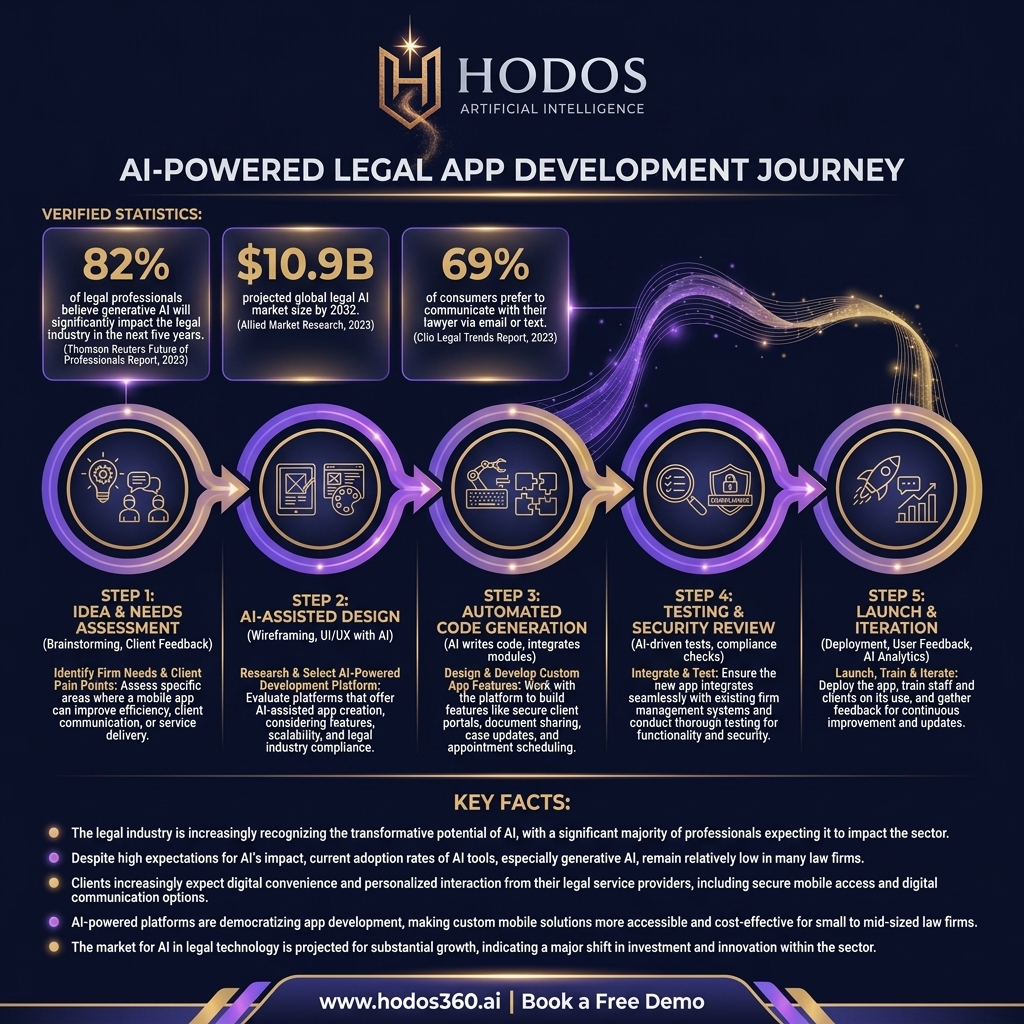
For law firms looking to build and launch mobile apps, the next steps are clear. Begin by assessing your firm's specific needs and identifying areas where a custom app could deliver the most value, whether for client engagement, internal productivity, or marketing. Research AI mobile app development platforms that prioritize legal industry compliance, data security, and ease of integration with your existing systems. Don't be afraid to start small, perhaps with a pilot app for a specific practice area, and then iterate based on feedback. The future of legal service delivery is inextricably linked to digital innovation, and AI mobile app development is a cornerstone of that future. Embracing this technology isn't just about staying relevant; it's about forging deeper client relationships, optimizing your practice, and securing your firm's position as a leader in the digital age.
Frequently Asked Questions
What is AI mobile app development?+
AI mobile app development refers to the use of artificial intelligence tools and platforms to automate, streamline, and enhance various stages of mobile application creation. This includes AI-powered code generation, UI/UX design assistance, automated testing, and integrating AI functionalities directly into apps, making development faster and more accessible for law firms without extensive coding expertise.
How can AI mobile apps benefit law firms?+
AI mobile apps can revolutionize law firms by improving client engagement through secure portals, streamlining client intake, automating document sharing, and providing real-time case updates. Internally, they boost operational efficiency by integrating with case management systems, automating administrative tasks, and providing data-driven insights, ultimately enhancing productivity and client satisfaction.
Is AI mobile app development secure for sensitive legal data?+
Yes, when implemented correctly with robust security protocols, AI mobile app development can be highly secure. Firms must prioritize end-to-end encryption, secure authentication, and compliance with legal data privacy regulations (e.g., ABA Model Rule 1.6, GDPR, CCPA). Partnering with legal tech experts who understand these requirements is crucial to ensure data confidentiality and integrity.
What are the costs associated with AI-powered app building for law firms?+
The costs of AI-powered app building are significantly lower than traditional development, often reducing expenses by 50% or more. This is due to automation, pre-built modules, and reduced need for extensive coding. While exact figures vary, it makes custom app solutions economically viable for small and mid-sized firms, offering substantial ROI through improved efficiency and client relations.
How can law firms get started with AI mobile app development?+
Law firms should begin by identifying key pain points or opportunities where an app could add value. Then, research AI-powered development platforms or legal tech providers specializing in web and mobile development, like HODOS 360. Prioritize security, compliance, and scalability. Start with a clear use case, gather feedback, and iterate to continuously refine the app's functionality and user experience.