
AI Virtual Receptionist: An Essential Guide for Law Firms
The legal industry often moves with a cautious, deliberate pace, yet the rapid acceleration of artificial intelligence is challenging this tradition. The recent news of a 12-year-old girl, Ms. Anya Sharma, developing a sophisticated AI virtual receptionist for small businesses is a testament to how accessible and impactful this technology has become. Her project, born from a blend of youthful creativity and programming prowess, dramatically illustrates AI's potential to boost productivity, reduce repetitive tasks, and expand digital transformation access far beyond the tech giants. This narrative isn't just a feel-good story; it's a clarion call for law firms to recognize that powerful AI virtual receptionist technology is mature, available, and ready to redefine client interactions and operational efficiency.
For decades, the image of a law firm's front office has been synonymous with a human receptionist—the first point of contact, the gatekeeper, the coordinator of schedules. While invaluable, this traditional model faces inherent limitations: finite hours, susceptibility to human error, and the sheer volume of mundane queries that divert focus from complex legal work. In an era where clients expect instant communication and seamless service, a human-only approach can inadvertently create bottlenecks, deter potential clients, and strain internal resources. This tension between traditional service delivery and modern client expectations forms the crucible in which advanced voice AI solutions are proving to be not just a convenience, but a strategic imperative. Firms that embrace this shift are not merely adopting new tools; they are fundamentally reshaping their client engagement strategy and operational backbone. The question is no longer *if* AI will impact legal services, but *how quickly* firms will leverage it to gain a competitive edge in an increasingly digital-first world.
This transformation is not theoretical; it's unfolding in real-time, driven by innovations from companies like OpenAI and Anthropic, whose foundational models empower specialized applications across industries. Legal tech leaders, including Clio and Thomson Reuters, are integrating sophisticated AI capabilities into their platforms, recognizing the demand for smarter, more efficient legal operations. The AI virtual receptionist, powered by these advancements, represents a significant leap forward in legal tech innovation, offering a scalable, multilingual, and always-on solution. It promises to liberate legal professionals from the relentless churn of administrative tasks, allowing them to focus on the intricate, high-value work that truly defines their profession. This guide will explore how law firms can harness this technology, transforming challenges into opportunities for growth and unparalleled client service. Discover how an AI virtual receptionist can be your firm's most tireless and effective front-line asset.
AI Virtual Receptionist: The Next Frontier in Legal Client Engagement
The story of Anya Sharma's virtual receptionist for small businesses resonates deeply within the legal sector, highlighting a pervasive need for automated efficiency across all professional services. While her innovation specifically targeted small enterprises, the underlying principles—using AI to handle routine inquiries, manage schedules, and improve initial client interactions—are directly transferable and profoundly beneficial to law firms. The legal profession, historically steeped in tradition, is now at a critical juncture, facing intense pressure to modernize. Clients today, accustomed to instant gratification from consumer-facing apps, expect similar responsiveness from their legal counsel. They don't want to wait on hold, navigate complex phone trees, or receive delayed responses to initial inquiries. This expectation gap creates a significant challenge for firms still relying on conventional methods, often leading to missed opportunities and client frustration.
Leading the charge in adapting to these new client expectations are forward-thinking legal tech companies and law firms who understand that the future of client engagement is digital and intelligent. Take, for instance, the recent surge in AI adoption reported by the American Bar Association (ABA) in its annual TechReport. While specific figures for AI virtual receptionist adoption are still emerging, the broader trend shows a significant uptick in firms exploring or implementing AI tools for tasks ranging from legal research to document review. This signals a growing comfort level and recognition of AI's practical benefits. Firms like Allen & Overy, known for their early adoption of AI tools like Harvey AI for legal research, are setting a precedent, demonstrating that even the most established institutions can leverage AI to enhance their core services and client experience. Learn more about Gemini 3.1 Flash TTS: Ultimate Voice AI for Law Firms. The competitive landscape is shifting, and firms that delay integration risk being outpaced by more agile competitors who are already reaping the rewards of AI-powered operational efficiency.
The strategic advantage of deploying an AI virtual receptionist extends beyond mere cost savings; it fundamentally elevates the client experience from the very first touchpoint. Imagine a prospective client calling your firm at 10 PM on a Saturday, distressed and needing urgent advice. A traditional setup would likely lead to voicemail, potentially losing that client to a competitor who offers 24/7 availability. An AI virtual receptionist, however, can immediately engage, understand the urgency, qualify the lead, provide basic information, and even schedule a follow-up consultation for the next business day. This always-on capability ensures that no lead is ever truly missed, and every client feels heard and valued, regardless of when they reach out. This level of responsiveness is not just about convenience; it builds trust and demonstrates a firm's commitment to modern, client-centric service delivery, fostering loyalty long before any legal work even begins.
Moreover, the sophistication of current voice AI solutions means these virtual assistants are not just answering machines; they are intelligent communicators capable of nuanced interactions. Equipped with natural language processing (NLP) capabilities, they can comprehend complex queries, extract key information, and respond in a human-like manner, often indistinguishable from a human operator. This technological leap, fueled by advancements from research labs and companies like Google and Amazon's voice AI teams, means that the AI virtual receptionist can handle a vast array of tasks, from routing calls to the correct department, answering FAQs about firm services, to even initiating basic client intake processes. This frees up human staff to focus on more complex, empathetic interactions that require genuine human judgment, thereby optimizing the entire operational workflow and ensuring that every team member is utilized at their highest potential.
Transforming Law Firm Operations with Voice AI Solutions
The practical applications of voice AI solutions within a law firm are vast and immediately impactful, moving beyond the simple answering of calls to fundamentally reshaping how firms operate. At its core, an AI virtual receptionist serves as a powerful force multiplier for administrative staff, allowing them to dedicate their valuable time to more strategic tasks rather than being bogged down by repetitive inquiries. Consider the sheer volume of calls a typical law firm receives daily: questions about office hours, directions, payment options, case status updates, and initial consultations. Each call, while seemingly minor, consumes valuable staff time that could be better spent on complex client support, document preparation, or direct legal assistance. By offloading these predictable interactions to an AI, firms can achieve significant operational efficiencies, reducing overhead costs associated with staffing and improving overall team productivity. This shift allows legal professionals to engage in higher-value work, aligning their efforts with the firm's core mission of delivering exceptional legal services, rather than managing a constant stream of administrative tasks.
One of the most critical areas where voice AI excels is in client intake automation. The initial client intake process is often a bottleneck, requiring detailed information gathering, conflict checks, and preliminary case assessment. A sophisticated AI virtual receptionist can be programmed to guide prospective clients through a structured series of questions, collecting essential data like contact information, nature of the legal issue, relevant dates, and preliminary facts. This information can then be seamlessly integrated into the firm's existing case management system, creating a preliminary client file even before a human attorney reviews it. This not only expedites the intake process but also ensures consistency and completeness of data, reducing the likelihood of errors that can arise from manual data entry. Furthermore, the AI can be configured to perform initial lead qualification, identifying high-priority cases or urgent matters that require immediate human intervention, thus optimizing the allocation of attorney time and ensuring that the most promising leads are addressed promptly.
Beyond intake, AI voice assistants can significantly enhance a firm's marketing and client engagement strategies. By providing 24/7 client service, these AI tools act as an always-on extension of the firm's brand, ensuring that every inquiry is met with a professional and timely response. Learn more about Voice Assistant Migration: An Essential Guide for Law Firms. This capability is particularly crucial in competitive legal markets where responsiveness can be the deciding factor for a client choosing a firm. The AI can also be leveraged for targeted outreach, reminding clients of upcoming appointments, requesting necessary documents, or providing general updates on firm news, all through personalized, automated voice interactions. This proactive engagement, a feature often found in advanced AI Marketing Platforms, strengthens client relationships and reinforces the firm's commitment to transparent and efficient communication. For example, HODOS 360's AI Voice Assistants offer multilingual support, allowing firms to cater to diverse client bases without needing to hire additional bilingual staff, thereby expanding market reach and inclusivity.
The deployment of voice AI also offers unprecedented insights into client needs and operational performance. Every interaction handled by the AI virtual receptionist generates valuable data—call volumes, types of inquiries, peak times, client demographics, and conversion rates. This data, when analyzed, can reveal patterns and trends that inform strategic decisions, from staffing adjustments to service offerings. For instance, if the AI consistently identifies a high volume of calls regarding a specific legal issue, the firm might consider developing a new service line or creating more targeted marketing content. This analytical capability transforms the front office from a cost center into a data-rich hub, providing actionable intelligence that drives continuous improvement. Firms can identify bottlenecks, refine their communication strategies, and even predict future client demands, ensuring they remain agile and responsive in a dynamic legal landscape. This data-driven approach, powered by advanced analytics, is a hallmark of modern operational efficiency.
Streamlining Client Intake and Lead Qualification
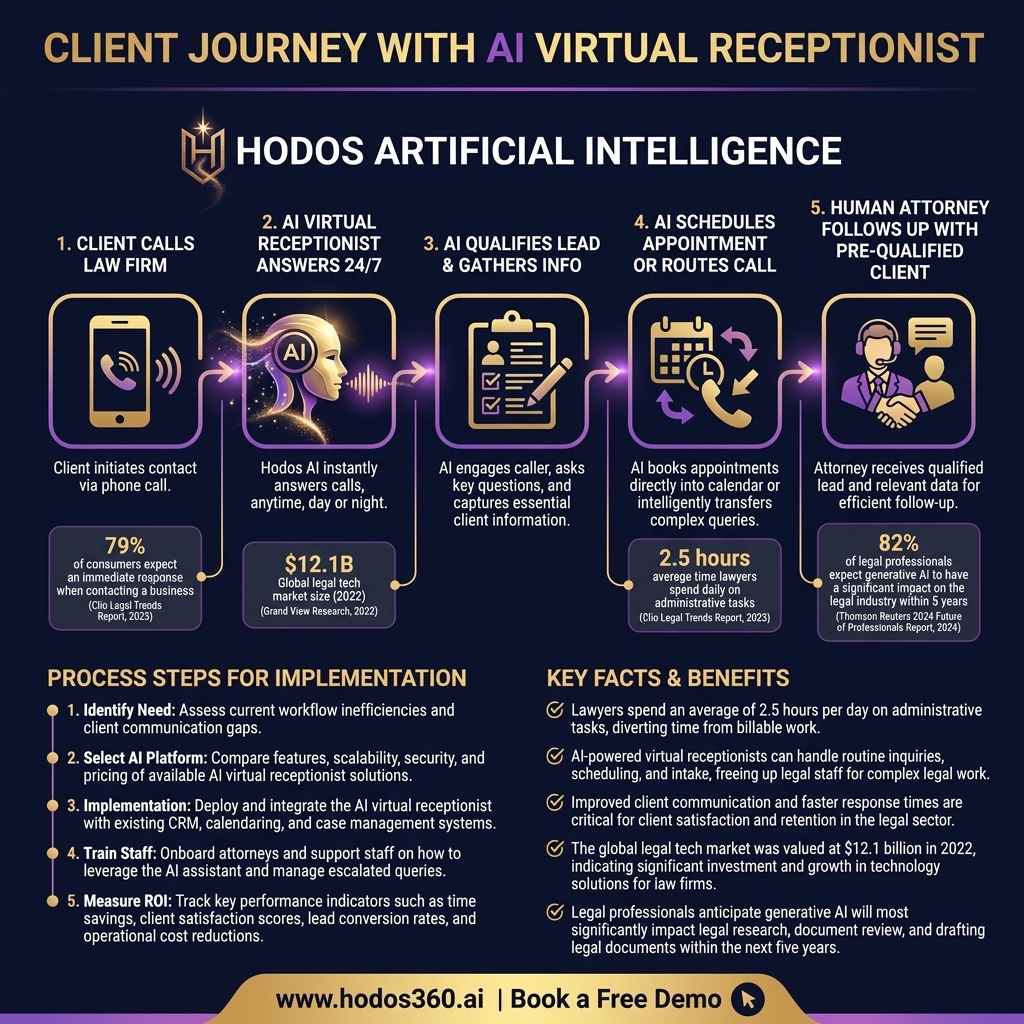
The efficiency of client intake is paramount for law firms, directly impacting growth and client satisfaction. Traditionally, this process is resource-intensive, requiring significant human interaction to collect initial details, conduct conflict checks, and determine the viability of a case. An AI virtual receptionist revolutionizes this by automating the initial screening process. Upon receiving a call, the AI can intelligently engage the prospective client, asking a series of predefined questions to gather critical information such as the type of legal matter, jurisdiction, urgency, and any opposing parties. This structured data collection ensures consistency and reduces the risk of overlooking crucial details that might be missed during a hurried human interaction. Learn more about AI Act: Essential Guide to Europe's Digital Legal Future. The AI can then automatically populate this information into the firm's CRM or case management system, initiating a new client file with minimal human intervention. This not only accelerates the onboarding process but also frees up paralegals and legal assistants to focus on more complex tasks, such as in-depth client interviews or legal research. The integration of such capabilities within an AI Law Firm Management System ensures a cohesive and efficient workflow from the very first contact. Moreover, the AI's ability to operate 24/7 means that leads generated outside of traditional business hours are captured and processed immediately, significantly improving lead response times—a critical factor in client acquisition, as highlighted by various studies from institutions like the Legal Marketing Association.
Strategic Implementation: Integrating AI Voice Assistants into Your Firm
Implementing an AI virtual receptionist or any advanced voice AI solution within a law firm requires a strategic, phased approach, not merely a plug-and-play installation. The success of such a deployment hinges on careful planning, clear objectives, and a thorough understanding of both the technological capabilities and the firm's specific operational needs. Firms must first conduct a comprehensive audit of their existing client communication workflows, identifying pain points, high-volume repetitive tasks, and areas where human resources are currently overstretched. This diagnostic phase is crucial for tailoring the AI to address the most pressing needs effectively. For instance, if the firm frequently receives calls about billing inquiries, the AI should be configured with robust billing FAQs and the ability to securely direct clients to relevant payment portals. It's also vital to select an AI solution that offers seamless integration with existing legal tech infrastructure, such as case management systems, document automation platforms, and calendaring tools, to ensure a cohesive digital ecosystem and avoid data silos. Companies like HODOS 360 prioritize such integrations, understanding that a fragmented tech stack can undermine the very efficiencies AI is meant to deliver.
Beyond technical integration, firms must also invest in comprehensive training for their human staff. The goal of an AI virtual receptionist is not to replace human interaction entirely but to augment it, allowing human professionals to focus on higher-value, more empathetic tasks. Staff members need to understand how the AI operates, its limitations, and how to effectively collaborate with it. This includes training on how to seamlessly take over a call from the AI when complex issues arise, how to access and utilize the data collected by the AI, and how to explain the AI's role to clients. Change management is a critical component of this process, addressing potential anxieties about job displacement and emphasizing the AI's role as a tool for empowerment rather than replacement. Firms that foster a culture of technological adoption and continuous learning will find greater success in leveraging AI, transforming potential resistance into enthusiasm for enhanced productivity and client service. Learn more about AI Hallucinations: Essential Lessons for Legal Practice. This human-AI collaboration is a cornerstone of modern legal practice, as emphasized by legal tech visionaries like Jack Newton, CEO of Clio, who frequently discusses the importance of technology for augmenting, not replacing, legal professionals.
One of the most significant considerations for law firms integrating AI, especially voice AI, is navigating the complex landscape of ethical obligations and data privacy regulations. The ABA Model Rules of Professional Conduct, particularly Rule 1.1 (Competence) and Rule 1.6 (Confidentiality of Information), impose strict duties on attorneys to safeguard client data and maintain technological competence. This means firms must ensure that their AI virtual receptionist solutions are designed with robust security protocols, including encryption, access controls, and compliance with data privacy laws such as GDPR in Europe or state-specific regulations like CCPA in California. Transparency with clients about the use of AI is also paramount; firms should clearly communicate how their information is handled and by whom (or what). The recent enforcement of the EU AI Act, while primarily targeting high-risk AI systems, sets a global precedent for regulatory oversight, underscoring the importance of responsible AI deployment. Firms must partner with AI providers who demonstrate a deep understanding of these legal and ethical frameworks, ensuring that the technology not only performs efficiently but also adheres to the highest standards of professional conduct and client trust.
Finally, the successful integration of an AI virtual receptionist requires a commitment to continuous monitoring, evaluation, and iteration. Technology evolves rapidly, and client needs can shift, necessitating ongoing adjustments to the AI's programming and functionalities. Firms should establish clear metrics for success, such as reduced call wait times, improved lead conversion rates, increased client satisfaction scores, and enhanced staff productivity. Regular reviews of AI performance, coupled with client feedback, will enable firms to refine the AI's capabilities, ensuring it remains an effective and valuable asset. This iterative process, often overseen by a dedicated legal operations team or a lead attorney with a strong grasp of legal tech, ensures that the AI solution evolves with the firm, continuously optimizing its contribution to operational excellence and client service. The journey of AI integration is not a one-time event but an ongoing process of adaptation and improvement, reflecting the dynamic nature of both technology and the legal profession itself.
Navigating Ethical Considerations and Data Security
The integration of an AI virtual receptionist into a law firm's operations brings with it profound ethical and data security responsibilities that cannot be overlooked. Attorneys are bound by strict rules regarding client confidentiality (ABA Model Rule 1.6) and competence in technology (ABA Model Rule 1.1, Comment 8). This means firms must ensure that any AI solution deployed handles sensitive client information with the utmost care, employing robust encryption, secure data storage, and strict access controls. Furthermore, transparency is key; clients should be informed when interacting with an AI, and firms must clearly articulate how their data is being processed and protected. The potential for data breaches or misuse of confidential information poses significant risks, not only to client trust but also to a firm's reputation and compliance standing. Learn more about AI Marketing: Revolutionizing Law Firm Growth in 2026. Therefore, selecting an AI provider with a proven track record in data security and legal compliance is critical. Firms should also conduct regular security audits and ensure their AI systems are updated to counter emerging cyber threats, aligning with best practices in legal cybersecurity. The stakes are incredibly high, making due diligence in this area non-negotiable.
Measuring Impact: ROI and the Future of Legal Productivity
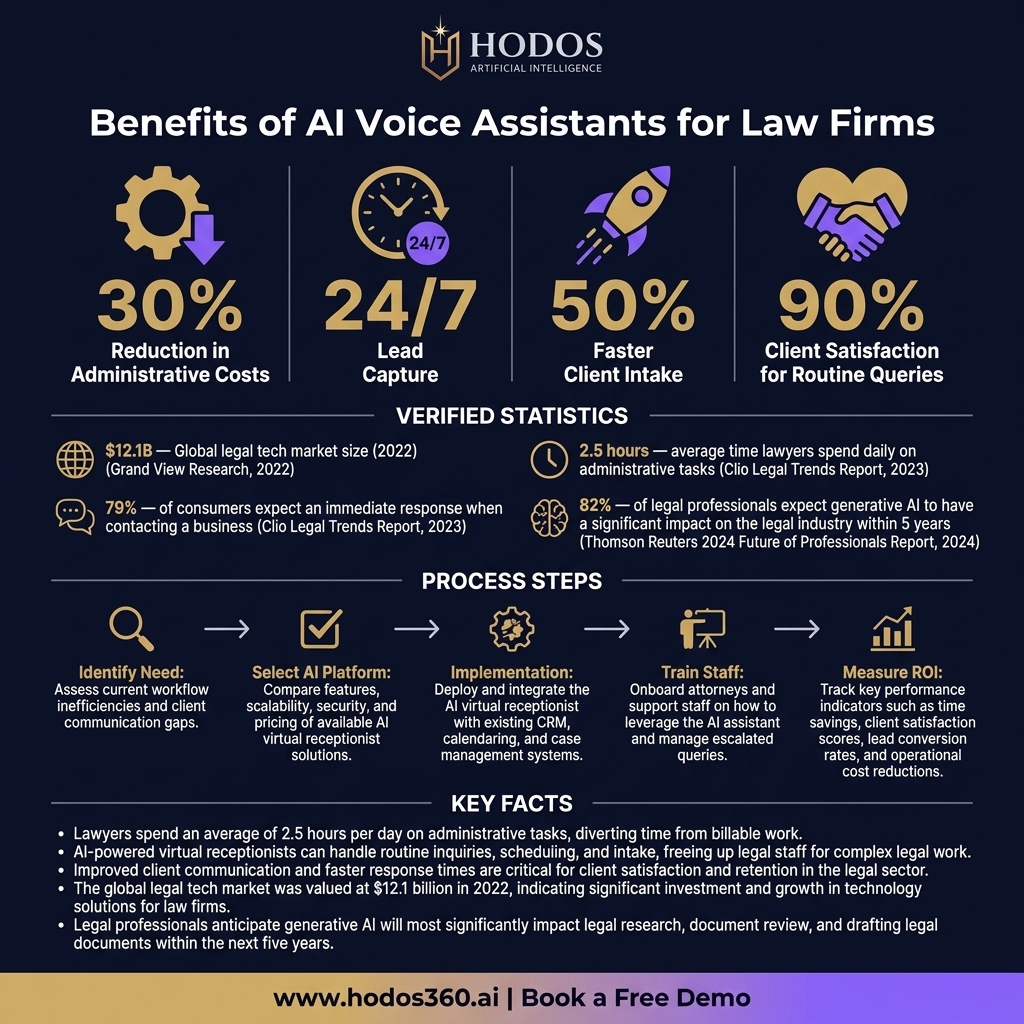
The true value of an AI virtual receptionist is best understood through its measurable impact on a law firm's return on investment (ROI) and overall productivity. While the initial investment in AI technology might seem significant, the long-term benefits in terms of cost savings, increased revenue, and enhanced client satisfaction far outweigh these expenditures. Firms can quantify ROI by analyzing several key metrics: reduced administrative labor costs, increased lead conversion rates due to 24/7 availability, decreased client churn from improved responsiveness, and the ability of existing staff to take on more billable work. For example, a study by Thomson Reuters on the State of the Legal Market often highlights how operational inefficiencies translate directly into lost revenue. By automating routine call handling and client intake, firms can effectively reallocate dozens, if not hundreds, of administrative hours per month, translating into substantial salary savings or the capacity to manage a larger client portfolio without increasing headcount. This fiscal prudence, combined with a boosted capacity for higher-value work, paints a compelling picture for the financial viability of AI adoption.
Beyond direct financial gains, the implementation of an AI virtual receptionist contributes significantly to a firm's long-term competitive advantage. In a market saturated with legal service providers, differentiation is key. A firm that can offer instant, intelligent, and multilingual support stands out from competitors who are still relying on outdated communication methods. This enhanced client experience translates into stronger client loyalty, more positive referrals, and a superior brand image—intangible assets that are difficult to quantify but profoundly impact a firm's sustained success. Furthermore, the data generated by AI interactions provides invaluable insights into client needs and service gaps, enabling firms to proactively refine their offerings and stay ahead of market trends. This strategic foresight, fueled by intelligent data analytics, positions firms not just as service providers but as innovative leaders in the legal tech space, attracting top talent and high-value clients who seek forward-thinking legal partners. Learn more about Claude AI for Legal: The Ultimate Guide to Contract Review. The firms that embrace this digital transformation are not just adapting; they are actively shaping the future of legal service delivery.
The future of legal productivity is undeniably intertwined with the intelligent integration of AI. As AI models become even more sophisticated, capable of understanding complex legal jargon and nuanced client emotions, the role of the AI virtual receptionist will expand further. We can anticipate AI assistants not only handling initial inquiries but also providing more detailed legal information (within ethical boundaries), assisting with document assembly, and even offering preliminary case assessments based on vast legal databases. This evolution will allow attorneys to focus almost exclusively on strategic thinking, complex problem-solving, and the deeply human aspects of legal counsel—empathy, judgment, and advocacy. The ongoing development in natural language understanding and generation, spearheaded by companies like OpenAI and Google DeepMind, ensures that these capabilities will continue to advance rapidly, pushing the boundaries of what is possible in legal tech. Firms that invest now in robust AI infrastructure will be best positioned to leverage these future innovations, ensuring they remain at the forefront of legal service delivery.
Ultimately, the narrative isn't about AI replacing humans, but about AI empowering humans to achieve more. The introduction of an AI virtual receptionist isn't merely a technological upgrade; it's a strategic decision to enhance client service, optimize operational efficiency, and secure a firm's place in the evolving legal landscape. Firms that embrace this technology are investing in a future where administrative burdens are minimized, client satisfaction is maximized, and legal professionals are free to focus on the intricate, impactful work that truly defines their calling. The journey toward a more productive and client-centric legal practice begins with intelligently deployed AI solutions, transforming how law firms interact with the world and deliver justice.
Quantifying the Benefits: From Cost Savings to Client Loyalty
Measuring the tangible and intangible benefits of an AI virtual receptionist is crucial for demonstrating its value and securing continued investment. On the tangible side, firms can directly track cost savings from reduced need for administrative overtime, decreased phone system expenses, and optimized staffing levels. For instance, if an AI handles 70% of routine calls, that frees up a significant portion of a human receptionist's time, potentially allowing them to take on other critical tasks or reducing the need for additional hires during periods of growth. Intangible benefits, while harder to put a dollar figure on, are equally vital: enhanced client satisfaction from immediate responses, improved brand reputation for being technologically forward, and increased employee morale as staff are liberated from monotonous tasks. These contribute to a stronger firm culture and better client retention, which are invaluable. The HODOS 360 platform, with its integrated analytics, allows firms to track these metrics, providing clear data on how the AI is performing against predefined KPIs, thereby offering a transparent view of the ROI.
- ✓24/7 Availability: Ensures no client inquiry is missed, capturing leads outside business hours and providing immediate support.
- ✓Enhanced Lead Qualification: Automatically screens and prioritizes potential clients, directing high-value leads to attorneys faster.
- ✓Reduced Administrative Burden: Frees up human staff from repetitive tasks like answering FAQs, routing calls, and scheduling appointments.
- ✓Multilingual Support: Caters to diverse client populations, breaking down language barriers and expanding market reach.
- ✓Consistent Client Experience: Provides uniform, professional responses every time, ensuring brand consistency.
- ✓Data-Driven Insights: Gathers valuable data on call patterns, client needs, and operational efficiency for strategic decision-making.
- ✓Cost Efficiency: Lowers operational costs by optimizing staffing and reducing the need for extensive manual call handling.

Beyond Automation: The Human-AI Partnership in Legal Services
The integration of an AI virtual receptionist marks a pivotal moment, signaling a shift from mere automation to a sophisticated human-AI partnership within legal services. This isn't about replacing the nuanced judgment and empathetic counsel that only a human attorney can provide; rather, it's about elevating the human element by offloading the mundane and repetitive. By handling initial client interactions, managing schedules, and answering common queries, AI allows legal professionals—from partners to paralegals—to dedicate their intellectual capital and emotional intelligence to the complex, strategic, and deeply human aspects of law. This symbiotic relationship fosters an environment where attorneys can focus on legal strategy, client advocacy, and building robust relationships, while the AI ensures that the operational machinery runs smoothly and efficiently in the background. The result is a more productive firm, a more satisfied clientele, and a more fulfilling professional experience for legal practitioners, as evidenced by firms that have successfully implemented AI-powered legal workflows to streamline their operations.
This evolving partnership is a testament to the transformative power of digital transformation, a journey that HODOS 360 is committed to supporting. Our AI Voice Assistants, part of a comprehensive suite of AI-powered services including an AI Law Firm Management System, AI Marketing Platform, and Web & Mobile Development, are designed to seamlessly integrate into your firm's ecosystem. We understand that the future of legal practice lies in leveraging intelligent tools to enhance every facet of your operations, from client intake and document automation to marketing and analytics. The story of Anya Sharma and her virtual receptionist reminds us that innovation can come from anywhere, and its benefits are universally applicable. For law firms, embracing an AI virtual receptionist is not just about adopting a new technology; it's about embracing a future where operational excellence, enhanced client satisfaction, and unparalleled legal service delivery are the norm, not the exception.
As law firms navigate the complexities of the 21st century, the strategic deployment of an AI virtual receptionist emerges as a critical differentiator. It's a clear signal to clients and competitors alike that your firm is forward-thinking, efficient, and deeply committed to providing superior service. The insights shared here underscore the profound impact this technology can have, not just on individual tasks but on the entire operational fabric of a legal practice. The time for deliberation is over; the era of intelligent automation in legal services is here. Firms that act decisively to integrate these powerful tools will not only thrive in the current competitive landscape but will also be instrumental in shaping the future of legal productivity and client engagement. Embrace this transformation, and position your firm at the forefront of legal innovation.
Frequently Asked Questions
What is an AI virtual receptionist and how does it differ from traditional answering services?+
An AI virtual receptionist is an intelligent, voice-powered assistant capable of understanding natural language, answering questions, routing calls, and performing basic client intake 24/7. Unlike traditional answering services, which rely on human operators following scripts, AI assistants use advanced algorithms to provide dynamic, personalized interactions, learn over time, and integrate seamlessly with firm management systems for real-time data flow and automated workflows.
Can an AI virtual receptionist handle complex legal inquiries?+
While an AI virtual receptionist excels at handling routine inquiries, lead qualification, and appointment booking, it is not designed to provide legal advice or handle highly complex legal questions requiring human judgment. Its primary role is to filter, organize, and direct inquiries efficiently, ensuring that complex matters are escalated to the appropriate human legal professional, thereby optimizing the firm's overall responsiveness and resource allocation.
How does an AI virtual receptionist ensure client data privacy and confidentiality?+
Reputable AI virtual receptionist solutions for law firms are built with robust security protocols, including end-to-end encryption, secure cloud storage, and compliance with relevant data protection regulations (e.g., GDPR, CCPA). Firms must conduct due diligence, partner with trusted providers, and ensure transparency with clients about data handling, aligning with ABA Model Rule 1.6 on client confidentiality. Regular security audits are also crucial for maintaining compliance.
What are the typical costs and ROI of implementing an AI virtual receptionist?+
Costs vary based on features and scale, but ROI is typically realized through reduced administrative overhead, increased lead conversion rates due to 24/7 availability, and improved staff productivity. Firms can reallocate administrative hours to billable work, save on staffing costs, and enhance client satisfaction, leading to better retention and referrals. Many providers offer tiered pricing, allowing firms to scale their investment as they experience benefits.
How long does it take to integrate an AI virtual receptionist into a law firm's existing systems?+
Integration time depends on the complexity of the firm's existing tech stack and the chosen AI solution. Basic deployments can take weeks, while more comprehensive integrations with case management, CRM, and billing systems might take a few months. A phased approach, starting with core functionalities and gradually expanding, is often recommended. Providers like HODOS 360 offer dedicated support to ensure a smooth and efficient implementation process.