


AI Act: Essential Guide to Europe's Digital Legal Future
On July 9, 2026, the European Union's Artificial Intelligence Act stands as a monumental achievement in global digital governance, marking the first comprehensive legal framework for AI worldwide. This landmark legislation, a culmination of years of intense debate and negotiation, is not merely a European directive; it’s a global blueprint shaping the future of artificial intelligence development and deployment.
As Ursula von der Leyen, President of the European Commission, articulated during its ratification, the Act aims to foster trustworthy AI in Europe, ensuring that technological progress serves humanity while upholding fundamental rights. Its provisions, now moving towards full enforcement, are sending ripples across industries, none more so than the legal sector, which is grappling with both the challenges of compliance and the vast opportunities it presents.
The journey to the AI Act has been fraught with complex discussions, pitting innovation advocates against privacy and ethical concerns. Yet, its final form represents a delicate balance, categorizing AI systems based on their potential risk to fundamental rights and safety, from minimal to unacceptable.
This tiered approach mandates stringent requirements for high-risk applications, impacting everything from critical infrastructure to legal processes. For law firms, this isn't just another regulatory hurdle; it's a fundamental shift in how legal technology will be developed, used, and audited. The Act demands a deep understanding of AI's technical and ethical dimensions, compelling firms to re-evaluate their digital strategies and embrace a new era of legal tech responsibility.
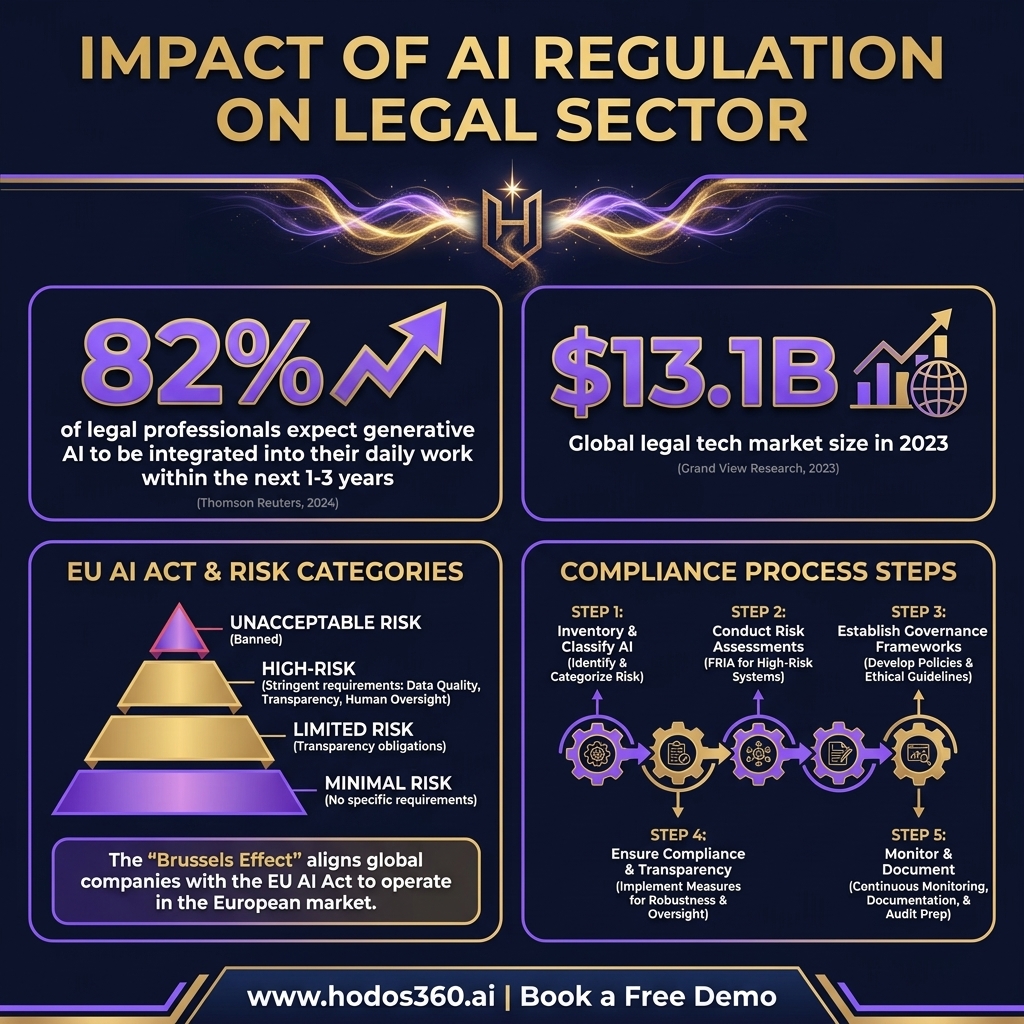
The global implications extend far beyond Europe's borders, a phenomenon often dubbed the 'Brussels Effect.' Companies like Google, Microsoft, and OpenAI, regardless of their headquarters, must align their AI products and services with the AI Act if they wish to operate within the European market.
This creates a de facto global standard, compelling tech giants and startups alike to build AI with compliance in mind from inception. For law firm owners and legal professionals, this means not only adapting to European regulations but also anticipating similar frameworks emerging worldwide. The Act serves as a stark reminder that the integration of AI into legal practice is no longer just about efficiency; it's about ethical governance, transparency, and accountability.
The EU AI Act: A Landmark in Global Digital Governance
The EU AI Act is a comprehensive legal framework designed to regulate artificial intelligence systems placed on the EU market. It classifies AI applications into four risk categories: unacceptable, high, limited, and minimal. Unacceptable risk AI systems, such as social scoring by governments or real-time biometric identification in public spaces, are banned outright.
The true focus for the legal industry, however, lies in the 'high-risk' category, which includes AI used in the administration of justice and democratic processes, as well as systems that could impact fundamental rights. This classification triggers a cascade of obligations for developers and deployers, including robust risk management systems, data governance and quality assurance, technical documentation, human oversight, and conformity assessments.
This unprecedented approach to AI regulation sets a major global precedent. As Brad Smith, President of Microsoft, noted in a recent interview concerning Microsoft's AI strategy, the company is actively working to align its products with the Act's principles, recognizing that regulatory compliance is now a critical component of market access and public trust.
The Act's provisions, particularly Article 14 on data governance, underscore the imperative for high-quality datasets to train and validate AI systems, minimizing bias and ensuring accuracy. Learn more about AI-Native Law Firms: An Essential Guide to Legal Innovation. This directly impacts legal tech developers, who must now demonstrate not just the utility, but the ethical robustness and data integrity of their AI solutions, pushing the boundaries of what constitutes responsible innovation in the digital age.
The Act's enforcement mechanisms are equally significant. National supervisory authorities will oversee compliance, with the European AI Board coordinating across member states. Non-compliance can lead to hefty fines, up to €30 million or 6% of a company’s global annual turnover, whichever is higher. This financial deterrent, combined with reputational risks, ensures that the AI Act carries substantial weight.
For instance, a legal tech startup developing a predictive analytics tool for litigation must now embed compliance from its design phase, conducting thorough impact assessments and ensuring explainability. This shift from purely product-centric development to a 'trust-by-design' philosophy is fundamentally shaping the competitive landscape, rewarding firms and developers who prioritize ethical considerations and transparency in their artificial intelligence offerings.
Beyond Compliance: Driving Innovation
While the AI Act introduces significant compliance burdens, it also acts as a catalyst for innovation. By establishing clear guidelines for trustworthy AI, it provides a framework for developers to build more reliable, ethical, and defensible solutions. This clarity can reduce uncertainty, encouraging investment in AI technologies that meet high standards.
For example, firms that invest in transparent and auditable AI systems for document review or legal research will gain a competitive edge, appealing to clients who are increasingly concerned about data privacy and ethical AI use. This isn't just about avoiding penalties; it's about building a reputation for excellence and responsibility in the rapidly evolving legal tech market.
The Act implicitly encourages a shift towards explainable AI (XAI), where the rationale behind AI-driven decisions can be understood and scrutinized, a crucial element in legal contexts where justification and precedent are paramount.
Furthermore, the Act's emphasis on human oversight and robust technical documentation can lead to the development of more sophisticated AI tools that augment, rather than replace, human expertise.
Learn more about AI and Junior Lawyers: The Ultimate Guide to Thriving. Consider the case of a major law firm like Allen & Overy, which has been at the forefront of legal AI adoption, even partnering with startups like Harvey AI. Their approach to integrating AI is often characterized by a focus on human-in-the-loop processes, where AI handles preliminary tasks, and human lawyers provide critical judgment and oversight.
The AI Act reinforces this model, ensuring that even the most advanced artificial intelligence systems remain subject to human control, particularly in high-stakes legal decision-making. This creates a fertile ground for developing hybrid legal tech solutions that combine AI's speed with human wisdom, ultimately enhancing the quality and ethical standing of legal services.
The ongoing debate around openai news today often highlights the need for such regulatory frameworks to guide rapid technological advancements.
Navigating High-Risk AI Systems: Implications for Legal Tech
For law firms, the critical challenge lies in identifying and managing high-risk AI systems within their operations. The AI Act explicitly includes AI systems intended to assist judicial authorities in researching and interpreting facts and the law, or in applying the law to a concrete set of facts.
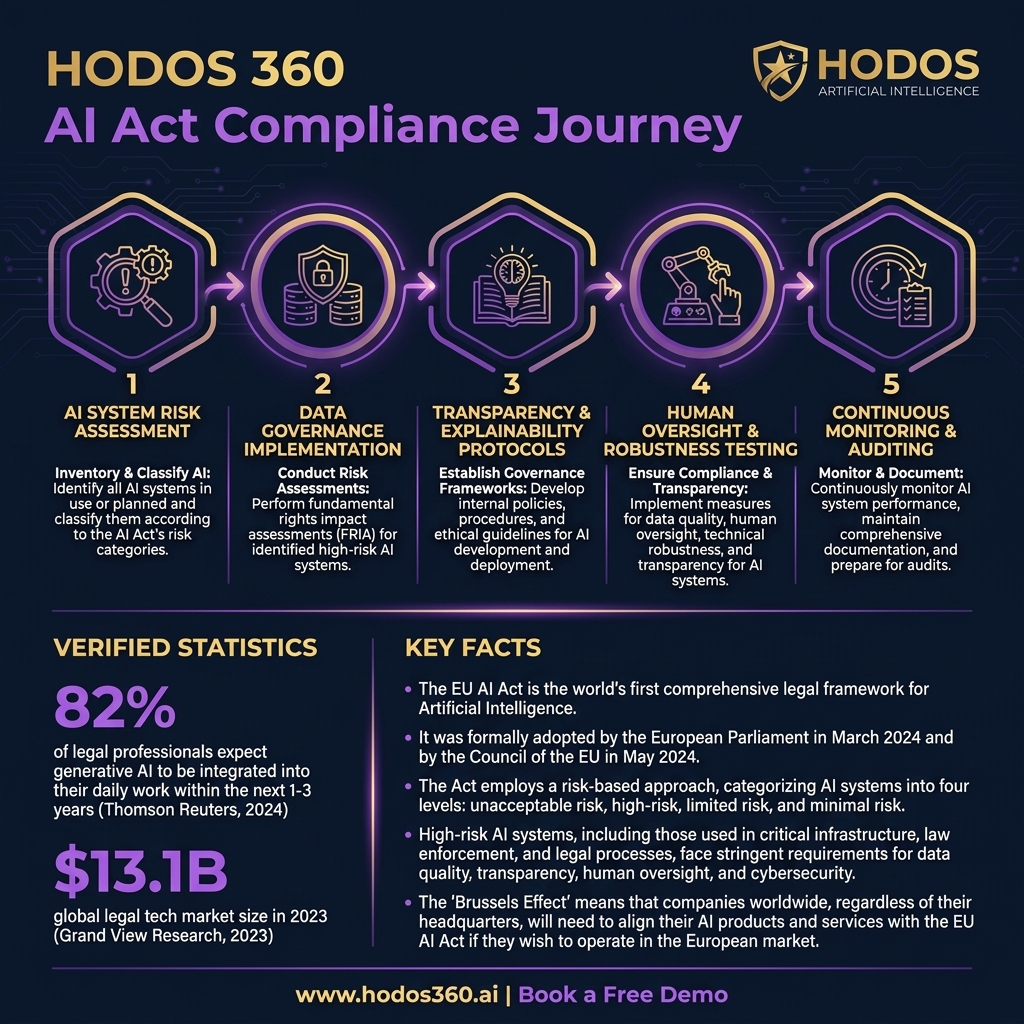
This definition potentially covers a broad spectrum of legal tech tools, from advanced e-discovery platforms that categorize evidence to predictive analytics tools that forecast litigation outcomes or even sophisticated AI-powered legal workflows for case management. Firms using or developing such tools must now implement stringent internal controls, including comprehensive risk assessments, data governance protocols, and continuous monitoring to ensure compliance with the Act's technical and ethical standards.
The obligations for high-risk AI systems are extensive, requiring firms to establish a quality management system, maintain detailed technical documentation, and ensure traceability of results. Moreover, the Act mandates human oversight, meaning that AI-driven decisions in legal contexts cannot be fully automated without a human 'in the loop' to review and intervene.
This directly impacts the design and deployment of legal AI, pushing developers towards transparent, auditable, and human-interpretable systems. For example, a firm utilizing an AI for contract review must ensure that the AI's recommendations are explainable, and that a lawyer can readily understand the basis for its suggestions, rather than simply accepting black-box outputs.
Learn more about AI Marketing Automation: Essential Lead Flow for Law Firms. This emphasis on explainability aligns with fundamental legal principles of due process and reasoned decision-making.
Furthermore, the AI Act places a significant burden on data quality. Article 14 stipulates that high-risk AI systems must be trained on datasets that are relevant, representative, free of errors, and complete, with appropriate data governance and management practices.
This is a direct response to concerns about algorithmic bias, which can lead to discriminatory outcomes. For legal tech, this means meticulously curating and auditing legal datasets, ensuring they reflect diverse legal precedents and demographics to avoid perpetuating biases inherent in historical data. Firms that invest in robust data auditing and cleansing processes will not only comply with the Act but also enhance the fairness and reliability of their AI-powered insights, providing a distinct advantage in legal tech innovation.
The current discussions around markets news today often touch upon how regulatory shifts like this influence investment in data infrastructure.
The Role of AI Ethics and Data Governance
The AI Act firmly places AI ethics and data governance at the forefront of legal technology development. It moves beyond mere data protection, as seen with GDPR, to encompass the broader ethical implications of AI's decision-making processes. For law firms, this translates into a need for internal ethical guidelines for AI use, complementing existing professional responsibility rules like ABA Model Rule 1.1 (Competence), which implicitly requires lawyers to understand the risks and benefits of technology.
Firms must not only ensure the technical compliance of their AI tools but also cultivate a culture of ethical AI use, where lawyers understand the limitations and potential biases of these systems.
Effective data governance becomes paramount. This involves not just securing client data but also ensuring that data used to train and operate AI systems is collected, stored, and processed ethically and legally.
Learn more about AI Website Design: The Essential Guide for Law Firms. This includes clear consent mechanisms, anonymization where appropriate, and stringent data quality checks to prevent biased outcomes. For example, when a firm uses an AI to analyze client intake solutions or predict case outcomes, the underlying data must be handled with utmost care to avoid privacy breaches or discriminatory predictions.
The Act's focus on transparency means firms must be able to explain how their AI systems work, what data they use, and how they arrive at their conclusions, providing a level of accountability previously unseen in the tech world. This aligns with the increasing public scrutiny of AI, highlighted by ongoing tiktok news today debates regarding data privacy and algorithmic transparency.
Opportunities and Challenges for Law Firms in the AI Act Era
The AI Act presents a dual landscape for law firms: significant challenges in compliance alongside unprecedented opportunities for growth and specialization. The immediate challenge is the investment required to review existing AI tools, update internal processes, and train staff on the new legal framework. A 2024 Thomson Reuters Institute report indicated that nearly 70% of law firms anticipate increased compliance costs due to emerging AI regulations.
Firms that have been slow to adopt digital transformation may find themselves struggling to catch up, facing not only the burden of regulatory compliance but also the risk of being outmaneuvered by more agile, tech-forward competitors. This situation creates a clear divide between firms that embrace change and those that resist it, a classic human conflict between disruption and tradition.
However, for proactive firms, the AI Act is a potent driver of new service lines. The complexity of the Act means businesses across all sectors will require expert legal guidance on AI compliance, risk assessments, and ethical AI development. Law firms can position themselves as indispensable advisors, offering specialized services in AI regulation consulting, data governance audits, and the development of internal AI policies.
Learn more about Legal AI Gap: Bridging the Divide for Law Firms in 2026. This represents a significant market opportunity, allowing firms to diversify their revenue streams and attract new clients grappling with their own AI compliance journeys. Imagine partners like Mary Shen O'Carroll, formerly of Google and now a leading voice in legal operations, advising firms on how to leverage this regulatory wave into a competitive advantage.
Furthermore, the Act can foster greater trust in legal tech innovation. By ensuring that AI tools meet high standards of safety, ethics, and transparency, the regulation can overcome some of the skepticism that has hindered broader AI adoption in the legal sector. Firms that can demonstrate their commitment to using trustworthy AI will build stronger client relationships and enhance their reputation.
This is particularly relevant for firms looking to expand their web and mobile development to offer secure, compliant client portals or AI-driven self-service tools. The Act, therefore, doesn't just regulate; it legitimizes and professionalizes the use of AI in legal practice, paving the way for more confident and widespread adoption of ethical AI solutions.
Building Compliant Digital Infrastructure: A HODOS 360 Perspective
In this new regulatory landscape, a robust and compliant digital infrastructure is no longer a luxury but a necessity for law firms. The AI Act mandates specific requirements for data quality, human oversight, and transparency, all of which rely heavily on the underlying technological systems.
Firms must invest in secure, scalable platforms that can manage vast amounts of data, track AI system performance, and provide clear audit trails. This includes everything from secure AI-powered website building that clearly communicates a firm's AI policies to integrated case management systems capable of documenting AI-assisted decisions and their human oversight.
The fragmented approach of disparate tools will no longer suffice; integration and comprehensive data flow are paramount.
This is where platforms like HODOS 360 become instrumental. Our AI Law Firm Management System offers integrated solutions for case management, client intake, document automation, and AI-powered legal workflows, all designed with an eye towards future regulatory compliance.
By centralizing operations and embedding AI governance features, HODOS 360 helps firms manage the complexities of the AI Act, ensuring that data quality standards are met and human oversight is seamlessly incorporated into daily operations. For instance, our document automation capabilities can be configured to include specific compliance checks before documents are finalized, reducing human error and ensuring adherence to new legal standards.
Learn more about Legal AI Gap Widens: Strategic Imperative for Law Firms 2026. This comprehensive approach minimizes the risk of non-compliance while maximizing operational efficiency, allowing firms to focus on delivering high-value legal services.
Furthermore, the Act's emphasis on transparency and user understanding means that how a firm presents its digital services and AI-driven tools to clients is crucial.
This falls squarely into the domain of Web & Mobile Development. A firm's online presence must not only be responsive and SEO-optimized but also clearly communicate its commitment to ethical AI and data protection. This involves designing user-friendly interfaces for client portals, providing clear explanations of how AI is used in their legal services, and ensuring easy access to privacy policies.
HODOS 360's Web & Mobile Development services, including AI-powered website building and high-converting templates, are designed to help firms create digital platforms that are not only aesthetically pleasing and functional but also fully compliant and transparent, building client trust in the eu ai act 2026 era.
This holistic approach to digital presence is key to navigating the new regulatory environment effectively.
Leveraging Web & Mobile Development for AI Act Readiness
To truly be AI Act ready, law firms must leverage their web and mobile development strategies to create platforms that are inherently compliant and transparent. This means building secure client portals where AI-driven insights can be shared responsibly, ensuring data privacy and allowing for client access to information regarding AI processing.
For example, a responsive website developed with a focus on user experience can host dedicated sections explaining the firm's AI policies, outlining how client data is used, and detailing the human oversight mechanisms in place. This proactive communication builds trust and demonstrates a firm's commitment to ethical artificial intelligence, setting them apart in a competitive market.
Think of it as a digital declaration of your firm's adherence to the highest standards.
Moreover, custom web and mobile applications can be developed to facilitate internal compliance processes. Imagine an internal mobile app for attorneys to quickly log their human oversight actions on AI-generated legal drafts, or a dashboard that tracks the performance and bias indicators of internal AI tools.
These bespoke solutions, expertly crafted through targeted web and mobile development, can transform complex regulatory requirements into streamlined, user-friendly workflows. This not only ensures compliance but also enhances efficiency, allowing legal professionals to integrate AI ethically without significant operational disruption. The investment in such tailored digital tools represents a strategic move towards long-term digital resilience and leadership in the legal industry.

Strategic Imperatives: Future-Proofing Your Firm in Europe's Digital Future
The AI Act is more than just a piece of legislation; it's a foundational element shaping Europe's digital future, and by extension, the global legal landscape. For law firms, future-proofing means adopting a proactive, comprehensive strategy that integrates regulatory compliance with technological innovation. This involves continuous learning and adaptation, understanding that the regulatory environment for artificial intelligence will continue to evolve.
Firms must move beyond a reactive stance and embed AI governance into their core operational and strategic planning. This includes dedicating resources to monitor legislative updates, participating in industry discussions, and fostering a culture of technological literacy among all legal professionals. The firms that thrive will be those that view compliance not as a burden, but as a strategic advantage, using it to build more robust, ethical, and competitive practices.
Embracing ethical AI and robust data governance will be non-negotiable. This means investing in training for attorneys and staff on the nuances of the AI Act, understanding how to conduct AI risk assessments, and implementing best practices for data quality and bias mitigation. It also involves forging strategic partnerships with legal tech providers who prioritize compliance and ethical design.
The goal is to ensure that every AI tool, whether for AI marketing platform analytics or internal AI voice assistants, adheres to the highest standards. The legal profession, traditionally rooted in precedent and stability, is now called upon to lead in a rapidly changing technological frontier, demonstrating how innovation can be harnessed responsibly and ethically for the benefit of society.
Ultimately, the AI Act provides a clear roadmap for building a trustworthy AI ecosystem. Law firms that embrace its principles, investing in compliant digital infrastructure and fostering a culture of ethical technology use, will not only meet regulatory requirements but also unlock new opportunities for growth and leadership.
The shift is already underway, and the firms that strategically align their operations with this new legal framework will be the ones that define the next generation of legal practice, ensuring their relevance and success in Europe's digital future. The time for passive observation is over; the era of proactive AI governance has arrived.
- ✓Conduct a comprehensive AI system audit: Identify all AI tools in use, assess their risk category under the AI Act, and evaluate current compliance gaps.
- ✓Implement robust data governance frameworks: Establish clear policies and procedures for data collection, storage, processing, and quality assurance to minimize bias and ensure accuracy.
- ✓Prioritize human oversight and explainability: Ensure that all AI-driven decisions in high-risk areas include a human review component and that the AI's rationale is understandable and auditable.
- ✓Invest in secure and compliant digital infrastructure: Develop or update web and mobile platforms to support transparency, data privacy, and seamless integration of AI governance features.
- ✓Foster a culture of AI ethics and continuous learning: Educate legal professionals on the AI Act's requirements, ethical considerations, and the responsible use of AI in legal practice.
- ✓Engage with legal tech providers committed to compliance: Partner with vendors who actively integrate AI Act principles into their product development, ensuring your firm's tools are future-proof.
Frequently Asked Questions
What is the EU AI Act?+
The EU AI Act is the world's first comprehensive legal framework for artificial intelligence, establishing rules for the development, deployment, and use of AI systems within the European Union. It categorizes AI based on risk levels, from unacceptable to minimal, imposing stringent requirements, especially for high-risk applications, to ensure safety, fundamental rights, and ethical standards are upheld. Its goal is to foster trustworthy AI.
How does the AI Act affect law firms?+
Law firms are impacted in several ways: compliance for their own use of AI tools (e.g., e-discovery, predictive analytics), developing new service lines as consultants for businesses seeking AI Act compliance, and adapting their digital infrastructure to meet transparency and data governance mandates. High-risk AI systems used in justice administration face strict obligations for human oversight, data quality, and risk management.
What are 'high-risk' AI systems in the legal context?+
High-risk AI systems in the legal context include those intended to assist judicial authorities in interpreting facts, applying the law, or impacting fundamental rights. This can encompass AI for legal research, case prediction, or automated document review. These systems require rigorous risk assessments, data quality checks, human oversight, and comprehensive technical documentation under the AI Act.
Why is data governance crucial under the AI Act?+
Data governance is crucial because the AI Act mandates that high-risk AI systems be trained and operated using high-quality datasets that are relevant, representative, and free of errors. This aims to prevent algorithmic bias and ensure accurate, fair outcomes. Robust data governance practices are essential for demonstrating compliance, maintaining transparency, and building trustworthy AI solutions.
How can HODOS 360 help law firms with AI Act compliance?+
HODOS 360 supports law firms through its integrated AI Law Firm Management System, which centralizes case management and AI workflows with compliance in mind. Our Web & Mobile Development services help firms build secure, transparent digital presences that communicate ethical AI use and comply with data privacy requirements, ensuring a robust and compliant digital infrastructure for the AI Act era.