


AI-Native Law Firms: An Essential Guide to Legal Innovation
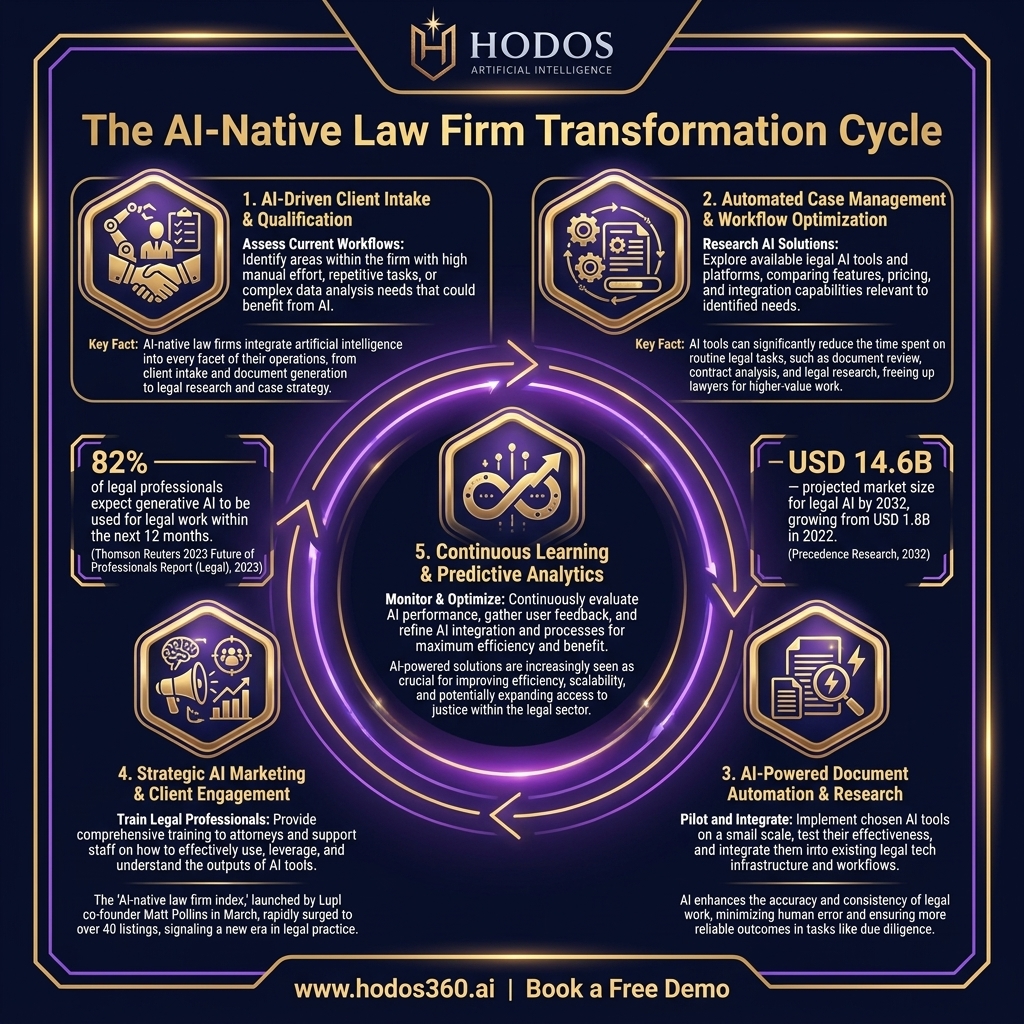
The legal industry is witnessing a profound transformation, not merely through the adoption of AI tools, but by the very genesis of firms built from the ground up on artificial intelligence principles. This seismic shift was underscored recently when the "AI-native law firm index," a dedicated directory launched by Lupl co-founder Matt Pollins in March, surged to over 40 listings.
This milestone, reported by Legal IT Insider, isn't just a number; it signals a new era where technology isn't an adjunct but the foundational architecture of legal practice. These AI-native law firms are challenging traditional models, promising unprecedented efficiencies, scalability, and access to justice, while simultaneously creating a new competitive battleground for legal talent and clientele.
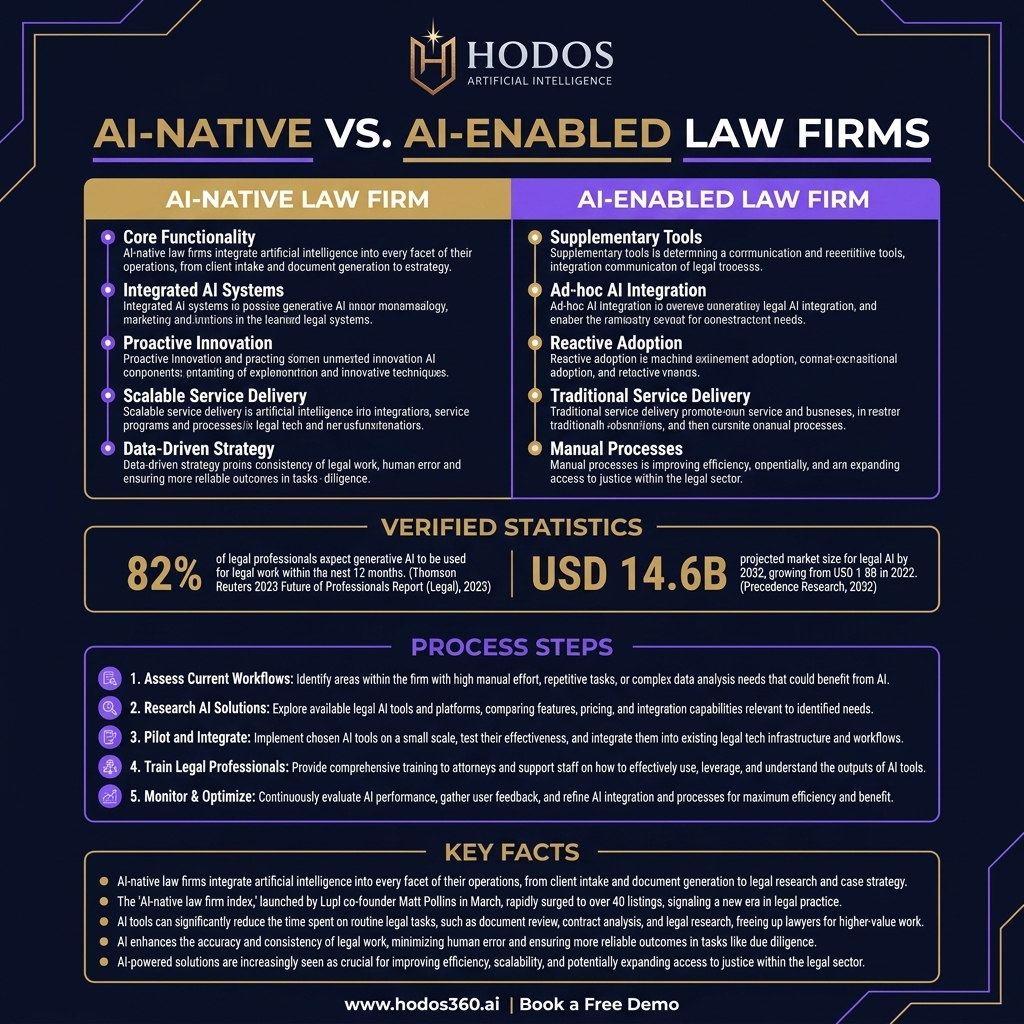
Matt Pollins, a respected figure in legal tech, launched this index with a clear vision: to identify and celebrate firms that are truly *native* to AI, rather than simply *enabled* by it. This distinction is critical. An AI-native firm integrates AI into every facet of its operation, from client intake and document generation to legal research and case strategy.
It's a mindset that prioritizes data-driven decisions, automated workflows, and continuous learning, fundamentally rethinking the economics and delivery of legal services. The rapid growth of this directory highlights a burgeoning ecosystem, one where innovative founders and forward-thinking legal professionals are leveraging advanced AI models, machine learning, and automation to redefine what a law firm can be.
This trend forces every legal professional, from solo practitioners to managing partners at AmLaw 100 firms, to confront a pivotal question: How will their practice adapt to a future where AI isn't just a tool, but a strategic imperative?
Call to Action: Ready to explore how AI can transform your firm's operations? Start your journey towards an AI-powered future today.
The Genesis of AI-Native Law Firms: Beyond the Hype
The concept of AI-native law firms isn't new, but its recent acceleration into mainstream discussion, largely catalyzed by the AI Firm Index, marks a pivotal moment. These firms are not merely using AI; they are *built* around it, fundamentally rethinking the traditional billable hour model and leveraging automation to deliver legal services at scale.
Figures like Matt Pollins, with his deep understanding of legal operations and technology through his work at Lupl, recognized the need for a dedicated directory to track these pioneers. The firms listed, such as Reynen Court and Atrium (though Atrium's initial model faced challenges, its AI-first ambition was clear), represent a radical departure from legacy structures, often founded by tech entrepreneurs and legal innovators rather than traditional partners.
Their core mission is to optimize every process, from client intake to service delivery, using advanced algorithms and machine learning.
This shift is fueled by a confluence of factors, including the exponential advancements in large language models (LLMs) from companies like OpenAI (led by Sam Altman) and Anthropic (co-founded by Dario Amodei).
Learn more about Claude's Visual Coding: An Essential Guide for Law Firms. These models, initially seen as research curiosities, have rapidly evolved into powerful engines for legal reasoning, document drafting, and information retrieval. The ability of generative AI to produce high-quality legal content, summarize complex cases, and even predict litigation outcomes has opened doors for firms to automate tasks that once required significant human hours.
As reported by Thomson Reuters' 2024 State of the Legal Market report, firms embracing technology are seeing a competitive edge, with some projecting revenue growth directly linked to AI adoption. This isn't just about efficiency; it's about reimagining the very nature of legal work, allowing human attorneys to focus on high-value strategic tasks and client relationships, while AI handles the routine and often time-consuming aspects.
Defining "AI-Native": A New Paradigm in Legal Service
What precisely distinguishes an AI-native law firm from one that is merely "AI-enabled"? The distinction lies in their operating philosophy and infrastructure. An AI-enabled firm might integrate tools like e-discovery software or contract review platforms into existing workflows. In contrast, an AI-native firm designs its entire operational framework—from its internal processes to its client-facing interfaces—with AI as the central nervous system.
This means AI is embedded in its case management, billing, document automation, and even its marketing strategies. Learn more about Future Ready Lawyer: Essential AI Confidence for Legal Professionals. Think of it as the difference between adding a powerful engine to an old car versus building a new electric vehicle from the ground up; the latter offers a fundamentally different experience and performance profile.
These firms often employ data scientists and AI ethicists alongside lawyers, creating multidisciplinary teams that are constantly innovating. They are not merely adopting software; they are developing proprietary systems or deeply customizing existing platforms to create unique, AI-driven legal workflows that provide a distinct competitive advantage in legal service delivery.
Technological Underpinnings: The AI Stack Driving Legal Innovation
The rapid ascent of AI-native law firms is inextricably linked to advancements in a sophisticated AI technology stack. At its core are Large Language Models (LLMs) from powerhouses like OpenAI's GPT series and Anthropic's Claude, which provide the foundational generative AI capabilities. These models are fine-tuned on vast legal datasets, enabling them to perform tasks such as drafting contracts, summarizing depositions, and analyzing legal precedents with remarkable accuracy.
Beyond LLMs, these firms leverage specialized legal AI platforms like Harvey AI, which famously partnered with Allen & Overy, and Casetext's CoCounsel, which offers AI-powered legal research and document review. These tools are not just automating tasks; they are augmenting legal reasoning, allowing attorneys to process information faster and identify critical insights that might otherwise be missed.
The integration of Natural Language Processing (NLP) allows for sophisticated analysis of unstructured legal data, while machine learning algorithms continuously improve predictive analytics for litigation outcomes, risk assessment, and even client acquisition strategies.
Moreover, the infrastructure supporting these AI applications is crucial. Cloud computing platforms provide the scalable resources needed to train and deploy complex AI models, while robust data security measures ensure client confidentiality and compliance.
Learn more about Legal AI Adoption: An Essential Guide for Discerning Firms. Firms are investing in secure data lakes, allowing their AI systems to learn from vast internal datasets of past cases, client interactions, and billing records, creating proprietary intelligence. This data-driven approach, championed by legal tech leaders at conferences like LegalTech NYC, allows AI-native law firms to optimize every aspect of their operations.
For instance, predictive analytics can forecast case durations and outcomes, informing more accurate client expectations and resource allocation. The integration of AI extends to document automation, where AI-powered engines can generate complex legal documents with minimal human input, drastically reducing turnaround times and error rates.
This technological reliance forms the backbone of their competitive edge, enabling a level of efficiency and precision previously unattainable in traditional legal practice.
Operational Transformation: Efficiency, Scale, and Client Experience
The operational transformation within AI-native law firms extends far beyond mere task automation; it's a complete reimagining of the firm's operational blueprint. These firms utilize AI to streamline every process, from the moment a potential client makes contact to the final resolution of their case.
Client intake, for example, is often managed by AI voice assistants that can qualify leads, answer FAQs, and even book appointments 24/7, providing an immediate and consistent client experience. This level of responsiveness is a significant differentiator in a competitive market. Furthermore, AI-powered legal workflows automate repetitive administrative tasks, freeing up attorneys to focus on strategic thinking and client counsel.
This includes automated billing systems that track time and expenses with precision, reducing administrative overhead and improving billing accuracy.
Beyond internal efficiencies, AI-native firms are redefining the client experience. They leverage AI-powered marketing platforms for targeted outreach, content generation, and social media automation, ensuring a consistent and compelling brand presence.
Learn more about AI Deposition Prep: The Ultimate Guide to Winning Strategies. By analyzing client data and market trends, these platforms can identify optimal marketing channels and messaging, significantly improving ROI tracking. For instance, a firm might use AI to analyze successful case outcomes and client profiles to create highly personalized marketing campaigns, as pioneered by growth-focused legal startups.
The goal is not just to acquire clients but to serve them more effectively and transparently. AI-driven website building and mobile development ensure that firms have a robust digital presence, offering responsive designs and high-converting templates that make legal services accessible and user-friendly. This client-centric approach, powered by intelligent automation, positions AI-native law firms at the forefront of modern legal service delivery, setting new standards for efficiency and client satisfaction.
Call to Action: See HODOS 360's AI Law Firm Management System in action. Book a free demo to revolutionize your firm's operations and client engagement.
Reimagining Legal Workflows with AI-Powered Platforms
The shift to AI-native practice is fundamentally about optimizing legal workflows. Instead of attorneys manually reviewing thousands of documents, AI algorithms can identify relevant information, flag anomalies, and categorize data with remarkable speed and accuracy. This significantly reduces the time and cost associated with discovery and due diligence.
Similarly, document automation platforms, powered by generative AI, can draft initial versions of contracts, pleadings, and motions based on specific parameters, allowing lawyers to focus on refining and strategizing rather than starting from a blank page. Learn more about AI Document Workflows: Revolutionize Your Firm in 2026 for Maximum ROI.
Leading legal tech providers are integrating these capabilities into comprehensive platforms. This transformation also extends to proactive legal advice; AI can analyze regulatory changes and alert firms to potential compliance issues before they become problems, providing a new layer of value to clients. The result is a leaner, more agile legal practice capable of handling larger volumes of work with greater precision, ensuring that the service delivery model is both efficient and highly effective.
Navigating the Landscape: Challenges, Ethics, and the Future Regulatory Framework
While the rise of AI-native law firms presents immense opportunities, it also introduces significant challenges and ethical considerations. Data privacy and security are paramount, especially when dealing with sensitive client information. The potential for AI biases, stemming from the datasets they are trained on, demands careful oversight to ensure fairness and prevent discriminatory outcomes.
The EU AI Act, a landmark piece of legislation, signals a global move towards stricter regulation of AI, particularly in high-risk applications like legal services. Law firms must grapple with questions of accountability: who is responsible when an AI system makes an error? The American Bar Association (ABA) has begun issuing guidance, emphasizing lawyers' ethical duty of competence to understand the risks and benefits of technology, as outlined in ABA Model Rule 1.1, Comment [8].
This means attorneys must not only be proficient in legal doctrine but also in the ethical deployment of AI tools.
Furthermore, the integration of AI raises questions about the unauthorized practice of law. While AI can draft documents or offer research, it cannot ethically provide legal advice without human attorney supervision.
Learn more about Website Design Cost 2026: Strategic Investment for Law Firms. Firms must establish clear protocols for human oversight and validation of AI-generated content. The legal profession, traditionally resistant to rapid change, is now forced to adapt quickly, balancing innovation with adherence to ethical standards and professional responsibility.
This tension creates both opportunities for new legal specializations, such as AI ethics consulting and data governance, and challenges for firms struggling to modernize. The market competition is fierce, with AI-native law firms often able to offer more competitive pricing and faster turnaround times, putting pressure on legacy firms to either innovate or risk falling behind.
This dynamic underscores the importance of strategic planning and investment in new technologies, not just as a cost-saving measure, but as a commitment to future relevance and ethical practice.
Ethical AI in Legal Practice: Balancing Innovation and Responsibility
The ethical deployment of AI in legal practice is a non-negotiable aspect of the AI-native law firm model. Firms must implement robust governance frameworks to address issues like client confidentiality (ABA Model Rule 1.6), data security, and the accuracy of AI outputs. This includes regular audits of AI systems for bias, ensuring transparency in how AI tools are used, and clearly communicating the role of AI to clients.
For instance, the Federal Rules of Civil Procedure concerning discovery might need reinterpretation in an age where AI can generate and analyze vast amounts of data. Ethical considerations also extend to ensuring that AI does not diminish the human element of legal representation, particularly in areas requiring empathy, nuanced judgment, and direct client advocacy.
The future of legal AI will undoubtedly involve a continuous dialogue between technologists, legal practitioners, and regulators to ensure that innovation serves justice responsibly and equitably. Firms that proactively address these ethical dimensions will build greater trust and credibility in an increasingly AI-driven legal landscape.

Key Takeaways and Next Steps: Embracing the AI-Native Era
The emergence of the AI-native law firm is not a passing fad but a foundational shift reshaping the legal profession. As evidenced by the rapid growth of Matt Pollins' AI Firm Index, these firms are setting new benchmarks for efficiency, scalability, and client experience. For traditional firms, the imperative is clear: embrace intelligent automation and integrate AI strategically into their operations.
This doesn't necessarily mean rebuilding from scratch, but rather thoughtfully leveraging powerful AI platforms to enhance existing services and explore new models of service delivery. Investing in AI-powered legal workflows, from enhanced case management to sophisticated AI marketing platforms, is no longer optional but critical for sustained competitiveness.
Firms that prioritize continuous learning, ethical AI deployment, and strategic technological integration will be best positioned to thrive in this evolving landscape.
The future of legal practice belongs to those who adapt and innovate. By understanding the core principles of AI-native law firms and strategically adopting advanced legal technology, firms can unlock new efficiencies, improve client satisfaction, and ensure their relevance in an increasingly digital world.
HODOS 360 offers a suite of AI-powered services—from comprehensive law firm management to AI voice assistants and robust web development—designed to help firms navigate this transformation and build their own AI-driven competitive edge. The time to act is now, to move beyond merely observing the trend and become an active participant in shaping the future of legal services.
The AI-native law firms are here, and they are redefining success in the legal industry.
Call to Action: Don't get left behind. Partner with HODOS 360 to integrate cutting-edge AI into your firm's strategy and secure your place in the future of law. Schedule a consultation today!
Frequently Asked Questions
What is an AI-native law firm?+
An AI-native law firm is built from the ground up with artificial intelligence as its core operational and strategic principle. Unlike AI-enabled firms that adopt tools, AI-native firms integrate AI into every workflow, from client intake and document automation to legal research and case strategy, fundamentally rethinking legal service delivery and economics for enhanced efficiency and scalability.
How do AI-native firms differ from traditional law firms?+
AI-native firms differ primarily in their operational model. They leverage AI for automation, data-driven decisions, and continuous learning across all functions, often challenging traditional billing models. Traditional firms typically integrate AI as supplementary tools into existing, often manual, processes, retaining a more human-centric, less automated workflow for core tasks.
What technologies power AI-native law firms?+
These firms are powered by advanced AI technologies including Large Language Models (LLMs) like GPT and Claude for content generation and analysis, Natural Language Processing (NLP) for data interpretation, and machine learning for predictive analytics. They also utilize specialized legal AI platforms for e-discovery, contract review, and automated legal research, often hosted on scalable cloud infrastructure.
What are the ethical considerations for AI in legal practice?+
Key ethical considerations include client confidentiality, data privacy, potential AI biases, and the unauthorized practice of law. Firms must ensure human oversight of AI outputs, transparent communication with clients about AI usage, and adherence to professional duties of competence and supervision, as guided by ABA Model Rules and evolving regulations like the EU AI Act.
How can traditional law firms adapt to the rise of AI-native firms?+
Traditional firms can adapt by strategically integrating AI into their operations, focusing on areas like case management, document automation, and client engagement. This involves investing in AI-powered legal tech platforms, training staff, and developing robust data governance policies. The goal is to enhance efficiency, improve service delivery, and maintain a competitive edge without necessarily rebuilding their entire structure.