Claude's Visual Coding: An Essential Guide for Law Firms
Just last month, at the bustling LegalTech NYC 2026 conference, a common lament echoed through the exhibition halls: the arduous, often frustrating process of website development for law firms. Managing Partner Sarah Chen of Meridian Legal Group, a mid-sized firm specializing in M&A, shared her recent ordeal.
"We spent six months and a substantial budget updating our site," she recounted, "only for it to still feel outdated, clunky on mobile, and not truly reflect our brand. The back-and-forth with developers was endless, and every small change felt like a major project." Sarah's experience is far from unique; many legal professionals grapple with digital presence, often seeing it as a necessary evil rather than a strategic asset.
The traditional web development cycle, with its intricate dance between designers, coders, and content strategists, has historically been a bottleneck for firms striving for agility and a cutting-edge online identity.
However, a seismic shift is underway, promising to redefine this landscape entirely. The recent announcement from Anthropic, detailing Claude 3.5 Sonnet's groundbreaking ability to "code websites by sight," as highlighted by Geeky Gadgets, marks a pivotal moment.
This isn't merely an incremental update; it's a paradigm shift in how digital interfaces can be conceived and constructed. Imagine providing an AI with a visual mock-up, a hand-drawn sketch, or even a screenshot of a competitor's site, and having it generate functional, semantic HTML and CSS almost instantaneously.
This Claude visual website coding capability moves beyond abstract instructions, allowing the AI to interpret visual cues and translate them into robust web architecture. For law firms, this innovation holds the potential to dramatically cut down development cycles, reduce costs, and empower them to iterate on their digital presence with unprecedented speed and precision, transforming their approach to client engagement and online visibility.
This article delves into the mechanics of Claude's new visual intelligence, exploring how it works and its profound implications for legal professionals. We will examine the competitive landscape, the strategic advantages for law firms, and the practical steps for integrating this advanced AI web development into your firm's digital strategy.
The era of cumbersome website overhauls is drawing to a close, replaced by a future where a firm's online presence can evolve as dynamically as the legal market itself. This isn't just about faster coding; it's about democratizing sophisticated web design and empowering law firms to exert greater control over their digital destiny, from responsive design to intricate client portals, all while maintaining strict compliance and security standards.
The Dawn of Visual AI Coding: Claude's Game-Changing 'Sight'
The concept of an AI coding websites "by sight" might sound like science fiction, but Anthropic's Claude 3.5 Sonnet has made it a tangible reality. At its core, this capability leverages advanced computer vision and multimodal understanding. Unlike previous generative AI models that primarily relied on text prompts to produce code, Claude 3.5 Sonnet can now ingest visual inputs—ranging from simple wireframes to complex UI designs or even screenshots of existing websites—and generate the corresponding front-end code (HTML, CSS, JavaScript) that accurately reflects the visual layout and styling.
Dario Amodei, CEO of Anthropic, has consistently emphasized the development of AI models that can reason and interact with the world in more human-like ways, and this visual coding breakthrough is a testament to that vision. It’s a significant leap from merely generating code based on described features to interpreting the *intent* embedded within a visual representation, fundamentally altering the interaction model between human designers and AI developers.
Early reports, including those from Geeky Gadgets, detail how this system observes the structure, spacing, typography, and color schemes, then translates these visual properties into a coherent, functional codebase, significantly reducing the manual effort involved in traditional front-end development. This shift could make the iterative design process much more fluid, allowing legal marketing teams to rapidly prototype and test new website layouts or landing pages without extensive developer resources.
The underlying technology combines cutting-edge large language models (LLMs) with sophisticated visual transformers. When Claude is presented with an image, it doesn't just recognize objects; it understands their spatial relationships, hierarchical structure, and aesthetic attributes. For instance, if it sees a navigation bar, it interprets its function, the arrangement of links, and its responsiveness across different screen sizes.
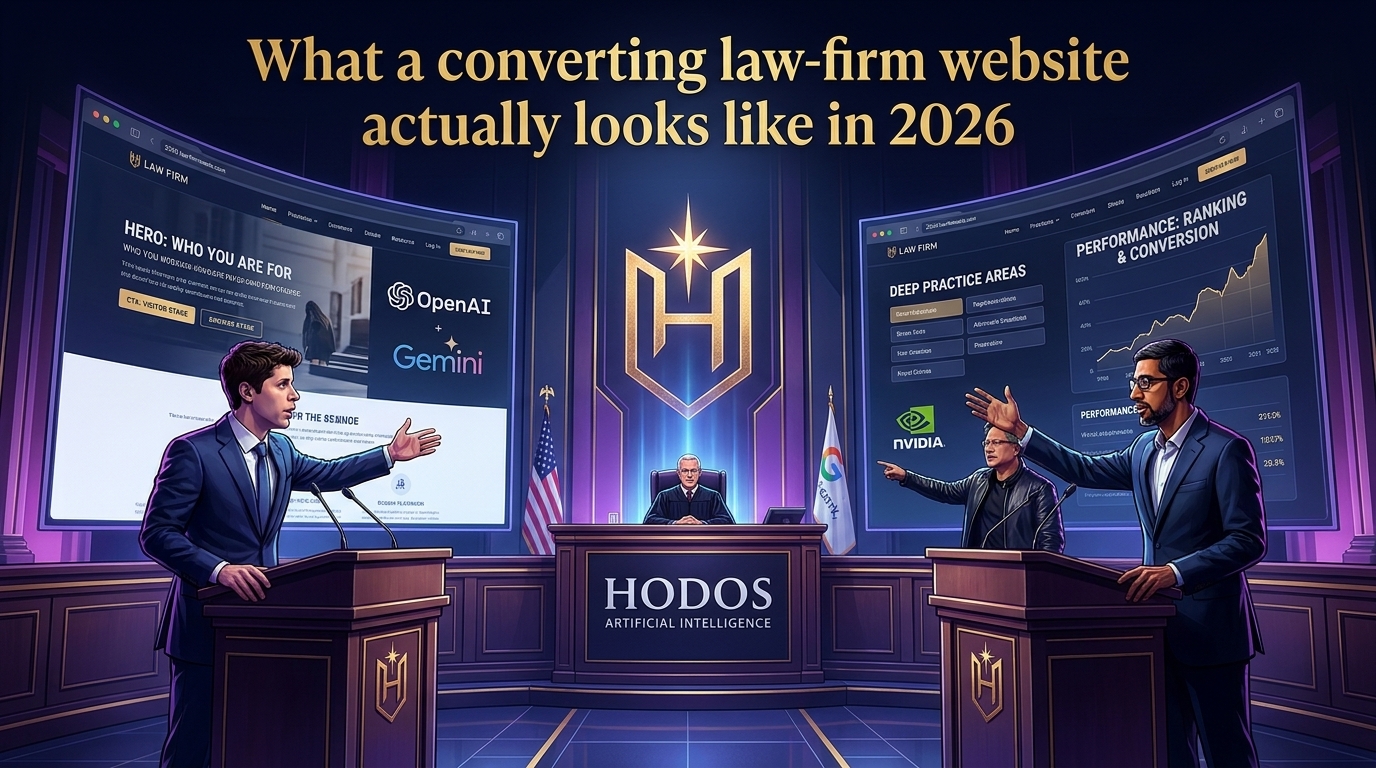
This deep semantic understanding of visual elements allows it to produce cleaner, more maintainable code compared to earlier, more rudimentary image-to-code solutions. The competitive landscape in AI development is fierce, with giants like OpenAI's GPT models and Google's Gemini constantly pushing boundaries. Learn more about Legal AI ROI: Maximizing Law Firm Value in 2026.
While other models, such as those powering Cursor or Perplexity, have shown prowess in code generation or debugging based on textual prompts, Claude's visual interpretation offers a distinct advantage in the domain of UI/UX development. This ability to navigate complex visual data and follow design principles implicitly means less explicit instruction is required from the user, accelerating the initial build phase and subsequent modifications.
The implications extend beyond simple webpage creation, suggesting potential for AI to assist in developing interactive elements, dynamic content displays, and even sophisticated web applications with minimal human intervention in the coding process, making the once-complex task of building and maintaining a modern legal website far more accessible.
This new sight_intelligence capability also addresses a critical bottleneck in the legal sector: the often-limited access to specialized web development talent familiar with the nuances of legal marketing and compliance. Law firms frequently struggle to find developers who understand both aesthetic design and the specific requirements of legal ethics, data privacy (e.g., California Consumer Privacy Act (CCPA) or GDPR for international clients), and client experience.
By allowing a visual input to drive code generation, firms can leverage their internal design expertise or readily available templates, then have Claude translate that vision into a functional site. This democratizes the process, moving away from relying solely on highly specialized and often expensive external agencies.
For instance, a firm could take a screenshot of a high-performing legal industry website, ask Claude to replicate its structure, and then customize the content, branding, and specific features pertinent to their practice areas. This approach dramatically reduces the hours traditionally spent on coding from scratch, allowing legal teams to focus on strategic content and client engagement rather than technical implementation details.
The speed and efficiency gains are particularly appealing given the fast pace of digital marketing and the need for law firms to adapt quickly to new trends and client expectations in a competitive market.
The AI Development Ecosystem: Claude vs. Competitors
While Claude 3.5 Sonnet's visual coding is a significant advancement, it operates within a rapidly evolving AI development ecosystem. Companies like OpenAI with their GPT-4o, and Google with their Gemini family of models, are also pushing multimodal capabilities, albeit with different strengths. GPT-4o, for instance, excels in real-time conversational interaction and creative content generation, while Gemini often integrates deeply with Google Workspace applications for enhanced productivity.
The distinction for Claude lies in its specific optimization for visual-to-code translation, aiming for high fidelity and semantic understanding of design elements. Startups like Harvey AI have already demonstrated the power of specialized LLMs in legal research and drafting, securing partnerships with global firms like Allen & Overy.
Similarly, the competition for AI web development tools is heating up, with platforms like Bubble offering no-code solutions and others like Webflow providing low-code environments. Learn more about AI Lead Flow: Essential Strategies for Law Firm Growth. Claude's approach bridges the gap between these, offering the speed of visual input with the flexibility of generated, editable code.
This is particularly relevant for law firms that need customized solutions but lack extensive in-house coding expertise. The ability of ollama to run large language models locally is also gaining traction, offering alternative deployment models for more privacy-sensitive applications, but for cutting-edge visual coding, cloud-based powerful models like Claude remain at the forefront.
The ongoing market competition, often highlighted by founder rivalries and rapid innovation cycles, ultimately benefits end-users by driving down claude code pricing and enhancing capabilities across the board.
Revolutionizing Legal Web Development: Efficiency and Innovation
For law firms, the implications of Claude's visual coding are transformative, especially in the realm of legal marketing automation and client acquisition. A recent Thomson Reuters report indicated that over 70% of legal clients begin their search for legal services online, underscoring the critical importance of a firm's digital storefront.
Traditional website development often involves a protracted process: design mock-ups are created, then handed off to developers who manually translate them into code. This hand-off is a common source of delays, misinterpretations, and budget overruns. With Claude, a law firm's marketing team or even a tech-savvy partner could directly upload a design concept – perhaps a high-converting landing page template or a vision for a new client portal – and have Claude generate the foundational code.
This drastically compresses the development timeline, allowing firms to launch new campaigns, update practice area pages, or respond to market shifts with unprecedented agility. For example, a firm looking to capitalize on a new legislative change could quickly spin up a specialized micro-site or landing page within days, rather than weeks or months, ensuring they capture early leads and demonstrate thought leadership.
This isn't just about speed; it's about empowering law firms to be proactive and responsive in their digital engagement, turning their website from a static brochure into a dynamic, revenue-generating asset.
The efficiency gains extend beyond initial development to ongoing maintenance and updates, areas where many law firms incur significant costs and frustration.
According to a 2024 ABA Legal Technology Survey Report, nearly 60% of small to mid-sized firms cite website maintenance as a significant administrative burden. Imagine a scenario where a firm decides to refresh its brand identity or implement a new responsive design element across its site.
Instead of engaging developers for several weeks, they could provide Claude with the updated visual guidelines, and the AI could suggest or even implement the necessary code changes. This reduces reliance on external vendors and gives firms greater control over their digital assets. Furthermore, Claude's ability to interpret visual designs means that firms can leverage a broader pool of talent for their design needs, focusing on UX/UI specialists rather than just full-stack developers.
Learn more about AI Legal Startup Sandstone: Unlocking 2026's Legal Tech Future. This is particularly beneficial for smaller firms that might not have the budget for a dedicated in-house web development team. The shift towards AI-powered web creation allows these firms to compete more effectively with larger entities that have historically outspent them on digital infrastructure, leveling the playing field in terms of online presence and client outreach.
This capability is poised to make sophisticated web & mobile development accessible to a much wider range of legal practices.
Moreover, Claude's visual coding can foster a culture of innovation within law firms. Instead of being constrained by technical limitations, legal professionals can experiment with new digital strategies.
Want to test a new layout for case studies? Or integrate an interactive element for client testimonials? Claude can rapidly prototype these ideas, providing tangible code that can be deployed and tested. This iterative approach, often seen in agile software development, is now within reach for legal marketing teams.
The speed of iteration means firms can quickly identify what works best for their target audience, optimize conversion funnels, and improve the overall client journey. This level of flexibility was previously unattainable without substantial technical investment. Firms can also leverage this for internal-facing applications, such as developing custom dashboards for case management or intuitive interfaces for internal knowledge bases.
The ability to quickly generate and modify web components based on visual specifications means that the digital tools a law firm uses can be much more tailored to its unique operational needs, enhancing both external client experience and internal operational efficiency. This continuous improvement cycle, fueled by AI, ensures that a firm's digital presence remains cutting-edge and highly effective in a competitive legal market.
- ✓Accelerated Development Cycles: Transform weeks or months of website creation into days, enabling rapid deployment of new content and features.
- ✓Reduced Costs: Minimize reliance on expensive external web development agencies and reduce ongoing maintenance expenditures.
- ✓Enhanced Design Fidelity: Ensure the generated code accurately reflects the visual design, eliminating common discrepancies between mock-ups and live sites.
- ✓Improved Agility: Empower marketing and legal teams to quickly adapt to market trends, legislative changes, and client feedback with rapid website updates.
- ✓Democratized Expertise: Allow non-coders to contribute significantly to web design and development, leveraging visual skills over coding proficiency.
- ✓Consistent Responsive Design: Automatically generate code optimized for various devices, ensuring a seamless user experience across desktops, tablets, and mobile phones.
- ✓Scalability for Growth: Easily scale website capabilities and add new sections as the firm grows, without major overhauls.
Beyond Aesthetics: SEO, Accessibility, and Compliance for Law Firms
While the visual appeal and rapid deployment are immediate benefits of Claude visual website coding, its true value for law firms extends into critical areas like SEO, accessibility, and legal compliance. A beautiful website is ineffective if it cannot be found by potential clients or used by individuals with disabilities.
Claude's sophisticated understanding of web standards means it can generate clean, semantic HTML, which is a cornerstone of effective SEO for law firms. Search engines like Google favor well-structured, semantically correct code as it makes content easier to crawl and understand. This translates directly into higher search rankings and greater organic visibility.
Moreover, Claude can be instructed or trained to adhere to specific SEO best practices, such as proper heading structure (H1, H2, H3 tags), meta descriptions, and image alt attributes, directly from visual cues or minimal text prompts. This ensures that the technical foundation for strong SEO is baked into the website from its inception, rather than being an afterthought or a costly retrofit.
For example, a firm might provide a visual layout for a new blog post and Claude could automatically structure it with SEO in mind, ensuring key legal terms are correctly highlighted in semantic tags. This level of integrated optimization significantly enhances a law firm's digital footprint and competitive edge in online legal services, moving beyond generic web development to truly specialized legal marketing automation.
Accessibility is another non-negotiable aspect of modern web design, particularly for legal entities that serve diverse populations. The Americans with Disabilities Act (ADA) and similar global regulations mandate that public-facing websites, including those of law firms, be accessible to individuals with disabilities. Non-compliance can lead to costly lawsuits and reputational damage.
Claude's ability to interpret visual design with an awareness of web standards means it can generate code that inherently supports Web Content Accessibility Guidelines (WCAG) principles. Learn more about AI Document Workflows: Unleash Efficiency & ROI in 2026. For instance, it can automatically add ARIA attributes, ensure proper keyboard navigation, and implement sufficient color contrast based on the visual design.
This is a monumental shift from traditional development, where accessibility often requires specialized audits and retrofitting, leading to additional expenses and delays. By integrating accessibility considerations into the initial visual-to-code translation, law firms can proactively ensure their websites are inclusive and compliant, mitigating legal risks and broadening their client reach.
This proactive approach to accessibility is not just a legal requirement but also a strategic advantage, demonstrating a firm's commitment to serving all potential clients. The cost of retrofitting an inaccessible site can be substantial, making this preventative AI capability incredibly valuable.
Furthermore, the legal industry operates under stringent ethical guidelines and data privacy regulations.
Websites for law firms must not only be visually appealing and functional but also secure and compliant with rules like the ABA Model Rules of Professional Conduct, particularly those related to client confidentiality and advertising. While Claude generates the front-end code, the underlying data handling and security protocols still require careful consideration.
However, the AI can be instrumental in generating compliant forms, secure client login interfaces, and privacy policy pages that adhere to industry standards. For instance, when designing a client intake form, Claude can be guided to generate fields that encrypt sensitive information or to ensure clear disclaimers are present, minimizing potential liabilities.
Partner John Davies of LegalTech Solutions, a firm specializing in legal compliance software, notes, "AI like Claude can dramatically streamline the *creation* of compliant digital assets, but human oversight remains paramount for *ensuring* compliance in their deployment and data management." This interplay between AI efficiency and human legal expertise is crucial.
As AI tools continue to evolve, with developments like claude desktop app or enhanced API integrations, law firms will gain even finer control over how their digital platforms meet both technical and regulatory demands, making digital transformation legal a more secure and reliable process.
Ensuring Data Privacy and Security in AI-Driven Development
The advent of AI-powered web & mobile development tools like Claude also brings renewed focus on data privacy and security, especially within the highly sensitive legal sector. While Claude excels at generating front-end code, law firms must remain vigilant about how client data is handled both during the development process and on the live site.
The principle of "privacy by design" becomes even more critical. Firms must ensure that any visual inputs containing sensitive information are processed securely and that the generated code, when integrated with backend systems, maintains robust data encryption and access controls. Legal professionals should be aware of where their data is being processed (e.g., cloud servers, local machines) and the security certifications of AI providers like Anthropic.
Learn more about Essential AI Website Builder Guide for Law Firms. Additionally, the responsible use of AI in website creation means understanding potential biases in the generated code or design suggestions. While Claude is designed for objectivity, continuous human review and ethical guidelines, such as those discussed at the recent EU AI Act enforcement discussions, are essential.
This proactive approach ensures that the efficiencies gained through Claude visual website coding do not come at the expense of client trust or regulatory compliance. The partnership between human legal expertise and AI capabilities is not just about building faster, but building smarter and more securely.
Strategic Implementation: Integrating AI Visual Coding into Your Firm's Digital Strategy
Integrating Claude visual website coding into a law firm's digital strategy requires a thoughtful, phased approach rather than a wholesale replacement of existing workflows. The initial step involves identifying specific use cases where AI visual coding can deliver immediate, tangible benefits. This might include rapidly prototyping new landing pages for specific campaigns, quickly updating practice area sections, or developing internal dashboards for legal operations.
For instance, a firm could leverage Claude to create a series of A/B test variations for a high-converting client intake form, allowing them to optimize for lead generation more effectively. This allows firms to experiment with the technology, understand its strengths and limitations, and build internal expertise without disrupting core operations.
Training is also crucial; while Claude simplifies coding, understanding how to craft effective visual prompts and refine AI-generated code remains a valuable skill. Firms might designate a "digital innovation lead" within their marketing or IT departments to spearhead this integration, working closely with external consultants or platform providers like HODOS 360, which offers specialized Web & Mobile Development services tailored for law firms, leveraging AI-powered website building and high-converting templates.
This strategic integration ensures that the technology serves the firm's overarching business objectives, rather than being an isolated tool. The adoption of AI in legal tech is not a question of *if*, but *how*, and a measured, strategic implementation plan is key to successful digital transformation.
The long-term strategy for firms should encompass not just the adoption of AI visual coding but its seamless integration into a broader digital transformation legal roadmap. This involves evaluating how Claude's capabilities can complement existing tools and platforms, such as client relationship management (CRM) systems (e.g., Clio Grow), marketing automation platforms, and document management systems.
For instance, a visually coded client intake form could directly feed into the firm's case management system, streamlining the entire client onboarding process. This holistic view ensures that the website is not a standalone entity but an integral part of an interconnected digital ecosystem. Furthermore, firms should consider how AI-generated websites can be maintained and updated over time.
Learn more about AI Web Development: Revolutionizing Law Firm Websites in 2026. While Claude can generate code, human oversight for quality assurance, security patching, and complex feature development remains essential. This hybrid approach, combining AI efficiency with human expertise, represents the most robust path forward.
As Jensen Huang, CEO of NVIDIA, often articulates, the future of technology lies in intelligent augmentation, where AI empowers human potential rather than replacing it entirely. For law firms, this means leveraging Claude to accelerate routine or design-heavy tasks, freeing up human talent to focus on strategic thinking, complex problem-solving, and personalized client relationships.
Firms should also consider the ethical implications of using AI in client-facing web development. Transparency with clients about the use of AI in generating website components, especially for interactive elements or personalized content, builds trust. The legal industry has a unique responsibility to maintain integrity and clarity in all communications, and digital platforms are no exception.
Establishing internal guidelines for AI usage, reviewing generated content for accuracy and bias, and ensuring adherence to professional ethics are paramount. This involves not just technical implementation but also a cultural shift within the firm towards embracing AI responsibly. The market competition among AI providers, including discussions around claude code pricing and feature sets, will continue to evolve, making it important for firms to stay informed and adapt their strategies.
This ongoing engagement with emerging technologies will be critical for law firms looking to maintain a competitive edge and provide superior client service in an increasingly digital world. The future of legal web presence lies in intelligent, agile, and ethically-driven development, a future that Claude's visual coding is helping to usher in.
Staying abreast of developments, such as the emergence of a claude desktop app or new features, will be vital for maximizing the utility of this technology.
The Synergy of AI and Human Expertise in Legal Tech
The narrative around AI often presents it as a replacement for human tasks, but the most effective applications, particularly in the legal sector, demonstrate a powerful synergy between AI and human expertise. With Claude visual website coding, legal professionals are not ceding control to machines; rather, they are gaining a powerful co-pilot.
This means attorneys and marketing teams can focus on the strategic vision, the nuanced client experience, and the precise legal messaging, while Claude handles the heavy lifting of code generation. For example, a senior partner could sketch a concept for a new thought leadership piece's landing page, specifying key elements and calls to action, and Claude could rapidly translate that into a functional web page.
The human element then comes into play for refining the copy, ensuring legal accuracy, and injecting the firm's unique voice. This collaborative model elevates the role of legal professionals, allowing them to leverage their specialized knowledge more effectively and creatively. The tension between traditional methods and AI disruption is not about one replacing the other, but about finding the optimal point of collaboration.
Firms that embrace this synergy will be the ones that truly excel in the evolving digital landscape, delivering superior online experiences while maintaining their core professional values. This balanced approach ensures that technology like Claude's sight_intelligence serves to augment, not diminish, the human touch in legal services.
Key Takeaways and Next Steps for Forward-Thinking Law Firms
The introduction of Claude's ability to code websites by sight represents a pivotal moment for law firms navigating the complexities of the digital age. This is not just another technological advancement; it is a fundamental shift in how digital presences can be conceived, built, and maintained.
Firms that embrace this AI web development capability will gain a significant competitive advantage, characterized by faster market responsiveness, optimized client engagement, and streamlined operational efficiency. The traditional bottlenecks of web development—high costs, long timelines, and technical dependencies—are being systematically dismantled, making sophisticated digital infrastructure accessible to firms of all sizes.
The future of a law firm's online presence is dynamic, iterative, and deeply integrated with its overall business strategy.
For forward-thinking legal professionals, the immediate next steps involve exploring how AI visual coding can be piloted within their firms. Start with low-stakes projects, such as creating new landing pages for specific campaigns or revamping internal resource portals.
Invest in understanding the capabilities of tools like Claude 3.5 Sonnet and how they can be integrated with existing legal tech stacks. Crucially, foster a culture of experimentation and continuous learning within your team. The legal industry is undergoing a rapid digital transformation legal, and staying stagnant is no longer an option.
Firms that proactively adopt and adapt to these innovations will be better positioned to attract and retain clients, enhance their brand reputation, and operate more efficiently in an increasingly competitive market. Tools like those offered by HODOS 360, encompassing AI-powered website building and legal marketing platforms, are specifically designed to help law firms leverage these advancements.
Ultimately, the ability of AI to interpret visual designs and generate functional code empowers law firms to take greater control of their digital narrative. It allows for rapid iteration, ensuring that their online presence is always current, compliant, and optimized for client acquisition and satisfaction.
This evolution signifies a move towards a more agile, cost-effective, and strategically aligned approach to digital presence. The firms that recognize this shift and strategically integrate these AI capabilities will not only adapt to the future but actively shape it, setting new benchmarks for digital excellence in the legal profession.
Frequently Asked Questions
What does 'Claude can code websites by sight' mean for law firms?+
It means Claude 3.5 Sonnet can generate functional website code (HTML, CSS, JavaScript) from visual inputs like sketches, mock-ups, or screenshots. For law firms, this translates to significantly faster website development, reduced costs, and the ability to quickly update or create new web pages without extensive coding expertise, streamlining their digital marketing efforts and client engagement strategies.
How does AI visual coding improve SEO for law firm websites?+
AI visual coding, when properly implemented, can generate clean, semantic HTML code, which is highly favored by search engines. This improves crawlability and understanding of content, leading to better search rankings. It also allows for the automated application of SEO best practices like proper heading structures and meta descriptions directly from visual designs, enhancing a law firm's online visibility.
Can Claude's visual coding help with website accessibility and compliance?+
Yes, Claude can be guided to generate code that adheres to Web Content Accessibility Guidelines (WCAG) from the design phase. This proactive approach helps law firms ensure their websites are accessible to individuals with disabilities, mitigating legal risks (like ADA lawsuits) and demonstrating a commitment to inclusivity. It embeds compliance directly into the development process.
What are the security and privacy considerations when using AI for web development?+
While Claude generates code, law firms must ensure robust data encryption and access controls for any sensitive information handled by the website. Human oversight is crucial for reviewing AI-generated code, implementing secure backend systems, and adhering to data privacy regulations (e.g., CCPA). Transparency about AI use and continuous security audits are also vital to maintain client trust.
How can law firms integrate AI visual coding into their existing digital strategy?+
Law firms should start with pilot projects for specific use cases, like new landing pages or internal dashboards, to build expertise. Integrate AI-generated components with existing CRMs and marketing platforms for a cohesive digital ecosystem. Training staff, establishing ethical guidelines, and maintaining human oversight for quality and compliance are key for a successful, long-term digital transformation legal.