
Future Ready Lawyer: Essential AI Confidence for Legal Professionals
The legal profession stands at a pivotal juncture, grappling with an unprecedented wave of technological innovation. Just last month, the Wolters Kluwer Future Ready Lawyer Report sent ripples across the industry, revealing that a staggering 92% of legal professionals now engage with AI in some capacity.
This isn't merely a trend; it's a fundamental shift, challenging established norms and demanding a proactive approach to technology integration. As firms navigate this complex terrain, the question isn't whether to adopt AI, but how to do so strategically and ethically, fostering genuine confidence in its capabilities and ensuring it serves as an accelerator for growth and client value.
The report, a benchmark for legal industry analysis, underscores a critical imperative: to be a future ready lawyer means embracing AI not as a threat, but as an indispensable partner in delivering superior legal services.
The insights from the Wolters Kluwer report resonate with the broader discussions unfolding at major legal tech conferences like LegalTech NYC 2026, where the focus has decisively shifted from theoretical AI potential to practical, scalable implementations. Firms that once hesitated are now confronting the undeniable competitive advantage enjoyed by early adopters.
Consider the dramatic transformation at boutique litigation firm, 'Lex Innova,' led by managing partner Sarah Chen. For years, Chen resisted what she called 'faddish tech,' preferring traditional methods. However, after losing a significant corporate client to a competitor leveraging advanced AI for due diligence and contract review, Chen invested heavily in AI-powered tools.
Learn more about AI Legal Research: The Ultimate Guide for Law Firms. Her firm, once a bastion of paper files, now uses sophisticated AI Law Firm Management Systems to automate everything from client intake to document generation, drastically cutting turnaround times and improving accuracy. This pivot highlights the human drama inherent in this transition: the initial skepticism, the competitive pressure, and ultimately, the transformative potential when embraced thoughtfully.
The imperative for legal professionals to become a future ready lawyer is no longer a suggestion, but a necessity for survival and prosperity in an increasingly digital world.
Navigating the AI Tsunami: Insights from the Wolters Kluwer Report
The Wolters Kluwer Future Ready Lawyer Report serves as a critical compass, charting the currents of AI adoption and its profound implications for the legal ecosystem. It highlights not just the pervasive use of AI, but also the widening gap between firms that are confidently deploying AI for strategic advantage and those still grappling with foundational implementation.
The report details how AI is being leveraged across various legal functions, from enhancing legal research and automating routine tasks to predicting case outcomes and optimizing resource allocation. For instance, it reveals that firms utilizing AI for document review are seeing up to a 30% reduction in time spent on these tasks, a statistic that underscores the tangible efficiency gains at stake.
This data challenges the long-held belief that AI primarily threatens jobs, instead framing it as a tool for augmentation, freeing legal professionals from mundane tasks to focus on higher-value strategic work. Learn more about WordPress AI Unlocked: Legal Websites Mastered 2026. The narrative arc here is one of evolution, where the legal sector, traditionally cautious, is being compelled to innovate by market forces and the sheer capability of emerging technologies.
The report also touches upon the growing importance of data security and ethical AI governance, particularly in light of evolving regulations like the EU AI Act, which came into full enforcement recently, adding another layer of complexity and necessity for careful implementation. Becoming a future ready lawyer means understanding these multifaceted implications.
The report also delves into the psychological aspect of AI adoption, specifically addressing the 'confidence gap' among legal professionals. While many recognize AI's potential, a significant portion still lacks the confidence in their own ability to effectively integrate and manage these tools. This sentiment is often rooted in a lack of specialized training, fear of job displacement, or concerns about data privacy and algorithmic bias.
However, the report also showcases a cohort of 'future ready' firms that are actively investing in upskilling their workforce, fostering a culture of continuous learning, and partnering with legal tech providers to bridge this gap. Take, for example, the recent collaboration between global firm Linklaters and AI startup Harvey AI, which aims to integrate generative AI across various practice areas.
Learn more about Voice AI Adoption: Essential for Law Firms' Future Growth. This partnership, following OpenAI's substantial $6.6 billion raise and its continued push into enterprise solutions, demonstrates a real commitment to not just adopting AI, but embedding it deeply into operational workflows. Dario Amodei, CEO of Anthropic, often speaks about the need for 'constitutional AI' – systems designed with safety and ethics at their core – a principle that resonates deeply within the legal community as it grapples with responsible AI deployment.
This emphasis on ethical development and user confidence is paramount for any legal professional aspiring to be a future ready lawyer.
Moreover, the Wolters Kluwer report highlights the increasing client demand for transparency, efficiency, and innovative solutions, which AI-powered firms are better equipped to meet. Clients are no longer content with opaque billing practices and lengthy timelines; they expect demonstrable value and predictable outcomes. Firms that can leverage AI to provide faster, more accurate, and cost-effective services are gaining a significant competitive edge.
This shift in client expectations is a major driver of AI adoption, pushing even the most traditional firms to reconsider their operational models. The report suggests that firms failing to adapt risk being left behind, losing market share to agile, tech-forward competitors. Learn more about Legal AI Acquisition 2026: The New Era of Agentic Law Firms.
This competitive tension creates a compelling narrative: firms must either innovate or face obsolescence. The discussion around ai news today and the rapid advancements from companies like Nvidia are consistently underscoring this urgency. The legal profession is witnessing a market realignment, where technological prowess is becoming as crucial as legal acumen in attracting and retaining top-tier clients.
For any aspiring future ready lawyer, these insights are invaluable for strategic planning.
The data presented by Wolters Kluwer also sheds light on the evolving skill sets required for the legal workforce. Beyond traditional legal expertise, proficiency in data analytics, prompt engineering, and understanding AI ethics are becoming increasingly vital. Firms are now seeking legal professionals who are not only adept at law but also fluent in the language of technology.
This creates a significant challenge for legal education and continuing professional development. Universities and bar associations are beginning to integrate AI literacy into their curricula, but the pace of technological change often outstrips traditional educational cycles. Learn more about Voice AI Unleashed: Transforming Law Firms in 2026 with HODOS 360.
This necessitates a commitment from firms themselves to invest in continuous learning and development for their teams. Brad Smith, President of Microsoft, often emphasizes that 'AI is a copilot, not a replacement,' advocating for a symbiotic relationship between human intelligence and artificial intelligence. This vision aligns perfectly with the report's findings, suggesting that the most successful firms will be those that empower their legal professionals with AI tools, transforming them into a highly effective future ready lawyer.
Beyond the Hype: Practical AI Adoption for Law Firms
Moving beyond the theoretical discussions, the practical implementation of AI in law firms demands a clear strategy and a phased approach. The key lies in identifying specific pain points and bottlenecks within existing workflows where AI can deliver immediate, measurable value. For many firms, this begins with automating repetitive, time-consuming tasks.
Consider the case of 'Global Lex Partners,' a mid-sized firm that initially struggled with inefficient client intake processes, often leading to delays and missed information. By integrating an AI Law Firm Management System, they automated initial client questionnaires, conflict checks, and document collection. Learn more about AI Document Workflows: Unleash Efficiency & ROI in 2026.
This not only streamlined their operations but also significantly improved the client experience, reducing the average intake time by 60%. This practical application of AI demonstrates that tangible benefits are readily achievable, even for firms with limited IT resources. The focus should always be on augmenting human capabilities, not replacing them, allowing legal professionals to dedicate more time to complex legal analysis and client interaction.
The continuous evolution of openai news and nvidia news today reinforces the need for legal professionals to stay informed about cutting-edge developments, ensuring they remain a future ready lawyer.
Another critical area for practical AI adoption is in legal research and knowledge management. Traditional legal research can be arduous and time-intensive, but AI-powered platforms are revolutionizing this domain. Tools that can quickly analyze vast repositories of case law, statutes, and legal precedents, identifying relevant information and potential arguments, are becoming indispensable.
For example, Thomson Reuters' recent advancements in generative AI for Westlaw are transforming how lawyers conduct research, allowing for more comprehensive and nuanced results in a fraction of the time. This frees up junior associates from hours of tedious manual research, enabling them to contribute more strategically to cases.
The benefit extends beyond efficiency; it enhances the quality and depth of legal arguments, ultimately leading to better client outcomes. The competitive landscape demands that firms leverage these tools to maintain their edge, ensuring their legal professionals are always a future ready lawyer equipped with the best available resources.
Furthermore, AI's role in marketing and business development for law firms is rapidly expanding. In a crowded legal market, attracting and retaining clients requires sophisticated strategies. An AI Marketing Platform can analyze market trends, identify potential client segments, and even assist in generating personalized content for social media and email campaigns.
Firms like 'Digital Juris' have leveraged AI for video creation and social media automation, seeing a 40% increase in qualified leads within six months. This platform also provides robust analytics and ROI tracking, allowing firms to precisely measure the effectiveness of their marketing spend. This proactive approach to business development, powered by AI, is crucial for growth in today's competitive environment.
The ability to effectively target, engage, and convert potential clients through intelligent automation is a hallmark of a future ready lawyer and firm.
The adoption of AI Voice Assistants represents another significant leap in practical application, particularly for client interaction and lead management. Imagine a law firm where every incoming call is answered promptly, leads are qualified 24/7, and appointments are booked seamlessly, even in multiple languages. This is no longer futuristic speculation but a present-day reality for firms utilizing advanced AI voice solutions.
These assistants can handle routine inquiries, route calls to the appropriate department, and even conduct initial client screenings, ensuring that human legal professionals engage only with truly qualified leads. This dramatically improves client satisfaction and firm efficiency, allowing attorneys to focus on core legal work rather than administrative overhead.
For instance, a firm in Miami, serving a diverse clientele, found that multilingual AI voice assistants were instrumental in expanding their reach and improving service quality, demonstrating how a future ready lawyer embraces technology to serve client needs more effectively.
Embracing AI Law Firm Management Systems
The backbone of any modern, future ready lawyer practice is a robust AI Law Firm Management System. These comprehensive platforms integrate case management, billing, client intake, document automation, and calendaring into a single, cohesive ecosystem. By automating repetitive administrative tasks and providing predictive insights into workflows, these systems free up valuable time for legal professionals, allowing them to focus on strategic legal work.
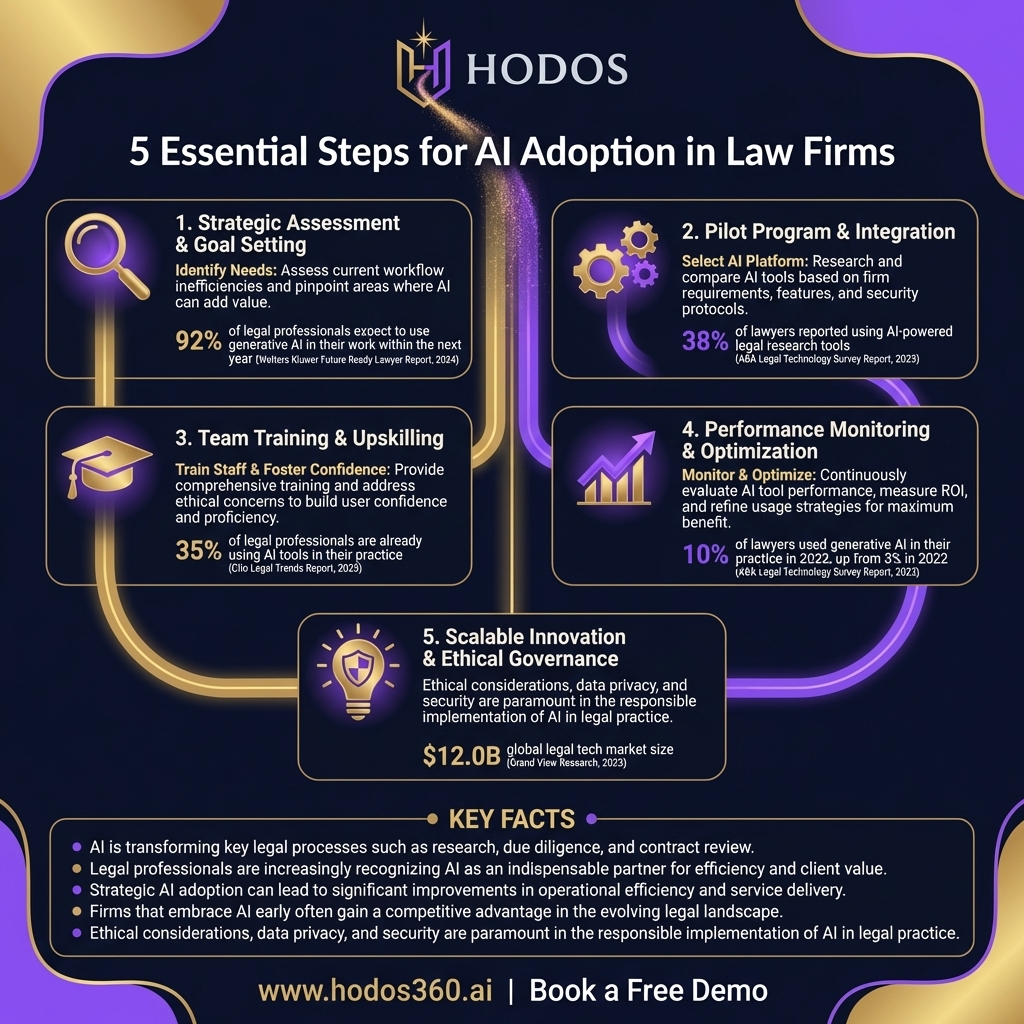
For example, instead of manually drafting engagement letters or court filings, AI-powered document automation can generate these with high accuracy, often in minutes. This not only boosts efficiency but also reduces the risk of human error, ensuring consistency and compliance across all firm operations. The ability to track cases, manage deadlines, and process billing seamlessly through an AI-driven interface transforms operational efficiency, making the firm more agile and responsive to client needs.
The market for these systems is dynamic, with continuous innovation driven by firms like Clio and their recent strategic acquisitions, highlighting the intense competition and rapid evolution in legal tech. This type of integrated solution is essential for any firm aiming to be a future ready lawyer in the digital age.
Building an AI-Powered Practice: Strategies for Success
Building a truly AI-powered practice requires more than just purchasing software; it demands a strategic vision, a commitment to cultural change, and continuous investment in people and processes. The first step is often a comprehensive audit of current workflows to identify areas ripe for AI integration.
This involves engaging legal professionals at all levels to understand their pain points and solicit their input on potential solutions. Firms that involve their teams early in the adoption process tend to experience higher rates of success and greater employee buy-in. A phased implementation, starting with pilot projects in specific practice areas, can help iron out kinks and demonstrate ROI before a firm-wide rollout.
This approach minimizes disruption and builds confidence among staff. For example, a small intellectual property firm, 'Patent Pros,' began by implementing AI for patent search and analysis, achieving remarkable efficiency gains. This success then paved the way for broader AI adoption across their case management and client communication systems.
Such incremental victories are crucial for fostering a culture where every legal professional feels empowered to become a future ready lawyer.
Another crucial strategy is fostering a culture of continuous learning and experimentation. Given the rapid pace of AI development, what is cutting-edge today may be commonplace tomorrow. Firms must invest in ongoing training for their legal professionals, not just on how to use specific AI tools, but also on the broader implications of AI, including ethical considerations and regulatory compliance.
This includes understanding the nuances of data privacy under acts like GDPR and CCPA, as well as the professional obligations outlined in the ABA Model Rules of Professional Conduct (e.g., Rule 1.1 Competence, requiring lawyers to keep abreast of changes in the law and its practice, including the benefits and risks associated with relevant technology).
Regular workshops, seminars, and access to online learning platforms can help keep teams updated. This commitment to lifelong learning ensures that the firm's human capital remains its most valuable asset, capable of adapting to new technologies and leveraging them effectively. The goal is to cultivate an environment where every attorney is a future ready lawyer, capable of critical thinking about AI's role in their practice.
Strategic partnerships with legal tech vendors are also vital for success. Rather than viewing technology providers as mere vendors, forward-thinking firms establish collaborative relationships, providing feedback that helps shape product development and ensuring solutions are tailored to their specific needs. This symbiotic relationship can lead to bespoke solutions and early access to innovative features.
For instance, HODOS 360 offers an integrated suite of AI-powered services, from law firm management to marketing and web development, designed to cater comprehensively to the needs of modern legal practices. Such partnerships can significantly accelerate a firm's digital transformation journey. Beyond technology, firms must also consider the organizational structure.
Some firms are creating dedicated 'Legal Innovation' or 'Legal Operations' teams to drive AI strategy and oversee implementation, ensuring that AI initiatives are aligned with overall business objectives. This dedicated focus is a hallmark of firms committed to being a future ready lawyer in the evolving legal landscape.
Finally, building an AI-powered practice necessitates a robust focus on data governance and ethical considerations. As firms increasingly rely on AI to process sensitive client information, ensuring data security and privacy is paramount. This involves implementing stringent cybersecurity protocols, complying with data protection regulations, and regularly auditing AI systems for bias and fairness.
The ethical implications of AI, particularly in areas like predictive justice or automated legal advice, require careful consideration and clear guidelines. For example, the Federal Rules of Civil Procedure (Rule 26, Duty to Disclose) and similar state rules regarding e-discovery place significant obligations on attorneys regarding electronically stored information, underscoring the need for AI tools to be transparent and auditable.
Firms must develop internal policies that govern the responsible use of AI, ensuring that human oversight remains central to all AI-driven processes. This commitment to ethical AI is not just a regulatory requirement but a fundamental pillar of client trust and professional integrity, ensuring that every legal professional is a responsible future ready lawyer.
Leveraging AI for Marketing and Client Acquisition
In an increasingly competitive market, the ability to effectively market legal services and acquire new clients is critical. AI Marketing Platforms offer unprecedented capabilities in this regard. By analyzing vast datasets of client behavior, market trends, and competitor activities, AI can help firms identify niche opportunities and craft highly targeted campaigns.
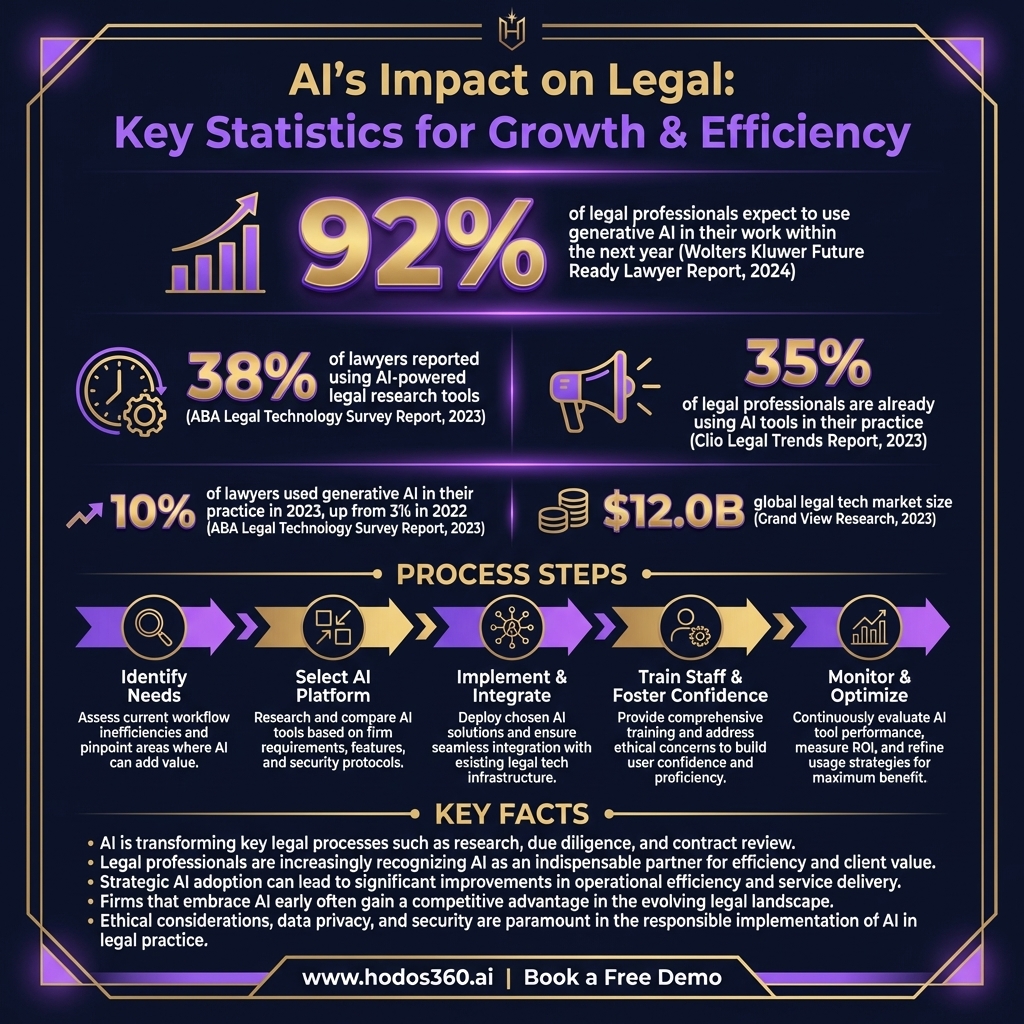
This moves beyond traditional, broad-brush marketing to hyper-personalized outreach. For instance, AI can generate compelling social media content, optimize website SEO for specific legal queries, and even create AI-powered video content that resonates with potential clients. The platform's ability to track campaign performance in real-time, providing detailed analytics and ROI insights, allows firms to continuously refine their strategies and maximize their marketing spend.
This data-driven approach ensures that marketing efforts are not only efficient but also highly effective, transforming how a future ready lawyer connects with their audience and expands their practice.
The Human Element: Elevating Client Service with AI
While AI automates tasks and enhances efficiency, its ultimate value in the legal profession lies in its ability to elevate the human element of client service. By taking over routine administrative burdens, AI frees up legal professionals to focus on what they do best: providing empathetic counsel, strategic advice, and personalized attention.
Clients seek legal expertise, but they also crave trust, understanding, and responsiveness. AI tools can facilitate this by ensuring faster communication, more transparent processes, and quicker resolution of inquiries. For example, AI-powered chatbots on a firm's website can provide instant answers to common questions, improving accessibility and client satisfaction.
This allows attorneys to dedicate their valuable time to complex legal strategy and direct client engagement, strengthening relationships and building deeper trust. The synergy between human empathy and AI efficiency creates a powerful differentiator in the market, allowing every legal professional to embody the ideal of a future ready lawyer who truly prioritizes client needs.
Furthermore, AI can help firms anticipate client needs and proactively offer solutions. By analyzing client data and historical interactions, AI can identify patterns and predict potential issues or opportunities, allowing firms to provide more tailored and timely advice. This proactive approach transforms client relationships from reactive problem-solving to strategic partnership.
Imagine a scenario where AI flags an impending regulatory change that impacts a client's business, prompting the legal team to reach out with preventative advice before the client even becomes aware of the issue. This level of foresight, powered by AI, demonstrates exceptional value and reinforces the firm's position as a trusted advisor.
This is particularly relevant in areas like corporate compliance, where staying ahead of legal developments is crucial. The ability to offer such sophisticated, anticipatory service is a hallmark of a future ready lawyer and a competitive advantage in a crowded market, enhancing client loyalty and driving repeat business.
The ethical considerations surrounding AI in client service are also paramount. While AI can enhance efficiency, it must never compromise the confidentiality or privilege inherent in the attorney-client relationship. Firms must ensure that AI systems are deployed with robust data security measures and that client data is handled in strict compliance with all relevant privacy regulations.
Moreover, the decision-making process, especially in critical legal matters, must always retain human oversight. AI should serve as an assistant, providing data-driven insights and automating tasks, but the ultimate legal judgment and advice must come from a qualified legal professional. This balance between technological assistance and human accountability is crucial for maintaining professional standards and client trust.
Adhering to these principles ensures that the integration of AI enhances, rather than detracts from, the core values of the legal profession, empowering every legal professional to be a responsible future ready lawyer.
The transformation brought about by AI also extends to making legal services more accessible and equitable. AI-powered tools can help streamline processes, reduce costs, and even assist in pro bono efforts by automating routine tasks, allowing legal aid organizations to serve more individuals. This democratization of legal access aligns with the broader societal goal of ensuring justice for all.
By leveraging AI for initial assessments, document preparation, and even basic legal information dissemination, firms can contribute to a more inclusive legal system. This demonstrates that the impact of a future ready lawyer extends beyond profit margins, touching upon the fundamental role of law in society.
The ongoing discussions about the ethical deployment of AI for social good, often highlighted in ai news today, underscore this potential. The legal profession has a unique opportunity to harness AI not just for efficiency, but for greater societal impact.
Ethical AI Use and Regulatory Compliance
The rapid evolution of AI technology necessitates a strong emphasis on ethical use and strict regulatory compliance. As AI systems become more sophisticated, the potential for bias, privacy breaches, and misuse also increases. Legal professionals have a professional obligation to understand these risks and implement safeguards.
This includes adhering to data protection laws like GDPR and CCPA, ensuring transparency in how AI processes client data, and mitigating algorithmic bias to prevent discriminatory outcomes. The EU AI Act, for instance, sets a precedent for comprehensive AI regulation, categorizing AI systems by risk level and imposing stringent requirements for high-risk applications.
Law firms must proactively develop internal policies and training programs to ensure all legal professionals are aware of and comply with these evolving standards, reinforcing their role as a responsible future ready lawyer.

The Path Forward: Sustaining Innovation in Legal Tech
The journey to becoming a future ready lawyer is not a one-time event but a continuous process of adaptation, learning, and innovation. The legal tech landscape is dynamic, with new tools and capabilities emerging almost daily. Firms must establish mechanisms for continuous monitoring of technological advancements, evaluating new solutions, and integrating those that offer strategic advantages.
This requires a proactive approach to research and development, perhaps dedicating resources to exploring emerging technologies like quantum computing's potential impact on data processing or advanced natural language processing models. The ability to anticipate future trends and pivot quickly will be a key differentiator. Firms that foster a culture of agile development and embrace iterative improvements will be best positioned to thrive in this evolving environment, ensuring that their legal professionals remain at the forefront of the industry.
The constant influx of wolters kluwer news and industry reports serves as a continuous reminder of this ongoing transformation.
Sustaining innovation also means investing in the human capital that drives it. Attracting and retaining top talent, especially those with a blend of legal and technological expertise, will be crucial. This involves offering competitive compensation, providing opportunities for professional growth and skill development, and fostering an inclusive and innovative work environment.
Firms should also consider creating internal innovation hubs or partnering with external accelerators to nurture new ideas and solutions. This collaborative approach can lead to breakthroughs that benefit not just the firm but the broader legal community. The narrative here shifts from mere adoption to active contribution, where firms are not just consumers of legal tech but co-creators of its future.
This forward-thinking mindset is what truly defines a future ready lawyer in the modern era.
Ultimately, the insights from the Wolters Kluwer Future Ready Lawyer Report serve as a powerful call to action. The legal profession is undergoing a profound transformation, and AI is at its core. Firms and individual legal professionals who embrace this change with confidence, strategic foresight, and a commitment to ethical innovation will not only survive but thrive.
They will redefine the practice of law, delivering greater value to clients, enhancing operational efficiency, and securing a leading position in the legal landscape of tomorrow. This isn't just about technology; it's about shaping the future of justice and professional service. The opportunity to leverage AI to become a truly future ready lawyer is here, and the time to act is now.
To effectively navigate this evolving landscape and truly become a future ready lawyer, legal professionals need more than just awareness; they need robust tools and strategic partners. HODOS 360 provides an integrated suite of AI-powered solutions specifically designed for law firms. From our AI Law Firm Management System that streamlines every aspect of your practice—case management, billing, client intake, and document automation—to our AI Marketing Platform that drives client acquisition through intelligent content generation and ROI tracking, we empower firms to confidently embrace the AI era.
Our AI Voice Assistants ensure 24/7 client engagement, while our Web & Mobile Development services build your digital presence from the ground up. These comprehensive services are engineered to help you leverage AI for unparalleled efficiency, growth, and client satisfaction, transforming your practice into a beacon of innovation and readiness.
Frequently Asked Questions
What is the key takeaway from the Wolters Kluwer Future Ready Lawyer Report?+
The report highlights that AI adoption is pervasive, with 92% of legal professionals using AI. The core message is the urgent need for firms to build confidence in AI, strategically integrate it into workflows, and invest in continuous learning to remain competitive and meet evolving client expectations in the rapidly transforming legal landscape.
How can AI Law Firm Management Systems help my practice become 'future ready'?+
AI Law Firm Management Systems streamline operations by automating case management, billing, client intake, and document generation. This reduces administrative burden, improves accuracy, and frees up legal professionals to focus on high-value legal work, enhancing efficiency and client service, which are hallmarks of a 'future ready' practice.
What role does AI play in legal marketing and client acquisition today?+
AI Marketing Platforms use data analytics to identify client segments, generate personalized content, automate social media, and track ROI. This enables firms to execute highly targeted and effective campaigns, increasing qualified leads and enhancing their digital presence, crucial for growth in a competitive legal market.
Are there ethical concerns regarding AI use in legal practice?+
Yes, ethical considerations are paramount. Firms must address data privacy, algorithmic bias, and ensure human oversight in all AI-driven processes. Compliance with regulations like the EU AI Act and adherence to professional obligations (e.g., ABA Model Rule 1.1 on competence) are essential to maintain client trust and professional integrity.
How can my firm overcome the 'confidence gap' in AI adoption?+
Overcoming the confidence gap requires investment in continuous training for legal professionals, fostering a culture of experimentation, and starting with pilot projects to demonstrate AI's tangible benefits. Strategic partnerships with legal tech providers, like HODOS 360, can also provide the necessary tools and support for successful integration and upskilling.