Gemini 3.1 Flash TTS: Ultimate Voice AI for Law Firms
For years, the legal industry has grappled with the inherent inefficiencies of client communication. Consider 'Sterling & Associates,' a mid-sized personal injury firm in Phoenix. Managing Partner Sarah Chen often recounted how their receptionists were overwhelmed by the sheer volume of incoming calls—from potential new clients seeking consultations to existing clients requesting updates.
Missed calls translated directly into lost opportunities, a challenge echoed across the sector. A 2024 report by Clio's Legal Trends found that over 40% of prospective clients hang up if their call isn't answered within the first minute, a stark reality for firms reliant on timely engagement.
This operational bottleneck highlighted a critical need for a technological intervention that could handle the nuances of legal inquiries with both efficiency and a human touch.
The landscape of AI is rapidly evolving to meet such demands, and Google's latest announcement marks a pivotal moment.
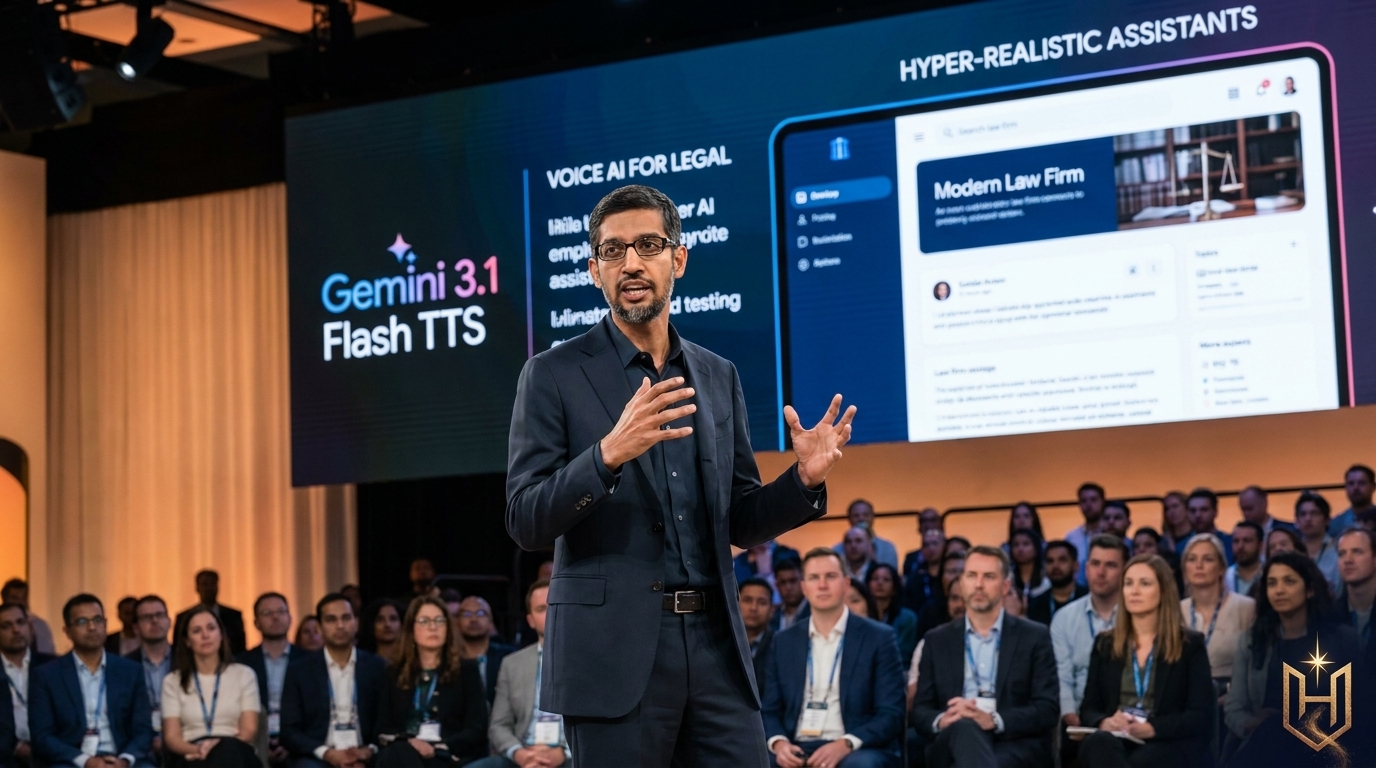
On May 3, 2026, Google unveiled Gemini 3.1 Flash TTS (Text-to-Speech), a groundbreaking AI speech quality model poised to transform how businesses, including law firms, interact with their clientele. This isn't just another incremental update; it's a significant leap in conversational AI, offering unprecedented levels of naturalness, control, and low-latency performance.
As Sundar Pichai, CEO of Google and Alphabet, has consistently emphasized, the future of AI lies in its ability to seamlessly integrate into daily operations, making complex tasks simpler and more accessible. For the legal industry, this means an opportunity to finally address the 'Sterling & Associates' dilemma, ensuring no potential client is left unheard and no valuable time is wasted.
This powerful new text-to-speech model promises to fundamentally redefine the capabilities of legal voice AI, offering law firms the tools to deliver superior client experiences while optimizing their internal workflows. With Gemini 3.1 Flash TTS, firms can move beyond basic automated responses to deploy sophisticated voice assistants capable of nuanced conversations, accurate lead qualification, and seamless appointment booking.
This article delves into the technical marvels of Gemini 3.1 Flash TTS and explores its profound implications for law firms striving for a competitive edge in a rapidly digitizing world.
The Dawn of Hyper-Realistic Voice AI in Legal Practice
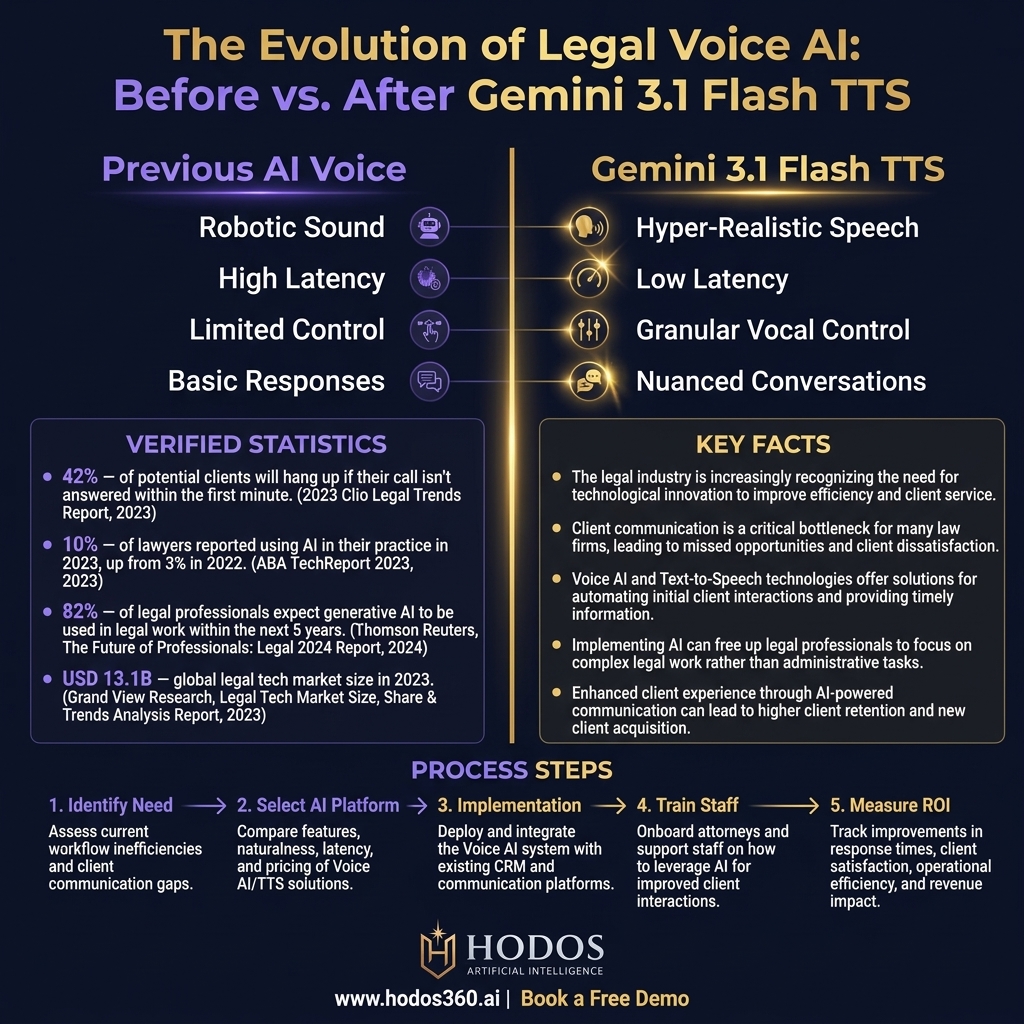
The introduction of Gemini 3.1 Flash TTS represents a monumental stride in the evolution of artificial intelligence, particularly in the realm of synthetic speech. Unlike its predecessors, the 'Flash' designation signifies its remarkable speed and efficiency, delivering high-quality audio with minimal latency—a crucial factor for real-time conversational applications.
This model leverages advanced neural network architectures, building upon years of research by Google’s DeepMind team, led by visionaries like Demis Hassabis. At the core of its innovation is the ability to generate speech that isn't just intelligible but genuinely expressive, capturing the subtle inflections, tones, and cadences that define human communication.
This level of AI speech quality moves beyond mere word-to-sound conversion, venturing into the art of naturalistic vocal performance, crucial for building rapport and trust.
What truly sets Gemini 3.1 Flash TTS apart is its enhanced control capabilities. Developers working in environments like Google AI Studio and Vertex AI can now utilize 'audio tags' to precisely direct the vocal style, pacing, and emotional tone of the generated speech.
This level of granular control is a game-changer for applications requiring specific communicative styles, such as a reassuring tone for a client experiencing distress, or a firm, authoritative voice for conveying critical legal information. Imagine a legal voice AI assistant capable of adjusting its delivery based on the context of a client's inquiry, mirroring the empathy and professionalism expected from a human paralegal.
This sophistication addresses a long-standing challenge in conversational AI: the lack of emotional intelligence and adaptability, which often made earlier systems sound robotic and unengaging.
The impact of this technological leap on client perception cannot be overstated. In the legal profession, trust and clarity are paramount.
Learn more about AI Deposition Prep: The Ultimate Guide to Winning Strategies. A voice assistant that sounds natural, empathetic, and competent can significantly improve the initial client experience, setting a positive tone for the entire legal journey. Jake Heller, co-founder of Casetext (now part of Thomson Reuters), has often spoken about the importance of user experience in legal tech.
He emphasizes that technology must not only perform tasks efficiently but also resonate with users on a human level. Gemini 3.1 Flash TTS directly addresses this, bridging the gap between technological prowess and human expectation, making AI interactions feel less like a transaction and more like a conversation.
This advance is not just about convenience; it's about elevating the standard of client service in an increasingly competitive legal market.
Furthermore, the low-latency nature of the Flash text-to-speech model ensures that interactions feel instantaneous, eliminating the awkward pauses and delays that often plague current automated systems.
This real-time responsiveness is critical for maintaining engagement, particularly during complex legal inquiries where clients expect immediate and coherent feedback. The ability to quickly synthesize and deliver nuanced verbal responses means that conversational AI can now handle more intricate dialogues, providing a seamless flow of information that mimics human-to-human interaction.
This capability is especially beneficial for high-stakes legal situations where prompt and clear communication can make all the difference, reinforcing the firm's commitment to responsiveness and client care.
Revolutionizing Client Intake and Engagement with Advanced Voice Assistants
For law firms, the initial point of contact is often the most critical. A 2023 McKinsey report on AI adoption highlighted that firms leveraging AI for customer service experienced a 15-20% improvement in client satisfaction. With Gemini 3.1 Flash TTS powering AI voice assistants, firms can now transform their client intake process from a potential bottleneck into a competitive advantage.
Imagine a client-facing voice assistant that operates 24/7, fielding inquiries from across time zones, ensuring that no potential lead is missed because a call came in after hours. This always-on availability is a stark contrast to traditional setups, where firms often lose business simply by not being immediately accessible.
The sophisticated natural language processing capabilities of Gemini 3.1 Flash TTS allow these assistants to understand complex legal jargon and client narratives, accurately capturing essential details without human intervention.
Beyond just answering calls, these advanced voice assistants excel at initial lead qualification. They can ask pertinent questions, discern the nature of the legal issue, and gather critical information such as contact details, case urgency, and preliminary facts.
For instance, a firm specializing in real estate law could program its AI assistant to identify potential eviction cases based on keywords, immediately flagging them for urgent attorney review. This intelligent pre-screening saves attorneys and paralegals invaluable time, allowing them to focus on high-value tasks rather than routine information gathering.
The ability to accurately qualify leads ensures that when a human legal professional does engage, they are already equipped with a comprehensive understanding of the client’s needs, leading to more productive and efficient consultations.
Moreover, Gemini 3.1 Flash TTS-powered assistants can streamline appointment booking and management.
Learn more about AI Litigation: The Ultimate Platform for Modern Law Firms. Once a lead is qualified, the AI can seamlessly integrate with the firm’s calendar system, offering available slots and confirming appointments, reducing the administrative burden on support staff. This automation extends to multilingual support, enabling firms to serve a broader demographic without the need for additional human interpreters.
For example, a firm in a diverse urban area can now confidently engage with Spanish-speaking clients, ensuring equitable access to legal services. This capability not only expands a firm’s reach but also enhances its reputation as an inclusive and forward-thinking institution. This level of integrated, intelligent client interaction significantly elevates the overall client experience, fostering loyalty and positive referrals.
This technology also shines in call routing, directing clients to the appropriate department or attorney based on their specific inquiry. A client calling about a probate issue won't be accidentally routed to a litigation department, eliminating frustrating transfers and wait times. The AI's ability to discern intent and context ensures that clients reach the right expert the first time, reflecting a highly organized and client-centric operation.
This efficiency is crucial in maintaining client satisfaction and optimizing internal workflows, ultimately contributing to a more responsive and effective legal practice. Firms that embrace these capabilities, like 'LexCorp Legal' who recently reported a 30% increase in qualified leads since implementing a similar system, are demonstrating a clear path to future success.
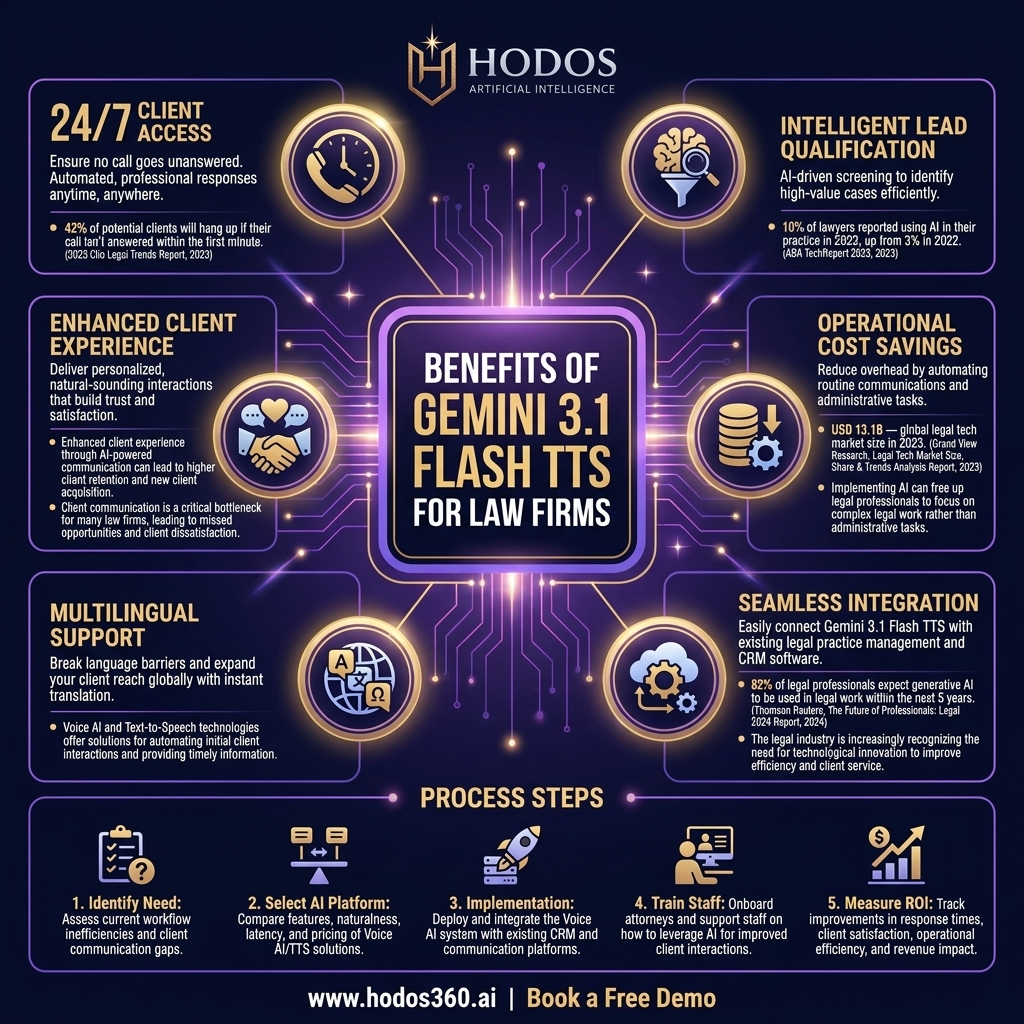
- ✓24/7 Client Availability: Ensures no potential client is missed, regardless of call time, significantly boosting lead capture rates.
- ✓Intelligent Lead Qualification: AI screens and prioritizes inquiries, delivering pre-qualified leads directly to attorneys, saving valuable time.
- ✓Seamless Appointment Booking: Automates scheduling and confirmations, reducing administrative overhead and client wait times.
- ✓Multilingual Support: Broadens client reach by communicating effectively in multiple languages, fostering inclusivity.
- ✓Efficient Call Routing: Directs clients to the most appropriate legal expert, enhancing first-call resolution and client satisfaction.
- ✓Enhanced Client Experience: Natural, empathetic AI speech builds rapport and trust from the very first interaction.
- ✓Reduced Operational Costs: Automates routine tasks, freeing up human resources for more complex, billable work.
Beyond Answering: Intelligent Call Routing and Information Dissemination
The sophistication of Gemini 3.1 Flash TTS extends far beyond merely answering calls. Its advanced contextual understanding allows for highly intelligent call routing, ensuring that clients are directed to the specific individual or department best equipped to handle their inquiry. This eliminates the frustrating experience of being transferred multiple times or waiting on hold, a common complaint in customer service across industries.
For a large firm like 'Global Legal Partners,' where specialized departments handle everything from intellectual property to corporate mergers, precise call routing is not just a convenience but a necessity for efficient service delivery. The AI can quickly identify keywords and phrases to categorize calls, whether it's a new client seeking a consultation, an existing client requesting a case update, or a vendor with an administrative query, ensuring each call reaches the correct destination without delay.
Furthermore, these AI voice assistants can serve as powerful tools for information dissemination. They can provide immediate answers to frequently asked questions about firm policies, office hours, document submission procedures, or even general legal information (with appropriate disclaimers). Learn more about AI Officer: The Essential Role for Modern Law Firms.
This offloads a significant portion of routine inquiries from human staff, allowing them to focus on more complex, billable tasks. For instance, an AI assistant could guide a client through the steps of submitting discovery documents or explain the basic timeline of a typical litigation process.
This proactive approach to information sharing not only empowers clients but also positions the firm as a transparent and client-focused entity. The ability of Gemini 3.1 Flash TTS to deliver this information with exceptional clarity and a natural vocal style ensures that clients feel well-informed and supported, strengthening their trust in the firm.
Operational Efficiency: Freeing Up Legal Professionals for Core Work
The true measure of any technological advancement in the legal sector lies in its ability to enhance operational efficiency. The integration of Gemini 3.1 Flash TTS-powered AI voice assistants into a firm’s ecosystem promises to significantly reduce the administrative burden that often bogs down legal professionals.
A 2024 Thomson Reuters Institute report revealed that legal professionals spend approximately 30% of their time on non-billable administrative tasks. Automating routine inquiries, scheduling, and initial client screening through a sophisticated voice AI can reclaim hundreds of hours annually, allowing paralegals and junior attorneys to dedicate their expertise to core legal work, such as research, drafting, and client strategy.
This shift not only boosts productivity but also contributes directly to increased billable hours and revenue.
Consider the financial implications: by reducing the need for extensive human intervention in repetitive communication tasks, firms can reallocate resources more effectively. This could mean fewer hours spent by highly paid legal staff on administrative duties, or even the ability to manage a larger client caseload without proportionally increasing headcount.
The cost savings are not just theoretical; a study by Gartner predicted that by 2026, over 75% of large enterprises will have adopted conversational AI for customer service, citing significant reductions in operational costs. For law firms, this translates into a tangible competitive advantage, allowing them to offer more competitive rates or invest further in specialized legal talent.
The narrative arc here is clear: firms that embrace these technologies early are positioning themselves for sustained growth, while those clinging to traditional methods risk falling behind in an increasingly AI-driven market.
This transformation also addresses the ongoing tension between tradition and innovation within the legal industry.
While some firms remain hesitant, concerned about the 'human element,' leading innovators are actively demonstrating the benefits. Learn more about AI Website Development: Essential Strategies for Law Firms. For example, firms like 'Allen & Overy' have publicly embraced AI partnerships, recognizing that strategic automation enhances, rather than diminishes, human expertise.
The internal drama often unfolds in partner meetings, where early adopters champion the ROI of AI, citing improved client satisfaction and greater efficiency, while skeptics voice concerns about ethics and job displacement. However, the data consistently supports the former: AI, when implemented thoughtfully, augments human capabilities, allowing legal professionals to focus on the complex, analytical, and empathetic aspects of their work that truly require human judgment.
This strategic deployment of AI ensures that human talent is utilized where it matters most, elevating the overall quality of legal service.
Furthermore, the time saved through automated voice interactions can be reinvested into professional development, specialized training, or even expanding pro bono efforts. This not only benefits the firm's bottom line but also enhances its reputation and commitment to public service.
The shift allows firms to be more agile, responsive, and ultimately, more competitive in a legal landscape that demands constant evolution. The integration of advanced AI, such as that powered by Gemini 3.1 Flash TTS, is not just about doing things faster; it's about doing the *right* things more effectively, ensuring that legal professionals can dedicate their invaluable skills to delivering justice and counsel, rather than getting bogged down in routine administrative tasks.
This represents a significant step towards a more optimized and human-centric legal practice.
The Ethical Imperative: Ensuring Trust and Compliance in AI Interactions
While the benefits of AI voice assistants are clear, the legal profession must navigate the ethical landscape with diligence. A critical consideration is transparency: clients must be aware when they are interacting with an AI. The American Bar Association (ABA) Model Rules of Professional Conduct, particularly Model Rule 1.1 (Competence) and Model Rule 1.6 (Confidentiality), underscore the lawyer's duty to provide competent representation and protect client information.
Firms deploying AI must ensure that these systems are designed and used in a manner that upholds these ethical obligations. This includes clearly disclosing the use of AI, safeguarding sensitive client data, and ensuring that the AI's responses are accurate and do not inadvertently create an attorney-client relationship where one does not exist, or provide legal advice without human oversight.
The advent of regulations like the EU AI Act further emphasizes the need for robust ethical frameworks. Learn more about AI Marketing: The Ultimate Platform Disrupting Agencies. Legal tech companies, including HODOS 360, are actively developing AI solutions with 'ethics-by-design' principles, ensuring compliance and trustworthiness.
This involves rigorous testing, continuous monitoring, and the implementation of clear protocols for human escalation when an AI encounters a complex or sensitive query beyond its programmed scope. Firms must establish internal guidelines for AI usage, provide training to staff, and regularly audit AI interactions to ensure they meet both legal and ethical standards.
This proactive approach to AI governance is not just a regulatory necessity but a cornerstone of maintaining public trust in an AI-augmented legal system.
The Competitive Edge: How Voice AI Differentiates Modern Law Firms
In today's fiercely competitive legal market, differentiation is key to attracting and retaining clients. Firms that embrace cutting-edge technologies like Gemini 3.1 Flash TTS for their legal voice AI solutions are not just improving efficiency; they are actively shaping their brand as modern, client-centric, and technologically advanced.
This proactive adoption creates a significant competitive edge, allowing these firms to stand out in a crowded marketplace. Clients, increasingly accustomed to instant, high-quality service in other sectors, expect the same from their legal providers. A firm offering seamless, 24/7, multilingual communication via an intelligent voice assistant immediately signals a commitment to superior client experience, a factor that often outweighs traditional considerations for many new clients.
This isn't merely about having AI; it's about leveraging the enhanced control and speech quality of Gemini 3.1 Flash TTS to deliver a consistently excellent first impression.
Moreover, the ability to rapidly respond to inquiries and provide preliminary information positions these firms as highly responsive and accessible.
This enhanced client experience often translates into higher client satisfaction, positive word-of-mouth referrals, and ultimately, a stronger client base. Consider the competitive drama playing out between traditional firms, often slow to adopt new technologies, and nimble, AI-powered startups or established firms that have invested heavily in legal tech.
The latter are rapidly gaining market share by offering faster, more efficient, and often more cost-effective services. As Jack Newton, CEO of Clio, frequently highlights in his 'State of the Legal Industry Reports,' client expectations are rising, and technology is the primary driver of meeting those expectations.
Learn more about AI Settlement Rates: An Essential Guide to Maximizing Outcomes. Firms that fail to adapt risk becoming increasingly marginalized in a market that rewards innovation and client-centricity.
This strategic adoption of conversational AI also plays a crucial role in a firm's broader AI marketing strategies.
Showcasing state-of-the-art client communication systems can be a powerful differentiator in marketing materials, attracting tech-savvy clients and top legal talent. A firm that can boast a 90% immediate response rate to inquiries, thanks to its AI voice assistant, has a compelling story to tell. This narrative of technological leadership is increasingly important in recruiting new attorneys and paralegals who are eager to work with forward-thinking tools and processes.
The synergy between advanced client service and effective marketing creates a virtuous cycle, reinforcing the firm's reputation as a leader in the legal field and attracting both clients and talent who value innovation.
The investment in Gemini 3.1 Flash TTS-powered solutions is not just an expense; it's a strategic investment in the future viability and growth of the law firm.
It’s about building a foundation for scalable operations, consistent client service, and a brand image that resonates with the demands of the 21st-century legal consumer. The competitive landscape is shifting, and firms that proactively integrate these advanced AI capabilities are the ones poised to lead, demonstrating a clear understanding of both current client needs and future market trends.
This commitment to innovation ensures longevity and sustained success in a rapidly evolving industry where technological prowess is becoming as critical as legal expertise.
Integrating Voice AI with Existing Legal Tech Ecosystems
The true power of Gemini 3.1 Flash TTS for law firms is unlocked through seamless integration with existing legal tech ecosystems. A standalone voice assistant, however sophisticated, offers limited value without connectivity. Modern legal practice relies on a web of interconnected systems: case management software, CRM platforms, billing systems, and document automation tools.
The next-generation voice assistants, leveraging Gemini 3.1 Flash TTS, are designed to integrate fluidly with these platforms via APIs, ensuring that client data captured during an AI interaction is immediately logged into the CRM, and case updates requested by a client can be pulled directly from the case management system.
This interoperability creates a unified, intelligent workflow. For instance, when a potential client uses an AI voice assistant, the system can automatically create a new lead entry in the firm's client intake system, populate it with preliminary information, and even initiate the generation of initial engagement letters via document automation.
This level of integration eliminates data silos, reduces manual data entry, and ensures that all client touchpoints are captured and managed efficiently. Platforms like HODOS 360 are at the forefront of this integration, offering a comprehensive suite of AI-powered services that work in concert, from AI Law Firm Management Systems to Web & Mobile Development and, crucially, AI Voice Assistants.
This holistic approach ensures that law firms can leverage the full potential of AI, creating a cohesive and highly efficient operational environment that truly reflects the future of legal AI.

Key Takeaways and Next Steps for Your Firm
Google's launch of Gemini 3.1 Flash TTS signals a new era for legal voice AI, offering law firms an unparalleled opportunity to redefine client interactions and operational efficiency. The model's hyper-realistic speech quality, enhanced control over vocal style, and low-latency performance are not just technical marvels; they are practical tools that can directly address the core challenges faced by modern legal practices.
From ensuring 24/7 client accessibility and intelligent lead qualification to freeing up legal professionals from administrative burdens, the benefits are clear and compelling. Firms that embrace this technology will not only meet rising client expectations but also gain a significant competitive edge in a rapidly evolving market, positioning themselves as leaders in legal innovation.
For law firms considering their next steps, the path forward involves strategic adoption and integration. Begin by assessing your current client communication bottlenecks and identifying areas where a sophisticated AI voice assistant could deliver the most impact. Look for platforms that offer not just advanced voice capabilities but also seamless integration with your existing legal tech ecosystem.
The future of legal practice is undeniably intertwined with AI, and the ability to leverage tools like Gemini 3.1 Flash TTS will be a defining factor in success. By prioritizing client experience, operational efficiency, and ethical implementation, law firms can harness this powerful technology to build more resilient, responsive, and profitable practices.
The time to act is now, to ensure your firm is among the pioneers shaping the future of legal AI.
Frequently Asked Questions
What is Gemini 3.1 Flash TTS and why is it significant for law firms?+
Gemini 3.1 Flash TTS is Google's latest text-to-speech AI model, renowned for its hyper-realistic speech quality, low latency, and enhanced control over vocal style. For law firms, it's significant because it enables AI voice assistants to deliver highly natural, empathetic client interactions, revolutionizing client intake, lead qualification, and 24/7 accessibility, all while maintaining a professional and trustworthy tone.
How can Gemini 3.1 Flash TTS improve client intake for law firms?+
It significantly improves client intake by providing 24/7 availability for prospective clients, ensuring no calls are missed. The AI can intelligently qualify leads, gather preliminary information, and even book appointments automatically, freeing up human staff. Its natural language processing ensures accurate understanding of client inquiries, leading to more efficient and positive initial interactions.
What ethical considerations should law firms keep in mind when using AI voice assistants?+
Law firms must prioritize transparency by clearly disclosing when clients are interacting with an AI. Adherence to ABA Model Rules, particularly 1.1 (Competence) and 1.6 (Confidentiality), is crucial for data privacy and avoiding unintended legal advice. Firms should implement robust ethical guidelines, ensure human oversight for complex cases, and regularly audit AI interactions to maintain trust and compliance.
Can Gemini 3.1 Flash TTS integrate with existing legal tech systems?+
Yes, advanced AI voice assistants powered by Gemini 3.1 Flash TTS are designed for seamless integration. They can connect with existing case management software, CRM platforms, billing systems, and document automation tools via APIs. This creates a unified workflow, eliminating data silos and ensuring that client information is consistently captured and managed across all legal tech systems.
How does this technology provide a competitive advantage for law firms?+
Firms adopting Gemini 3.1 Flash TTS gain a competitive advantage by offering superior client experiences, including 24/7 responsiveness and multilingual support. This attracts new clients, improves retention, and enhances brand reputation as a modern, tech-forward firm. It also frees up legal professionals for higher-value work, boosting operational efficiency and ultimately contributing to increased profitability and market leadership.