


AI Litigation: The Ultimate Platform for Modern Law Firms
Just a few years ago, the idea of artificial intelligence orchestrating the intricate dance of a high-stakes litigation case seemed like a distant sci-fi fantasy. Legal professionals often grappled with mountains of documents, disparate software solutions, and the relentless pressure of managing complex workflows. Consider Sarah Chen, a senior partner at a mid-sized firm in Chicago, who once spent countless hours overseeing teams manually sifting through discovery documents, a process ripe for human error and prohibitive costs.
Her firm, like many others, was caught in the tension between traditional legal practice and the nascent promises of legal tech. Then came the wave of specialized AI tools, initially siloed, offering glimpses of a more efficient future. The recent announcement from AI.Law, releasing the second version of its litigation platform, marks a pivotal moment, signaling a maturation of the market towards truly integrated, comprehensive solutions.
This isn't just an upgrade; it's a recalibration of what's possible for law firms globally, pushing the boundaries of efficiency and strategic foresight.
The legal industry is witnessing a profound shift, driven by the relentless pursuit of efficiency and strategic advantage. The launch of AI.Law's second-generation litigation operating system is more than just a product release; it's a testament to the growing demand for unified, intelligent platforms that can handle the multifaceted demands of modern legal practice.
This evolution moves beyond simple automation, integrating advanced AI capabilities across the entire legal workflow. Firms that once relied on piecemeal software — one for billing, another for document management, and yet another for e-discovery — are now seeking a cohesive ecosystem. Learn more about AI Voice Agent: Essential Legal Firm Automation for 2026.
This drive for integration isn't merely about convenience; it's about eliminating data silos, reducing redundancy, and enabling a holistic view of every case. The market is increasingly rewarding providers who can deliver users a seamless experience, transforming the operational backbone of legal services. As the competition intensifies, the ability to leverage such a platform becomes a non-negotiable for staying relevant and competitive in a rapidly digitizing world.
The Dawn of Integrated AI Litigation Platforms
The legal tech landscape has been a hotbed of innovation, but often characterized by fragmentation. Early AI solutions, while groundbreaking, typically addressed specific pain points like document review or legal research in isolation. The release of AI.Law's second version of its platform signifies a crucial turning point: the industry is consolidating towards truly integrated AI litigation operating systems.
This move mirrors broader trends in enterprise software, where unified solutions are replacing disparate tools to enhance user experience and data integrity. For instance, the initial buzz around generative AI in legal, fueled by companies like Harvey AI and their partnership with global giants like Allen & Overy, showcased the power of AI to augment legal professionals.
Learn more about AI Lead Flow: Essential Strategies for Law Firm Growth. However, the real challenge has always been to weave these powerful capabilities into a coherent, daily operational fabric. At LegalTech NYC 2026, many discussions revolved around this very theme – the urgent need for providers to deliver users not just tools, but a complete operating system for legal practice.
This shift is driven by the recognition that a fragmented tech stack creates more problems than it solves, leading to inefficiencies, compliance risks, and a disjointed user experience. The firms that are winning are those embracing this holistic approach, understanding that true digital transformation requires a unified strategy.
This integration isn't just about combining features; it's about building intelligence into every layer of the litigation workflow. Imagine a system where client intake data automatically populates billing, case management, and document templates, all while identifying potential conflicts and suggesting relevant precedents. This level of seamless operation, powered by artificial intelligence, is the promise of these new platforms.
For example, firms like Linklaters have openly discussed their internal AI initiatives, focusing on how these technologies can enhance everything from due diligence to complex contractual analysis. The competitive pressure is immense, as highlighted by a recent Thomson Reuters report, which indicated that firms investing in integrated legal tech solutions are seeing significantly higher growth rates than their peers.
Learn more about Essential AI Website Builder Guide for Law Firms. This robust market activity, including strategic acquisitions by larger players like Clio expanding their ecosystem, underscores the strategic importance of comprehensive platforms. The goal is clear: to equip attorneys with an advanced, intelligent co-pilot that streamlines administrative burdens, allowing them to focus on high-value strategic work and client relationships.
This is the new frontier of AI litigation, where the technology is not merely a tool but an embedded partner in every legal endeavor.
Beyond Basic Document Review: A Unified Operating System
The early days of AI in legal were largely defined by sophisticated document review capabilities, dramatically cutting down the time and cost associated with e-discovery. While still critical, the new version of AI litigation platforms goes far beyond this foundational utility. They are designed to be true unified operating systems, integrating critical functions such as case management, automated billing, streamlined client intake, and sophisticated document automation.
This means that when a new client is onboarded, their information flows seamlessly through the system, populating engagement letters, conflict checks, and initiating the appropriate legal workflows. This eliminates the manual re-entry of data, a notorious source of errors and delays. For instance, a complex corporate litigation might involve thousands of documents, dozens of parties, and intricate jurisdictional rules.
Learn more about Legal AI Problem: Mastering Ethical Tech in Law Firms 2026. A truly unified platform can track every piece of evidence, every communication, and every deadline with precision, offering real-time insights into the case status. This level of integration ensures that every team member, from paralegal to senior partner, is working from the same, most up-to-date information, fostering collaboration and reducing miscommunication.
It transforms a firm's operational backbone from a collection of disparate tools into a cohesive, intelligent entity, significantly enhancing overall productivity and client service. (Suggested Internal Link: Streamlining Case Management with AI)
The Economic Imperative: ROI and Efficiency in Legal Practice
For law firm leaders, the adoption of advanced AI litigation platforms isn't merely about keeping up with trends; it's an economic imperative. The return on investment (ROI) from these systems can be substantial, manifesting in reduced operational costs, increased billable hours through efficiency gains, and enhanced client satisfaction.
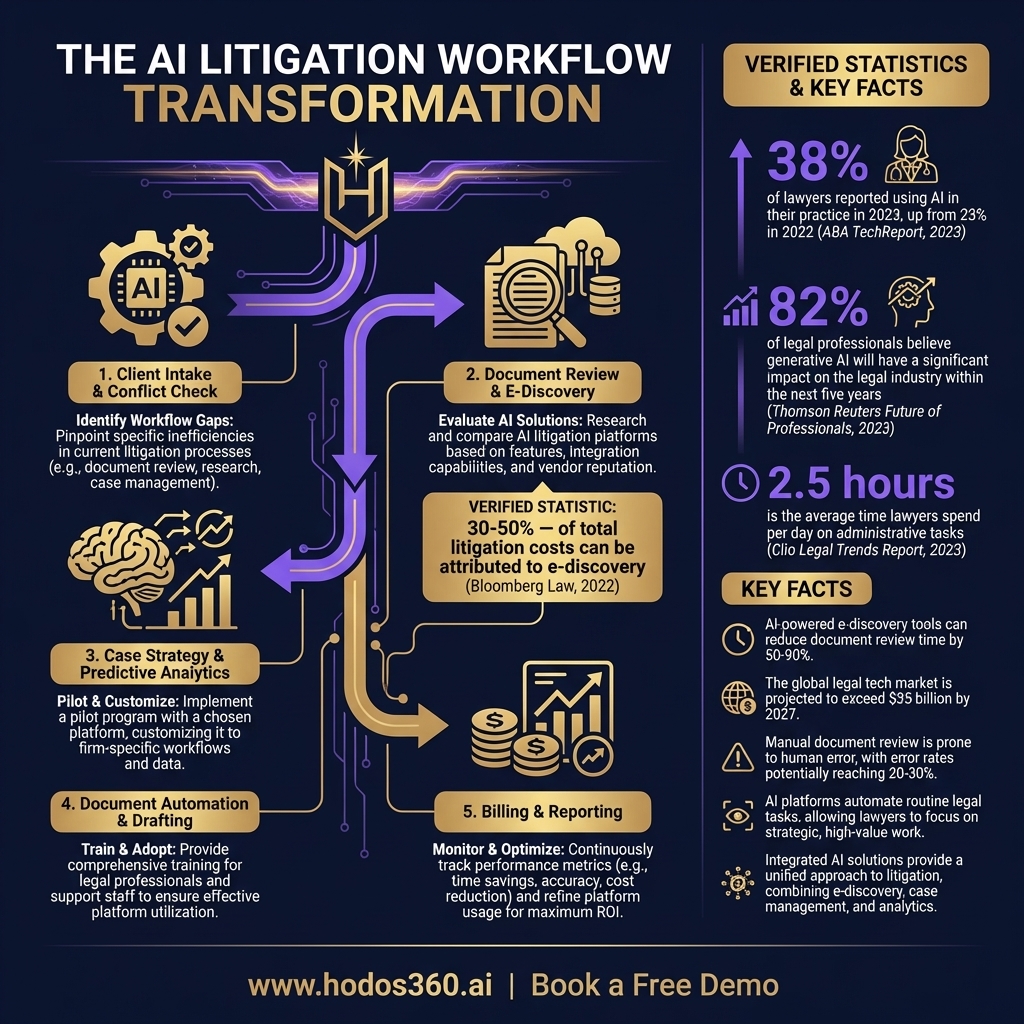
A recent report by Gartner projected that by 2027, generative AI will automate 30% of legal tasks, freeing up lawyers for more strategic work. This isn't just about saving money; it's about reallocating human capital to higher-value activities. Firms that have been early adopters, like a partner at a prominent New York firm, David Lee, noted at a recent industry panel that their investment in an integrated AI litigation solution paid for itself within 18 months, primarily through a 40% reduction in discovery costs and a 25% increase in attorney capacity.
Learn more about AI Marketing: Law Firms Slash $225K Tools in 2026. This stark contrast creates significant human conflict/drama in the legal market, as firms that embrace digital transformation pull ahead, while those clinging to traditional methods risk being outmaneuvered and outpriced. The narrative isn't just about technology; it's about survival and thriving in a competitive landscape where clients expect more for less.
The pressure to adopt is further amplified by the ongoing talent war, where modern tools are also a draw for top legal talent seeking more engaging, less administrative roles. This economic reality underscores the urgency for firms to evaluate and integrate these powerful legal operating systems.
Beyond direct cost savings, these platforms offer a crucial competitive edge. The ability to process vast amounts of data, identify patterns, and predict outcomes with greater accuracy allows firms to offer more strategic advice and potentially win more cases. This is particularly evident in large-scale litigation, where predictive analytics can inform settlement strategies or identify key arguments early in the process.
Firms that leverage advanced AI are not just efficient; they are intelligent. They can provide clients with clearer insights into potential risks and opportunities, translating into stronger client relationships and a reputation for innovation. This competitive advantage is not lost on the market. Learn more about AI Website Coding: An Essential Guide for Law Firms.
Venture capital funding in legal tech continues to break records, with companies like Relativity securing significant investment to further develop their e-discovery and AI litigation capabilities. This influx of capital fuels rapid innovation, making the gap between tech-forward firms and their laggard counterparts even wider.
The imperative for law firms is no longer if they should adopt AI litigation platforms, but how quickly and effectively they can integrate these powerful tools to secure their future in a rapidly evolving legal market. The firms that lead this charge are not just adopting technology; they are fundamentally rethinking their legal practice management models.
Navigating the Ethical and Practical Landscape of AI Integration
While the benefits of AI litigation platforms are compelling, their integration into legal practice is not without its complexities. Ethical considerations, data security, and the need for robust human oversight are paramount. The American Bar Association (ABA) Model Rules of Professional Conduct, particularly Rule 1.1 (Competence), implicitly require lawyers to stay abreast of changes in technology, including the benefits and risks associated with relevant technology.
This means understanding how AI tools function, their limitations, and ensuring they are used responsibly to maintain client confidentiality and avoid bias. For example, concerns about algorithmic bias in predictive analytics must be carefully managed to ensure fair and equitable outcomes. Firms must implement stringent data governance policies to protect sensitive client information, especially when leveraging cloud-based AI platforms.
The EU AI Act, with its focus on high-risk AI systems, serves as a global benchmark for regulatory scrutiny, emphasizing transparency and human accountability. It is crucial for firms to select providers who prioritize security and ethical design, ensuring that their AI litigation operating system adheres to the highest standards.
The role of the human attorney evolves from purely manual tasks to one of critical oversight, interpreting AI outputs, and applying nuanced legal judgment. (Suggested External Link: ABA Journal - AI and Ethics in Law)
HODOS 360: Architecting the Future of AI Law Firm Management
In this evolving landscape, HODOS 360 stands at the forefront, offering an AI Law Firm Management System that embodies the principles of a truly unified and advanced AI litigation platform. Our system is designed to provide law firms with a comprehensive suite of tools that integrate seamlessly to enhance every aspect of their operations.
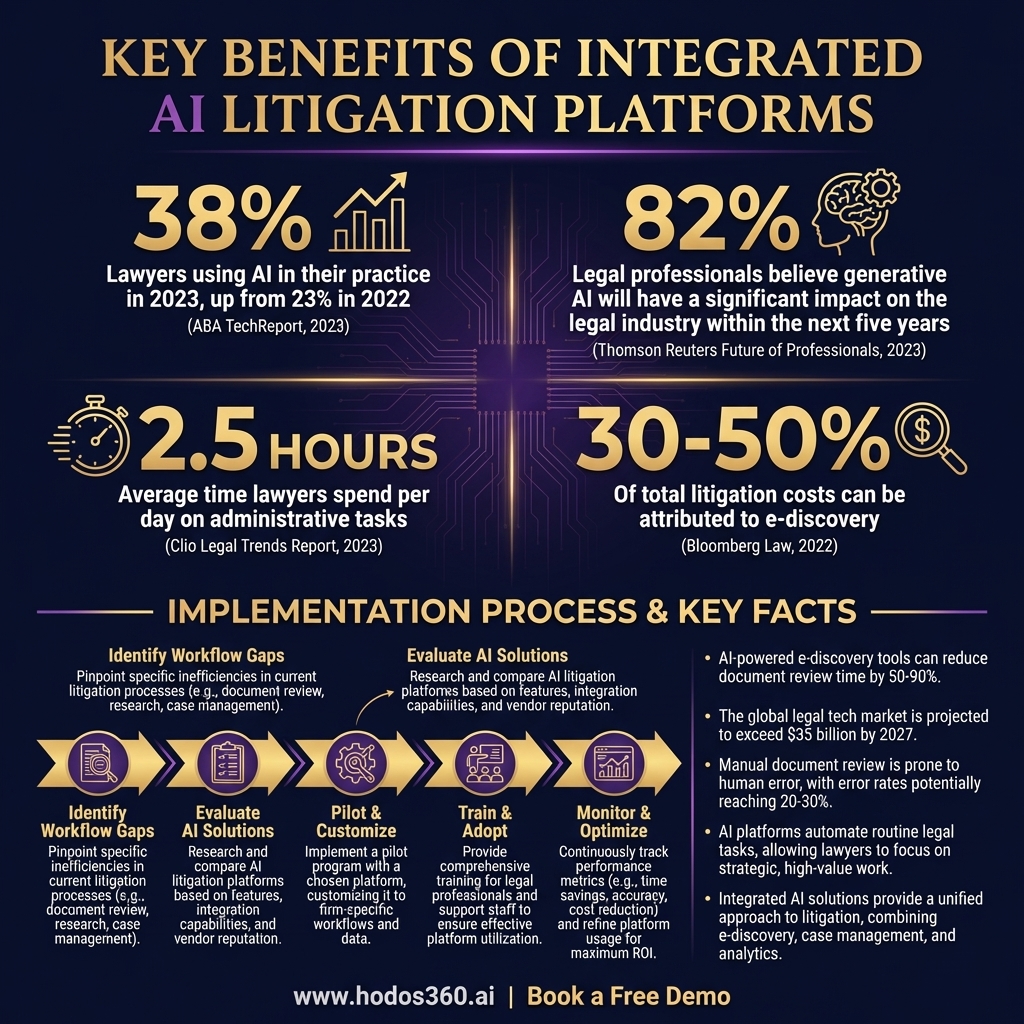
From intelligent case management that tracks every detail of your litigation portfolio to sophisticated document automation that generates complex legal documents in minutes, HODOS 360 empowers attorneys to focus on strategy rather than administrative burden. Our AI-powered legal workflows are customizable, adapting to the unique needs of your practice areas, ensuring consistency and compliance.
This integration extends to client intake, transforming it from a laborious process into an efficient, data-rich experience that feeds directly into billing and practice management systems. The goal is to create a cohesive digital environment where information flows effortlessly, decisions are data-driven, and every legal professional can operate at peak efficiency.
We understand the pressing need for providers to deliver users not just features, but a transformative operating system that truly moves the needle for their legal business. HODOS 360 is built on the premise that an intelligent, integrated platform is the cornerstone of a successful future-proof law firm.
(Suggested Internal Link: Explore HODOS 360's AI-Powered Legal Workflows)
The Impact on Legal Professionals: From Paralegals to Partners
The rise of AI litigation platforms is fundamentally reshaping the roles and responsibilities within law firms, impacting everyone from paralegals to senior partners. For paralegals and junior associates, the burden of repetitive, data-intensive tasks like initial document review, contract analysis, and legal research is significantly reduced.
Instead of spending hours on manual tasks, they can now focus on higher-value activities such as strategic analysis, client communication, and developing specialized expertise. This shift offers a more engaging and intellectually stimulating career path, which is crucial for talent retention in a competitive market.
Senior attorneys and partners, on the other hand, gain unprecedented insights into their litigation portfolio. They can leverage predictive analytics to better assess case risks, inform settlement negotiations, and allocate resources more effectively. For example, Sarah Chen, the Chicago partner mentioned earlier, now relies on her firm's AI platform to quickly identify key documents and potential liabilities, allowing her to spend more time advising clients on complex legal strategy rather than overseeing manual review.
This transformation isn't about replacing lawyers; it's about augmenting their capabilities, allowing them to practice law at a more sophisticated and strategic level. The challenge lies in upskilling the existing workforce to effectively utilize these advanced AI tools, fostering a culture of continuous learning and adaptation within the firm.
(Suggested Internal Link: Upskilling for the AI Era in Law)
Predictive Analytics and Strategic Advantage
One of the most transformative aspects of modern AI litigation platforms is their capability for predictive analytics. By analyzing vast datasets of past cases, judicial decisions, and legal arguments, these systems can forecast potential case outcomes, identify patterns in opposing counsel's strategies, and even predict the likely duration and cost of a litigation.
This provides an invaluable strategic advantage for law firms. Imagine a scenario where an attorney can present a client with a data-backed probability of success, along with potential costs and timelines, early in the legal process. This level of transparency and foresight was unimaginable a decade ago.
Data from LexisNexis’s Litigation Analytics, for instance, allows attorneys to research judges, opposing counsel, and specific case types to gain insights into past behaviors and outcomes. This capability empowers attorneys to make more informed decisions, refine their arguments, and develop more effective negotiation strategies. The ability to anticipate legal challenges and proactively address them significantly enhances a firm's value proposition to its clients.
This strategic foresight, designed to deliver users actionable intelligence, is what truly sets advanced AI litigation platforms apart, moving beyond mere efficiency to fundamental strategic advantage. (Suggested External Link: LexisNexis Litigation Analytics Overview)

Key Takeaways and Next Steps for Law Firms
The release of the second version of AI.Law's platform and the broader trend towards integrated AI litigation solutions underscore a critical reality: the future of legal practice is undeniably intertwined with advanced AI technology. For law firms looking to thrive, the path forward involves strategic adoption of these comprehensive operating systems.
It's no longer sufficient to patch together disparate tools; success hinges on a unified approach that streamlines every legal workflow, from client intake to case management and document automation. The economic benefits in ROI and efficiency are clear, offering a significant competitive edge to firms willing to embrace digital transformation.
However, this journey requires careful consideration of ethical implications and a commitment to continuous learning for all legal professionals. Firms must prioritize providers who not only offer robust technology but also ensure data security and support ethical AI use. The goal is to leverage artificial intelligence to elevate the quality of legal services, empower attorneys, and ultimately deliver users superior outcomes.
The time to act is now, by evaluating your current tech stack, identifying areas for improvement, and exploring integrated AI litigation platforms that can truly transform your firm's future. (Suggested Internal Link: Choosing the Right Legal Tech Partner)
- ✓Embrace Integrated Platforms: Move beyond siloed tools to a unified AI litigation operating system that covers case management, document automation, and legal workflows.
- ✓Prioritize ROI and Efficiency: Recognize the significant economic benefits of advanced AI, including reduced costs and increased attorney capacity.
- ✓Invest in Upskilling: Prepare your legal professionals for new roles focusing on strategic oversight and higher-value tasks, rather than manual processes.
- ✓Address Ethical Considerations: Implement robust data governance and ensure transparent, unbiased use of AI in all aspects of legal practice.
- ✓Leverage Predictive Analytics: Utilize AI for strategic insights into case outcomes, risk assessment, and more effective litigation strategies.
- ✓Choose Your Provider Wisely: Select an AI litigation platform provider that offers comprehensive features, strong security, and ethical design, like HODOS 360.
- ✓Stay Ahead of the Curve: Continuous evaluation and adoption of new legal tech are crucial for maintaining a competitive edge in the rapidly evolving legal market.
Frequently Asked Questions
What is an AI litigation platform?+
An AI litigation platform is an integrated software system that leverages artificial intelligence to manage and optimize various aspects of the litigation workflow. This includes features like document review, case management, predictive analytics, document automation, and e-discovery, all unified into a single operating system to enhance efficiency and strategic decision-making for law firms.
How do AI litigation platforms improve efficiency for law firms?+
AI litigation platforms significantly improve efficiency by automating repetitive tasks, such as initial document review and client intake. They streamline legal workflows, reduce manual errors, and provide real-time insights into case progress. This allows legal professionals to reallocate their time to higher-value strategic work, ultimately reducing operational costs and increasing overall productivity.
What ethical considerations should law firms keep in mind when using AI in litigation?+
Law firms must consider several ethical implications, including data privacy and security, potential algorithmic bias, and the need for human oversight. Adherence to rules like ABA Model Rule 1.1 (Competence) is crucial, ensuring attorneys understand the technology's limitations and use it responsibly to maintain client confidentiality and avoid unfair outcomes. Transparency in AI use is also vital.
Can AI litigation platforms predict case outcomes?+
Yes, advanced AI litigation platforms often incorporate predictive analytics capabilities. By analyzing vast datasets of past cases, judicial rulings, and legal arguments, these systems can identify patterns and forecast potential case outcomes, durations, and costs. This provides law firms with valuable strategic insights, enabling more informed decision-making and more effective negotiation strategies, offering a significant competitive edge.
How does an integrated AI platform differ from traditional legal software?+
Traditional legal software often consists of separate, siloed tools for different functions (e.g., one for billing, another for document management). An integrated AI platform, like a unified AI litigation operating system, combines these functionalities into a single, cohesive environment. This ensures seamless data flow, eliminates redundancies, and provides a holistic view of all legal workflows, enhancing overall efficiency and strategic coherence across the firm.