


AI Voice Assistant: Essential for Modern Law Firm Growth
The digital age has ushered in an era where client expectations for immediate, round-the-clock responsiveness are higher than ever. For many law firms, this presents a significant challenge. Consider Sarah Chen, a managing partner at Chen & Associates, a thriving mid-sized firm specializing in real estate law.
Sarah often recounted the frustration of missing crucial after-hours calls from potential clients, inquiries that could represent substantial new business. Her firm, like countless others, grappled with the administrative overhead of a dedicated reception team and the inevitable limitations of human availability. This common dilemma highlights a critical tension in the legal industry: the demand for personalized, always-on service versus the practical constraints of a traditional law practice.
It's a conflict that directly impacts a firm's growth trajectory and its ability to compete in a rapidly evolving market.
The conversation around leveraging artificial intelligence in professional services has intensified, particularly following events like LegalTech NYC 2026, where discussions frequently centered on practical AI applications beyond document review.
While companies like Constant Contact are integrating AI virtual assistant features into their marketing platforms to help businesses create campaigns and manage communications, the legal sector requires a tailored approach. The specific needs of law firms—handling sensitive client information, adhering to strict ethical guidelines, and performing nuanced lead qualification—demand an AI solution that is more than just a generic chatbot.
The advent of sophisticated AI voice assistant technology is now offering a powerful, specialized answer, promising to transform how law firms interact with clients and manage their operational workflows, ensuring that no potential lead, like those Sarah Chen once missed, ever slips through the cracks again.
The Evolving Landscape of Legal Client Communication
The bedrock of any successful legal practice is effective communication, yet it remains one of the most persistent operational challenges. Historically, law firms have relied on traditional phone systems, receptionists, and voicemails, a model increasingly ill-equipped to meet the demands of a 24/7 digital world.
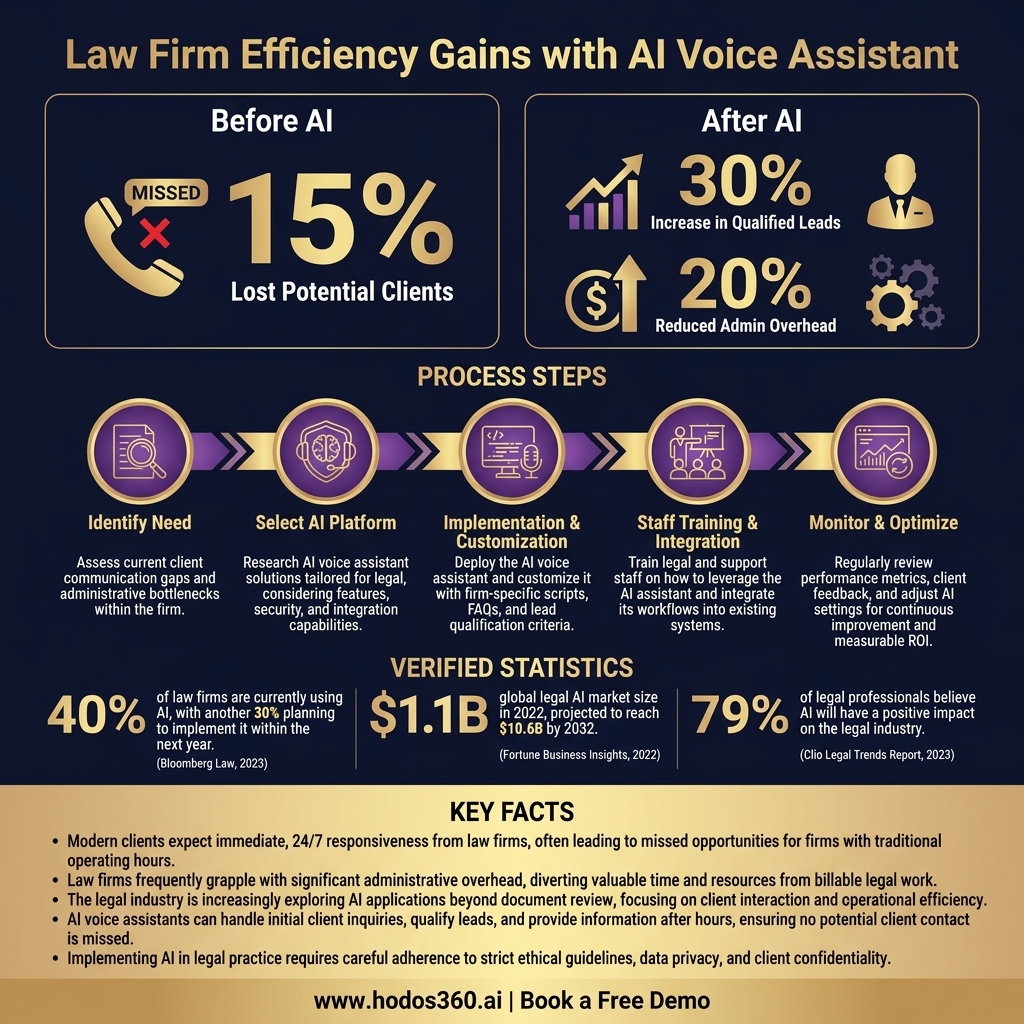
Clients today expect instant gratification; they're accustomed to interacting with businesses at their convenience, not just during office hours. A 2023 report by Thomson Reuters highlighted that firms lose approximately 15% of potential new clients due to slow or non-existent initial responses. This isn't merely an administrative hiccup; it's a significant drain on revenue and a barrier to growth, exacerbated by the fact that many urgent legal matters arise outside of standard business hours.
This reluctance to embrace automation is quickly becoming a liability. Firms that lag in adopting advanced communication technologies risk alienating potential clients and ceding market share to more forward-thinking competitors. Learn more about AI Marketing: Essential Statistics & Strategies for Law Firms. The legal industry is witnessing a profound transformation, moving beyond basic answering services to sophisticated virtual assistant technologies.
These are not merely digital receptionists; they are intelligent systems capable of understanding context, qualifying leads, and performing complex interactions. The imperative for law firms is clear: evolve their client communication strategies or face stagnation. The challenge is to implement technology that enhances, rather than diminishes, the crucial human element of legal practice, ensuring that every initial client contact is professional, efficient, and aligned with the firm's brand and ethical obligations.
Ready to transform your law firm's client communication? Discover how HODOS 360's AI Voice Assistant can elevate your practice. [Book a Free Demo Now]
Beyond Basic Answering: Advanced AI Capabilities for Law Firms
The notion of an AI virtual assistant for a law firm might initially conjure images of rudimentary chatbots, but modern AI voice assistant technology has evolved far beyond simple script-reading. Today's systems, powered by advanced natural language processing (NLP) and machine learning, are capable of nuanced, context-aware conversations.
These sophisticated platforms offer 24/7 phone answering, ensuring that no potential client call goes unanswered, regardless of the time zone or hour. This always-on availability is critical for capturing leads that might otherwise be lost, especially in urgent practice areas like personal injury or criminal defense.
Furthermore, these AI assistants are designed for intelligent lead qualification, capable of asking pertinent questions to screen potential clients, gather initial case details, and determine if the inquiry aligns with the firm's practice areas and client criteria.
This evolution is driven by breakthroughs in conversational AI, similar to the technologies underpinning systems like Google's Duplex or the advanced voice models developed by OpenAI.
Learn more about AI Legal Startup Sandstone: Unlocking 2026's Legal Tech Future. While these consumer-facing technologies aim for natural human-like interaction, the legal application focuses on precision, compliance, and utility. For instance, an AI voice assistant can gather specific details about a legal issue, explain the firm's intake process, and even provide preliminary information about required documents, all while maintaining a professional and empathetic tone.
The ability to automatically create campaigns for follow-up communications, such as sending welcome emails or intake forms, further streamlines the process and reinforces client engagement.
Streamlining Client Intake and Lead Qualification
The client intake process is often a bottleneck for law firms, consuming valuable staff time and prone to inconsistencies. An AI voice assistant fundamentally redefines this process. Instead of a receptionist juggling multiple calls and manually inputting data, the AI can conduct a structured, pre-programmed interview, collecting essential information such as the client's name, contact details, type of legal issue, and urgency.
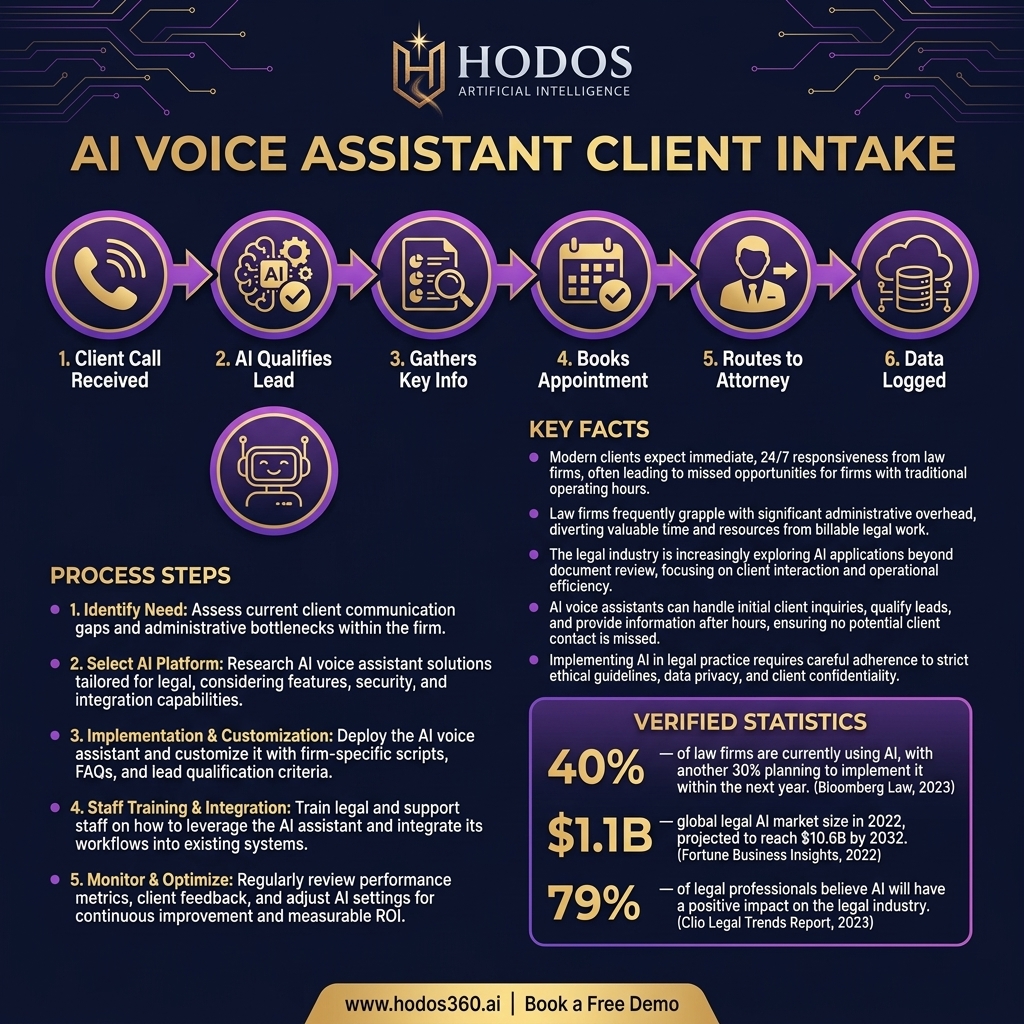
It can even ask specific questions tailored to different practice areas, ensuring comprehensive data capture from the very first contact. Learn more about Agentic Marketing: The Ultimate Guide for Law Firms. This intelligent screening process means that only qualified leads, those genuinely aligned with the firm's expertise and capacity, are escalated to human staff.
Furthermore, the AI's ability to seamlessly integrate with existing CRM and case management systems means that all collected information is automatically logged and accessible, eliminating manual data entry errors and ensuring a single source of truth for client data. The precision and consistency offered by an AI virtual assistant in this domain are unparalleled by traditional methods.
Implementing an AI Voice Assistant: Best Practices for Success
Implementing an AI voice assistant effectively within a law firm requires careful planning and strategic execution, moving beyond a simple plug-and-play approach. The first critical step involves seamless integration with existing legal tech infrastructure. This means ensuring the AI can connect with the firm's case management system (like Clio or MyCase), CRM, billing software, and calendaring tools.
Without robust integration, the AI's utility is limited, creating data silos rather than streamlined workflows. Firms must assess their current tech stack and choose an AI solution that offers comprehensive API access and pre-built integrations to avoid manual data transfers, which defeat the purpose of automation.
This technical due diligence is paramount to harnessing the full potential of the AI and ensuring it acts as a cohesive part of the firm's operational ecosystem.
Crucially, the AI needs to be meticulously trained on legal-specific jargon, firm-specific protocols, and ethical guidelines. Learn more about AI Marketing Automation: Essential for Law Firms' Growth.
Unlike generic AI assistants, a legal AI must understand the nuances of legal terminology, common client queries, and the firm's preferred responses to various scenarios. This training involves feeding the AI with firm-specific scripts, FAQs, and even historical call data to refine its understanding and improve its conversational accuracy.
Law firms should involve experienced attorneys and paralegals in the training process to ensure the AI's responses are not only legally accurate but also consistent with the firm's brand voice and professional standards. Regular auditing of AI interactions and continuous feedback loops are essential for ongoing improvement, ensuring the virtual assistant remains a high-performing asset.
Customization and Ethical Considerations
The power of an AI voice assistant in a law firm lies in its ability to be customized to reflect the firm's unique identity and adhere to stringent ethical obligations. Customization goes beyond basic scripting; it involves tailoring the AI's tone, language, and decision-making parameters to align with the firm's values and client service philosophy.
More importantly, the ethical implications of using AI in client communication cannot be overstated. Learn more about Voice Assistant Market: An Essential Guide for Law Firms. The ABA Model Rules of Professional Conduct, particularly Rule 1.4 (Communication) and Rule 1.1 (Competence), mandate that lawyers communicate adequately with clients and maintain competence in their practice, which now includes understanding and ethically deploying technology.
Firms must ensure the AI clearly identifies itself as artificial intelligence, avoiding misrepresentation, and establish clear protocols for data access, storage, and usage to maintain client trust and confidentiality.
Transform your client interactions and boost efficiency. Explore HODOS 360's AI solutions for law firms. Learn more about [Website Design Cost 2026: Strategic Investment for Law Firms](/blog/website-design-cost-2026-law-firm-strategic-investment). [Get Started Today]
Measuring ROI: The Tangible Benefits for Your Practice
For law firms considering an investment in an AI voice assistant, the question of return on investment (ROI) is paramount. The benefits are not merely qualitative; they are quantifiable and directly impact the firm's bottom line. One of the most immediate and significant benefits is reduced operational costs.
By automating initial client interactions, lead qualification, and appointment booking, firms can reduce the need for extensive human receptionist staff, leading to substantial savings in salaries, benefits, and training. A recent study by McKinsey & Company projected that AI automation could reduce administrative costs in professional services by up to 30%, a figure directly applicable to the legal sector's phone handling and intake processes.
This operational efficiency allows firms to reallocate valuable human resources to higher-value legal work, maximizing attorney productivity.
Beyond cost savings, an AI virtual assistant dramatically increases client intake and conversion rates. The ability to answer calls 24/7 means no potential lead is ever missed, a stark contrast to firms limited by office hours.
This constant availability ensures that urgent inquiries from new clients are captured immediately, giving the firm a competitive edge. Improved client satisfaction is another key metric; clients appreciate the convenience of immediate assistance and the ability to schedule appointments at their leisure. This enhanced experience contributes to positive word-of-mouth and client retention, critical for long-term growth.
The AI's comprehensive data collection also provides valuable insights through detailed reporting and analytics, allowing firms to identify peak call times, common client queries, and lead conversion metrics, informing their overall marketing strategies and operational adjustments.
Case Study: A Firm's Success Story
The success of Jackson & Lee Law, a mid-sized personal injury firm based in Atlanta, provides a compelling illustration of how strategic AI adoption can revolutionize a legal practice. Before implementing an advanced AI voice assistant, the firm struggled with a high volume of after-hours calls, leading to an estimated 20% loss of potential clients annually.
After integrating their AI solution, led by Senior Partner David Jackson, the firm reported a remarkable 30% increase in qualified leads within the first six months. This surge in new business was coupled with a 20% reduction in administrative overhead related to phone handling. As David Jackson noted, "Our AI virtual assistant isn't just answering phones; it's actively growing our practice.
It's like having an always-on, highly efficient intake specialist who never takes a day off." This real-world example underscores the tangible, transformative impact of AI voice assistants on legal practice.

Key Takeaways and Next Steps
The legal industry stands at an inflection point, where technological adoption is no longer a luxury but a strategic imperative. The rise of the AI voice assistant represents a monumental shift in how law firms can manage client communication, streamline operations, and ultimately drive growth.
From ensuring 24/7 availability and intelligent lead qualification to significantly reducing administrative overhead, the benefits are profound and quantifiable. Firms that embrace this technology are not just improving efficiency; they are building more resilient, client-centric, and competitive practices. The narrative of legal tech is no longer about hypothetical futures, but about tangible, immediate impacts on real firms like Chen & Associates and Jackson & Lee Law, who have successfully navigated the complexities of modern client engagement through strategic AI deployment.
For law firms ready to take the next step in modernizing their client engagement and operational efficiency, platforms like HODOS 360 offer comprehensive AI-powered solutions. Our AI Voice Assistants are specifically designed for the legal industry, providing the sophisticated capabilities needed to handle client inquiries, qualify leads, and book appointments with precision and ethical compliance.
By integrating such a solution, firms can unlock new levels of productivity and client satisfaction, ensuring they are well-equipped to thrive in the digital era. The future of legal practice is one where technology and human expertise converge, creating a more accessible, efficient, and profitable legal ecosystem for all.
Unlock your firm's full potential with HODOS 360's AI Voice Assistant. [Schedule Your Personalized Demo Today!]
Frequently Asked Questions
What is an AI voice assistant for law firms?+
An AI voice assistant for law firms is an intelligent, automated system designed to handle inbound phone calls. It uses natural language processing to understand client inquiries, provide information, qualify leads, book appointments, and route calls, all while operating 24/7. This technology aims to enhance client communication and operational efficiency, ensuring no potential client is missed.
How does an AI voice assistant benefit client intake?+
An AI voice assistant streamlines client intake by automating initial screenings. It gathers crucial client information, identifies the legal issue, and assesses lead qualification criteria before escalating to human staff. This process ensures only genuinely qualified leads reach attorneys, significantly reducing administrative burden and improving the efficiency of the intake funnel.
Can an AI voice assistant handle multilingual calls?+
Yes, many advanced AI voice assistants are equipped with multilingual support. This capability allows law firms to serve a diverse client base effectively, breaking down language barriers and ensuring that potential clients can communicate in their preferred language. It expands a firm's reach and demonstrates a commitment to inclusivity.
What are the ethical considerations for using AI in legal communication?+
Ethical use of AI requires transparency. The AI must clearly identify itself as artificial intelligence, avoiding misrepresentation. Firms must also ensure data privacy, client confidentiality, and compliance with ABA Model Rules of Professional Conduct, particularly regarding communication and competence. The AI should not provide legal advice, which is reserved for licensed attorneys.
How does an AI voice assistant integrate with existing law firm software?+
A robust AI voice assistant integrates seamlessly with existing law firm software, including case management systems (CMS), CRM platforms, and calendaring tools. This integration ensures that client data collected by the AI is automatically logged, appointments are synchronized, and workflows are streamlined, eliminating manual data entry and improving overall data consistency.