


AI Marketing Strategies: Essential Guide for Law Firms
The legal industry stands at a pivotal juncture, grappling with a rapidly evolving digital landscape that demands more than traditional marketing tactics. The recent Digital Marketing News, September 1st–15th, 2026 report by ALM Corp highlighted a seismic shift: Google's AI Max upgrade, which took effect on September 1st. This change, alongside Meta's placement adjustments and the rise of ChatGPT-powered ads, signals a new era where artificial intelligence isn't just an advantage—it's a prerequisite for visibility and client acquisition. Law firms, traditionally cautious adopters of new technology, can no longer afford to ignore these profound changes.
Historically, legal marketing relied on reputation, referrals, and often, static advertising. Today, the modern legal professional navigates a complex ecosystem of online reviews, social media presence, and hyper-targeted advertising. The conflict between maintaining professional decorum and aggressively competing for market share is real. Firms that embraced early digital strategies, such as those championed by Clio's CEO Jack Newton, saw significant growth. Now, the next frontier is AI marketing, promising unprecedented precision in reaching potential clients, automating tedious tasks, and generating actionable insights from vast datasets. This isn't just about efficiency; it's about strategic growth.
Ignoring the advancements in AI marketing is akin to practicing law without a digital case management system in the 21st century. As the legal tech market continues to expand—evidenced by significant investments like Harvey AI's recent funding rounds for its generative AI legal assistant—the tools available to law firms are more sophisticated than ever. The firms that will thrive are those that strategically integrate AI into their marketing workflows, turning data into dollars and visibility into new clients. Ready to transform your firm's outreach? Discover HODOS 360's AI Marketing Platform today.
The Shifting Sands of Legal Marketing: Why AI is No Longer Optional
The legal profession, often perceived as resistant to rapid technological shifts, is now being undeniably reshaped by artificial intelligence, particularly in the realm of marketing. For years, firms have relied on established networks and word-of-mouth, but the digital age has democratized information, empowering clients to research and compare legal services like never before. According to the ABA TechReport 2023, interest in AI tools among legal professionals has surged, with a significant percentage of firms exploring or actively adopting AI for various operational tasks. This trend is now extending aggressively into marketing, driven by the need to stand out in an increasingly crowded market.
Traditional marketing methods, such as print ads or generic online listings, are proving less effective in capturing the attention of a digitally native clientele. The modern client expects personalized interactions, immediate information, and transparent communication. Firms that cling to outdated strategies risk being outmaneuvered by competitors who are leveraging AI to identify client pain points, tailor messaging, and optimize their online presence. This isn't just about adopting new tools; it's about fundamentally rethinking how law firms connect with and serve their communities. Learn more about AI Marketing: The Essential Guide to Legal Personalization. The tension between preserving the venerable traditions of the law and embracing disruptive innovation creates both challenges and immense opportunities for those willing to adapt.
Take, for instance, the insights shared by Jack Newton, CEO of Clio, at LegalTech NYC 2026. He consistently emphasizes that the future of legal practice is client-centered and tech-enabled. Firms that fail to meet clients where they are—which is overwhelmingly online—will struggle to grow. AI offers the power to not only meet clients online but to anticipate their needs, engage them proactively, and build relationships long before they even pick up the phone. This strategic imperative makes AI marketing not just an option, but an essential component of any forward-thinking law firm's growth strategy in 2026 and beyond.
Navigating Google's AI Max Upgrade: Strategies for Law Firms
The Google AI Max upgrade, which rolled out on September 1st, 2026, represents one of the most significant changes to digital advertising in recent memory, particularly impacting search campaigns. This upgrade fundamentally shifts how advertisers manage their accounts, moving towards greater automation powered by Google's sophisticated AI. For law firms, this means less direct manual control over certain bidding strategies and audience targeting, and more reliance on Google's algorithms to optimize for conversions based on the data provided. The drama here lies in the balance: the promise of unprecedented efficiency versus the fear among marketers of relinquishing control to an opaque AI system. Firms that quickly adapt their strategies will gain a considerable competitive edge.
Competitors who haven't yet adapted to these changes risk falling behind. Google's intention is clear: to streamline campaigns and maximize performance through machine learning. This means that the quality of your ad creatives, the clarity of your conversion goals, and the robustness of your data feeds are more critical than ever. The AI will learn and adapt based on these inputs, dictating who sees your ads and at what cost. Learn more about AI Social Media Agents: The Ultimate Guide for Law Firms. Law firms need to understand that this isn't a passive upgrade; it requires active engagement to ensure the AI is working in their favor, rather than against their specific legal marketing objectives. The ability to monitor and interpret performance data becomes paramount.
This shift also highlights the broader trend of AI integration across major platforms. Beyond Google, companies like Meta have been refining their ad placement algorithms with AI, and even Pinterest debuted Visual Search Ads as it moves deeper into performance marketing. The underlying message is consistent: AI is becoming the central nervous system of digital advertising. For law firms, this necessitates a proactive approach to understanding and leveraging these technologies, rather than reacting to them. Firms that embrace these powerful tools can significantly enhance their client acquisition funnels and improve their overall marketing ROI.
Optimizing Your Google Search Campaigns for AI Max
To thrive under Google's AI Max, law firms must re-evaluate their search campaigns with an AI-first mindset. Focus on creating high-quality, diverse ad creatives and compelling landing pages that clearly articulate your firm's value proposition. The AI thrives on options, so provide it with a rich library of headlines, descriptions, and images. Crucially, ensure your conversion tracking is impeccable. Whether it's a phone call, a contact form submission, or a consultation booking, the AI needs clear signals to optimize effectively. Firms that have robust conversion tracking in place will see their AI marketing efforts yield far superior results, allowing Google's algorithms to precisely target potential clients. This proactive data management is key to navigating the new landscape and ensuring your campaigns remain competitive and cost-efficient.
Furthermore, while AI automates many aspects, human oversight remains indispensable. Learn more about Voice AI: Essential Revenue Protection for Law Firms. Regular analysis of performance reports, identifying trends, and making strategic adjustments are vital. Don't simply set it and forget it. Legal marketing professionals must work alongside the AI, providing strategic direction and refining campaign parameters based on real-world insights. This collaborative approach ensures that the firm's unique brand voice and ethical considerations (e.g., ABA Model Rule 7.1 (Communications Concerning a Lawyer's Services) are always upheld. The goal is to leverage AI's power for scale and precision while maintaining the human touch that defines client relationships in the legal sector.
Beyond Search: Leveraging AI for Comprehensive Legal Marketing
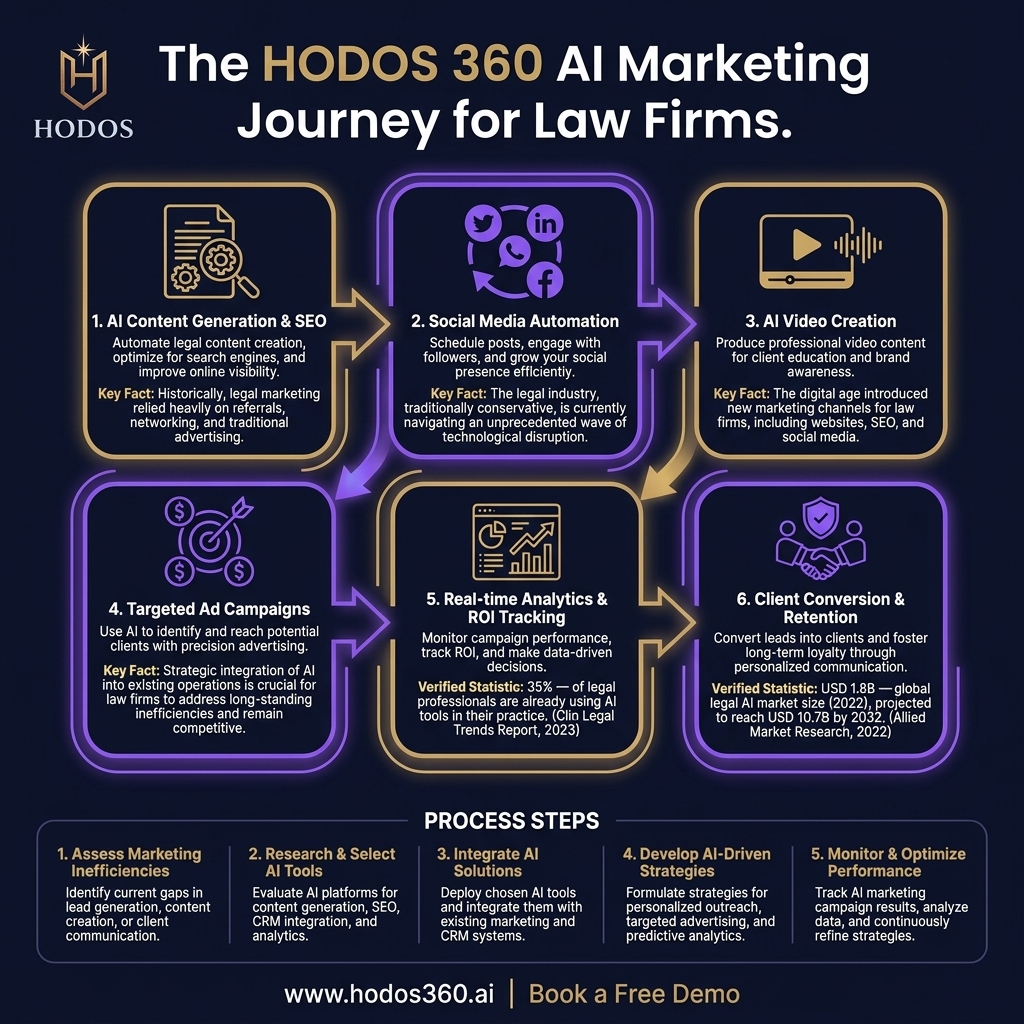
While Google's AI Max update dominates business news today for paid search campaigns, the scope of AI in legal marketing extends far beyond just search advertising. Modern law firms are discovering the transformative power of AI across their entire digital footprint. This includes everything from sophisticated social media automation, which ensures consistent engagement and targeted outreach, to AI-powered video creation tools that enable firms to produce high-quality, engaging visual content without extensive production budgets. Imagine an AI generating a compelling video explaining a complex legal concept or showcasing client testimonials – this is now a reality for forward-thinking firms. The integration of AI across various channels allows for a truly comprehensive and cohesive digital marketing strategy.
This holistic approach is critical in an age where clients interact with brands across multiple touchpoints. A potential client might see a LinkedIn post, watch an AI-generated explainer video, and then encounter a targeted ad on Google. AI ensures these interactions are seamless, personalized, and strategically aligned. Platforms like HODOS 360 integrate these diverse capabilities, offering a unified solution for law firms to manage their entire AI marketing ecosystem. Learn more about Essential AI Website Security: Protecting Law Firms from Cyber Threats. From automating social media posts based on trending legal topics to generating localized content, AI streamlines the entire process, freeing up valuable attorney time. This allows lawyers to focus on what they do best: practicing law, while their marketing engine runs efficiently in the background.
The competitive landscape demands this multi-faceted approach. Firms that only focus on one aspect of digital marketing, such as SEO without social media presence, will find themselves at a disadvantage. The synergy created by combining AI-driven search, social, content, and video marketing creates a powerful network effect that amplifies a firm's reach and impact. As the digital marketing jobs sydney market reflects, the demand for integrated, AI-savvy marketers is skyrocketing, indicating a permanent shift in industry expectations. This comprehensive strategy is what truly sets leading firms apart in the race for client acquisition.
Crafting Compelling Content with AI
One of the most exciting applications of AI marketing for law firms is in content generation. AI tools can analyze vast amounts of data to identify trending legal topics, understand audience preferences, and even draft initial versions of blog posts, articles, and social media updates. This capability dramatically reduces the time and resources traditionally required for content creation, allowing firms to maintain a consistent and authoritative online presence. For example, an AI could analyze recent court rulings or legislative updates and generate a draft article summarizing their implications for a specific client demographic. However, the critical caveat is that AI-generated content for legal matters must always undergo rigorous human review by qualified attorneys to ensure accuracy, ethical compliance, and alignment with the firm's brand voice. AI serves as a powerful accelerator, not a replacement for legal expertise.
Beyond basic drafting, AI can personalize content at scale. Learn more about AI Phone Assistant: Essential Guide for Modern Law Firms. Imagine an AI tailoring an email newsletter to individual client interests based on their past interactions with the firm's website or previous legal inquiries. This level of personalization fosters deeper engagement and builds stronger client relationships. Firms are also using AI to generate scripts for short-form video content, which is crucial for platforms like TikTok and Instagram, capturing attention in a way traditional text often cannot. The ability to rapidly produce diverse, high-quality content across various formats is a game-changer for firms looking to establish thought leadership and expand their digital footprint. It allows firms to answer questions like "what is digital marketing" not just theoretically, but practically through their own engaging content.
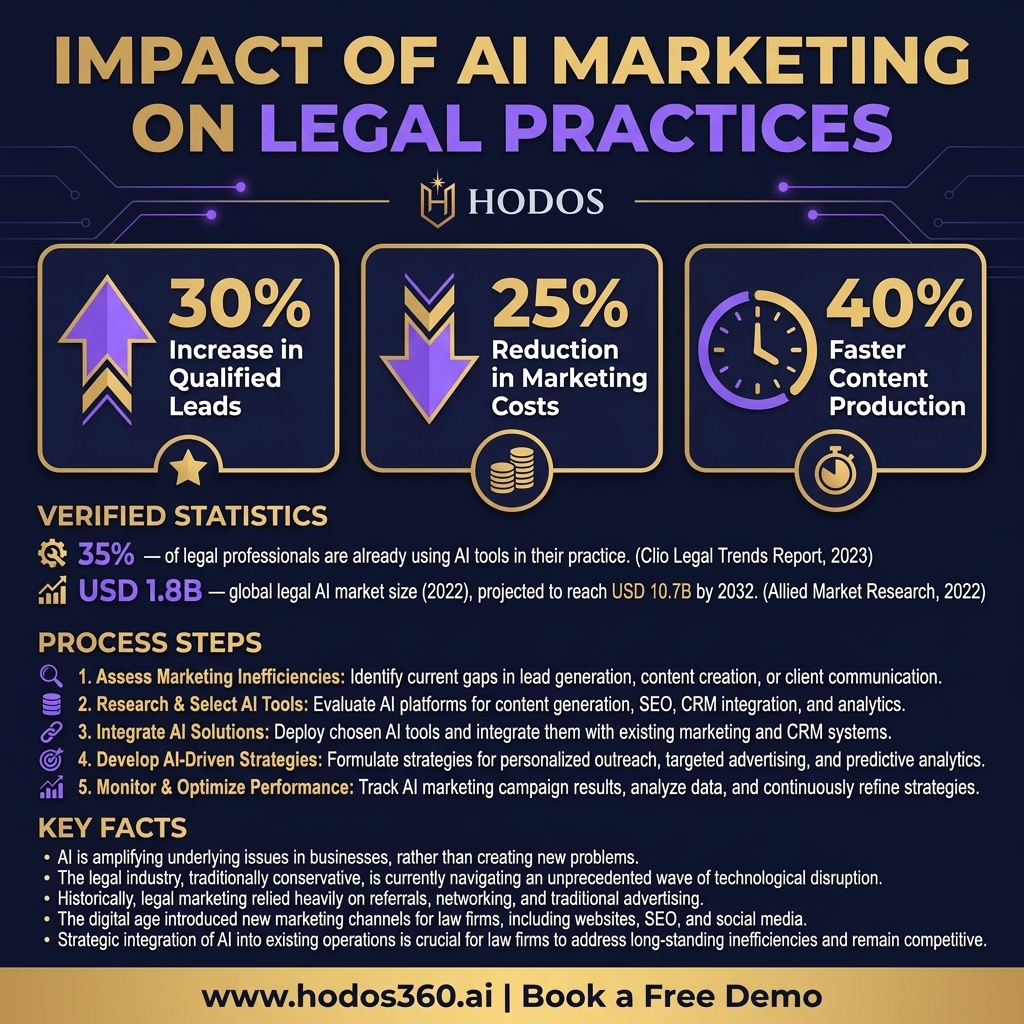
- ✓AI-powered Client Intake & Lead Scoring: Automate initial client interactions, qualify leads based on predefined criteria, and prioritize high-value prospects.
- ✓Automated Social Media Scheduling & Content Curation: Plan and execute social media campaigns, identify relevant legal news, and post engaging content consistently.
- ✓Personalized Email Marketing Campaigns: Segment client lists and deliver tailored emails with relevant legal updates, firm news, and service offerings.
- ✓Predictive Analytics for Client Retention: Analyze past client data to identify patterns, predict future needs, and proactively engage clients to foster loyalty.
- ✓AI-driven Video Creation for Brand Storytelling: Generate professional-quality videos for case studies, client testimonials, and legal explainers with minimal effort.
- ✓SEO Optimization for Legal Content: Ensure your website and content rank highly on Google search results for critical legal keywords, driving organic traffic.
- ✓ROI Tracking & Performance Analytics: Gain deep insights into marketing campaign effectiveness, understand client acquisition costs, and optimize spending for maximum return.
Ready to see these capabilities in action? Schedule a HODOS 360 demo today.
Measuring Success: ROI, Analytics, and Data-Driven Decisions with AI
In the world of legal marketing, proving return on investment (ROI) has historically been a challenge. Attorneys often struggle to connect marketing spend directly to client acquisition and revenue. This is where AI marketing platforms fundamentally change the game. AI excels at processing and analyzing vast datasets, providing granular insights into every aspect of a marketing campaign. Firms can now precisely track which search campaigns are generating the most qualified leads, which social media posts lead to website visits, and what the true cost of acquiring a new client is. This level of transparency is invaluable, transforming marketing from a nebulous expense into a quantifiable investment. According to a recent Thomson Reuters Institute report on legal marketing trends, data analytics is increasingly cited as a top priority for legal business development leaders.
AI-powered analytics go beyond simple tracking; they offer predictive capabilities. By analyzing historical data, AI can forecast future trends, identify potential bottlenecks in the client journey, and even predict which marketing channels are likely to yield the best results for specific practice areas. Learn more about AI Assistant: Essential Tool for Law Firm Staffing Shortages. This allows law firms to make truly data-driven decisions, optimizing their budgets and strategies in real-time. For example, if AI identifies that a particular type of content consistently attracts high-value personal injury clients in a specific geographic area, the firm can double down on that strategy with confidence. This iterative optimization ensures that every marketing dollar is spent as effectively as possible, maximizing ROI tracking and minimizing wasted effort. The shift from reactive marketing to proactive, predictive marketing is one of AI's most significant contributions.
The ability to demonstrate clear ROI is also crucial for internal buy-in. When firm partners can see tangible evidence of how AI marketing is contributing to the bottom line, it fosters greater confidence in technological investments. This data-centric approach helps bridge the gap between marketing efforts and firm profitability, proving that modern marketing is not just about brand awareness, but about measurable growth. Firms that embrace these analytical capabilities are not just marketing smarter; they are managing their entire business more strategically, gaining a significant edge in a competitive market that increasingly values efficiency and demonstrable results.
Unlocking Client Acquisition with Predictive Analytics
Predictive analytics, a core component of advanced AI marketing platforms, takes data analysis to the next level for client acquisition. Instead of merely reporting on past performance, AI utilizes machine learning algorithms to anticipate future client behavior and identify the most promising leads. By analyzing factors such as website engagement, demographic data, past case types, and even sentiment from online interactions, AI can score leads and predict their likelihood of converting into paying clients. This empowers law firms to focus their resources on the prospects most likely to retain their services, drastically improving efficiency and reducing client acquisition costs. It's about working smarter, not just harder, in the pursuit of new business.
This foresight allows firms to proactively tailor their outreach and service offerings. For example, if predictive analytics identifies a segment of the market that is likely to need estate planning services in the next six months, the firm can launch a targeted marketing campaign specifically addressing those needs, positioning themselves as the go-to experts. This precision targeting moves beyond broad demographic assumptions, allowing for highly personalized and timely interventions. The result is a more efficient sales funnel, higher conversion rates, and a more robust pipeline of new clients. Predictive analytics transforms the speculative nature of traditional lead generation into a more scientific, data-driven process, offering a clear competitive advantage.

The Future is Now: Integrating AI Marketing into Your Firm's Growth Strategy
The narrative emerging from the legal tech world is clear: AI is not a distant future, but a present-day reality that is fundamentally redefining how law firms operate and grow. From Google's AI Max upgrade to the sophisticated content generation capabilities, AI marketing offers an unparalleled toolkit for firms looking to enhance their digital presence, attract more clients, and streamline their operations. The firms that are proactively integrating these technologies are already seeing significant returns, outperforming those that remain hesitant. This isn't about replacing human marketers or attorneys; it's about empowering them with tools that amplify their expertise, automate routine tasks, and provide insights previously unattainable.
The competitive landscape for law firms is only intensifying, and the demands of modern client acquisition are more complex than ever. Embracing AI marketing isn't just about keeping pace; it's about carving out a leadership position in the market. By leveraging platforms that offer comprehensive AI solutions—from AI-powered legal workflows and client intake automation to AI Voice Assistants and a robust AI Marketing Platform—firms can build a resilient and highly effective growth engine. This holistic approach ensures that every aspect of client engagement, from initial outreach to ongoing relationship management, is optimized for success. The journey to a future-proof law firm begins with strategic adoption of AI, transforming challenges into opportunities for unprecedented growth.
Ultimately, the goal of AI marketing is to enable law firms to achieve smarter, more sustainable growth. It's about making informed decisions based on data, reaching the right clients with precision, and fostering deeper relationships through personalized engagement. As the legal industry continues its rapid evolution, the firms that master AI will not only survive but thrive, setting new benchmarks for efficiency, client satisfaction, and profitability. Don't get left behind. Explore HODOS 360's AI Marketing Platform and elevate your firm's digital presence.
Frequently Asked Questions
What is AI marketing for law firms?+
AI marketing for law firms leverages artificial intelligence to automate, optimize, and personalize marketing efforts. This includes AI-driven ad targeting, content generation, social media management, and data analytics to attract and retain clients more efficiently. It allows firms to reach the right audience with the right message at the opportune moment, significantly enhancing client acquisition strategies and improving ROI.
How does Google's AI Max impact law firm advertising?+
Google's AI Max upgrade, implemented September 1st, 2026, automates more aspects of search campaigns, including bidding and audience targeting. For law firms, this means a greater reliance on high-quality ad creatives and clear conversion goals. Firms must adapt by providing robust data to Google's AI and continuously monitoring performance to maintain control and optimize their digital ad spend effectively.
Can AI truly generate high-quality legal content?+
While AI can efficiently generate drafts for blog posts, social media updates, and marketing copy, human oversight remains crucial for legal content. AI excels at analyzing trends and structuring information, but attorneys must review and edit for legal accuracy, ethical compliance (e.g., ABA Model Rule 7.1), and to ensure the content reflects the firm's unique voice and expertise. AI is a powerful assistant, not a replacement for legal minds.
What ethical considerations apply to AI in legal marketing?+
Ethical use of AI in legal marketing is paramount. Firms must ensure transparency regarding AI-generated content, avoid misleading claims, and protect client data privacy. Compliance with advertising rules, such as ABA Model Rule 7.1 (Communications Concerning a Lawyer's Services), which governs communications about a lawyer's services, is essential. AI tools should be used to enhance client service and firm reputation, never to compromise professional integrity or client trust.
How can small law firms afford AI marketing solutions?+
Many AI marketing platforms, including HODOS 360, offer scalable solutions tailored for firms of all sizes. Cloud-based subscriptions eliminate large upfront investments, making advanced AI tools accessible. The efficiency gains and improved client acquisition from AI can lead to significant cost savings and increased revenue, often offsetting the investment. Small firms can start with core features and expand as their needs and budget evolve.