
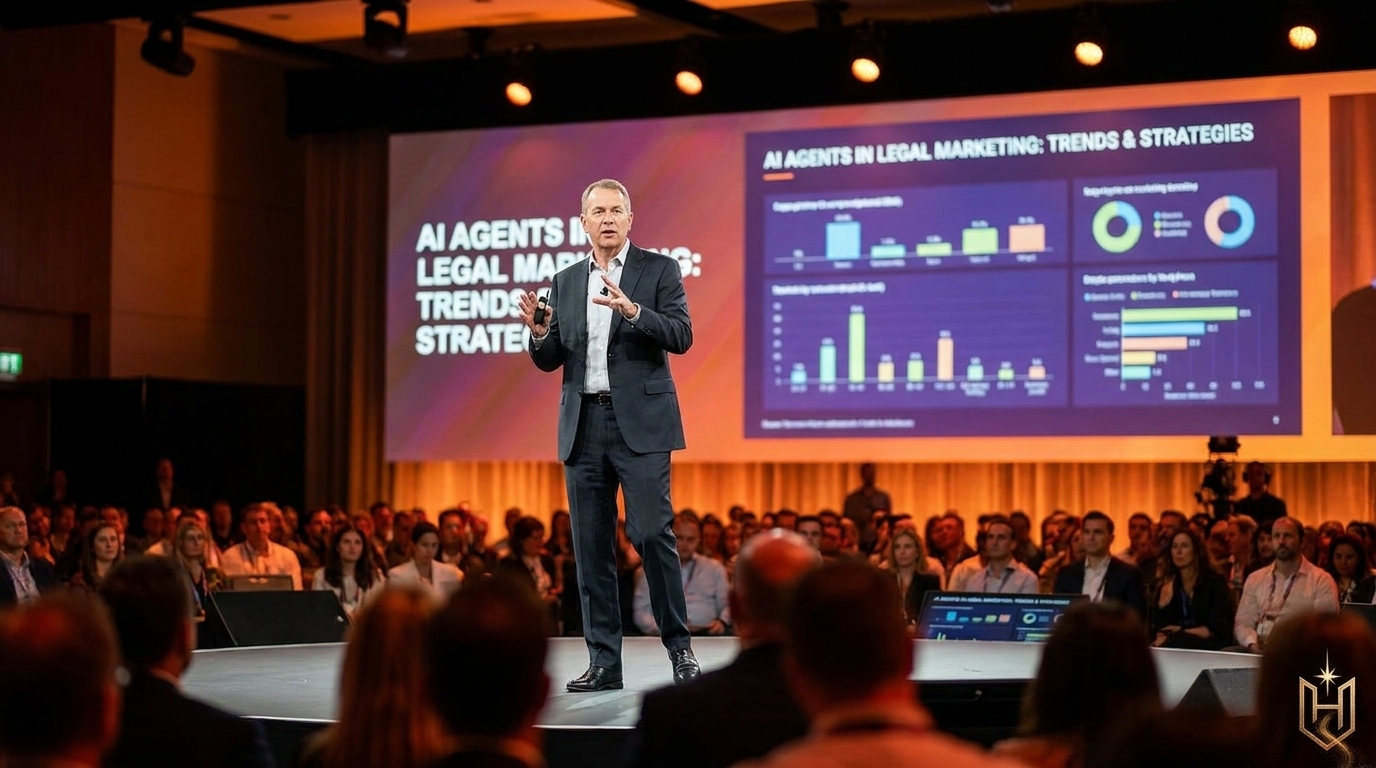
AI Social Media Agents: The Ultimate Guide for Law Firms
Just a few years ago, the idea of autonomous digital entities managing a law firm's public presence seemed like science fiction. Yet, here we are in July 2026, witnessing the rapid ascent of AI social media agents — a transformative trend highlighted by publications like Trend Hunter, which recently spotlighted their burgeoning influence. Consider the journey of Sarah Chen, managing partner at Innovate Legal, a mid-sized firm that, until recently, struggled to maintain a consistent, engaging digital footprint. Overwhelmed by the demands of complex litigation and client service, their social media efforts were sporadic, often reactive, and rarely yielded the qualified leads they desperately needed. Chen's firm represents a common narrative in the legal sector: a deep commitment to legal excellence, but a lagging adoption of cutting-edge marketing technologies. The emergence of platforms like MoltBook AI social media agent networks signals a profound shift, offering a glimpse into a future where digital outreach is not just automated, but intelligently orchestrated.
This isn't merely about scheduling posts or basic chatbots; we're talking about sophisticated AI agents capable of understanding nuanced legal discourse, generating contextually relevant content, and even engaging in proactive client messaging. The legal industry, traditionally cautious, is now at an inflection point. According to a 2025 report by Thomson Reuters, over 60% of Am Law 200 firms are actively exploring or implementing AI solutions in various capacities, a significant leap from just 20% two years prior. This burgeoning interest isn't confined to back-office efficiency; it's extending to the very front lines of client acquisition and brand building. Firms are realizing that to remain competitive, they must embrace AI not just as an operational tool, but as a strategic marketing imperative, particularly in the dynamic realm of social media. The human element, however, remains crucial, guiding these powerful agents to ensure ethical compliance and strategic alignment.
For law firm owners and attorneys, the question is no longer *if* AI will impact their social media strategy, but *how* to effectively integrate AI social media agents to gain a distinct competitive advantage. These autonomous systems are fundamentally reshaping how legal practices approach digital engagement, offering unprecedented scale, precision, and insight. From identifying emerging legal trends to personalizing client outreach and optimizing campaign performance, AI social media agents represent the next frontier in legal marketing. They free up invaluable human resources, allowing legal professionals to focus on what they do best: practicing law, while ensuring a robust, intelligent, and always-on digital presence. This guide will explore the mechanics, benefits, and strategic implementation of these advanced agents, providing a roadmap for firms ready to embrace the future of legal marketing.
The Dawn of Autonomous AI Social Media Agents in Legal Marketing
The concept of AI social media agents transcends traditional automation, moving into a realm of proactive, intelligent digital assistants. Unlike simple content schedulers or rule-based chatbots, these advanced agents are powered by sophisticated large language models (LLMs) like those developed by OpenAI and Anthropic, allowing them to comprehend complex legal topics, generate nuanced copy, and engage in contextually appropriate interactions. For instance, an AI agent can monitor legal news feeds, synthesize information on a new regulatory change (like recent EU AI Act news enforcement updates), and then draft a series of social media posts explaining its implications for specific client segments, all while maintaining the firm's established brand voice. This level of autonomy and intelligence represents a paradigm shift, enabling law firms to maintain a vibrant, always-on digital presence without constant human intervention.
The emergence of specialized AI agent social networks, exemplified by phenomena like MoltBook, underscores the growing sophistication and integration of these autonomous systems. MoltBook, initially focused on consumer trends, demonstrated how AI agents could form networks to gather, analyze, and disseminate information at an unprecedented scale, influencing trends and messaging. Learn more about Voice AI: Essential Transformation for Modern Legal Workflows. For law firms, this translates into the ability to deploy specialized agents that can not only generate content but also act as digital liaisons, qualifying leads, answering preliminary questions, and even booking initial consultations. This is a far cry from the static websites and generic email blasts of yesteryear, offering a dynamic, interactive experience that mirrors the speed and responsiveness clients now expect from all professional services. The shift is so profound that industry leaders like Sam Altman of OpenAI and Dario Amodei of Anthropic consistently emphasize the future role of agents in all digital ecosystems, a vision now concretely manifesting in legal marketing.
Beyond Content Generation: Strategic Client Engagement
The true power of AI social media agents for law firms lies not just in automating content creation, but in fostering strategic client engagement. These agents can analyze client interactions, identify pain points, and tailor personalized messaging that resonates deeply. Imagine an AI agent identifying a client's specific legal query on LinkedIn, providing a helpful, non-legal advice response, and then seamlessly suggesting a relevant blog post or a direct consultation with a specialist attorney. This level of personalized, proactive outreach builds trust and positions the firm as a responsive, client-centric entity. Such capabilities are becoming indispensable in a competitive legal market where client experience is a key differentiator, moving beyond mere reactive customer service to a predictive engagement model.
However, the deployment of AI social media agents for client engagement in the legal sector necessitates strict adherence to ethical guidelines. ABA Model Rule 7.1, which governs Communications Concerning a Lawyer’s Services, is paramount. Learn more about Ultimate Inbound Marketing AI Guide for Law Firms. Firms must ensure that any AI-powered communication is not false, misleading, or deceptive, and clearly delineates between general information and legal advice. Transparency about the use of AI, particularly in direct client interactions, is also crucial. The human element of oversight remains critical, with attorneys reviewing agent interactions and ensuring all communications uphold the profession's ethical standards. This delicate balance ensures that while AI offers efficiency, it never compromises the integrity or trustworthiness of legal services.
Harnessing AI for Trend Prediction and Market Advantage
Beyond client engagement, AI social media agents are transforming law firms into sophisticated trend hunters, equipped with unparalleled predictive capabilities. These agents can continuously monitor vast oceans of digital data – social media conversations, legislative updates, court filings, industry news, and even competitor activities – to identify nascent legal trends and market shifts long before they become mainstream. For example, an AI agent might detect a surge in online discussions around a niche area like AI intellectual property rights, or the implications of new semiconductor manufacturing regulations on supply chain litigation. This early detection allows firms to proactively develop expertise, create relevant content, and position themselves as leaders in emerging practice areas, like those related to openclaw technology or anthropic news today.
This predictive power offers a significant competitive advantage. While traditional legal marketing often reacts to market demands, AI-powered agents enable firms to anticipate and even shape them. Learn more about AI Document Workflows: Unleash Firm Efficiency in 2026. A 2024 report by Gartner highlighted that organizations leveraging AI for predictive analytics saw a 25% increase in market share capture compared to those relying on historical data alone. For law firms, this means identifying potential litigation hotspots, understanding the evolving needs of specific industries, or even forecasting changes in regulatory enforcement, allowing for the development of new service offerings. This proactive stance, fueled by intelligent trend analysis, separates the market leaders from the laggards, creating a palpable tension between firms that embrace data-driven foresight and those that cling to traditional, reactive strategies.
Implementing AI Social Media Agents: A Practical Roadmap for Law Firms
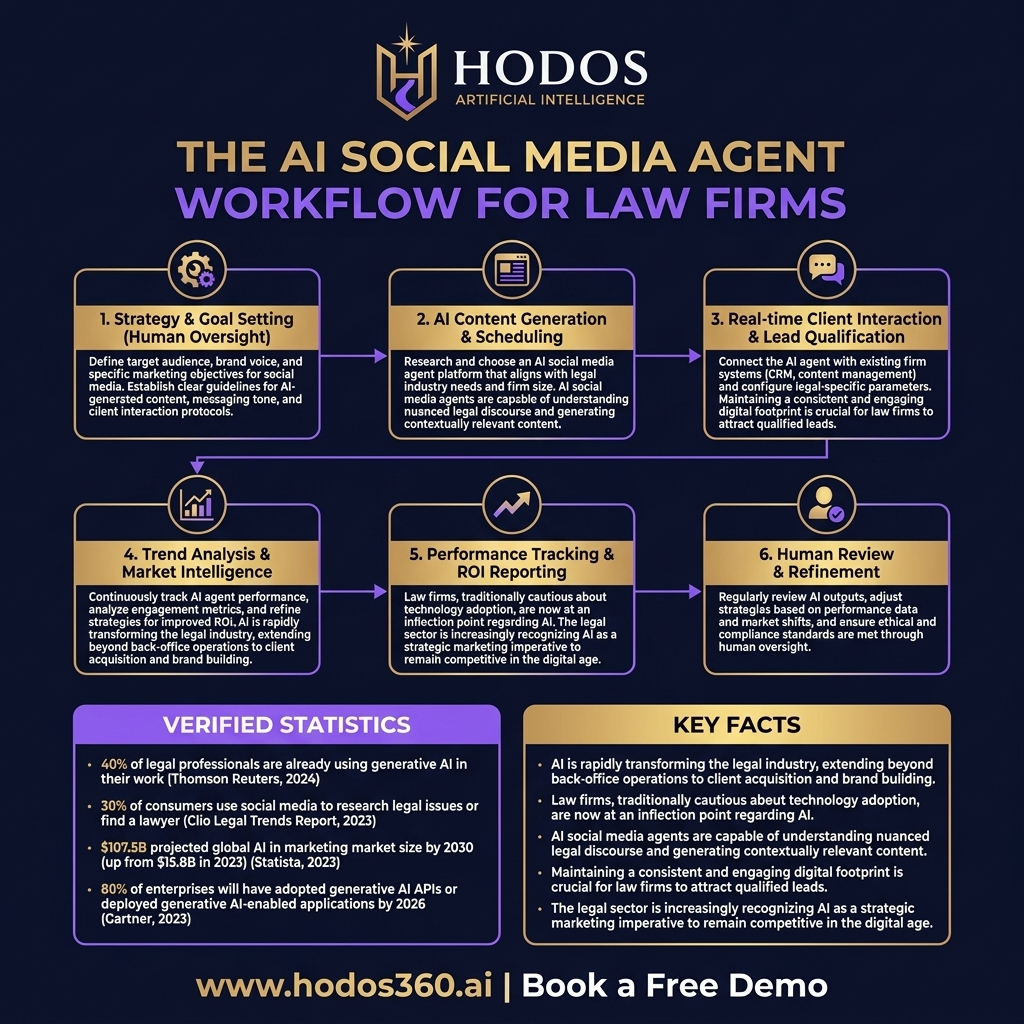
Implementing AI social media agents into a law firm's marketing strategy requires a structured, thoughtful approach, not a wholesale overhaul. The first step involves a comprehensive assessment of current digital presence, target audience, and specific marketing goals. Are you looking to increase brand awareness, generate more qualified leads, or enhance client retention? This clarity will guide the selection and configuration of your AI agents. A phased rollout, starting with a pilot program for a specific practice area or content type, is often advisable. This allows firms to fine-tune the agent's parameters, refine its messaging, and measure its effectiveness before scaling across the entire firm. Platforms like the HODOS 360 AI Marketing Platform offer modular solutions that allow firms to start with core functionalities like social media automation and content generation, then gradually integrate more advanced AI-powered features, ensuring a smooth transition and measurable ROI.
Beyond technical implementation, ethical deployment is paramount. Learn more about AI Regulatory Monitoring: Essential for Law Firm Compliance. As discussed at LegalTech NYC 2026, where leading legal tech experts debated the implications of generative AI, transparency and accountability are non-negotiable. Firms must establish clear guidelines for AI agent interactions, ensuring they do not inadvertently offer legal advice, maintain client confidentiality, and avoid any form of bias in their outreach. This requires robust internal policies and continuous monitoring by human legal marketing professionals. The goal is to augment human capabilities, not replace them, maintaining the personal touch and ethical standards that define the legal profession. This dual approach of technological advancement and ethical rigor is what differentiates responsible AI adoption from mere technological opportunism, ensuring that the benefits of AI social media agents are realized without compromising professional integrity.
Overcoming Challenges and Maximizing ROI
Adopting AI social media agents isn't without its challenges. Concerns about cost, complexity, and the potential displacement of human roles are common. However, these challenges can be reframed as opportunities. Initial investments in AI platforms are increasingly offset by significant long-term gains in efficiency, lead quality, and brand reach. The complexity can be mitigated by partnering with providers offering intuitive, purpose-built legal marketing AI, like the HODOS 360 platform. Rather than displacing roles, AI often redefines them, allowing marketing teams to shift from repetitive tasks to strategic oversight, creative direction, and deeper analysis of AI-powered insights. Learn more about Proven Legal AI ROI: Essential Strategies for Law Firms. This upskilling of staff to manage and optimize AI agents is a critical component of successful implementation.
Maximizing ROI means looking beyond vanity metrics like likes and shares. Firms should focus on tangible outcomes: increased website traffic from social media, higher conversion rates for qualified leads, reduced client acquisition costs, and enhanced brand reputation. Robust analytics and ROI tracking, a core feature of advanced AI marketing platforms, are essential for demonstrating the value of these agents. For example, a firm might track how many new client inquiries directly originated from an AI-powered social media campaign or how much faster their client intake process became due to AI agent pre-qualification. This data-driven approach not only justifies the investment but also provides continuous feedback for optimizing AI agent performance, ensuring that every digital interaction contributes meaningfully to the firm's bottom line.
The Future of Legal Marketing: AI-Powered Autonomy and Human Oversight
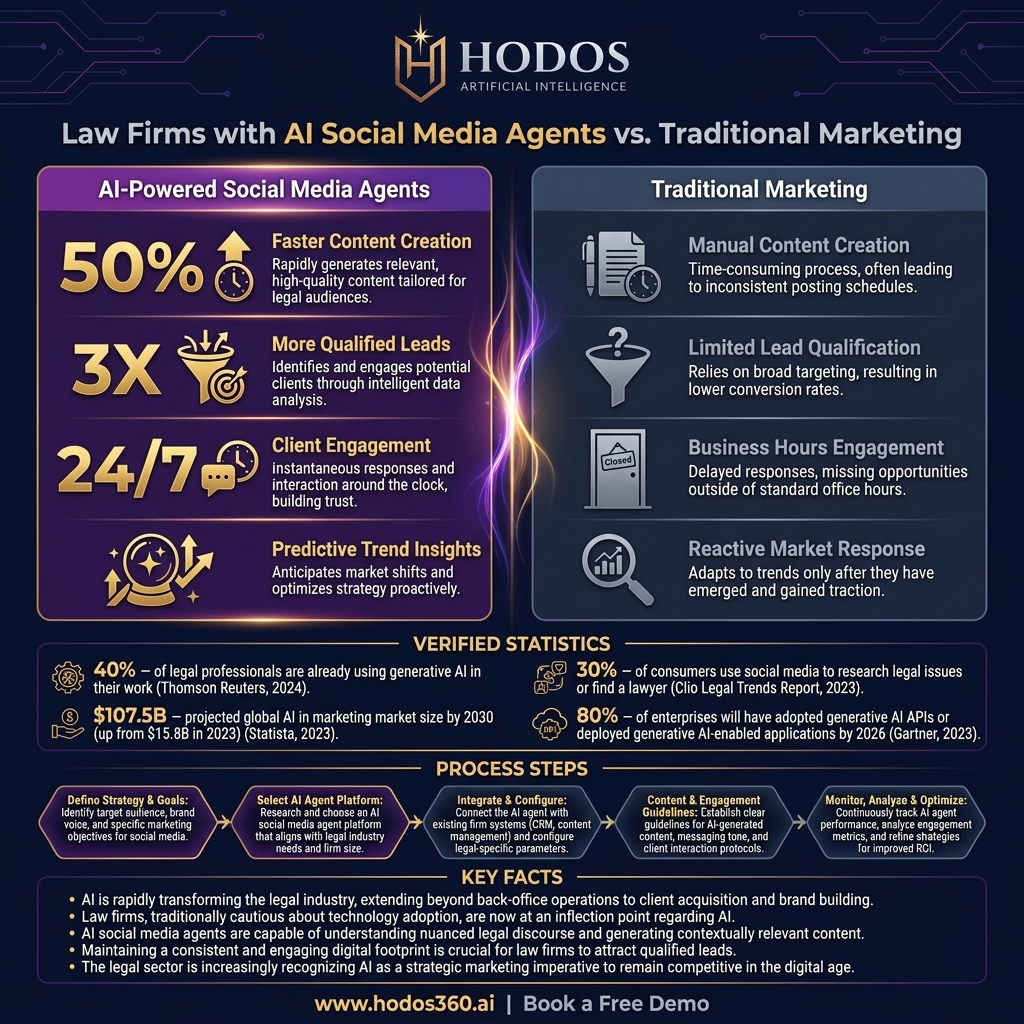
The trajectory of AI social media agents suggests an increasingly autonomous yet human-guided future for legal marketing. We are moving towards a landscape where AI will not just assist but proactively manage significant portions of a firm's digital presence, from sophisticated content campaigns to real-time, personalized client interactions. This evolution will be driven by advancements in generative AI, enabling agents to create multi-modal content – including AI video and interactive experiences – and to integrate seamlessly with other firm operations, from client intake to document automation. Visionaries like Jack Newton, CEO of Clio, have long championed the integration of technology into every facet of legal practice, and AI social media agents represent a natural extension of this ethos, fundamentally redefining how law firms build their brand and attract clients in a digital-first world.
Firms that embrace this trend will gain a formidable competitive edge, attracting not only a new generation of tech-savvy clients but also top legal talent eager to work at the forefront of innovation. The integration of AI agents will allow firms to scale their marketing efforts exponentially, reaching broader audiences with tailored messaging while maintaining the highest standards of professionalism and ethical conduct. Learn more about Siri AI Evolution: Ultimate Guide for Law Firms. However, the future is not one of full automation without human involvement. Instead, it's a powerful synergy: AI agents handling the heavy lifting of data analysis, content distribution, and initial engagement, while human legal marketing teams provide strategic direction, ethical oversight, and the irreplaceable nuances of legal expertise and client empathy. This collaborative model ensures that technology serves the profession's highest ideals, rather than diminishing them. It's about empowering lawyers to connect more effectively, not replacing the critical human relationships at the heart of legal service.
Staying Ahead with HODOS 360's AI Marketing Platform
To navigate this evolving landscape, law firms need a robust and intelligent partner. HODOS 360's AI Marketing Platform is designed precisely for this purpose, offering a comprehensive suite of tools that empower law firms to effectively leverage AI social media agents. Our platform provides AI video creation, social media automation, advanced content generation, and sophisticated analytics with ROI tracking, giving firms the capabilities to implement and manage their AI-powered marketing strategies with confidence. From crafting compelling narratives to identifying key market trends and engaging clients 24/7, HODOS 360 integrates the cutting-edge technology required to thrive. By partnering with HODOS 360, law firms can ensure they remain at the forefront of digital innovation, transforming their marketing efforts into a powerful engine for growth and client acquisition. It's about providing the tools to turn the vision of AI social media agents into a tangible reality for your firm.

Key Takeaways and Next Steps
AI social media agents are no longer a futuristic concept but a present-day reality rapidly reshaping legal marketing. For law firms, embracing this trend offers an unparalleled opportunity to enhance client engagement, predict market shifts, and streamline content creation, ultimately driving significant growth and competitive advantage. The future of legal marketing is undoubtedly AI-powered, yet it remains fundamentally human-guided, demanding a strategic blend of technological adoption and ethical oversight. Firms that prioritize this integration will be best positioned to thrive in an increasingly digital and data-driven legal landscape.
To begin your firm's journey with AI social media agents, start by assessing your current marketing needs and identifying areas where AI can provide the most immediate impact. Research platforms that offer comprehensive, legally compliant solutions, and consider piloting these technologies in a controlled environment. The key is continuous learning and adaptation. Explore how HODOS 360’s AI Marketing Platform can equip your firm with the tools necessary to harness the full potential of AI social media agents and transform your digital presence. The time to act is now; discover how intelligent automation can redefine your firm's future.
Frequently Asked Questions
What exactly are AI social media agents for law firms?+
AI social media agents are advanced, autonomous software systems powered by artificial intelligence, typically large language models. For law firms, they can manage social media presence, generate legal content, engage with potential clients, qualify leads, and analyze market trends. They go beyond simple automation, offering intelligent, context-aware interactions and strategic insights to enhance a firm's digital marketing efforts.
How do AI social media agents help with client acquisition?+
AI social media agents enhance client acquisition by maintaining a consistent, engaging online presence 24/7. They can identify and interact with potential clients, answer preliminary questions, qualify leads based on specific criteria, and even book appointments. This allows firms to capture interest and nurture prospects more efficiently, directing highly qualified leads to attorneys for conversion, significantly streamlining the client intake process.
What ethical considerations should law firms keep in mind?+
Ethical considerations are paramount. Law firms must ensure AI agents comply with ABA Model Rule 7.1 regarding truthful and non-misleading communications. Transparency about AI usage, avoidance of unauthorized legal advice, and strict adherence to client confidentiality and data privacy (like GDPR or CCPA) are crucial. Human oversight is essential to review AI interactions and maintain professional standards, preventing bias or misrepresentation.
Can AI social media agents predict legal market trends?+
Yes, AI social media agents are highly effective at predicting legal market trends. By continuously analyzing vast amounts of data from social media, news, legislative updates, and court filings, they can identify emerging legal needs, shifts in regulatory landscapes (e.g., EU AI Act news), and new practice area opportunities. This predictive capability allows law firms to proactively adapt their services and marketing strategies, gaining a significant competitive advantage.
How can law firms get started with AI social media agents?+
Law firms should begin by assessing their current marketing goals and identifying specific areas where AI can provide value. Start with a pilot program for a particular practice area to test and refine the AI agent's performance. Partnering with a comprehensive AI marketing platform, such as HODOS 360, can provide the necessary tools for content generation, social media automation, and analytics, ensuring a structured and effective implementation.