AI Marketing: The Essential Guide to Legal Personalization
Just over a year ago, at LegalTech NYC 2025, a moment of quiet skepticism met the bold pronouncements of Andrew Arruda, co-founder of ROSS Intelligence. He spoke not just of AI’s potential in legal research, but of its burgeoning role in client acquisition and retention.
Many veteran attorneys, including Sarah Chen, Managing Partner at LexCorp Advocates in Toronto, listened with a cautious ear, having seen countless tech fads come and go. Chen's firm, like many across Canada, relied on established networks and traditional referrals, methods that, while reliable, were showing diminishing returns in a rapidly digitizing world.
Yet, as Arruda detailed case studies of firms achieving unprecedented client engagement through hyper-personalized outreach and automated workflows, a flicker of curiosity ignited. This wasn't merely about efficiency; it was about competitive survival and thriving in a new era.
The global legal landscape, particularly in Canada, is now witnessing this prediction unfold with remarkable speed.
The recent MarTech Outlook article, "Canada AI Marketing Trends: Personalization and Workflow Automation," isn't just a headline; it's a clarion call. It highlights a critical inflection point where artificial intelligence (AI) is no longer a futuristic concept but a present-day imperative for law firms seeking to streamline operations, enhance client relationships, and significantly expand their market reach.
The tension is palpable: firms like Chen's, once wary, are now actively exploring how AI marketing can differentiate them, while others risk being outmaneuvered by early adopters. This shift is not just about adopting new tools; it's about fundamentally rethinking how legal services are marketed and delivered, moving from generic outreach to precision-targeted engagement.
This comprehensive guide explores the transformative power of AI marketing in the legal sector, focusing on how personalization and workflow automation are reshaping client acquisition and fostering unparalleled growth. We delve into real-world applications, examine the competitive dynamics between firms embracing and resisting AI, and address the critical ethical and regulatory considerations.
From crafting bespoke client journeys to automating routine marketing tasks, understanding these trends is paramount for any law firm aiming for sustained success. The insights presented here are designed to equip legal professionals with the knowledge to navigate this evolving digital frontier, ensuring their practice remains robust, relevant, and ready for the future.
Ready to transform your firm's marketing? Discover how HODOS 360's AI Marketing Platform can help.
The Dawn of Hyper-Personalized Legal Outreach
The era of one-size-fits-all legal marketing is rapidly drawing to a close, replaced by a sophisticated approach driven by AI marketing that emphasizes deep personalization. This paradigm shift means moving beyond generic newsletters and broad advertising campaigns to delivering content and services tailored precisely to an individual's unique legal needs and preferences.
AI achieves this by analyzing vast datasets – everything from historical case types and client demographics to website interaction patterns and communication channel preferences. For instance, consider a potential client who frequently visits a firm's web pages on family law and downloads guides on divorce proceedings.
Traditional marketing might treat them like any other visitor, but an AI-powered system can identify these specific behavioral cues, inferring a high likelihood of needing family law services. This insight allows the firm to then automatically serve highly relevant content, such as case studies of successful family law outcomes, testimonials, or even schedule a targeted follow-up from a family law attorney, rather than a general intake specialist.
This level of precision, once a pipe dream, is now a tangible reality, fundamentally altering the initial client engagement process.
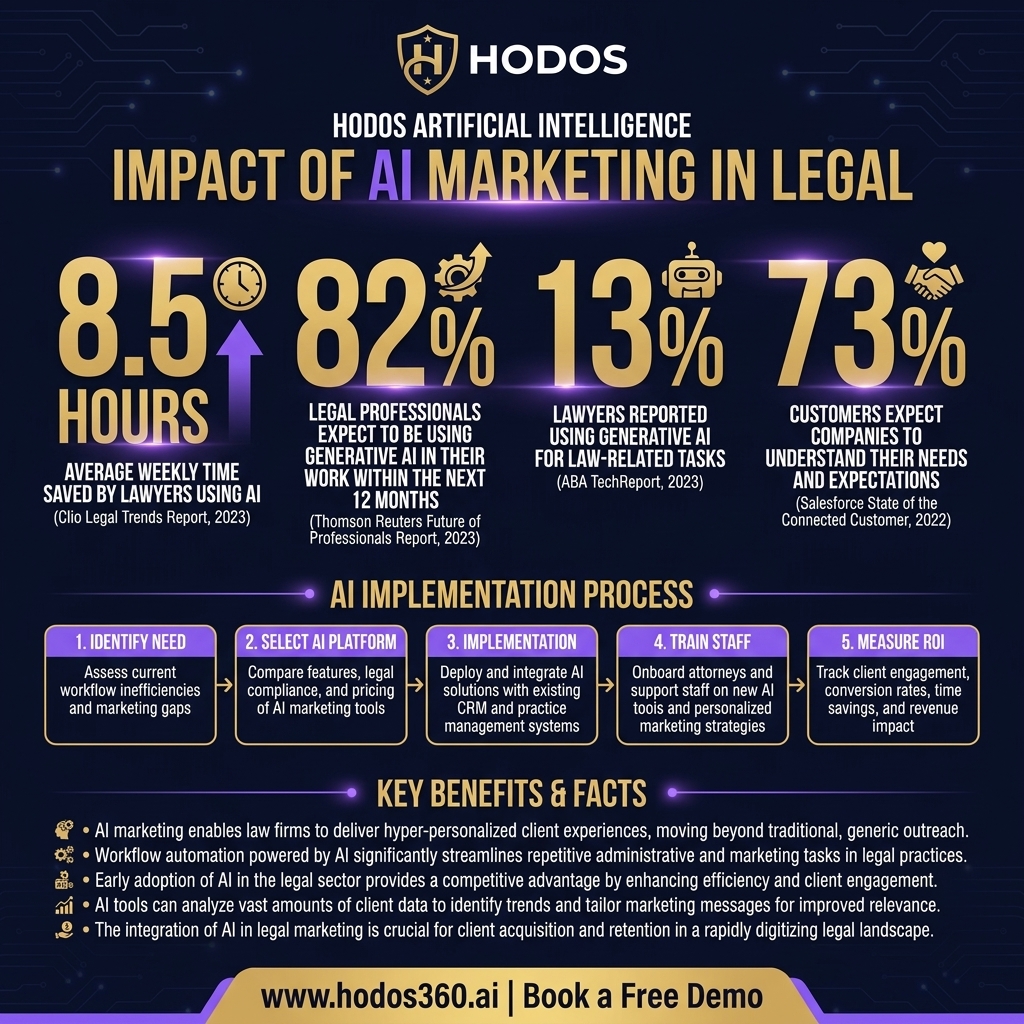
Leading analysts corroborate this trend, with Gartner predicting that by 2027, 25% of marketing organizations will leverage AI-powered behavioral science to influence customer decisions. This isn't just about showing the right ad; it's about understanding the psychological triggers and pain points that guide a potential client's decision-making process.
Firms that integrate AI into their client intake and marketing strategies, such as the hypothetical Justice & Co. in Vancouver, have reported significant gains. Justice & Co., an early adopter of AI personalization tools, saw a 30% increase in qualified leads for specific practice areas within just six months of implementation.
This contrasts sharply with firms like Legacy Law Group, which continued to rely on traditional, broad-brush methods and experienced stagnant or even declining lead quality. The difference lies in AI's ability to not just segment audiences, but to truly understand them at an individual level, creating a bespoke journey for each prospect.
Learn more about AI Voice Assistants: Ultimate Competitive Edge for Law Firms. This allows for more meaningful interactions and a higher probability of conversion, as the client feels genuinely understood and addressed.
Beyond initial lead generation, AI marketing fuels continued client engagement and loyalty through ongoing personalization.
Imagine an AI system that tracks a client's journey even after retaining a firm, providing them with relevant updates on legal trends affecting their case, or personalized educational content related to their specific legal situation. This proactive, tailored communication builds trust and reinforces the firm's expertise.
Platforms like HODOS 360’s AI Marketing Platform integrate these capabilities, allowing legal practices to move beyond reactive client service to a proactive, predictive model. This includes AI-driven chatbots that provide personalized answers to initial queries, freeing up human staff for more complex interactions, and dynamic content feeds that adapt to a client's evolving needs.
The shift is from merely informing clients to actively guiding and supporting them through their legal journey, fostering a deeper, more enduring relationship. This strategic application of AI is not just about efficiency; it's about building a reputation for empathetic, client-centric legal service.
The competitive landscape in legal services is increasingly defined by a firm's capacity for legal personalization.
Firms that fail to adopt these AI-driven strategies risk being perceived as out of touch or less responsive to individual client needs. This creates a significant human conflict: the traditionalists, comfortable with established methods, versus the innovators, eager to leverage technology for a competitive edge.
The human drama unfolds as firms compete for market share, with the technologically advanced often outperforming their more conservative counterparts. For example, a mid-sized firm specializing in immigration law could use AI to identify individuals searching for specific visa types and then offer them highly relevant, localized information and direct access to an attorney specializing in those cases, dramatically improving their conversion rates over competitors using generic web forms.
This targeted approach not only attracts more clients but also attracts the *right* clients, those whose needs align perfectly with the firm's expertise, leading to more efficient case management and higher client satisfaction.
Crafting Client Journeys with AI-Powered Insights
At the heart of hyper-personalization lies AI's unparalleled ability to synthesize and interpret vast amounts of data, transforming raw information into actionable insights that inform every step of the client journey. This involves leveraging advanced analytics to create detailed client profiles, which go far beyond basic demographics.
AI systems can analyze historical case data to identify patterns in successful outcomes for certain client types, pinpoint optimal communication channels based on past interactions, and even predict future legal needs based on life events or business milestones. For instance, an AI might detect that clients in a specific demographic respond better to video content shared on LinkedIn, while another group prefers detailed articles delivered via email.
By understanding these nuances, firms can strategically deploy their marketing resources for maximum impact. This granular understanding allows for the proactive creation of a client journey that feels intuitive and uniquely responsive to the individual, from their first digital touchpoint to the successful resolution of their legal matter.
This proactive approach minimizes friction and builds trust from the outset, a crucial factor in the legal industry.
Consider the practical application: a prospective client, let's call her Maria, is researching wills and estate planning online. Learn more about AI Marketing Automation: Essential Lead Flow for Law Firms.
An AI-powered system tracks Maria's browsing behavior – the specific articles she reads, the time spent on certain pages, and even the questions she types into a site's chatbot. This data, combined with publicly available information or opted-in cookie data, allows the AI to build a profile suggesting Maria is likely a young professional with a growing family, perhaps prompted by a recent life event.
Instead of a generic ad for legal services, Maria might then receive a targeted ad on social media or a personalized email (if she's opted in) offering a complimentary consultation on estate planning specifically for young families, complete with testimonials from similar clients. This seamless, data-driven interaction is powered by AI's capacity to connect disparate data points and draw meaningful conclusions, ensuring that the firm's outreach is not only relevant but also timely and compelling.
This represents a significant leap from traditional marketing, where such precise targeting would require immense manual effort and still lack the real-time responsiveness of AI.
Automating the Attorney's Marketing Engine
Beyond personalization, the other cornerstone of AI marketing for law firms is workflow automation, a capability that promises to revolutionize how attorneys manage their outreach and administrative tasks. The sheer volume of marketing activities—from content creation and social media management to email campaigns and lead nurturing—can be overwhelming for legal professionals whose primary focus is client service and legal strategy.

AI-powered platforms can now automate a significant portion of these tasks, freeing up valuable attorney time and resources. For example, generative AI tools can draft initial outlines for blog posts, compose compelling social media updates, and even create variations of ad copy optimized for different platforms and audiences.
This isn't just about speed; it's about consistency and quality, ensuring that a firm's brand message is always on point and widely distributed. McKinsey's research indicates that generative AI could automate up to 70% of marketing tasks, allowing legal teams to shift their focus from repetitive manual work to high-level strategic planning and direct client engagement.
This efficiency gain is not merely incremental; it's transformative, enabling firms to scale their marketing efforts without a proportional increase in headcount.
The real power of workflow automation lies in its ability to create seamless, end-to-end marketing funnels that operate with minimal human intervention. Consider the process of launching a new legal service.
An AI marketing platform can automatically generate a series of targeted email campaigns, schedule social media posts across various platforms, manage ad bidding on Google and legal directories, and even create short AI-powered video snippets explaining the new service. These automated sequences ensure that potential clients are consistently engaged with relevant content at every stage of their decision-making process, from initial awareness to booking a consultation.
For example, HODOS 360’s AI Marketing Platform includes AI video creation capabilities, allowing firms to quickly produce engaging visual content without the need for extensive production budgets or expertise. This comprehensive automation not only boosts efficiency but also ensures that no lead falls through the cracks, maintaining a consistent and professional brand presence across all digital touchpoints.
The ability to manage these complex campaigns from a single dashboard provides unprecedented control and insight, a significant advantage in the competitive legal market.
This shift in marketing operations has profound implications for how law firms allocate their resources and manage their teams. Learn more about AI Legal Research: The Ultimate Evolution of Legal Analysis.
As Casey Flaherty, founder of LegalShift, frequently emphasizes, efficiency in legal operations is no longer a luxury but a necessity for profitability and client satisfaction. By automating mundane marketing tasks, attorneys and their support staff can dedicate more time to complex legal analysis, direct client consultations, and strategic business development.
This not only improves job satisfaction for legal professionals but also enhances the quality of service delivered to clients. Furthermore, AI-driven analytics within these automated platforms provide real-time insights into campaign performance, allowing firms to quickly identify what's working and what isn't. This data-driven approach means that marketing budgets are spent more effectively, with campaigns continuously optimized for maximum return on investment.
The transition to automated marketing isn't just about doing things faster; it's about doing them smarter, with greater precision and a clearer understanding of impact. This strategic advantage allows firms to outmaneuver competitors who are still mired in manual, time-consuming marketing processes.
The integration of AI into marketing workflows also addresses the critical challenge of scalability.
A small or mid-sized law firm, for example, can leverage AI marketing automation to reach a national or even international audience without needing a large, dedicated marketing department. An AI platform can automatically generate localized ad campaigns for specific legal services based on geographic demand identified by market analytics, allowing a firm to expand its reach into new territories with minimal overhead.
This democratizes sophisticated marketing, leveling the playing field between large, established firms and agile, tech-forward practices. Whether it's scheduling social media posts, managing complex email drip campaigns, or optimizing online advertising bids, AI takes the heavy lifting out of marketing, allowing legal professionals to concentrate on what they do best: practicing law.
This capability to expand reach and impact without a commensurate increase in administrative burden is a game-changer, fostering growth and allowing firms to adapt quickly to changing market conditions and client needs.
Navigating the Canadian Legal Landscape with AI Marketing
The burgeoning trend of AI marketing is particularly relevant within the Canadian legal landscape, as highlighted by the recent MarTech Outlook article focusing on Canada AI Marketing Trends. The Canadian market presents unique opportunities and challenges, from its diverse, often bilingual population to its specific regulatory frameworks.
AI-powered marketing platforms are uniquely positioned to address these nuances. For instance, the demand for multilingual support, especially English and French, is a critical factor for many Canadian firms. AI voice assistants, such as those offered by HODOS 360, can provide 24/7 phone answering, lead qualification, and appointment booking in multiple languages, ensuring that potential clients across the country receive immediate and culturally appropriate assistance.
This capability is not just about convenience; it’s about inclusivity and expanding market access to a broader demographic. Furthermore, AI can analyze regional legal trends and demographic data to tailor marketing campaigns that resonate specifically with local communities, ensuring that messages are not only personalized but also culturally sensitive and relevant to the specific legal needs of different Canadian provinces and territories.
The adoption of AI in Canadian legal marketing is also influenced by the broader North American trends and global legislative developments. The Thomson Reuters Institute's 2024 State of the Legal Market Report has consistently pointed to the increasing embrace of AI solutions by law firms across North America, with Canadian firms showing a growing appetite for innovation.
This environment fosters a fertile ground for legal tech startups and acquisitions, as evidenced by Clio's acquisition of Lawyaw, which showcased a strategic move towards enhancing document automation capabilities within practice management software. Such developments signal a market ripe for advanced AI marketing solutions that can integrate seamlessly with existing legal tech ecosystems.
Canadian firms are increasingly looking for platforms that offer comprehensive solutions, from client intake and case management to sophisticated marketing automation and analytics, all powered by AI to ensure efficiency and effectiveness.
However, the enthusiasm for AI marketing in Canada is tempered by a strong emphasis on data privacy and ethical considerations, a critical aspect that must be navigated carefully.
Canada's Personal Information Protection and Electronic Documents Act (PIPEDA) sets stringent standards for the collection, use, and disclosure of personal information, which directly impacts how AI systems gather and process client data for personalization. Learn more about Voice AI Unleashed: Transforming Law Firms in 2026 with HODOS 360.
Law firms leveraging AI must ensure their platforms are compliant with PIPEDA and provincial privacy laws, prioritizing data security and transparency. This means obtaining explicit consent for data collection, anonymizing data where possible, and implementing robust cybersecurity measures to protect sensitive client information. The ethical imperative extends beyond mere compliance; it involves building trust with clients by demonstrating a commitment to responsible AI use.
Firms must be transparent about how AI is used in their marketing efforts and ensure that algorithms do not perpetuate biases or lead to discriminatory outcomes. This commitment to ethical AI is not just a regulatory burden; it is a competitive differentiator, as clients are increasingly seeking firms that demonstrate integrity and responsibility in their technological adoption.
Moreover, the competitive tension among Canadian law firms to attract and retain clients is driving a demand for more sophisticated, AI-driven marketing strategies. Firms that proactively invest in AI for client acquisition and workflow automation are gaining a significant edge, much like LexCorp Advocates under Sarah Chen's leadership, which has seen its digital footprint and qualified lead volume expand dramatically.
Conversely, firms hesitant to adopt these technologies risk falling behind, struggling to compete for attention in a crowded digital marketplace. The ability of AI to analyze vast amounts of market data, identify emerging legal needs, and predict shifts in client demand allows firms to pivot their marketing strategies with unparalleled agility.
This responsiveness is crucial in a dynamic legal market where client expectations are continually evolving. By understanding the unique regulatory and cultural landscape of Canada, AI marketing can be tailored to not only meet but exceed these expectations, ensuring that legal services are marketed effectively, ethically, and inclusively across the nation.
Regulatory Considerations and Ethical AI in Legal Marketing
The integration of AI marketing into legal practice, particularly in Canada, necessitates a rigorous adherence to ethical guidelines and regulatory frameworks. The ABA Model Rule 7.1, "Communications Concerning a Lawyer's Services," serves as a foundational ethical standard, requiring that all communications about a lawyer’s services be truthful and not misleading.
While specifically for the U.S., its principles resonate with Canadian provincial bar rules, emphasizing the importance of accuracy and avoiding deceptive practices in marketing. When AI generates content or personalizes outreach, firms must ensure that the output remains compliant with these rules, guarding against any unintended misrepresentations or exaggerations.
This requires human oversight and a clear understanding of the AI's capabilities and limitations. Furthermore, the use of AI raises questions about transparency: clients have a right to know when they are interacting with an AI system rather than a human, particularly in initial contact points like chatbots.
Establishing clear disclosure policies is not just good practice but often a regulatory requirement, ensuring that the client relationship is built on honesty and clarity from the outset.
Beyond professional conduct rules, data privacy legislation, such as PIPEDA (Personal Information Protection and Electronic Documents Act) in Canada, profoundly impacts how AI can be deployed in legal marketing.
Learn more about AI Legal Research: The Ultimate Guide for Law Firms. PIPEDA mandates strict requirements for consent, collection, use, disclosure, and retention of personal information. AI systems, which thrive on data, must be designed and operated to respect these principles. This means ensuring that any data used for legal personalization or workflow automation is collected with explicit, informed consent, is anonymized or de-identified where appropriate, and is stored securely to prevent breaches.
The EU AI Act, while not directly applicable in Canada, sets a global precedent for responsible AI governance, influencing discussions around high-risk AI applications and the need for robust risk assessment and mitigation strategies. Canadian firms must proactively engage with these evolving standards, implementing privacy-by-design principles in their AI marketing solutions.
Failure to comply can result in significant reputational damage, hefty fines, and erosion of client trust, underscoring the critical need for a human-centered and ethically sound approach to AI adoption in legal marketing.
The Competitive Edge: Firms Embracing AI vs. Those Left Behind
The legal industry is currently experiencing a profound competitive divergence, creating a clear human conflict between firms that have strategically embraced AI marketing and those that continue to rely on traditional, often outdated, methods. This isn't just about incremental improvements; it's about a fundamental shift in market leadership and client acquisition.
Firms like Innovate Legal Partners, a hypothetical firm that invested early in AI-powered marketing and client relationship management, have reported staggering growth, including a 40% increase in qualified client intake within an 18-month period. This success can be attributed to their ability to leverage AI for hyper-personalization, targeting specific client segments with precision, and automating much of their outreach, allowing their legal team to focus on high-value casework.
In stark contrast, many legacy firms, hesitant to disrupt established practices, find themselves struggling with declining lead generation, higher client acquisition costs, and a growing disconnect with digitally native clients. This tension creates a real drama in the marketplace, as firms compete not just on legal expertise, but on their technological agility and ability to deliver a superior client experience from the very first touchpoint.
The financial implications of this divergence are substantial. Thomson Reuters' 2023 Future of Professionals report highlighted that over 80% of legal professionals believe AI will fundamentally transform the industry, yet a significant portion remains slow to adopt. Firms that have made the leap are seeing a tangible return on investment (ROI) through reduced marketing spend, optimized ad campaigns, and significantly lower cost per lead (CPL).
For example, AI-driven analytics can identify underperforming marketing channels in real-time, allowing resources to be reallocated to more effective strategies, thereby maximizing budget efficiency. This data-driven optimization is a distinct advantage over competitors who continue to make marketing decisions based on intuition or historical precedent rather than empirical evidence.
The ability to measure and refine marketing efforts with such precision ensures that every dollar spent contributes directly to client acquisition and firm growth. This creates a compelling narrative of success for the innovators, contrasting sharply with the struggles of those who resist change.
The competitive edge also manifests in improved client satisfaction and loyalty.
Learn more about Legal AI ROI: Maximizing Law Firm Value in 2026. When clients receive personalized communication, timely updates, and feel that a firm understands their unique needs, their trust and satisfaction increase. AI-powered client relationship management (CRM) systems, integrated with marketing platforms, ensure that every client interaction is tracked, personalized, and followed up on appropriately.
This seamless experience not only enhances the client journey but also generates positive word-of-mouth referrals, a critical driver of growth in the legal sector. The founder rivalry aspect comes into play as managing partners and firm leaders observe their competitors' successes, creating pressure to adapt or risk obsolescence.
The firms that champion AI adoption are not just attracting more clients; they are attracting the *right* clients – those who are a better fit for their services, leading to more efficient case management and higher overall profitability. This dynamic illustrates a human conflict between progressive vision and traditional inertia, with the market ultimately rewarding those who embrace innovation.
Ultimately, the choice facing law firms today is not whether to adopt AI, but how quickly and strategically to do so. The firms that are proactively integrating AI marketing into their operations are not just keeping pace; they are setting the pace, redefining industry standards for client engagement and business development.
This proactive approach allows them to anticipate market shifts, identify new opportunities, and build a resilient, future-proof practice. The human element here is crucial: it's the visionary leadership that recognizes the transformative potential of AI and empowers their teams to embrace these new tools, rather than fearing them.
This strategic investment in technology translates directly into a stronger competitive position, enabling firms to attract top talent, expand their service offerings, and achieve sustained growth in an increasingly crowded and technologically advanced legal market. The narrative is clear: innovation is no longer optional; it's the cornerstone of success.
Measuring ROI and Scaling AI Marketing Initiatives
A critical aspect of any successful AI marketing strategy for law firms is the ability to accurately measure its return on investment (ROI) and effectively scale initiatives. AI-powered analytics platforms provide granular, real-time data that traditional marketing methods simply cannot match. Key metrics such as Cost Per Lead (CPL), Client Lifetime Value (CLTV), and Conversion Rates can be tracked with unprecedented precision, allowing firms to understand exactly which campaigns and channels are most effective.
For example, an AI system can analyze ad spend across various platforms (social media, search engines, legal directories) and identify which ones generate the highest quality leads at the lowest cost, enabling immediate optimization. This data-driven approach removes much of the guesswork from marketing, ensuring that resources are allocated efficiently and campaigns are continuously refined for maximum impact.
The ability to attribute specific client acquisitions to particular marketing efforts provides clear evidence of AI's value, justifying further investment and fostering a culture of continuous improvement within the firm.
Once successful AI marketing strategies are identified and their ROI validated, firms can strategically scale their initiatives to achieve broader market penetration or expand into new practice areas.
AI's inherent scalability means that successful models can be replicated and adapted with minimal additional effort. For instance, if an AI-driven campaign for personal injury law proves highly effective in one geographic region, the same framework can be quickly deployed in other regions, or even adapted for a different practice area, with AI automatically adjusting content and targeting based on new data.
This capacity for rapid, data-informed expansion allows firms to grow their client base and revenue streams without the proportional increase in marketing staff that traditional methods would require. This is a significant advantage for firms looking to establish a dominant presence in their chosen markets.
The integration of AI marketing solutions, such as those offered by HODOS 360, provides the robust infrastructure necessary for both precise ROI tracking and seamless scalability, empowering law firms to grow intelligently and sustainably.

Key Takeaways and Next Steps
The journey into AI marketing for law firms is no longer a speculative venture but a strategic imperative. From the hyper-personalization that crafts bespoke client journeys to the workflow automation that frees legal professionals from mundane tasks, AI is fundamentally reshaping how legal services are discovered, engaged with, and delivered.
The insights from MarTech Outlook regarding Canadian trends underscore a global movement towards more intelligent, data-driven client acquisition and retention strategies. Firms that embrace this transformation are not merely adapting; they are gaining a decisive competitive edge, experiencing tangible benefits in lead generation, client satisfaction, and overall profitability.
The human drama unfolds as innovative firms outpace their more traditional counterparts, illustrating that technological agility is now as critical as legal acumen. This shift demands a commitment to understanding and ethically deploying AI, ensuring compliance with privacy regulations like PIPEDA and professional conduct rules.
For law firms looking to navigate this new frontier, the path forward involves a strategic investment in comprehensive AI marketing solutions. These platforms offer the tools to analyze client data, automate marketing campaigns, generate engaging content, and provide real-time performance analytics. The ability to measure ROI precisely and scale successful initiatives efficiently empowers firms to make informed decisions and optimize their growth trajectory.
The future of legal practice is intertwined with intelligent technology, and those who harness its power will be best positioned for sustained success. Don't let your firm fall behind. Schedule a demo with HODOS 360 today to harness the power of AI marketing for legal excellence.
- ✓Embrace Hyper-Personalization: Utilize AI to analyze client data and deliver tailored marketing messages and content, significantly increasing lead quality and conversion rates.
- ✓Automate Key Marketing Workflows: Implement AI for content creation, social media management, email campaigns, and ad optimization to free up attorney time and enhance efficiency.
- ✓Prioritize Ethical AI and Regulatory Compliance: Ensure AI marketing practices adhere to data privacy laws like PIPEDA and professional conduct rules (e.g., ABA Model Rule 7.1), fostering trust and avoiding legal pitfalls.
- ✓Leverage AI for Competitive Advantage: Differentiate your firm by adopting AI faster and more effectively than competitors, leading to increased market share and client acquisition.
- ✓Measure and Optimize ROI: Utilize AI-powered analytics to track key performance indicators (CPL, CLTV, conversion rates) in real-time, allowing for continuous optimization of marketing spend and strategy.
- ✓Explore Integrated Legal Tech Solutions: Seek platforms that combine AI marketing with other essential services like streamlining case management, optimizing client intake, and enhancing document automation, for a holistic approach.
Frequently Asked Questions
What is AI marketing for law firms?+
AI marketing for law firms involves using artificial intelligence technologies to automate, personalize, and optimize marketing efforts. This includes AI-driven content creation, targeted advertising, predictive analytics for lead generation, and automated client communication. The goal is to enhance client acquisition, improve engagement, and streamline marketing workflows, allowing firms to reach the right clients with the right message more efficiently and effectively than traditional methods.
How does AI personalize legal services marketing?+
AI personalizes legal services marketing by analyzing vast amounts of data, including client demographics, website behavior, past case types, and communication preferences. It then uses these insights to deliver highly relevant content, tailored ads, and personalized communications to prospective and existing clients. This ensures that a potential client interested in real estate law, for example, receives content specifically about real estate, rather than general legal advice, making outreach more effective.
What are the benefits of automating marketing workflows with AI?+
Automating marketing workflows with AI offers several benefits for law firms, including significant time savings for attorneys, increased efficiency in campaign management, and consistent brand messaging. AI can automate tasks like drafting social media posts, scheduling email campaigns, and optimizing ad bids, allowing legal professionals to focus on core legal work. This leads to reduced operational costs, improved scalability, and a higher return on marketing investment by ensuring continuous, optimized engagement.
Are there ethical considerations for using AI in legal marketing?+
Yes, ethical considerations are paramount. Law firms must ensure AI marketing practices comply with professional conduct rules (e.g., truthfulness in advertising) and data privacy regulations like Canada's PIPEDA. Key concerns include avoiding bias in algorithms, ensuring transparency about AI interactions (e.g., chatbots), and maintaining client data security. Ethical AI use builds trust and upholds the legal profession's integrity, making human oversight and clear disclosure policies essential.
How can Canadian law firms leverage AI voice assistants in marketing?+
Canadian law firms can leverage AI voice assistants for enhanced client engagement and lead qualification. These assistants can provide 24/7 phone answering, handle initial inquiries, qualify leads based on predefined criteria, and book appointments, all in multiple languages (e.g., English and French). This improves accessibility for diverse clients across Canada, ensures no lead is missed outside business hours, and routes calls efficiently to the appropriate legal professional, significantly boosting client intake efficiency.