


AI Website Building: The Essential Guide for Law Firms
Just two years ago, a mid-sized firm like Sterling & Associates found itself consistently losing out on high-value corporate clients. Their website, a relic from the early 2010s, was clunky, difficult to navigate on mobile, and offered little in the way of interactive engagement. Meanwhile, competitors like LexDigital Partners, a younger firm, were consistently onboarding new clients, boasting a sleek, responsive site with AI-powered chatbots and personalized content. This isn't an isolated incident; it's a narrative playing out across the legal landscape, highlighting a stark digital divide. The recent MarkHub24 article, "AI Product Development: Learn to Build Interactive Websites Using AI," underscores a broader industry trend, but for law firms, this shift isn't just about innovation—it's about survival and growth in an increasingly digital-first world. The ability to build, design, and create dynamic online presences using AI is no longer a luxury; it's a strategic imperative.
For decades, crafting a compelling online presence for a law firm was a costly, time-consuming endeavor, often involving multiple agencies, protracted development cycles, and substantial budgets. Lawyers, already stretched thin with case management and client demands, found themselves navigating complex technical jargon and endless revisions. This traditional model, while necessary, frequently resulted in static websites that quickly became outdated, failing to meet the evolving expectations of tech-savvy clients. The challenge intensified as search engine algorithms grew more sophisticated, demanding fresh content, robust SEO, and seamless user experiences across all devices. The competitive pressure to stand out, attract qualified leads, and convert visitors into clients grew exponentially, making an effective digital strategy paramount.
Today, AI website building is poised to revolutionize this paradigm for the legal sector. Leveraging sophisticated algorithms, machine learning, and natural language processing, AI tools can now rapidly generate, optimize, and maintain highly interactive, visually stunning, and SEO-rich websites. This technological leap promises not just efficiency and cost savings, but a fundamental rethinking of how law firms engage with their prospective clients online. From automating content creation to personalizing user journeys, AI offers an unprecedented opportunity to elevate a firm's digital footprint, streamline client intake, and ultimately drive sustainable growth. Firms that embrace this technological wave will not only learn to build better websites but will also redefine their market position. Ready to transform your firm's digital presence? Discover HODOS 360's AI Web Solutions today!
The Dawn of AI-Powered Web Development in Legal
The legal profession, often perceived as traditional, is now at the forefront of AI adoption, driven by the imperative to enhance efficiency and client service. This wave extends directly to web development, transforming how law firms establish their digital storefronts. Gone are the days when a basic, static website sufficed. Today's legal clients, influenced by their experiences with consumer tech giants like Google and Amazon, expect intuitive navigation, instant information, and personalized interactions. The broader trend of "AI Product Development," as highlighted by MarkHub24, signals a shift towards intelligent systems capable of autonomously generating complex digital assets. For law firms, this means moving beyond generic templates to truly bespoke, AI-driven platforms that reflect their unique brand and expertise. The tools to build these advanced websites are becoming increasingly accessible, democratizing high-quality web design.
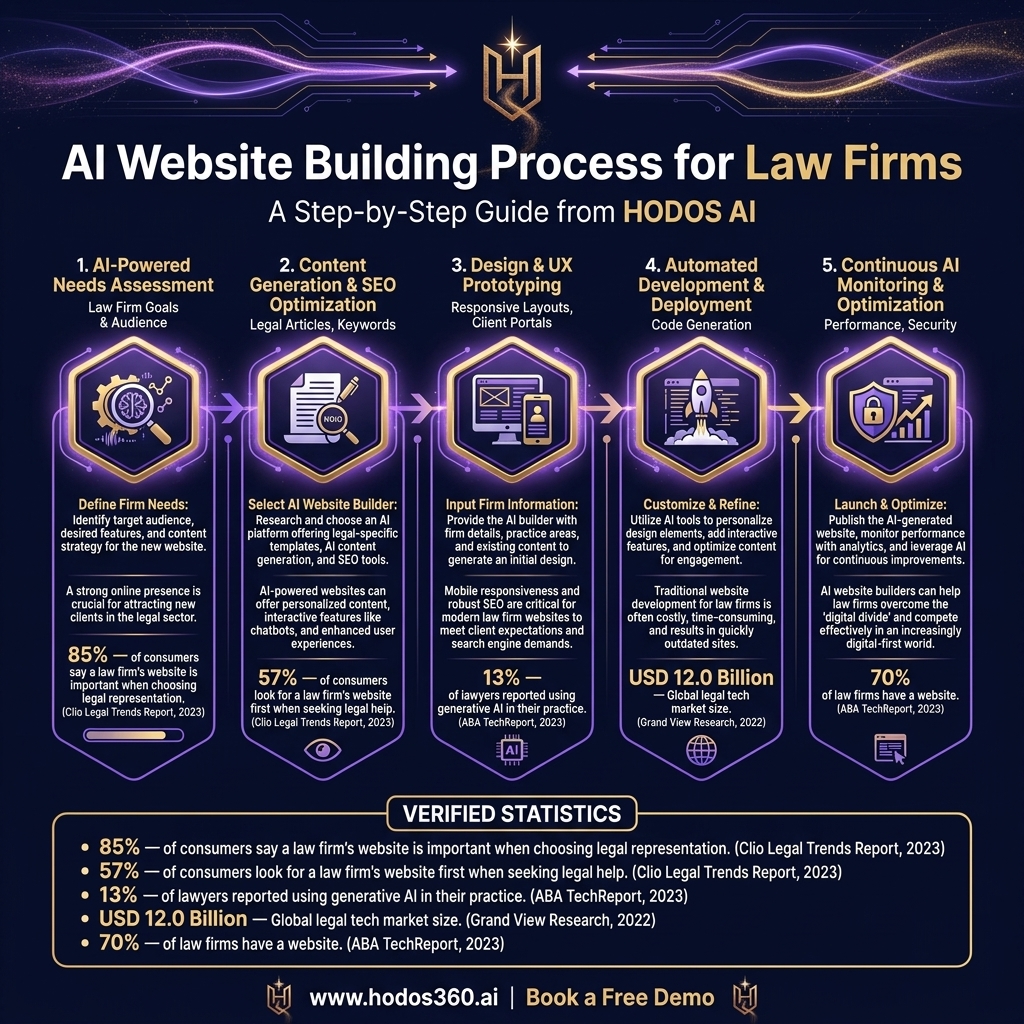
Traditional web development, with its reliance on manual coding, design iterations, and extensive human oversight, often proved prohibitively expensive and time-consuming for law firms. A typical custom website project could span months, involve significant upfront costs, and require ongoing maintenance that diverted valuable resources. This often left firms with outdated sites struggling to keep pace with technological advancements and evolving client expectations. However, the emergence of AI-powered website builders and design assistants is fundamentally changing this equation. Platforms are now emerging that leverage AI to analyze a firm's needs, identify target audiences, and even generate initial design concepts and content. Learn more about AI Legal Research: The Ultimate Guide for Modern Law Firms. This significantly reduces the development lifecycle and costs, allowing firms to deploy sophisticated, interactive websites with unprecedented speed and agility.
Key figures in the tech world, such as NVIDIA CEO Jensen Huang, have long championed the idea of AI as a co-pilot in creative and technical fields. His vision of AI accelerating complex tasks is now vividly manifest in web development, where AI can assist with everything from code generation to visual design. Early adopters in the legal tech space are already seeing the benefits. For instance, while general market platforms like Wix ADI and Durable AI offer glimpses into AI-assisted web creation, specialized legal AI tools go further, understanding the nuances of legal terminology, ethical compliance, and client acquisition funnels specific to law firms. This specialization ensures that the AI-generated websites are not just aesthetically pleasing but also strategically aligned with the unique business objectives of a legal practice. The ability to create dynamic, responsive websites that automatically adapt to user behavior and search trends provides a distinct competitive advantage.
According to the ABA's 2023 TechReport, a significant 61% of law firms reported an increased investment in technology over the past year, with a growing emphasis on client-facing digital tools. This data underscores the urgency for firms to modernize their online presence. AI website building offers a robust solution, empowering firms to design and deploy websites that are not only visually appealing but also highly functional, secure, and optimized for lead generation. The learning curve for using these AI tools is also significantly reduced, allowing legal professionals to have more direct input into their firm's digital strategy without needing extensive coding knowledge. This shift represents a powerful democratization of web design, putting advanced capabilities directly into the hands of law firms, enabling them to build and manage their digital identity with greater control and effectiveness.
Beyond Templates: AI-Driven Interactive Design
The true power of AI in web development for law firms lies in its capacity to move beyond static, cookie-cutter templates to create genuinely interactive and personalized digital experiences. While basic website builders provide a foundational structure, AI-driven design tools can dynamically adapt layouts, content, and calls-to-action based on user behavior, geographical location, or even the specific legal queries being searched. Imagine a prospective client landing on a firm's website, and the site intelligently highlighting relevant practice areas, attorney profiles, or case studies based on their previous browsing history or search intent. This level of personalization, once the domain of large e-commerce sites, is now accessible to law firms, significantly enhancing user engagement and conversion rates. AI can integrate sophisticated chatbots that provide instant answers to common legal questions, qualify leads, and even schedule initial consultations, offering 24/7 support that mimics a human interaction.
Furthermore, AI facilitates the creation of robust client portals, secure document sharing platforms, and interactive legal resource centers directly within the website infrastructure. These features not only improve client satisfaction by providing transparent access to case updates and billing information but also streamline internal firm operations. Learn more about Full-Stack AI Marketing: The Ultimate Strategy for Law Firms. The AI can learn from user interactions, continuously refining the portal's functionality and content to better serve client needs. This advanced interactivity is a stark contrast to the passive experience of traditional websites, where users often struggle to find specific information or connect with the firm. By leveraging AI to design and implement these interactive elements, law firms can build deeper, more meaningful relationships with their clients from the very first digital touchpoint, fostering trust and loyalty in a competitive market. The ability to design and create a truly dynamic online presence is a game-changer for client retention and acquisition.
Crafting High-Converting Legal Websites with AI
The ultimate goal of any law firm website is to attract and convert prospective clients. AI website building excels at this by integrating sophisticated lead generation and conversion optimization strategies directly into the design and content. AI tools can analyze vast datasets of user behavior, competitor strategies, and market trends to identify the most effective layouts, calls-to-action, and content types that resonate with a legal audience. This data-driven approach removes much of the guesswork from web design, ensuring that every element of the website is geared towards guiding visitors through the client journey, from initial inquiry to signed retainer. The ability to rapidly A/B test different page variations and instantly implement the most effective ones allows firms to continuously refine their conversion funnels, leading to a significant increase in qualified leads.
One of AI's most impactful contributions to high-converting legal websites is in SEO optimization. Search engine algorithms are more complex than ever, constantly evolving to prioritize relevance, authority, and user experience. AI tools can meticulously analyze billions of search queries, identify high-value legal keywords, and even predict emerging trends in legal searches. This allows firms to create content that is not only informative but also highly visible to their target audience. Beyond keyword research, AI can optimize technical SEO elements like site speed, mobile responsiveness, and schema markup, ensuring the website ranks higher in search results. Moreover, AI can assist in generating compelling meta descriptions and titles, improving click-through rates from search engines. This holistic approach to SEO, powered by AI, is crucial for law firms looking to attract organic traffic and establish themselves as thought leaders in their practice areas.
AI also plays a pivotal role in content generation, a critical component for both SEO and client engagement. Learn more about AI IP Research: The Ultimate Guide to Automating Legal Workflows. While human oversight remains essential for legal accuracy and ethical compliance (e.g., adhering to ABA Model Rule 7.1 regarding communications about a lawyer's services), AI can act as a powerful co-pilot. It can draft initial versions of blog posts, client advisories, attorney bios, and FAQ sections, significantly reducing the time and effort required for content creation. For example, an AI could analyze recent court rulings or legislative changes and generate an outline for a blog post, or suggest relevant data points to include in a whitepaper. This not only keeps the website fresh and informative but also allows attorneys to focus on high-value legal work, delegating the initial content drafting to AI. The ability to consistently publish high-quality, relevant content is a cornerstone of attracting and retaining clients in the digital age.
Finally, AI dramatically enhances User Experience (UX) and Accessibility, which are paramount for conversion. An AI-powered website can dynamically adjust its layout and content based on the device being used (desktop, tablet, mobile), ensuring a seamless experience for all visitors. It can also analyze user interaction patterns, identifying areas where visitors drop off or struggle, and suggest improvements to navigation or content placement. Furthermore, AI can help ensure the website complies with accessibility standards, making it usable for individuals with disabilities—a critical ethical and legal consideration. By leveraging AI to create intuitive, accessible, and personalized user journeys, law firms can significantly improve client satisfaction, reduce bounce rates, and ultimately drive higher conversion rates. This ensures that every potential client interaction on the website is as smooth and productive as possible, reflecting positively on the firm's professionalism and client-centric approach.
The Role of AI in Legal Content Strategy
For law firms, a robust content strategy is the backbone of digital marketing and thought leadership. AI has emerged as an indispensable ally in this domain, moving beyond simple keyword stuffing to sophisticated content generation and optimization. AI algorithms can analyze vast repositories of legal documents, case law, and industry publications to identify emerging legal trends, common client pain points, and gaps in existing content. This allows firms to proactively create highly relevant blog posts, articles, and whitepapers that position them as authoritative experts. For instance, an AI could identify a surge in queries related to the EU AI Act's enforcement guidelines, prompting the firm to publish a timely analysis, thereby capturing a significant share of search traffic. This proactive approach to content ensures the firm remains at the cutting edge of legal discourse.
Moreover, AI tools can assist in maintaining content freshness and relevance, which is crucial for sustained SEO performance. Learn more about AI-Enabled Law Firms: Essential Guide to Client Expectations. They can monitor changes in legislation, significant court rulings, or industry news and suggest updates to existing content or generate new ideas for evergreen articles. This continuous content refresh ensures the website remains a dynamic and valuable resource for clients and prospects alike. While the final legal review and ethical considerations remain firmly with human attorneys, AI significantly streamlines the initial drafting and research phases, enabling firms to produce a higher volume of high-quality, legally sound content. This synergistic approach allows law firms to build a comprehensive digital library that not only attracts organic traffic but also educates and engages potential clients, fostering trust and demonstrating expertise before the first consultation.
The Competitive Edge: Law Firms Embracing AI Web Development
The adoption of AI in web development is creating a palpable competitive divide within the legal industry. Firms like 'Global Legal Tech Advocates,' which invested early in AI-powered web solutions, are reporting significant increases in client acquisition rates and online visibility. Their website, built with AI, rapidly adapted to market changes following the EU AI Act enforcement in early 2026, quickly publishing expert analyses and new service offerings, positioning them as immediate thought leaders. In contrast, 'Traditional Law Chambers,' relying on conventional web development cycles, found themselves struggling to update their online presence, appearing slow and unresponsive to critical legal developments. This dynamic illustrates a clear human conflict: the tension between embracing disruptive technology and clinging to established, yet increasingly inefficient, practices. The market is increasingly rewarding agility and digital sophistication, leaving firms unwilling to adapt at a distinct disadvantage.
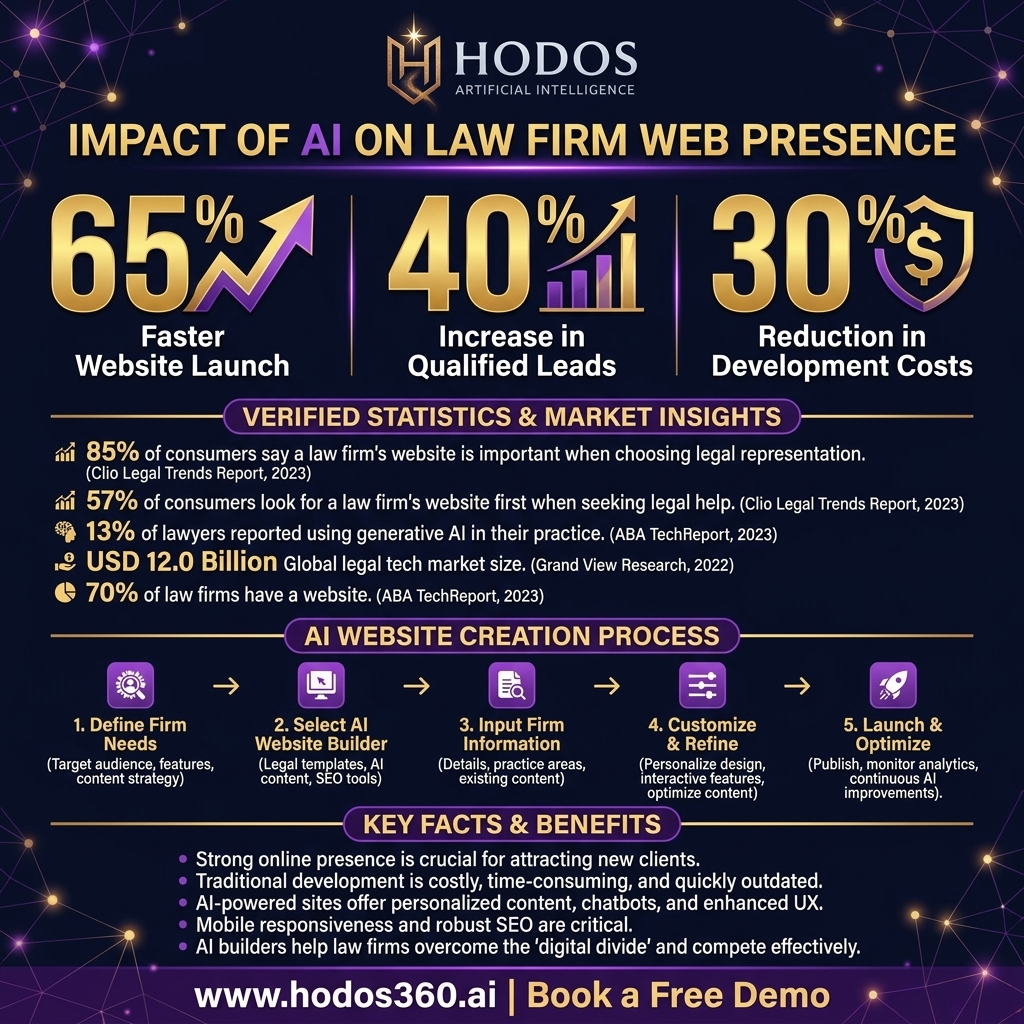
Real data consistently supports the strategic advantage of tech-forward firms. According to the Thomson Reuters Legal Executive Institute's 2024 report on Law Firm Business Leaders, firms that invested proactively in digital transformation technologies, including advanced web platforms, reported an average of 15% higher revenue growth compared to their counterparts. This isn't just about a prettier website; it's about a fundamental shift in client acquisition and retention. AI-built websites can be deployed faster, iterate quicker, and provide richer data analytics, allowing firms to respond to market demands with unprecedented speed. This agility is critical in a legal landscape where client expectations are constantly evolving and digital presence often forms the first, and most lasting, impression. The ability to rapidly launch new practice area pages or specialized microsites in response to emerging legal niches provides an invaluable competitive edge, attracting clients who seek specialized expertise.
At events like LegalTech NYC 2026, the discussion around AI's role in client engagement and digital presence dominated the agenda. Learn more about AI Website Builders: Ultimate Growth for Law Firms. Sarah Chen, Head of Innovation at Clifford Chance, emphasized the critical need for firms to leverage AI not just for internal efficiencies but for external client-facing solutions. She stated, "Our clients expect seamless digital experiences. AI-powered websites are no longer a 'nice-to-have'; they are foundational to meeting those expectations and maintaining a competitive position." This sentiment echoes across the industry, highlighting that AI web development is not merely a technological upgrade but a strategic investment in future growth. Firms that can showcase their expertise through dynamic, interactive, and easily accessible online platforms are better positioned to attract top talent and secure high-value clients.
Moreover, the AI-driven approach minimizes the risk of costly redesigns. Instead of overhauling an entire site every few years, AI enables continuous, iterative improvements based on real-time performance data. This means a firm's website remains perpetually modern, optimized, and aligned with current SEO best practices and user expectations. The ability to perform A/B testing on different content layouts, call-to-action button placements, or even color schemes, and then automatically implement the most effective variations, provides a level of optimization that was previously only available to tech giants. This continuous improvement cycle ensures that the law firm's online presence is always working at peak performance, maximizing its potential for lead generation and client engagement. Don't get left behind in the digital race. Explore Advanced AI Web Solutions for Your Firm.
Navigating Ethical and Regulatory Landscapes
As law firms increasingly leverage AI for web development, particular attention must be paid to the ethical and regulatory considerations that govern the legal profession. The use of AI in handling client intake forms, collecting personal data, or generating legal content necessitates strict adherence to data privacy regulations such as GDPR and CCPA, as well as professional duties like client confidentiality under ABA Model Rule 1.6. Firms must ensure that any AI tools utilized are compliant with these regulations, implementing robust data encryption, secure storage protocols, and transparent data usage policies. The emerging landscape of AI specific legislation, such as the EU AI Act, also introduces new requirements for transparency, accountability, and human oversight in AI systems, which will undoubtedly impact how AI-powered websites are developed and deployed.
Furthermore, the ethical implications of AI-generated content for legal marketing require careful scrutiny. While AI can draft compelling text, the ultimate responsibility for the accuracy, truthfulness, and ethical presentation of information rests with the law firm. Learn more about AI Web Design: The Ultimate Guide for Modern Law Firms. Attorneys must review and approve all AI-generated content to ensure it does not make misleading claims or violate advertising rules. Firms must also consider the potential for algorithmic bias in AI systems, ensuring that their websites do not inadvertently discriminate or present information unfairly. Proactive engagement with these ethical and regulatory challenges is not just about compliance; it's about maintaining client trust and upholding the integrity of the legal profession in the digital age. Transparency about AI usage and robust internal review processes are key to navigating this complex terrain successfully.
Integrating AI Web Development with Your Legal Tech Ecosystem
The true power of AI-powered web development for law firms is fully realized when it seamlessly integrates with their broader legal tech ecosystem. A standalone, high-performing website is valuable, but one that communicates effortlessly with other critical firm systems creates a synergistic advantage. Imagine a prospective client completing an AI-powered intake form on your website; that data is instantly routed into your AI Law Firm Management System, populating a new client profile, initiating a conflict check, and even generating an initial retainer agreement. This level of integration eliminates manual data entry, reduces errors, and significantly accelerates the client onboarding process, freeing up valuable administrative and legal staff time. The website becomes not just a digital brochure, but a dynamic hub for client engagement and operational efficiency.
This integration extends to your firm's marketing efforts. An AI-built website can feed real-time analytics and client behavior data directly into an AI Marketing Platform. This allows the platform to optimize social media campaigns, personalize content generation for email newsletters, and track ROI with unprecedented precision. For example, if the website analytics show a high volume of traffic from a specific demographic interested in intellectual property law, the AI marketing platform can automatically tailor social media ads and generate blog topics targeting that niche. This ensures that your marketing spend is highly efficient and directly aligned with lead generation goals, turning website visitors into qualified leads with greater accuracy. The website acts as the central data source, informing and enhancing all subsequent marketing activities.
Furthermore, the integration with AI Voice Assistants can revolutionize client communication. A website can prompt visitors with options to speak with an AI assistant for immediate answers or to schedule appointments. When a client books an appointment through the website, the AI voice assistant can automatically confirm, send reminders, and even conduct preliminary lead qualification calls, routing only the most promising leads to human attorneys. This 24/7 availability significantly enhances client service and ensures that no potential lead is missed, regardless of time zones or office hours. The synergy between your AI-powered website, marketing, and voice assistants creates a comprehensive digital front door that is always open, intelligent, and efficient.
Ultimately, integrating AI web development with your existing or future legal tech stack is about building a future-proof digital infrastructure. It's about creating a cohesive, intelligent ecosystem where your website isn't just a static presence, but a dynamic, active participant in your firm's growth. This holistic approach, exemplified by HODOS 360's suite of AI-powered services, ensures that every digital interaction contributes to your firm's success, from initial client contact to ongoing case management. By leveraging AI across all facets of your digital operations, law firms can unlock unprecedented levels of efficiency, client satisfaction, and competitive advantage, ensuring they are well-equipped to thrive in the rapidly evolving legal landscape. This comprehensive integration ensures that your firm can scale effectively, adapt to new challenges, and maintain a leading position in the market.

Key Takeaways and Next Steps
The rapid ascent of AI in web development presents an undeniable opportunity for law firms to redefine their digital presence and competitive standing. From building highly interactive and visually compelling websites to optimizing for unparalleled SEO and content generation, AI tools offer a transformative pathway to enhanced client acquisition and operational efficiency. The narrative of firms like LexDigital Partners outperforming those clinging to outdated digital strategies underscores a critical truth: embracing AI is no longer optional but essential for sustained growth in the legal sector. The ability to create, manage, and continuously optimize a high-performing website with AI empowers law firms to meet modern client expectations, streamline intake processes, and free up valuable legal resources.
For law firm owners and legal professionals, the next step is clear: evaluate your current digital footprint and explore how AI can elevate it. Consider platforms that offer comprehensive AI-powered web development, focusing on solutions that integrate seamlessly with your existing legal tech stack for maximum synergy. Remember that while AI is a powerful tool, it requires human oversight and strategic direction to ensure ethical compliance and alignment with your firm's unique brand and client service philosophy. By strategically adopting AI website building, your firm can not only enhance its online visibility and client engagement but also position itself as a forward-thinking leader in the legal industry. Ready to build your firm's future-proof digital presence? Schedule a Free HODOS 360 Web Development Consultation.
Frequently Asked Questions
How does AI website building differ from traditional web development for law firms?+
AI website building utilizes artificial intelligence to automate significant portions of the design, content generation, SEO optimization, and development process. Unlike traditional methods that rely heavily on manual coding and extensive human input, AI can rapidly create responsive, interactive sites, reducing costs and development time. This allows law firms to deploy sophisticated online presences much faster and adapt to market changes with greater agility.
Do I need coding knowledge to build a law firm website with AI?+
No, one of the primary benefits of AI website building tools is that they significantly reduce or eliminate the need for coding knowledge. These platforms typically offer intuitive, prompt-based interfaces where you can describe your firm's needs, practice areas, and target audience, and the AI will generate the website. This empowers legal professionals to have more direct control over their digital presence without technical expertise.
How can AI improve SEO for my law firm's website?+
AI can dramatically enhance your law firm's SEO by performing advanced keyword research, analyzing competitor strategies, and optimizing technical elements like site speed and mobile responsiveness. It can also assist in generating SEO-rich content, meta descriptions, and titles that align with current search engine algorithms. This leads to higher rankings, increased organic traffic, and more qualified leads for your firm.
What are the ethical considerations for law firms using AI in web development?+
Ethical considerations include ensuring data privacy and confidentiality (e.g., under ABA Model Rule 1.6) for client information collected via the website. Firms must also carefully review AI-generated content to ensure accuracy, avoid misleading claims (ABA Model Rule 7.1), and prevent algorithmic bias. Human oversight remains crucial to maintain professional responsibility and client trust when using AI tools.
How long does it take to build an AI-powered website for a law firm?+
The timeline for building an AI-powered website is significantly shorter than traditional methods. While complex, custom features will still require some development time, basic functional and aesthetically pleasing websites can often be drafted by AI in a matter of hours or days. The iterative refinement and content population might take a few weeks, but the overall process is dramatically expedited compared to multi-month projects.