


AI Rewrites Website Development Costs: An Essential Guide
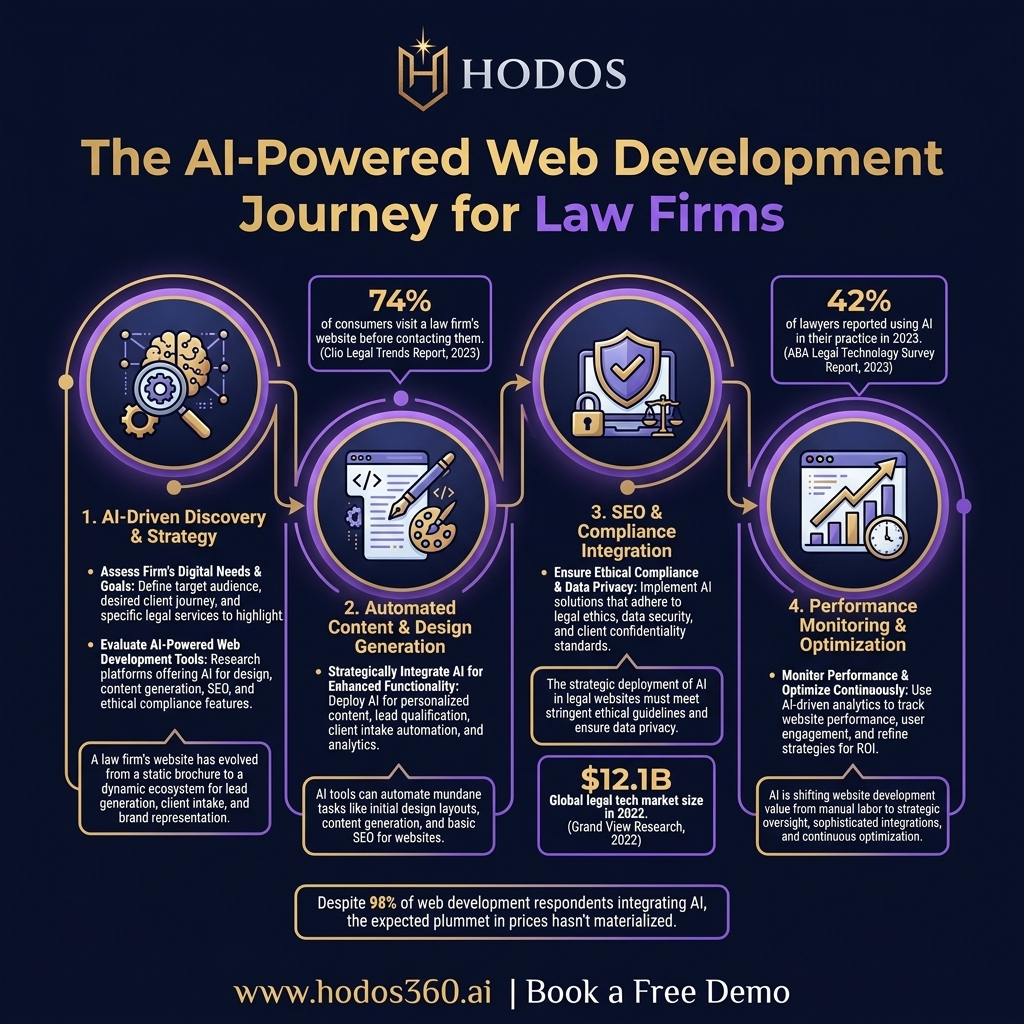
The legal industry, often perceived as slow to adopt technological shifts, is now at the epicenter of a digital revolution, particularly concerning its online presence. A recent GoodFirms report, highlighted by StreetInsider, starkly revealed that despite 98% of respondents integrating AI into their web development workflows, the expected plummet in prices hasn't materialized. This paradox challenges the prevailing assumption that AI equals immediate cost reduction, especially for specialized sectors like law. Instead, AI is rewriting the entire price tag of website development, shifting value from manual labor to strategic oversight, sophisticated integrations, and continuous optimization, demanding a nuanced understanding from law firm owners and managing partners. The narrative isn't about cheaper websites; it's about smarter, more effective, and ethically compliant digital assets that drive client acquisition and firm growth.
Historically, a law firm's website was a static brochure, a digital business card. Today, it's a dynamic ecosystem: a lead generation engine, a client intake portal, a brand ambassador, and often, the first point of contact for potential clients. The rise of AI has amplified these roles, enabling unprecedented personalization, efficiency, and analytical depth. However, this evolution comes with its own set of complexities. While AI tools can automate mundane tasks like initial design layouts, content generation, and basic SEO, the true value for a law firm lies in how these tools are strategically deployed to meet stringent ethical guidelines, ensure data privacy, and differentiate the firm in a crowded legal market. Firms like Greenberg Traurig or Kirkland & Ellis are not merely building websites; they are crafting sophisticated digital experiences powered by AI that reflect their brand's gravitas and client-centric approach.
The tension between the promise of AI-driven efficiency and the reality of specialized investment defines the current landscape. Companies like OpenAI, with their advancements in large language models and image generation, or Webflow, integrating AI directly into design workflows, have dramatically lowered the barrier to entry for basic web creation. Yet, for a law firm needing a secure, compliant, high-converting platform that integrates with their case management and CRM systems, the AI website development costs are less about the raw AI tools and more about the expertise required to orchestrate them effectively. This blog post delves into this evolving dynamic, providing law firm leaders with an essential guide to navigating the new economics of web development, ensuring their digital presence is not just modern, but strategically impactful. Discover how HODOS 360's Web & Mobile Development services can help your firm harness AI for a truly transformative online presence. Learn more about HODOS 360's AI-powered Web & Mobile Development.
The Shifting Landscape of AI Website Development Costs
The notion that AI would unilaterally drive down website development costs has been a widespread expectation, yet the reality, particularly for the discerning legal sector, paints a more nuanced picture. While AI tools from companies like Jasper AI for content generation or Midjourney for visual design can significantly accelerate initial production phases, the overall investment for a robust, high-performing legal website often remains substantial, or in some cases, has even seen an increase in complexity-driven costs. This isn't a failure of AI, but rather a redefinition of where value is created and consumed. The 98% statistic from GoodFirms underscores that AI is now ubiquitous in web development, but its integration into sophisticated legal workflows requires more than just basic implementation. Firms are investing in the strategic oversight, specialized AI models trained on legal data, and the expertise to ensure compliance and ethical adherence, factors that command a premium.
The shift is from brute-force coding and repetitive design tasks to intelligent automation and strategic architecture. For example, an AI-powered website builder might generate boilerplate legal services pages in minutes, but customizing that content to reflect a firm's unique value proposition, ensuring it adheres to ABA Model Rule 7.1 regarding truthful communication, and integrating it seamlessly with an existing client intake system, demands significant human expertise. Leading legal tech commentators, such as Monica Goyal, a lawyer and AI expert, frequently point out that while AI handles the 'how fast,' human intelligence is still critical for the 'what' and 'why,' particularly in a regulated profession. The initial price might seem lower for a generic AI-built site, but the long-term costs of non-compliance, poor user experience, or ineffective lead generation can be far greater.
Moreover, the rise of AI-powered SEO and content optimization tools, while powerful, introduces a new arms race. Learn more about AI Agents Search: The Essential API for Real-Time Legal Web Data. As every firm leverages AI for improved search rankings, the baseline for visibility rises, necessitating even more sophisticated strategies to stand out. This means investing not just in the tools themselves, but in data analytics, A/B testing, and continuous refinement guided by AI insights, rather than guesswork. A report by the Thomson Reuters Institute in 2024 highlighted that firms adopting advanced analytics in their marketing efforts saw a 15% higher client retention rate compared to those relying on traditional methods. This data-driven approach, heavily reliant on AI, transforms website development from a one-time project into an ongoing strategic investment, impacting the perceived value and overall website development costs.
The true cost-efficiency of AI in web development for law firms stems from its ability to scale and optimize over time, rather than a dramatic upfront reduction. While a basic AI-generated site might cost less initially, the real ROI comes from a platform that leverages AI for continuous improvement: predicting client needs, personalizing user experiences, automating follow-ups, and providing actionable insights for marketing and business development. This long-term perspective is crucial for understanding the evolving website development costs in the AI era. It's not about cutting corners, but about building a digital asset that intelligently works harder for the firm, generating leads and streamlining operations, ultimately offering a superior return on investment through enhanced efficiency and client acquisition.
Beyond the Initial Price Tag: Long-Term Value
The allure of low upfront website development costs offered by some AI-powered platforms can be tempting, but for law firms, the long-term value and total cost of ownership are paramount. A website is not a static entity; it requires continuous maintenance, security updates, content refreshes, and performance optimization. AI tools, when integrated effectively, can significantly reduce the manual effort for these ongoing tasks. For instance, AI-powered content management systems can suggest relevant updates, identify outdated information, and even draft new articles based on recent legal developments or trending client queries. This proactive maintenance minimizes the risk of security vulnerabilities, ensures compliance with evolving digital accessibility standards (e.g., WCAG 2.1), and keeps the firm's online presence fresh and authoritative.
Consider the impact on legal marketing and client acquisition. An AI-optimized website is a powerful engine for lead generation. Learn more about Personal Injury Automation: Strategic Scaling for Law Firms. AI algorithms can analyze user behavior, predict potential client needs, and personalize content delivery, guiding visitors through the sales funnel more effectively. For example, a visitor searching for "divorce lawyer near me" might be automatically shown content tailored to local family law resources, specific attorney bios, and an AI-driven chatbot to qualify their needs and book an initial consultation. This level of personalized engagement, which was once prohibitively expensive to implement manually, is now achievable through sophisticated AI integrations, directly impacting the firm's client acquisition workflows and ultimately reducing their costs per lead. The ongoing value far outweighs the initial development expense when the website is a dynamic, intelligent asset.
Navigating AI's Impact on Legal Firm Web Presence
The legal industry's unique demands for accuracy, confidentiality, and ethical conduct mean that integrating AI into web presence requires careful navigation. Unlike a generic e-commerce site, a law firm's website must adhere to strict professional rules, such as those outlined in the ABA Model Rules of Professional Conduct, particularly regarding attorney advertising (Rule 7.1-7.5) and client-lawyer confidentiality (Rule 1.6). This necessitates a bespoke approach to AI implementation, where off-the-shelf solutions often fall short. Firms must ensure that AI-generated content is factually correct, not misleading, and accurately reflects the firm's expertise. Furthermore, any AI handling client data, such as through intake forms or chatbots, must be rigorously vetted for data security and privacy compliance, aligning with regulations like GDPR or the CCPA. The ethical imperative adds a layer of complexity and specialized investment to AI website development costs for law firms.
AI's role in improving search and social presence for law firms is transformative. AI-powered analytics can pinpoint optimal keywords, analyze competitor strategies, and identify content gaps, allowing firms to create highly targeted content that resonates with potential clients. For instance, AI can help identify emerging legal trends (e.g., new regulations in data privacy or intellectual property) and rapidly generate blog posts or informational articles that position the firm as a thought leader. Social media automation tools, also powered by AI, can schedule posts, analyze engagement metrics, and even suggest optimal times for sharing content, ensuring the firm maintains a consistent and impactful online voice. This strategic use of AI enhances visibility, attracts qualified leads, and builds trust within the legal community, justifying the investment.
The competitive landscape among law firms is intensifying, with early adopters of sophisticated AI web solutions gaining a distinct advantage. Learn more about AI Marketing: The Ultimate Klaviyo Claude Integration Guide. Firms like Allen & Overy, known for their innovative use of legal tech, have invested in custom AI platforms that not only manage their internal operations but also enhance their client-facing digital interfaces. Their website isn't just a portal; it's an intelligent extension of their services, offering insights and streamlined interactions. In contrast, firms that hesitate to embrace these advancements risk falling behind in client acquisition and brand perception. The "AI Website Development Cost in 2026" isn't merely about building a site, but about investing in a digital infrastructure that allows a firm to compete effectively in an increasingly AI-driven market, where client expectations for seamless digital interaction are rapidly evolving.
The strategic deployment of AI within a law firm's web presence also extends to internal workflows and efficiencies. An AI-powered website can integrate seamlessly with a firm's internal case management system, automating client intake, document generation, and initial conflict checks. This not only improves client experience by reducing friction but also frees up valuable attorney and paralegal time, allowing them to focus on higher-value legal work. For instance, HODOS 360's AI-powered website building integrates with its broader Law Firm Management System, creating a cohesive digital ecosystem. This holistic approach to AI, where the external website is a gateway to internal efficiencies, represents the cutting edge of legal tech and significantly impacts the long-term operational costs and profitability of a law firm. It's about creating a synergistic relationship between technology and legal practice.
AI for SEO and Client Acquisition
In the fiercely competitive legal market, visibility is paramount for client acquisition. AI is rewriting the rules of SEO, transforming how law firms attract and convert potential clients. AI-powered tools can perform exhaustive keyword research, identifying long-tail keywords and semantic variations that human researchers might miss, directly targeting the specific queries of individuals seeking legal assistance. Furthermore, AI can analyze search intent with greater accuracy, ensuring that content not only ranks high but also genuinely answers user questions, building authority and trust. This capability is vital for firms aiming to capture local search traffic, where precision in targeting is key. For example, an AI tool can identify that users searching for 'personal injury lawyer' in a specific city often follow up with questions about 'contingency fees' or 'free consultation,' allowing the firm to proactively address these in their web content.
AI also revolutionizes content generation and optimization. Learn more about AI's Profound Impact: Essential Lessons for Legal Firms. Platforms like Surfer SEO, when combined with AI writing assistants, can guide content creators to produce highly optimized, comprehensive articles that satisfy both search engine algorithms and human readers. This includes suggesting optimal word counts, relevant headings, and internal linking strategies. The result is content that not only ranks higher but also engages visitors, encouraging them to explore further and ultimately convert into clients. This efficiency in content production and optimization directly impacts the effectiveness of a firm's marketing budget, making AI website development costs a strategic investment in predictable lead generation. The ability to rapidly adapt content to trending keywords and legal news ensures the firm remains relevant and visible, capturing new client segments.
Strategic Investment: Maximizing ROI in AI-Powered Web Solutions
For law firms, investing in an AI-powered website is not merely an IT expenditure; it's a strategic move aimed at maximizing return on investment (ROI) through enhanced efficiency, improved client experience, and superior lead generation. The key to realizing this ROI lies in a holistic approach that integrates the website with other critical firm operations. This includes tying website analytics to client intake metrics, measuring the conversion rates of different landing pages, and tracking the lifetime value of clients acquired through digital channels. McKinsey's 2025 report on digital transformation in professional services emphasized that firms with integrated digital strategies see a 20-30% higher revenue growth compared to those with siloed approaches. This data underscores the importance of a unified strategy for website development costs.
Maximizing ROI means continuously leveraging AI for performance monitoring and iterative improvements. AI-powered analytics platforms can identify bottlenecks in the user journey, highlight underperforming content, and even predict potential client churn. For example, if an AI detects a high bounce rate on a specific practice area page, it can suggest A/B tests for different headlines, call-to-actions, or even propose a new rewriting tool for the content to improve engagement. This continuous feedback loop ensures that the website is not a static asset but a dynamically evolving tool that adapts to market changes and client behavior, consistently optimizing for conversions. This iterative optimization, driven by AI, transforms the website into a perpetually improving asset that delivers compounding returns.
Furthermore, the integration of AI voice assistants and automated client communication tools into the website can dramatically improve client service and operational efficiency. Learn more about AI Specialist Unveiled: Essential Guide for Law Firms. Imagine a potential client visiting a firm's website at 2 AM with an urgent legal query. An AI voice assistant can answer common questions, qualify their needs, and even schedule an appointment for the next business day, ensuring no lead is lost due to after-hours limitations. This 24/7 client engagement not only enhances client satisfaction but also significantly reduces the workload on administrative staff, allowing them to focus on more complex tasks. The synergy between AI-powered web development and AI voice assistants (a service offered by HODOS 360) creates a powerful ecosystem that directly impacts a firm's bottom line by improving both client acquisition and operational efficiency, thereby justifying the website development costs.
Finally, the strategic investment in AI-powered web solutions must consider scalability and future-proofing. The legal tech landscape is evolving rapidly, with new AI capabilities emerging almost daily, as evidenced by the constant stream of AI news today from companies like OpenAI. A wisely designed AI-powered website is built on a flexible architecture that can easily integrate new technologies and adapt to future trends without requiring a complete overhaul. This forward-thinking approach protects the firm's initial investment and ensures its digital presence remains at the forefront of innovation. Firms that invest in scalable AI solutions are better positioned to respond to market shifts, adopt new legal tech tools, and maintain a competitive edge, ensuring their AI website development costs translate into sustained growth and leadership.
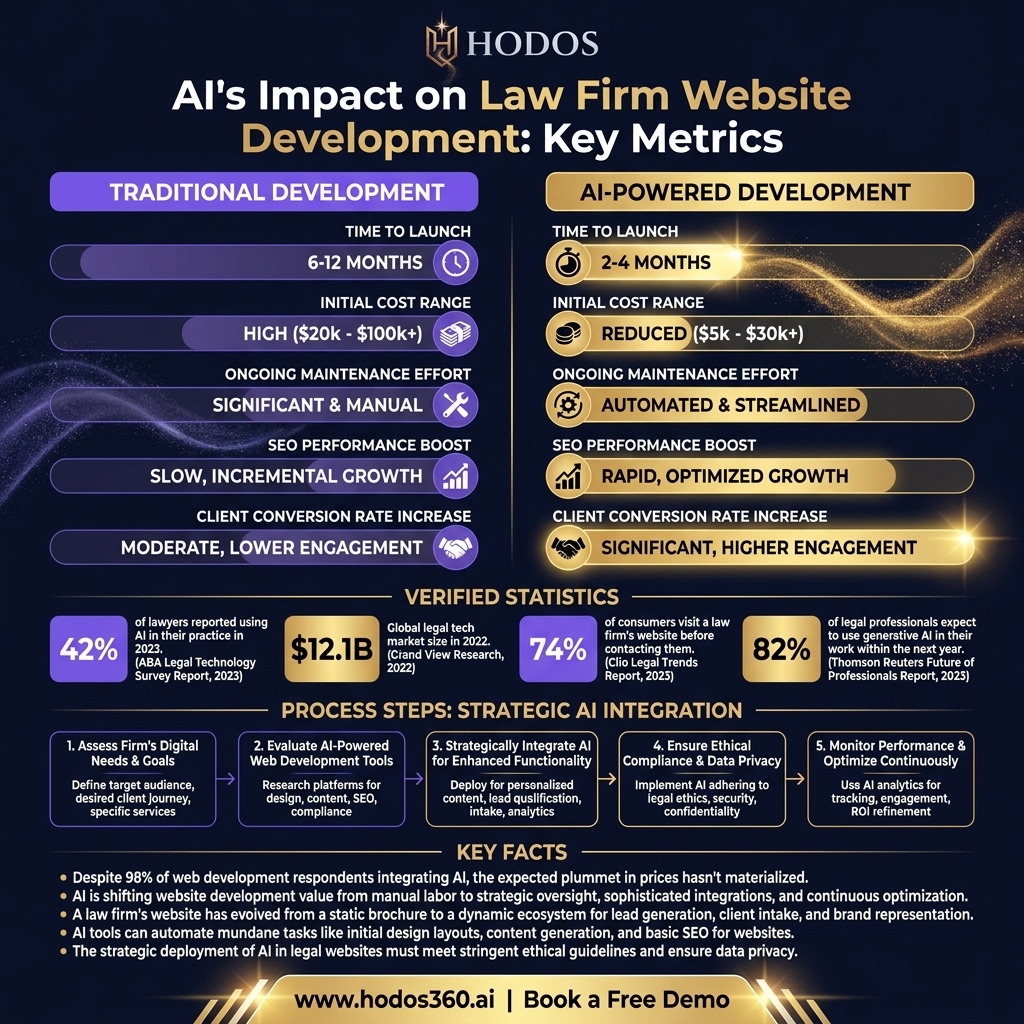
- ✓Enhanced Client Experience: AI personalizes website content and interactions, making it easier for potential clients to find relevant information and connect with the firm.
- ✓Optimized Lead Generation: AI-driven SEO and analytics identify high-value keywords and user behaviors, leading to more qualified leads and improved conversion rates.
- ✓Operational Efficiencies: Integration with AI tools can automate client intake, scheduling, and initial query responses, freeing up staff for more complex legal work.
- ✓Data-Driven Decision Making: AI provides deep insights into website performance, marketing effectiveness, and client demographics, enabling strategic adjustments for better ROI.
- ✓24/7 Client Engagement: AI chatbots and voice assistants ensure continuous availability for client inquiries and appointment booking, never missing a potential client.
- ✓Scalability and Future-Proofing: AI-powered platforms are designed for easy integration of new technologies and adaptation to evolving legal tech trends, protecting long-term investment.
- ✓Cost-Effectiveness Over Time: While initial AI website development costs might be higher for custom solutions, the long-term savings in marketing, administration, and client acquisition can be substantial.
Data Security and Client Trust
For law firms, data security and client trust are non-negotiable, forming the bedrock of the attorney-client relationship. The integration of AI into website development introduces new considerations regarding the handling of sensitive client information. Firms must implement robust cybersecurity measures and ensure that any third-party AI tools or platforms comply with stringent data protection regulations such as the Health Insurance Portability and Accountability Act (HIPAA) if dealing with health-related legal matters, or the California Consumer Privacy Act (CCPA) and General Data Protection Regulation (GDPR) for broader data privacy. A breach of client data, even through a website vulnerability, can lead to severe reputational damage, loss of client trust, and significant legal penalties.
Law firms have an ethical obligation to safeguard client data, as outlined in ABA Model Rule 1.6 (Confidentiality of Information). This rule extends to the technological infrastructure used by the firm, including its website. Learn more about AI Regulatory Monitoring: Essential for Law Firm Compliance. Therefore, when selecting an AI-powered web development partner, firms must conduct thorough due diligence on their data security protocols, encryption methods, and compliance certifications. Transparency with clients about how their data is collected and used via AI on the website is also crucial for maintaining trust. Firms should clearly articulate their privacy policies and obtain informed consent where necessary. This commitment to data security and transparency, while potentially adding to the specialized AI website development costs, is an investment in the firm's reputation and its foundational ethical responsibilities.

Key Takeaways and Next Steps
The era of AI is undeniably rewriting the landscape of website development costs for law firms, transforming it from a simple IT expense into a strategic investment in digital infrastructure. While AI tools offer unprecedented efficiencies in design, content, and SEO, the true value for law firms lies in bespoke implementation that prioritizes ethical compliance, data security, and seamless integration with existing legal workflows. The paradox highlighted by GoodFirms—that AI adoption doesn't always equate to lower prices—underscores the need for a sophisticated understanding of where and how AI adds genuine value, particularly in a highly regulated and client-trust-dependent profession like law. Firms must move beyond chasing the lowest upfront price and instead focus on long-term ROI, scalability, and the strategic advantages that a well-designed, AI-powered digital presence can offer.
For law firm owners and managing partners, the next steps involve a critical evaluation of their current digital strategy and a proactive embrace of AI. This isn't about replacing human expertise but augmenting it. It's about leveraging AI to create a more efficient, engaging, and compliant online experience that attracts and retains clients. The goal is to transform your website from a passive online presence into an active, intelligent asset that contributes directly to your firm's growth and profitability. Firms that invest strategically in AI-powered web solutions will not only navigate the evolving digital landscape but will also emerge as leaders, setting new standards for client engagement and operational excellence in the legal profession.
HODOS 360 stands at the forefront of this transformation, offering comprehensive Web & Mobile Development services specifically tailored for law firms. Our AI-powered platform ensures your website is not just visually appealing but also strategically optimized for SEO, client conversion, and seamless integration with your firm's operations. By combining cutting-edge AI technology with a deep understanding of the legal industry's unique needs, we help firms like yours build high-converting, compliant, and future-proof digital presences. Don't just adapt to the future of legal tech; define it. Explore HODOS 360's Web & Mobile Development solutions and schedule a free demo today.
Frequently Asked Questions
Are AI website development costs lower for law firms?+
While AI tools can automate many tasks, significantly reducing the labor involved in basic web creation, overall AI website development costs for law firms may not be inherently lower. The specialized needs for ethical compliance, data security, custom integrations with legal workflows, and strategic optimization for client acquisition often require expert oversight, increasing the complexity and thus the investment. The value shifts from manual labor to sophisticated AI deployment and continuous refinement.
How does AI impact SEO for law firm websites?+
AI revolutionizes SEO for law firms by enabling more precise keyword research, intent analysis, and content optimization. AI-powered tools can identify long-tail keywords, analyze competitor strategies, and suggest content improvements that resonate with potential clients, improving search rankings and visibility. This leads to more qualified leads and a higher return on investment for marketing efforts, effectively rewriting the approach to online visibility.
What ethical considerations should law firms consider with AI web development?+
Law firms must prioritize ethical compliance, especially concerning attorney advertising (ABA Model Rule 7.1) and client confidentiality (Rule 1.6). AI-generated content must be accurate and not misleading. Data privacy (GDPR, CCPA) is paramount for any AI handling client information. Firms must vet third-party AI tools for security and transparency, ensuring client trust is maintained at all times, potentially impacting website development costs for robust solutions.
Can AI help with client acquisition through my law firm's website?+
Absolutely. AI enhances client acquisition by personalizing user experiences, optimizing lead generation funnels, and providing 24/7 engagement through chatbots and voice assistants. AI can qualify leads, book appointments, and tailor content to individual visitor needs, significantly improving conversion rates. This makes the website development costs a strategic investment in predictable and scalable client growth for your businesses.
How can HODOS 360 assist with AI-powered website development for my firm?+
HODOS 360 offers comprehensive Web & Mobile Development services, leveraging AI to build high-converting, compliant, and future-proof websites specifically for law firms. Our platform integrates AI for SEO optimization, responsive design, and seamless connection with other firm operations like client intake and case management. We focus on maximizing your ROI and ensuring your digital presence is a strategic asset, addressing the unique website development costs of the legal sector.