


Legal AI Funding: Essential Strategies for Law Firms
The legal technology landscape is experiencing an unprecedented acceleration, fueled by substantial investments in artificial intelligence. A prime example is Vikk AI's recent $4.2 million funding round, as reported by The Manila Times. This significant capital injection, aimed at expanding its legal AI platform and AI-powered lawyer advertising, is not an isolated incident but a clear indicator of a broader trend. Venture capital firms are increasingly recognizing the transformative potential of AI in legal services, pouring millions into startups that promise to redefine everything from litigation prediction to client intake. This influx of legal AI funding is creating a competitive environment where law firms that embrace innovation are poised to thrive, while those that hesitate risk being left behind in a rapidly evolving market. It’s a narrative reminiscent of the early internet boom, where adaptability was paramount, and the legal sector is now at its own pivotal juncture.
This isn't merely about new tools; it's about a fundamental shift in how legal services are delivered, managed, and marketed. Industry leaders like Jack Newton, CEO of Clio, have long championed the idea of data-driven law practice, and the current wave of legal AI funding is bringing that vision to fruition at an accelerated pace. Firms are no longer asking *if* they should adopt AI, but *how* and *which* solutions will provide the most significant return on investment. The competition among AI platforms, as evidenced by similar funding rounds for companies like Theo Ai and HAQQ Legal AI, underscores the urgency for law firms to develop a robust AI strategy. This article delves into the implications of these investments, exploring how law firms can strategically leverage AI across various functions—from internal operations to client engagement and marketing—to secure their future relevance and profitability. Discover how your firm can harness these advancements and stay ahead of the curve. Learn more about embracing the future of legal practice.
The Surge in Legal AI Funding and Market Dynamics
The recent capital injection into Vikk AI, a company focused on legal AI and lawyer advertising, is indicative of a burgeoning market that analysts predict will reach tens of billions within the next decade. According to a 2024 report by Thomson Reuters, investment in legal technology startups has grown by an average of 35% year-over-year since 2020, with AI-driven solutions attracting the lion's share. This isn't just about early-stage seed rounds; established players are also drawing significant attention. For instance, companies like Harvey AI, which famously partnered with Allen & Overy, secured substantial backing, demonstrating investor confidence in AI's ability to augment highly complex legal work. This trend signals a maturing legal tech ecosystem where specialized AI platforms are not just conceptual but are proving their efficacy in real-world legal scenarios, from due diligence to contract analysis and even litigation prediction.
This competitive landscape is fueled by the promise of efficiency and competitive advantage. Law firms are under increasing pressure to reduce costs, enhance accuracy, and deliver faster results, and AI offers a compelling solution. Learn more about AI Web Design: Essential Strategies for Law Firms in the AI Search Era. The market is witnessing a fascinating interplay between disruption and traditional practice, creating both opportunities and challenges. While some firms cautiously observe, others, like Latham & Watkins, are actively piloting AI tools, recognizing that early adoption can translate into significant market share and improved client service. The drama unfolds as founders of these AI startups, often former legal professionals themselves, vie for market dominance, pushing the boundaries of what AI can achieve. The question for many legal professionals is not *if* to engage with this technology, but *how* to navigate the myriad options and integrate them seamlessly into existing workflows without compromising the ethical obligations enshrined in rules like ABA Model Rule 1.1 (Competence), which implicitly requires lawyers to keep abreast of changes in the law and its practice, including the benefits and risks associated with relevant technology.
Transforming Law Firm Operations with AI Management Systems
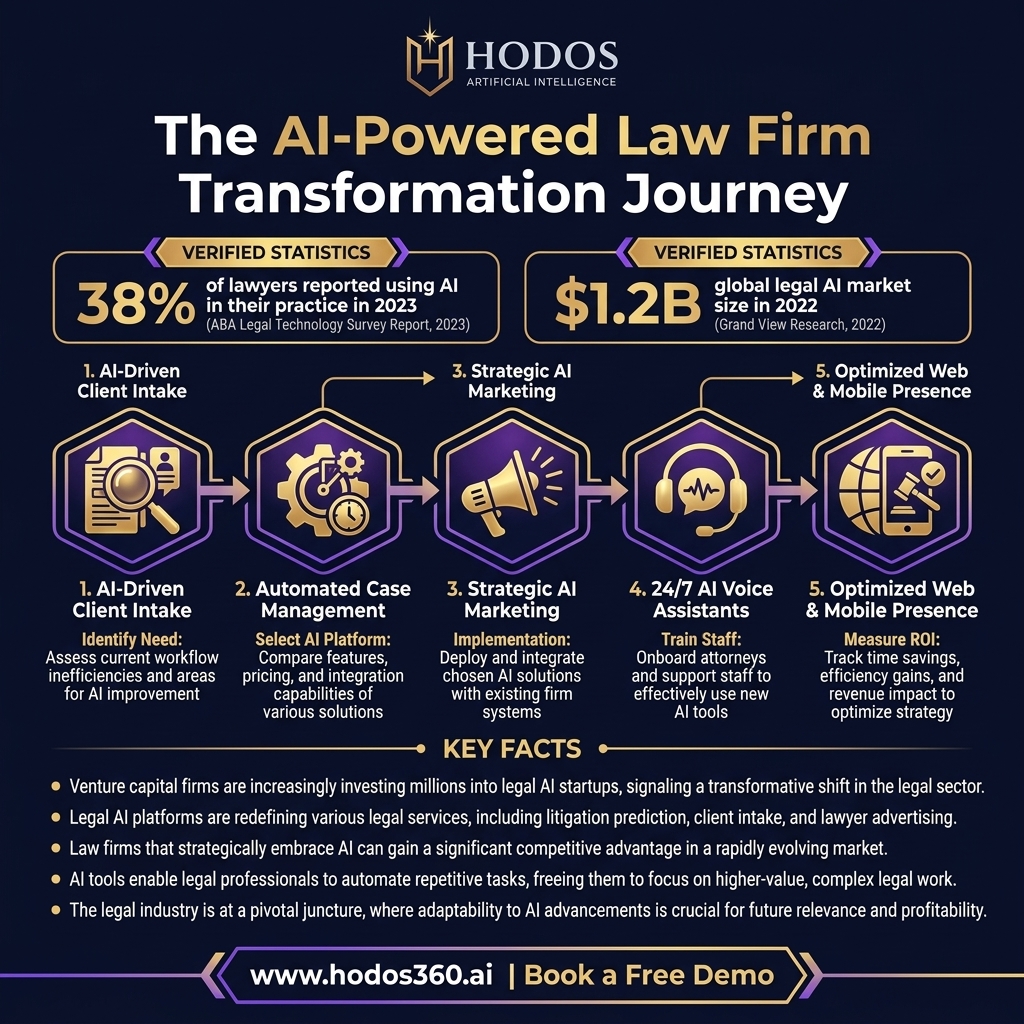
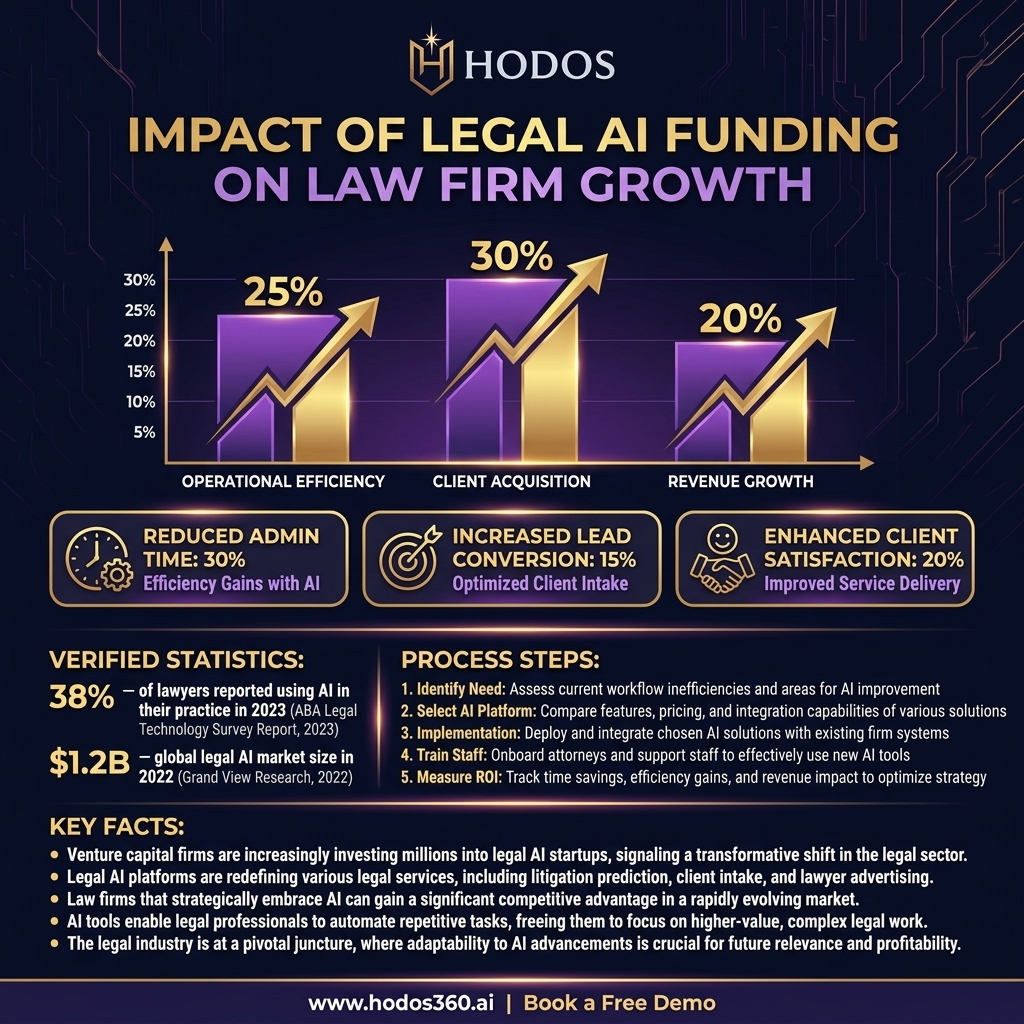
The core of any modern law firm's efficiency lies in its operational infrastructure. Here, AI Law Firm Management Systems are proving to be game-changers, moving far beyond traditional practice management software. These sophisticated platforms, like the HODOS 360 AI Law Firm Management System, integrate case management, billing, client intake, document automation, and calendaring into a cohesive, intelligent ecosystem. Imagine an AI-powered legal workflow that can automatically generate initial drafts of pleadings based on case facts, schedule follow-ups, and even predict potential bottlenecks in a litigation timeline. This level of automation frees up attorneys and paralegals from tedious, repetitive tasks, allowing them to focus on higher-value, strategic work that requires human judgment and expertise. The impact on profitability is significant; McKinsey & Company's 2025 Legal Industry Report highlighted that firms leveraging advanced automation saw a 20-30% increase in billable hours per attorney due to reduced administrative overhead.
Beyond just automation, these systems offer unparalleled insights. AI can analyze historical billing data to identify inefficient practices, suggest optimal pricing strategies, and even flag potential billing disputes before they escalate. Learn more about Ultimate AI Search SEO Guide for Law Firms: Essential Strategies. For client intake, AI-powered chatbots can collect initial information, screen for conflicts, and even guide prospective clients through a preliminary qualification process, ensuring that attorneys engage only with high-potential leads. This not only streamlines the onboarding process but also enhances the client experience from the very first interaction. Firms that have invested in such systems report a dramatic reduction in administrative errors and a significant improvement in overall operational fluidity. This shift is critical for firms navigating the complexities of modern legal practice, especially given the rising expectations for transparency and efficiency from clients. Optimizing client intake with AI means faster onboarding and more accurate initial assessments.
Beyond Case Management: AI-Powered Workflows
The true power of AI in law firm management extends beyond merely organizing cases; it lies in orchestrating intelligent workflows. Consider the lifecycle of a typical lawsuit. From initial client consultation, through discovery, motion practice, and eventual resolution, countless documents, deadlines, and communications are generated. An AI-powered workflow system can monitor these elements in real-time, identifying dependencies, flagging potential missed deadlines, and even suggesting strategic responses based on similar past cases. For instance, in a complex M&A transaction, AI can analyze thousands of contracts for specific clauses, identify regulatory compliance issues, and generate a summary report in a fraction of the time a human team would require. This capability, often referred to as next-gen law firm management, transforms reactive practices into proactive, predictive operations.
Furthermore, document automation, powered by generative AI, is no longer a futuristic concept but a present-day reality. Learn more about AI Intake: The Essential Guide for Modern Law Firms. Instead of manually drafting standard agreements or court filings, attorneys can leverage AI to generate high-quality documents from templates, populated with case-specific details extracted from client data. This drastically reduces drafting time and minimizes human error, ensuring consistency and compliance with jurisdictional requirements. The integration of AI with calendaring systems can automatically schedule depositions, court appearances, and client meetings, cross-referencing attorney availability and court schedules. This level of sophisticated integration is what differentiates cutting-edge legal management systems, enabling firms to achieve unprecedented levels of productivity and accuracy, thereby directly impacting their bottom line and competitive standing. Streamlined billing solutions are also a core component, with AI automating time tracking and invoice generation.
AI's Role in Modern Legal Marketing and Client Acquisition
The legal market is more competitive than ever, making client acquisition a critical challenge. The same AI innovations driving operational efficiency are now revolutionizing how law firms attract and retain clients. The Vikk AI funding round specifically highlighted investment in "AI-powered lawyer advertising," underscoring the growing importance of AI in legal marketing. AI Marketing Platforms empower firms with capabilities previously only accessible to large corporations. These platforms can analyze vast amounts of data to identify ideal client demographics, predict their legal needs, and even craft personalized marketing messages. Imagine AI generating multiple versions of an ad, testing them across various social media channels, and automatically optimizing for the highest conversion rate—all in real time. This level of precision ensures that marketing budgets are spent effectively, targeting the right clients with the right message at the right time. Data from the ABA's 2025 TechReport indicated that firms utilizing AI in their marketing efforts reported an average 15% higher lead conversion rate compared to traditional methods.
Beyond targeted advertising, AI is transforming content generation and social media automation. Learn more about Essential AI Website Security: Protecting Law Firms from Cyber Threats. Firms can leverage AI to create compelling blog posts, articles, and even video scripts that resonate with their target audience. This content can then be automatically scheduled and published across various platforms, maintaining a consistent and engaging online presence. AI marketing strategies also extend to sophisticated analytics and ROI tracking, allowing firms to meticulously measure the effectiveness of every campaign. This data-driven approach moves legal marketing from guesswork to precision science, enabling firms to understand exactly which channels and messages yield the best return on investment. The ability to track ROI with such granularity is invaluable for firms looking to optimize their marketing spend and demonstrate tangible growth. This represents a significant shift from the broad-brush marketing approaches of the past, offering a level of specificity that can dramatically improve client acquisition outcomes.
Data-Driven Decisions in Legal Marketing
The traditional approach to legal marketing often involved significant guesswork, relying on intuition and broad demographic targeting. However, the advent of AI has ushered in an era of data-driven decisions in legal marketing, transforming it into a precise science. AI marketing platforms can ingest and analyze data from numerous sources: website traffic, social media engagement, email campaign performance, and even client relationship management (CRM) systems. This comprehensive analysis allows firms to build incredibly detailed client personas, understanding not just demographics, but also psychographics, pain points, and even their preferred communication channels. For example, an AI might identify a surge in searches for "estate planning for digital assets" in a particular age group, prompting the firm to create targeted content and ads for that niche.
Furthermore, AI's predictive capabilities extend to forecasting market trends and identifying emerging legal needs. By analyzing news, legislative changes, and social discourse, AI can alert firms to potential areas of practice growth or shifts in client demand. Learn more about AI Marketing Tools: Essential Strategies for Law Firms. This proactive intelligence allows firms to pivot their marketing efforts and even develop new service offerings before competitors. The ability to track the entire client journey, from initial contact to conversion and retention, provides invaluable insights into what works and what doesn't. This continuous feedback loop enables constant optimization, ensuring that marketing spend is maximally effective. In a world where client acquisition costs are rising, leveraging AI for such granular insights is not just an advantage—it's a necessity for sustained growth and profitability, adhering to the spirit of ethical advertising under ABA Model Rule 7.2 (Advertising).
Enhancing Client Experience and Firm Reach with AI Voice Assistants
In an increasingly on-demand world, client expectations for immediate and responsive communication have soared. This is where AI Voice Assistants are making a profound impact, fundamentally reshaping the client experience and extending a law firm's reach far beyond traditional office hours. These aren't just automated answering machines; they are sophisticated, AI-powered entities capable of 24/7 phone answering, intelligent lead qualification, and seamless appointment booking. Imagine a prospective client calling at 10 PM on a Sunday, and instead of reaching voicemail, they interact with an AI assistant that can understand their inquiry, qualify their needs, and even schedule a consultation for Monday morning. This immediate engagement dramatically improves the chances of converting a lead into a client, as highlighted by a 2023 Gartner report indicating that firms offering 24/7 client support experienced a 20% higher client satisfaction rate.
The capabilities of modern AI Voice Assistants extend to multilingual support, ensuring that firms can cater to a diverse client base without the need for additional human staff. They can handle routine inquiries, provide information about firm services, and intelligently route calls to the appropriate department or attorney based on the client's specific needs. Learn more about Ultimate AI Agent Builder: Essential Tools for Law Firms. This not only enhances client service but also significantly reduces the administrative burden on front-office staff, allowing them to focus on more complex tasks. The technology behind these assistants, often incorporating advanced natural language processing (NLP) and machine learning, allows them to learn and adapt, continuously improving their ability to understand and respond to client queries. This level of seamless client engagement: the AI voice advantage positions firms as modern, client-centric institutions, ready to meet the demands of today's fast-paced legal environment. This innovation is crucial for firms aiming to maximize their client outreach and operational efficiency.
Seamless Client Engagement: The AI Voice Advantage
The true advantage of AI Voice Assistants lies in their ability to create a truly seamless and consistent client engagement experience. From the initial phone call, these assistants act as the firm's always-on, always-ready front desk. For example, when a potential client calls, the AI can engage in a natural language conversation, asking qualifying questions about their legal issue, jurisdiction, and urgency. Based on the responses, it can immediately determine if the lead fits the firm's practice areas and current capacity, providing a highly efficient lead qualification process. This prevents attorneys from spending valuable time on non-viable leads, optimizing their schedules for genuine prospects. Moreover, the AI can instantly access attorney calendars, suggesting available slots for consultations and sending automated confirmations and reminders, significantly reducing no-shows.
Furthermore, for existing clients, AI Voice Assistants can handle routine inquiries such as checking case status updates (if integrated with the firm's case management system), providing billing information, or answering frequently asked questions about legal procedures. This not only empowers clients with instant access to information but also frees up paralegals and support staff from answering repetitive calls, allowing them to dedicate more time to substantive legal work. The ability to offer multilingual support means firms can expand their client base and provide equitable access to legal services, breaking down language barriers. This comprehensive, 24/7 support system, driven by AI, transforms the client experience from a potential point of friction into a hallmark of exceptional service, reinforcing the firm's reputation for responsiveness and modernity.
Strategic Web & Mobile Development for the AI-Powered Law Firm
In today's digital-first world, a law firm's online presence is its virtual storefront, and for an AI-powered firm, this presence must be sophisticated, intuitive, and highly effective. Strategic Web & Mobile Development goes beyond merely having a website; it involves creating an AI-powered website building experience with responsive design, robust SEO optimization, and high-converting templates that serve as a dynamic hub for client interaction and information dissemination. The goal is to create a digital ecosystem that not only attracts potential clients but also seamlessly integrates with the firm's AI-driven management and marketing platforms. A poorly designed or outdated website can deter potential clients, regardless of how innovative a firm's internal AI tools might be. Research from the Legal Marketing Association consistently shows that over 80% of potential clients will visit a firm's website before making initial contact.
AI-powered website builders can personalize user experiences, dynamically showcasing relevant practice areas or attorney profiles based on a visitor's browsing history or geographic location. Responsive design ensures a flawless experience across all devices, from desktops to smartphones, which is crucial as mobile search increasingly dominates. Moreover, deep SEO optimization, often guided by AI analytics, is vital to ensure the firm ranks highly for relevant legal search terms, driving organic traffic and qualified leads. High-converting templates are designed with user psychology in mind, guiding visitors towards clear calls to action, such as scheduling a consultation or downloading a legal guide. This comprehensive approach to web and mobile presence is an indispensable component of an integrated AI strategy, ensuring that the firm's digital face is as advanced and client-centric as its internal operations. Responsive website design and strong SEO are non-negotiable for modern firms.

Key Takeaways and Next Steps for AI Adoption
The significant legal AI funding flowing into startups like Vikk AI is a clear signal: the future of legal practice is inextricably linked with artificial intelligence. For law firms, this isn't a distant phenomenon but an immediate call to action. The choice is no longer whether to adopt AI, but how to strategically integrate these powerful tools to enhance operational efficiency, revolutionize client acquisition, and deliver superior legal services. Firms that proactively invest in AI-powered law firm management systems, sophisticated AI marketing platforms, responsive AI voice assistants, and cutting-edge web and mobile development will not only survive but thrive in this evolving landscape. This requires a commitment to continuous learning and a willingness to embrace new paradigms, recognizing that technology is an enabler, not a replacement, for human legal expertise.
As you consider the next steps for your firm, evaluate your current operational bottlenecks, marketing challenges, and client engagement strategies. Identify areas where AI can provide the most immediate and impactful solutions. Begin with pilot programs, measure their effectiveness, and scale your adoption incrementally. Platforms like HODOS 360 offer an integrated suite of services designed to help law firms navigate this transformation, providing tools for everything from AI-powered legal workflows to advanced client acquisition strategies. The legal profession has always adapted to change, from the printing press to the internet, and now to artificial intelligence. The firms that champion this latest wave of innovation will be the ones shaping the legal landscape for decades to come, ensuring they remain competent and competitive in an increasingly automated world. Explore more about how HODOS 360 can empower your firm's future.
Frequently Asked Questions
What does Vikk AI's $4.2 million funding round signify for law firms?+
This funding round indicates a strong investor confidence in legal AI platforms and AI-powered advertising. For law firms, it means increased competition from tech-savvy firms and a growing imperative to adopt AI solutions for efficiency, client acquisition, and marketing. It underscores that legal technology is rapidly maturing and becoming a critical component for sustained growth and competitiveness in the legal market.
How can AI Law Firm Management Systems benefit my practice?+
AI Law Firm Management Systems streamline operations by automating tasks like case management, billing, and document generation. They provide AI-powered legal workflows that reduce administrative overhead, minimize errors, and free up attorneys for higher-value work. This leads to increased profitability, improved efficiency, and better resource allocation, ultimately enhancing overall firm performance and client satisfaction.
What role does AI play in modern legal marketing?+
AI revolutionizes legal marketing by enabling data-driven client acquisition. AI Marketing Platforms can analyze demographics, predict legal needs, generate targeted content (like AI video creation and social media automation), and track ROI with precision. This allows firms to optimize marketing spend, reach ideal clients more effectively, and achieve higher lead conversion rates compared to traditional marketing approaches.
How do AI Voice Assistants improve client engagement for law firms?+
AI Voice Assistants offer 24/7 phone answering, intelligent lead qualification, and appointment booking, ensuring immediate client engagement. They provide multilingual support, route calls efficiently, and handle routine inquiries, significantly improving client satisfaction and reducing staff workload. This creates a seamless, responsive client experience, enhancing the firm's reputation and expanding its client reach globally.
Why is strategic web and mobile development crucial for AI-powered law firms?+
A firm's online presence is its digital storefront. Strategic web and mobile development, including AI-powered website building, responsive design, and SEO optimization, ensures the firm attracts and converts potential clients effectively. It integrates seamlessly with AI management and marketing platforms, providing a dynamic hub for client interaction. A strong digital presence is vital for visibility, lead generation, and demonstrating modernity.