
Legal AI Strategy: An Essential Blueprint for Modern Firms
The legal landscape is experiencing an unprecedented technological revolution, with artificial intelligence emerging as the defining force. For years, AI’s potential in law was a topic of academic debate and isolated pilot programs. However, the recent announcement from Hogan Lovells Cadwalader regarding the next phase of its comprehensive AI strategy marks a pivotal moment, signaling a firm-wide commitment to integrating advanced AI across its global operations. This move by a global legal powerhouse underscores a critical shift: AI is no longer a futuristic concept but a present-day imperative for competitive advantage and operational excellence.
This strategic embrace of AI by firms like Hogan Lovells Cadwalader is a direct response to evolving client demands, the need for increased efficiency, and the relentless pace of innovation. As Caroline Hill, a prominent voice in legal tech and a partner at Hogan Lovells, has often articulated, the successful adoption of AI requires not just investment in technology but a fundamental rethinking of legal workflows and firm culture. The firm's decision to establish a dedicated AI governance board and explore both custom-built solutions and commercial platforms, including integrations with leading tools like Harvey AI, reflects a mature and nuanced approach to managing the risks and maximizing the rewards of this transformative technology. This proactive stance sets a new benchmark for what a truly comprehensive legal AI strategy entails, moving beyond mere experimentation to embedded, scalable solutions.
The Imperative of a Comprehensive Legal AI Strategy
The legal industry, traditionally cautious about rapid technological shifts, is now at an inflection point. The announcement by Hogan Lovells Cadwalader is not an isolated event but a reflection of a broader trend where firms recognize that a piecemeal approach to AI is insufficient. A truly comprehensive legal AI strategy involves integrating AI at every layer of the firm's operations, from administrative tasks to complex legal research and client service. This strategic imperative is driven by several factors, including the need to manage burgeoning data volumes, reduce operational costs, and deliver faster, more accurate legal services to clients who are themselves navigating AI-driven industries. Firms that fail to develop a coherent AI strategy risk falling behind in a rapidly evolving market, struggling with inefficiencies that erode profitability and client satisfaction.
The shift towards a firmwide AI strategy is also influenced by the rapid advancements in generative AI, exemplified by models from OpenAI and Google DeepMind. These tools, once theoretical, are now capable of drafting complex documents, summarizing vast amounts of information, and even assisting in legal reasoning. According to a 2024 Thomson Reuters Institute report, over 60% of large law firms anticipate significant investment in generative AI within the next two years, a stark increase from previous years. Learn more about AI Voice: Essential Strategy for Law Firms in the Musk Era. This data highlights the industry's growing confidence in AI's practical applications. Firms like Hogan Lovells Cadwalader are not just adopting tools; they are building an entire ecosystem where AI augments human capabilities, allowing legal professionals to focus on higher-value, strategic work, thereby enhancing both productivity and job satisfaction.
Beyond efficiency, a robust legal AI strategy is becoming a differentiator in attracting and retaining top talent. Younger attorneys, having grown up in a digitally native world, expect modern tools and workflows. Firms that provide access to cutting-edge AI platforms are seen as forward-thinking and committed to innovation, making them more attractive employers. Moreover, clients are increasingly scrutinizing how their legal providers leverage technology to deliver value and manage costs. Firms that can articulate a clear AI strategy demonstrate a commitment to innovation and client-centricity, strengthening their competitive position against rivals like Clifford Chance or Freshfields who are also making significant AI moves. This strategic foresight extends to ensuring that AI adoption aligns with ethical guidelines, such as those outlined in ABA Model Rule 1.1 on Competence, which implies a duty to stay abreast of technological advancements relevant to practice.
The competitive pressure is immense, not just from other large firms but also from agile legal tech startups. Firms that invest in a comprehensive AI strategy today are future-proofing their operations. This involves not only selecting the right technologies but also cultivating an AI-literate workforce and establishing processes for continuous evaluation and adaptation. The market is dynamic, with new AI solutions emerging constantly, and firms must be prepared to integrate these innovations seamlessly. The example set by Hogan Lovells Cadwalader, with its focus on both custom development and commercial solutions, provides a powerful blueprint for how established firms can navigate this complex technological landscape while maintaining their core values and service quality.
Building an AI Governance Framework: Lessons from Industry Leaders
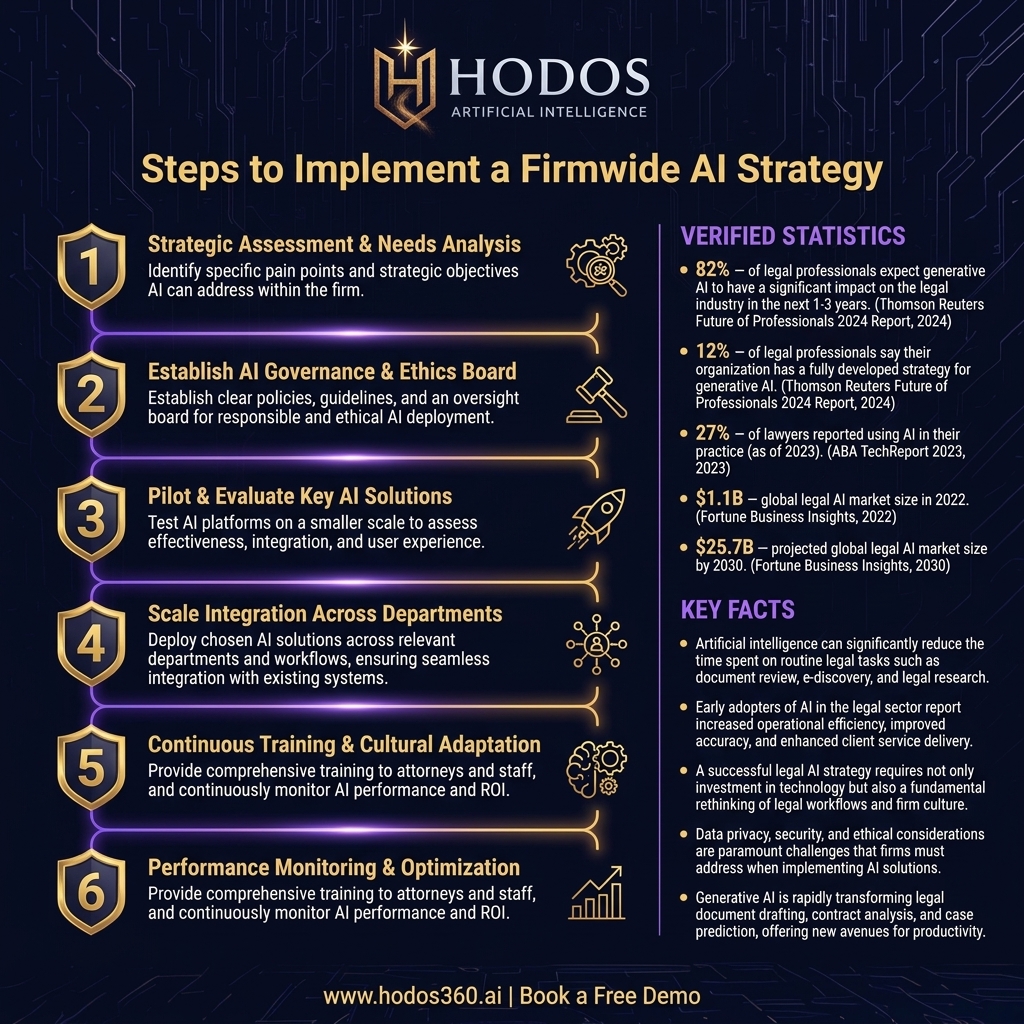
The announcement of an AI governance board by Hogan Lovells Cadwalader is perhaps the most critical component of its new AI strategy. As AI integration deepens, so do the ethical, security, and regulatory complexities. A robust governance framework is essential to ensure responsible AI deployment, mitigating risks such as data breaches, algorithmic bias, and compliance failures. This board, typically comprising partners, IT specialists, and ethics officers, is tasked with setting firm-wide policies, evaluating new AI tools, and ensuring adherence to legal and ethical standards. Learn more about Voice AI Legal: Essential Battles in the Age of Cupertino. Without such a framework, even the most advanced AI tools can introduce unforeseen liabilities, jeopardizing client trust and firm reputation. The EU AI Act, for instance, highlights the increasing regulatory scrutiny on AI, making proactive governance indispensable.
Leading firms understand that AI governance extends beyond mere compliance; it's about embedding ethical considerations into the very fabric of AI development and deployment. This includes ensuring data privacy in line with ABA Model Rule 1.6 (Confidentiality of Information) and addressing potential biases in AI models that could lead to discriminatory outcomes. Brad Smith, Vice Chair and President of Microsoft, has frequently emphasized the importance of responsible AI, advocating for a human-centered approach that prioritizes fairness, accountability, and transparency. Learn more about AI Law Firm Management: The Ultimate Guide for Growth. Firms are now actively collaborating with AI developers to build tools that are explainable and auditable, moving away from 'black box' solutions that obscure decision-making processes. This commitment to ethical AI is not just a moral imperative but a strategic necessity for maintaining credibility in the legal profession.
The establishment of a dedicated governance board also facilitates the firmwide adoption of AI by creating clear guidelines and fostering a culture of trust. When attorneys understand the guardrails and ethical considerations, they are more likely to embrace and effectively utilize AI tools. This leadership-driven approach ensures that AI initiatives are aligned with the firm's overarching business objectives and values. For instance, the governance board might oversee pilot programs for new AI applications, gather feedback from users, and make informed decisions about scaling successful implementations. This structured approach contrasts sharply with ad-hoc AI adoption, which often leads to fragmented systems, security vulnerabilities, and inconsistent quality of service. It represents a mature recognition that technology alone is not enough; it must be managed strategically and ethically.
Effective AI governance also plays a crucial role in talent development and training. The board often collaborates with HR and learning & development departments to design training programs that equip attorneys and staff with the necessary skills to work alongside AI. This includes understanding AI's capabilities and limitations, ethical use, and data security protocols. Firms like Perkins Coie have been lauded for their internal AI training initiatives, which empower their lawyers to leverage technology effectively. By investing in human capital alongside technological capital, firms ensure a smooth transition to an AI-augmented practice, minimizing resistance to change and maximizing the return on their AI investments. This holistic view of governance underscores its central role in a successful legal AI strategy.
Integrating AI: Custom Solutions vs. Commercial Platforms
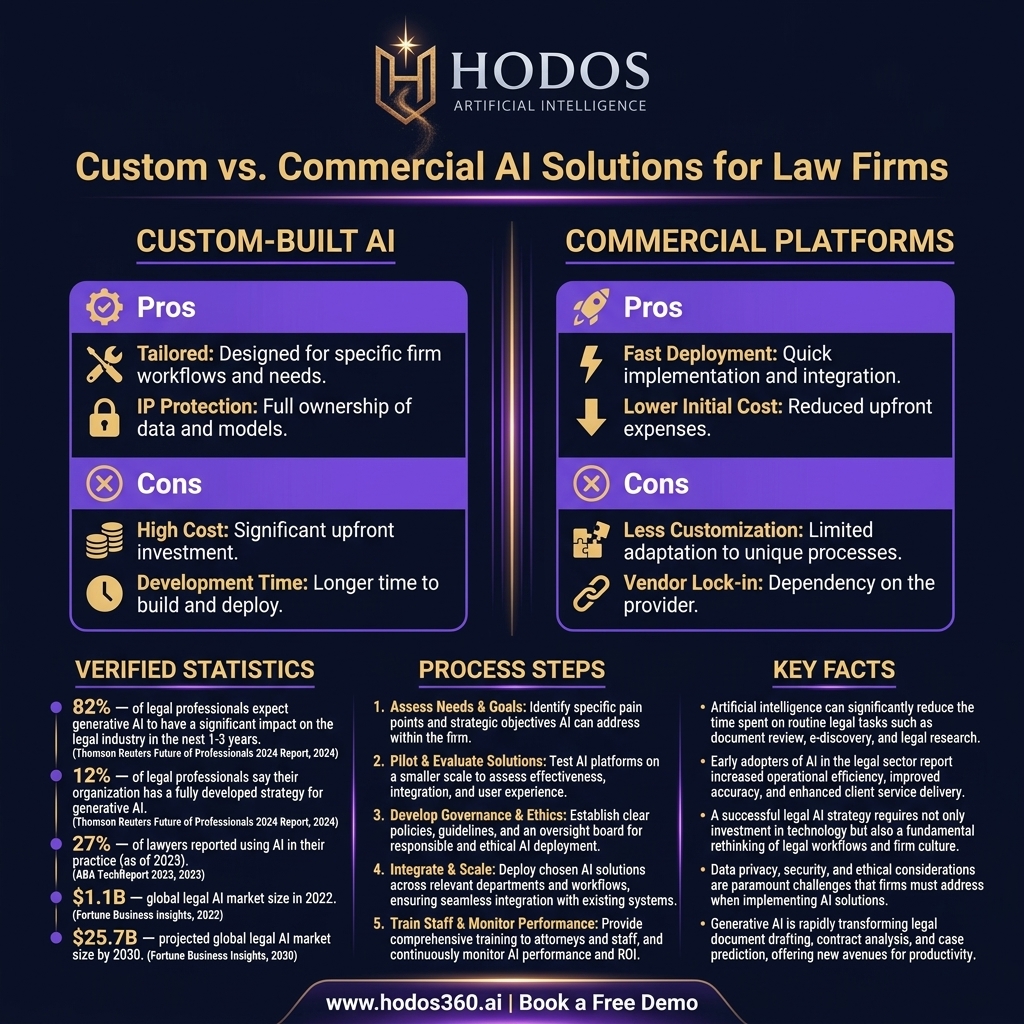
One of the key decisions in developing a legal AI strategy revolves around the 'build vs. buy' dilemma: whether to develop custom AI solutions internally or integrate off-the-shelf commercial platforms. Hogan Lovells Cadwalader's approach, combining both custom-built and market-leading commercial AI products, represents a pragmatic hybrid strategy. Custom solutions offer unparalleled tailoring to a firm's unique workflows and intellectual property, allowing for highly specialized applications that address specific pain points. However, they demand significant investment in development talent, infrastructure, and ongoing maintenance. Firms with unique data sets or highly specialized practices might find the custom route more appealing for niche applications, providing a distinct competitive edge.
Conversely, commercial AI platforms, such as Harvey AI (which has famously partnered with firms like Allen & Overy), offer ready-to-use, robust solutions for common legal tasks like due diligence, contract review, and legal research. These platforms benefit from continuous updates, broad industry adoption, and often come with built-in compliance and security features. The advantage lies in faster deployment, lower initial costs, and access to cutting-edge AI models without the burden of in-house development. For many firms, leveraging these established platforms provides a quicker path to realizing AI's benefits, allowing them to focus resources on integrating and optimizing these tools rather than building them from scratch. The choice often depends on the specific use case, the firm's technological capabilities, and its strategic objectives.
The Hybrid Approach: Best of Both Worlds
The hybrid strategy, as adopted by Hogan Lovells Cadwalader, is gaining traction because it allows firms to harness the strengths of both approaches. By integrating commercial platforms for foundational tasks, firms can quickly achieve baseline efficiencies and provide attorneys with immediate AI support. Simultaneously, they can allocate resources to develop custom AI agents or specialized modules that address proprietary workflows, client-specific needs, or areas where their unique expertise can be codified into AI. This balanced approach ensures broad AI adoption while preserving the firm's distinct competitive advantages. It's about strategically deploying resources where they yield the most impact, rather than adhering to a rigid 'either/or' philosophy. This flexibility is crucial in a rapidly evolving tech landscape, allowing firms to adapt and innovate continuously, much like how HODOS 360 offers both comprehensive management systems and custom web development to meet diverse firm needs.
The success of this hybrid model hinges on seamless integration capabilities. AI tools, whether custom or commercial, must be able to communicate and share data securely within the firm's existing IT ecosystem. This requires robust APIs, interoperability standards, and a well-planned data architecture. Firms must invest in integration expertise to avoid creating fragmented technology silos. The goal is to create a cohesive AI environment where different tools work in concert to support legal professionals, streamline workflows, and enhance the overall client experience. This strategic integration is a complex undertaking, but it is fundamental to unlocking the full transformative potential of a firmwide legal AI strategy.
Operationalizing AI: Transforming Law Firm Management and Client Service
Beyond legal research and document review, AI is fundamentally reshaping the operational backbone of law firms. The true power of a legal AI strategy lies in its ability to transform everyday law firm management, from client intake to billing and case management. Imagine an AI-powered legal workflow that automates the initial client intake process, qualifies leads, and even schedules appointments, freeing up administrative staff for more complex tasks. This is not a distant dream but a present reality being implemented by forward-thinking firms. The integration of AI into these administrative functions leads to significant time savings, reduced human error, and a more streamlined experience for both clients and internal staff. It's about creating an intelligent operational framework that supports the legal practice, rather than being a bottleneck.
AI-powered solutions are revolutionizing client service by enabling faster responses and personalized interactions. AI Voice Assistants, for example, can provide 24/7 phone answering, qualify leads with sophisticated natural language processing, and even offer multilingual support, ensuring that no potential client query goes unanswered. This immediate, intelligent engagement elevates the client experience, setting firms apart in a competitive market. Furthermore, AI tools can analyze client data to predict future needs, allowing firms to proactively offer tailored legal advice and services. This proactive, data-driven approach to client relationship management fosters stronger, more enduring client loyalties, reflecting a shift from reactive problem-solving to proactive partnership.
Enhancing Efficiency Across the Board
The impact on operational efficiency is profound. AI can automate tedious tasks such as document generation, contract analysis, and even aspects of legal billing. This allows attorneys and paralegals to redirect their expertise to strategic thinking, legal argumentation, and client counseling, areas where human judgment and empathy are irreplaceable. Firms adopting such systems report significant improvements in productivity and a reduction in overhead costs. For instance, an AI Law Firm Management System can provide predictive analytics on case outcomes, optimize resource allocation, and identify potential bottlenecks in workflows, leading to more informed decision-making and better overall firm performance. This move towards data-driven legal practice is not just about cutting costs; it's about optimizing every facet of the firm's operations for maximum impact and value delivery.
Moreover, AI's role extends to marketing and business development. An AI Marketing Platform can analyze market trends, generate compelling content, automate social media outreach, and track the ROI of various campaigns. This allows firms to target potential clients more effectively, build their brand presence, and measure the direct impact of their marketing efforts. For example, AI can identify emerging legal needs in specific industries, enabling firms to create tailored services and marketing messages that resonate deeply with prospective clients. This strategic use of AI across all firm functions, from back-office administration to client-facing interactions and business growth, underscores the holistic transformation possible with a well-executed legal AI strategy.
Navigating the Future: Strategic Imperatives for Law Firms
As the legal industry continues its rapid evolution, firms must recognize that AI adoption is not a one-time project but an ongoing strategic journey. The leadership shown by firms like Hogan Lovells Cadwalader provides a clear roadmap, but each firm must tailor its legal AI strategy to its unique practice areas, client base, and organizational culture. The imperative is to foster a culture of continuous learning and adaptation, where attorneys are encouraged to experiment with new tools and provide feedback, contributing to the iterative improvement of AI systems. This requires investment not only in technology but also in comprehensive training programs and change management initiatives to ensure smooth transitions and broad adoption across the firm.
The future of legal practice will be defined by how effectively firms leverage AI to enhance human capabilities, not replace them. This means focusing on AI as an augmentation tool that empowers lawyers to deliver superior results, faster and more efficiently. Firms must strategically identify areas where AI can have the greatest impact, whether it's streamlining client intake, automating document review, or providing sophisticated legal analytics. The goal is to free up legal professionals from mundane tasks, allowing them to dedicate more time to complex problem-solving, strategic advice, and building strong client relationships – the core value proposition of legal services. This human-AI collaboration will be the hallmark of successful firms in the coming decade, creating a synergistic model where technology amplifies expertise.
Embracing Continuous Innovation
Moreover, firms must remain vigilant regarding emerging technologies and regulatory developments. The AI landscape is dynamic, with new breakthroughs and legislative frameworks, such as the EU AI Act, constantly shaping its trajectory. Strategic foresight involves anticipating these changes and building flexible AI infrastructures that can adapt to new tools and compliance requirements. This agility will be crucial for maintaining a competitive edge and avoiding technological obsolescence. Regularly reviewing and updating the firmwide AI strategy will ensure that the firm remains at the forefront of legal innovation, continuously delivering value to clients and optimizing internal operations. Firms that embrace this mindset of continuous innovation will be best positioned to thrive in the AI-powered legal future.
Ultimately, the success of any legal AI strategy hinges on its ability to drive tangible business outcomes: increased profitability, enhanced client satisfaction, and a more engaged workforce. As firms move beyond initial pilot projects, the focus must shift to scaling AI solutions across the entire organization, embedding them into daily operations, and measuring their impact. The journey of Hogan Lovells Cadwalader serves as a powerful testament to the transformative potential of a well-conceived and meticulously executed AI strategy. For law firms looking to navigate this new frontier, the message is clear: strategic, ethical, and integrated AI adoption is not optional, but essential for sustained success in the modern legal era. Firms can explore AI-powered legal workflows to stay ahead.

Key Takeaways and Next Steps
The proactive and comprehensive AI strategy unveiled by Hogan Lovells Cadwalader offers invaluable lessons for law firms globally. It underscores that successful AI integration requires a holistic approach, encompassing not just technology acquisition but also robust governance, ethical considerations, and a commitment to transforming firm culture. Firms must move beyond siloed AI experiments towards a firmwide AI strategy that touches every aspect of their operations, from AI Law Firm Management Systems to client-facing interactions. This strategic imperative is about enhancing efficiency, improving client service, and securing a competitive advantage in an increasingly digital legal market. The time for hesitation is over; the future of legal practice is undeniably intertwined with intelligent automation and advanced analytics.
To effectively implement a robust legal AI strategy, law firm leaders should consider several immediate steps. First, establish an internal AI task force or governance committee to oversee ethical guidelines, data security, and compliance. Second, conduct a thorough audit of current workflows to identify areas where AI can deliver the most significant impact, prioritizing high-volume, low-complexity tasks. Third, invest in continuous training for all personnel, fostering AI literacy and encouraging adoption. Finally, explore partnerships with leading legal tech providers that offer scalable, integrated solutions for AI-powered legal workflows and overall management. Embracing these principles will position your firm at the forefront of legal innovation, ready to meet the demands of the 21st-century client.
The legal industry is undergoing a profound metamorphosis, and firms that proactively embrace AI are poised to lead this transformation. The strategic moves by industry giants like Hogan Lovells Cadwalader serve as a powerful reminder that a well-defined legal AI strategy is no longer a luxury but a fundamental requirement for growth and resilience. By integrating AI thoughtfully and ethically, law firms can unlock unprecedented levels of efficiency, elevate their client experience, and cultivate a competitive edge that will define success in the years to come. Don't be left behind in this critical evolution; start shaping your firm's AI future today. Discover how HODOS 360 can elevate your firm's AI strategy.
Frequently Asked Questions
Why is a comprehensive legal AI strategy essential for law firms today?+
A comprehensive legal AI strategy is essential because it moves beyond isolated experiments to integrate AI across all firm operations. This ensures consistent efficiency gains, improved client service, better risk management, and a stronger competitive position. Firms without a clear strategy risk falling behind in a rapidly evolving, tech-driven legal market, impacting profitability and talent acquisition.
What are the key components of an effective AI governance framework?+
An effective AI governance framework includes a dedicated board (partners, tech, ethics), clear policies for AI use, risk mitigation protocols (data privacy, bias detection), and continuous ethical oversight. It also involves training programs to ensure responsible adoption and compliance with evolving regulations like the EU AI Act, fostering trust and accountability across the firm.
Should law firms build custom AI solutions or adopt commercial platforms?+
Many leading firms, like Hogan Lovells Cadwalader, adopt a hybrid approach. Commercial platforms (e.g., Harvey AI) offer quick, robust solutions for common tasks. Custom solutions provide tailored capabilities for unique workflows and intellectual property. The optimal choice depends on specific needs, existing infrastructure, and strategic goals, leveraging the best of both worlds for maximum impact.
How does AI transform law firm management and client service?+
AI transforms management by automating tasks like client intake, billing, and document generation, enhancing operational efficiency. For client service, AI offers 24/7 support via voice assistants, lead qualification, and personalized communication, elevating the client experience. This frees up human talent for complex legal work, driving both productivity and client satisfaction.
What are the long-term benefits of a proactive legal AI strategy?+
A proactive legal AI strategy leads to sustained profitability through operational efficiencies, enhanced client loyalty via superior service, and increased attractiveness for top talent. It future-proofs the firm against market disruption, fosters continuous innovation, and ensures ethical, compliant AI deployment, positioning the firm as a leader in the evolving legal landscape for years to come.