Voice AI Legal: Essential Battles in the Age of Cupertino
The legal world is no stranger to dramatic narratives, but a new CBS series, "Cupertino," has captivated audiences by bringing the high-stakes world of Silicon Valley's tech battles directly into the courtroom. This compelling drama, named after the iconic city that houses tech giants, delves into real-life *tech issues* that are rapidly becoming central to legal practice: from sophisticated voice cloning and deepfake controversies to wrongful termination claims within the powerful, data-hungry corporations. As the show unfolds, depicting lawyers battling on behalf of the 'little guy' against seemingly insurmountable corporate power, it serves as a stark reminder for law firms everywhere: the *Voice AI legal* landscape is evolving at an unprecedented pace, demanding immediate attention and strategic adaptation.
The premise of "Cupertino" isn't just entertainment; it's a mirror reflecting the very real and complex challenges that Voice AI legal applications present to the legal industry today. The show's narrative, where attorneys grapple with cutting-edge *AI voice technology* and its implications for privacy, intellectual property, and even personal identity, underscores the urgent need for legal professionals to not only understand these technologies but also to navigate their ethical and regulatory minefields. Law firms that once considered AI a futuristic concept are now confronting its tangible impact on everything from client intake to evidentiary standards. The stakes are incredibly high, as firms must balance the immense potential of AI to enhance efficiency and client service with the critical imperative to uphold ethical duties and protect sensitive information in an increasingly digital and voice-activated world. This article will explore the real-world Voice AI legal challenges illuminated by the "Cupertino" *drama* and provide actionable insights for law firms seeking to thrive amidst this technological revolution.
The Cupertino Effect: Real Tech Issues Driving Legal Drama
The fictionalized *courtroom drama* in "Cupertino" showcases an array of *tech issues* that are far from imaginary. From sophisticated deepfake audio used to manipulate stock prices to allegations of AI-driven surveillance violating employee privacy, the show’s plotlines resonate deeply with current headlines and ongoing legislative debates. Consider the real-world concerns surrounding generative AI, a field where companies like OpenAI, led by CEO Sam Altman, and Anthropic, co-founded by Dario Amodei, are pushing boundaries. These advancements, while revolutionary, introduce unprecedented *deepfake legal challenges*. For instance, a 2024 report by the ABA Journal highlighted a 300% increase in inquiries regarding AI-generated evidence in litigation over the past two years, reflecting a growing unease about the authenticity of digital media. The show’s depiction of *lawyers* grappling with these novel forms of evidence mirrors the struggles faced by real legal professionals trying to establish new precedents in uncharted technological territory. The *battle* against powerful tech entities often involves navigating complex intellectual property disputes and evolving definitions of digital rights.
Beyond deepfakes, "Cupertino" *tackles* the broader implications of AI in the workplace, particularly the ethical quagmires of algorithmic bias and wrongful termination. Learn more about AI Legal Website Optimization: Essential Guide for Law Firms. In real life, companies like Amazon and Google have faced scrutiny over AI systems used in hiring and performance reviews that exhibited racial or gender biases, leading to significant legal challenges. For example, a 2023 study by Gartner predicted that by 2028, 75% of legal departments will have adopted AI tools for tasks beyond basic research, but only 30% will have fully integrated ethical AI governance frameworks. This gap creates fertile ground for the kind of *legal issues* explored in the *drama*, where individuals are pitted against opaque corporate algorithms. The show's narrative, *following* two *fired* attorneys who *battle* powerful tech companies, emphasizes the burgeoning need for legal expertise in tech employment law and the protection of individual rights in the age of pervasive AI. These fictionalized *issues* serve as a critical wake-up call for law firms to develop specialized knowledge and proactive strategies to address the complex intersection of AI and human rights.
The Expanding Scope of Digital Rights and Liabilities
The legal landscape is undergoing a profound transformation, compelled by the rapid advancements in AI, particularly Voice AI legal applications. The "Cupertino" *drama* effectively illustrates the expanding scope of digital rights, including the right to one's voice, image, and data in an era where AI can effortlessly replicate or manipulate them. This raises fundamental questions about identity, consent, and ownership in the digital realm. Consider the case of voice impersonation: while traditional defamation and fraud laws exist, proving intent and tracing the origin of a deepfake voice can be extraordinarily challenging. The Uniform Electronic Transactions Act (UETA) and similar state laws provide some framework for electronic signatures and records, but they often fall short in addressing the nuances of AI-generated content where the 'author' is not a human. Learn more about AI Back Office: Ultimate Guide for Law Firm Efficiency. Law firms must now contend with establishing new legal precedents for damages incurred from deepfake technology, whether it's reputational harm, financial fraud, or emotional distress. This necessitates a deep dive into emerging areas of tort law and intellectual property, where the lines between human and machine creation are increasingly blurred. The need for specialized legal counsel in this domain is more critical than ever, as the Voice AI legal frontier continues to expand, driven by technological innovation and the inherent human conflict it often creates.
Navigating the Legal Minefield of Deepfakes & Voice Cloning
The proliferation of *AI voice technology*, capable of generating hyper-realistic human voices from mere seconds of audio, presents one of the most formidable *deepfake legal challenges* today. Companies like ElevenLabs and Google DeepMind's advancements in text-to-speech synthesis and voice cloning have made these capabilities accessible, leading to a surge in sophisticated scams, impersonations, and disinformation campaigns. The *legal issues* are manifold: from intellectual property infringement when a celebrity’s voice is cloned without consent, to defamation when a deepfake voice is used to spread false statements, to outright fraud in financial transactions. In 2025, a landmark case in Texas involved a deepfake audio recording used to attempt to defraud a company out of millions, highlighting the tangible financial risks. Proving the authenticity of audio evidence has become a significant hurdle for *lawyers*, often requiring specialized forensic analysis and expert testimony. The lack of comprehensive federal legislation specifically targeting deepfakes means that legal professionals often rely on a patchwork of existing laws, such as copyright, privacy, and tort law, which may not fully address the unique characteristics of AI-generated content. This legal vacuum creates a complex and often unpredictable environment for both plaintiffs and defendants.
Furthermore, the ethical implications of voice cloning extend into the realm of personal identity and the right of publicity. Learn more about Agentic Marketing: The Ultimate Guide for Law Firms. As highlighted by legal scholars and the American Bar Association (ABA) in its discussions on AI ethics, the ability to replicate someone's voice raises profound questions about consent and control over one's digital persona. For law firms, this translates into new areas of client representation, from individuals seeking to protect their voices from unauthorized use to corporations facing liability for content generated by their AI tools. The legal community, including influential bodies like Thomson Reuters, has stressed the urgent need for clearer guidelines and legislation. According to a 2024 Thomson Reuters report on legal industry trends, 68% of law firms anticipate an increase in litigation related to AI-generated content within the next five years. This statistic underscores the imperative for *attorney AI tools* and strategies that can effectively battle these emerging threats, ensuring that firms are not only prepared for defense but also capable of advising clients on proactive measures to safeguard their digital identities and assets.
Liability in AI-Generated Content: Who is Responsible?
One of the most vexing *legal issues* arising from *AI voice technology* is the question of liability for harmful or illegal content generated by these systems. When an AI-cloned voice commits fraud or defamation, who bears the legal responsibility? Is it the developer of the AI model, the platform that hosts the content, or the user who prompted its creation? Current legal frameworks, often designed for human-authored content, struggle to assign fault in this distributed and opaque chain of creation. Legal scholars and organizations like the American Bar Association (ABA) are actively debating these complex questions. ABA Model Rule 1.1 Competence dictates that lawyers must maintain competence in the benefits and risks associated with relevant technology, implying a duty to understand the provenance and potential pitfalls of AI-generated evidence. Learn more about AI Voice Assistant: Essential Legal Practice Game-Changer. Similarly, ABA Model Rule 1.6 Confidentiality of Information mandates safeguarding client data, a principle challenged by the potential for AI systems to inadvertently expose sensitive information. Without clear legislative guidance, courts are left to interpret existing product liability, intellectual property, and tort laws, often leading to inconsistent rulings. This uncertainty creates significant risks for businesses deploying AI and for law firms advising them, necessitating a cautious and ethically grounded approach to AI integration and usage.
Data Privacy, Security, and Ethical AI Voice Assistants
The deployment of *AI voice technology* in legal settings, particularly for tasks like client intake or call handling, introduces significant *data privacy law* considerations. Every interaction with a Voice AI legal assistant can potentially collect sensitive personal and confidential client information. Compliance with stringent regulations like the General Data Protection Regulation (GDPR) in Europe and the California Consumer Privacy Act (CCPA) in the United States is paramount. These laws mandate explicit consent for data collection, transparency regarding data usage, and robust security measures to prevent breaches. A 2024 report by IBM Security revealed that the average cost of a data breach in the legal sector exceeds $7 million, emphasizing the severe financial and reputational consequences of lax data security. For law firms, this means ensuring that any AI voice assistant implemented adheres to the highest standards of data encryption, access control, and anonymization where appropriate. The ethical imperative extends beyond mere compliance, requiring firms to consider the broader societal impact of their AI tools and to prioritize client trust above all else. This proactive approach to data governance is essential to avoid the kinds of high-profile *tech issues* that drive the narratives in shows like "Cupertino" and lead to costly litigation.
The ethical deployment of *AI voice technology* also necessitates a careful consideration of bias in algorithms. Learn more about AI Marketing: The Ultimate Guide for Law Firm Growth. AI systems, trained on vast datasets, can inadvertently perpetuate or amplify societal biases, leading to discriminatory outcomes in areas such as lead qualification or case assessment. This is a critical concern for *attorney AI tools*, as biased AI could compromise a firm's ethical obligations and commitment to justice. Firms must undertake rigorous testing and auditing of their AI systems to identify and mitigate such biases. Furthermore, transparency with clients about how AI is being used and what data is being collected is not just a legal requirement but an ethical cornerstone. The ABA's formal opinion on the ethical use of technology underscores the lawyer's duty of technological competence, which includes understanding the risks and benefits of AI. Firms must partner with AI providers that are committed to ethical AI development, ensuring that their tools are designed with fairness, accountability, and transparency as core principles. This commitment helps firms navigate the complex intersection of innovation and responsibility, safeguarding their reputation and upholding their professional duties.
Securing Client Data with Intelligent Voice AI
Protecting client confidentiality is a cornerstone of legal practice, and with the integration of Voice AI legal assistants, this duty takes on new dimensions. Law firms must implement stringent security protocols to safeguard sensitive client communications and data handled by these systems. This includes end-to-end encryption for all voice data, secure cloud storage compliant with legal industry standards (e.g., ISO 27001, SOC 2 Type II), and robust access controls that limit who can access recorded conversations or transcripts. Due diligence in selecting AI vendors is paramount; firms should vet providers for their security certifications, data handling policies, and commitment to privacy. For instance, HODOS 360's AI Voice Assistants are designed with enterprise-grade security features, ensuring that all client interactions are protected and compliant with legal confidentiality requirements. Learn more about AI Litigation: Essential Guide for Navigating Pro Se AI Use. Furthermore, obtaining explicit, informed consent from clients regarding the use of AI in handling their calls and data is not only a legal necessity under regulations like GDPR but also an ethical best practice. Firms must clearly communicate how their *AI voice technology* operates, what data it collects, and how that data is secured, reinforcing the trust that is fundamental to the attorney-client relationship. This proactive stance on data security is vital for mitigating risks and upholding professional integrity in the age of AI.
The Transformative Role of Voice AI in Law Firm Operations
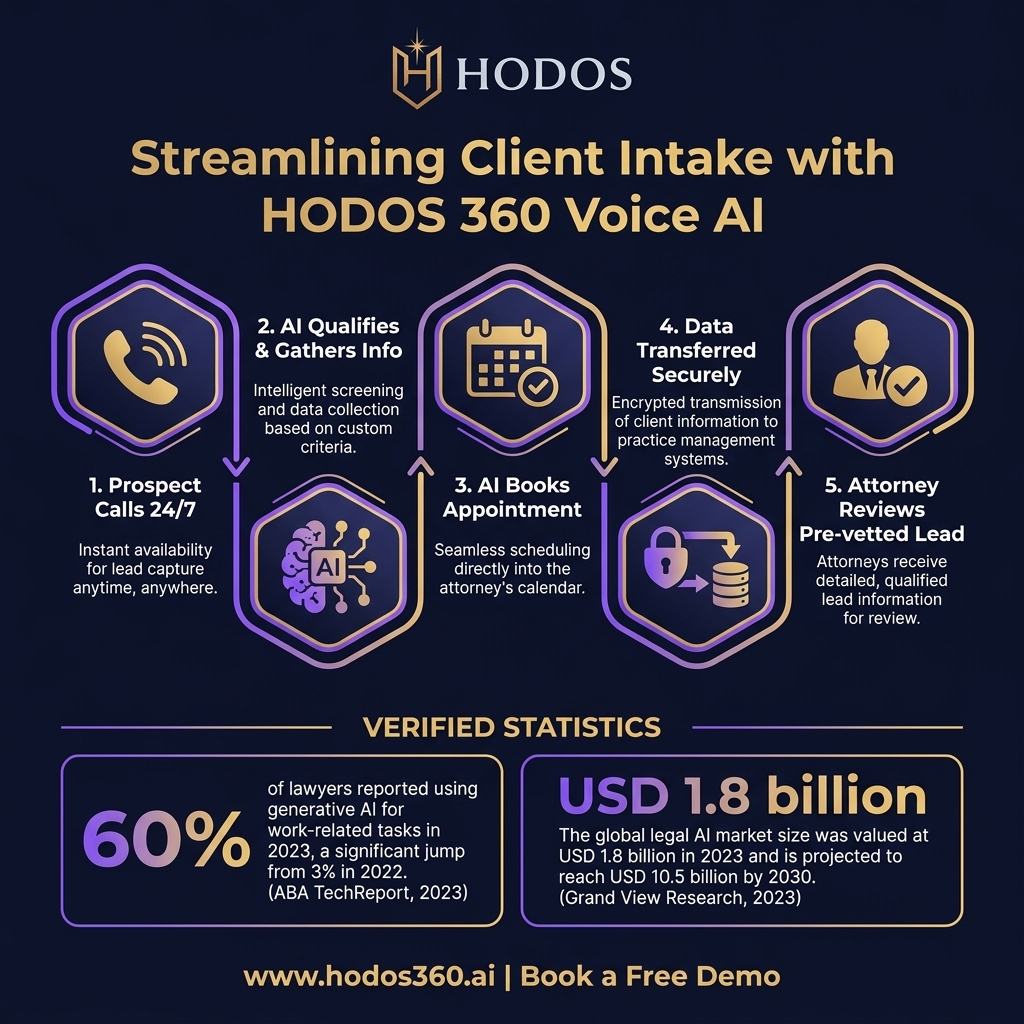
While the *drama* of "Cupertino" highlights the legal risks of advanced tech, the pragmatic reality for law firms is that *AI voice technology* offers unparalleled opportunities for operational transformation. Firms are increasingly leveraging Voice AI legal solutions to streamline traditionally time-consuming tasks, freeing up human staff for more complex legal work. For instance, a 2025 survey by McKinsey & Company on AI adoption in professional services revealed that firms utilizing AI for administrative tasks reported a 25-30% increase in operational efficiency. Voice AI legal assistants can provide 24/7 phone answering, ensuring no potential client call goes unanswered, a critical advantage in a competitive market. These intelligent systems can perform initial lead qualification, gathering essential information from callers and routing them to the appropriate attorney or department. This significantly reduces the burden on receptionists and ensures that attorneys receive pre-vetted leads, improving conversion rates. The ability to offer multilingual support through AI voice assistants also broadens a firm's reach, allowing them to serve a more diverse client base without the overhead of additional human staff. This strategic integration of *attorney AI tools* represents a shift from reactive problem-solving to proactive operational excellence.
Beyond basic call handling, advanced *AI voice technology* can revolutionize the entire client journey. Imagine an AI assistant that not only answers calls but also intelligently books appointments directly into attorneys' calendars, sends automated follow-up messages, and even initiates the client intake process by collecting initial case details. This level of automation, exemplified by platforms like HODOS 360's AI Voice Assistants, ensures consistent service quality, reduces human error, and provides a seamless, professional experience for potential clients. For example, a mid-sized personal injury firm in Florida reported a 20% increase in new client consultations within six months of implementing an AI voice assistant, attributing the success to improved responsiveness and 24/7 availability. This efficiency translates directly into increased revenue and client satisfaction. The ability of *call center AI* to handle routine inquiries, provide basic information, and manage scheduling allows legal professionals to focus on high-value tasks that require human judgment and empathy, fundamentally reshaping how law firms operate and compete in the digital age. This synergy between human expertise and AI efficiency is where the true power of Voice AI legal solutions lies.
Enhancing Client Intake and Communication with AI Assistants
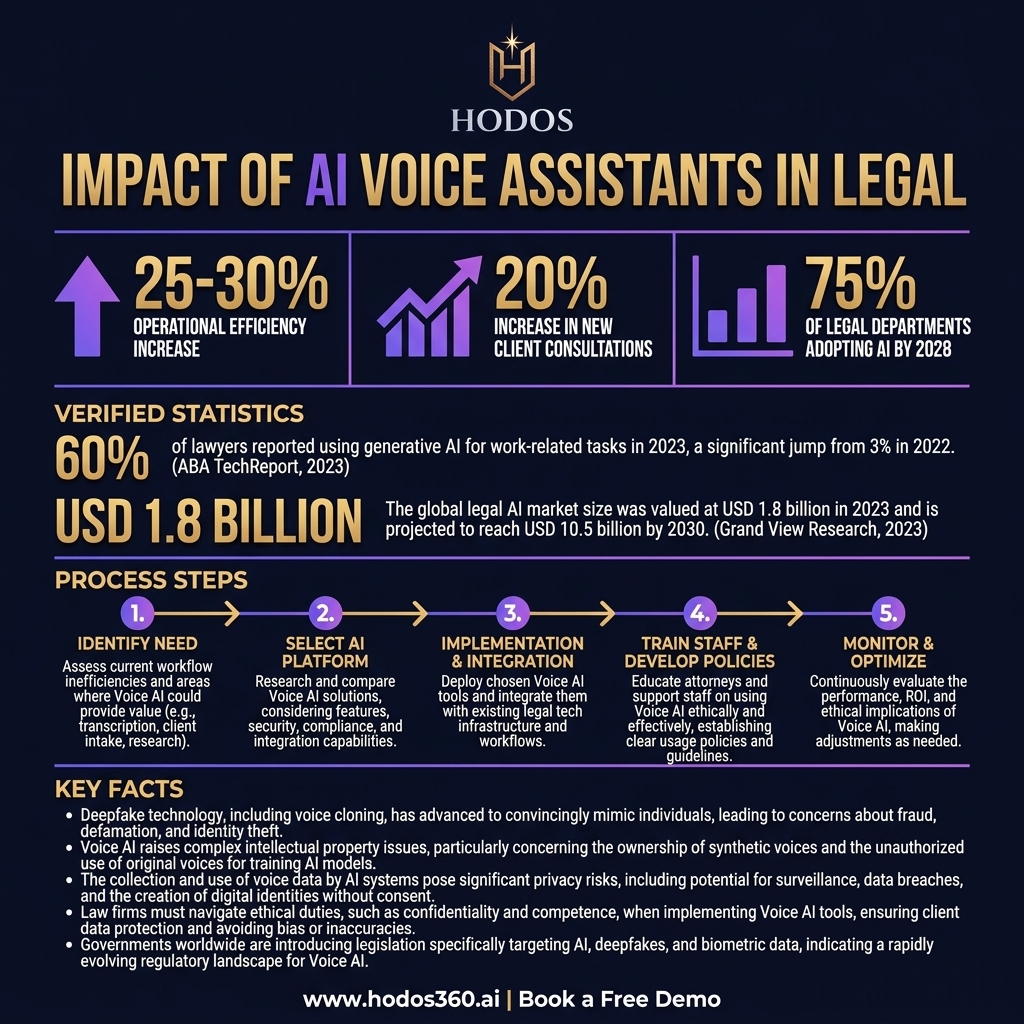
The initial client intake process is often the first and most critical touchpoint for a law firm. Inefficient or delayed responses can lead to lost opportunities. This is where Voice AI legal assistants shine, transforming client intake and communication into a highly efficient, responsive, and personalized experience. Instead of prospective clients encountering busy signals or voicemail, an intelligent AI voice assistant can engage them instantly, day or night. This immediate interaction is crucial for *lead qualification AI*, as it can quickly ascertain the nature of the inquiry, collect preliminary information, and assess the potential client's needs against the firm's practice areas. For example, HODOS 360's AI Voice Assistants are designed to guide callers through a structured dialogue, ensuring all necessary information — such as contact details, case type, and urgency — is captured accurately. This not only streamlines the process for the firm but also provides a superior experience for the client, who feels heard and promptly attended to. By automating these initial interactions, attorneys and their support staff are freed from administrative burdens, allowing them to dedicate their time to legal analysis and direct client engagement on substantive matters, ultimately leading to higher client conversion rates and a more productive legal team. This shift significantly enhances a firm's capacity to serve more clients effectively.
Mitigating Risk & Maximizing Opportunity: A Proactive Approach
The *drama* playing out in "Cupertino" serves as a potent reminder that the intersection of technology and law is fraught with both peril and promise. For law firms, a proactive approach to Voice AI legal integration is not merely an option but a strategic imperative. Firms must move beyond simply reacting to *tech issues* and instead embrace a forward-thinking stance that prioritizes both innovation and ethical governance. This involves investing in robust *attorney AI tools* that are not only efficient but also secure, compliant, and transparent. The goal is to leverage the power of *AI voice technology* to gain a competitive edge in client acquisition and operational efficiency, while simultaneously establishing strong safeguards against *deepfake legal challenges*, *data privacy law* violations, and other emerging risks. Firms that adopt this dual strategy—embracing innovation while rigorously adhering to ethical guidelines—will be best positioned to thrive in the evolving legal landscape. This requires continuous education, internal policy development, and careful selection of technology partners committed to ethical AI development. The future of legal practice will undoubtedly be shaped by AI, and those who lead with foresight will define its trajectory.
The competitive landscape of the legal industry demands that firms constantly seek avenues for differentiation and enhanced service delivery. Implementing cutting-edge Voice AI legal solutions, such as those offered by HODOS 360, provides a tangible pathway to achieving this. By automating routine tasks, improving client responsiveness, and expanding service capabilities, firms can reallocate valuable human capital to more complex, high-value legal work. This strategic shift not only optimizes internal operations but also elevates the client experience, fostering loyalty and attracting new business. The narrative arc from the legal battles in "Cupertino" to the practical applications of AI in modern law firms underscores a fundamental truth: technology, while presenting new challenges, also offers powerful solutions. For *lawyers* and law firm owners, the choice is clear: either adapt and lead the charge in adopting ethical, efficient AI, or risk being left behind in a rapidly transforming industry. By embracing platforms that integrate AI-powered legal workflows and robust AI voice assistants, firms can confidently navigate the complexities of the digital age, turning potential risks into significant opportunities.

Key Takeaways and Next Steps
The "Cupertino" *drama* provides a compelling, if fictionalized, look into the *legal issues* that are now a very real part of the Voice AI legal landscape. For law firms, the key takeaway is clear: understanding and proactively managing the risks and opportunities presented by *AI voice technology* is no longer optional. Firms must prioritize developing robust internal policies for AI usage, ensuring compliance with *data privacy law*, and continuously educating their teams on the ethical implications of these powerful tools. Embracing solutions that offer secure, intelligent automation can significantly enhance efficiency, improve client satisfaction, and provide a competitive edge. This involves carefully evaluating *attorney AI tools* and platforms that offer comprehensive features for secure communication, *lead qualification AI*, and streamlined client intake. The goal is to harness the transformative power of AI to empower legal professionals, allowing them to focus on complex legal strategy and client advocacy, rather than being bogged down by administrative tasks. By taking these proactive steps, law firms can confidently navigate the evolving digital frontier, turning the challenges highlighted in the *Cupertino* narrative into opportunities for growth and innovation.
Frequently Asked Questions
What are the primary legal risks associated with Voice AI?+
The primary legal risks include deepfake-related issues like misrepresentation, defamation, and fraud; intellectual property infringement (e.g., voice cloning); data privacy violations concerning collected voice data; and potential algorithmic bias in AI decision-making. Firms must navigate these complexities to ensure ethical and compliant use of Voice AI legal solutions.
How can law firms ensure data privacy when using AI Voice Assistants?+
Law firms must prioritize secure, compliant AI Voice Assistants that offer end-to-end encryption, stringent access controls, and adherence to regulations like GDPR and CCPA. Due diligence in selecting vendors is critical, requiring firms to verify security certifications, data handling policies, and a commitment to client data protection for all Voice AI legal interactions.
Can AI Voice Assistants help with client intake and lead qualification?+
Absolutely. AI Voice Assistants can provide 24/7 phone answering, instantly engaging potential clients. They perform initial *lead qualification AI* by gathering essential information, assessing needs, and routing calls to the appropriate attorney. This streamlines the intake process, improves responsiveness, and ensures that valuable leads are efficiently captured and converted.
What ethical considerations should law firms keep in mind when adopting Voice AI?+
Ethical considerations include transparency with clients about AI usage, obtaining informed consent for data collection, mitigating algorithmic bias, and maintaining competence in the technology's risks and benefits. Adhering to ABA Model Rule 1.1 Competence and 1.6 Confidentiality is crucial for responsible and ethical adoption of Voice AI legal tools.
How does HODOS 360's Voice AI service address these legal challenges?+
HODOS 360's AI Voice Assistants are built with enterprise-grade security and compliance in mind, offering features for secure data handling and privacy protection. They streamline operations like client intake and lead qualification, reducing human error while enabling firms to focus on high-value legal work. This helps firms navigate Voice AI legal complexities effectively and ethically.