


Legal Tech Adoption: Mastering AI for Law Firms in 2026
The legal landscape is undergoing a profound transformation, and the discussions at Legalweek 2026 served as a stark reminder: legal tech adoption is no longer optional, but a strategic imperative. As firms grapple with mounting pressures—from escalating client demands for efficiency and transparency to the relentless pace of technological advancement—the question shifts from *if* to *how* to integrate cutting-edge solutions, particularly Generative AI (Gen AI), with intention and purpose.
The recent spotlight on managing tech adoption and handling Gen AI underscores a pivotal moment for legal professionals: embracing innovation responsibly is key to not just survival, but thriving in the competitive market of 2026 and beyond. This isn't just about implementing new tools; it's about fundamentally reshaping how legal services are delivered, managed, and marketed.
For far too long, law firms have been characterized by their cautious approach to technology, often lagging behind other industries. However, the legal profession is now at an inflection point, driven by the capabilities of advanced AI. The stakes are higher than ever, with early adopters gaining significant advantages in productivity, client satisfaction, and market share.
The challenge, as highlighted by industry experts at Legalweek, lies not merely in acquiring the technology, but in fostering a culture of adoption, providing robust training, and establishing clear governance practices to ensure ethical and effective deployment. This comprehensive guide will dissect these challenges, offering a blueprint for law firm owners and attorneys to navigate the complexities of AI integration, turning potential disruption into unparalleled opportunity.
It’s time to move beyond hesitant experimentation and embrace a future where AI empowers legal excellence.
Ready to transform your firm with intelligent automation? Book a free demo with HODOS 360 today and discover the future of legal practice!
The Imperative of Legal Tech Adoption in 2026
The legal industry stands at a critical juncture in 2026, where the pace of legal tech adoption dictates competitive advantage. Firms that hesitate risk being outmaneuvered by agile competitors leveraging AI to streamline operations, enhance client services, and unlock new efficiencies. According to a recent report by the American Bar Association (ABA), over 70% of legal professionals now believe AI will significantly impact their practice within the next five years, yet actual widespread, strategic implementation remains inconsistent.
This gap between awareness and action represents both a challenge and an immense opportunity. Clients, increasingly tech-savvy, expect their legal partners to operate with the same efficiency and digital prowess they experience in other sectors, driving demand for firms that can deliver faster, more cost-effective, and transparent services.
The digital transformation isn't just about efficiency; it's about meeting evolving client expectations and securing future relevance.
Firms are facing unprecedented pressure on profit margins, necessitating a re-evaluation of traditional operational models WordPress AI Unlocked: Legal Websites Mastered 2026. Manual processes, once the norm, are now costly liabilities that impede growth and divert valuable attorney time from high-value legal work.
The legal tech market, valued at over $20 billion in 2024 and projected to grow exponentially, offers solutions ranging from sophisticated case management systems to advanced document automation platforms. However, the sheer volume and complexity of available technologies can be daunting. The real imperative lies in strategic selection and thoughtful integration, ensuring that new tools genuinely enhance productivity and client outcomes, rather than adding layers of complexity.
This demands leadership that champions innovation, coupled with a clear vision for how technology aligns with the firm's strategic objectives.
Navigating Resistance and Skepticism
Despite the clear benefits, managing internal resistance to legal tech adoption remains a significant hurdle. Attorneys, often ingrained in established practices, may view new technologies with skepticism, fearing job displacement, loss of control, or simply the disruption of learning new systems. This human element is precisely why the discussions at Legalweek 2026 emphasized the 'intention' behind AI integration.
Successful adoption hinges on proactive change management, clear communication, and comprehensive training programs that address concerns head-on. Firms must articulate a compelling vision for how AI empowers their legal professionals, freeing them from mundane tasks to focus on complex problem-solving and strategic client counsel, thereby enhancing their professional satisfaction and value.
Overcoming skepticism requires more than just demonstrating the technology's capabilities; it requires building trust and showcasing tangible benefits for individual practitioners Website Design Cost 2026: Strategic Investment for Law Firms. Pilot programs, internal champions, and a phased rollout can help demystify AI and illustrate its practical advantages in daily workflows.
Furthermore, recognizing and rewarding early adopters can foster a positive environment for change. The goal is not to replace human expertise but to augment it, creating a symbiotic relationship between attorney and AI. By focusing on how AI enhances legal practice—improving accuracy, speeding up research, and automating administrative burdens—firms can transform resistance into enthusiasm, positioning their teams for greater success in an AI-powered legal future.
Handling Generative AI with Intention: A Strategic Blueprint
The emergence of Generative AI (Gen AI) has introduced unprecedented capabilities, yet also new complexities, into the legal sphere. The 'handling Gen AI with intention' directive from Legalweek 2026 is paramount. This means moving beyond experimental usage to a deliberate, ethical, and strategically aligned integration of AI tools.
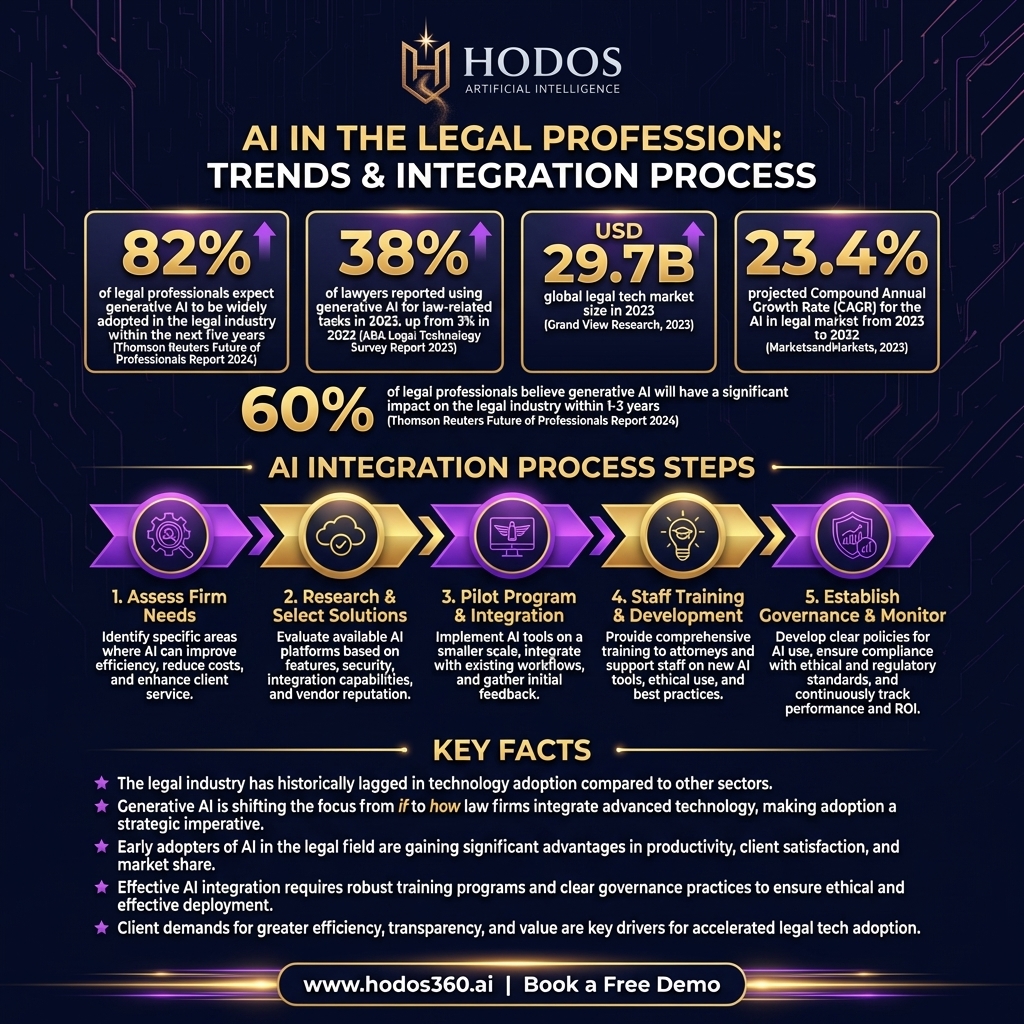
Firms must develop clear internal governance practices that address data privacy, intellectual property, client confidentiality, and the potential for AI-generated hallucinations. The ABA Model Rules of Professional Conduct, particularly Rule 1.1 (Competence) and Rule 1.6 (Confidentiality of Information), are directly implicated by AI usage, requiring attorneys to understand the technology's risks and ensure its application does not compromise ethical duties.
This demands a robust framework for vetting AI tools, continuous monitoring of their output, and a clear chain of responsibility for their use.
Deploying Gen AI without intention can lead to significant reputational and legal risks AI Marketing Revolution 2026: Autonomous Agents for Law F....
Examples of attorneys facing sanctions for relying on AI-generated fabricated case law highlight the critical need for human oversight and verification. A strategic blueprint for Gen AI integration must therefore include a multi-layered approach: educating attorneys on AI's limitations, establishing clear protocols for human review, and implementing safeguards to prevent misuse.
The focus should be on leveraging Gen AI for tasks where it excels—drafting initial documents, summarizing large volumes of text, generating marketing content, and assisting with legal research—while ensuring that critical legal analysis and client advice remain firmly within the domain of human expertise. This intentional approach maximizes AI's benefits while mitigating its inherent risks, ensuring responsible innovation.
- ✓Establish Clear Policies: Develop comprehensive internal policies for AI use, covering data security, confidentiality, ethical guidelines, and client disclosure, aligning with ABA Model Rules.
- ✓Prioritize Training & Education: Implement continuous training programs on AI tools, their capabilities, and their limitations, ensuring all staff understand responsible AI application.
- ✓Implement Human Oversight: Mandate human review and verification for all AI-generated content, especially legal analysis, court filings, and client communications, to prevent errors and ensure accuracy.
- ✓Select Purpose-Built Tools: Invest in AI solutions specifically designed for the legal industry, offering robust security features and compliance with legal standards.
- ✓Start Small, Scale Smart: Begin with pilot programs for specific use cases (e.g., document review, initial drafting) to refine processes and build internal confidence before broader deployment.
- ✓Foster a Culture of Innovation: Encourage experimentation within a controlled environment, celebrating successes and learning from challenges to drive continuous improvement in AI integration.
- ✓Monitor & Adapt: Regularly review AI performance, update policies based on new developments, and adapt strategies to evolving legal and technological landscapes.
Mid-point check: Is your firm leveraging AI to its fullest potential? HODOS 360’s integrated platform offers the comprehensive tools you need to stay ahead. Learn more about our AI solutions today!
Transforming Law Firm Operations with AI-Powered Management
The operational backbone of any successful law firm in 2026 is its management system, and AI is revolutionizing this core function. An AI Law Firm Management System integrates disparate processes into a cohesive, intelligent workflow, dramatically improving efficiency and reducing administrative burdens. Imagine a system where client intake is automated, documents are generated with a few clicks, and case management tasks are intelligently prioritized.
This is the reality that advanced AI platforms deliver. By automating repetitive tasks such—as scheduling, data entry, and initial document drafting—attorneys and support staff are freed to focus on strategic work, client relationships, and complex legal analysis Legal AI Acquisition 2026: The New Era of Agentic Law Firms.
This shift not only enhances productivity but also significantly improves job satisfaction for legal professionals, reducing burnout and fostering a more engaging work environment.
Beyond simple automation, AI-powered management systems provide predictive analytics that can forecast case outcomes, optimize resource allocation, and identify potential bottlenecks before they arise.
For instance, AI can analyze historical billing data to provide more accurate fee estimates, improving transparency for clients and ensuring more predictable revenue streams for firms. The ability to track key performance indicators (KPIs) in real-time, from billable hours to client acquisition costs, empowers firm leadership with actionable insights for strategic decision-making.
This level of operational intelligence was once the exclusive domain of large corporations, but AI now democratizes it, making sophisticated law firm management accessible to firms of all sizes, enabling them to compete more effectively in a rapidly evolving market.
The Client-Centric Advantage of AI Workflows
In today's competitive legal market, client experience is paramount. AI-powered legal workflows are not just about internal efficiency; they are fundamentally about enhancing client satisfaction and fostering stronger relationships. From the initial client intake, where AI-driven forms can gather information quickly and accurately, to 24/7 client support via AI voice assistants, technology ensures clients feel heard, valued, and informed at every stage.
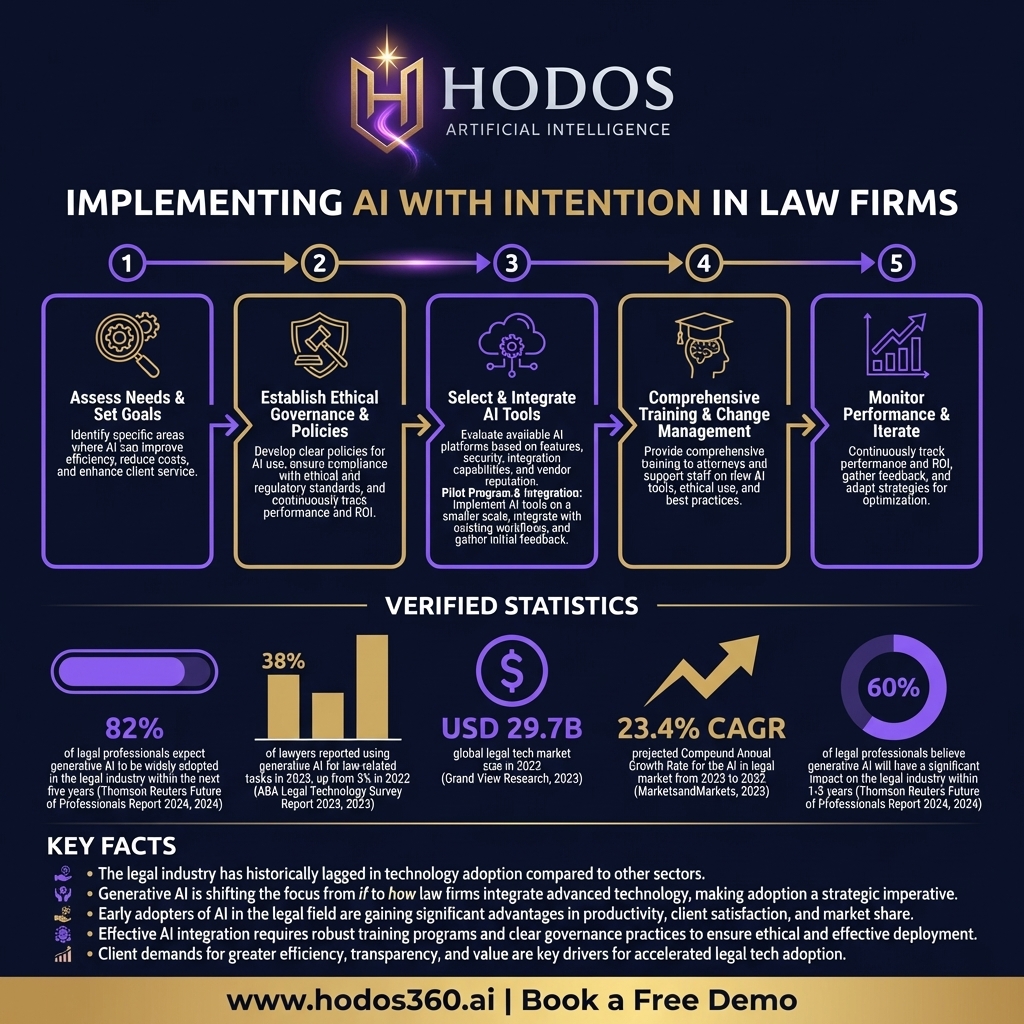
Faster response times, proactive communication, and personalized updates—all facilitated by AI—build trust and demonstrate a commitment to service excellence. A firm utilizing AI to streamline processes can offer more competitive pricing and faster turnaround times, directly addressing two of clients' primary concerns: cost and speed.
Furthermore, AI's ability to analyze vast amounts of data allows firms to gain deeper insights into client needs and preferences, enabling the delivery of highly tailored legal solutions Legal AI Gap: Bridging the Divide for Law Firms in 2026. For example, AI can help identify patterns in client inquiries, allowing firms to proactively develop new services or refine existing ones to better meet market demands.
The integration of client portals with AI-driven document sharing and communication tools ensures secure, transparent, and convenient interaction. This client-centric approach, powered by intelligent automation, transforms the legal service delivery model from a reactive process into a proactive, value-driven partnership, ultimately strengthening client loyalty and driving positive referrals.
Beyond the Back Office: AI for Growth and Engagement
While AI's impact on law firm management is undeniable, its potential extends far beyond internal operations to redefine how firms attract, engage, and retain clients. An AI Marketing Platform is a game-changer, automating content generation, optimizing social media presence, and even facilitating AI-powered video creation.
Imagine generating compelling blog posts, social media updates, and even short explainer videos in minutes, tailored to specific client segments. This dramatically increases a firm's digital footprint and thought leadership, reaching potential clients where they are—online. Moreover, AI-driven analytics track the effectiveness of marketing campaigns, providing invaluable insights into return on investment (ROI) and allowing firms to refine their strategies for maximum impact.
This data-driven approach replaces guesswork with precision, ensuring marketing efforts are efficient and yield measurable results.
Client engagement is further revolutionized by AI Voice Assistants AI Legal Revolution: Corporate Use Jumps 87% by 2026. These sophisticated systems offer 24/7 phone answering, ensuring no potential lead is missed, even outside traditional office hours.
AI voice assistants can qualify leads, book appointments directly into attorney calendars, and provide multilingual support, significantly expanding a firm's reach and accessibility. This level of responsiveness cultivates an exceptional first impression, demonstrating a firm's modern and client-focused approach. By automating initial inquiries and routine client communications, attorneys are protected from constant interruptions, allowing them to dedicate their time to complex legal matters and client counseling.
This seamless integration of AI into both marketing and client interaction strategies creates a powerful ecosystem for sustainable growth.
Measuring Success: ROI in an AI-Driven Legal Landscape
In the new era of legal tech adoption, simply implementing AI tools isn't enough; firms must meticulously measure their return on investment (ROI). This requires a clear understanding of key metrics and the ability to track them effectively. For operational AI, ROI can be measured in terms of time saved on administrative tasks, reduction in errors, faster case resolution times, and improved billable hours.
For marketing AI, success is quantified by increased lead generation, higher conversion rates, lower client acquisition costs, and enhanced brand visibility. The beauty of AI is its capacity to generate and analyze data, providing unprecedented transparency into performance. Firms can assess which AI tools are delivering the most value and where adjustments need to be made, ensuring every technology investment translates into tangible business benefits.
Establishing a baseline before AI implementation and then consistently tracking performance metrics post-adoption is crucial. This includes quantitative data, such as percentage reduction in document review time or increase in client inquiries, as well as qualitative feedback from attorneys and clients. The goal is to create a culture of continuous improvement, where data informs strategy and technology decisions.
By demonstrating clear ROI, firms can justify further investment in AI, overcome internal resistance, and solidify their position as forward-thinking leaders in the legal industry. This strategic approach to measurement transforms AI from a mere expense into a powerful engine for profitability and sustained growth.

HODOS 360: Your Partner in AI-Powered Legal Transformation
The path to successful legal tech adoption and intentional Gen AI integration can feel overwhelming, but HODOS 360 offers a comprehensive, unified solution. Our AI-powered platform is engineered to address every facet of modern law firm needs, from streamlining internal operations to supercharging client acquisition and engagement.
With HODOS 360, firms gain access to an integrated suite of services designed to propel them into the future of legal practice. Our AI Law Firm Management System provides unparalleled efficiency in case management, billing, client intake, and document automation, allowing your team to focus on what truly matters: delivering exceptional legal counsel.
This system is built to enhance your firm's internal governance practices and ensure compliance, giving you peace of mind as you scale.
Beyond internal efficiencies, HODOS 360 empowers your firm's growth with its AI Marketing Platform. Leverage AI video creation, social media automation, and intelligent content generation to expand your reach and attract new clients effortlessly.
Our platform includes robust analytics and ROI tracking, ensuring your marketing spend is always optimized for maximum impact. Complementing this, our AI Voice Assistants provide 24/7 client service, lead qualification, and appointment booking, ensuring no opportunity is missed and client satisfaction remains at an all-time high.
Finally, our Web & Mobile Development services ensure your digital presence is cutting-edge, with AI-powered website building, responsive design, and SEO optimization that converts visitors into loyal clients. HODOS 360 is more than just a vendor; we are your strategic partner in navigating the complexities of AI and achieving unparalleled success in 2026 and beyond.
Frequently Asked Questions
What are the biggest challenges for legal tech adoption in 2026?+
The primary challenges include overcoming internal resistance from attorneys, ensuring ethical deployment of Gen AI, integrating disparate systems, and providing adequate training. Firms must also carefully select tools that align with their strategic goals and measure tangible ROI to justify investments, moving beyond mere technological acquisition to intentional, value-driven implementation.
How can law firms handle Generative AI with intention?+
Handling Gen AI with intention involves establishing robust ethical guidelines, implementing strict data privacy and confidentiality protocols, and mandating human oversight for all AI-generated content. It also requires continuous training for legal professionals on AI's capabilities and limitations, focusing on augmentation rather than replacement, and using AI for tasks like drafting and research under expert supervision.
What benefits does an AI Law Firm Management System offer?+
An AI Law Firm Management System offers numerous benefits, including automated case management, streamlined client intake, efficient billing processes, and rapid document automation. It frees attorneys from administrative burdens, enhances data security, provides predictive analytics for strategic decision-making, and ultimately improves overall operational efficiency and profitability for the firm.
How can AI marketing help my law firm grow?+
An AI Marketing Platform can significantly boost your firm's growth by automating content creation (blogs, social media, videos), optimizing SEO, and providing in-depth analytics for ROI tracking. This allows firms to reach a wider audience, generate more qualified leads, and convert prospects into clients more effectively, all while optimizing marketing spend and resources.
Why is 24/7 AI Voice Assistant support crucial for law firms?+
24/7 AI Voice Assistant support is crucial because it ensures no potential client call or inquiry is ever missed. These assistants can qualify leads, book appointments, provide multilingual support, and route calls efficiently, enhancing client experience and demonstrating responsiveness. This allows attorneys to focus on legal work while the assistant handles initial client interactions and administrative tasks.