

Voice AI: The Ultimate Leap with GPT-Live-1 for Law Firms
The legal landscape is perpetually reshaped by technological innovation, and in late 2026, the seismic shift originating from real-time conversational AI is undeniable. The recent announcement from PPC Land, highlighting how Yelp and Hatch integrated OpenAI’s GPT-Live-1 into their voice AI systems after processing over a million calls, isn't just a win for the restaurant industry; it's a clarion call for legal professionals. This development signals a new era for voice AI, moving beyond mere chatbots and into sophisticated, full-duplex conversations that mirror human interaction, demanding attention from law firms globally.
For years, the promise of truly intelligent voice assistants has been a tantalizing prospect for the legal sector, often hindered by clunky interfaces and limited understanding. The introduction of GPT-Live-1, a model that allows for simultaneous listening and speaking with remarkably low latency, fundamentally changes this narrative. As OpenAI CEO Sam Altman has often articulated, the goal is to make AI interactions feel as natural and intuitive as talking to another person. Yelp and Hatch's successful deployment, handling the intricate dance of customer service after a staggering volume of calls, proves this architecture's robustness. This isn't just an incremental improvement; it's a qualitative leap that legal practices can no longer afford to ignore as they seek to advance their operations and client service.
The GPT-Live-1 Revolution: Beyond Yelp and Hatch
The buzz around GPT-Live-1 stems from its 'full-duplex' architecture, a significant departure from earlier, turn-taking conversational AI models. Traditional systems, like Google's Duplex, while impressive for their time, often had noticeable delays or struggled with natural interruptions, making interactions feel less organic. GPT-Live-1, however, processes input and generates responses concurrently, allowing for fluid, human-like dialogue. This capability, now proven by Yelp and Hatch across a million real-world customer solutions and interactions, opens up unprecedented possibilities for law firms looking to deploy cutting-edge voice AI.
The implications for legal services are profound. Imagine an AI voice assistant that can genuinely engage a potential client, understand complex legal inquiries, and respond in real-time without awkward pauses. Learn more about Generative AI Marketing: Law Firms' 2026 Growth Engine. This isn't science fiction; it's the current reality enabled by OpenAI's latest model. The competitive landscape among AI developers, with players like Anthropic and Google constantly pushing boundaries, ensures that these solutions will only become more sophisticated. As observed by industry analysts at LegalTech NYC 2026, the firms that embrace this next-generation voice AI will gain a significant competitive edge, particularly in client acquisition and initial case assessment.
Unpacking Full-Duplex Voice AI Architecture for Legal
The technical prowess behind GPT-Live-1's full-duplex architecture lies in its ability to predict and process speech simultaneously, minimizing latency to imperceptible levels. This means the AI can listen while it speaks, anticipate user intent, and even handle interruptions gracefully, much like a human conversation partner. For a law firm, this translates into a voice AI assistant that can conduct nuanced intake interviews, gather detailed information, and answer complex procedural questions with remarkable fluency. This capability sets it apart from previous generations of automated phone systems, which often frustrated callers with rigid menus and limited understanding.
Beyond basic question-answering, this advanced model can integrate sentiment analysis, detecting a caller's emotional state to route urgent or sensitive cases to human attorneys more effectively. Learn more about Legal AI Revolution: Unlocking 2026 Firm Growth with HODOS. Its multilingual support, a feature critical for diverse client bases, ensures that firms can serve a broader demographic without increasing overhead. The ability to deploy such sophisticated solutions means that a law firm's initial client contact point can become a highly efficient and empathetic experience, improving client satisfaction from the very first interaction. This is where HODOS 360's AI Voice Assistants stand out, leveraging similar cutting-edge architectures to provide seamless, intelligent client interactions.
Enhanced Client Intake and Lead Qualification
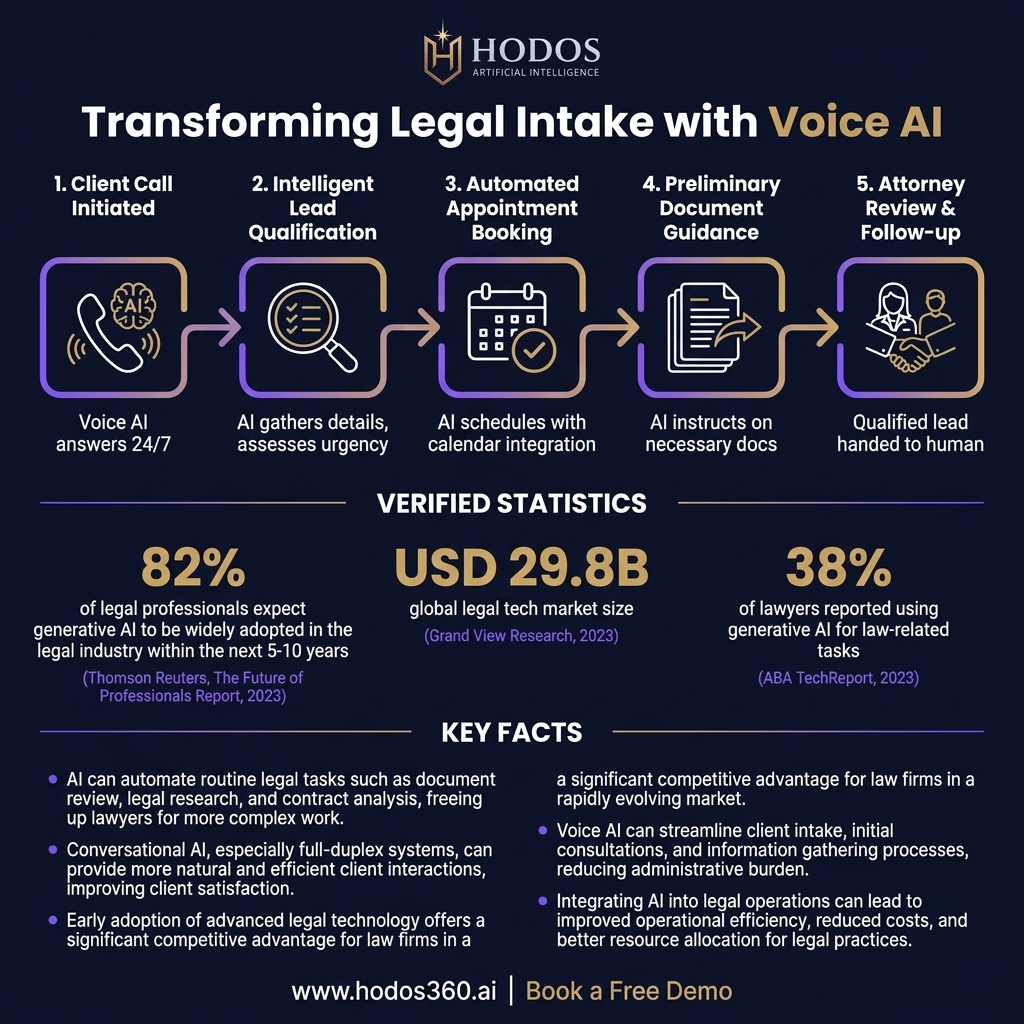
- ✓24/7 Availability: AI assistants can answer calls and qualify leads around the clock, ensuring no potential client is missed, regardless of time zones or firm operating hours.
- ✓Detailed Information Gathering: The full-duplex voice AI can conduct comprehensive initial interviews, collecting necessary details about a case, including parties involved, timelines, and specific legal needs, far beyond what simple form fills can achieve.
- ✓Intelligent Lead Qualification: By asking targeted questions and analyzing responses, the AI can pre-qualify leads based on case type, jurisdiction, urgency, and potential value, routing high-priority cases directly to attorneys.
- ✓Automated Appointment Booking: Seamlessly integrate with firm calendars to schedule initial consultations, sending automated reminders to reduce no-shows.
- ✓Multilingual Support: Break down language barriers by offering assistance in multiple languages, expanding a firm's reach and inclusivity.
- ✓Initial Document Guidance: Guide potential clients on what preliminary documents they might need to prepare, streamlining the onboarding process before human intervention.
Transforming Legal Operations with Advanced Voice Solutions
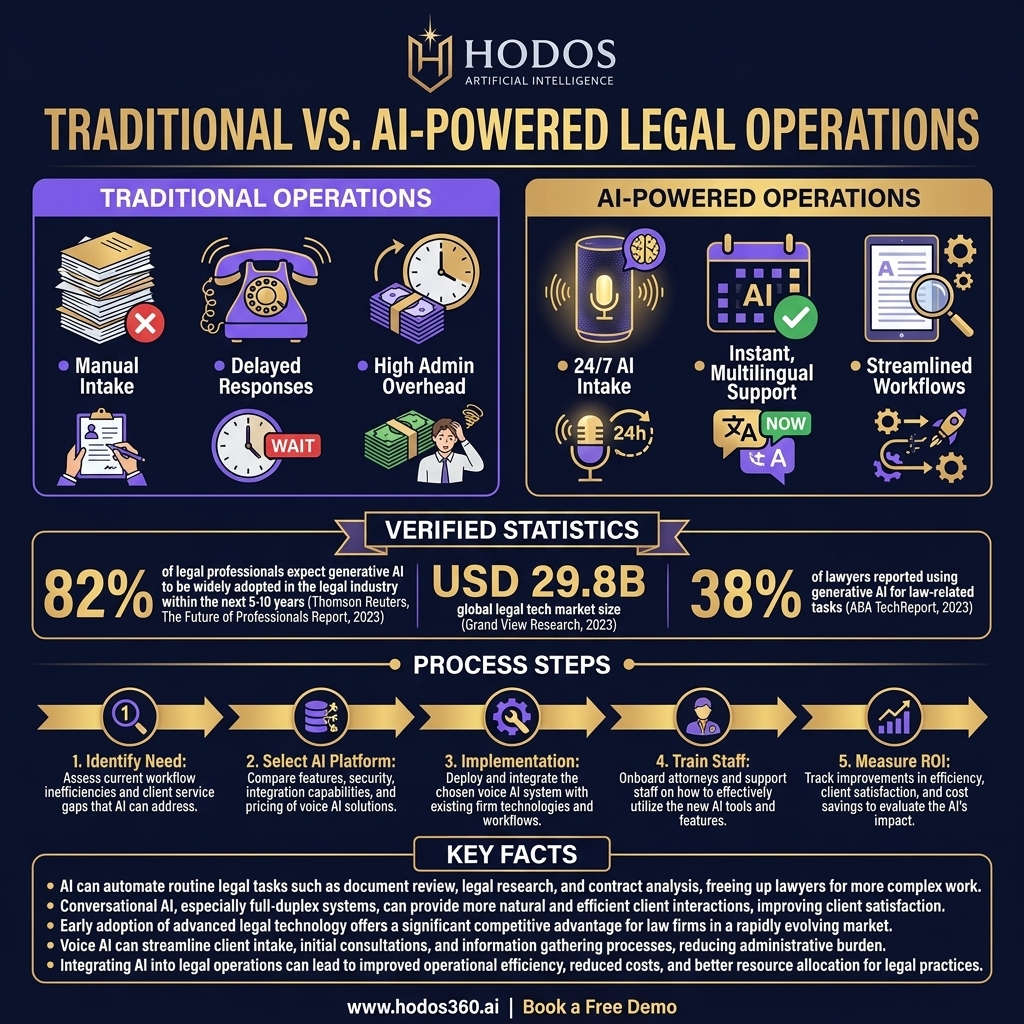
The impact of advanced voice AI extends far beyond client-facing roles, permeating the very core of legal operations. Internally, these solutions can automate a myriad of administrative tasks that traditionally consume valuable attorney and paralegal time. Imagine dictating a draft memo or a client update, and having the voice AI transcribe it, summarize key points, and even suggest relevant clauses from your firm's document management system. This level of efficiency, previously aspirational, is now achievable with models like GPT-Live-1, significantly reducing the administrative burden on legal professionals.
According to the 2025 ABA TechReport, firms embracing AI tools report an average of a 15-20% increase in operational efficiency, particularly in areas like document management and client communication. Learn more about Automate Client Lead Follow-Up: Proven Strategies for Law Firms. This data underscores the tangible benefits of integrating such technology. HODOS 360's AI Law Firm Management System can leverage these advanced voice AI capabilities to create AI-powered legal workflows, allowing attorneys to update case files, schedule court dates, or retrieve information using natural language commands, freeing them to focus on complex legal strategy and client advocacy, rather than mundane data entry.
Streamlining Administrative Workflows
One of the most immediate benefits of integrating advanced voice AI into a law firm's daily operations is the profound streamlining of administrative workflows. Attorneys and support staff spend countless hours on tasks like time tracking, scheduling, and drafting routine communications. A voice AI assistant can dramatically reduce this burden. For instance, an attorney could simply state, "Log 1.5 hours on the *Smith v. Jones* case for document review," and the system automatically updates the billing software. Learn more about No-Code Review: The Ultimate Website Builder Guide for Law Firms. Similarly, dictating initial drafts of emails, letters, or even sections of legal briefs becomes effortless, with the AI handling transcription and basic formatting.
This automation not only saves time but also minimizes human error, ensuring greater accuracy in record-keeping and billing. The ability to quickly retrieve case information, client contact details, or even legal precedents through natural language queries further enhances productivity. Firms that deploy these solutions are finding that their legal professionals can allocate more time to high-value, client-centric work, directly impacting profitability and client satisfaction. This strategic shift is crucial for firms aiming to advance in a competitive market, moving beyond traditional, time-consuming methods.
Client Engagement Reimagined: The AI Voice Assistant Advantage
In today's client-centric legal market, the quality and responsiveness of client engagement can be a significant differentiator. Advanced voice AI assistants, especially those built on cutting-edge architecture like GPT-Live-1, offer an unparalleled advantage. They provide 24/7 availability, ensuring that clients can always reach someone to answer their basic questions, check case status, or schedule appointments, even after normal business hours. This constant accessibility significantly enhances client satisfaction and builds trust, as clients feel supported and informed at all times. The seamless, natural conversation flow prevents frustration often associated with older automated systems.
Furthermore, the multilingual capabilities embedded in these solutions allow law firms to cater to a broader, more diverse client base without the prohibitive costs of hiring extensive bilingual staff. Learn more about Essential Guide: AI Citation Hallucinations & Legal Integrity. An AI model can instantly switch between languages, providing consistent, high-quality service to every caller. This not only expands a firm's market reach but also demonstrates a commitment to inclusivity. Firms that leverage HODOS 360's AI Voice Assistants are already reporting improved client retention and a stronger reputation for modern, client-focused service, proving that investing in advanced voice AI is investing in the future of client relations.
Navigating Implementation and Ethical Considerations
While the benefits of advanced voice AI are compelling, successful implementation within a law firm requires careful consideration of both practical and ethical dimensions. Data security and client confidentiality are paramount. Firms must ensure that any AI solutions deployed comply with stringent privacy regulations and industry best practices. This includes robust encryption, secure data storage, and clear policies on how client data is handled and processed by the AI. The American Bar Association's Model Rule 1.6 on Confidentiality of Information is a critical guidepost, emphasizing the attorney's duty to protect client data, even when utilizing third-party technology providers.
Moreover, the ethical implications of AI interacting with clients must be meticulously managed. The AI must never engage in the unauthorized practice of law. Learn more about Digital Marketing: Essential Strategies for Law Firms. Its role should be clearly defined as an assistant, providing information and facilitating communication, rather than offering legal advice. Firms must establish clear protocols for human oversight, ensuring that complex or sensitive inquiries are promptly escalated to an attorney. Training the AI on specific legal terminology and firm-specific procedures is also crucial to ensure accuracy and relevance, preventing the AI from generating generic or misleading information. This is a journey, not a destination, requiring continuous monitoring and refinement of the AI model's performance.
Ethical AI: Data Privacy and Professional Responsibility
The integration of voice AI into legal practice necessitates a renewed focus on ethical obligations concerning data privacy and professional responsibility. As articulated in ABA Model Rule 1.1, attorneys have a duty of competence, which now includes understanding the risks and benefits associated with relevant technology. This means thoroughly vetting AI providers to ensure their data security protocols meet or exceed the firm's obligations. For instance, the EU AI Act, which came into full enforcement in early 2026, sets a global precedent for regulating high-risk AI systems, and while not directly applicable in all jurisdictions, its principles offer a strong framework for responsible AI deployment.
Firms must implement clear client consent processes, informing callers when they are interacting with an AI and providing options to speak with a human. The potential for an AI to inadvertently disclose confidential information or to misinterpret a client's legal needs underscores the necessity of robust safeguards and continuous attorney supervision. It is not enough to simply deploy the solutions; firms must actively manage and audit the AI's performance, ensuring it always operates within the bounds of legal ethics and professional conduct. The goal is to advance legal service, not compromise its foundational principles.

Key Takeaways and Next Steps
The integration of OpenAI's GPT-Live-1 into real-world applications by companies like Yelp and Hatch marks a pivotal moment for voice AI, demonstrating its readiness for sophisticated professional environments. For law firms, this isn't just a technological marvel; it's a strategic imperative. The ability of full-duplex conversational AI to handle complex client interactions, streamline administrative tasks, and provide 24/7 multilingual support offers an unparalleled opportunity to enhance efficiency, improve client satisfaction, and gain a significant competitive edge. Firms that hesitate to deploy these advanced solutions risk being left behind in a rapidly evolving legal landscape.
The path forward involves a thoughtful, phased approach. Law firms should begin by exploring pilot programs that target specific pain points, such as initial client intake or routine inquiry management. Prioritize solutions that emphasize data security, ethical guidelines, and seamless integration with existing legal tech stacks. The future of legal practice is conversational, intelligent, and highly efficient. Embracing this next generation of voice AI is not just about adopting new technology; it's about redefining how legal services are delivered, making them more accessible, responsive, and ultimately, more human-centric. The time to advance your firm's capabilities with intelligent voice AI is now.
Frequently Asked Questions
What is full-duplex voice AI and why is it important for law firms?+
Full-duplex voice AI, like OpenAI's GPT-Live-1, allows for simultaneous listening and speaking, mimicking natural human conversation without delays. For law firms, this means more fluid and empathetic client interactions, improved lead qualification, and efficient information gathering, making automated assistants feel less robotic and more helpful in managing inquiries and administrative tasks.
How can voice AI improve client intake and lead qualification for law firms?+
Voice AI can provide 24/7 availability for potential clients, conducting detailed initial interviews to gather crucial case information. It intelligently qualifies leads based on specific criteria, routes high-priority cases to human attorneys, and automates appointment booking. This process significantly reduces the workload on administrative staff and ensures no valuable lead is missed, enhancing client acquisition efficiency.
What internal operations can voice AI streamline within a law firm?+
Internally, voice AI can automate numerous administrative tasks. This includes voice-activated time tracking, dictating drafts of memos or emails, scheduling meetings, and retrieving case information through natural language commands. By integrating with existing management systems, it frees up attorneys and paralegals from routine data entry, allowing them to focus on higher-value legal work and strategic thinking.
What are the ethical considerations when implementing voice AI in legal practice?+
Ethical considerations are paramount. Firms must ensure strict data privacy and client confidentiality, adhering to ABA Model Rules. The AI must be clearly identified as an assistant, never engaging in the unauthorized practice of law by providing legal advice. Robust human oversight and clear escalation protocols are essential to manage complex inquiries and maintain professional responsibility, ensuring ethical AI deployment.
How does advanced voice AI differentiate a law firm in the market?+
Advanced voice AI differentiates a law firm by offering superior client service through 24/7 availability and instant, multilingual support. This enhances client satisfaction, builds trust, and expands market reach. By demonstrating technological leadership and a commitment to efficiency, firms can attract new clients, improve retention, and solidify their reputation as modern, forward-thinking legal service providers in a competitive landscape.