


AI Adoption: The Essential Shift for Modern Law Firms
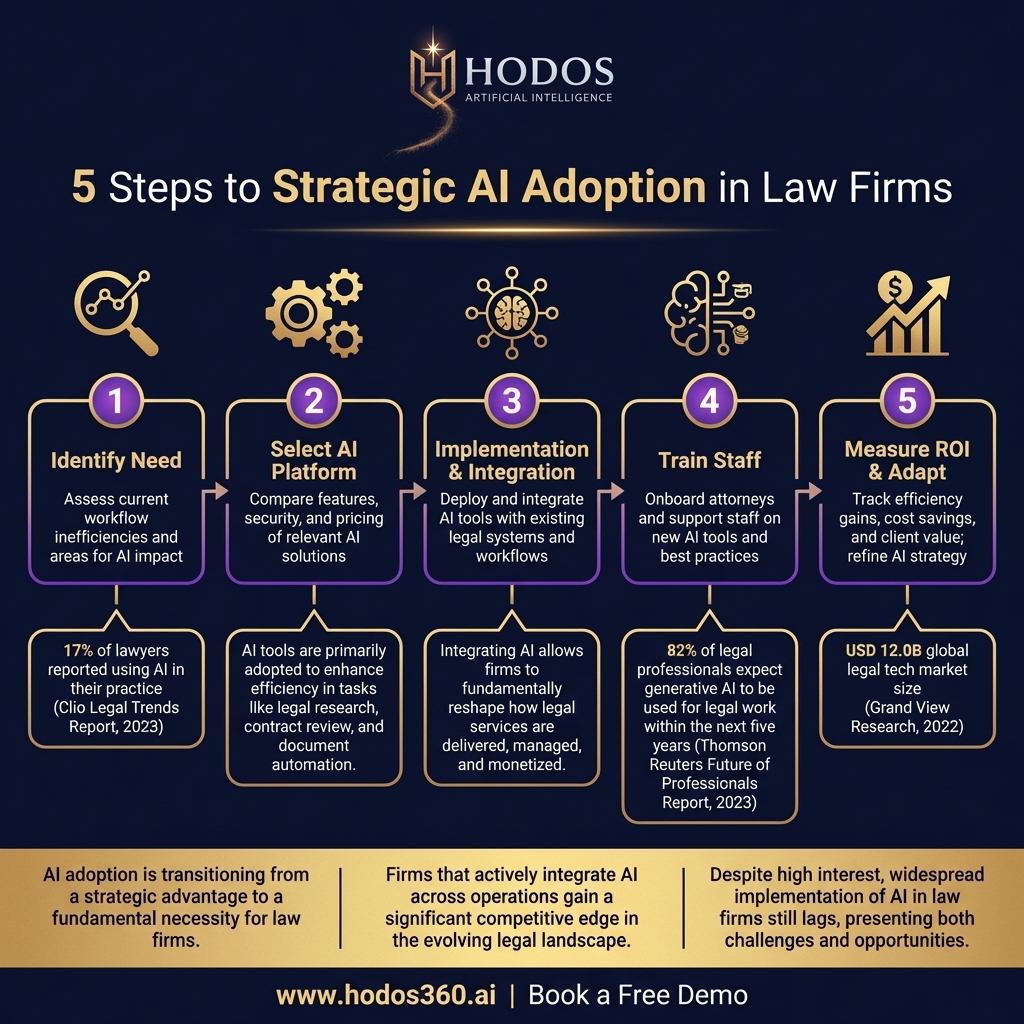
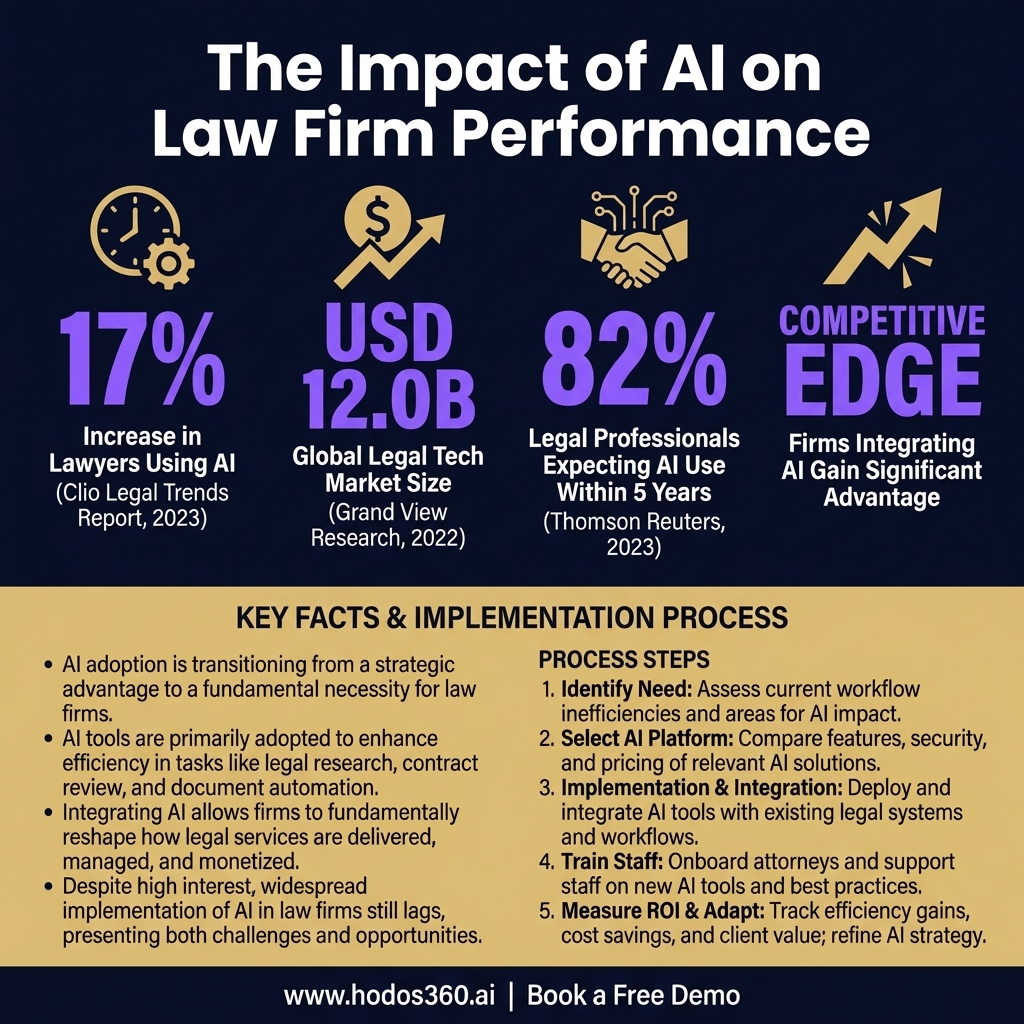
The legal landscape in 2026 presents a stark choice: embrace artificial intelligence, or risk irrelevance. As ETLegalWorld.com recently highlighted, AI adoption has transitioned from a strategic advantage to a fundamental compulsion for law firms grappling with evolving business models. This isn't merely about automating mundane tasks; it's about fundamentally reshaping how legal services are delivered, managed, and monetized.
Consider the insights from Microsoft's President, Brad Smith, who frequently emphasizes that AI is not just a tool but a foundational platform, akin to electricity or the internet, that will redefine every industry. For law firms, this means a profound rethinking of everything from client intake to complex litigation strategy.
The firms that are winning today, and those poised to dominate tomorrow, are the ones actively integrating AI across their operations, understanding that the competitive edge no longer lies solely in legal acumen, but equally in technological agility. This shift creates a palpable tension between tradition and innovation, where cautious leaders are now forced to confront the rapid pace of change or face being outmaneuvered by more technologically adept competitors.
The urgency for AI adoption is underscored by compelling data. A recent report by the ABA Journal revealed that while interest in AI among legal professionals is at an all-time high, actual widespread implementation still lags, creating a significant opportunity for early movers. This gap is precisely where the "compulsion" narrative gains traction.
Firms like Allen & Overy, with its groundbreaking partnership with Harvey AI, are not just experimenting; they are actively deploying AI-powered legal research and contract analysis tools at scale, demonstrating tangible benefits in efficiency and client value. This move by a global legal powerhouse sends a clear signal: AI is ready for prime-time legal work.
Furthermore, the rise of sophisticated large language models like Claude AI and Gemini AI has democratized access to powerful AI capabilities, making it easier for even mid-sized firms to explore and integrate solutions that were once exclusive to tech giants. This accessibility intensifies the pressure, as the cost of entry for effective AI solutions continues to decrease, making inaction a far more expensive proposition than strategic investment.
This paradigm shift isn't just about technology; it's about talent, culture, and ultimately, survival. The managing partners and legal operations leaders who once viewed AI as a distant future now see it as a pressing present, demanding immediate attention and robust investment. The stakes are high: firms that successfully navigate this transformation stand to gain significant market share, attract top talent, and deliver unparalleled client service.
Conversely, those that cling to outdated methodologies risk losing ground, talent, and ultimately, clients, to more agile and innovative competitors. The question is no longer *if* AI will transform the legal industry, but *how quickly* firms can adapt and integrate these powerful tools into their daily operations to redefine their business models and secure their future.
Ready to transform your law firm with cutting-edge AI? Discover how HODOS 360 can elevate your operations.
The Inevitable Shift: Why AI is Now a Mandate for Legal Leaders
The conversation around AI in legal circles has dramatically evolved. Just a few years ago, AI was largely seen as a novelty, a tool for niche applications, or a distant future technology. Today, it’s a non-negotiable component of a forward-thinking legal strategy. This shift is not merely academic; it’s driven by concrete economic pressures and client demands.
Learn more about Generative AI Marketing: Law Firms' 2026 Growth Engine. According to a 2024 Thomson Reuters report on the State of the Legal Market, clients are increasingly demanding greater efficiency, transparency, and value from their legal service providers. This pressure directly translates into the need for tools that can deliver more for less, faster.
AI, with its capacity for rapid data processing, predictive analytics, and automated workflows, is the most potent answer to these demands.
Leading legal figures, like Casey Flaherty, President of LexFusion, have consistently articulated that the legal industry’s traditional reluctance to embrace technology is no longer sustainable. He argues that firms must move beyond incremental improvements to fundamental re-engineering, with AI at the core, to truly deliver on client expectations in a competitive market.
This involves a profound change in mindset, viewing technology not as a cost center but as a strategic differentiator. Learn more about Voice AI: An Essential Leap for Law Firms' Client Engagement. The competitive landscape is also playing a critical role in making AI adoption a mandate, with innovative legal tech startups challenging traditional models.
The imperative for AI adoption is further amplified by the evolving regulatory environment and the increasing complexity of legal work. The EU AI Act, for example, is setting new global standards for AI governance, requiring legal teams to understand and advise on the ethical and compliance implications of AI deployment.
This creates a dual demand: firms need AI to manage the complexity of modern legal challenges, and they also need AI to understand and comply with the regulations surrounding AI itself. Learn more about Claude's Visual Coding: An Essential Guide for Law Firms. This cyclical demand underscores the deep integration of AI into the fabric of contemporary legal practice.
Moreover, the sheer volume of digital data generated in discovery, due diligence, and e-discovery processes has rendered manual review practically impossible. AI-powered e-discovery tools are no longer optional but essential for managing these data mountains efficiently and cost-effectively, safeguarding client interests and adhering to court-mandated timelines.
Firms that fail to invest in these capabilities risk not only inefficiency but also potential ethical breaches related to competence and client service, as outlined in the ABA Model Rule 1.1 (Competence), which implicitly requires lawyers to keep abreast of technology. Learn more about AI SEO: Ultimate Content Strategy for Law Firms.
The insights gained from ai news today consistently highlight this acceleration, making it clear that the window for cautious observation is closing rapidly.
The Cost of Inaction: Firms Falling Behind
The consequences of delaying AI adoption are becoming increasingly severe. Firms that postpone integrating AI risk a multitude of setbacks, including escalating operational costs due to inefficient manual processes, diminished client satisfaction stemming from slower service delivery, and a significant competitive disadvantage against more technologically advanced counterparts.
A recent PwC report indicated that firms lagging in digital transformation could see up to a 15% reduction in profitability compared to their AI-forward peers over the next five years. Learn more about Voice AI Revolutionizes Legal: HODOS 360's 2026 Impact. This isn't just about losing out on new business; it's about hemorrhaging existing clients who seek greater value and efficiency.
Furthermore, delaying AI integration makes it harder to attract and retain top legal talent, particularly the younger generations who expect modern tools and workflows.
Rethinking Business Models: Strategies for AI-Powered Law Firms
The shift to AI isn't just about new tools; it's about a fundamental re-evaluation of how legal services are structured, priced, and delivered. This is where the true strategic power of AI adoption lies in transforming business models. Traditional law firm structures, heavily reliant on the billable hour, are facing increasing pressure from clients who demand predictable costs and value-based billing.
Learn more about Essential Risk Management for Law Firms in the AI Era. AI provides the leverage to move beyond hourly rates by enabling firms to deliver services with greater efficiency, allowing for alternative fee arrangements that are more attractive to clients. For example, firms can use AI to accurately scope projects, predict resource allocation, and automate repetitive tasks, thereby offering fixed-fee services for complex matters that were once exclusively billable-hour territory.
This strategic pivot not only enhances client satisfaction but also improves firm profitability by optimizing resource utilization and reducing overhead. The conversation at LegalTech NYC 2026 heavily emphasized this shift, with numerous panels discussing how AI is enabling a transition towards productized legal services and subscription models, particularly for routine legal tasks.
One of the most profound impacts of AI adoption on business models is the opportunity to unbundle legal services. Historically, clients paid for a full package, even if they only needed specific components. With AI, firms can dissect their offerings, automate discrete tasks like contract review, due diligence, or preliminary legal research, and offer these as standalone, cost-effective services.
This allows firms to cater to a broader market, including small businesses and startups that might otherwise find traditional legal fees prohibitive. For instance, a firm could offer an AI-powered contract analysis service for a flat fee, providing clients with rapid insights into legal risks without the full cost of manual review.
This approach, championed by innovators like Clio, which has expanded its platform to integrate more AI features, allows firms to scale their expertise and reach new client segments. The ability to offer granular, AI-enhanced services positions firms as agile and client-centric, directly addressing the market demand for flexible and transparent legal solutions.
This strategic unbundling, powered by AI, is reshaping how legal value lives and is consumed.
Furthermore, AI is enabling law firms to develop entirely new revenue streams and expand their service offerings. Beyond traditional legal advice, firms can now leverage their expertise and AI capabilities to offer data analytics services, compliance auditing, or even build proprietary AI tools for specific industry niches.
Imagine a firm specializing in healthcare law using AI to monitor regulatory changes across multiple jurisdictions, offering this as a subscription service to pharmaceutical companies. Or a firm developing an AI-powered tool to identify potential intellectual property infringements for tech startups. These are not merely futuristic concepts; they are tangible applications of AI adoption that are already being explored by innovative firms.
The insights offered by ai news today frequently highlight how AI is blurring the lines between traditional professional services, and law firms are uniquely positioned to capitalize on this convergence.
From Billable Hours to Value-Based Billing
The transition from the traditional billable hour model to value-based billing is a significant challenge, but one that AI adoption makes increasingly viable. The billable hour, while familiar, often creates perverse incentives, rewarding inefficiency and penalizing speed. Clients, particularly sophisticated corporate counsel, are increasingly resistant to this model, demanding certainty and alignment with their business outcomes.
AI tools, by dramatically reducing the time spent on routine and analytical tasks, allow firms to accurately estimate project scope and deliver high-quality work within predictable budgets. This empowers firms to confidently offer fixed fees, capped fees, and success-based pricing. This shift requires a cultural change within firms, moving away from a time-centric mindset to one focused on measurable outcomes and client value.
The firms that successfully make this pivot, leveraging AI to enhance efficiency and transparency, will be the ones that thrive in the evolving legal market.
Navigating the AI Landscape: Essential Tools and Implementation
The proliferation of AI tools in the legal sector can feel overwhelming, but a strategic approach to AI adoption involves identifying the right solutions for specific firm needs and implementing them effectively. The market is rich with specialized AI platforms, from AI Law Firm Management Systems that streamline case management, billing, and client intake, to sophisticated AI Marketing Platforms designed for content generation and social media automation.
For instance, platforms like HODOS 360 offer an integrated suite of services, providing everything from AI-powered legal workflows that automate document creation and contract review, to AI Voice Assistants capable of 24/7 phone answering and lead qualification. The key is to avoid the "buy everything" trap and instead focus on solutions that address the firm's most pressing pain points and offer clear ROI.
This often starts with automating high-volume, low-complexity tasks, freeing up human lawyers for higher-value, strategic work.
Successful AI adoption hinges not just on selecting the right tools, but on a well-planned implementation strategy. This involves pilot programs, robust training, and continuous evaluation. Firms like White & Case have publicly discussed their phased approach to integrating AI, starting with specific departments or practice areas to test new technologies and gather feedback before wider deployment.
This iterative process allows firms to refine their workflows, address any unforeseen challenges, and build internal champions for the new technology. Training is paramount: it's not enough to provide access to an AI tool; lawyers and staff need to understand its capabilities, limitations, and how it integrates into their existing processes.
This requires clear guidelines on ethical AI use, data privacy, and client confidentiality, issues that are increasingly addressed by evolving legal frameworks, including aspects of the EU's General Data Protection Regulation (GDPR) which applies to AI systems processing personal data. The goal is to empower users, not replace them, fostering a collaborative environment where human expertise is augmented by AI efficiency, rather than threatened by it.
Beyond core legal operations, AI is revolutionizing how law firms engage with the market and manage their brand. An AI Marketing Platform, for example, can automate content generation for blogs and social media, create AI-powered video content, and analyze campaign performance with precision.
This frees up marketing teams to focus on high-level strategy and client relationship building. Similarly, AI Voice Assistants are transforming client intake and customer service. Imagine a potential client calling your firm at 2 AM, and an AI assistant not only answers the call but qualifies the lead, schedules an appointment, and even provides multilingual support.
This 24/7 availability significantly enhances the client experience and ensures no lead is missed, directly impacting revenue generation. The strategic implementation of these diverse AI tools, from back-office management to client-facing engagement, creates a holistic digital ecosystem that drives efficiency, enhances client satisfaction, and fuels growth.
This comprehensive approach to AI adoption is what distinguishes market leaders from those merely reacting to change, ensuring that every aspect of the firm benefits from technological advancement.
Optimizing Workflows with AI-Powered Legal Workflows
Optimizing workflows through AI-powered legal workflows is a cornerstone of modern law firm efficiency. These systems go beyond simple automation, intelligently guiding legal professionals through complex processes. For instance, in contract lifecycle management, AI can automate initial drafting, identify key clauses, highlight discrepancies against firm standards, and even suggest revisions based on past successful negotiations.
This significantly reduces the time spent on repetitive tasks, minimizes human error, and ensures consistency across documents. For litigation, AI can assist in early case assessment by rapidly analyzing discovery documents to identify patterns, key players, and potential risks, thereby informing strategic decisions from the outset.
The integration of such workflows into a comprehensive AI Law Firm Management System transforms every stage of a legal matter, from initial client intake—where AI can pre-populate forms and conduct preliminary conflict checks—to final billing, which can be automated and made transparent. This level of optimization not only frees up valuable attorney time but also improves the overall quality and speed of legal service delivery, ensuring that firms can handle more cases with greater precision and profitability.
The Human Element: Upskilling, Talent Strategy, and Ethical AI
While much of the discussion around AI adoption focuses on technology, the human element remains paramount. The most successful firms understand that AI is a tool to augment human capabilities, not replace them. This necessitates a proactive approach to talent strategy, focusing on upskilling existing employees and attracting new talent with AI literacy.
As Sam Altman, CEO of OpenAI, frequently articulates, the future of work will involve humans collaborating closely with AI, requiring new skills in prompt engineering, data interpretation, and ethical oversight. Law firms must invest in continuous learning programs to train their attorneys and staff on how to effectively use AI tools, understand their outputs, and integrate them into their legal reasoning.
This might involve workshops on AI-powered legal research, practical sessions on document automation platforms, or discussions on the ethical implications of using AI in client matters. The goal is to transform legal professionals into "AI-enabled lawyers" who can leverage technology to deliver superior client outcomes, fostering a culture of innovation and continuous improvement rather than fear or resistance.
The integration of AI also demands a critical re-evaluation of roles and responsibilities within the firm. Junior associates, traditionally tasked with high-volume, repetitive tasks like document review, will see their roles evolve. Instead of spending hours on manual review, they will be trained to oversee AI systems, refine their outputs, and focus on higher-level analysis and strategic thinking.
This shift offers an exciting opportunity for professional development, allowing junior talent to engage in more substantive work earlier in their careers. For partners and senior attorneys, AI can provide powerful analytical capabilities, freeing them to concentrate on client relationships, complex problem-solving, and business development.
This revised talent strategy, driven by AI adoption, is not about reducing headcount but about reallocating human capital to its highest and best use, maximizing both individual potential and firm-wide productivity. The insights from ai news today often highlight this evolving dynamic, emphasizing the need for firms to prepare their workforce for future collaboration with intelligent systems.
Ethical considerations are at the forefront of responsible AI adoption in the legal industry. The use of AI raises complex questions around bias in algorithms, data privacy, confidentiality, and the ultimate accountability for AI-generated advice. The ABA, through its various committees, is actively exploring these issues, with discussions around updating the Model Rules of Professional Conduct to explicitly address AI's role in legal practice.
For instance, ABA Model Rule 1.6 (Confidentiality of Information) and Rule 1.9 (Duties to Former Clients) are highly relevant when considering how client data is processed and secured by AI systems, especially those using cloud-based solutions. Firms must establish clear internal policies and governance frameworks to ensure AI tools are used ethically and responsibly, maintaining client trust and adhering to professional obligations.
This includes rigorous vetting of AI vendors, transparent communication with clients about AI use, and continuous monitoring of AI outputs for fairness and accuracy. Building an AI-ready culture means prioritizing ethical AI practices as much as technological prowess, ensuring that innovation aligns with the core values of the legal profession.
Building an AI-Ready Culture
Creating an AI-ready culture is perhaps the most critical, yet often overlooked, aspect of successful AI adoption. It goes beyond training and policy; it involves fostering an environment where innovation is encouraged, experimentation is valued, and continuous learning is the norm. This culture starts at the top, with firm leadership championing AI initiatives, openly communicating their strategic vision, and demonstrating their own willingness to embrace new technologies.
It means creating safe spaces for attorneys and staff to explore AI tools without fear of failure, providing resources for self-paced learning, and celebrating early successes. Firms that foster such a culture will find their employees more engaged, more adaptable, and more likely to identify new and innovative ways to apply AI in their daily work.
This proactive cultural transformation is essential for overcoming resistance to change, ensuring that the entire firm moves forward cohesively in its digital transformation journey, leveraging AI not as a threat, but as a powerful catalyst for growth and professional evolution.
Future-Proofing Your Practice: HODOS 360 and the Path Forward
The journey of AI adoption is not a sprint, but a continuous evolution, and future-proofing your practice requires a strategic partner that understands the unique demands of the legal industry. The imperative to integrate AI into every facet of a law firm's operations is clear, and the competitive pressures are only intensifying.
As legal tech evolves, firms need platforms that are not only cutting-edge today but also designed for future scalability and adaptability. This is where comprehensive, integrated solutions become indispensable. Rather than piecing together disparate tools, a unified platform provides seamless integration across critical functions, ensuring data consistency, streamlined workflows, and a single source of truth for firm operations.
This holistic approach minimizes friction, reduces IT overhead, and maximizes the ROI on technology investments, allowing firms to focus on what they do best: delivering exceptional legal services. The future of legal practice is one where technology is deeply embedded, not an afterthought, and selecting the right foundational platform is a strategic decision that will define a firm's trajectory for years to come.
For law firms seeking to navigate this complex landscape and truly future-proof their practice, platforms like HODOS 360 offer a compelling, integrated solution. HODOS 360’s AI Law Firm Management System provides a robust foundation for AI adoption, encompassing case management, billing, client intake, and document automation.
This empowers firms to streamline their core operations, enhance efficiency, and free up valuable attorney time. Beyond internal management, HODOS 360 also offers an AI Marketing Platform to amplify a firm's reach through AI video creation and social media automation, and AI Voice Assistants for 24/7 client engagement and lead qualification.
These integrated tools provide a comprehensive ecosystem designed to address the full spectrum of a modern law firm's needs, ensuring that every aspect of the practice, from internal workflows to external client interactions, is optimized for the AI era. By leveraging such a platform, firms can move beyond mere experimentation and achieve transformative results, securing their position at the forefront of legal innovation.
The path forward for law firms is one of strategic AI adoption, embracing technology not as a threat, but as the ultimate enabler of growth, efficiency, and superior client service. The data from reports by organizations like Gartner consistently indicate that firms leveraging integrated AI solutions are outperforming their peers in profitability and client retention.
This is not a fleeting trend; it is the new standard for legal excellence. By systematically implementing AI across operations, re-skilling their workforce, and prioritizing ethical considerations, law firms can confidently navigate the complexities of the digital age. The choice is no longer between adopting AI or not, but between leading the charge or being left behind.
Firms that strategically invest in comprehensive AI platforms and cultivate an innovation-driven culture will not only survive but thrive, redefining what it means to be a modern, successful law firm in 2026 and beyond.

Key Takeaways and Next Steps
The journey into advanced AI adoption for law firms is multifaceted, demanding both technological investment and a cultural paradigm shift. The core message from leading voices in legal tech, like those at LegalTech NYC 2026, is unequivocal: AI is no longer optional. Firms must prioritize strategic integration of AI across their operations, from enhancing internal efficiencies with AI-powered legal workflows to revolutionizing client engagement through AI Voice Assistants and AI Marketing Platforms.
This transformation requires not just procuring tools, but also a commitment to upskilling the workforce, fostering an innovation-friendly culture, and rigorously adhering to ethical AI principles. The benefits are clear: improved profitability, enhanced client satisfaction, and a robust competitive edge. The ultimate takeaway is that strategic AI adoption is the defining characteristic of future-proof legal practices.
Firms should conduct a comprehensive internal audit to identify areas ripe for AI integration, invest in continuous learning for their teams, and seek out integrated platforms that offer holistic solutions. Ready to lead the charge in legal innovation? Explore HODOS 360's comprehensive AI solutions. Don't get left behind.
Schedule a free demo with HODOS 360 to see how AI can transform your firm.
Frequently Asked Questions
Why is AI adoption now considered "compulsory" for law firms?+
AI adoption has become compulsory due to increasing client demands for efficiency and value, intense competition from tech-savvy firms and legal tech startups, and the sheer volume of data in modern legal work. Firms that don't adapt risk falling behind in profitability, client satisfaction, and talent acquisition, making AI a strategic imperative for survival and growth in today's market.
How can AI help law firms rethink their business models?+
AI enables firms to shift from traditional billable hours to value-based billing by accurately scoping projects and automating tasks. It also allows for the unbundling of services, offering cost-effective, specialized AI-powered solutions, and creating new revenue streams through data analytics or proprietary AI tools. This flexibility enhances client appeal and firm profitability.
What are the key ethical considerations when implementing AI in a law firm?+
Key ethical considerations include ensuring data privacy and confidentiality (ABA Model Rule 1.6), addressing algorithmic bias, maintaining accountability for AI-generated advice, and providing transparent communication to clients about AI use. Firms must establish robust governance frameworks, vet AI vendors carefully, and train staff on responsible AI practices to uphold professional obligations.
How does AI impact the roles of attorneys and legal staff?+
AI augments, rather than replaces, human roles. Junior associates can shift from repetitive tasks to higher-level analysis and strategic oversight of AI systems. Senior attorneys can focus more on client relationships and complex problem-solving. This requires upskilling the workforce in AI literacy, prompt engineering, and ethical oversight, fostering a collaborative human-AI environment.
What types of AI tools are most beneficial for law firms today?+
Today, beneficial AI tools include AI Law Firm Management Systems (case management, billing, document automation), AI Marketing Platforms (content generation, social media automation), and AI Voice Assistants (24/7 answering, lead qualification). These integrated solutions streamline operations, enhance client engagement, and provide a holistic approach to digital transformation and competitive advantage.