

AI Agents: Essential Guide for Law Firms to Master Marketing
The legal industry, often perceived as an bastion of tradition, is now at the precipice of a marketing revolution, not merely incremental change. The recent headline from Exchange4Media, "AI Agents Are Replacing Marketing Teams Faster Than You Think," serves as a stark warning and a compelling call to action for law firms globally.
This isn't about AI as a simple tool; it's about the emergence of sophisticated AI agents capable of autonomous decision-making and multi-step task execution, fundamentally reshaping how legal services are marketed and delivered. Consider the palpable tension in the market, where agile startups are leveraging these technologies to outpace established firms clinging to conventional marketing strategies, often with dwindling returns on investment.
This paradigm shift is forcing law firm leaders, from managing partners to marketing directors, to re-evaluate their entire client acquisition framework. We're witnessing a dramatic re-allocation of resources away from large, generalist marketing teams towards leaner, highly specialized human teams empowered and augmented by intelligent AI agents.
Firms that embrace this evolution are not just optimizing; they are creating entirely new pathways for client engagement and brand visibility. As Bloomberg Law reported in late 2025, early adopters of advanced AI in legal marketing saw a 20-30% increase in qualified leads within the first year, a metric too significant for any forward-thinking firm to ignore.
The strategic integration of AI agents isn't merely a technological upgrade; it's a competitive imperative. For law firms navigating the complexities of modern client demands and fierce market competition, understanding and deploying these autonomous systems is no longer optional. It's about securing a sustainable future, enhancing efficiency, and delivering unparalleled value.
To thrive in this new era, law firms must move beyond apprehension and proactively explore the transformative potential of AI. Discover how HODOS 360's AI Marketing Platform can empower your firm to lead this charge.
The Dawn of Autonomous Legal Marketing Agents
The concept of AI agents represents a significant leap beyond the basic AI tools many law firms are already familiar with. Unlike singular applications that perform specific functions like drafting an email or analyzing a document, AI agents are designed to operate autonomously, pursuing defined goals through a series of interconnected steps.
This evolution is driven by advancements in large language models (LLMs) and cognitive architectures, championed by visionaries like OpenAI's Sam Altman and Anthropic's Dario Amodei, whose research pushes the boundaries of what AI can achieve. These agents can plan, execute, monitor, and adapt their strategies in real-time, making them incredibly powerful for complex tasks like legal marketing campaigns.
In the legal sector, this translates into AI systems that can independently manage everything from initial client outreach to sophisticated content distribution. For instance, a firm like Dentons, known for its innovation, has been exploring how AI can streamline non-billable tasks, and marketing is a prime candidate.
Imagine an AI agent tasked with increasing qualified leads for a specific practice area: it could identify target demographics, craft personalized outreach messages across multiple channels, schedule follow-up communications, and even book initial consultations, all with minimal human intervention. This shift in capability challenges traditional marketing teams to redefine their roles, moving from execution to strategic oversight and refinement.
The competitive tension surrounding this technological shift is palpable. Firms that have started integrating AI agents are reporting significant gains in efficiency and reach, often at a fraction of the cost of traditional methods. A recent report by McKinsey & Company highlighted that businesses adopting generative AI for marketing tasks could see efficiency gains of up to 40% in content creation and campaign management by 2027. Learn more about [Privilege & AI: The Ultimate Guide After US v.
Heppner](/blog/ai-privilege-heppner-law-firms-guide). This data underscores a dramatic market disruption where firms that hesitate risk being outmaneuvered by more agile competitors. The "replace vs. augment" debate is quickly shifting towards a reality where human marketers who master AI agent orchestration will be invaluable, while those who don't adapt may find their traditional roles diminishing.
This isn't just theoretical; real-world applications are emerging. Take the example of a mid-sized personal injury firm in Texas that, after struggling with inconsistent lead flow, deployed a specialized AI agent for localized social media advertising and lead qualification. Within three months, their cost per qualified lead dropped by 35%, and their intake conversion rate increased by 15%.
This success story, while specific, illustrates the tangible benefits of embracing autonomous AI in legal marketing. The agent handled campaign optimization, ad copy generation, and initial chatbot interactions, freeing up human staff to focus on high-value client consultations and case management. The future of effective legal marketing is undeniably intertwined with the intelligent deployment of these advanced AI agents.
Reimagining Marketing Workflows with AI Agents
The true power of AI agents for law firms lies in their ability to reimagine and optimize virtually every facet of the marketing workflow. From the initial spark of an idea to the final conversion of a client, these agents can automate, personalize, and scale efforts in ways previously impossible.
Consider content generation and distribution: an AI agent can analyze current legal trends, identify relevant keywords for SEO, draft blog posts, articles, and social media updates, and then schedule their publication across various platforms. This frees up legal professionals from time-consuming content creation, allowing them to focus on legal work while maintaining a robust online presence.
The HODOS 360 AI Marketing Platform, for instance, leverages these capabilities to streamline content pipelines and ensure consistent brand messaging.
Beyond content, AI agents are revolutionizing lead generation and qualification. Imagine an AI voice assistant, like those offered by HODOS 360, handling 24/7 phone answering, qualifying potential clients based on predefined criteria, and even booking appointments directly into your firm's calendar.
This dramatically reduces response times, ensures no lead is missed outside business hours, and pre-screens inquiries, allowing attorneys to engage only with highly qualified prospects. This level of automation significantly boosts efficiency, a critical factor for busy law firms. According to Gartner's 2025 predictions, companies effectively deploying AI for lead qualification will see a 25% improvement in sales cycle efficiency.
Another transformative area is targeted advertising and campaign optimization. Learn more about AI Voice: Legal's 2026 Paradigm Shift & Innovation Catalyst. AI agents can continuously monitor the performance of digital ad campaigns, adjusting bidding strategies, audience targeting, and ad creatives in real-time to maximize ROI.
This dynamic optimization far surpasses what human teams can achieve manually, ensuring every marketing dollar is spent as effectively as possible. For instance, an agent could identify a demographic segment responding particularly well to a specific ad for estate planning services, then automatically reallocate budget to target that segment more aggressively, or even generate new ad variations tailored to their engagement patterns.
This level of granular control and responsiveness is a game-changer for digital marketing.
Finally, AI agents are proving invaluable in client intake automation and personalized outreach. Post-qualification, an agent can guide potential clients through an automated intake process, collecting necessary information, explaining next steps, and even preparing initial documents for review.
This not only streamlines the onboarding experience but also provides a consistent, professional first impression. For existing clients, agents can facilitate personalized communications, sending relevant legal updates, follow-up messages, or even birthday greetings, fostering stronger client relationships. This blend of efficiency and personalization is key to modern firm growth.
Enhancing Client Acquisition and Engagement
The ability of AI agents to enhance client acquisition and engagement is multifaceted and profound. By analyzing vast datasets of client interactions, market trends, and demographic information, these agents can pinpoint ideal client profiles with unprecedented accuracy. This allows law firms to craft highly targeted marketing campaigns that resonate directly with the specific needs and pain points of potential clients.
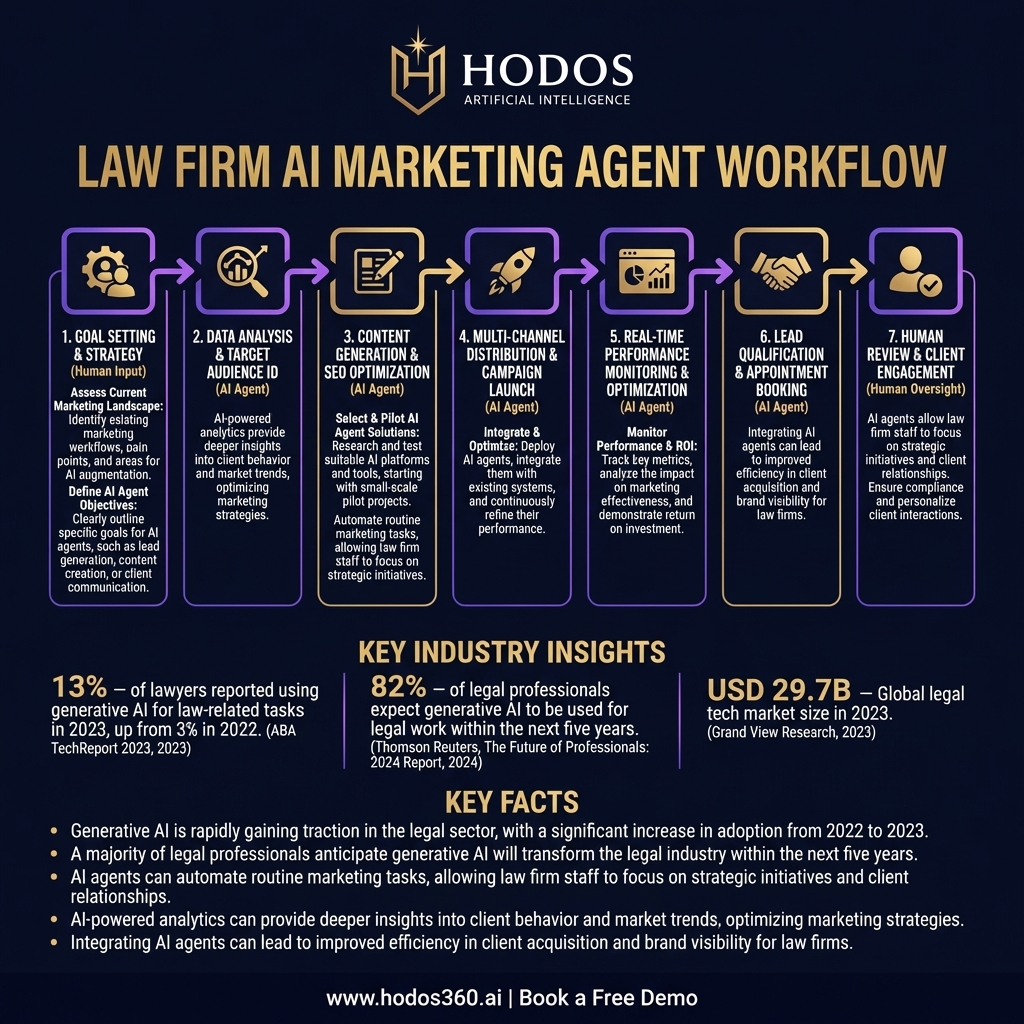
For example, an agent could identify a surge in corporate litigation queries from a particular industry and automatically generate content and ads tailored to that sector, ensuring the firm's expertise is visible to those actively seeking it. This hyper-personalization transforms generic outreach into highly relevant and compelling communication.
Furthermore, AI agents facilitate continuous engagement throughout the client journey. Learn more about Law Firm Mobile App Development: An Essential Blueprint for Growth. From the moment a potential client first interacts with a firm's website or social media, an AI agent can track their journey, offering relevant content, answering initial questions, and nudging them towards a consultation.
This proactive and responsive engagement builds trust and positions the firm as a knowledgeable and accessible resource. For existing clients, agents can manage communication flows, ensuring they receive timely updates on their case (if appropriate and secure), reminders for appointments, or invitations to webinars on relevant legal topics.
This consistent, value-driven interaction significantly improves client satisfaction and retention, turning one-off clients into long-term advocates for the firm.
Navigating the Ethical and Practical Landscape
While the promise of AI agents in legal marketing is immense, their deployment is not without ethical and practical considerations that law firms must meticulously navigate. Data privacy stands as a paramount concern. AI agents often process sensitive client information and marketing data, necessitating strict adherence to regulations like GDPR, CCPA, and, crucially, the ethical obligations outlined in legal professional conduct rules.
ABA Model Rule 1.6 on Confidentiality of Information, for instance, demands that lawyers make reasonable efforts to prevent the inadvertent or unauthorized disclosure of, or unauthorized access to, information relating to the representation of a client. This extends to the security and management of data handled by AI systems.
Firms must ensure that any AI solution they implement has robust security protocols and transparent data handling practices, maintaining client trust and avoiding potential breaches.
Bias in AI is another critical ethical challenge. If AI agents are trained on biased datasets, they can perpetuate or even amplify those biases in their marketing outputs, potentially leading to discriminatory targeting or messaging.
For example, an agent might inadvertently exclude certain demographics from marketing campaigns if the training data disproportionately represented others. This not only carries significant ethical implications but can also lead to reputational damage and legal challenges. Law firms must engage in rigorous testing and continuous monitoring of their AI agents to identify and mitigate biases, ensuring equitable and inclusive marketing practices.
The recent enforcement of the EU AI Act, which emphasizes risk assessment and human oversight for high-risk AI systems, provides a useful framework for considering these issues.
Beyond ethics, practical challenges include the need for robust human oversight and strategic direction. Learn more about Voice Assist: Essential AI Scheduling for Law Firms.
While AI agents are autonomous, they are not infallible and lack the nuanced understanding of human emotion, complex legal ethics, and strategic foresight that experienced legal professionals possess. A partner at Allen & Overy, a firm known for its AI initiatives like the partnership with Harvey AI, emphasized at LegalTech NYC 2026 that AI must serve as an augmentative force, not a replacement for human judgment.
This means human marketers and attorneys must guide the agents, set their goals, review their outputs, and intervene when necessary. The human element remains critical for ensuring brand voice consistency, ethical compliance, and alignment with the firm's overarching business strategy.
Finally, integrating AI agents with existing legal tech stacks can present technical hurdles.
Many law firms operate with a diverse ecosystem of practice management software, CRM systems, and document management tools. Seamless integration requires careful planning and often custom development to ensure data flows efficiently and securely between systems. Firms must also consider the ongoing maintenance and updates required for AI solutions, as the technology evolves rapidly.
Investing in scalable and interoperable platforms is essential to prevent technological silos and maximize the utility of AI agents. Firms should prioritize solutions that offer open APIs and comprehensive support, ensuring long-term viability and ease of use.
Strategic Implementation: Building an AI-Powered Marketing Framework
Building an effective AI-powered marketing framework within a law firm requires a strategic, phased approach, moving beyond ad-hoc experimentation to integrated system deployment. The first critical step is a comprehensive audit of your current marketing processes. Identify bottlenecks, manual repetitive tasks, and areas where human resources are stretched thin.
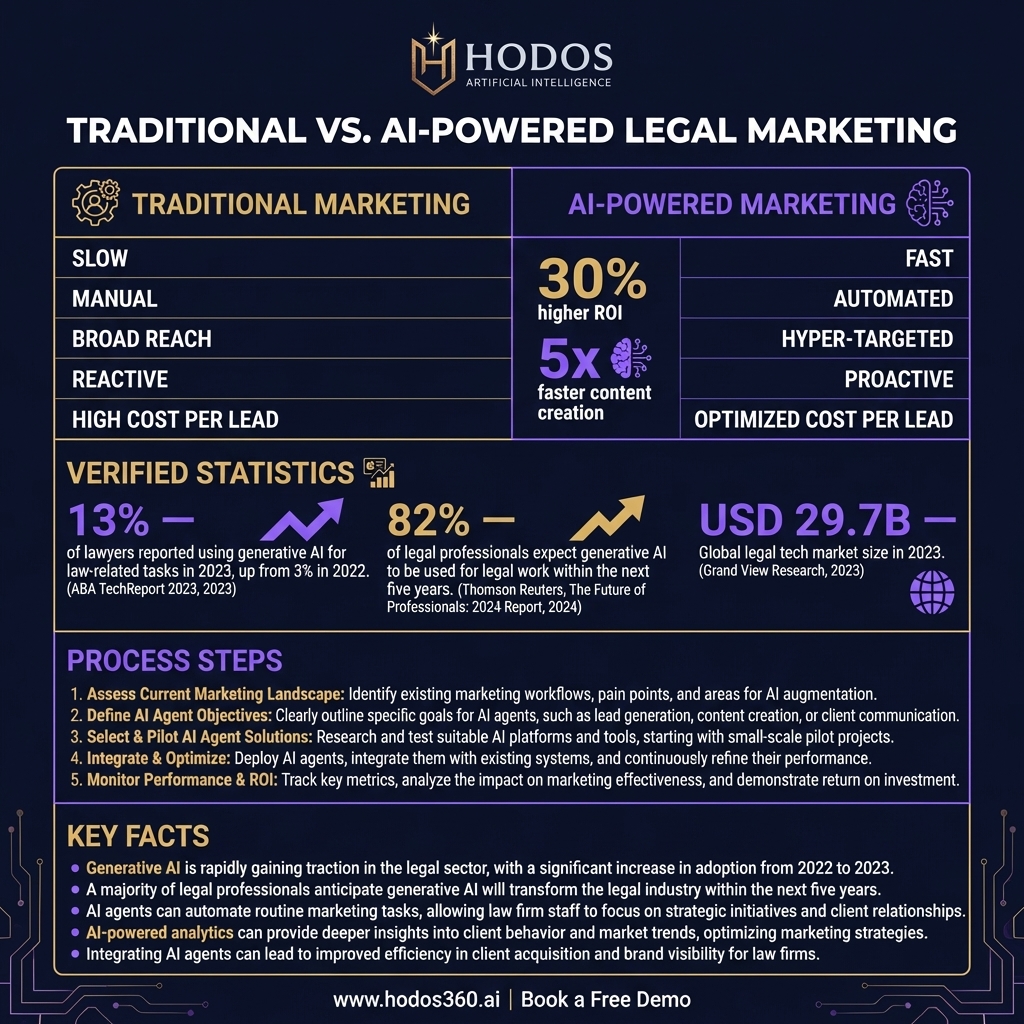
This diagnostic phase helps pinpoint exactly where AI agents can deliver the most immediate and impactful value, whether it's in lead qualification, content scheduling, or social media engagement. This isn't about replacing; it's about re-engineering for efficiency and scale, recognizing that the future of effective legal marketing involves smart automation.
Once areas for improvement are identified, law firms should focus on selecting and deploying the right AI agents or platforms. This often involves evaluating vendors based on their specialization, integration capabilities, and adherence to data security and ethical AI principles. For instance, a firm might start with an AI agent focused on social media automation to ensure consistent posting and engagement, then gradually expand to more complex tasks like personalized email campaigns or SEO optimization.
Training and upskilling human teams are equally vital. Marketing professionals within the firm will transition from executing every task to becoming 'AI orchestrators,' managing, refining, and strategizing alongside their digital counterparts. This shift requires investment in continuous learning and a cultural embrace of technological augmentation.
Seamless integration with existing legal tech stacks is paramount for maximizing the utility of AI agents. Learn more about Legal AI ROI: Maximizing Law Firm Value in 2026. Your AI marketing platform should ideally communicate with your case management system, CRM, and even your billing software to provide a holistic view of client acquisition and retention.
A study by Thomson Reuters in 2024 revealed that law firms with integrated tech stacks reported 25% higher profitability than those with fragmented systems. This interoperability ensures that data collected by marketing agents can inform client intake, case management, and even business development strategies, creating a virtuous cycle of efficiency and growth.
Consider platforms that offer robust APIs and a unified ecosystem to avoid data silos and enhance overall operational fluidity.
Finally, firms must establish clear metrics and continuous evaluation processes for their AI-powered marketing efforts. This involves tracking key performance indicators (KPIs) such as lead conversion rates, cost per acquisition, website traffic, and client engagement levels.
Regularly review these metrics to assess the effectiveness of your AI agents, identify areas for refinement, and demonstrate tangible ROI. This iterative approach ensures that your AI strategy remains agile and aligned with your firm's evolving business objectives. The initial investment in AI technology and training will be offset by long-term gains in efficiency, client acquisition, and overall firm profitability, proving the strategic value of these advanced systems.
The Role of Human Oversight in AI-Driven Campaigns
Despite the advanced capabilities of AI agents, the indispensable role of human oversight in AI-driven marketing campaigns cannot be overstated. AI agents excel at data processing, automation, and pattern recognition, but they lack the nuanced understanding of legal ethics, brand voice, and the emotional intelligence required for truly impactful communication.
Human marketers provide the strategic vision, ethical guardrails, and creative spark that elevate campaigns from merely efficient to genuinely effective. They are responsible for setting the overall goals for AI agents, defining success metrics, and interpreting the complex results that AI generates. This partnership ensures that marketing efforts remain aligned with the firm's core values and legal obligations, such as avoiding misleading advertising as per ABA Model Rule 7.1.
Furthermore, human oversight is crucial for adapting to unforeseen market shifts or unique client situations that an AI agent might misinterpret.
Learn more about Marketing Automation: Powering Law Firm Growth & Efficiency in 2026. A human can detect subtle changes in public sentiment, political developments, or competitor strategies that require a rapid and nuanced adjustment in messaging—something an autonomous agent might struggle with without explicit reprogramming.
This strategic agility, combined with the AI's efficiency, creates a powerful synergy. The human team acts as the conductor of the AI orchestra, ensuring harmony and precision while injecting the essential element of human creativity and empathy that builds genuine client relationships. It's a collaboration where the strengths of both human and machine are leveraged to achieve superior results.
Key Takeaways and Next Steps for Law Firm Growth
The emergence of AI agents marks a pivotal moment for legal marketing, transforming it from a labor-intensive endeavor into a strategically augmented, highly efficient operation. Law firms are no longer just competing on legal expertise; they are competing on their ability to leverage technology to reach, engage, and convert clients more effectively.
The narrative isn't one of wholesale replacement but of profound augmentation, where human ingenuity and legal acumen are amplified by the autonomous capabilities of AI. Firms that proactively embrace this shift will define the competitive landscape of the next decade, securing a distinct advantage in client acquisition and retention.
The time for cautious observation is over; the era of strategic action is now.
To navigate this transformative period successfully, law firms must commit to a culture of innovation and continuous learning. This involves not only investing in the right technologies but also in the professional development of their teams, equipping them with the skills to collaborate effectively with AI agents.
The goal is to build a resilient, future-proof marketing framework that can adapt to evolving client expectations and technological advancements. The firms that will thrive are those that view AI not as a threat, but as an unparalleled opportunity to refine their operations, expand their reach, and deepen their client relationships.
This strategic foresight is what separates market leaders from those left behind.
For law firms ready to harness the power of AI agents and revolutionize their marketing efforts, the path forward involves deliberate integration and strategic partnership. Consider starting with areas where AI can deliver immediate, measurable impact, such as automating lead qualification or enhancing content distribution.
The key is to select platforms that offer comprehensive solutions and seamless integration, allowing your firm to build a cohesive AI ecosystem. HODOS 360 stands at the forefront of this revolution, offering an AI Marketing Platform designed specifically for law firms, alongside AI Voice Assistants that can transform your client intake and engagement.
Embracing AI agents is more than just adopting new tools; it's about redefining the future of your law firm's growth. By strategically deploying these intelligent systems, you can unlock unprecedented efficiencies, personalize client experiences, and achieve a competitive edge that traditional marketing alone cannot provide.
The future of legal marketing is intelligent, autonomous, and deeply integrated. Your firm's journey into this future starts now.
- ✓Audit Current Marketing Processes: Identify manual, repetitive tasks suitable for AI agent automation.
- ✓Invest in Integrated AI Platforms: Choose solutions that offer comprehensive marketing capabilities and integrate with existing legal tech.
- ✓Upskill Your Marketing Team: Train human staff to become AI orchestrators, focusing on strategy and oversight.
- ✓Prioritize Data Security & Ethics: Implement robust protocols and ensure compliance with legal and ethical guidelines (e.g., ABA Model Rule 1.6).
- ✓Establish Clear KPIs and Monitor Performance: Continuously track metrics to refine AI agent strategies and demonstrate ROI.
- ✓Foster a Culture of Innovation: Encourage experimentation and continuous learning within the firm to adapt to rapid technological changes.

Future-Proofing Your Firm with Integrated AI Solutions
Future-proofing your law firm extends beyond just marketing; it encompasses a holistic integration of AI across all operational pillars. The same principles that apply to leveraging AI agents in marketing—efficiency, personalization, and strategic oversight—can be applied to case management, client intake, and even legal research.
By adopting an integrated AI strategy, firms can create a seamless, intelligent ecosystem that enhances every aspect of their service delivery. This ensures not only superior marketing outcomes but also optimized internal workflows, reduced administrative burdens, and ultimately, a more agile and competitive firm. The vision is to build a practice where AI supports every touchpoint, from initial client contact to final case resolution, allowing legal professionals to focus on their core expertise: practicing law.
Frequently Asked Questions
What are AI agents and how do they differ from traditional AI tools?+
AI agents are autonomous, goal-driven systems that can plan, execute, and adapt multi-step tasks to achieve a defined objective. Unlike traditional AI tools, which perform specific, singular functions (e.g., grammar checking), agents can orchestrate complex workflows, such as managing an entire marketing campaign from content creation to lead qualification, with minimal human intervention, learning and improving over time.
Can AI agents truly replace human marketing teams in law firms?+
While AI agents can automate many repetitive and data-intensive tasks, they are unlikely to fully replace human marketing teams. Instead, they augment human capabilities, allowing marketers to shift from execution to strategic oversight, creativity, and ethical decision-making. The future lies in a synergistic partnership where human expertise guides and refines the efficient operations of AI agents, creating more powerful and effective marketing outcomes.
What are the primary benefits of using AI agents for legal marketing?+
The primary benefits include significantly increased efficiency in marketing workflows, enhanced personalization of client outreach, faster lead qualification and conversion, optimized ad spending through real-time adjustments, and consistent brand presence across multiple platforms. This leads to higher ROI, reduced operational costs, and a stronger competitive edge in client acquisition for law firms.
What ethical considerations should law firms be aware of when deploying AI agents?+
Law firms must prioritize data privacy and security, ensuring compliance with regulations like GDPR and ABA Model Rule 1.6. Mitigating AI bias in targeting and messaging is also crucial to avoid discrimination and maintain ethical marketing practices. Continuous human oversight is essential to ensure AI agents adhere to professional conduct rules, maintain brand integrity, and adapt to nuanced legal or market changes.
How can law firms get started with integrating AI agents into their marketing strategy?+
Begin with an audit of current marketing processes to identify automation opportunities. Select specialized AI platforms that integrate seamlessly with your existing tech stack. Invest in training your human marketing team to become proficient in AI orchestration and oversight. Establish clear KPIs to monitor performance, refine strategies, and ensure the AI deployment aligns with your firm's growth objectives.