


AI Competency Law Firms Future Success
The clock is ticking for law firms across the globe. A recent report by The Business Journals sends a clear, urgent message: firms have just 12 months to prove AI competency or risk losing major clients. This isn't merely a suggestion; it's a direct challenge to the traditional legal model, signaling a profound shift in client expectations and competitive landscapes. The legal profession, often seen as resistant to rapid technological change, now faces an undeniable imperative to adapt, innovate, and integrate artificial intelligence not just as a tool, but as a foundational element of its operational and strategic framework. Firms that fail to meet this benchmark risk not only client attrition but also significant erosion of their market position and long-term viability. The mandate reflects a broader industry trend where sophisticated clients, from Fortune 500 companies to tech-savvy startups, increasingly demand efficiency, predictability, and data-driven insights that only advanced AI can provide. They are no longer content with traditional billing models or manual processes; they expect their legal partners to leverage technology to deliver superior outcomes at competitive costs. This shift is not just about adopting new software; it's about a fundamental re-evaluation of legal service delivery.
This looming deadline has ignited a fierce debate within the legal community. On one side are the early adopters, like Allen & Overy, which famously partnered with Harvey AI, a generative AI startup, to roll out AI tools to its lawyers worldwide. Speaking at LegalTech NYC 2026, Sarah Davies, Global Head of Innovation at Allen & Overy, emphasized, "Our clients expect us to be at the forefront of legal innovation. Demonstrating AI competency isn't just a competitive advantage; it's becoming a baseline requirement." On the other side, many mid-sized and smaller firms grapple with the perceived complexity and cost of AI integration, fearing it's a bridge too far. However, industry giants like Thomson Reuters, through their annual State of the Legal Market Report, consistently highlight that firms investing in legal technology report higher profitability and client satisfaction. The tension between tradition and transformation is palpable, creating a make-or-break moment for legal practices. The question is no longer *if* AI will reshape the legal industry, but *how quickly* firms can effectively embrace it to secure their future.
The Urgency of AI Competency: A 12-Month Mandate
The Business Journals' report serves as a stark wake-up call, crystallizing a trend that has been quietly gaining momentum for years. Clients, particularly large corporations, are no longer satisfied with firms merely acknowledging AI; they demand demonstrable proficiency. This isn't just about using AI for basic tasks, but integrating it into the core of legal strategy, due diligence, and client communication. Brad Smith, President of Microsoft, at a recent economic forum, noted, "AI is not just a tool for tech companies; it's a fundamental shift in how every industry operates, and legal is no exception. Firms that master AI will redefine value; those that don't will struggle to keep pace." This sentiment is echoed across boardrooms, where general counsel are under pressure to optimize legal spend and mitigate risks more effectively. A 2025 Gartner survey indicated that 65% of in-house legal departments plan to increase their budget for legal technology solutions, with a strong preference for external counsel who can demonstrate advanced tech capabilities. This translates directly to firms being evaluated not just on legal acumen, but on their technological sophistication and efficiency.
The implications of this 12-month deadline extend beyond client retention; they touch upon a firm's very brand and reputation. Learn more about AI Rewriting Litigation Economics: An Essential Guide for Law Firms. In a rapidly digitizing world, a firm's perceived inability to leverage cutting-edge technology can be a significant deterrent for new business, especially from younger, tech-native companies. The narrative is shifting from 'can you handle this case?' to 'can you handle this case with the efficiency and insight that modern technology allows?' The competitive landscape is being redrawn, with agile, tech-forward firms gaining a distinct advantage. For instance, firms like Wilson Sonsini Goodrich & Rosati, known for their work with tech startups, have been early adopters of AI tools for contract analysis and e-discovery, positioning themselves as indispensable partners to their innovative client base. Conversely, firms clinging to outdated methodologies risk being seen as slow, expensive, and ultimately, less effective. The pressure is immense, but so is the opportunity for those willing to embrace the change.
The Cost of Inaction: Losing Ground to Agile Competitors
Ignoring the call for AI competency is not a neutral act; it's a strategic decision with severe repercussions. The most immediate is the risk of client defection. Consider the case of a prominent, but tech-averse, corporate law firm that recently lost a major litigation client to a smaller, more agile competitor. The client cited the competitor's use of predictive analytics for litigation strategy and AI-powered document review, which significantly reduced costs and improved outcome predictability, as key differentiators. This isn't an isolated incident. A 2025 report by McKinsey & Company on the future of legal services projected that firms failing to integrate AI could see a 15-20% decrease in market share within the next five years, as clients migrate to more technologically advanced providers. Learn more about AI Answering Service: The Ultimate Guide for Law Firms. This loss isn't just revenue; it's also a loss of institutional knowledge, talent, and future growth opportunities. The talent market is also shifting; top legal talent, particularly younger associates, are increasingly drawn to firms that offer modern tools and a forward-thinking approach to legal practice. Firms perceived as technologically stagnant will struggle to attract and retain the best minds, further exacerbating their competitive disadvantage. This creates a vicious cycle: losing clients leads to less revenue, which limits investment in technology, leading to further client loss. The time to act and invest in AI competency law firms is unequivocally now.
Navigating the AI Landscape: Core Competencies for Modern Law Firms
Achieving AI competency is multifaceted, extending beyond simply licensing a piece of software. It requires a strategic understanding of how AI can be applied across various legal functions, coupled with the organizational infrastructure to support its implementation and ethical use. Core competencies include: data literacy, where legal professionals understand how to interpret and leverage data generated by AI tools; algorithmic thinking, enabling attorneys to grasp the logic and limitations of AI models; and change management, preparing firms to integrate new workflows and overcome resistance. For example, firms like Latham & Watkins have invested heavily in internal training programs, collaborating with legal tech vendors to educate their attorneys on everything from prompt engineering for generative AI to understanding machine learning outputs for due diligence. This holistic approach ensures that AI isn't just a back-office tool but an integral part of legal strategy, enhancing the firm's ability to deliver superior client outcomes. The focus is on empowering lawyers, not replacing them, by augmenting their capabilities with intelligent automation and analytical power.
Furthermore, firms must develop expertise in selecting and evaluating AI tools. The market is flooded with solutions, from e-discovery platforms like RelativityOne to contract analysis tools like Kira Systems. Learn more about AI Marketing: Essential Legal Safeguards for Law Firms. Understanding which tools align with a firm's specific practice areas and client needs requires a blend of technical insight and legal judgment. This involves due diligence on vendor security protocols, data privacy compliance, and the explainability of AI models. Jack Newton, CEO of Clio, a leading legal practice management software, often highlights the importance of choosing integrated solutions. "The real power of legal tech," Newton stated at a recent industry webinar, "comes from platforms that seamlessly connect different aspects of a firm's operations, creating a unified digital ecosystem." This integration is critical for maximizing efficiency and ensuring data flow across different functions. Developing this selection competency is crucial to avoid costly mistakes and ensure that AI investments yield tangible returns, directly contributing to a firm's overall AI competency law firms strategy.
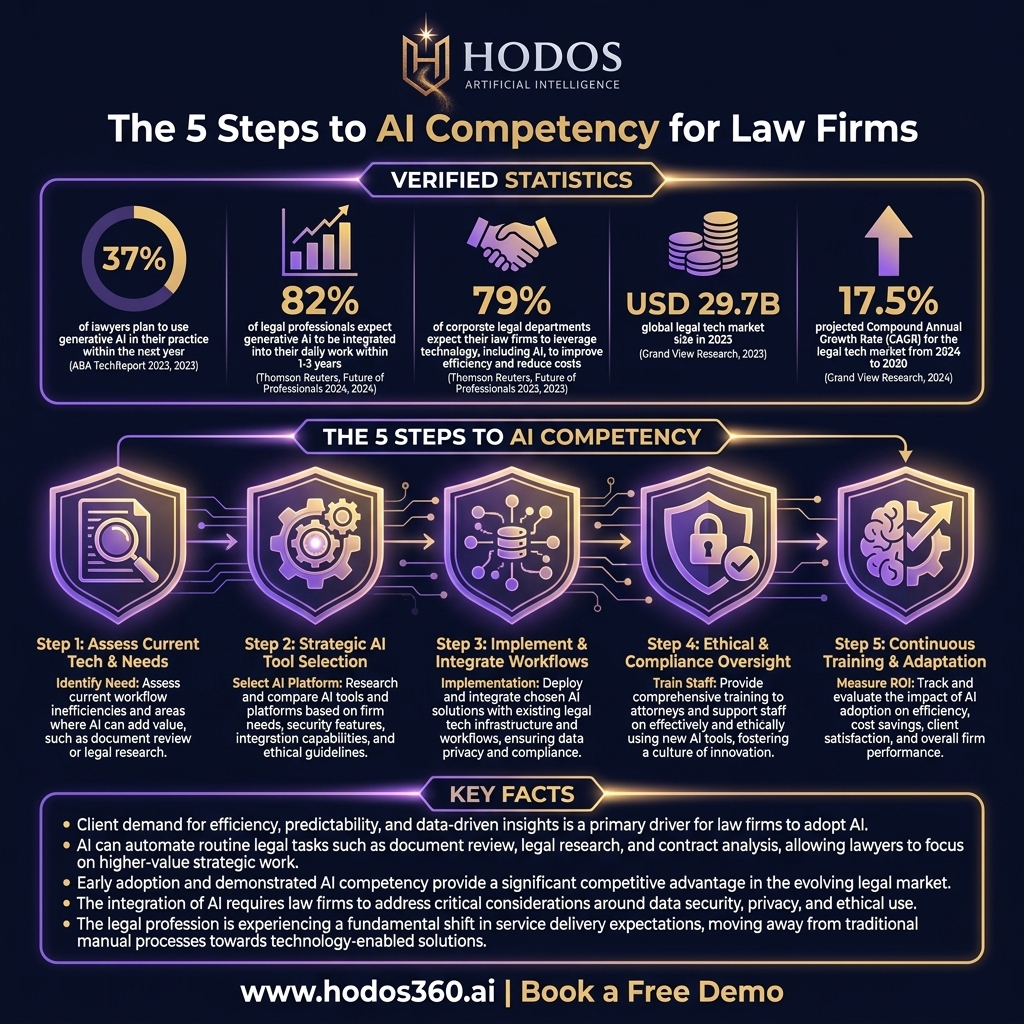
Leveraging AI for Enhanced Client Service and Operational Efficiency
The adoption of AI offers transformative benefits, fundamentally reshaping how law firms operate and interact with clients. On the client service front, AI-powered tools enable unprecedented levels of responsiveness and personalized engagement. Imagine an AI voice assistant handling initial client inquiries 24/7, instantly qualifying leads, scheduling appointments, and providing multilingual support, ensuring no potential client is ever missed. This not only improves client satisfaction but also frees up valuable human resources to focus on complex legal work. Furthermore, AI-driven marketing platforms can analyze client data to identify trends, personalize outreach, and track ROI, ensuring marketing efforts are targeted and effective. This proactive approach to client engagement and acquisition is a game-changer in a competitive market. Firms can move beyond reactive service to truly anticipate client needs, delivering value before it's explicitly requested. This level of insight and responsiveness directly translates into stronger client relationships and higher retention rates.
Operationally, AI streamlines numerous time-consuming tasks, boosting efficiency and profitability. Learn more about Legal AI ROI: Proven Strategies for Measuring Investment Return. AI-powered legal workflows automate everything from client intake and document generation to billing and case management. For instance, instead of manually sifting through thousands of discovery documents, AI can identify relevant information, flag anomalies, and even predict litigation outcomes with remarkable accuracy. This dramatically reduces the time and cost associated with complex cases. Firms employing these systems report significant reductions in administrative overhead, allowing attorneys to dedicate more time to strategic thinking and client counsel, rather than rote tasks. The American Bar Association's 2024 TechReport indicated that firms utilizing AI for document automation and legal research saw a 30% increase in billable hours efficiency. This isn't just about cutting costs; it's about reallocating human capital to higher-value activities, improving the quality of legal services, and ultimately, enhancing a firm's competitive edge. For law firms grappling with the 12-month AI competency deadline, these operational efficiencies are not just desirable, but essential for survival and growth.
From Client Intake to Case Resolution: AI in Action
The practical applications of AI span the entire legal service lifecycle. Consider the initial client intake process: instead of lengthy manual forms, an AI-powered system can gather essential information, conduct preliminary conflict checks, and even draft initial engagement letters in minutes. For case management, AI integrates calendars, deadlines, and communication logs, providing a holistic view of every matter. In document automation, AI can generate complex contracts, pleadings, and briefs from templates, tailored to specific case details, drastically reducing drafting time and errors. Firms like Dentons have publicly showcased their use of AI for knowledge management, leveraging algorithms to quickly surface relevant precedents and internal expertise across their global network. Learn more about Legal AI Problem: Mastering Ethical Tech in Law Firms 2026. This allows their attorneys to access critical information faster, leading to more informed decisions and strategic advice. The impact on legal research is equally profound, with AI tools like Casetext's CoCounsel and LexisNexis's Lexis+ AI capable of synthesizing vast amounts of legal data, identifying trends, and answering complex legal questions in seconds, far outperforming traditional keyword-based searches. These real-world applications demonstrate that AI isn't a futuristic concept but a present-day reality, offering tangible benefits that directly address the core requirements of AI competency law firms.
Mitigating Risks and Ensuring Ethical AI Adoption
While the benefits of AI are undeniable, its adoption in the legal sector is not without significant ethical and practical considerations. The American Bar Association (ABA) has been proactive in addressing these, notably through amendments to Model Rules of Professional Conduct. ABA Model Rule 1.1, Comment 8, explicitly states that lawyers must keep abreast of changes in the law and its practice, "including the benefits and risks associated with relevant technology." This underscores a lawyer's duty of technological competence. Firms must grapple with issues of client confidentiality and data security, especially when using cloud-based AI solutions. Robust cybersecurity measures are paramount to protect sensitive client information from breaches. Furthermore, the potential for algorithmic bias, where AI systems inadvertently perpetuate or amplify existing societal biases, presents a significant ethical challenge. For example, if an AI tool for predicting litigation outcomes is trained on historical data reflecting systemic biases, it could produce skewed or unfair results. Firms must implement rigorous testing and oversight mechanisms to identify and mitigate such biases, ensuring fairness and equity in their AI applications.
Transparency and explainability are also critical. Attorneys must understand how AI tools arrive at their conclusions, especially when those conclusions inform critical legal advice or strategy. Learn more about AI-Native Law Firms: Essential Blueprint for Future Legal Success. This isn't just an ethical imperative; it's a practical necessity for maintaining professional responsibility. Lawyers cannot simply outsource their judgment to an algorithm. Firms must establish clear policies on the appropriate use of AI, including when human oversight is required and how AI-generated information is verified. The EU AI Act, set to be fully enforced in the coming years, provides a comprehensive framework for governing AI, emphasizing risk management, transparency, and human oversight. While primarily targeting European markets, its principles are likely to influence global best practices. Law firms must proactively develop internal guidelines and training programs to ensure compliance with evolving ethical standards and regulatory frameworks, demonstrating a commitment to responsible AI adoption that builds trust with clients and the broader legal community. This proactive approach is a cornerstone of true AI competency law firms.
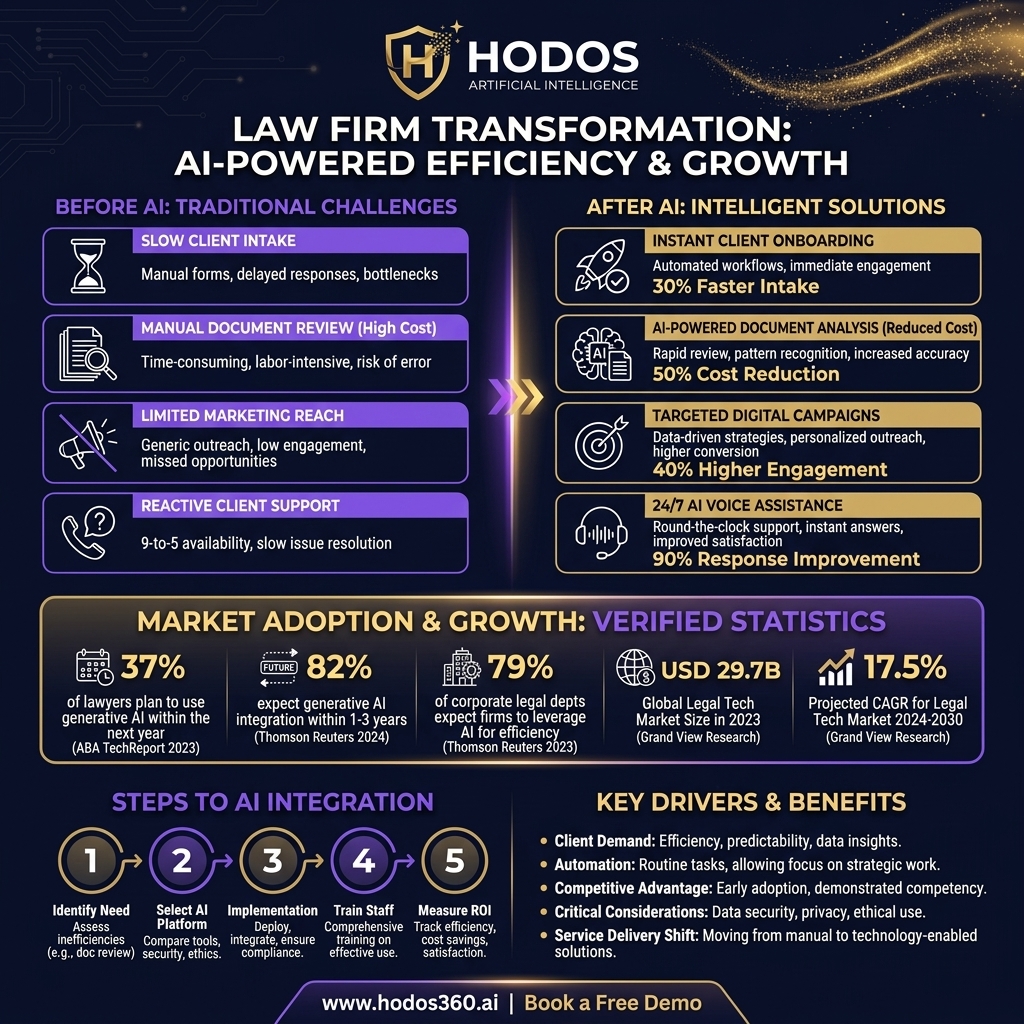
Building an AI-Ready Culture
Beyond technology acquisition, fostering an AI-ready culture is paramount for successful integration. This involves cultivating a mindset of continuous learning and adaptation among all legal professionals. Firms need to invest in comprehensive training programs that demystify AI, highlight its benefits, and equip staff with the skills to effectively use new tools. This training should not be a one-off event but an ongoing process, given the rapid evolution of AI technologies. Change management strategies are also crucial to address potential resistance from attorneys and staff who may feel threatened or overwhelmed by new systems. Leadership must champion AI initiatives, clearly communicating the strategic vision and demonstrating how AI will enhance, rather than diminish, their roles. Firms that successfully integrate AI often have dedicated innovation teams or "legal ops" departments, responsible for identifying, testing, and implementing new technologies. By creating an environment where experimentation is encouraged and learning is prioritized, firms can transform their workforce into enthusiastic adopters of AI, turning the 12-month deadline from a threat into an opportunity for growth and innovation. This cultural shift is as important as the technological one, ensuring that the firm's human capital is prepared to maximize the benefits of AI.
The HODOS 360 Advantage: Your Partner in AI Transformation
In the face of the urgent 12-month deadline for AI competency law firms, finding a comprehensive and reliable partner is crucial. HODOS 360 stands at the forefront of this transformation, offering an integrated suite of AI-powered services designed specifically to empower law firms to not only meet but exceed these new industry standards. Our platform addresses the multifaceted challenges of AI adoption, providing tools that enhance every aspect of your practice. From our AI Law Firm Management System, which automates case management, billing, client intake, and document generation, to our AI Marketing Platform that streamlines content creation and social media automation, we provide the infrastructure for operational excellence. Imagine a seamless workflow where administrative burdens are minimized, allowing your team to focus on high-value legal work and client relationships. This comprehensive approach is designed to ensure that firms can rapidly build and demonstrate their AI proficiency, securing their competitive edge and client loyalty.
Beyond internal operations, HODOS 360 also extends your firm's reach and responsiveness. Our AI Voice Assistants provide 24/7 phone answering, lead qualification, and appointment booking, ensuring your firm never misses an opportunity and provides unparalleled client service. Combined with our Web & Mobile Development expertise, offering AI-powered website building and SEO optimization, HODOS 360 equips firms with the digital presence and tools needed to thrive in the modern legal landscape. We understand the unique pressures law firms face, and our solutions are crafted to deliver measurable results, driving efficiency, enhancing client satisfaction, and ensuring compliance with evolving technological demands. Partnering with HODOS 360 means embracing a future where technology amplifies your legal expertise, allowing your firm to navigate the AI competency mandate with confidence and emerge stronger.

Key Takeaways and Next Steps
The 12-month deadline for AI competency law firms is not a threat to be feared, but a catalyst for profound and necessary transformation. The legal industry is evolving rapidly, driven by client demand for efficiency, transparency, and innovative service delivery. Firms that proactively embrace AI, investing in both technology and the cultural shifts required to leverage it effectively, will be the ones that thrive. This means understanding the ethical implications, ensuring data security, and committing to continuous learning. The journey towards AI competency is ongoing, requiring strategic planning, thoughtful implementation, and a willingness to adapt. The time for deliberation is over; the era of decisive action has arrived. By embracing AI, law firms can not only meet the immediate challenge posed by the 12-month mandate but also unlock unprecedented opportunities for growth, innovation, and enhanced client value in the years to come. The future of legal practice is intelligent, and the firms that lead the way will be those that master AI today.
- ✓Understand the Mandate: Recognize that AI competency is no longer optional but a client-driven requirement for retaining major business.
- ✓Assess Current Capabilities: Conduct an internal audit of your firm's current technological infrastructure and AI literacy.
- ✓Develop a Strategic Roadmap: Outline specific AI tools and training initiatives tailored to your firm's practice areas and client needs.
- ✓Invest in Integrated Solutions: Prioritize platforms that offer comprehensive AI-powered tools for management, marketing, and client interaction.
- ✓Prioritize Ethical Adoption: Establish clear policies for data privacy, algorithmic bias mitigation, and human oversight in AI usage.
- ✓Foster an AI-Ready Culture: Implement ongoing training and change management programs to ensure widespread adoption and enthusiasm for new technologies.
- ✓Seek Expert Partnerships: Collaborate with legal tech providers to leverage their expertise and accelerate your firm's AI transformation.
Frequently Asked Questions
What does 'AI competency' mean for law firms?+
AI competency for law firms signifies the ability to strategically and ethically leverage artificial intelligence tools across various aspects of legal practice. This includes understanding AI's capabilities and limitations, integrating AI into workflows for efficiency, ensuring data security and privacy, mitigating algorithmic bias, and maintaining human oversight. It's about using AI to enhance client service, improve operational efficiency, and make data-driven decisions while adhering to professional responsibilities.
Why is there a 12-month deadline for AI competency?+
The 12-month deadline, as highlighted by The Business Journals, reflects escalating client expectations and intense market competition. Major clients are increasingly demanding that their legal partners utilize advanced technology, including AI, to deliver more efficient, cost-effective, and insightful legal services. Firms that cannot demonstrate this proficiency risk being perceived as outdated, less efficient, and ultimately losing significant business to more technologically advanced competitors.
What are the biggest risks of not adopting AI in a law firm?+
Failing to adopt AI poses several critical risks. Primarily, firms face the loss of major clients who seek technologically advanced legal solutions. This can lead to decreased revenue and market share. Other risks include reduced operational efficiency, higher costs compared to tech-savvy competitors, difficulty attracting and retaining top legal talent, and a damaged reputation in an increasingly digital legal landscape. Inaction is a strategic disadvantage.
How can AI improve client service in law firms?+
AI can dramatically improve client service by enabling 24/7 responsiveness through AI voice assistants for inquiries and bookings, personalizing communication via AI marketing platforms, and speeding up legal processes like document review and case management. This leads to faster, more accurate advice, better communication, and more predictable outcomes, ultimately enhancing client satisfaction and building stronger, more loyal relationships. It allows lawyers to focus on strategic advice.
What ethical considerations should law firms keep in mind when using AI?+
Ethical considerations for AI in law firms include ensuring client confidentiality and data security, addressing potential algorithmic bias in AI tools, maintaining transparency regarding AI usage, and ensuring human oversight for all critical legal decisions. Lawyers must uphold their duty of technological competence (ABA Model Rule 1.1), understand AI's limitations, and implement robust policies to prevent errors or ethical breaches that could impact clients or the firm's reputation.