

AI Content Creation: Ultimate Edge for Law Firms
The legal world watched closely in early 2026 as Xelta.ai, a burgeoning AI powerhouse, announced its significant expansion into an all-in-one platform for image, video, voice, and content creation. This move, widely reported by outlets like The Tribune, wasn't just another product launch; it signaled a pivotal shift in the digital landscape, one that demands immediate attention from law firms. The era of fragmented digital tools is rapidly giving way to integrated AI platforms capable of generating comprehensive, multimedia content at unprecedented scale and speed. For law firms, this trend is not merely a technological curiosity but a strategic imperative, fundamentally redefining how they attract clients, build brand presence, and manage their digital reputation.
Historically, legal marketing has often lagged behind other industries in embracing cutting-edge technology. However, the sheer velocity of AI innovation, exemplified by firms like Xelta.ai and the foundational models from giants such as OpenAI and Google, has created an inescapable wave of transformation. Law firms that once relied on traditional advertising and word-of-mouth are now confronting a marketplace where digital visibility and compelling AI content creation are paramount. The challenge lies not only in understanding these new tools but in strategically integrating them into a cohesive digital strategy that maintains ethical integrity while maximizing reach and engagement. This article explores how these all-in-one platforms are reshaping the legal industry's digital future and how firms can harness this power.
Discover how HODOS 360's AI-powered marketing platform can transform your firm's content strategy.
The Rise of All-in-One AI Content Platforms: A New Frontier in Legal Marketing
The expansion of Xelta.ai exemplifies a broader trend in the AI industry: the consolidation of diverse generative AI capabilities into unified, user-friendly platforms. What started with text generation from models like OpenAI's GPT series and image generation from DALL-E has rapidly evolved. Today, firms like Xelta.ai offer comprehensive suites that can produce high-quality images, engaging videos, natural-sounding voiceovers, and polished written content, all from a single interface. Learn more about Law Firm Mobile App Development: An Essential Blueprint for Growth. This integration significantly lowers the barrier to entry for sophisticated AI content creation, allowing even small to mid-sized law firms to compete with larger entities that might otherwise have dedicated marketing departments or agencies. This market shift reflects intense competition among AI developers, often fueled by substantial funding rounds, such as OpenAI's reported multi-billion dollar raises, pushing the boundaries of what these creative tools can achieve.
The strategic implications for legal marketing are profound. Previously, creating a professional marketing video required significant investment in production, editing, and voice talent. Now, an AI platform can generate a script, create visual assets, and synthesize a voiceover in minutes, dramatically increasing content velocity. This enables law firms to respond to trending legal news, create educational content, and personalize client communications at an unprecedented pace. Learn more about AI Virtual Assistant: Essential for Modern Law Firms. According to a 2025 Thomson Reuters Future of Legal Report, 68% of law firms anticipate generative AI to significantly impact their marketing efforts within three years, underscoring the urgency for adoption. This isn't just about efficiency; it's about staying relevant in an increasingly digital-first legal marketplace where attention is a scarce commodity.
Beyond Text: The Multimedia Imperative
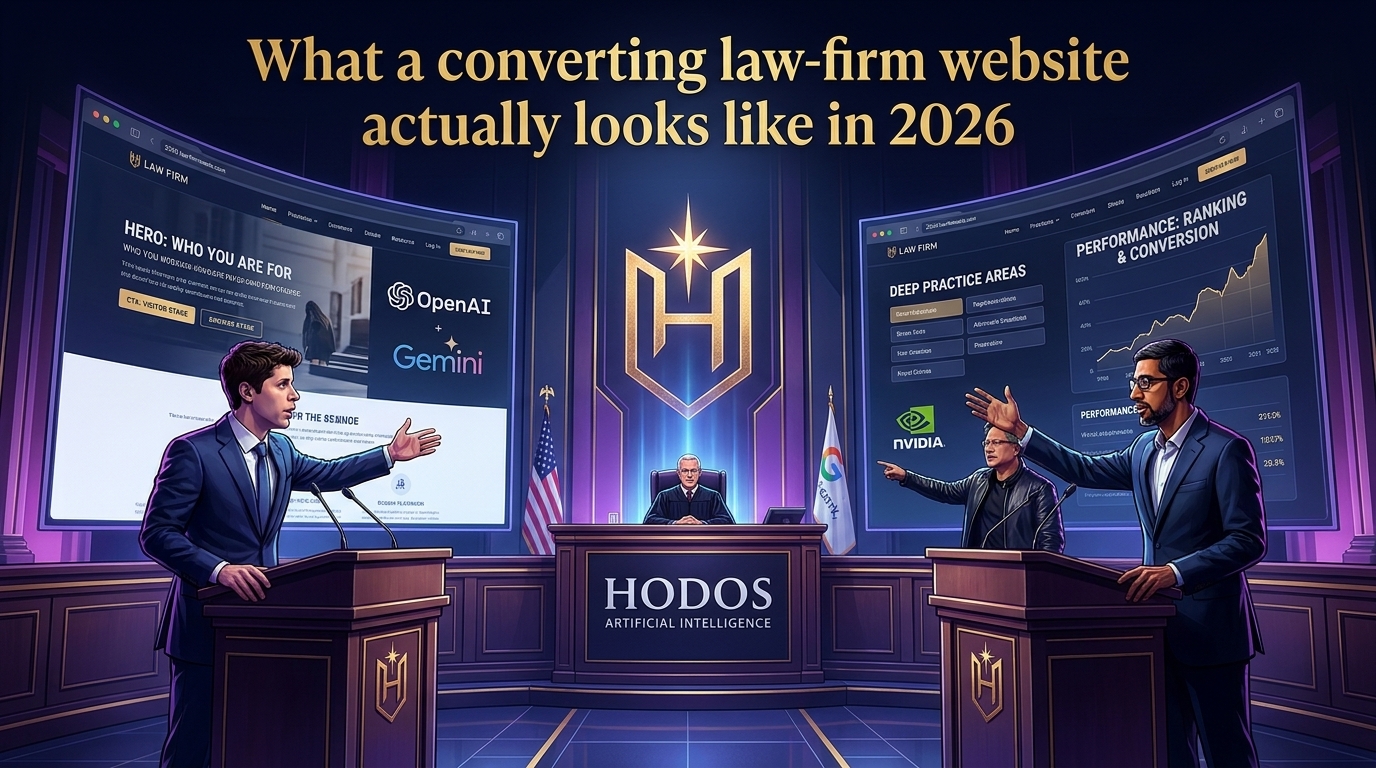
The true power of these new AI content creation platforms lies in their multimedia capabilities. Law firms can now easily produce short, impactful videos for social media explaining complex legal concepts, generate compelling images for website banners, or even create AI-driven voice assistants for initial client intake. For example, a firm specializing in personal injury could quickly generate a series of animated videos illustrating common accident scenarios and legal remedies, vastly improving client education and engagement. Learn more about Voice AI: Ultimate Legal Assistant Comparison for Law Firms. These visuals and audio elements are crucial for capturing the attention of modern audiences, who increasingly prefer visual and auditory content over lengthy text. However, firms must be mindful of ethical guidelines, particularly ABA Model Rule 7.1 concerning communications about a lawyer's services, ensuring that all AI-generated content remains truthful and not misleading.
Strategic Implications: Redefining Legal Digital Presence and Client Engagement
The advent of sophisticated AI content platforms forces law firms to rethink their entire digital presence. It's no longer enough to have a static website; firms must maintain a dynamic, engaging online ecosystem. AI enables hyper-personalization, allowing firms to tailor content to specific client demographics or legal needs identified through AI-driven analytics. Imagine an estate planning firm automatically generating blog posts, social media updates, and email newsletters specifically addressing the concerns of young families, retirees, or small business owners. Learn more about Personal Injury Automation: Strategic Scaling for Law Firms. This level of targeted communication fosters deeper client relationships and significantly enhances lead qualification. Firms like Allen & Overy, known for their early adoption of legal AI tools such as Harvey AI, demonstrate the competitive advantage of integrating these technologies into core operations, contrasting sharply with firms that delay adoption.
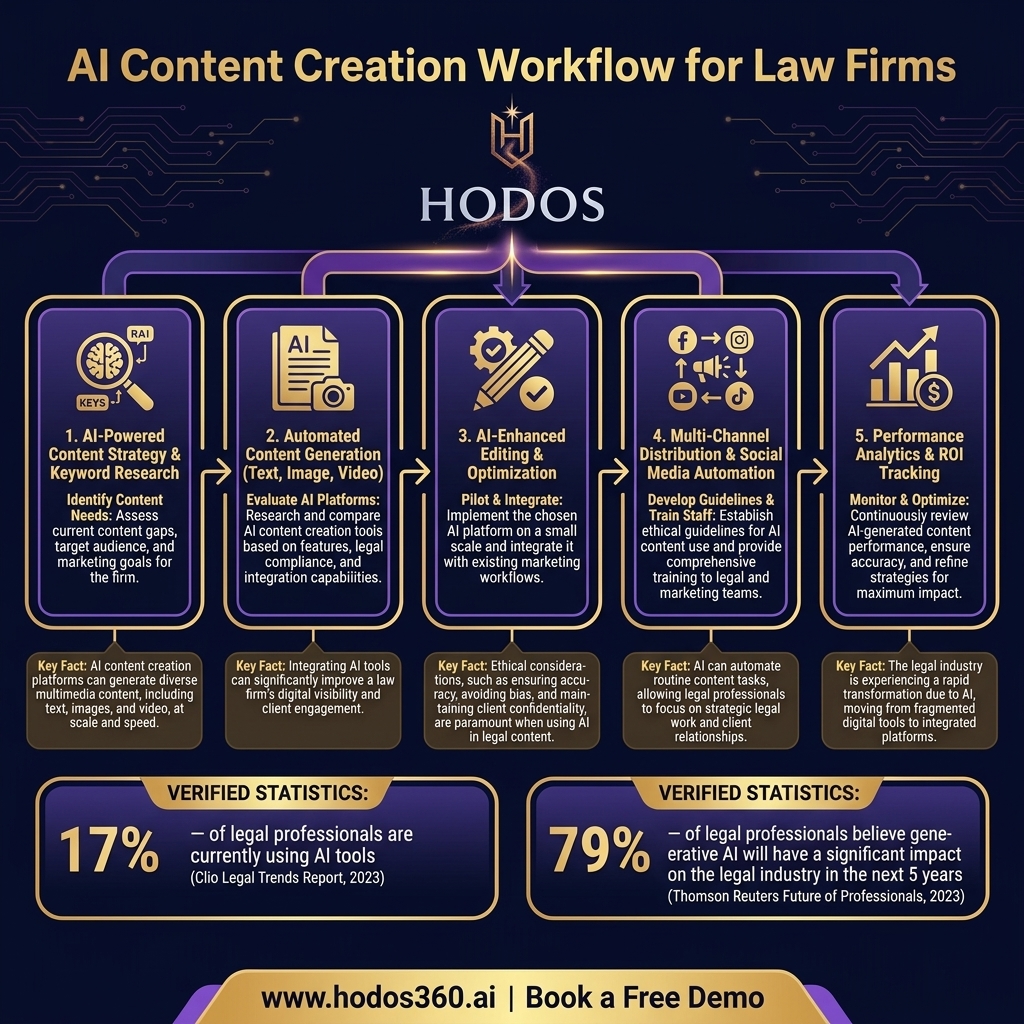
Furthermore, the ability to rapidly produce high-quality content directly impacts search engine optimization (SEO). Google and other search engines prioritize fresh, relevant, and engaging content. With AI content creation, law firms can flood the digital landscape with valuable information, improving their search rankings and organic visibility. A recent McKinsey study on enterprise AI adoption highlighted that companies using generative AI for content saw a 30-40% increase in content output and engagement, translating directly to improved digital presence. Learn more about AI Web Design Tools: The Ultimate Guide for Law Firms. This content velocity is a game-changer, allowing smaller firms to punch above their weight and challenge established players who might be slower to adapt. However, the quality and accuracy of AI-generated legal content still requires rigorous human oversight to maintain credibility and avoid factual errors, a critical component often emphasized by industry leaders like LexisNexis and Thomson Reuters.
Explore HODOS 360's AI Marketing Platform for advanced social media automation and content generation.
AI-Powered Web & Mobile Development: The Foundation of Modern Legal Marketing
While AI content creation grabs headlines, the effectiveness of this content is intrinsically linked to the underlying digital infrastructure – a firm's website and mobile presence. AI-powered web development platforms are revolutionizing how law firms build and maintain their digital storefronts. These tools leverage AI to automate design choices, optimize responsive layouts for all devices, and even suggest content placements for maximum conversion. Learn more about AI Marketing: Essential Strategies for Law Firm Growth. For instance, HODOS 360's Web & Mobile Development service uses AI to build high-converting templates and ensure SEO optimization, providing a robust foundation for all generated content. This means a firm can not only create compelling videos and articles with AI but also ensure they are showcased on a website that is fast, intuitive, and designed to convert visitors into clients, creating a seamless user journey from initial discovery to client intake.
The synergy between AI content and AI-driven web development is critical. A beautifully designed website with poor content will fail, just as brilliant content on a slow, non-responsive site will be overlooked. Modern AI platforms integrate these aspects, allowing for dynamic adjustments to web layouts based on user behavior and content performance. This continuous optimization ensures that the firm's digital assets are always performing at their peak, adapting to algorithm changes and user preferences without constant manual intervention. Firms can leverage AI for A/B testing different website elements, identifying the most effective calls to action, and personalizing user experiences based on their browsing history, leading to significantly higher engagement and conversion rates, a critical factor for any firm seeking growth in a competitive market.
Optimizing for Search and User Experience
AI is fundamentally changing SEO. Beyond generating high-quality text, AI tools can perform sophisticated keyword research, analyze competitor strategies, and even predict search trends, ensuring that content is not only relevant but also highly discoverable. AI-powered web platforms can automatically generate schema markup, optimize image alt text, and ensure mobile-first design, all crucial elements for ranking highly on Google. This focus on user experience (UX) is paramount; a website that loads quickly, is easy to navigate, and provides relevant information keeps visitors engaged longer, signaling to search engines that the site is valuable. This holistic approach, where AI content creation and web development work in tandem, is the new standard for achieving strong online visibility.
Navigating the Ethical and Regulatory Landscape of Generative AI in Law
The rapid advancement of AI content creation also brings a complex web of ethical and regulatory challenges for the legal profession. As firms increasingly rely on generative AI for marketing materials, the potential for misinformation, deepfakes, copyright infringement, and data privacy breaches becomes a significant concern. The legal community is actively grappling with these issues; for example, the EU AI Act, enforced in 2026, sets a global precedent for regulating AI systems, including those used for content generation. American jurisdictions are also considering similar frameworks, and the ABA Standing Committee on Ethics and Professional Responsibility has issued guidance, such as Formal Opinion 507, which emphasizes a lawyer's duty of competence and supervision when using AI, especially regarding client confidentiality and the accuracy of information. Law firms must remain vigilant, prioritizing transparency and robust review processes.
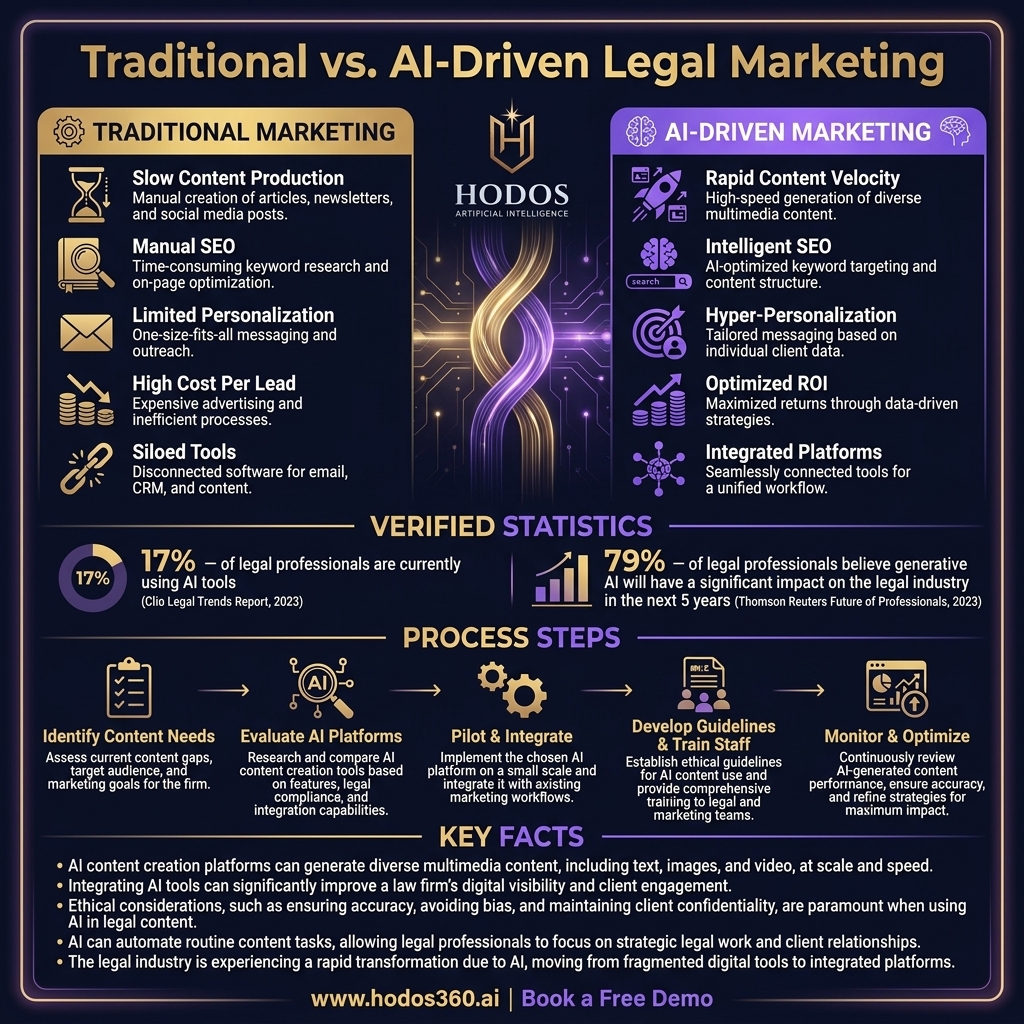
The tension between innovation and ethical responsibility is a defining characteristic of this era. Prominent legal tech figures, such as Clio CEO Jack Newton, have consistently advocated for responsible AI adoption, emphasizing that AI should augment human capabilities, not replace critical judgment. Firms must implement clear policies for vetting AI-generated content, ensuring it aligns with professional standards and avoids any implication of guaranteeing outcomes or making misleading statements, as prohibited by ABA Model Rule 7.2 on Advertising. The human element remains indispensable in the final approval process, acting as the ultimate safeguard against errors or ethical missteps. This proactive approach to ethics is not merely compliance; it's about maintaining client trust and the integrity of the profession amidst rapid technological change.
Ensuring Authenticity and Compliance
To ensure authenticity and compliance, law firms leveraging AI platforms for content must establish clear internal protocols. This includes mandatory human review of all AI-generated material before publication, clear disclaimers where appropriate (e.g., stating that an image is AI-generated), and training staff on the limitations and ethical considerations of generative AI. Firms should also be aware of copyright implications, as the legal landscape around AI-generated content ownership is still evolving. Adhering to these principles is crucial for building and maintaining client trust, safeguarding the firm's reputation, and navigating the evolving regulatory environment successfully. Transparency about AI use is not just a best practice; it's becoming an ethical necessity.
The HODOS 360 Advantage: Unifying Your Digital Strategy for Growth
The expansion of platforms like Xelta.ai highlights a critical need for law firms: an integrated, AI-powered solution that addresses not just content creation, but the entire spectrum of firm management and digital presence. This is precisely where HODOS 360 offers a transformative advantage. While Xelta.ai focuses on creative assets, HODOS 360 provides a holistic ecosystem designed specifically for the legal industry. Our AI Law Firm Management System streamlines everything from AI-powered legal workflows and document automation to case management and client intake. This foundational efficiency frees up legal professionals to focus on high-value tasks, rather than getting bogged down in administrative overhead. The integration of these core services ensures that operations are as agile as your marketing efforts.
- ✓Comprehensive AI Marketing Platform: Leveraging AI for video creation, social media automation, and advanced content generation, HODOS 360 ensures your firm's digital voice is compelling and consistent across all channels, transforming raw ideas into high-impact campaigns.
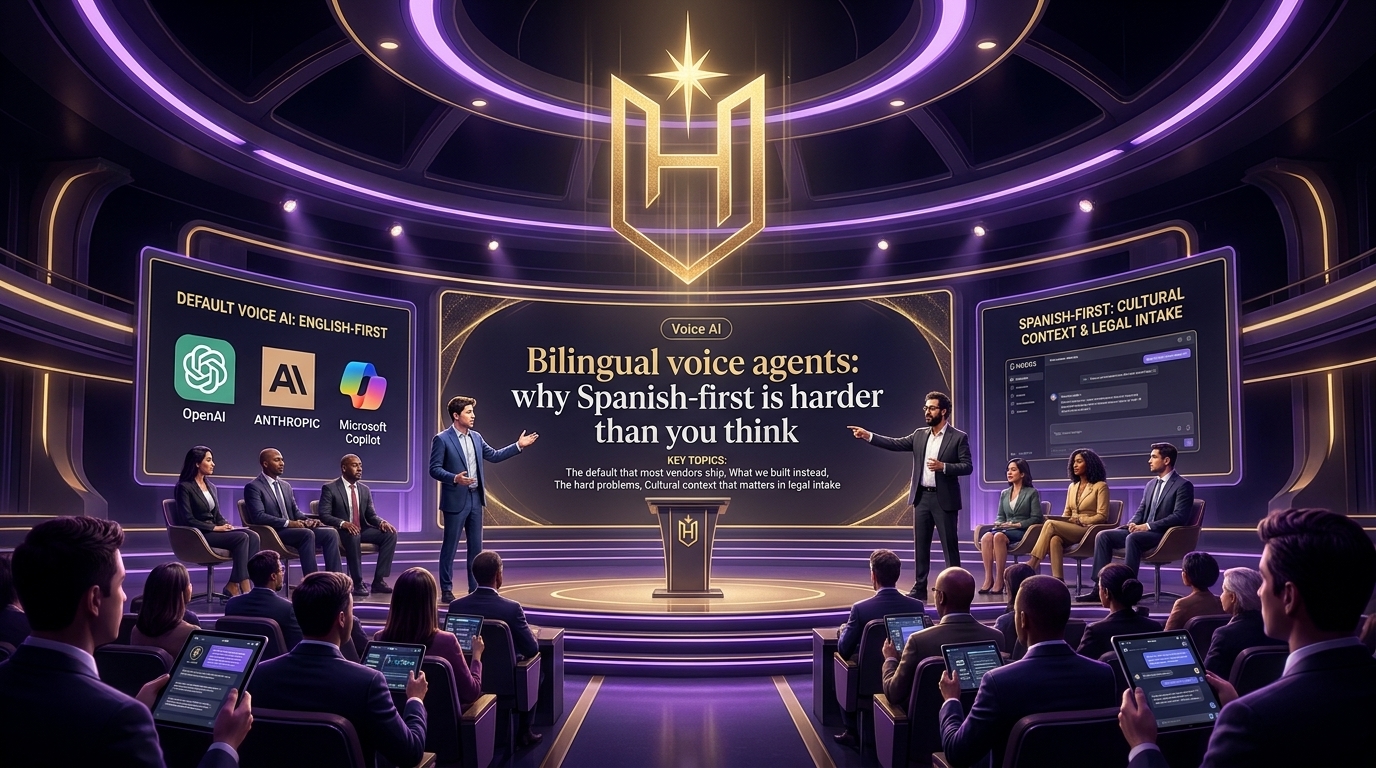
- ✓AI Voice Assistants: Our 24/7 AI Voice Assistants handle lead qualification, appointment booking, and multilingual support, ensuring no potential client call is missed and every inquiry is efficiently managed, routing calls seamlessly to the right department.
- ✓AI-Powered Web & Mobile Development: We build responsive, SEO-optimized websites using AI, ensuring your digital storefront is not only visually appealing but also a high-converting asset that effectively showcases your AI-generated content.
- ✓Integrated Case Management: From initial client intake to final billing, our AI-powered system automates routine tasks, manages calendars, and provides intelligent insights, dramatically improving operational efficiency.
- ✓Data-Driven Analytics & ROI Tracking: Our marketing platform provides robust analytics and ROI tracking, allowing firms to measure the effectiveness of their AI content creation strategies and make informed, data-backed decisions for continuous improvement.
- ✓Ethical AI Implementation: HODOS 360 prioritizes ethical AI, providing tools and frameworks that support compliance with legal ethics, ensuring that your firm’s innovative digital strategies are always aligned with professional responsibility.
By unifying these critical services, HODOS 360 empowers law firms to move beyond simply generating content to building a truly integrated, AI-driven practice. This comprehensive approach ensures that every piece of AI-generated content, every client interaction, and every operational workflow is optimized for efficiency, growth, and ethical compliance. It’s about leveraging the power of AI not just for one aspect of your business, but for a complete, competitive edge in the modern legal landscape.

Key Takeaways and Next Steps
The rapid evolution of all-in-one AI content creation platforms, as highlighted by Xelta.ai's expansion, presents both unprecedented opportunities and significant challenges for law firms. Embracing these AI platforms is no longer optional; it's a prerequisite for maintaining a competitive edge, attracting new clients, and building a robust digital presence. Firms must move beyond traditional marketing paradigms and proactively integrate generative AI into their content strategies, web development, and client engagement models. The narrative of disruption versus tradition is playing out in real-time, and firms that adapt swiftly with integrated solutions will be the ones that thrive.
For law firms ready to harness the full potential of AI, the next step involves evaluating comprehensive platforms that offer integrated solutions across marketing, management, and digital infrastructure. A fragmented approach will yield fragmented results. Instead, seek a unified platform that can streamline your operations, amplify your marketing efforts, and build a resilient digital presence. This strategic shift is crucial for navigating the future of legal practice and securing sustained growth.
Ready to transform your law firm with a unified AI strategy? Book a free demo with HODOS 360 today.
Frequently Asked Questions
What is an all-in-one AI content platform?+
An all-in-one AI content platform, like Xelta.ai, integrates various generative AI capabilities—such as text, image, video, and voice creation—into a single interface. This allows users to produce diverse multimedia content efficiently and at scale, streamlining the entire content production workflow. These platforms leverage advanced AI models to automate creative tasks, making sophisticated content generation accessible to a wider range of users, including law firms.
How can AI content creation benefit my law firm?+
AI content creation offers numerous benefits for law firms, including increased content velocity, enhanced SEO, and personalized client engagement. Firms can rapidly generate high-quality blog posts, social media updates, and marketing videos, improving their digital visibility and attracting more leads. It also enables the creation of targeted content for specific client segments, fostering deeper connections and more effective communication, while reducing manual effort.
Are there ethical concerns with using AI for legal marketing?+
Yes, ethical concerns are significant. Law firms must ensure AI-generated content is accurate, not misleading, and complies with professional conduct rules like ABA Model Rules 7.1 and 7.2 regarding advertising. Issues such as potential for misinformation, copyright infringement, and data privacy need careful management. Human oversight is crucial for vetting content, maintaining transparency, and upholding the firm's ethical obligations and reputation.
How does AI-powered web development differ from traditional methods?+
AI-powered web development leverages artificial intelligence to automate aspects of website design, optimization, and maintenance. Unlike traditional methods that rely heavily on manual coding and design, AI tools can suggest layouts, optimize for responsive design across devices, enhance SEO, and personalize user experiences dynamically. This results in faster development cycles, more efficient updates, and higher-performing, conversion-focused websites with less manual effort.
What role does HODOS 360 play in this evolving landscape?+
HODOS 360 provides a comprehensive AI-powered platform that integrates AI Law Firm Management, AI Marketing, AI Voice Assistants, and Web & Mobile Development. We go beyond just content creation, offering a unified solution that streamlines operations, amplifies marketing efforts with AI-generated content, enhances client communication, and builds a robust digital presence. HODOS 360 empowers law firms to strategically adopt AI for holistic growth and competitive advantage.