


AI-Enabled Law Firms: Essential Guide to Client Expectations
In early 2026, Sarah, a small business owner navigating a complex contract dispute, faced a stark contrast between two legal firms. The first, a traditional practice, offered slow email responses and vague timelines, leaving her anxious. The second, 'Innovate Legal,' an AI-enabled law firm, provided instant updates via a client portal, used AI to rapidly analyze contract clauses, and offered predictive insights into potential outcomes. This firm's seamless digital experience, driven by advanced legal tech, not only resolved her case faster but also instilled a profound sense of trust and control. Sarah's experience epitomizes the seismic shift in client expectations, moving, as Thomson Reuters Legal Solutions recently highlighted, "From permission to performance." The era where clients merely tolerated AI is over; they now actively demand its benefits.
This paradigm shift isn't just a trend; it's a fundamental redefinition of legal service delivery. The rapid advancements in artificial intelligence, fueled by innovators like OpenAI's Sam Altman and Anthropic's Dario Amodei, and underpinned by the computational power of NVIDIA's chips championed by Jensen Huang, have permeated every industry. The legal sector, once seen as resistant to change, is now at the forefront of this transformation. Law firms that embrace AI are not just modernizing; they are redefining what constitutes high-quality legal service. The question for modern clients is no longer *if* a firm uses AI, but *how* that AI translates into tangible, superior outcomes for their specific legal needs.
For law firm owners and attorneys, understanding and adapting to these new client expectations is not optional; it's a strategic imperative for survival and growth. Clients are seeking not just legal expertise, but a comprehensive, technology-driven experience characterized by speed, transparency, cost-efficiency, and personalized attention. This post will delve into the critical aspects of this transformation, exploring how AI-enabled law firms can leverage cutting-edge tools to deliver unparalleled firm performance, foster a truly seamless experience, and build lasting client relationships in this dynamic new legal landscape.
The Paradigm Shift: Redefining Client Expectations for AI-Enabled Law Firms
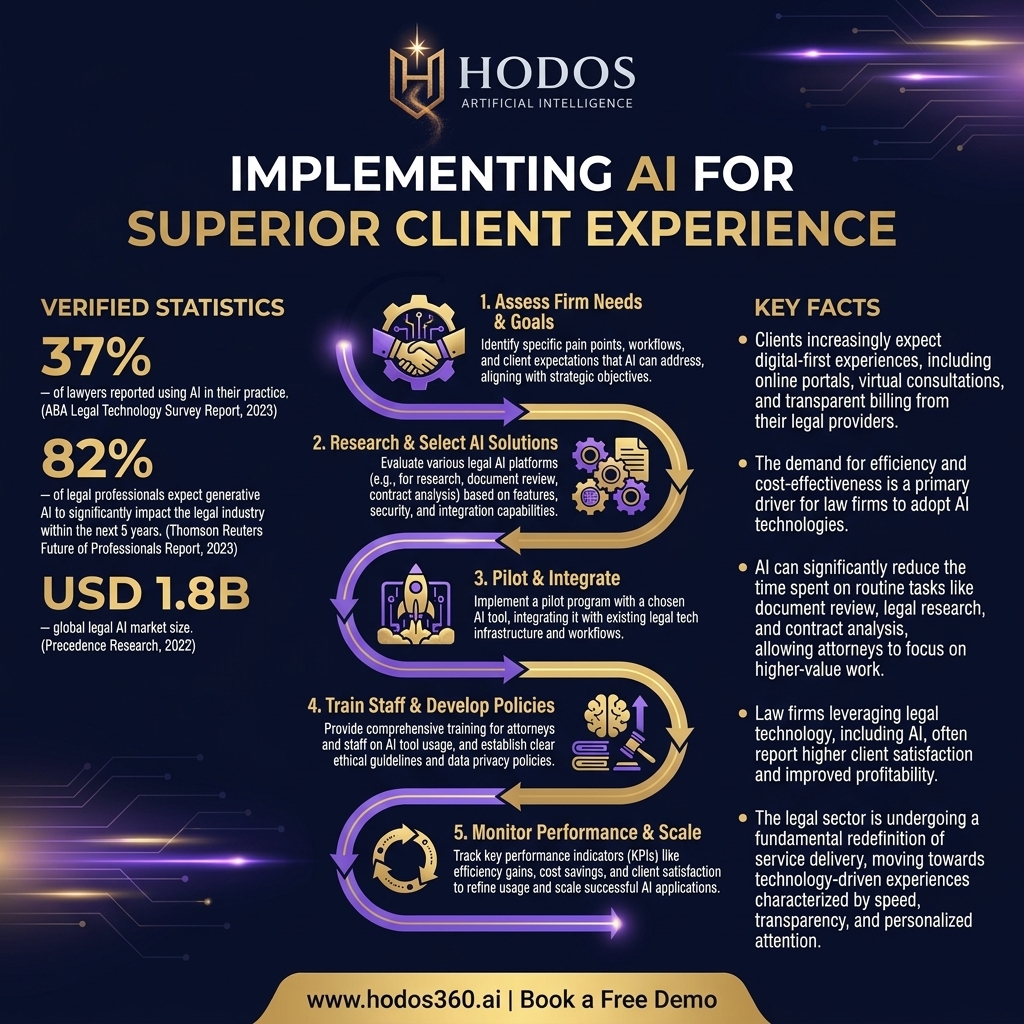
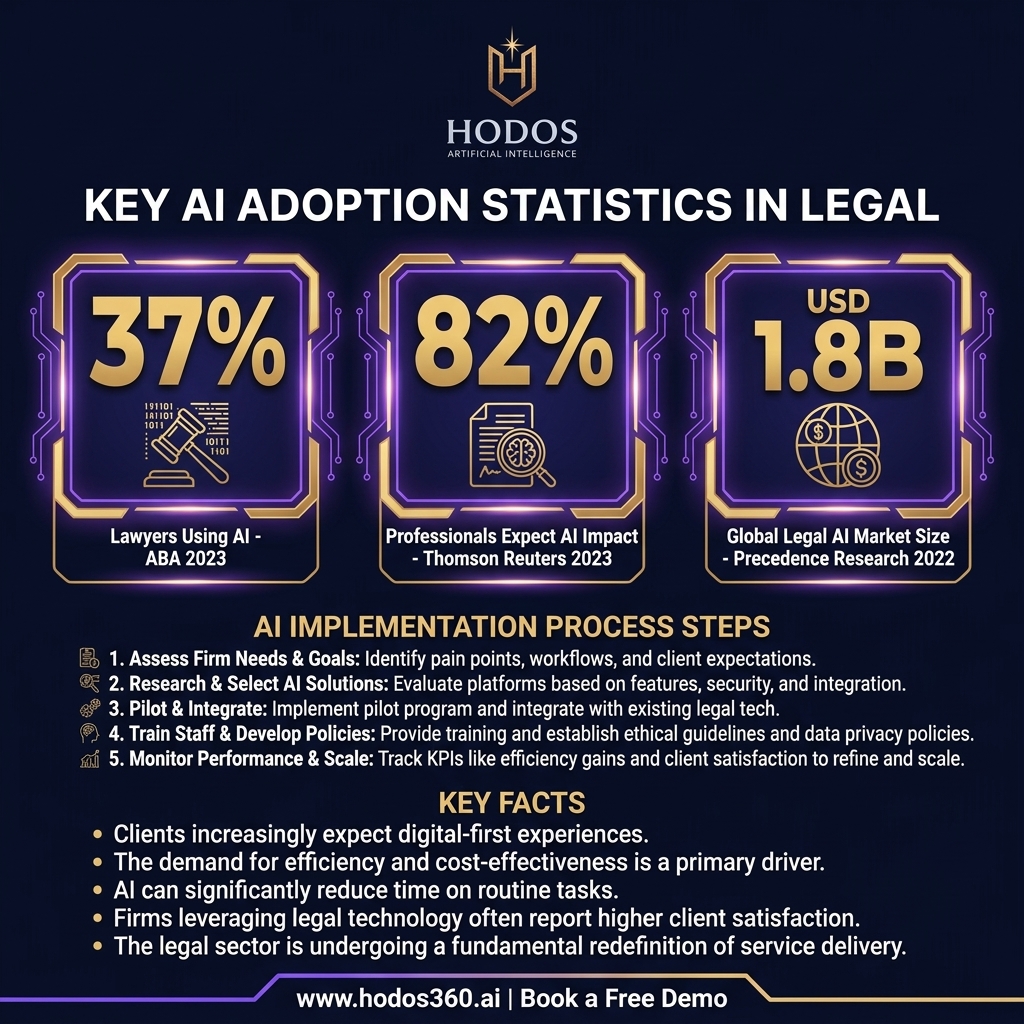
The legal industry has long operated on principles of tradition and precedent, but the digital revolution has irrevocably altered its trajectory. What began as a slow adoption of basic software for billing and document management has accelerated into a full embrace of sophisticated AI. According to the 2023 ABA Legal Technology Survey Report, nearly 50% of lawyers reported using AI in some form, a significant jump from previous years, indicating a growing acceptance within the profession itself. This internal shift is mirrored, and indeed driven, by external client demands. Clients today are digital natives or highly accustomed to digital convenience in every other aspect of their lives – from banking to healthcare. They bring these heightened expectations for speed, transparency, and accessibility to their legal engagements, making the integration of AI in law not just an advantage, but a baseline requirement.
This shift is particularly evident in the competitive landscape. When Allen & Overy announced its partnership with Harvey AI in early 2023, it sent a clear message: top-tier firms are not just experimenting with AI, they are integrating it into their core operations to enhance service delivery. This move, and similar initiatives by other global players, has effectively raised the bar for all AI-enabled law firms. Clients, whether individuals or large corporations, are now aware of the capabilities AI brings – from rapid document review to sophisticated legal research – and they expect these efficiencies to be passed on to them in the form of faster case resolution, more strategic advice, and ultimately, better value for their legal spend. The tension between firms that have fully committed to this digital transformation and those that are still hesitant creates a dramatic divide in market perception and client acquisition.
No longer content with opaque processes and lengthy turnaround times, modern clients demand real-time insights and proactive communication. Learn more about Essential AI Web Development: Build Legal Apps with Ease. They expect to understand the progress of their case without having to chase down their attorney. A 2024 Gartner report on enterprise AI adoption revealed that over 70% of businesses expect their service providers to leverage AI for improved efficiency and predictive analytics. This sentiment translates directly to the legal sector, where clients view AI as a tool for empowerment, enabling them to make more informed decisions about their legal matters. Firms that fail to meet these evolving expectations risk losing clients to competitors who have strategically invested in legal tech to offer a superior, more client-centric experience.
The narrative around AI has matured from fear and skepticism to one of strategic imperative. Law firms are no longer asking for permission to use AI; clients are demanding performance *from* its use. This means a shift from internal efficiency gains to demonstrable client benefits. For instance, a firm using AI to automate discovery processes isn't just saving its own time; it's delivering a faster, potentially less costly, and more accurate outcome for the client. This focus on tangible, client-facing value is the cornerstone of the new legal paradigm, pushing firms to rethink every aspect of their service model through an AI lens.
The Imperative of Performance: Beyond Mere Permission
The transition from AI as an experimental tool to a core performance driver is undeniable. For AI-enabled law firms, 'performance' now encapsulates speed, accuracy, cost-effectiveness, and strategic advantage. Consider the realm of legal research: traditional methods can be exhaustive and time-consuming. However, AI platforms like Thomson Reuters' own solutions or LexisNexis's offerings, augmented by generative AI, can synthesize vast databases of case law, statutes, and legal scholarship in minutes, identifying relevant precedents and predicting potential outcomes with remarkable precision. This capability translates directly into faster, more robust legal advice for clients, enhancing overall firm performance and delivering a superior product.
Beyond research, AI significantly impacts document review and contract analysis. Manual review of thousands of documents in a litigation or M&A transaction can take weeks or months, incurring substantial costs. AI-powered tools, however, can process these volumes at lightning speed, identifying key clauses, anomalies, and relevant information with over 95% accuracy, often reducing review time by 30-50%, as reported by various industry benchmarks. This efficiency gain isn't just about saving internal resources; it's about delivering a quicker, more cost-effective service to the client, directly addressing their demand for value. Learn more about Essential AI Website Security: Protecting Law Firms from Cyber Threats. For instance, a recent study by McKinsey & Company projected that AI could automate up to 23% of lawyers' tasks, freeing them to focus on higher-value, strategic work that directly benefits the client.
This drive for performance also extends to the proactive identification of risks and opportunities. Predictive analytics, a sophisticated application of AI in law, can analyze historical data from similar cases to forecast litigation outcomes, assess settlement probabilities, or identify potential regulatory pitfalls for corporate clients. This allows AI-enabled law firms to provide their clients with foresight, enabling them to make informed decisions that mitigate risks and capitalize on strategic advantages. Such proactive counsel is a hallmark of truly high-performing firms, moving beyond reactive problem-solving to strategic partnership, a key differentiator in today's competitive legal market.
Ultimately, the imperative of performance means that AI must deliver tangible, measurable benefits that improve the client's legal journey and outcome. It's about leveraging technology to provide not just answers, but *better* answers, delivered *faster*, and with greater transparency. Firms that can articulate and demonstrate these benefits are the ones that will thrive, capturing the trust and loyalty of modern clients who expect nothing less than excellence from their legal partners. The investment in legal tech is no longer a luxury but a strategic necessity to secure and enhance firm performance.
- ✓Accelerated Case Resolution and Strategic Insights: Clients expect AI to expedite legal processes, from discovery to research, leading to quicker outcomes and more data-driven strategic advice.
- ✓Enhanced Transparency and Real-time Updates: Demand for client portals and automated communication ensures clients are always informed about case progress, billing, and key developments without needing to initiate contact.
- ✓Predictable Fee Structures and Cost Efficiency: AI's ability to streamline tasks and predict outcomes allows firms to offer more transparent, often fixed-fee, pricing models, aligning with client desires for cost predictability.
- ✓Personalized Legal Advice and Service Delivery: AI helps analyze client-specific data to tailor legal strategies and communication, making clients feel understood and valued.
- ✓Proactive Risk Identification and Mitigation: Clients expect AI to identify potential legal risks before they escalate, offering preventive strategies rather than reactive solutions.
- ✓Seamless Digital Communication and Access: Integration of AI voice assistants, secure messaging, and user-friendly digital platforms for easy interaction and information exchange 24/7.
- ✓Unwavering Data Security and Confidentiality: High expectations for robust AI-powered cybersecurity measures to protect sensitive legal information and ensure compliance with data privacy regulations.
AI-Powered Client Experience: Delivering Seamless Service
The true measure of an AI-enabled law firm lies in its ability to transform the client experience from a transactional interaction into a seamless experience of partnership and trust. This begins from the very first touchpoint. Consider the journey of a potential client: instead of waiting for business hours to inquire about services, they can interact with an AI Voice Assistant 24/7, getting immediate answers to FAQs, qualifying their lead, and even booking an initial consultation. This instant gratification, mirroring experiences in other industries, sets a positive tone and significantly improves client intake efficiency, reducing friction and demonstrating the firm's commitment to modern service.
Firms are increasingly recognizing that the client journey extends beyond legal advice to encompass every interaction. Platforms like Clio, which famously acquired Lawmatics to enhance client intake and CRM capabilities, have shown the power of integrated systems in managing the client lifecycle. By leveraging an AI Law Firm Management System, firms can automate client intake, manage case files digitally, streamline billing, and provide secure client portals. These tools ensure that all client data is centralized and accessible, enabling a consistent and professional experience across all touchpoints, from initial consultation to case closure. Learn more about AI Voice Assistants: Ultimate Guide for Law Firm Efficiency. This holistic approach to client management, powered by AI, ensures that every interaction is efficient, informed, and contributes to a positive perception of the firm.
An often-overlooked aspect of the client experience is the marketing and communication strategy. An AI Marketing Platform can revolutionize how firms engage with current and prospective clients. By analyzing client demographics and preferences, AI can generate personalized content, automate social media outreach, and even create AI-powered video explanations for complex legal concepts. This targeted approach ensures that communication is relevant and timely, fostering stronger relationships and demonstrating the firm's commitment to keeping clients informed. The ability to track ROI on these marketing efforts also allows firms to continually refine their strategies, ensuring maximum impact and client satisfaction.
From Reactive to Proactive Communication
One of the most significant shifts driven by AI in the client experience is the move from reactive to proactive communication. Historically, clients often felt in the dark, waiting for updates from their lawyers. Today, AI-enabled law firms can utilize intelligent systems to provide automated, real-time updates on case progress, upcoming deadlines, and billing milestones. Imagine a client receiving an SMS notification when a court filing is made, or an email summarizing weekly case activity, all generated automatically by an AI-powered legal workflow. This level of transparency significantly reduces client anxiety and builds trust. The integration of AI Voice Assistants for routine queries further frees up legal professionals to focus on high-value strategic work, while ensuring clients always have a point of contact.
Furthermore, AI's predictive capabilities allow firms to anticipate client needs and potential issues before they arise. Learn more about Essential AI Deployment: Mastering Embedded AI for Law Firms. By analyzing patterns in case data and client interactions, AI can flag potential delays, suggest relevant legal information, or even recommend additional services that might benefit the client. This proactive engagement transforms the client-firm relationship from one of service provider and recipient to a true partnership. A firm that can foresee and address a client's concerns before they are even articulated demonstrates a profound understanding and commitment that fosters deep loyalty. This is the essence of a truly seamless experience, where technology serves to enhance, rather than replace, human connection and legal expertise.
Operational Excellence: The Backbone of Modern Legal Practice
While clients primarily focus on the outward-facing aspects of service, the ability of AI-enabled law firms to deliver a superior experience is intrinsically linked to their internal operational excellence. Behind every seamless client interaction is a robust infrastructure of legal tech streamlining workflows, managing data, and optimizing resources. The adoption of comprehensive AI Law Firm Management Systems is central to this. These platforms integrate diverse functions—from client intake and case management to billing and document automation—into a unified ecosystem. By automating repetitive administrative tasks, these systems free up attorneys and staff to focus on complex legal analysis and client engagement, directly enhancing the quality and speed of service delivery.
Consider the impact of document automation tools. Instead of manually drafting standard legal documents, attorneys can leverage AI to generate first drafts of contracts, pleadings, or motions based on predefined templates and case-specific data. This not only significantly reduces drafting time but also minimizes human error, ensuring consistency and compliance. The time saved translates directly into a faster turnaround for clients and allows legal professionals to dedicate more attention to the nuanced, strategic aspects of a case. This internal efficiency is a critical component of firm performance, enabling firms to handle a higher volume of cases with greater precision, without compromising on quality.
Beyond document automation, AI-powered legal workflows embedded within these management systems can orchestrate complex legal processes. Learn more about AI Call Receptionist: Ultimate Guide for Law Firms. From managing discovery timelines to tracking regulatory compliance, AI ensures that every step is executed efficiently and accurately. For example, in a large-scale litigation, AI can monitor thousands of data points, alerting the legal team to potential bottlenecks or emerging issues. This level of control and foresight is invaluable for maintaining high standards of service and meeting client expectations for timely and effective legal representation. It's the invisible hand of AI that ensures the visible client experience remains consistently excellent.
Furthermore, modern AI-enabled law firms are leveraging AI in their Web & Mobile Development strategies. An AI-powered website builder, for instance, can create highly responsive, SEO-optimized, and high-converting websites and mobile applications. These digital storefronts are often the first impression a client has of a firm, and an intuitive, informative, and accessible online presence is crucial. By using AI to analyze user behavior and optimize content, firms can ensure their digital platforms effectively communicate their value proposition and provide easy access to information, further enhancing the overall client journey and establishing a strong foundation for digital transformation.
Elevating Case Management with Predictive AI
The integration of predictive AI into case management systems represents a significant leap forward for AI-enabled law firms. Traditional case management often involves reactive decision-making based on current events. However, predictive AI analyzes vast datasets of historical case outcomes, judicial rulings, and even attorney performance metrics to forecast potential future scenarios. This allows firms to anticipate challenges, allocate resources more effectively, and advise clients with a higher degree of certainty regarding timelines, costs, and probable outcomes. For a client, this means less uncertainty and more strategic planning, moving beyond mere updates to genuine foresight. Learn more about AI Marketing Automation: Law Firms' 2026 Growth Catalyst. This capability is particularly impactful in complex litigation or transactional work where the stakes are high and precise forecasting is invaluable.
Moreover, AI can identify patterns in billing data to optimize resource allocation and ensure transparency in fee structures. By analyzing the time spent on various tasks across similar cases, AI can help firms develop more accurate estimates and even offer fixed-fee options, which are highly valued by modern clients seeking cost predictability. This data-driven approach not only improves internal efficiency but also enhances client trust by providing clear, justifiable billing practices. The synergy between AI-powered case management and predictive analytics creates an environment where firms can consistently deliver on their promises, fostering an unparalleled level of confidence in their firm performance.
Navigating Ethical AI and Data Security: Building Client Trust
As AI-enabled law firms increasingly leverage sophisticated technologies, the ethical implications and paramount importance of data security become critical. The legal profession is bound by strict ethical duties, including competence and confidentiality. The use of AI, while offering immense benefits, must align with these bedrock principles. The EU AI Act, which is set to be fully enforced in the coming years, provides a comprehensive framework for the responsible development and deployment of AI, particularly in high-risk sectors. While primarily impacting European operations, its principles of transparency, human oversight, and accountability are setting a global standard that all legal tech providers and users, including law firms, must heed. Firms must ensure that their AI tools are not merely efficient but are also deployed ethically, without bias, and with robust human oversight to prevent errors or misinterpretations that could harm clients.
Data security is non-negotiable in the legal field. Clients entrust law firms with their most sensitive and confidential information, from personal details to proprietary business secrets. The adoption of AI introduces new vectors for data handling and potential vulnerabilities that must be rigorously addressed. AI-enabled law firms must invest in state-of-the-art cybersecurity infrastructure, including AI-powered threat detection and response systems, to safeguard client data. This isn't just about compliance with regulations like GDPR or CCPA; it's about maintaining the fundamental trust that underpins the attorney-client relationship. A single data breach can irreparably damage a firm's reputation and lead to severe legal and financial repercussions, underscoring the critical need for robust security protocols.
Furthermore, the ethical use of AI requires an ongoing commitment to understanding its limitations and potential biases. AI models are only as good as the data they are trained on, and biased data can lead to discriminatory or inaccurate outcomes. Firms must implement rigorous validation processes for their AI tools, regularly auditing their performance and ensuring that human legal professionals remain in the loop for critical decision-making. This human-AI collaboration ensures that while AI enhances efficiency, the ultimate responsibility for legal advice and client outcomes rests with the attorney, in line with professional obligations like ABA Model Rule 1.1 (Competence). This approach cultivates confidence among clients that their legal matters are handled with both technological prowess and unwavering ethical stewardship.
The tension between innovation and responsibility is a defining characteristic of the AI era. Firms that successfully navigate this tension, demonstrating both cutting-edge technological capability and an unyielding commitment to ethical practice and data security, will be the ones that truly excel. They will not only attract modern clients but also retain their loyalty by proving themselves to be trustworthy stewards of both legal expertise and sensitive information. This dual focus is essential for building a sustainable and reputable AI-enabled law firm in the 21st century.
Securing Client Trust in the AI Era
Building and maintaining client trust in the AI era demands proactive measures far beyond traditional compliance. It requires clear communication about how AI is used, what safeguards are in place, and how human oversight ensures ethical outcomes. Firms must be transparent about their data privacy policies and cybersecurity measures, explicitly addressing client concerns regarding the confidentiality of their information, as mandated by ABA Model Rule 1.6 (Confidentiality of Information). This includes explaining how AI systems process data, where it is stored, and who has access to it. Regularly updated privacy notices and dedicated client education on these topics can significantly alleviate anxieties.
Moreover, fostering a culture of responsible AI within the firm is paramount. This means providing continuous training for attorneys and staff on AI ethics, data governance, and the firm's specific AI protocols. It's about empowering legal professionals to critically evaluate AI outputs and to intervene when necessary, ensuring that technology serves justice, not the other way around. By demonstrating this commitment to both technological advancement and unwavering ethical responsibility, AI-enabled law firms can solidify their position as trusted advisors, proving that innovation and integrity are not mutually exclusive but rather synergistic forces in delivering exceptional legal service.

Key Takeaways and Next Steps
The legal profession stands at an inflection point. The expectations of modern clients have irrevocably shifted, moving beyond mere tolerance of technology to an active demand for performance, transparency, and a seamless experience driven by AI. The firms that recognize and proactively adapt to this new reality—the truly AI-enabled law firms—are not just surviving but thriving. They are leveraging sophisticated legal tech to deliver faster, more accurate, and more cost-effective services, fundamentally redefining the value proposition of legal counsel. The journey from permission to performance is not a linear path but a continuous evolution, requiring strategic investment and a forward-thinking mindset.
For law firm owners and legal professionals grappling with these changes, the message is clear: embracing a comprehensive, integrated AI strategy is no longer a competitive advantage, but a foundational necessity. This involves adopting tools that streamline internal operations, enhance client communication, and provide a superior digital experience. Consider solutions that offer an AI Law Firm Management System for integrated case management and document automation, an AI Marketing Platform for engaging client outreach, AI Voice Assistants for 24/7 support, and robust Web & Mobile Development for a strong digital presence. These integrated capabilities are crucial for meeting and exceeding the demands of today's discerning clients. Investing in such comprehensive platforms allows firms to centralize their operations, automate repetitive tasks, and free up valuable attorney time for strategic, client-facing work.
The future of legal practice belongs to those who understand that technology is not just a tool but an enabler of deeper client relationships and superior outcomes. By strategically integrating AI across all facets of their practice—from client intake to case resolution—firms can build a reputation for innovation, efficiency, and unwavering client focus. The opportunity to reshape the legal landscape and secure a competitive edge is now. Don't just meet expectations; redefine them. The time for proactive digital transformation is here, ensuring your firm is not just prepared for the future, but actively shaping it.
Frequently Asked Questions
What are the primary expectations modern clients have for AI-enabled law firms?+
Modern clients expect AI-enabled law firms to deliver faster case resolution, greater transparency in processes and billing, and a seamless digital experience. They demand proactive communication, personalized advice, and cost-efficiency, moving beyond basic digital tools to sophisticated AI that provides tangible benefits and strategic insights, ultimately enhancing their overall legal experience.
How does AI improve the client experience beyond just efficiency?+
Beyond efficiency, AI significantly improves client experience by fostering trust and control through enhanced transparency and proactive communication. AI-powered systems provide real-time updates and personalized interactions, making clients feel informed and valued. AI Voice Assistants offer 24/7 access, reducing anxiety, while predictive analytics empower clients with foresight, turning reactive services into strategic partnerships.
What are the ethical considerations for law firms using AI?+
Ethical considerations for AI in law firms include ensuring competence (ABA Model Rule 1.1), maintaining client confidentiality (ABA Model Rule 1.6), and preventing bias in AI algorithms. Firms must ensure human oversight, transparently communicate AI usage to clients, and implement robust data security measures to protect sensitive information, aligning with legal and professional duties.
Can small and mid-sized firms effectively implement AI solutions?+
Absolutely. Cloud-based AI solutions and platforms have democratized access to advanced legal tech, making it highly accessible and cost-effective for small and mid-sized firms. These integrated systems can significantly level the playing field, allowing smaller firms to automate tasks, enhance client services, and compete effectively with larger counterparts without requiring massive upfront IT investments.
How does AI contribute to a law firm's overall performance?+
AI contributes to overall firm performance by automating mundane tasks, improving accuracy in legal research and document review, and enhancing strategic decision-making through predictive analytics. This leads to increased efficiency, reduced operational costs, and the ability to handle more cases effectively. Ultimately, it allows attorneys to focus on high-value work, leading to better client outcomes and stronger firm reputation.