
Essential AI Deployment: Mastering Embedded AI for Law Firms
The year is 2026, and for many law firms, the promise of artificial intelligence remains a tantalizing but often elusive vision. Consider the anecdote of Sarah Chen, a managing partner at a mid-sized litigation firm in Dallas. For two years, Sarah's firm invested heavily in various legal AI tools—from contract review software to predictive analytics platforms. Yet, despite the substantial outlay, the firm saw only marginal gains. Lawyers felt overwhelmed by new interfaces, data wasn't clean enough for the AI models to be truly effective, and the initial enthusiasm dwindled into a quiet frustration. Their experience wasn't unique; it highlighted a critical challenge across the legal industry: the gap between acquiring AI tools and successfully deploying them to transform operations. This narrative underscores a pervasive issue where firms often mistake procurement for AI deployment, leading to underutilized technology and missed opportunities for efficiency and competitive advantage.
This challenge is precisely what companies like Harbor are now addressing. Just recently, Law.com reported on Harbor's launch of "Harbor Deploy," an embedded AI deployment offering designed to bridge this gap by placing specialist teams directly within law firms. This strategic move, echoing approaches taken by the world's largest AI companies in other sectors, signifies a maturing legal tech market. It's a recognition that true AI transformation requires more than just powerful software; it demands deep integration, bespoke customization, and robust change management. The era of simply buying an AI model and expecting magic is over; successful firms must now master the art and science of AI deployment to truly harness its potential.
This article delves into the critical strategies for effective AI deployment in legal practice. We will explore what embedded AI deployment truly entails, moving beyond superficial implementations to discuss how law firms can strategically integrate AI into their core workflows. From navigating the complexities of data governance and ethical considerations to measuring tangible ROI, we aim to provide a comprehensive roadmap for legal professionals ready to move from AI aspiration to concrete, impactful reality. This is not just about adopting new technology; it's about fundamentally rethinking how legal services are delivered and how your firm can stay competitive in an increasingly AI-driven legal landscape.
The Evolving Landscape of Legal AI Adoption and the "Deployment Gap"
The legal industry's journey with artificial intelligence has been marked by cycles of hype and cautious adoption. Early enthusiasm, fueled by advancements from research powerhouses like OpenAI and Anthropic, led many firms to invest in nascent AI models with the promise of unprecedented efficiency. However, the reality for many, as illustrated by Sarah Chen's firm, was often a struggle with integration. According to the 2023 ABA TechReport, while 38% of lawyers reported using generative AI, a significant portion cited challenges in implementation, training, and lack of clear ROI. This data points to a clear "deployment gap" – the chasm between acquiring sophisticated legal AI tools and successfully embedding them into daily operations to yield measurable benefits. This gap is not merely a technical issue; it's a strategic one, often stemming from an underestimation of the human and organizational factors involved in technological shifts.
Historically, law firms have been early adopters of various technologies, from word processors to practice management software, but AI deployment presents a unique set of challenges. Unlike traditional software, AI often requires continuous data feeding, model refinement, and a fundamental shift in how lawyers approach their work. The complexity of using these advanced AI models effectively demands more than just installing a program; it necessitates a deep understanding of legal workflows, data structures, and the nuances of legal reasoning. This is where the traditional vendor-client relationship often falls short, leading to frustration and underperformance. Firms found themselves with powerful tools but without the internal expertise or external support to fully leverage them.
This critical need for deeper integration is precisely why companies like Harbor are launching new offerings focused on embedded AI deployment. Learn more about Legal Tech Adoption: Mastering AI for Law Firms in 2026. As Matt Sunderman, CEO of Harbor, articulated in a recent interview, "The legal industry has moved past the 'proof of concept' phase. Firms now understand the power of AI, but they need help making it work within their unique operational realities. That's why we're literally embedding our experts." This strategy, mirroring how tech giants like Microsoft or Google deploy their complex AI models internally or for key enterprise clients, acknowledges that successful AI deployment requires a hands-on, consultative approach. It's about bringing the expertise to the client, rather than expecting the client to become an AI expert overnight. This shift represents a significant evolution in the legal tech market, moving towards more holistic and integrated solutions that address the full lifecycle of AI adoption, from initial setup to ongoing optimization.
The implications for law firms are profound. Those that recognize and address this deployment gap by adopting strategic, embedded AI approaches will be better positioned to capitalize on AI's transformative potential. They will move beyond simply using AI to truly integrating it, creating a competitive advantage in efficiency, accuracy, and client service. Firms that continue to struggle with disjointed implementations risk falling behind, trapped in a cycle of underperforming technology investments. The future of legal practice is not just about having AI; it's about mastering its deployment.
Understanding Embedded AI Deployment: Beyond Off-the-Shelf Solutions
Embedded AI deployment represents a paradigm shift from the conventional "buy and install" model of software acquisition. Instead of simply purchasing an off-the-shelf AI model or platform, firms engaging in embedded deployment benefit from a deeper, more integrated approach where AI specialists work directly within their organization. This model is not new to the broader tech landscape; for years, world's largest AI companies like Google and Microsoft have built deployment arms to ensure their advanced AI models are seamlessly integrated into complex enterprise environments. The core idea is to tailor the AI solution to the specific nuances of the client's operations, data architecture, and strategic goals, ensuring maximum utility and minimal disruption. In the legal sector, this means understanding the unique intricacies of case management, client intake, document automation, and billing processes.
The benefits of this embedded approach for law firms are multifaceted. Firstly, it allows for highly customized AI models that are trained on the firm's specific data, jurisdictional nuances, and preferred legal terminology. This level of customization significantly enhances accuracy and relevance, moving beyond generic outputs to deliver insights directly applicable to the firm's caseload. Secondly, embedded deployment facilitates superior change management. As Harbor CEO Matt Sunderman noted, the experts brought in are not just technicians; they are change agents who understand how to navigate internal resistance, provide hands-on training, and foster a culture of AI adoption. This human element is crucial for overcoming the psychological barriers that often hinder technological transitions in traditionally conservative industries.
Furthermore, embedded AI deployment can significantly improve data governance and security. Learn more about AI Marketing: Law Firms Slash $225K Tools in 2026. With specialists working directly within the firm's environment, they can ensure that AI models are using data ethically, securely, and in compliance with stringent legal and regulatory requirements, such as client confidentiality obligations under ABA Model Rule 1.6. This is particularly vital in the legal sector where data privacy breaches can have severe consequences. The specialists can help design robust data pipelines, implement access controls, and monitor AI performance to identify and mitigate biases or inaccuracies, ensuring that the AI tools enhance, rather than compromise, the integrity of legal work. This proactive approach to data management is a cornerstone of responsible AI implementation and a key differentiator of embedded deployment.
Finally, the embedded model fosters a continuous feedback loop between the firm and the AI provider. As legal workflows evolve and new challenges emerge, the on-site specialists can rapidly adapt and retrain the AI models, ensuring that the technology remains relevant and effective. This iterative process of refinement is essential for sustaining the long-term value of AI investments. Firms that leverage this model effectively will find themselves with AI models that are not just tools, but integral components of their operational infrastructure, constantly evolving to meet the demands of a dynamic legal landscape. This is the future of AI deployment, where technology and expertise merge to create truly transformative solutions.
The Critical Role of Change Management in AI Integration
The most sophisticated AI models in the world are useless if the people meant to use them resist or misunderstand their purpose. This is where change management becomes paramount in AI deployment. For law firms, the adoption of AI is not merely a technological upgrade but a cultural shift. Lawyers, often trained in traditional methods, may view AI with skepticism, fearing job displacement or the erosion of professional judgment. Overcoming this requires more than just training sessions; it demands empathetic leadership, clear communication about AI's supportive role, and demonstrating tangible benefits. Firms that successfully navigate this often employ 'AI champions'—early adopters who can evangelize the technology and mentor colleagues, creating a grassroots movement for adoption.
Successful embedded AI deployment strategies, like the one Harbor is launching, inherently incorporate robust change management. Learn more about Legal AI ROI: Proven Strategies for Measuring Investment Return. These offerings typically include dedicated professionals who work alongside firm staff, understanding their daily struggles and demonstrating how AI can alleviate pain points, rather than create new ones. This hands-on, collaborative approach helps to demystify AI, making it less of an abstract threat and more of a practical assistant. The goal is to integrate AI into existing workflows so seamlessly that it feels like a natural extension of a lawyer's capabilities, not an imposed burden. This focus on the human element ensures that the investment in AI models translates into actual productivity gains and improved morale, reinforcing the firm's commitment to innovation and employee empowerment.
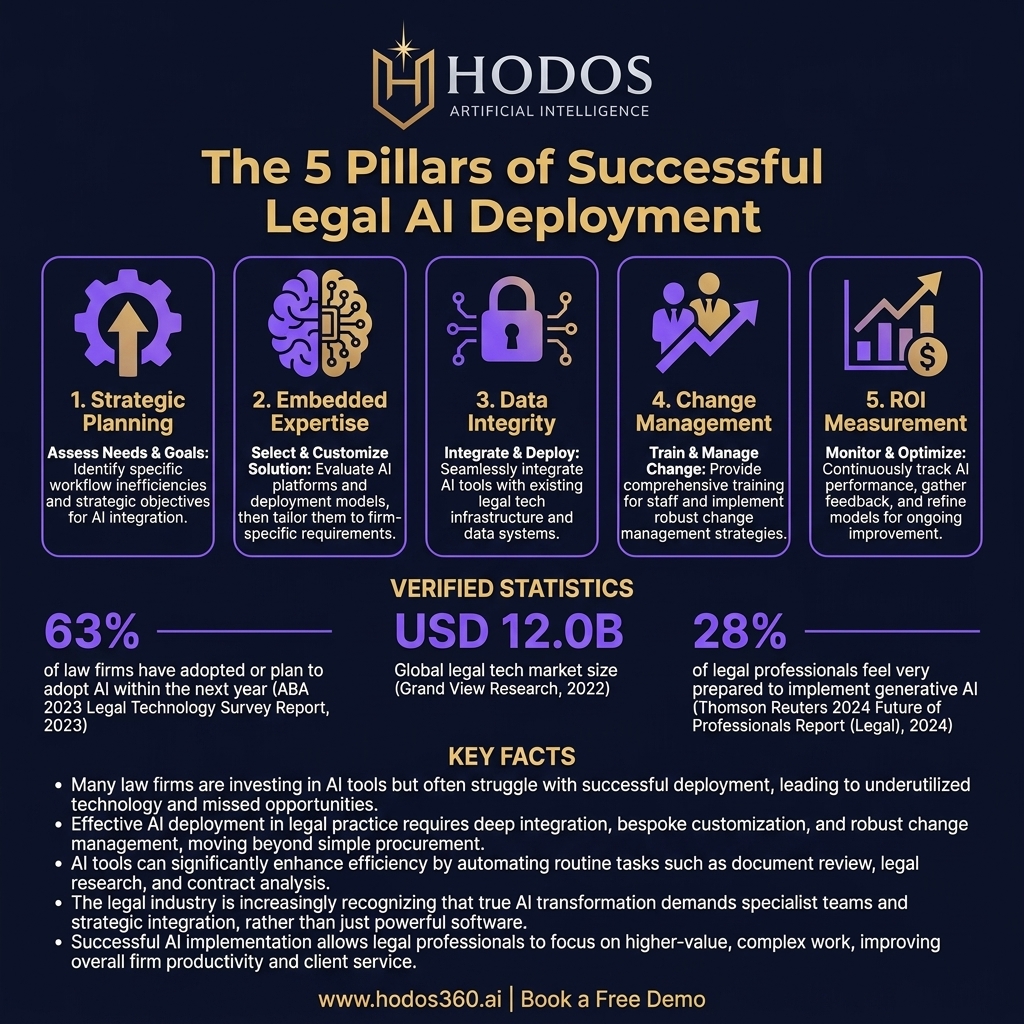
Strategic Planning for Seamless AI Integration in Your Practice
Effective AI deployment in a law firm begins long before any software is installed. It requires a meticulous strategic planning phase that assesses current workflows, identifies pain points, and defines clear objectives for AI integration. Firms should start with a comprehensive audit of their existing systems and data infrastructure, understanding what data is available, its quality, and how it can be leveraged by AI models. This initial assessment is critical for identifying the most impactful areas for AI intervention, whether it's automating routine document drafting, enhancing legal research, or optimizing client intake. Without a clear understanding of the firm's needs and capabilities, even the most advanced AI models from the world's largest AI companies will struggle to deliver meaningful results.
Once potential areas are identified, firms should consider pilot programs. For instance, a firm might initially deploy an AI tool for contract review in a specific practice group, such as corporate law, before rolling it out firm-wide. This phased approach allows for testing, refinement, and early identification of challenges in a controlled environment. Key performance indicators (KPIs) should be established upfront to measure the success of the pilot, such as time saved on document review, accuracy rates, or reduction in administrative overhead. This data-driven approach ensures that AI deployment decisions are based on tangible results, building internal confidence and securing buy-in from attorneys and staff. Companies like Clio, which have successfully integrated AI into their practice management solutions, emphasize the importance of iterative development and user feedback.
Data governance and security are paramount in legal AI deployment. Law firms handle highly sensitive client information, and any AI model using this data must adhere to the highest standards of confidentiality and data protection. Learn more about Ultimate Inbound Marketing AI Guide for Law Firms. This involves implementing robust data encryption, access controls, and ensuring compliance with regulations like GDPR or CCPA. Furthermore, firms must address the ethical implications of AI, particularly concerning bias in AI models and the potential for hallucination. The ABA Standing Committee on Ethics and Professional Responsibility has issued guidance on lawyers' ethical obligations when using AI, emphasizing the duty of competence (ABA Model Rule 1.1) and diligence, which extends to understanding the technology's limitations and supervising its use. Firms should establish clear internal policies for AI use, including guidelines for verifying AI-generated content and ensuring human oversight.
Finally, selecting the right AI partners and platforms is crucial. Firms should look for offerings that are not only technologically advanced but also demonstrate a deep understanding of the legal industry's unique demands. Integrated platforms, like HODOS 360's comprehensive AI Law Firm Management System, can offer significant advantages by providing a unified ecosystem for case management, document automation, and AI-powered workflows. Such platforms reduce the complexity of managing multiple vendors and disparate systems, making AI deployment more streamlined and effective. The goal is to choose solutions that are built for scalability and future-proofing, allowing the firm to adapt as AI technology continues to evolve. This strategic approach to partnership ensures that the firm's AI deployment is not a one-time event but an ongoing journey of innovation.
Data Integrity and Ethical AI Use in Legal Workflows
The axiom "garbage in, garbage out" holds particularly true for AI models in the legal sector. The effectiveness of any AI deployment hinges critically on the quality and integrity of the data it processes. Law firms must invest in robust data cleansing and standardization processes before feeding information into AI models. Inaccurate, incomplete, or inconsistently formatted data can lead to erroneous outputs, undermining the very purpose of using AI for efficiency and accuracy. This often involves migrating legacy data, establishing clear data entry protocols, and ensuring regular data audits. Firms that neglect this foundational step risk building their AI strategy on shaky ground, leading to unreliable results and eroded trust in the technology.
Beyond data integrity, the ethical implications of AI deployment are a paramount concern for legal professionals. As AI becomes more sophisticated, questions arise about algorithmic bias, fairness, and transparency. Learn more about AI Website Builder: Essential Tools for Law Firm Growth. For example, an AI model trained predominantly on historical case data might inadvertently perpetuate biases present in past legal decisions. Law firms have a professional obligation to ensure that their AI models are built and used in a manner that upholds justice and avoids discrimination. This requires continuous monitoring of AI outputs, independent audits of algorithmic fairness, and a commitment to human oversight. The duty of supervision (ABA Model Rule 5.1) extends to ensuring that non-lawyer personnel, including AI, operate ethically and competently. Firms must proactively develop internal guidelines and training to address these complex ethical dilemmas, ensuring that their AI deployment aligns with the core values of the profession.
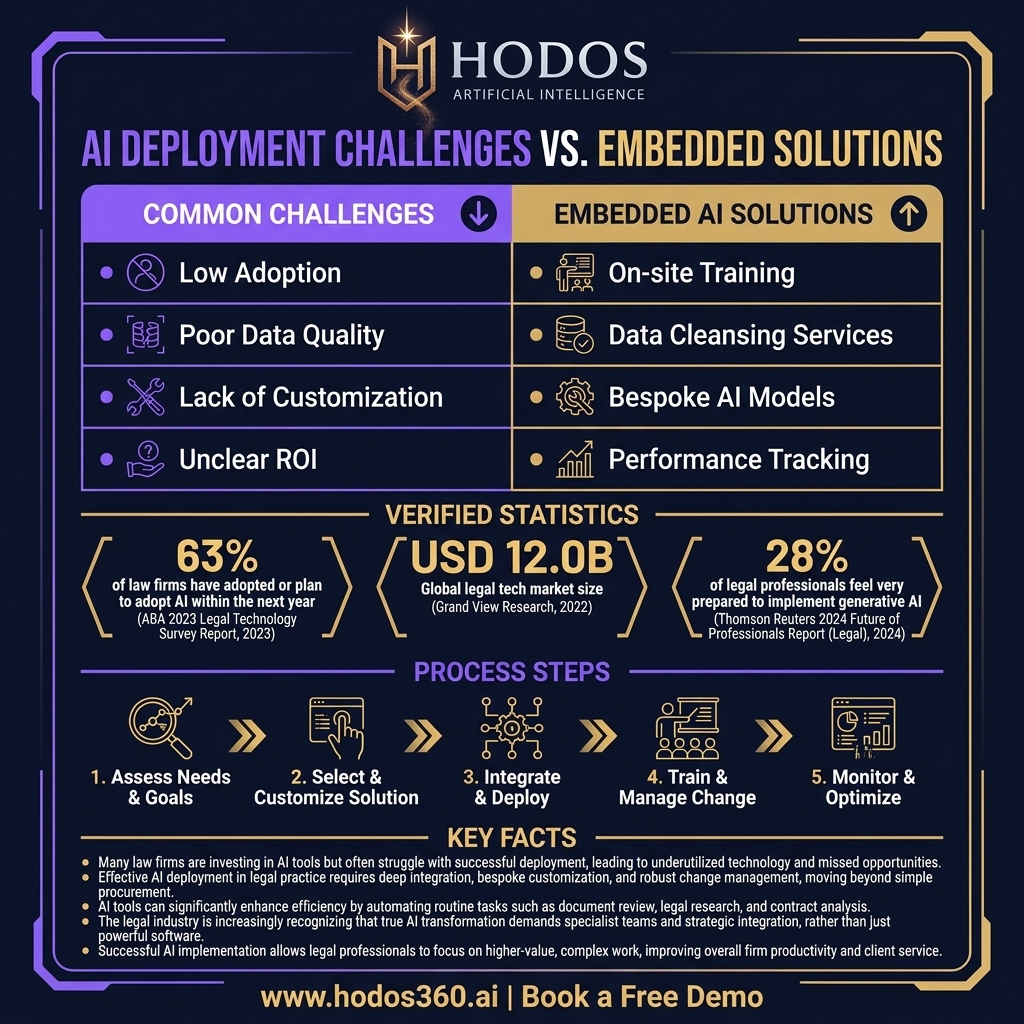
Measuring ROI and Sustaining AI Value in Legal Operations
For any significant technological investment, demonstrating a clear Return on Investment (ROI) is essential. This is particularly true for AI deployment in law firms, where initial costs can be substantial. Measuring ROI for AI goes beyond simple cost savings; it encompasses improvements in efficiency, accuracy, client satisfaction, and competitive positioning. Firms need to establish clear metrics before launching their AI models. For instance, if an AI tool is built to automate document review, metrics could include the reduction in billable hours spent on review, the increase in documents processed per hour, and the improvement in error detection rates. Thomson Reuters' annual State of the Legal Market Report consistently highlights efficiency and innovation as key drivers for firm growth, directly linking to successful AI deployment.
Sustaining the value of AI models requires ongoing effort. AI is not a static technology; it evolves rapidly, and its effectiveness can degrade over time if not properly maintained. This involves regular updates to the AI models, retraining them with new data, and adapting them to changes in legal regulations or firm practices. Firms should allocate resources for continuous monitoring of AI performance, ensuring that the AI models remain accurate and relevant. This proactive maintenance prevents what's known as "model drift," where an AI's performance deteriorates as the data it processes diverges from its training data. Learn more about Essential AI Safeguards: Navigating Responsible Legal Tech. The world's largest AI companies invest heavily in continuous improvement cycles for their AI models, a lesson legal firms can learn from.
Beyond the immediate operational gains, strategic AI deployment can unlock new revenue streams and enhance client relationships. By automating routine tasks, lawyers can dedicate more time to complex legal analysis, client strategy, and business development. This not only improves job satisfaction but also allows firms to offer more sophisticated services or handle a higher volume of cases without proportionally increasing headcount. Furthermore, the ability to leverage predictive analytics can provide clients with more accurate case outcome probabilities or cost estimates, leading to greater transparency and trust. The firm that effectively deploys AI becomes a more agile, responsive, and data-driven entity, better equipped to meet the evolving demands of its client base and the legal market.
Ultimately, the goal is to transform AI from a standalone tool into an integral part of the firm's strategic advantage. This means embedding AI into the firm's culture, processes, and business model. It requires leadership vision, investment in training, and a commitment to continuous innovation. Firms that view AI deployment as an ongoing journey, rather than a destination, will be the ones that truly harness its transformative power. They will not only survive but thrive in the future of legal practice, building a reputation for cutting-edge service and unparalleled efficiency through the intelligent application of AI models.
Future-Proofing Your Firm: Continuous Learning and Adaptation
The pace of AI innovation, driven by breakthroughs from companies like Google DeepMind and OpenAI, means that what is cutting-edge today may be standard practice tomorrow. For law firms, future-proofing their AI deployment strategy means fostering a culture of continuous learning and adaptation. This involves regular training for all staff on new AI capabilities, understanding emerging ethical guidelines, and staying abreast of advancements in AI models. Firms should encourage experimentation and allocate time for lawyers and legal professionals to explore how new AI tools can enhance their specific practice areas. This proactive engagement ensures that the firm's AI deployment remains agile and responsive to the evolving technological landscape.
Furthermore, future-proofing entails building flexible AI infrastructures that can easily integrate new AI models and adapt to different cloud environments. This foresight in initial deployment decisions can save significant resources down the line, allowing firms to pivot quickly to new opportunities without extensive rehauls. The ability to seamlessly integrate new offerings or upgrade existing AI models will be a hallmark of truly innovative law firms. This strategic agility ensures that the firm can continuously leverage the latest AI advancements, maintaining its competitive edge and delivering superior results for clients in an ever-changing legal world.

Key Takeaways and Next Steps for Modern Law Firms
The launch of offerings like Harbor Deploy signals a pivotal moment for legal AI: the industry is moving from theoretical interest to practical, embedded AI deployment. For law firms, the key takeaway is clear – successful AI integration is not about merely acquiring technology, but about strategically embedding it into the very fabric of the practice. This demands a holistic approach that prioritizes meticulous planning, robust change management, unwavering data integrity, and a clear focus on measurable ROI. Firms that embark on this journey with a clear vision, supported by the right partners and internal champions, will unlock unprecedented levels of efficiency, innovation, and client service.
As you consider your firm's AI deployment strategy, remember that the goal is not to replace human expertise but to augment it. AI tools, when properly integrated, free up lawyers from mundane tasks, allowing them to focus on high-value, complex legal work that truly leverages their unique skills and judgment. This shift elevates the practice of law, making it more engaging for attorneys and more valuable for clients. The competitive landscape for law firms is rapidly evolving, and those that master AI deployment will undoubtedly lead the charge into a more efficient and innovative future. Embrace this evolution, plan strategically, and watch your firm thrive.
For firms seeking a comprehensive partner in this transformation, HODOS 360 offers an AI-powered platform designed to facilitate seamless AI deployment across all aspects of law firm operations. From AI Law Firm Management Systems that streamline workflows to AI Voice Assistants that enhance client engagement, our integrated offerings are built to help your firm navigate the complexities of AI and unlock its full potential.
- ✓Prioritize Strategic Planning: Begin with a clear assessment of your firm's needs, data infrastructure, and specific pain points that AI can address. Define measurable objectives for your AI deployment.
- ✓Embrace Embedded Expertise: Consider offerings like Harbor Deploy that provide on-site specialists for deep customization and change management. This ensures AI models are tailored to your unique workflows.
- ✓Invest in Data Integrity: High-quality data is the foundation of effective AI. Implement robust data cleansing, standardization, and governance protocols to ensure your AI models deliver accurate results.
- ✓Champion Change Management: Recognize that AI adoption is a cultural shift. Foster internal 'AI champions,' provide continuous training, and communicate AI's role as an augmentative tool, not a replacement.
- ✓Uphold Ethical Standards: Establish clear internal policies for AI use, addressing bias, transparency, and human oversight. Ensure compliance with professional obligations like client confidentiality (ABA Model Rule 1.6) and competence (ABA Model Rule 1.1).
- ✓Measure and Iterate: Define clear ROI metrics from the outset. Continuously monitor AI performance, gather feedback, and be prepared to update and retrain AI models to sustain long-term value and adapt to new legal challenges.
- ✓Choose Integrated Platforms: Opt for comprehensive solutions that unify various AI-powered services, simplifying management and enhancing overall AI deployment efficiency.
Frequently Asked Questions
What is embedded AI deployment in the legal context?+
Embedded AI deployment involves placing AI specialists directly within a law firm to customize, integrate, and manage AI solutions. Unlike off-the-shelf software, this approach ensures the AI models are deeply tailored to the firm's specific workflows, data, and strategic goals, facilitating better change management and optimal utilization. It addresses the unique operational realities of legal firms.
Why are law firms struggling with AI deployment?+
Many law firms struggle because they often acquire AI tools without a comprehensive strategy for integration, change management, or data preparation. This leads to a "deployment gap" where powerful AI models are underutilized due to lack of internal expertise, resistance from staff, or insufficient data quality. The complexity of legal workflows also presents unique challenges.
How can law firms measure the ROI of AI deployment?+
Measuring ROI involves tracking metrics beyond just cost savings. Firms should monitor improvements in efficiency (e.g., time saved on tasks), accuracy rates, enhanced client satisfaction, and new revenue streams unlocked by AI. Establishing clear KPIs before AI deployment and continuously monitoring performance against these metrics is crucial for demonstrating value and sustaining investment.
What are the ethical considerations for AI deployment in legal practice?+
Ethical considerations include ensuring data privacy and confidentiality (ABA Model Rule 1.6), addressing algorithmic bias, maintaining human oversight, and upholding the duty of competence (ABA Model Rule 1.1) regarding AI tools. Firms must establish clear policies for verifying AI-generated content and ensuring that AI models are built and used responsibly to avoid ethical breaches.
What role does data integrity play in successful AI deployment?+
Data integrity is foundational. AI models are only as good as the data they process. Law firms must invest in robust data cleansing, standardization, and governance to ensure accurate and consistent inputs. Poor data quality can lead to erroneous AI outputs, undermining trust and negating the benefits of AI deployment. Clean, well-structured data is essential for reliable AI performance.