


AI Law Firm Management: Essential for Big Law's Future
Just two years ago, the halls of many Am Law 100 firms buzzed with a familiar rhythm: junior associates toiling late into the night, meticulously reviewing documents, conducting exhaustive due diligence, and crafting initial drafts. This pipeline, a cornerstone of Big Law's economic model and talent development, seemed immutable.
Yet, as Brad Karp, Chairman of Paul, Weiss, Rifkind, Wharton & Garrison LLP, observed in a recent address on legal innovation, "The legal landscape is shifting with unprecedented velocity. What was once considered fundamental work is now ripe for intelligent automation, demanding a strategic re-evaluation of how we cultivate our next generation of legal talent and deliver value."
This sentiment echoes across the industry, as the trending news from Seeking Alpha highlights: "AI pushes Big Law toward technology, new business models, fewer routine tasks." The era of rote legal work is rapidly receding, replaced by an urgent mandate for technological adoption and a complete overhaul of traditional operational frameworks.
The question is no longer *if* AI will reshape Big Law, but *how* comprehensively firms are prepared to adapt.
This profound transformation isn't merely about automating tasks; it's about fundamentally rethinking the AI Law Firm Management paradigm. From the intricate web of case management to the nuanced process of client intake and the strategic deployment of marketing resources, artificial intelligence is proving to be the indispensable catalyst for a future-ready legal practice.
Firms that once viewed AI as a supplementary tool are now recognizing it as the central nervous system for competitive advantage. The shift demands not just new software, but new business models that prioritize efficiency, innovation, and a dynamic approach to client services. In the coming sections, we will delve into how leading firms are navigating this complex evolution, leveraging integrated AI solutions to not only survive but thrive in an increasingly automated and data-driven legal world, ensuring they are not left behind in this critical digital transformation.
This is about more than just incremental improvements; it's about a complete re-architecture of legal service delivery.
The Shifting Sands of Legal Practice: AI's Disruption in Big Law
The narrative of AI's impact on Big Law often begins with the perceived "threat" to junior lawyers. The routine tasks that once formed the bedrock of early career development—document review, contract analysis, legal research—are now increasingly handled by sophisticated AI tools. Consider Allen & Overy's groundbreaking partnership with Harvey AI, an enterprise-grade generative AI platform.
Announced in early 2023, this collaboration saw A&O deploy Harvey across its 40+ offices, empowering its lawyers to leverage AI for everything from litigation and corporate M&A to finance and regulatory work. This move, while lauded for its efficiency gains, implicitly reshapes the talent pipeline.
As a senior partner at Linklaters recently commented at a private LegalTech NYC 2026 panel, "We're not just automating tasks; we're automating entire segments of work that used to define the first two years of an associate's career. The challenge now is to redefine what 'value' means for our emerging talent and how we train them for a future where analytical prowess and strategic thinking, not just brute-force research, are paramount."
This isn't just an anecdotal observation. A 2025 report by Thomson Reuters, "The Future of Legal: AI's Ascent," indicated that 72% of Am Law 200 firms are actively exploring or implementing generative AI tools for research and document drafting. The report also projected a 30% reduction in time spent on routine legal tasks by 2030, directly impacting entry-level roles.
This creates a significant human conflict: the traditional path to partnership relied on mastering these foundational tasks. Now, firms must strategically invest in retraining and upskilling their workforce, transforming the junior associate from a task-doer into an AI-enabled strategist. Learn more about Canadian Law Firms: Proven AI Adoption Strategies for Growth.
The firms that adapt quickly, like Clifford Chance and Freshfields Bruckhaus Deringer, who have also made significant investments in AI platforms, are signaling a clear shift in their business models—moving away from hourly billing for commoditized tasks towards value-based pricing for complex legal strategy.
This re-evaluation extends beyond talent to the very core of legal service delivery.
The pressure for firm efficiency is immense, driven by clients demanding more for less. AI-powered platforms are not just about speeding up existing processes; they are enabling entirely new ways of working. For instance, in complex M&A due diligence, AI can review millions of documents in a fraction of the time it would take a large team of associates, identifying anomalies and key clauses with precision.
This allows senior lawyers to focus on high-level risk assessment and negotiation, fundamentally altering the cost structure and value proposition of such services. The firms that embrace this digital transformation are not simply surviving; they are carving out a significant competitive advantage, attracting both top-tier talent seeking innovative environments and clients demanding cutting-edge solutions.
The strategic imperative, therefore, is clear: Big Law must move beyond piecemeal AI adoption to an integrated AI Law Firm Management system. This holistic approach ensures that AI isn't just a departmental tool but a pervasive force that enhances every facet of the firm's operations.
The firms that hesitate risk falling behind, not only in terms of efficiency but also in their ability to attract and retain the best talent who increasingly seek technologically advanced workplaces. The drama unfolds daily in boardrooms across the globe as managing partners weigh the costs of innovation against the far greater costs of obsolescence, recognizing that the legal industry is at an inflection point where proactive technological integration is non-negotiable.
Redefining the Junior Lawyer's Role in the AI Era
The fear that AI will eradicate junior legal roles is often overblown. Instead, firms are seeing a redefinition. The new expectation for junior lawyers is not to perform rote tasks, but to master the tools that perform them, to interpret AI outputs, and to apply human judgment to complex, nuanced legal problems that AI cannot yet solve.
Firms like Kirkland & Ellis, known for its aggressive litigation strategy, are now actively recruiting associates with strong data analytics skills and a comfort with advanced technology. Learn more about Essential AI Website Builder Guide for Law Firms. This shift requires law schools to adapt their curricula, and firms to implement robust internal training programs.
The focus is moving from 'how to find the needle in the haystack' to 'how to build a better haystack-finding machine' and, more importantly, 'what to do with the needle once it's found.' This elevates the intellectual challenge and potentially the job satisfaction for junior lawyers, positioning them for higher-value contributions earlier in their careers.
It's about augmenting human intelligence, not replacing it, fostering a new generation of legal professionals who are adept at leveraging technology for strategic advantage in legal operations.
AI Law Firm Management: The Engine of Modern Efficiency
At the heart of Big Law's transformation lies the integrated AI Law Firm Management system, a comprehensive platform designed to streamline every operational facet. These systems transcend basic practice management software, incorporating AI to automate complex workflows, predict outcomes, and provide actionable insights. Take, for instance, case management: traditional systems track deadlines and documents, but AI-powered solutions can analyze historical case data to forecast litigation timelines, identify key evidentiary patterns, and even suggest optimal legal strategies.
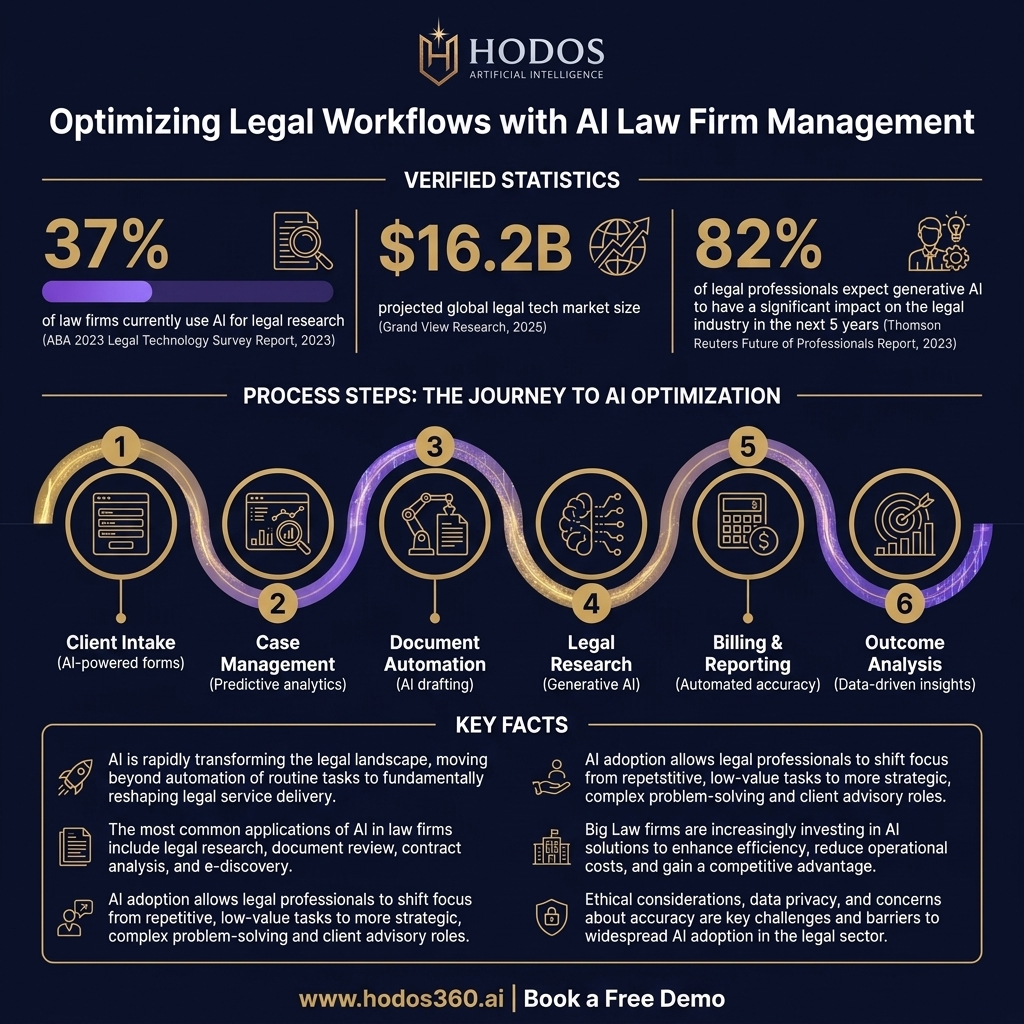
This predictive capability, drawing on vast datasets and advanced algorithms, offers a strategic advantage in resource allocation and client advisement. A recent report from the ABA's Legal Technology Resource Center indicated that firms utilizing integrated AI platforms reported an average 15% increase in operational efficiency, a significant figure in a highly competitive market.
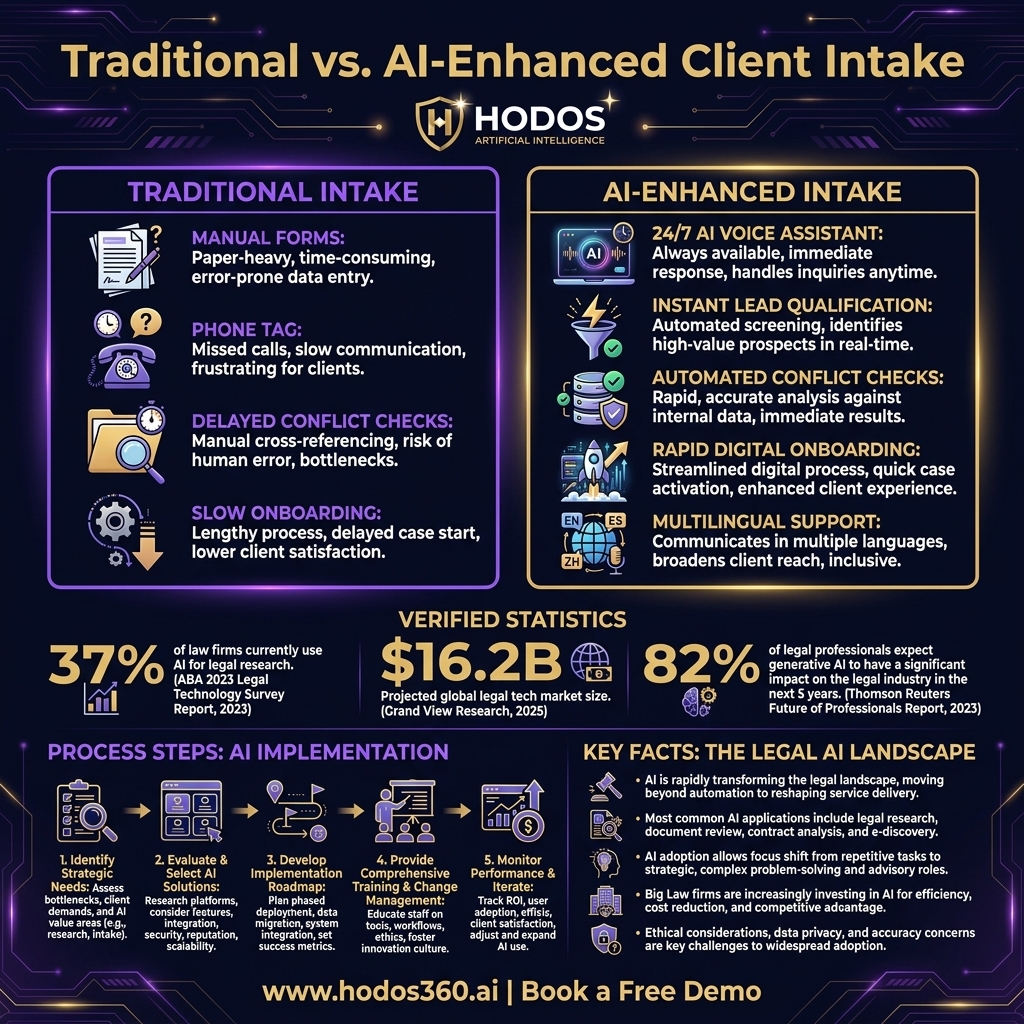
Beyond case management, AI is revolutionizing billing and client intake. Automated billing systems, enhanced with AI, can meticulously track billable hours, categorize activities, and even flag potential billing discrepancies, ensuring accuracy and compliance. For client intake, AI-powered chatbots and intelligent forms can gather initial information, perform conflict checks, and even conduct preliminary lead qualification 24/7, dramatically reducing the administrative burden and accelerating the onboarding process.
This not only improves firm efficiency but also enhances the client experience by providing immediate engagement. Firms like Cooley LLP, known for its tech-focused client base, have invested heavily in such systems, recognizing that a seamless, AI-accelerated intake process is crucial for attracting and retaining modern clients who expect digital-first interactions.
Document automation, a cornerstone of AI Law Firm Management, has evolved significantly. Learn more about Legal AI Gap: Bridging the Divide for Law Firms in 2026. No longer just template-filling, AI now enables the intelligent drafting of complex legal documents, from contracts to pleadings, by learning from vast repositories of legal precedents and firm-specific clauses.
This drastically reduces drafting time and minimizes human error, freeing lawyers to focus on the strategic implications of the document rather than its creation. Moreover, AI-powered e-discovery tools can process petabytes of data, identifying relevant documents, privileged information, and potential liabilities with unparalleled speed and accuracy.
This capability is particularly critical in large-scale litigation, where the sheer volume of data can overwhelm traditional review processes, as seen in complex anti-trust cases that involve millions of digital communications.
The integration of these AI-powered legal workflows creates a synergistic effect, where each component enhances the others, leading to a truly optimized legal practice.
The goal is to move beyond disparate tools to a unified platform that acts as an intelligent co-pilot for attorneys and administrators alike. This holistic approach to AI Law Firm Management not only slashes operational costs but also empowers firms to offer more innovative and cost-effective services, fundamentally altering their competitive positioning.
Firms that embrace this comprehensive digital transformation are better equipped to navigate the complexities of modern legal practice, ensuring they remain at the forefront of innovation and client service. This is the new standard for operational excellence in Big Law.
The imperative to modernize operations with integrated AI solutions is undeniable. Law firms seeking to truly transform their practice and achieve unparalleled efficiency must explore comprehensive platforms. Learn more about AI for Small Law Firms: The Essential Hub for Growth. Discover how HODOS 360's AI Law Firm Management System can streamline your operations, from case management to document automation, and propel your firm into the future.
Beyond Operations: AI's Strategic Edge in Marketing and Client Engagement
The impact of AI extends far beyond internal operations, fundamentally reshaping how law firms acquire and engage clients. The AI Marketing Platform represents a paradigm shift in legal marketing, moving from traditional, often reactive, methods to proactive, data-driven strategies. AI-powered tools can analyze market trends, competitor activities, and client demographics to identify niche opportunities and craft highly targeted campaigns.
For instance, AI video creation tools allow firms to produce compelling, high-quality video content for social media and websites with unprecedented speed and cost-efficiency. This democratizes content creation, enabling firms of all sizes to maintain a dynamic and engaging online presence. Social media automation, another key component, ensures consistent brand messaging and client interaction across multiple platforms, freeing marketing teams to focus on strategic initiatives rather than manual posting schedules.
Content generation, once a time-consuming endeavor, is now significantly augmented by AI. Legal blogs, articles, and whitepapers can be drafted and optimized for SEO using AI, ensuring that firms consistently produce valuable thought leadership that resonates with their target audience. This is crucial for client acquisition in a digital-first world where potential clients often begin their search online.
Learn more about AI Voice: Legal's 2026 Paradigm Shift & Innovation Catalyst. Furthermore, sophisticated analytics and ROI tracking capabilities within AI marketing platforms provide invaluable insights into campaign performance, allowing firms to optimize their marketing spend and demonstrate tangible returns on investment. As Emily Chang, CEO of McCann Worldgroup, often emphasizes regarding marketing innovation, "Data-driven insights are no longer a luxury; they are the bedrock of effective communication."
This philosophy is now firmly embedded in legal marketing, pushing firms to adopt AI for a competitive edge.
Complementing AI marketing efforts, AI Voice Assistants are transforming client engagement by offering 24/7 responsiveness and unparalleled efficiency. These intelligent assistants can handle initial phone inquiries, qualify leads, book appointments, and even provide multilingual support, ensuring that no potential client query goes unanswered, regardless of time zone or language barrier.
Imagine a prospective client calling after hours with an urgent legal issue; an AI voice assistant can immediately capture their details, understand their needs, and schedule a consultation for the next business day, effectively converting a missed call into a qualified lead. This level of continuous engagement dramatically improves the client experience and significantly boosts lead conversion rates.
The integration of AI marketing and voice assistant technologies provides a holistic approach to client engagement, ensuring that firms are not only visible to their target audience but also consistently responsive and efficient in their interactions. This dual strategy positions firms at the forefront of the digital legal landscape, allowing them to build stronger client relationships and expand their market reach.
The competitive drama here is palpable: firms that embrace these technologies are rapidly outmaneuvering those clinging to outdated marketing and client service models, demonstrating a clear path to sustained growth and increased profitability through advanced AI Law Firm Management practices.
The Evolving Client Journey: From Intake to Retention
The modern client journey is increasingly digital, and AI is central to optimizing every touchpoint. From the moment a potential client encounters a firm's online presence, AI shapes their experience. AI-powered websites offer personalized content, while voice assistants ensure immediate, intelligent responses. This seamless, efficient interaction sets the tone for the entire client relationship, fostering trust and demonstrating the firm's commitment to innovation.
Learn more about Voice Assistant Market: An Essential Guide for Law Firms. Post-engagement, AI can assist in sending personalized follow-ups, gathering feedback, and even identifying opportunities for future services, transforming a transactional relationship into a long-term partnership. This focus on a data-driven, client-centric approach, enabled by robust AI Law Firm Management systems, is critical for retention in a competitive market.
Digital Transformation: Building the Future-Ready Law Firm
In today's hyper-connected world, a law firm's digital presence is often the first, and most crucial, point of contact for prospective clients. This is where Web & Mobile Development powered by AI becomes indispensable. Gone are the days of static, brochure-ware websites. Modern firms require dynamic, responsive, and highly optimized digital platforms that not only inform but also convert visitors into clients.
AI-powered website builders leverage machine learning to analyze user behavior, identify optimal design elements, and suggest content strategies that maximize engagement and lead generation. This ensures that a firm's online presence is not just aesthetically pleasing but also a high-performing asset in its client acquisition strategy.
Search Engine Optimization (SEO) is no longer a niche concern but a fundamental pillar of any successful digital strategy. With AI, SEO optimization becomes more intelligent and adaptive. AI tools can analyze search trends, competitor rankings, and content gaps to ensure a firm's website consistently ranks high for relevant legal keywords.
This direct correlation between strong SEO and increased organic traffic translates into more qualified leads and a stronger brand presence. Moreover, high-converting templates, often integrated into AI-powered website platforms, are designed with user experience and conversion psychology in mind, guiding visitors seamlessly towards booking a consultation or downloading a resource.
As a study by Clio revealed in its 2025 Legal Trends Report, firms with optimized, mobile-responsive websites reported a 20% higher client conversion rate than those with outdated digital presences.
However, the rapid pace of digital transformation and AI adoption also brings forth significant ethical and regulatory considerations.
The EU AI Act, expected to be fully enforced in the coming years, sets a global precedent for regulating AI systems, particularly those deemed "high-risk." Law firms utilizing AI for sensitive tasks like predictive analytics in litigation or automated client intake must ensure compliance with evolving data privacy laws (e.g., GDPR, CCPA) and ethical guidelines.
The American Bar Association's Model Rule of Professional Conduct 1.1, Comment 8, explicitly states that "maintaining the requisite knowledge and skill" includes keeping abreast of "the benefits and risks associated with relevant technology." This legal citation underscores the attorney's ethical duty to understand and responsibly implement AI, ensuring client confidentiality and data security are paramount.
Firms must therefore invest not only in technology but also in robust governance frameworks and continuous training to navigate this complex legal and ethical landscape.
Ultimately, a future-ready law firm is one that embraces a holistic digital transformation, integrating AI across its web and mobile presence, marketing efforts, and internal operations.
This isn't merely about adopting new tools; it's about cultivating a culture of innovation and adaptability. The firms that prioritize AI-powered website building, robust SEO, and ethically sound AI implementation will be best positioned to attract the next generation of clients and talent, solidifying their competitive advantage in an increasingly digital legal market.
This proactive approach to AI Law Firm Management is no longer optional; it is the fundamental requirement for sustained success.
Navigating the Digital Frontier: Compliance and Ethics in AI Adoption
The promise of AI must be balanced with a rigorous commitment to ethical use and compliance. As AI systems become more sophisticated, issues of bias, transparency, and accountability become critical. Firms must establish clear internal policies for AI usage, ensuring that data used for training AI models is unbiased and that decisions made with AI assistance are explainable and reviewable by human attorneys.
The Federal Rules of Civil Procedure, particularly those pertaining to discovery, are also evolving to address electronically stored information (ESI) generated or processed by AI, demanding new protocols for preservation and production. This necessitates a proactive approach to governance, ensuring that the firm's adoption of AI Law Firm Management tools does not inadvertently create new legal or ethical liabilities.

Key Takeaways and Next Steps for Legal Leaders
The transformation driven by AI in Big Law is not a fleeting trend but a fundamental re-architecture of the legal profession. From the erosion of routine tasks to the emergence of data-driven business models, firms are facing an imperative to innovate or risk obsolescence. The firms that are thriving are those proactively investing in integrated AI Law Firm Management systems, recognizing that technology is no longer a support function but a core strategic asset.
This involves not only adopting advanced tools for case management, document automation, and billing but also leveraging AI for superior marketing and seamless client engagement.
For legal leaders, the path forward requires a clear vision and decisive action. It means fostering a culture of continuous learning, embracing digital transformation, and understanding that the future of legal practice is inextricably linked to intelligent technology.
Platforms that offer a comprehensive suite of AI-powered services, from practice management to marketing and web development, provide the integrated solutions necessary to navigate this complex landscape. By embracing these advancements, firms can not only enhance efficiency and profitability but also elevate the quality of legal services, positioning themselves as leaders in a rapidly evolving industry.
The time for hesitation is over; the era of the AI-powered law firm is here, and strategic investment in AI Law Firm Management is the key to unlocking its full potential.
Ready to propel your law firm into the future with integrated AI solutions? Explore HODOS 360's comprehensive platform and revolutionize your legal operations, marketing, and client engagement today.
- ✓Embrace Integrated AI Platforms: Move beyond fragmented tools to a unified AI Law Firm Management system for holistic efficiency.
- ✓Redefine Talent Development: Invest in upskilling junior lawyers for higher-value, strategic roles in an AI-augmented environment.
- ✓Optimize Legal Workflows: Leverage AI for automated case management, document automation, and predictive analytics to boost productivity.
- ✓Revolutionize Client Acquisition: Utilize AI marketing platforms for targeted content generation, social media automation, and ROI tracking.
- ✓Enhance Client Engagement: Deploy AI Voice Assistants for 24/7 responsiveness, lead qualification, and multilingual support.
- ✓Strengthen Digital Presence: Invest in AI-powered web and mobile development, responsive design, and robust SEO for competitive advantage.
- ✓Prioritize Ethical AI: Establish clear governance frameworks and ensure compliance with evolving ethical guidelines and regulations like the EU AI Act.
Frequently Asked Questions
How is AI changing the traditional business model of Big Law?+
AI is shifting Big Law's business model from hourly billing for routine tasks to value-based pricing for strategic advice and complex problem-solving. By automating mundane work, firms can reallocate resources to higher-value activities, improving efficiency and profitability. This allows for a focus on bespoke legal solutions rather than commoditized services, fundamentally altering revenue streams and client expectations.
Will AI replace junior lawyers in Big Law firms?+
AI is unlikely to replace junior lawyers entirely but will redefine their roles. Routine tasks will be automated, requiring junior lawyers to develop skills in AI interpretation, data analytics, and strategic application of legal knowledge. The focus will shift from extensive manual research to critical thinking, client counseling, and leveraging AI tools to enhance their effectiveness and provide higher-value contributions.
What are the key benefits of implementing an AI Law Firm Management system?+
An AI Law Firm Management system offers numerous benefits, including enhanced operational efficiency through automated workflows, improved accuracy in document drafting and e-discovery, better client engagement via 24/7 AI assistants, and data-driven marketing strategies. It streamlines case management, billing, and client intake, ultimately leading to cost savings, increased profitability, and a stronger competitive position in the market.
How can AI improve a law firm's marketing and client acquisition efforts?+
AI marketing platforms can significantly boost client acquisition by enabling targeted content generation, AI video creation, and social media automation. AI analyzes market trends and client data to optimize campaigns, ensuring higher ROI. AI Voice Assistants further enhance this by providing instant lead qualification, appointment booking, and multilingual support, ensuring no potential client is missed and engagement is maximized.
What ethical considerations should law firms keep in mind when adopting AI?+
Law firms must prioritize ethical considerations, including data privacy, potential AI bias, and transparency. Compliance with regulations like the EU AI Act and ABA Model Rule 1.1 (Competence) is crucial. Firms need to ensure client confidentiality, establish clear governance policies for AI use, and maintain human oversight of AI-generated outputs to uphold professional responsibility and avoid liabilities.